
Highway vs All-Terrain Tire Lifespan: How Many More Miles Do HTs Last?
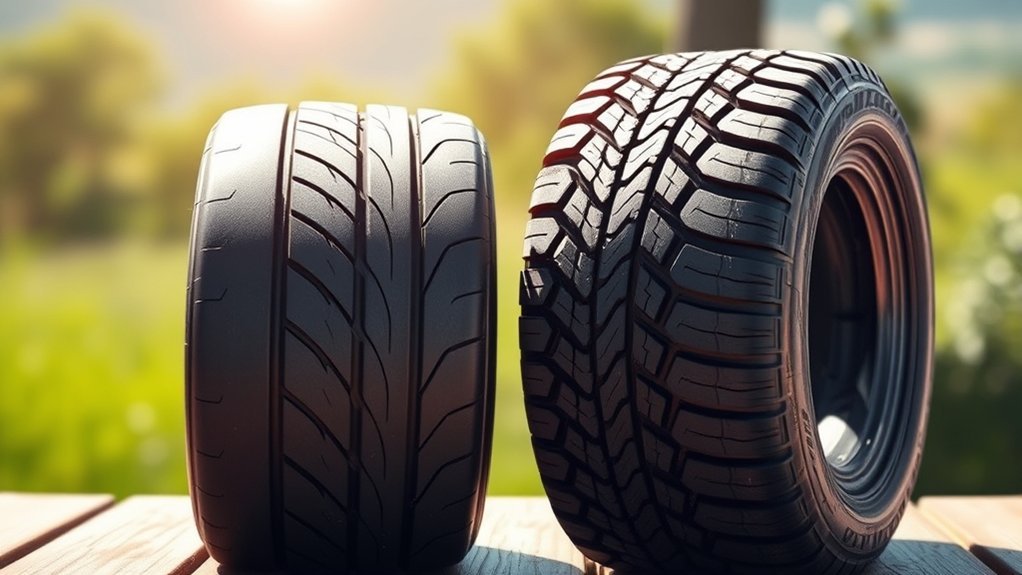
Highway-terrain and all-terrain tires can both deliver long service, but the category name alone cannot predict an exact mileage. Highway-terrain tires usually favor paved-road comfort, lower noise, and efficient rolling, while all-terrain tires trade some on-road refinement for traction and durability on gravel, dirt, and uneven surfaces. The best choice depends on your actual driving mix, vehicle load, maintenance, and the warranty for the exact tire size you buy.
Quick Answer
Highway-terrain tires often last longer than comparable all-terrain tires when most driving is on pavement. However, no universal mileage range applies to every model. Compare the exact treadwear warranty, then monitor pressure, rotation, alignment, tread depth, damage, and tire age to judge real service life.
Key Takeaways
- Highway-terrain tires generally favor longer paved-road wear, a quieter ride, and lower rolling resistance.
- All-terrain tires provide better loose-surface traction and tougher construction, but some models carry shorter mileage warranties.
- A mileage warranty is not a promise that every driver will reach that number; eligibility depends on maintenance and warranty terms.
- Replace a tire for unsafe tread depth, damage, irregular wear, or age-related concerns even if warranty mileage remains.
Understanding the Lifespan of Highway vs All-Terrain Tires
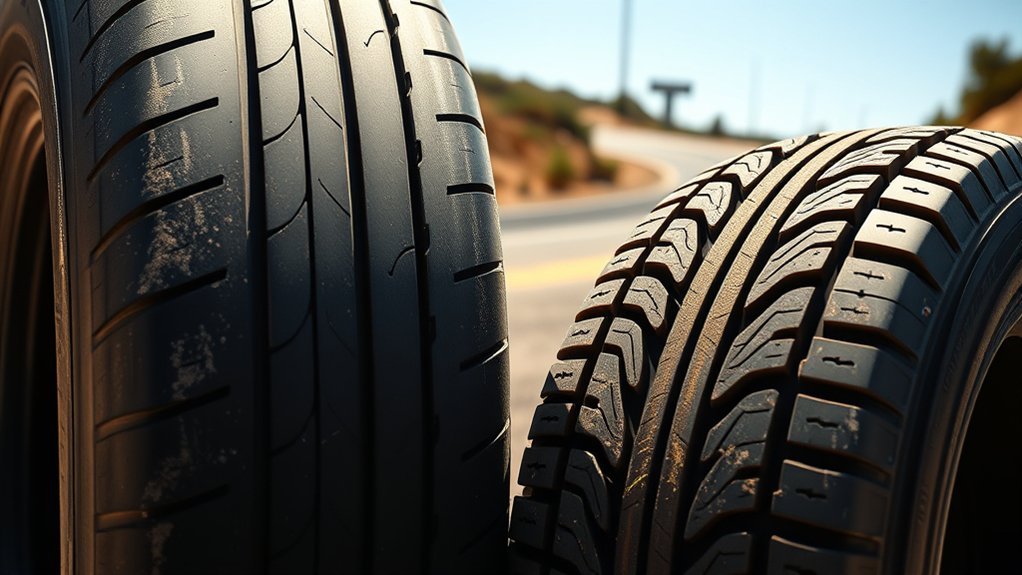
Highway-terrain tires, often labeled H/T, are designed mainly for paved roads. Their tread blocks are usually less open and less aggressive than those on all-terrain tires. This design can reduce noise, vibration, and energy loss during everyday highway driving. It may also help the tread wear more evenly when the tire is properly inflated and aligned.
All-terrain tires, labeled A/T, use larger tread blocks, wider voids, stronger shoulders, and compounds intended to handle gravel, dirt, mud, and other mixed surfaces. Those features add useful traction and resistance to off-road damage, but they can also increase noise, weight, and rolling resistance. Actual wear still varies greatly by model, tire size, vehicle weight, load range, driving style, and maintenance.
A useful real-world comparison comes from BFGoodrich. Its Advantage Control HT carries a 70,000-mile limited mileage warranty, while its All-Terrain T/A KO3 carries a 50,000-mile warranty. That example supports the general tendency, but it does not create a universal rule for every H/T and A/T tire.
[Products Worth Considering]

Keep RV, trailer, or truck dual-axle tires protected with waterproof, UV-resistant covers that help guard against sunlight, snow, rust, and dirt. The dual tire covers are easy to install with a rope/bungee fastener for a stable fit that won’t easily slip. Designed for 27–30 inch diameter wheels, they help maintain tire condition through harsh weather.
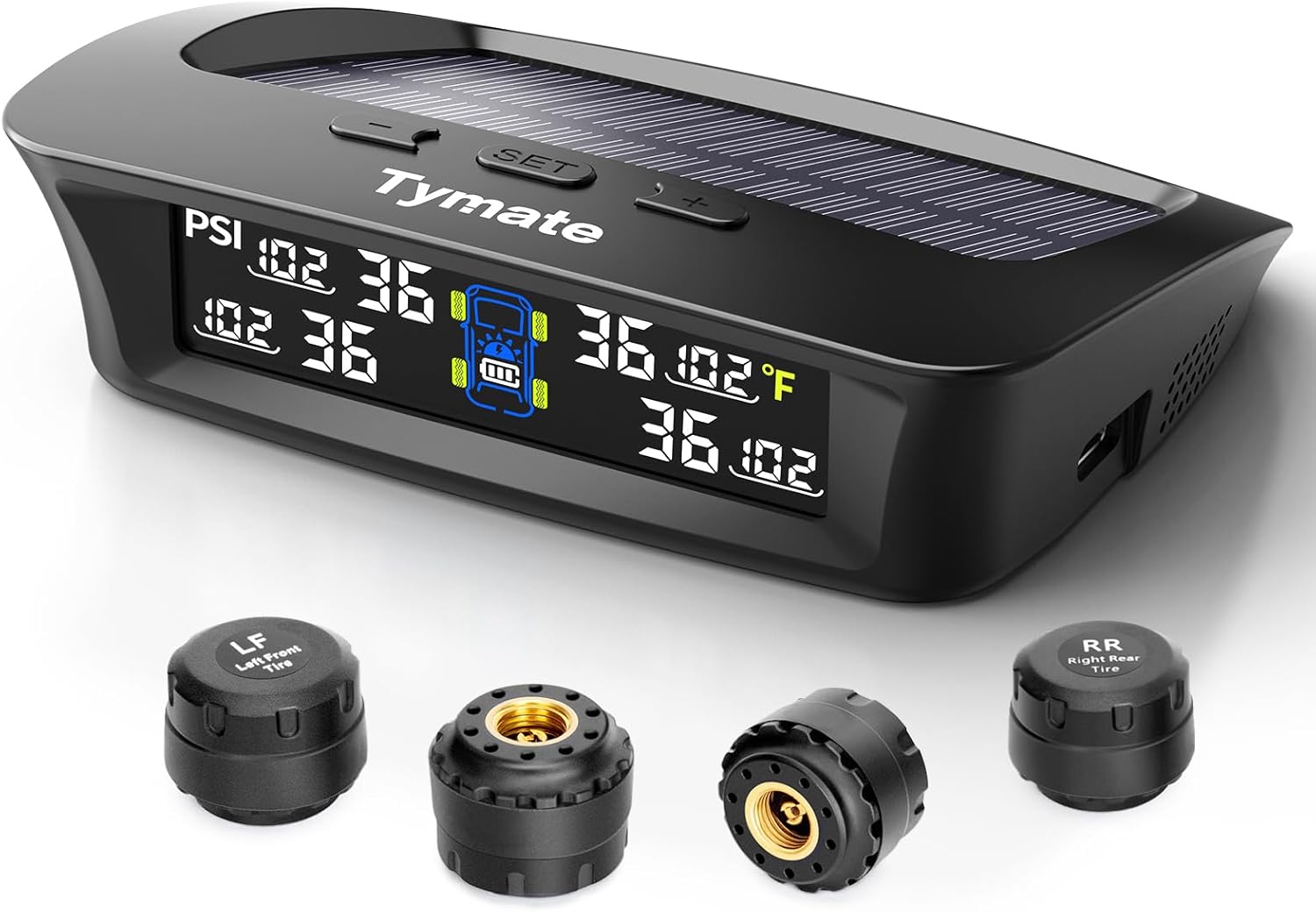
The Tymate TM3 RV TPMS delivers real-time tire pressure monitoring from 0 to 144 PSI with accurate readings and dependable wireless communication. It includes four external sensors with pre-pairing, six alarm modes for rapid leak, pressure extremes, temperature, and signal loss, plus an easy-reference setup for alert thresholds. Solar and USB-C charging help keep the display powered, while the color LCD and adaptive backlight improve visibility for safer driving and towing.

RVMATE dual-axle RV tire covers help shield your tires from sunlight, snow, rust, and dirt to keep them in better condition in harsh weather. Made with heavy-duty waterproof, UV-resistant 420D Oxford fabric, they provide strong shading and help reduce wear. They install easily by placing the cover on the wheel and fastening the rope for a stable fit.
Highway vs All-Terrain Tires: Direct Comparison
| Factor | Highway-Terrain Tires | All-Terrain Tires |
|---|---|---|
| Best use | Daily commuting, highways, paved roads | Mixed pavement, gravel, dirt, trails |
| Treadlife tendency | Often longer in mostly paved use | Varies widely; heavy off-road use can accelerate wear |
| Ride and noise | Usually smoother and quieter | Usually firmer and louder, depending on tread design |
| Fuel efficiency | Often better due to lower rolling resistance | Can be lower because of weight and tread design |
| Loose-surface traction | Limited | Better on gravel, dirt, and uneven surfaces |
| Best buyer | Drivers who stay mainly on pavement | Drivers who regularly leave pavement |
Key Factors That Affect Tire Longevity
Tread pattern matters, but it is only one part of tire life. Compound, casing design, tread depth, vehicle weight, axle load, wheel alignment, inflation pressure, road temperature, and driving style all affect how quickly the tread wears.
- Correct pressure: Underinflation creates extra heat and shoulder wear. Overinflation can reduce the contact patch and increase vulnerability to impact damage.
- Alignment and balance: Toe or camber problems can destroy a tire long before its warranty mileage.
- Vehicle load: Towing, hauling, and frequent heavy loads increase heat and stress. Use the correct tire size and load rating listed by the vehicle manufacturer.
- Driving style: Hard acceleration, abrupt braking, fast cornering, and sustained high speed increase tread wear.
- Road surface: Sharp gravel, rocks, potholes, and broken pavement can cause cuts, chipping, impact damage, and irregular wear.
- Climate and age: Heat, sunlight, storage conditions, and time can age the rubber even when plenty of tread remains.
Expected Mileage for Highway Tires
Instead of treating 50,000 to 80,000 miles as a guaranteed lifespan, use the exact limited treadwear warranty for the model and size you are considering. Many current highway-terrain and on-road light-truck tires advertise warranties in the 60,000-to-70,000-mile area, while some sizes receive a different warranty or no mileage warranty at all.
Your actual result can be lower if the vehicle is overloaded, misaligned, driven aggressively, or used with incorrect pressure. It can also be strong when the tire matches the vehicle, driving is mostly on smooth pavement, and maintenance records meet the warranty requirements.
To judge your mileage expectations, consider these factors:
| Factor | Impact on Mileage |
|---|---|
| Driving habits | Aggressive acceleration, braking, and cornering shorten treadlife. |
| Surface quality | Smooth pavement usually produces more predictable wear. |
| Maintenance | Correct pressure, rotation, alignment, and balance support even wear. |
| Vehicle and load | Heavy vehicles, towing, and high loads increase stress and heat. |
| Warranty terms | Coverage may vary by tire size, load range, and documented maintenance. |
Expected Mileage for All-Terrain Tires
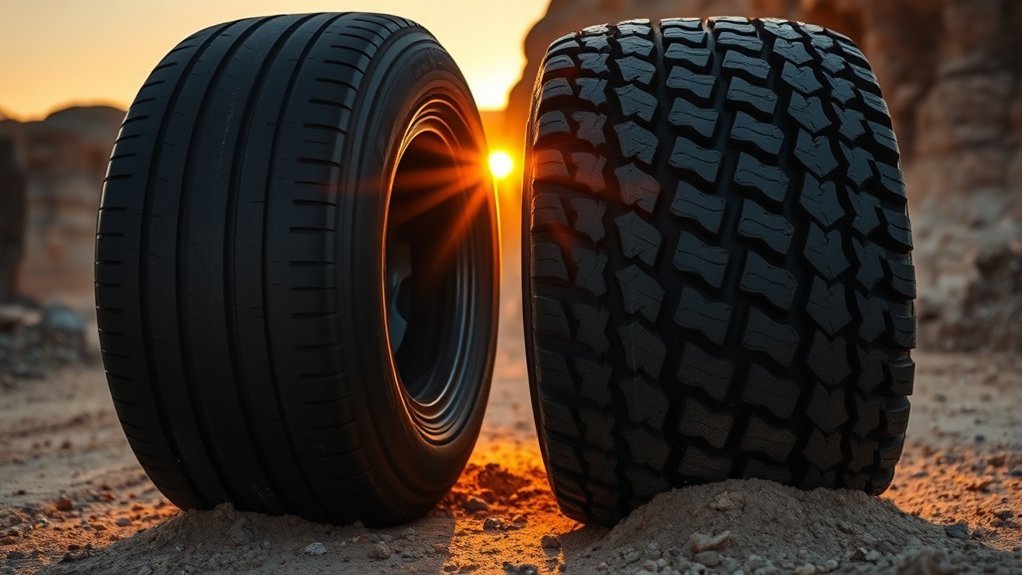
All-terrain tire life varies too widely for one reliable universal range. Many popular A/T models carry limited mileage warranties near 50,000 miles, while other tires offer more, less, or no mileage coverage. Heavy off-road use, sharp gravel, rock crawling, wheelspin, low-pressure trail use, and repeated towing can reduce treadlife even when the tire is built for those conditions.
If you use an A/T tire mainly on highways, it may wear evenly and last well, but you may still accept extra noise, weight, and rolling resistance that you do not need. If you regularly drive on gravel, unpaved job sites, farm roads, or trails, the extra capability can be worth the trade-off.
Lifespan Factors Explored
- Tread design: Deeper blocks and wider voids improve loose-surface traction, but block movement and irregular wear can become concerns on pavement.
- Material and construction: Compounds, casing strength, sidewall protection, and tread depth vary by model. A tougher-looking tire does not automatically have a longer mileage warranty.
- Driving conditions: Smooth road use, gravel, mud, rocks, towing, and temperature all create different wear patterns.
- Inflation strategy: Airing down may improve trail traction when the tire and situation allow it, but you must reinflate to the vehicle-appropriate road pressure before sustained pavement driving.
Typical Mileage Range
Use the manufacturer’s warranty as a comparison tool, not as a forecast. For example, the BFGoodrich All-Terrain T/A KO3 carries a 50,000-mile limited mileage warranty. Actual replacement may come earlier because of tread depth, damage, age, noise, vibration, or irregular wear. It may also come later for a well-maintained tire, but warranty coverage and safe service life are separate questions.
Mileage Warranty vs Actual Tire Life
A limited treadwear warranty usually provides prorated credit if the tire wears out before the stated mileage and you meet the manufacturer’s conditions. It is not a full replacement guarantee, and it does not override safety-based replacement.
Read the warranty for the exact model and size. Common requirements include proof of purchase, regular rotations, correct inflation, proper alignment, even wear, and use on an approved vehicle. Damage from road hazards, off-road abuse, overloading, improper mounting, or mechanical problems may not qualify.
Note: A 70,000-mile warranty does not mean the tire will remain safe or perform like new for 70,000 miles. Tread depth, wet grip, damage, and age still determine when replacement is necessary.
What Driving Conditions Cause Tire Wear?
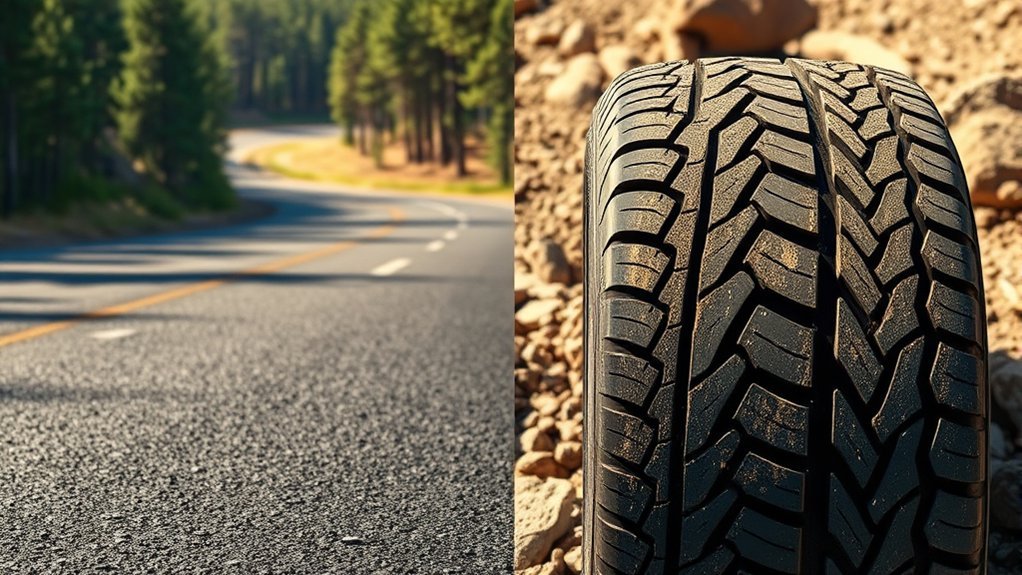
Driving conditions affect both the speed and pattern of tire wear. Smooth pavement usually produces predictable tread wear, while broken roads, gravel, rocks, and potholes add impact and abrasion. High temperatures, heavy loads, and sustained speed also increase heat, which can accelerate deterioration when pressure or load is incorrect.
[Products Worth Considering]
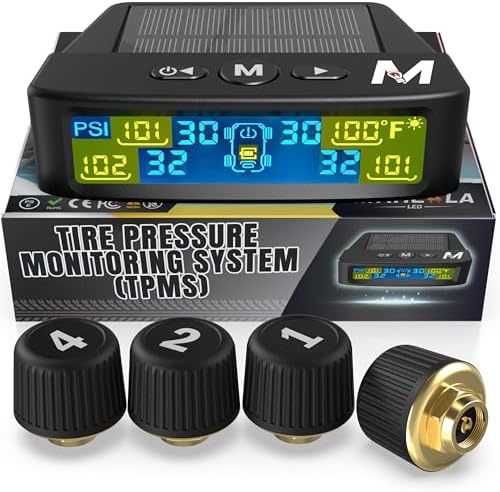
Marcala’s TPMS set of four sensors helps you monitor tire pressure and temperature in real time while driving, with updates every second. The bright color LCD uses auto-dimming for easy viewing, powered by dual solar and USB charging, and offers six alarm modes. Built for trailers, RVs, campers, trucks, and towing setups, the sensors support monitoring 1-4 wheels up to 98 PSI with IP67 waterproof protection.
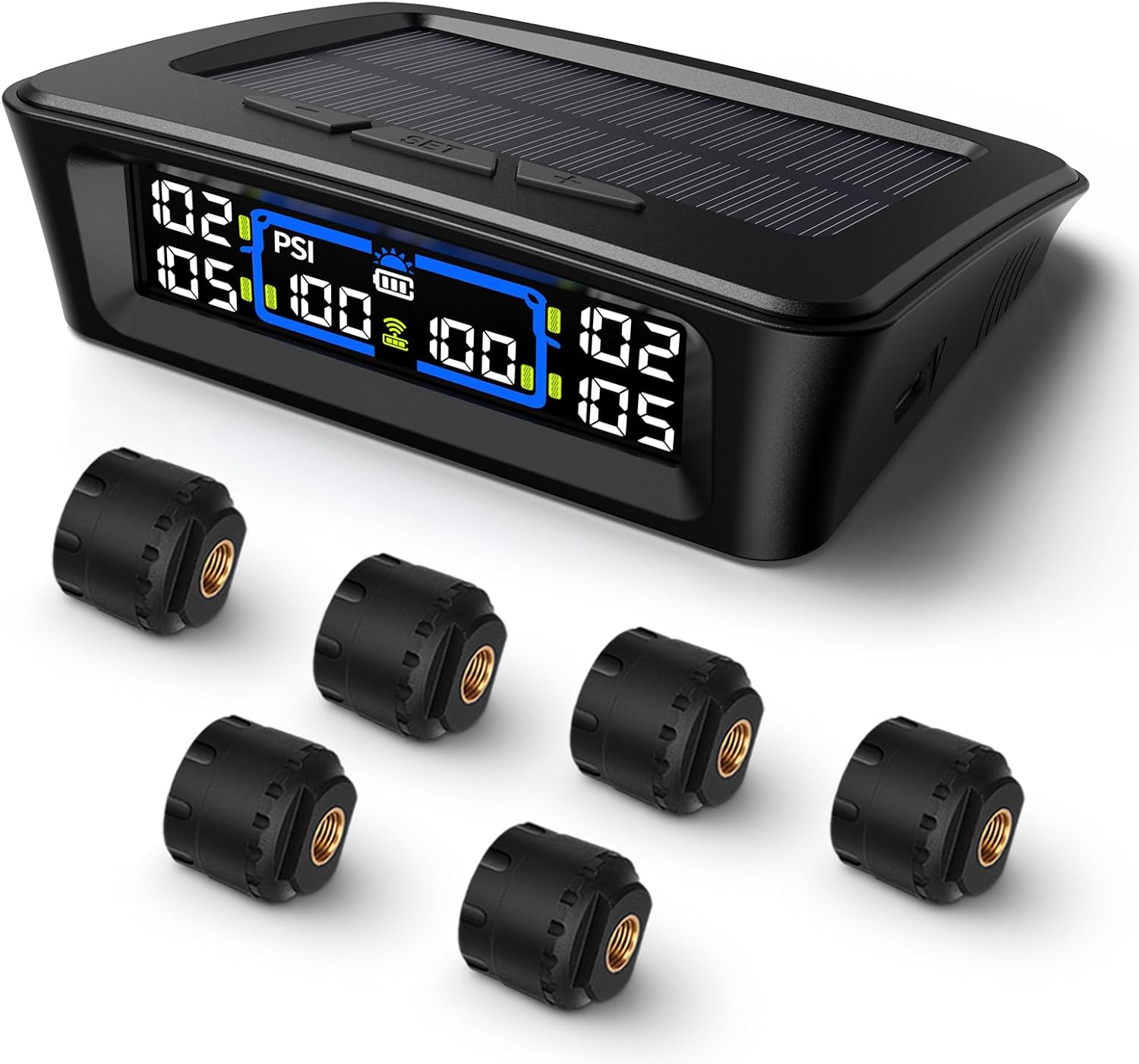
The Tymate TM12 RV TPMS delivers real-time tire pressure and temperature monitoring with a stable 433Hz display for safer long-distance driving. It supports simultaneous monitoring across vehicle and trailer zones, includes six alarm modes for pressure, temperature, leakage, battery, and signal loss, and features easy DIY installation with auto calibration. Power is supplied via USB-C charging or solar recharging, with a wide 0–144 PSI range and up to 50 ft signal coverage for RVs and towable trailers.
Road Surface Quality
- Smooth pavement: Favors highway-terrain tires and generally produces consistent wear when alignment and pressure are correct.
- Rough or unpaved roads: Can chip tread blocks, cut rubber, damage sidewalls, or knock wheels out of alignment.
- Potholes and curbs: Can cause impact breaks, bulges, bent wheels, or immediate alignment changes.
- Snow and ice: Require suitable traction, but a three-peak mountain snowflake rating only confirms that the tire meets a defined snow-traction requirement. It does not guarantee top performance on ice, in wet braking, or in every winter condition.
Driving Habits Impact
The way you drive has a direct effect on tread wear. Hard launches can spin or scrub the drive tires. Heavy braking wears the front tires faster. Fast cornering loads the outer shoulders, while sustained speed and heavy cargo increase heat.
| Driving Condition | Likely Effect on Tire Wear |
|---|---|
| Smooth, moderate-speed driving | More even and predictable wear |
| Frequent high-speed driving | More heat and potentially faster wear |
| Hard acceleration and braking | Faster wear on drive and front tires |
| Frequent off-road use | Greater risk of chipping, cuts, and irregular wear |
| Towing or heavy hauling | Higher load and heat; pressure and load rating become critical |
How to Know When Tires Need Replacement
Do not judge replacement by mileage alone. The National Highway Traffic Safety Administration says tires should be replaced when tread reaches 2/32 inch. You should also stop using a tire with a bulge, exposed cords, deep cuts, repeated pressure loss, severe cracking, or other structural damage.
- Tread depth: Check several grooves across each tire. Uneven readings can reveal alignment, pressure, or suspension problems.
- Wear bars: Replace the tire when the tread is level with the built-in wear indicators.
- Irregular wear: Feathering, cupping, one-sided wear, or bald spots need professional diagnosis.
- Age: Read the last four digits of the DOT Tire Identification Number to find the production week and year. NHTSA notes that some vehicle and tire manufacturers recommend replacement at six to ten years regardless of remaining tread.
- Behavior: New vibration, noise, pulling, or repeated pressure loss deserves immediate inspection.
Warning: Use the cold inflation pressure on the driver’s-door placard or in the owner’s manual, not the maximum pressure molded on the tire sidewall. Stop driving on a tire with a bulge, exposed cords, severe cracking, or rapid air loss.
Maintenance Tips to Extend Tire Life
A consistent maintenance routine improves safety and gives both H/T and A/T tires the best chance to wear evenly.
- Check pressure monthly: Measure all tires, including the spare, when they are cold and set them to the vehicle manufacturer’s specification.
- Rotate on schedule: Follow the owner’s manual. If no interval is listed, the U.S. Tire Manufacturers Association recommends rotation every 5,000 to 8,000 miles.
- Inspect tread and damage: Look for cuts, cracks, bulges, punctures, stones, uneven wear, and exposed material.
- Correct alignment problems: Have the vehicle checked if it pulls, the steering wheel sits off-center, or one edge of a tire wears faster.
- Balance when needed: Vibration can signal imbalance, damage, or another mechanical problem.
- Record maintenance: Keep rotation and alignment receipts because treadwear warranty claims may require proof.
NHTSA reports that proper inflation can extend the average life of a tire by about 4,700 miles.
Pro Tip: Measure tread depth at the inner edge, center, and outer edge of every tire. A single center reading can miss shoulder wear or an alignment problem.
Tire Cost: Highway vs All-Terrain
All-terrain tires are not automatically more expensive, and highway-terrain tires are not always the cheapest. Brand, size, load range, construction, warranty, and availability can matter more than the category label.
Compare total ownership cost instead of purchase price alone:
- Cost per mile: Divide the installed tire cost by the realistic mileage you expect from your use.
- Fuel use: Heavier or higher-rolling-resistance tires can affect fuel economy.
- Maintenance: Include rotations, balancing, alignment, and repairs.
- Capability value: An A/T tire may cost more to operate on pavement but save trouble if you regularly need off-road traction and stronger construction.
- Warranty value: Check whether the exact size has mileage coverage and what records are required.
How to Choose Between Highway and All-Terrain Tires
Start with the tire size, load index, speed rating, and type approved for your vehicle. Then match the category to how you really drive.
- Choose H/T tires when nearly all driving is on paved roads and you value quietness, ride comfort, predictable wear, and fuel efficiency.
- Choose A/T tires when you regularly drive on gravel, dirt, job sites, farm roads, trails, or other loose and uneven surfaces.
- Compare exact models rather than category averages. Check warranty mileage, size-specific coverage, weight, wet traction, snow rating, and owner-manual compatibility.
- Consider winter needs separately. A 3PMSF-marked A/T tire meets a snow-traction requirement, but dedicated winter tires can still be the better choice for frequent ice, deep snow, and severe cold.
- Do not oversize casually. Larger, heavier tires can change clearance, gearing, braking, steering feel, fuel use, and speedometer accuracy.
If you drive almost entirely on pavement and only visit maintained gravel roads occasionally, an H/T tire is usually the more practical choice. If leaving pavement is a regular part of your week, a well-matched A/T tire can justify its trade-offs.
Frequently Asked Questions
Do H/T tires last longer than A/T tires?
Often, yes, when both tires are properly matched to the vehicle and used mostly on pavement. H/T tires commonly use road-focused tread designs and may carry longer mileage warranties. However, the exact model, size, load, maintenance, and driving conditions matter more than the category name alone.
How long do highway-terrain tires last?
Check the limited treadwear warranty for the exact model and size. Many H/T tires advertise warranties around 60,000 to 70,000 miles, but actual service life can be shorter because of wear, damage, age, alignment, pressure, loading, or driving style.
How long do all-terrain tires last?
There is no single dependable range. Many popular A/T tires carry warranties near 50,000 miles, while others differ or have no mileage warranty. Gravel, rocks, wheelspin, towing, pressure, alignment, and rotation habits can change the result significantly.
Does the 3PMSF symbol make an all-terrain tire a winter tire?
The symbol confirms that the tire meets a defined snow-traction performance requirement. It does not test every winter behavior, and it does not guarantee the same ice grip, cold-weather compound performance, braking, or cornering as a dedicated winter tire.
Should I replace tires before the mileage warranty ends?
Yes. Replace them when tread reaches the minimum safe depth, or sooner when damage, severe cracking, exposed cords, irregular wear, repeated pressure loss, age, noise, or vibration makes continued use unsafe. Warranty mileage never overrides tire condition.
Conclusion
Highway-terrain tires often provide the better lifespan and ownership experience for drivers who stay mainly on pavement. All-terrain tires make more sense when gravel, dirt, trails, or rough job sites are a regular part of your driving. Do not choose from a broad mileage claim alone. Compare the exact size-specific warranty, confirm vehicle compatibility, and maintain pressure, rotation, alignment, tread depth, and load. Replace any tire when its condition or age becomes unsafe, even if the odometer has not reached the advertised warranty mileage.
Sources
- National Highway Traffic Safety Administration: TireWise — tire pressure, rotation, tread depth, aging, replacement, and rolling-resistance guidance.
- U.S. Tire Manufacturers Association: Tire Care Essentials — pressure checks, tread inspection, rotation intervals, and alignment.
- BFGoodrich North America Newsroom — model-specific 70,000-mile H/T and 50,000-mile A/T limited mileage warranty examples.
- BFGoodrich All-Terrain T/A KO3 — official product warranty and 3PMSF information.
- Transport Canada: Using Winter Tires — 3PMSF snow-traction meaning and winter tire guidance.

Related Articles
Toyota Tundra Tire and Wheel Package: What to Consider Before Buying
Unlock the secrets to choosing the perfect tire and wheel package for your Toyota Tundra—essential tips await to enhance your ride.
Read More
Do Bigger Tires Void a Toyota Tundra Warranty? Magnuson-Moss Act Explained
Bigger tires might not void your Toyota Tundra warranty, but understanding the Magnuson-Moss Act is crucial—discover how to protect your investment effectively.
Read More
Toyota Tundra Tire Rack Setup: Garage Storage Ideas for Seasonal Sets
Better tire storage for your Toyota Tundra awaits—discover essential tips to maximize space and protect your seasonal sets in the garage!
Read More