
Radial vs Bias Ply Tires for Hyundai Sonata: Which Is Right?
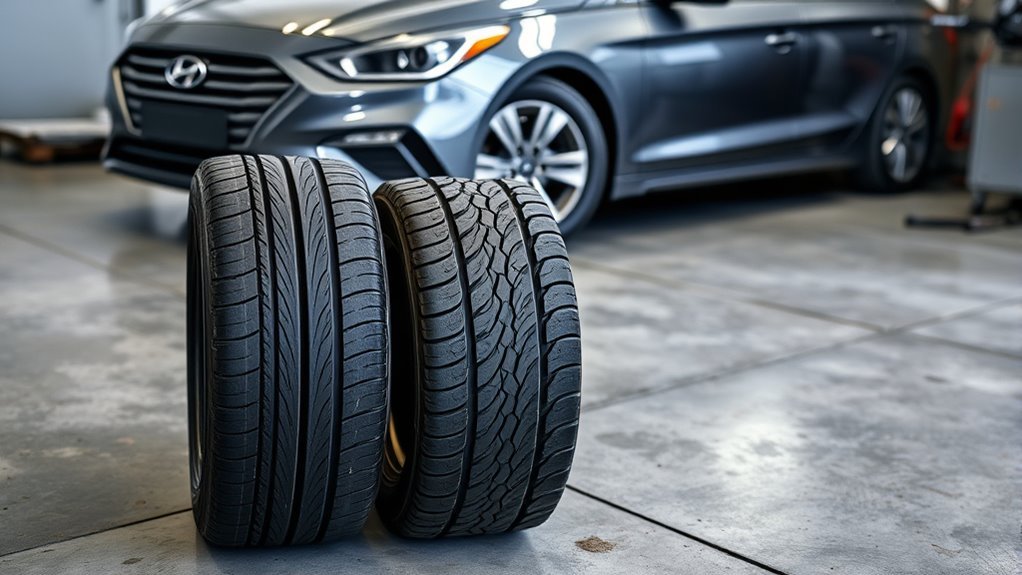
For a Hyundai Sonata used as a daily driver, radial tires are almost always the right choice. The important detail is not just “radial versus bias ply,” though. The safest choice is a radial tire that matches the tire size, load index, speed rating, and cold inflation pressure listed on your Sonata’s driver-side door placard or owner’s manual.
Quick Answer
Radial tires are better than bias-ply tires for a Hyundai Sonata because modern Sonata models are designed around radial passenger tires. Radials usually give better highway stability, ride comfort, tread contact, heat control, and fuel efficiency. Use the size and pressure on your door placard, not a generic tire size.
Key Takeaways
- Choose radial tires for normal Hyundai Sonata commuting, highway driving, rain, and everyday comfort.
- Do not choose a tire only by price. Match the door placard size, load index, speed rating, and inflation pressure.
- Bias-ply tires are mainly useful for certain classic cars, trailers, farm equipment, and low-speed specialty uses—not a modern midsize sedan.
- Never mix radial and bias-ply tire construction on the same vehicle unless a qualified tire professional and the vehicle manufacturer specifically approve it.
Why Radial Tires Are Ideal for Your Hyundai Sonata
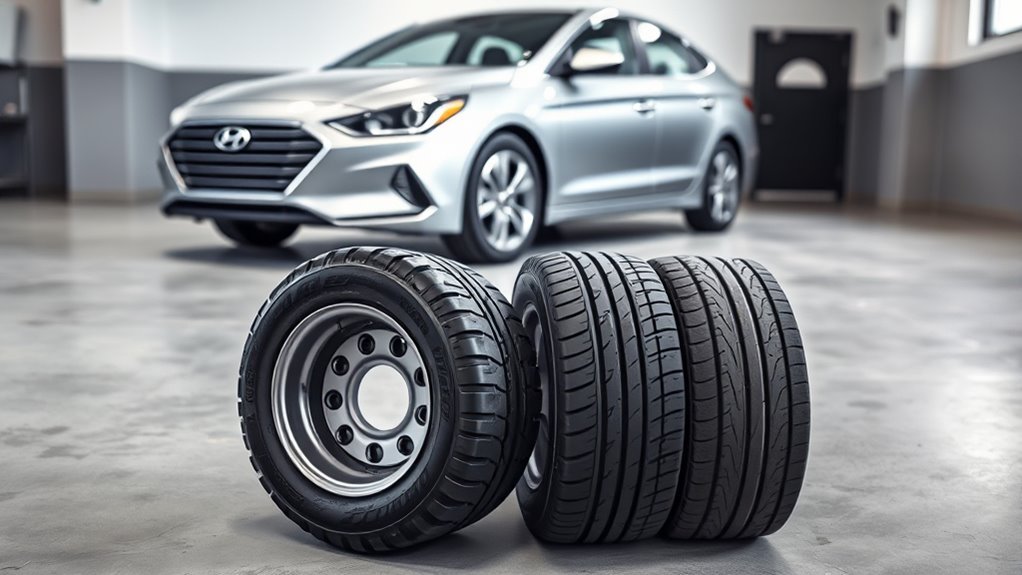
Modern passenger cars like the Hyundai Sonata are built around radial tire behavior. A radial tire has body plies that run across the tire from bead to bead, while belts under the tread help keep the contact patch stable. The Tire Industry Association explains that the most common passenger tires are radial tires, with casing plies aligned at 90 degrees to the beads.
That construction matters on a Sonata because it supports the kind of driving most owners actually do: commuting, highway cruising, wet-road braking, and quick lane changes. Compared with bias-ply construction, radial tires generally provide:
- Better highway stability: The tread stays flatter and more controlled at speed.
- Smoother ride comfort: The sidewall can flex without moving the tread as much.
- Lower heat buildup: This is especially important during long highway trips.
- Better fuel-efficiency potential: Many modern radial passenger tires are designed with lower rolling resistance.
- More tire choices: Touring, all-season, performance, winter, and low-rolling-resistance tires are widely available in radial construction.
Before buying, check the tire size molded into your current tire sidewall and compare it with the label on the driver-side center pillar. Hyundai notes that the tire label on the vehicle gives the recommended tire pressure for your specific vehicle, and that is the safest starting point for replacement decisions.
Pro Tip: In a tire size such as 215/55R17, the letter “R” means radial construction. If you see “D,” “B,” “X,” or a dash in that construction position, you may be looking at a diagonal, belted-bias, or bias-type tire instead.
[Products Worth Considering]

The ETENWOLF T600 digital tire pressure gauge delivers precise, manually calibrated readings to ANSI B40.7 Grade 2A standards with ±0.5% PSI accuracy. Its 360° rotating...
What Sonata Owners Should Know About Bias-Ply Tires
Bias-ply tires are built with layers that run diagonally across the tire and crisscross over each other. This gives the tire a different feel: the tread and sidewall tend to act more like one connected structure. That can be useful in certain heavy-duty or low-speed jobs, but it is not what a modern Hyundai Sonata is tuned for.
For everyday Sonata driving, bias-ply tires usually create more trade-offs than benefits. They can feel less stable at highway speeds, may ride more harshly on pavement, and are harder to find in modern passenger-car sizes. Even when the initial price looks attractive, the fitment, comfort, and safety compromises usually make them a poor match for a Sonata.
Warning: Do not mix radial and bias-ply tire construction, and do not install tires that fail to match your Sonata’s required size, load index, speed rating, and pressure requirements. A mismatch can affect stability, braking, traction control, ABS, and tire life.
Performance on Rough Terrain
Bias-ply tires can make sense on certain off-road, agricultural, construction, and specialty vehicles because their stiff sidewalls can resist some forms of abuse. That does not make them a good choice for turning a Sonata into a rough-terrain vehicle. The Sonata is a midsize road car, not a trail rig, and the tire that performs best on rocks or farm paths is not usually the tire that performs best during a 70-mph highway commute.
Cost-Effectiveness for Specific Uses
Bias-ply tires may cost less upfront in some specialty categories, but the cheaper tire is not always the cheaper decision. For a Sonata, you also have to consider ride quality, wet traction, highway heat, treadwear warranty, fuel economy, and whether the tire is even available in the correct size and service rating.
| Use Case | Better Choice | Why |
|---|---|---|
| Daily Sonata commuting | Radial | Better ride comfort, stability, availability, and highway manners. |
| Highway driving | Radial | Lower heat buildup and better tread stability at speed. |
| Classic restoration | Sometimes bias-ply | Original appearance may matter more than modern handling. |
| Farm, implement, or low-speed specialty use | Sometimes bias-ply | Stiff sidewalls and rugged construction may suit specific equipment. |
Historical Context and Appeal
Bias-ply tires have real historical appeal. They were common before radial tires became the passenger-car standard, and they can look right on older collector vehicles. That vintage appeal is the main reason some owners still seek them out. For a Hyundai Sonata, though, nostalgia is not a useful performance feature. A modern radial tire that matches the placard is the safer, more practical choice.
How Do Radial and Bias-Ply Tires Compare for Daily Driving?
For daily driving, the difference comes down to stability, heat, comfort, and tread contact. A Sonata spends most of its life on paved roads, so it benefits from the radial tire’s ability to keep the tread more planted while the sidewall absorbs road imperfections.
| Factor | Radial Tire | Bias-Ply Tire |
|---|---|---|
| Highway stability | Stronger fit for a Sonata | Usually less stable at sustained highway speeds |
| Ride comfort | Generally smoother | Can feel firmer or harsher |
| Fuel economy potential | Better, especially with low-rolling-resistance designs | Usually not the efficient highway choice |
| Treadwear | Often more even on passenger cars | Can wear unevenly in road-car use |
| Availability for Sonata sizes | Excellent | Limited and often inappropriate |
If you are shopping by sidewall code, most Sonata tire sizes will include “R,” such as 215/55R17, 235/45R18, or another trim-specific radial size. Do not assume one size fits every Sonata. Always confirm the tire placard, current wheel size, and owner’s manual for your exact model year and trim.
Tire Costs: Long-Term Value Comparison
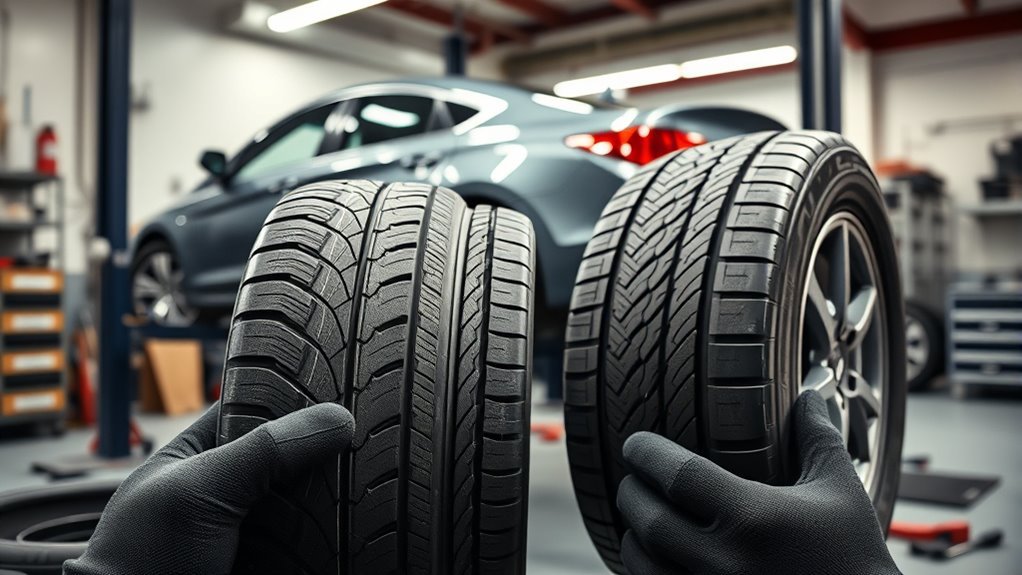
The lowest sticker price is not always the best value. For a Hyundai Sonata, the better long-term value usually comes from choosing the correct radial tire category for your driving: touring, grand touring, performance all-season, winter, or low-rolling-resistance. The right radial tire can protect ride quality, wet traction, fuel economy, and tread life.
Tire Purchase Price Comparison
Bias-ply tires can be cheaper in some specialty markets, but that does not help much if the tire is not correct for your Sonata. Radial tires are widely available in modern passenger sizes, so you can compare brands, warranties, treadwear ratings, wet-traction ratings, road-noise reviews, and fuel-efficiency features.
When comparing prices, look at the full installed cost:
- tire price
- mounting and balancing
- valve stems or TPMS service kits
- alignment if uneven wear is present
- road-hazard coverage if offered
- expected treadwear warranty
Longevity and Replacement Costs
Do not rely on a universal mileage promise. Tire life depends on tire model, compound, alignment, inflation pressure, rotation habits, driving style, climate, and road surface. A quality radial tire with the correct rating and regular maintenance is usually the smarter long-term choice for a Sonata, but you should still compare the tire warranty and real-world reviews before buying.
Maintenance and Upkeep Expenses
A tire that is underinflated, overloaded, misaligned, or never rotated can wear out early no matter how good it looked on paper. Hyundai recommends rotating tires according to the maintenance schedule or sooner if irregular wear develops. Many Sonata schedules list tire rotation around 7,500 miles, but your manual and tire warranty should be the final authority.
Note: Check tire pressure when the tires are cold. If the car has been driven recently, the pressure reading can be temporarily higher, and releasing air from warm tires can leave them underinflated later.
Choosing the Right Tires for Your Driving Style
The best Sonata tire is not simply “the most expensive” or “the sportiest.” It is the tire that matches your vehicle specs and the conditions you drive in most often.
Start With the Door Placard
Open the driver’s door and look for the tire and loading information label on the center pillar. Use it to confirm the original tire size and recommended cold tire pressure. Then match the load index and speed rating shown in your owner’s manual or on the original-equipment tire. If your Sonata has aftermarket wheels, have a tire professional confirm fitment before buying.
Match the Tire to Your Weather
- Mostly mild weather: A touring or grand-touring all-season radial is usually the best balance.
- Frequent rain: Prioritize wet traction, tread design, and braking performance.
- Snow and ice: Consider dedicated winter tires with the three-peak mountain snowflake symbol.
- Sportier driving: A performance all-season or summer radial may sharpen response, but it may trade off tread life or winter grip.
- Hybrid or fuel-focused driving: Consider low-rolling-resistance radial tires that still meet your traction and load requirements.
Do Not Forget Load and Speed Ratings
The tire size is only part of the fitment. A tire must also carry the correct load and speed rating for your Sonata. Choosing a tire with the wrong service description can affect handling, durability, and safety. When in doubt, ask a qualified tire shop to match your exact trim and wheel package.
Easy Tips to Keep Your Sonata’s Tires in Great Shape
The best tire choice still needs basic maintenance. Use this checklist to protect your Sonata’s ride, traction, and tread life:
- Check cold tire pressure monthly. Use the pressure on the door placard, not the maximum pressure molded on the sidewall.
- Rotate tires on schedule. Follow the Hyundai maintenance schedule or rotate sooner if you see uneven wear.
- Inspect tread depth. Once tread reaches 2/32 inch, it is time to replace the tire. For frequent rain, plan earlier because wet traction drops before the legal minimum.
- Look for damage. Replace or professionally inspect tires with bulges, cuts, exposed cords, sidewall cracks, or repeated air loss.
- Check alignment if wear is uneven. Feathering, shoulder wear, or one-sided wear can point to alignment, suspension, or pressure problems.
- Keep matching tires together. Use the same size, construction, and similar tread pattern across the vehicle whenever possible.
Your Sonata’s safest tire is not just a radial tire. It is the correct radial tire, inflated to the correct cold pressure, rotated on schedule, and replaced before the tread is too worn for the conditions you drive in.
Frequently Asked Questions
What tires go on a Hyundai Sonata?
A Hyundai Sonata should use tires that match the size, load index, speed rating, and pressure listed on the driver-side door placard and owner’s manual. Many modern Sonata tires are radial tires, shown by the “R” in the tire size, but the exact size varies by year, trim, and wheel package.
Are radial tires better than bias-ply tires for a Hyundai Sonata?
Yes, for normal Sonata driving, radial tires are the better choice. They are better suited to modern passenger-car suspension tuning, highway speed, wet-road traction, comfort, fuel efficiency, and tire availability.
What are the disadvantages of bias-ply tires?
For a modern road car, bias-ply tires can feel harsher, generate more heat at highway speeds, offer less stable handling, and be harder to find in the correct passenger-car size. They are better reserved for specific classic, trailer, farm, or specialty uses.
When should I use bias-ply tires?
Use bias-ply tires only when the application calls for them, such as certain vintage restorations, low-speed utility trailers, agricultural equipment, or specialty off-road setups. They are not the right upgrade for a Hyundai Sonata used on normal roads.
Can I mix radial and bias-ply tires on my Sonata?
No. Mixing tire constructions can change how the car handles, brakes, and responds in emergency maneuvers. Use matching radial tires in the correct size and service rating unless Hyundai and a qualified tire professional approve a specific exception.
How often should I rotate Hyundai Sonata tires?
Follow your owner’s manual and tire warranty. Many Sonata maintenance schedules call for tire rotation around 7,500 miles, or sooner if uneven wear appears. Rotation is also a good time to check balance, tread depth, and damage.
How do I know if my tire is radial?
Look at the tire size on the sidewall. In a size such as 215/55R17, the “R” means radial. A “D,” “B,” “X,” or dash in that position can indicate diagonal, belted-bias, or bias-type construction.
Conclusion
For a Hyundai Sonata, radial tires are the smart choice for normal driving. Bias-ply tires still have a place in the tire world, but that place is usually classic restorations, utility equipment, trailers, or specialty off-road use—not a modern midsize sedan. Choose a quality radial tire that matches your door placard, keep it inflated and rotated, and replace it before worn tread or damage puts your safety at risk.
Sources
- Hyundai Owner’s Manual — Tire specification and pressure label — supports checking the vehicle tire label for recommended pressure.
- Hyundai Owner’s Manual — Tires and wheels — supports matching tire size, type, construction, and pressure guidance.
- Tire Industry Association — How Tires Are Made — supports radial tire construction details.
- Tire Industry Association — Reading a Tire Sidewall — supports “R” meaning radial and bias-construction markings.
- NHTSA TireWise — supports tire buying, maintenance, tire ratings, and fuel-efficiency guidance.
- U.S. Tire Manufacturers Association — Tire Care Essentials — supports tire pressure, tread depth, and monthly inspection guidance.

Related Articles

Danger of Using Summer Tires in Winter on a Hyundai Sonata
Potentially perilous, using summer tires in winter on your Hyundai Sonata can compromise safety—discover the hidden dangers that await you on icy roads.
Read More
Can You Mix Nitrogen and Air in Hyundai Sonata Tires? Answered
Discover the implications of mixing nitrogen and air in your Hyundai Sonata tires—are the benefits worth the risks? Explore the answer inside!
Read More
How to Tell If Hyundai Sonata Tires Are Too Old to Use Safely
Understand how to assess the age of your Hyundai Sonata tires and discover crucial signs of deterioration that could compromise your safety on the road.
Read More