
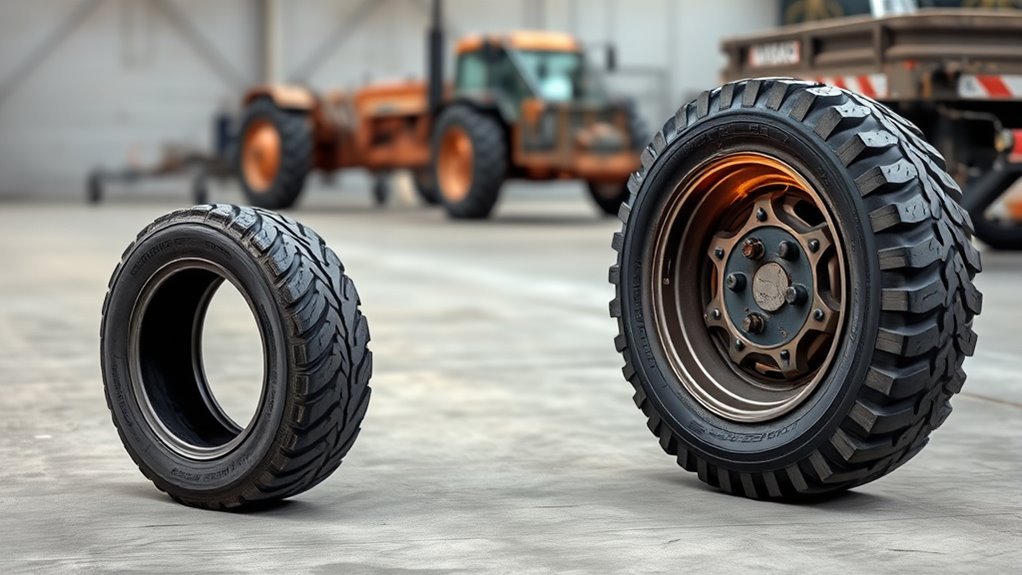
A bias-ply tire is a tire built with body cords that run diagonally from bead to bead, with each layer crossing the next. That crisscross carcass makes the tire tough, stiff, and well suited for trailers, farm equipment, construction machines, vintage vehicles, and some low-speed off-road work. The tradeoff is clear: bias-ply tires usually ride rougher, build more heat, wear faster on pavement, and feel less stable at sustained highway speeds than radial tires.
Quick Answer
A bias-ply tire uses angled fabric plies that overlap in a crisscross pattern, creating a strong, stiff tire carcass. Choose bias-ply tires for rugged, lower-speed work such as farm, trailer, construction, classic-car, and off-road use. Choose radials for daily driving, highway comfort, wet grip, fuel economy, and long tread life.
Key Takeaways
- Bias-ply tires are built for toughness: their diagonal plies and stiff sidewalls help resist cuts, impacts, and sidewall damage.
- They are not ideal for long highway runs: higher rolling resistance and heat buildup can shorten tread life and reduce stability.
- Radial tires are usually better for modern road use: they ride smoother, run cooler, and handle more predictably at speed.
- Use the tire your equipment calls for: always match tire construction, size, load rating, speed rating, and inflation pressure to the vehicle or trailer manufacturer’s specifications.
What Is a Bias-Ply Tire and How It’s Built
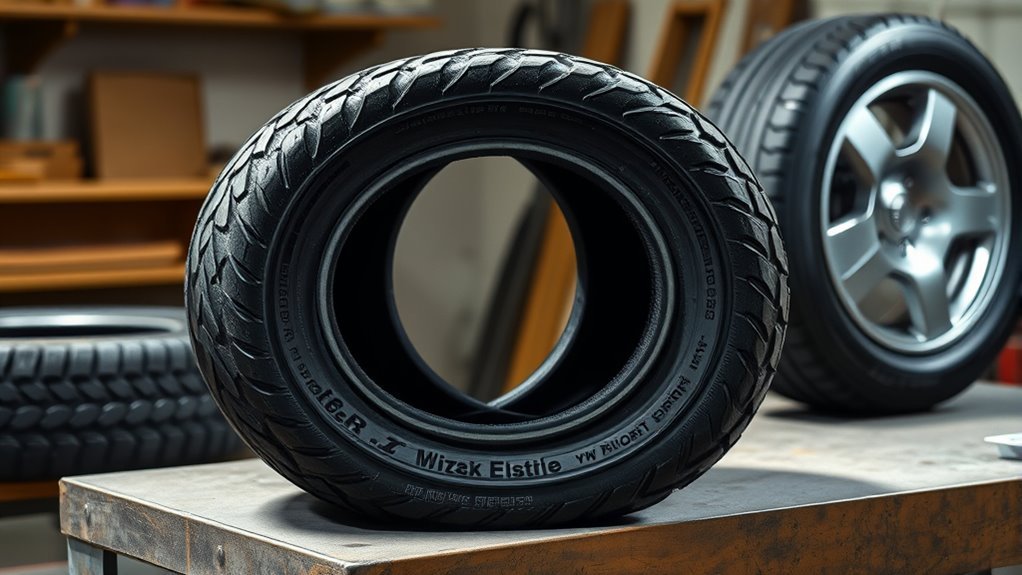
A bias-ply tire, also called a diagonal-ply tire or cross-ply tire, is made with multiple rubber-coated cord layers that run diagonally across the tire from bead to bead. Each ply crosses the next at an opposing angle, forming a strong crisscross structure through the tire body. Michelin describes bias construction as overlapping carcass layers arranged at an angle, creating a stiff and robust tire structure.
In a typical bias-ply design, the tread and sidewall work more like one unified structure. That is different from a radial tire, where the body cords run roughly perpendicular to the direction of travel and the tread area is stabilized by belts. Continental explains that radial tires use casing cords positioned at about 90 degrees to the direction of travel, with belts under the tread to improve stability and speed capability.
The main parts of a bias-ply tire include:
- Carcass plies: rubberized fabric cords laid diagonally in alternating directions.
- Bead cores: strong steel bundles that anchor the tire to the rim.
- Sidewall rubber: the outer side section that protects the plies and helps resist impacts.
- Tread: the rubber contact surface that provides traction and wear life.
- Innerliner or tube: depending on the tire design, the tire may be tubeless or require an inner tube.
Note: Bias-ply construction is not automatically “better” or “worse” than radial construction. It is better for certain jobs and worse for others. The right choice depends on speed, load, terrain, ride expectations, and the vehicle manufacturer’s tire requirements.
How Bias-Ply Construction Changes Performance
The crisscross ply pattern gives a bias-ply tire a stiffer carcass and sidewall. That stiffness is the reason these tires are valued in rough, heavy-duty settings. They can feel stable under heavy loads, resist sidewall cuts, and tolerate harsh surfaces where a softer sidewall may be more exposed to damage.
That same construction also creates compromises. Because the sidewall and tread flex together, a bias-ply tire usually produces more rolling resistance, more road shock, and more heat than a comparable radial used at highway speeds. Bridgestone notes that heat buildup is a major factor in tire damage and casing life, especially when load, speed, inflation, and ambient temperature are not managed properly.
| Performance Area | Bias-Ply Effect | What You’ll Notice |
|---|---|---|
| Ride comfort | Stiffer sidewalls | Firmer, rougher ride on pavement |
| Durability | Strong crisscross carcass | Better resistance to sidewall cuts and impacts |
| Highway performance | More heat and rolling resistance | Shorter tread life and less stable feel at speed |
| Load feel | Rigid sidewall support | Predictable support for trailers, implements, and equipment |
Durability & Load Capacity: Real-World Benefits
Because their plies cross at alternating angles, bias-ply tires create a rugged carcass that resists deformation under load. That is why they still appear on farm implements, small utility trailers, vintage vehicles, off-road equipment, and certain construction applications.
Titan International, a manufacturer of agricultural and off-the-road tires, notes that bias tires can be better suited for short distances and can provide sidewall cut resistance and stability in construction and mining applications. This matches the real-world strength of bias-ply construction: it is often valuable where the tire is moving slowly, carrying weight, and encountering rocks, ruts, debris, stubble, or curbs.
You’ll usually see the biggest benefits in these jobs:
- Agriculture: wagons, implements, tractors, and equipment that operate in fields or on rough farm surfaces.
- Construction: compact equipment, jobsite trailers, and machines exposed to debris and uneven ground.
- Utility trailers: short-distance hauling where sidewall toughness and load support matter more than long highway comfort.
- Classic cars and trucks: restorations that need a period-correct look and original-style road feel.
- Dedicated off-road rigs: low-speed trail vehicles where sidewall toughness is a priority.
Pro Tip: Do not judge load ability by tire construction alone. A radial with the correct load rating may safely carry more than a bias-ply tire with a lower rating. Always check the tire’s load index, ply rating or load range, speed rating, and the vehicle or trailer placard.
Limitations: Heat, Wear, and High-Speed Handling
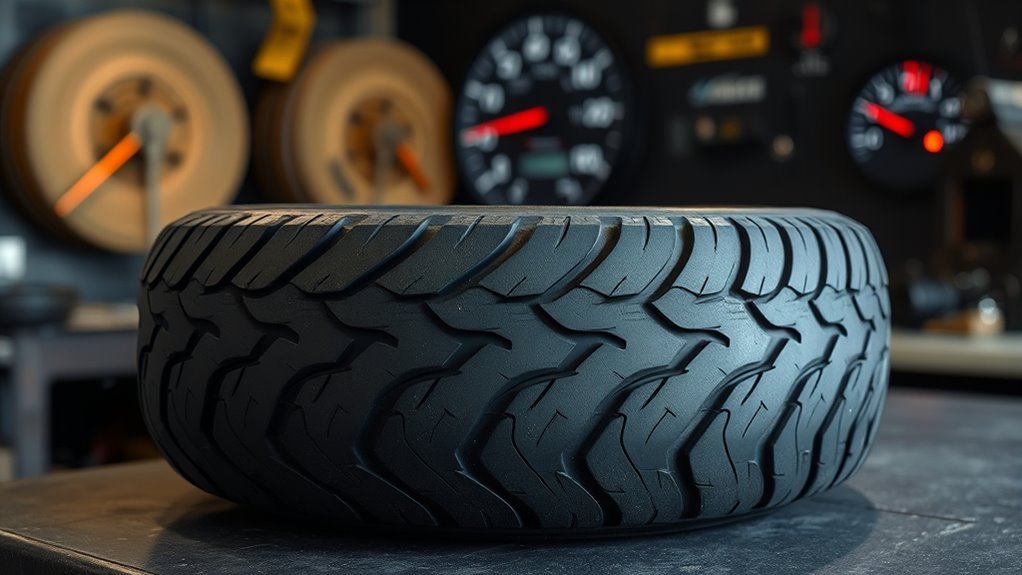
Bias-ply tires can be strong, but they are not the best fit for every road condition. Their biggest weaknesses show up during long, fast, hot, or heavily loaded pavement use. The thicker, stiffer construction can trap more heat and scrub the tread as the tire rolls, especially when inflation pressure or load is wrong.
Heat Buildup Risks
Heat is one of the most important tire safety concerns. NHTSA advises drivers to maintain proper tire pressure, follow load limits, avoid road hazards, and inspect tires for cuts, slashes, and irregularities to help prevent tire failure. Those points matter even more when using bias-ply tires in demanding conditions.
Bias-ply tires are most likely to overheat when they are:
- Run underinflated
- Overloaded
- Driven faster than their speed rating
- Used for long highway trips in hot weather
- Mounted on equipment that really requires radial tires
Warning: Never exceed a tire’s load rating, speed rating, or recommended inflation pressure. A tire that overheats can suffer internal damage before the problem is visible from the outside.
Accelerated Tread Wear
Bias-ply tires often wear faster than radials on paved roads because the tread and sidewall do not work as independently. As the tire rolls, the tread can move and scrub more against the road surface. That extra friction raises temperature and can shorten tread life.
To reduce accelerated wear, keep pressures within specification, rotate tires if the vehicle or trailer manufacturer recommends it, avoid overloading, and replace tires that show cracking, bulges, exposed cords, uneven wear, or repeated pressure loss.
Reduced High-Speed Stability
High-speed driving exposes the limits of bias-ply construction. The stiff sidewalls and diagonal carcass can produce a wandering feel, rough ride, and less precise tracking than a comparable radial. Radial tires usually provide better highway stability because the tread area and sidewall can work more independently, helping the tread stay flatter on the road.
| Characteristic | Bias-Ply at Highway Speed | Practical Impact |
|---|---|---|
| Heat | Builds faster under sustained load and speed | Higher risk of wear and internal damage |
| Sidewall stiffness | Less compliant | Rougher ride and more vibration |
| Rolling resistance | Usually higher than radial | Lower fuel efficiency and more heat |
| Handling | Less precise | More wandering and reduced confidence at speed |
Best Vehicles and Jobs for Bias-Ply Tires
Bias-ply tires are best for jobs where ruggedness, sidewall support, low-speed stability, and cost matter more than long-distance ride comfort or highway handling. They are work tires first, comfort tires second.
Agricultural Equipment
Bias-ply tires are common on tractors, wagons, implements, and older farm equipment because they can handle rough fields, debris, and heavy loads at lower speeds. They are often less expensive than radials, which can make sense for machines that do not spend much time on the road.
Construction and Industrial Equipment
Jobsite tires face sharp debris, ruts, and uneven surfaces. Bias-ply construction can provide sidewall toughness and stability for short-distance work. However, many larger modern machines now use radials because radials can run cooler, last longer, and improve traction in certain applications.
Trailers
Bias-ply trailer tires can work well for short, local hauling, especially on utility trailers exposed to rough ground, curbs, or jobsite damage. For long highway trips, many trailer owners prefer radial trailer tires because they generally run cooler and provide better tread life at sustained speeds.
Classic Cars and Vintage Trucks
Classic car owners may choose bias-ply tires to preserve the original look and driving feel of a restored vehicle. That said, a car originally designed around bias-ply tires will still require cautious driving because braking, steering, and cornering may feel very different from modern radial-equipped vehicles.
Off-Road and Specialty Use
Some off-road drivers use bias-ply tires for slow-speed trail work because the sidewalls can be tough and the carcass can conform to uneven ground. For mixed highway and off-road use, radials are usually more comfortable and stable.
Bias vs Radial: How Construction Changes Ride and Handling
The main difference between bias-ply and radial tires is the direction of the body cords. Bias-ply cords run diagonally and cross each other. Radial cords run more directly from bead to bead across the tire, roughly perpendicular to the direction of travel, with belts under the tread area.
That construction difference changes nearly everything you feel behind the wheel:
| Feature | Bias-Ply Tire | Radial Tire |
|---|---|---|
| Cord direction | Diagonal crisscross plies | Cords run about 90 degrees to travel direction |
| Ride comfort | Firmer and rougher | Smoother and more compliant |
| Highway stability | Less precise at speed | More stable and predictable |
| Heat control | More heat under sustained use | Generally runs cooler |
| Best use | Rough, low-speed, heavy-duty work | Daily driving, highway travel, wet roads |
[Products Worth Considering]

Measure tire tread depth quickly and accurately with this LUMITECO dial gauge that reads in 1/32" increments up to 14/32". The color-coded green/yellow/red zones make it easy to judge tire wear and know when replacement is needed. A rugged, compact design with a protective pouch helps keep the gauge ready for use on cars, trucks, motorcycles, and more.

TP-M13W combination repair unit kit includes wrapped stems with matching patches for fast, reliable tire repairs. It’s suitable for both radial and bias ply tires and is designed for chemical or heat vulcanization. Gray vulcanizing gum with blue backing helps create a strong bond, with the stem portion wrapped for added effectiveness.

Keep your tires properly inflated with this analog VONDIOR tire pressure gauge, designed for fast, easy readings without batteries. The swiveling, two-axis hose and large glow dial help you measure at any tire angle with instant visibility. Built with a protective rubber shield, it supports durable, low-maintenance use for cars and trucks.
Ride Comfort Differences
Bias-ply tires transmit more bumps and vibration into the vehicle because the sidewall is stiff and the tread does not act as independently from the sidewall. This can make the ride feel harsh on modern paved roads.
Radial tires usually feel smoother because the sidewall can flex while the tread remains more stable. That is why most modern passenger cars, trucks, SUVs, and highway trailers use radial tires.
Handling and Traction
Bias-ply tires can feel steady under heavy vertical load, but they are less precise for high-speed steering, braking, and cornering. Radials generally provide a larger, more stable contact patch on pavement, especially in wet conditions.
For a modern street vehicle, radial tires are almost always the better choice unless the vehicle maker, restoration goals, or specialty use clearly calls for bias-ply construction.
Winter Bias-Ply Tires: Performance and When to Use Them
Winter tire performance depends more on rubber compound, tread design, siping, tire condition, and correct sizing than on bias-ply construction alone. A winter bias-ply tire may perform better than a standard bias-ply tire in cold weather if it uses a cold-weather compound and a tread pattern designed for snow or ice.
However, most modern winter tires for passenger vehicles are radial tires. They are designed to combine cold-weather grip with better highway stability, braking, and comfort. A winter bias-ply tire is most likely to make sense for specialty equipment, vintage vehicles, or low-speed applications where a radial winter tire is not available or not appropriate.
| Attribute | Why It Matters |
|---|---|
| Compound | Cold-weather rubber stays more flexible in low temperatures |
| Tread pattern | Open grooves and biting edges help move snow and slush |
| Siping | Small cuts in tread blocks can improve grip on slick surfaces |
| Use case | Best suited for specialty or low-speed winter applications |
[Products Worth Considering]

Milton S-921 pencil tire pressure gauge helps you maintain optimal tire pressure for passenger cars with accurate readings in PSI and kPa. It features a built-in deflator valve for convenient pressure adjustments, plus a single chuck head and nylon indicator bar for easy use on the go. Built from durable plated brass and designed for reliable performance, it’s a practical road trip and cold-weather maintenance tool.
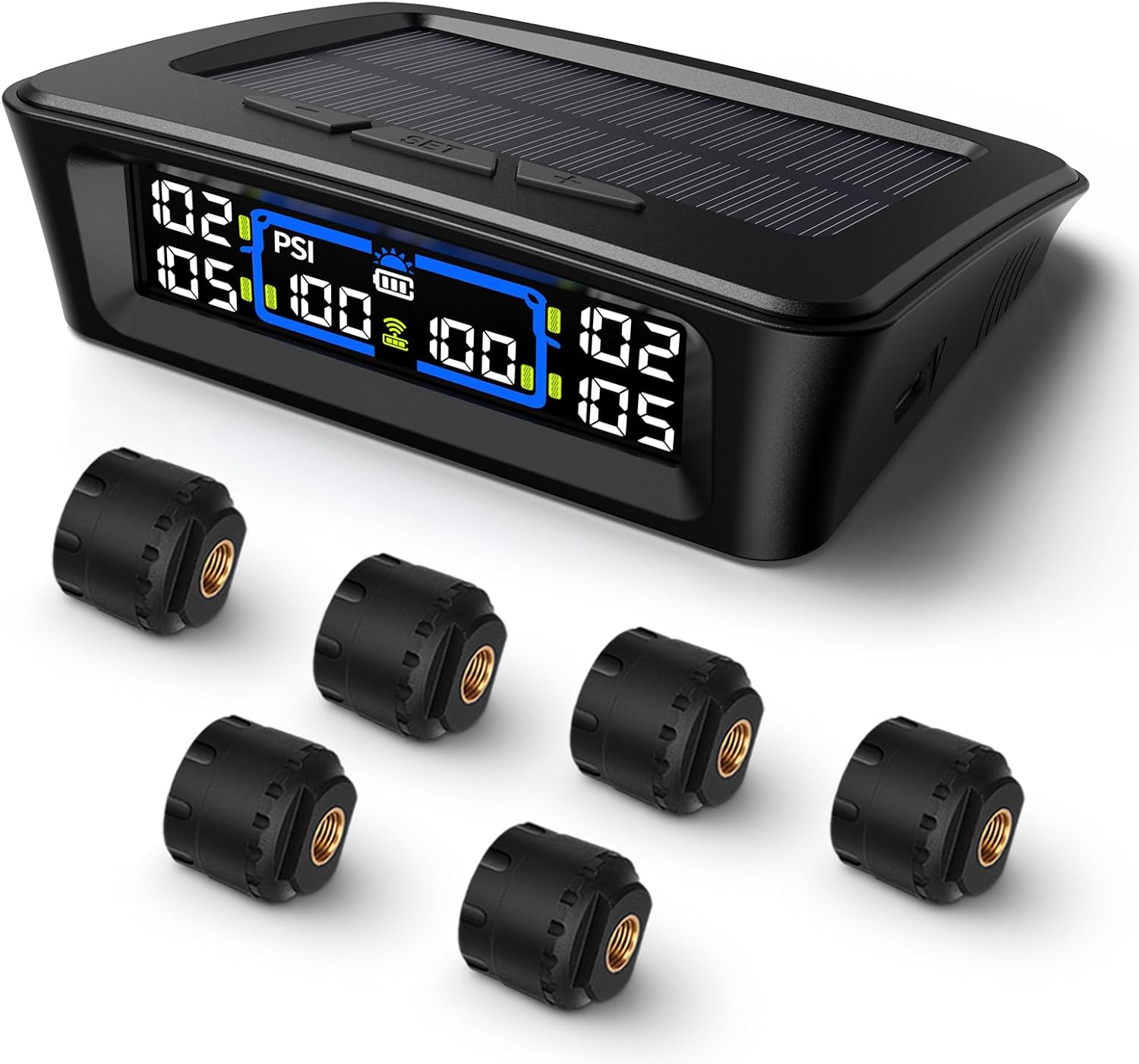
The Tymate TM12 RV TPMS delivers real-time tire pressure and temperature monitoring with a stable 433Hz display for safer long-distance driving. It supports simultaneous monitoring across vehicle and trailer zones, includes six alarm modes for pressure, temperature, leakage, battery, and signal loss, and features easy DIY installation with auto calibration. Power is supplied via USB-C charging or solar recharging, with a wide 0–144 PSI range and up to 50 ft signal coverage for RVs and towable trailers.

The Continental Grand Prix 5000 is an allround road bike tire engineered for faster rolling, improved ride comfort, and enhanced puncture protection. It features a Vectran Breaker cut-protection layer, Lazer Grip micro-profile tread for confident cornering control, and Active Comfort Technology to damp vibration for smoother rides. BlackChili compound optimizes grip and speed for everyday performance and long-lasting confidence.
Trailers and Heavy-Haul: Practical Considerations
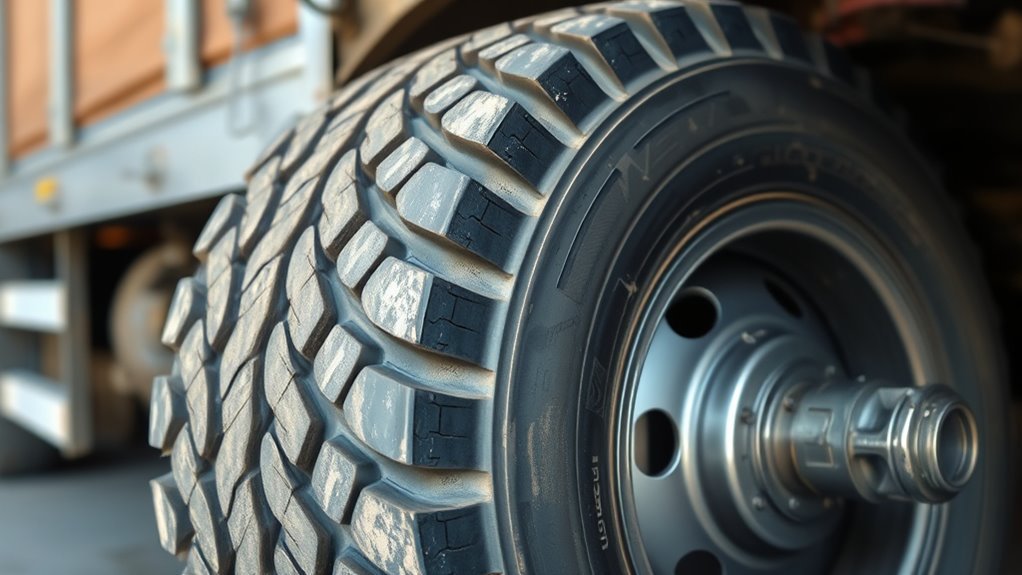
Bias-ply tires are still used on many trailers because they can provide stiff sidewall support, good load stability, and resistance to impact damage. They can be practical for farm trailers, utility trailers, equipment trailers, and short local hauls over rough surfaces.
For long highway hauls, a radial trailer tire is often the better choice. Radials typically run cooler, track better, and wear more evenly over distance. The safest choice is the tire construction specified by the trailer manufacturer, combined with the correct load range, speed rating, and inflation pressure.
Trailer Tire Checklist
- Use tires marked for trailer service when required by the trailer manufacturer.
- Match tire size, load range, and speed rating to the trailer placard or manual.
- Check cold inflation pressure before every trip.
- Do not overload the trailer or exceed the tire’s load rating.
- Inspect sidewalls and tread for cuts, cracking, bulges, exposed cords, or uneven wear.
- Replace tires that are aged, damaged, or repeatedly losing pressure, even if tread depth looks acceptable.
For trailer safety, tire construction is only one part of the decision. Load rating, inflation pressure, speed rating, tire age, and maintenance matter just as much.
How to Identify a Bias-Ply Tire
You can often identify tire construction by reading the sidewall size code. Tire Review notes that the letter R in a tire size identifies radial construction, while D can identify bias-ply construction. Some older or specialty bias-ply tires may use a dash in the size instead of the letter R.
Examples:
- P215/60R16: the “R” means radial construction.
- ST205/75D15: the “D” means diagonal or bias-ply construction.
- 6.00-16: the dash often appears on older bias-style numeric sizing, but you should verify construction from the tire maker’s specifications.
When in doubt, check the manufacturer’s product page or ask a qualified tire professional. Do not assume a tire is bias-ply based only on its vintage look; some modern tires are built as radials but styled to resemble older bias-ply tires.
Can You Mix Bias-Ply and Radial Tires?
Mixing tire constructions can change handling in unsafe ways. Goodyear advises that radial and bias-ply tires should not be mixed on the same axle. If radial tires are used with bias or bias-belted tires on the same vehicle, Goodyear says the radials should be placed on the rear axle.
For the safest and most predictable handling, use the same construction, size, load rating, and speed rating on all positions unless the vehicle manufacturer specifically allows a different setup.
Warning: Do not mix radial and bias-ply tires on the same axle. If you are replacing only part of a set, follow the vehicle manufacturer’s guidance or consult a qualified tire professional.
Choosing Bias or Radial: Quick Criteria and Recommendation
When you need tires for a specific use, match the construction to the job. Choose bias-ply for rugged, lower-speed work where sidewall toughness, load support, and cost matter most. Choose radials for highway miles, wet traction, ride comfort, tread life, and modern handling.
| Choose Bias-Ply If… | Choose Radial If… |
|---|---|
| You use the tire mainly off-road, on farms, or around jobsites | You drive long distances on pavement or highways |
| Sidewall cut resistance is a top priority | Ride comfort and steering precision matter |
| You need a period-correct look for a vintage vehicle | You want better wet-road grip and cooler highway operation |
| Your equipment manual allows or recommends bias-ply tires | Your vehicle was designed for modern radial tires |
As a simple rule: heavy loads and rough, lower-speed work can favor bias-ply tires; long, fast road miles usually favor radials.
[Products Worth Considering]

Protect tire valves from water, dust, and sand to help prevent leaks and support safe driving. These universal stem caps install quickly by hand and feature durable aluminum alloy construction with an inner sealing ring for better air retention. Compatible with cars, SUVs, trucks, motorcycles, and bicycles for everyday convenience.
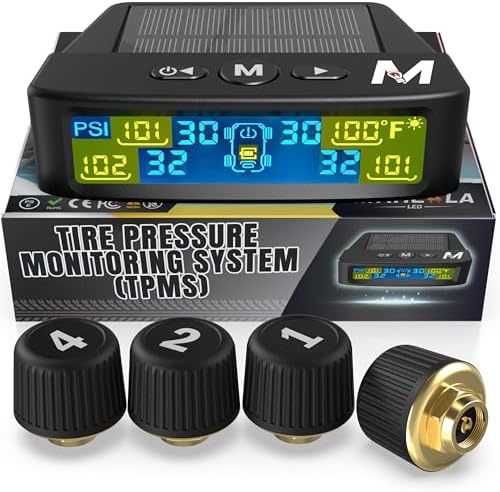
Marcala’s TPMS set of four sensors helps you monitor tire pressure and temperature in real time while driving, with updates every second. The bright color LCD uses auto-dimming for easy viewing, powered by dual solar and USB charging, and offers six alarm modes. Built for trailers, RVs, campers, trucks, and towing setups, the sensors support monitoring 1-4 wheels up to 98 PSI with IP67 waterproof protection.

Secure a full-size spare on your trailer with this powder-coated steel spare tire mount bracket. It fits most 4-, 5-, and 6-lug wheel bolt patterns and mounts to trailer tongues up to 4 in wide and 5 in tall. Built for reliable carry with a max 150 lb load rating and includes zinc-plated hardware for straightforward installation.
Maintenance Tips for Bias-Ply Tires
Bias-ply tires need the same basic care as any other tire, but heat, load, and pressure deserve extra attention. Good maintenance helps reduce failure risk and protects the tire carcass from early damage.
- Check pressure cold: measure inflation before driving, using the pressure recommended by the vehicle, trailer, or equipment maker.
- Respect load limits: never exceed the tire’s rated capacity or the vehicle’s gross weight ratings.
- Watch speed ratings: many bias-ply tires are built for lower-speed service, especially farm, trailer, and off-road designs.
- Inspect sidewalls: look for cuts, bulges, cracks, exposed cords, or embedded objects.
- Monitor tread wear: uneven wear can point to misalignment, overload, underinflation, or suspension problems.
- Store properly: keep unused tires away from sunlight, ozone sources, petroleum products, and standing water.
- Replace when needed: damage, age cracking, or internal separation signs are reasons to stop using the tire.
Frequently Asked Questions
What are bias-ply tires used for?
Bias-ply tires are used for farm equipment, construction equipment, utility trailers, vintage cars, classic trucks, some off-road vehicles, and other jobs where rugged sidewalls, load support, and lower-speed durability matter more than highway comfort.
What are the disadvantages of bias-ply tires?
The main disadvantages are rougher ride quality, more heat buildup at sustained speeds, higher rolling resistance, faster tread wear on pavement, reduced fuel efficiency, and less precise high-speed handling compared with radial tires.
Are bias-ply tires safe on the highway?
They can be safe only when they are approved for the vehicle, properly inflated, correctly loaded, in good condition, and used within their speed rating. For regular long-distance highway driving, radial tires are usually the safer and more comfortable choice.
How can I tell if a tire is bias-ply or radial?
Look at the tire size on the sidewall. An “R” usually means radial construction, while a “D” usually means diagonal or bias-ply construction. Older numeric sizes with a dash may also indicate bias-ply construction, but it is best to confirm with the tire maker’s specifications.
Can I mix bias-ply and radial tires?
You should not mix bias-ply and radial tires on the same axle. For predictable handling, it is best to use matching construction on all tire positions unless the vehicle or tire manufacturer gives specific instructions for a mixed setup.
Do bias-ply tires need tubes?
Some bias-ply tires are tube-type and require an inner tube, while others are tubeless. Check the sidewall markings and the manufacturer’s specifications before mounting. Using the wrong tube or rim setup can create safety problems.
Conclusion
A bias-ply tire is a tough, diagonal-ply tire built for specific jobs. Its crisscross carcass gives it strong sidewall support, impact resistance, and predictable low-speed load handling, which is why it remains useful on trailers, farm equipment, construction machines, vintage vehicles, and some off-road rigs.
For modern daily driving and long highway trips, however, radial tires are usually the better option. They ride smoother, run cooler, handle more precisely, and generally offer better wet-road performance and tread life. The best tire is the one that matches your vehicle, load, speed, terrain, and manufacturer requirements.
Sources
- Michelin: Radial or Bias Tires — explains bias-ply and radial tire construction differences.
- Continental: Tyre Construction — supports radial casing angle, belt construction, heat, and high-speed stability details.
- NHTSA TireWise — supports tire safety, maintenance, pressure, loading, labeling, and tire aging guidance.
- Bridgestone: Managing Tire Heat Buildup — supports the role of heat, load, inflation, and speed in tire durability.
- Goodyear: Tire Questions and Answers — supports guidance on not mixing radial and bias-ply tires on the same axle.
- Titan International: Construction Tires — supports practical bias-vs-radial use cases in construction and heavy-duty applications.

