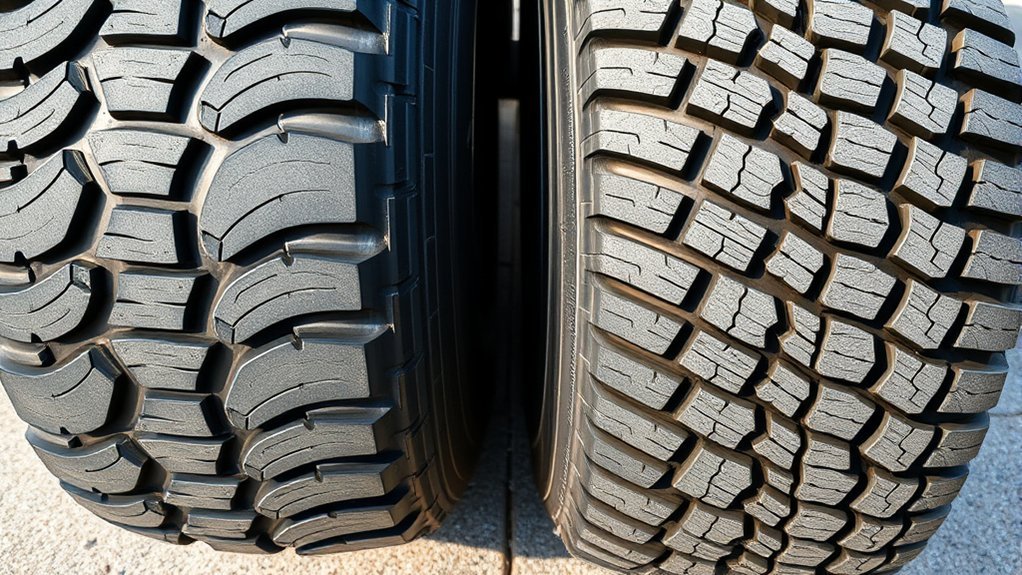
Radial and bias-ply tires are built differently, so they respond differently to speed, heat, impacts, steering, and heavy loads. Radial tires are usually the better choice for highway and mixed-road trucks, while bias-ply tires can still make sense for selected low-speed, severe-impact, agricultural, industrial, or off-road applications.
Quick Answer
Radial truck tires usually provide a smoother ride, lower heat buildup, more even tread wear, and better road efficiency. Bias-ply tires have a stiffer, unified casing that may tolerate impacts well in certain low-speed work. Choose by vehicle approval, load, speed, axle position, terrain, and tire model, not construction alone.
Key Takeaways
- Radial tires normally suit highway, regional, and mixed-road driving because they manage heat well and allow the tread and sidewall to perform more independently.
- Bias-ply tires can remain useful in selected low-speed applications where casing stiffness, sidewall support, or impact tolerance matters more than highway comfort.
- A radial tire is not automatically fuel-efficient, long-lasting, or puncture-proof. Tread compound, inflation, load, alignment, route, and maintenance also control performance.
- Avoid mixing radial and bias-ply construction unless the vehicle or tire manufacturer specifically approves the arrangement.
- Always match the tire’s size, load capacity, speed capability, rim requirements, and axle application to the vehicle and its actual work.
Understanding Radial and Bias-Ply Tire Construction
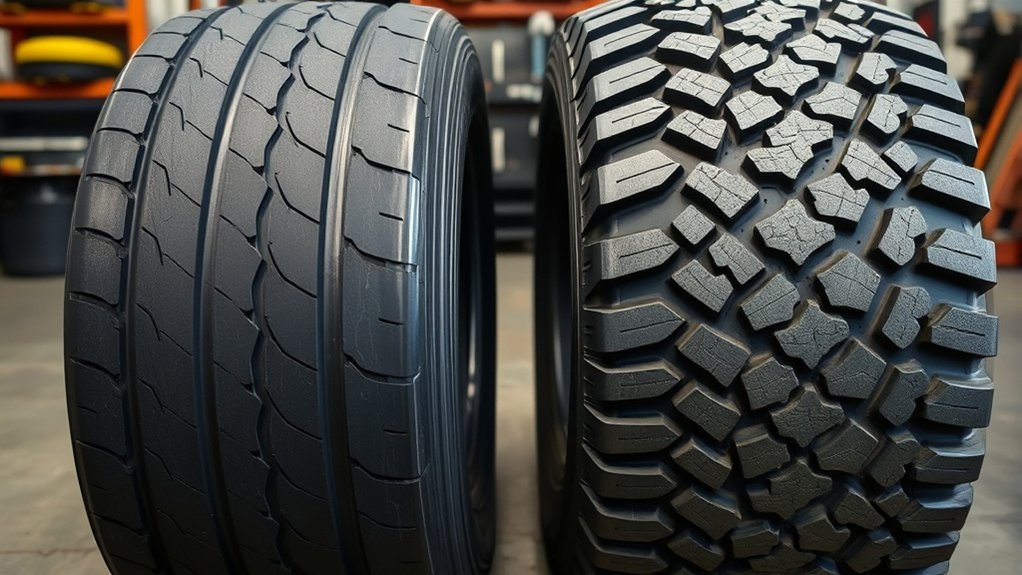
A radial tire uses body cords that run approximately perpendicular to the direction of travel. Reinforcing belts sit beneath the tread, allowing the crown and sidewall to perform somewhat independently. This design gives the sidewall room to flex while the tread remains supported.
A bias-ply tire uses multiple cord layers running diagonally in opposing directions. The crisscrossed layers connect the crown and sidewalls more closely, creating a firmer and more unified casing.
Michelin’s tire-construction guidance explains that radial construction separates sidewall flexibility from tread rigidity. That difference influences ride comfort, heat generation, steering response, and tread wear.
| Factor | Radial Tire | Bias-Ply Tire |
|---|---|---|
| Cord arrangement | Runs approximately 90 degrees to the tread centerline | Runs diagonally in opposing, crisscrossed layers |
| Sidewall behavior | More flexible and relatively independent from the tread | Stiffer and more closely connected to the crown |
| Sustained road speed | Usually better at controlling heat and maintaining tread contact | Can generate more internal flexing and heat at sustained speed |
| Ride | Normally smoother over road irregularities | Normally firmer |
| Typical strengths | Highway efficiency, comfort, tread stability, heat control, and even wear | Casing stiffness and suitability for selected low-speed, severe-impact work |
| Common applications | Pickup trucks, highway trucks, regional fleets, buses, trailers, and many mixed-service vehicles | Selected agricultural, industrial, construction, trailer, and specialty off-road equipment |
Note: Construction is only one part of tire performance. Two radial tires can behave very differently because of their tread pattern, rubber compound, casing strength, tread depth, load rating, and intended axle position.
Traction, Handling, and Ride in Different Conditions
Highway and Regional Driving
Radial tires normally provide the most balanced performance for trucks that spend substantial time on paved roads. Their flexible sidewalls help absorb small bumps, while the supported tread area can maintain a more stable contact patch during steering and braking.
Radials also tend to generate less internal heat during sustained operation. Heat control matters because excessive flexing, overloading, underinflation, and high speed can damage the casing and shorten tire life.
Mixed-Road and Work-Truck Use
A mixed-service truck may travel on pavement, gravel, construction entrances, mud, and broken surfaces during the same shift. Radial mixed-service tires are widely available for this work and often combine reinforced casings with cut-resistant tread compounds.
Do not assume that choosing a bias tire automatically gives you better off-road traction. Traction depends heavily on tread pattern, tread depth, compound, inflation, ground pressure, vehicle weight, and whether the surface is rock, loose soil, sand, mud, or packed gravel.
Low-Speed and Severe-Impact Applications
Bias-ply construction may remain useful when a machine operates slowly and repeatedly encounters impacts, debris, ruts, or sidewall contact. Its layered, unified casing can provide firm sidewall support in specific agricultural, industrial, and construction applications.
However, that advantage does not make every bias tire tougher than every radial tire. Modern radial off-road tires can use steel belts, reinforced sidewalls, specialized compounds, and deep tread packages designed for severe work.
Fuel Efficiency and Rolling Resistance
Rolling resistance is the energy a tire loses as it deforms and returns to shape while moving. Radial construction often helps reduce deformation and heat, but the word “radial” alone does not prove that a tire has low rolling resistance.
Tread compound, tread depth, casing design, inflation pressure, axle position, wheel alignment, load, speed, and road surface all affect energy use. A deep, aggressive radial off-road tire may have more rolling resistance than a highway tire designed specifically for efficiency.
NHTSA estimates that reducing tire rolling resistance by 10% can improve vehicle fuel economy by approximately 1% to 2%. That is different from claiming that every radial tire saves a fixed percentage of fuel.
The EPA SmartWay program reports fuel savings of 3% or more for qualifying long-haul tractor-trailer configurations using verified low-rolling-resistance tires in the required positions and maintaining correct inflation. Those results apply to verified systems and operating conditions, not radial construction by itself.
How Inflation Affects Efficiency
An underinflated tire flexes more, builds additional heat, and increases rolling resistance. An overinflated tire can reduce the contact patch, worsen ride quality, and contribute to irregular wear or impact damage.
Set cold pressure according to the vehicle or tire manufacturer’s load-and-inflation guidance. The maximum pressure molded on the tire sidewall is not automatically the correct everyday pressure for your truck.
Durability, Heat, and Tread Life
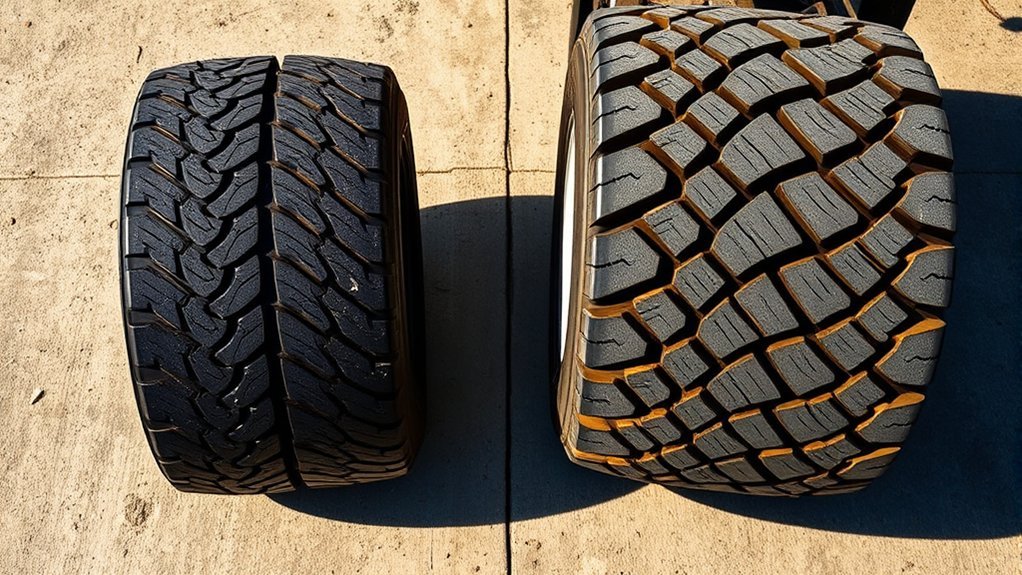
Radial tires often deliver longer and more even tread wear in highway service because the tread remains relatively stable while the sidewall flexes. They also tend to dissipate operating heat more effectively during sustained travel.
That does not support one universal lifespan multiplier. A poorly selected or poorly maintained radial can wear faster than a correctly applied bias tire. Actual service life depends on:
- Application: Highway, regional, urban, mixed-service, construction, or off-road work
- Axle position: Steer, drive, trailer, or approved multi-position use
- Load: Actual weight at each wheel position and axle
- Inflation: Cold pressure appropriate for the carried load
- Alignment: Toe, camber, axle tracking, and suspension condition
- Driving: Speed, braking, cornering, curb contact, and wheelspin
- Maintenance: Inspections, rotation where approved, balancing, and timely repair
- Tire design: Compound, casing, tread pattern, tread depth, and retreadability
Pro Tip: Track cost per mile instead of judging a tire by purchase price or construction label. Record installation mileage, removal mileage, remaining tread, repair history, fuel performance, casing condition, and retread value.
Puncture, Cut, and Impact Resistance
It is misleading to describe one construction as universally “puncture-proof” or a fixed percentage more resistant. Tire damage can occur in several different ways:
- Crown penetration: A nail, screw, sharp rock, or metal object passes through the tread area.
- Sidewall cut: Debris, rock, curb contact, or equipment slices or tears the sidewall.
- Impact break: A pothole, rock, or obstacle damages cords inside the tire without always leaving an obvious external hole.
- Heat damage: Underinflation, overloading, excessive speed, or casing flex weakens internal components.
- Separation: Tread, belt, or sidewall components begin separating because of damage, heat, fatigue, or manufacturing problems.
Steel belts beneath a radial tire’s tread can help protect the crown area, while a thick bias casing may tolerate certain sidewall impacts well. The better choice depends on where damage normally occurs in your operation and which tire model is engineered for that hazard.
Warning: Remove a tire from service if it has exposed ply or belt material, a tread or sidewall separation, an audible leak, a bulge, or a cut deep enough to expose reinforcement. Internal impact damage may require demounting and professional inspection.
Ride Comfort and Tire Maintenance
Radial sidewalls usually absorb road irregularities better, which can improve driver comfort and reduce vibration transmitted through the vehicle. Bias-ply tires normally feel firmer because their crossed layers tie the sidewall and tread together.
Construction cannot compensate for poor maintenance. Use these practices to protect either tire type:
- Check cold inflation pressure. Measure pressure before the tire has built significant heat from driving.
- Use the correct pressure for the load. Follow the vehicle placard, owner’s manual, fleet specification, and applicable tire load-and-inflation table.
- Inspect before operation. Look for cuts, cracks, penetrations, bulges, exposed reinforcement, irregular wear, damaged valves, and objects trapped between dual tires.
- Confirm tread depth. Measure in the major tread grooves and follow applicable vehicle and jurisdiction requirements.
- Watch wear patterns. One-sided wear may point to alignment problems, while cupping can indicate balance, suspension, or shock-absorber issues.
- Match dual assemblies. Use compatible tires with closely matched diameter, inflation, load capacity, and wear to prevent one tire from carrying excess load.
- Respect speed ratings. A tire’s maximum approved speed may be lower than the posted road limit, particularly in specialty applications.
- Use trained technicians. Commercial and multi-piece tire assemblies can store dangerous energy and require correct equipment and procedures.
Bridgestone’s commercial tire-care guidance recommends selecting tires by size, load capacity, route, and service type, then maintaining correct cold inflation and inspecting for damage before operation.
Short-Term Price and Life-Cycle Cost
Bias-ply tires may have a lower initial price in some sizes and applications. That does not automatically make them cheaper to operate. Radials may return value through fuel performance, tread life, ride quality, casing life, or retread potential, but those benefits must be measured in your operation.
A useful life-cycle calculation includes:
- Original purchase and mounting cost
- Expected service mileage or operating hours
- Fuel use or energy consumption
- Repairs and roadside-service costs
- Downtime and lost productivity
- Rotation, balancing, and alignment costs
- Removal condition and remaining casing value
- Retread cost and additional service life, where applicable
Calculate basic tire cost per mile by subtracting any casing credit from the total tire-related cost, then dividing by the miles delivered. For off-road equipment, cost per operating hour or cost per ton moved may provide a more useful comparison.
[Products Worth Considering]

Measure tire tread depth quickly and accurately with this LUMITECO dial gauge that reads in 1/32" increments up to 14/32". The color-coded green/yellow/red zones make it easy to judge tire wear and know when replacement is needed. A rugged, compact design with a protective pouch helps keep the gauge ready for use on cars, trucks, motorcycles, and more.

TP-M13W combination repair unit kit includes wrapped stems with matching patches for fast, reliable tire repairs. It’s suitable for both radial and bias ply tires and is designed for chemical or heat vulcanization. Gray vulcanizing gum with blue backing helps create a strong bond, with the stem portion wrapped for added effectiveness.

Vigorder rubber cement glue delivers superior adhesion and cures quickly within about 30 seconds for seamless rubber bonding. Once cured, it helps provide a strong, durable, waterproof seal that holds up to vehicle weight, pressure, and heat. Suitable for cars, motorcycles, trucks, bicycles, and off-road tires, it’s designed for emergency patch and maintenance repairs.
How to Choose the Right Tire for Your Truck
[Products Worth Considering]

Accurately measure tire tread depth with a calibrated gauge marked from 0 to 1 inch in 1/32 inch increments. The color-coded bar helps you quickly identify tread condition ranges, supporting safe driving for trucks, motorcycles, automobiles, and passenger vehicles.

The SAFELIFE dial tire tread depth gauge measures tread depth in 1/32 inch increments with clear, easy-to-read 2-inch dial face. Color zones using a traffic light system help you quickly judge whether tread is low, marginal, or ample for safer driving. Built with a durable zinc cast body and a metal detect probe for precise, comfortable use across cars, motorcycles, trucks, and buses.
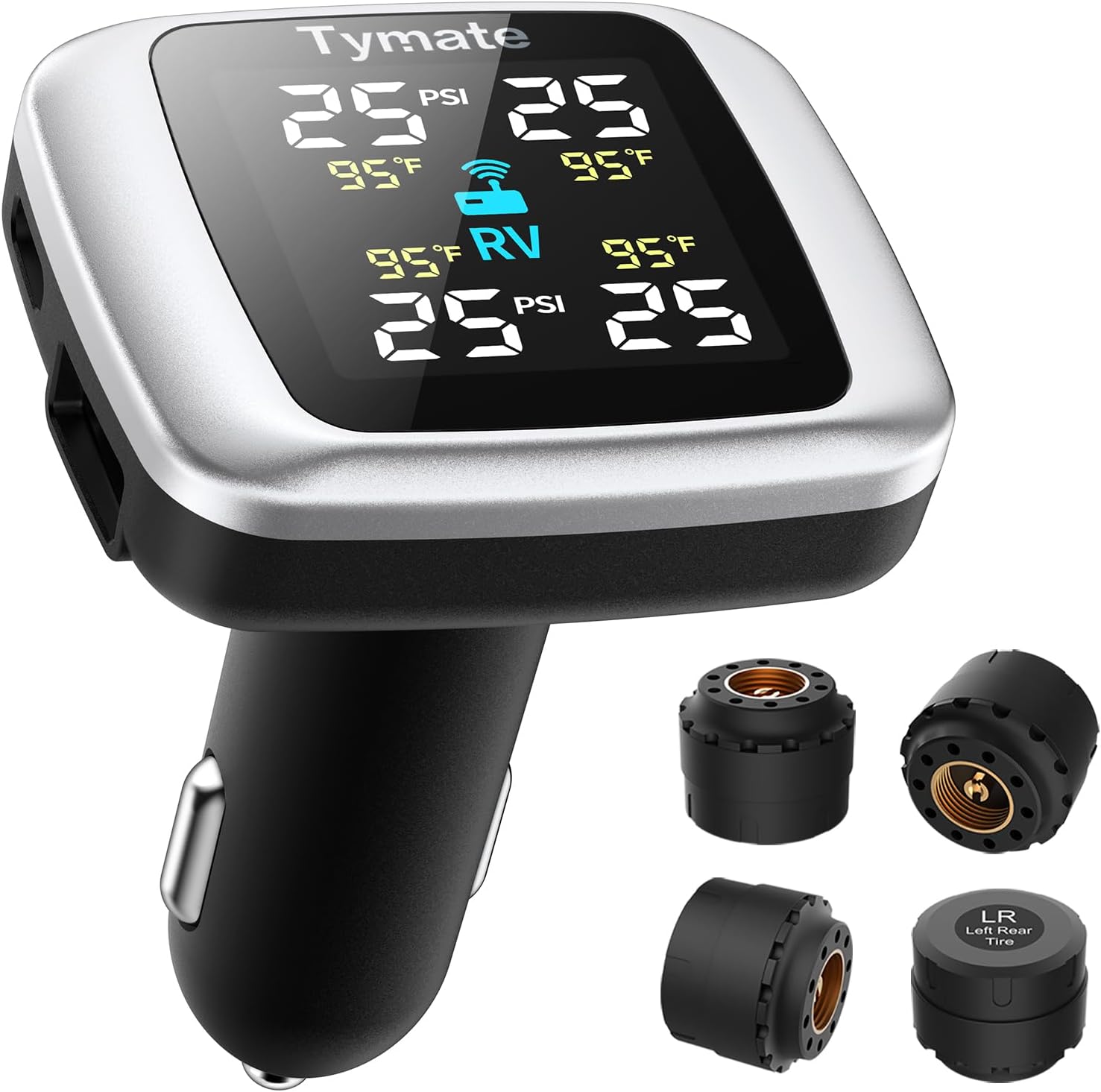
Tymate TM7 is a wireless tire pressure monitoring system that delivers real-time pressure and temperature readings for safer driving. It includes four external sensors, a bright color LCD display with adjustable backlight, and six alarm modes for high/low pressure, fast leakage, high temperature, and sensor signal or battery issues. The system covers a wide 0–144 PSI range and plugs into your vehicle’s cigarette lighter socket for quick DIY setup.
1. Start With Vehicle Approval
Check the tire-information placard, owner’s manual, body-builder guidance, and fleet specification. Use an approved tire size and construction that meets or exceeds the required load and speed capability.
Changing from bias to radial construction on an older vehicle or specialty machine may affect steering, suspension behavior, wheel requirements, clearance, and handling. Consult the vehicle and tire manufacturers when the original design did not use radials.
2. Confirm Load, Speed, and Rim Requirements
Verify the load index or load range, single or dual capacity, approved rim width, inflation range, and speed symbol. A tire that physically fits the wheel may still have insufficient load capacity or the wrong service designation.
For commercial vehicles, weigh the loaded vehicle by axle and, when possible, by wheel position. Set inflation using approved load-and-inflation data rather than guessing from appearance.
3. Match the Tire to the Route
- Mostly highway: A radial highway or regional tire is normally the preferred starting point.
- Paved and gravel routes: Consider a radial mixed-service tire with suitable chip, cut, and scrub resistance.
- Construction and severe service: Compare radial and bias options engineered for the exact machine, speed, load, and debris conditions.
- Low-speed agricultural or industrial work: A bias tire may remain practical when casing stiffness or impact tolerance is a priority.
- Trailer use: Use a tire approved for the trailer’s load, speed, rim, and operating environment. Do not choose solely by price.
4. Select the Correct Axle Application
Steer, drive, and trailer tires perform different jobs. Steer tires prioritize directional control and even wear. Drive tires need traction and torque resistance. Trailer tires must manage free-rolling loads, lateral scrub, and heat.
A multi-position label does not mean a tire is ideal for every axle or duty cycle. Follow the manufacturer’s application chart.
5. Compare Real Service Data
Compare tire models using your route, load, weather, driver behavior, and maintenance program. Manufacturer literature and fleet trials are more useful than broad claims about all radial or all bias tires.
Can You Mix Radial and Bias-Ply Tires?
Using the same tire construction, size, load capability, and similar tread design at all wheel positions normally gives the most predictable handling. Mixing radial and bias-ply tires can change steering response, cornering balance, braking behavior, heat buildup, and wear.
Michelin advises against mixing radial and bias-ply tires. Its general guidance says that when mixing is unavoidable and approved, radial tires should be placed on the rear axle and non-radials on the front. Four-wheel-drive and all-wheel-drive vehicles may have stricter matching requirements, so the owner’s manual takes priority.
Do not describe this as a universal “CDL regulation.” A CDL applies to the driver. Current federal commercial-vehicle tire rules focus on tire condition, tread depth, loading, speed limits, and inflation.
Under 49 CFR 393.75, a commercial motor vehicle cannot operate on a flat or audibly leaking tire, a tire with exposed reinforcement or separation, or a tire carrying more than its approved load. The rule also requires sufficient tread depth and cold inflation pressure for the load being carried.
Note: Manufacturer, fleet, state, provincial, workplace, and specialty-equipment rules may be stricter than the general federal requirements. Obtain written approval before mixing constructions on a commercial, four-wheel-drive, or specialty vehicle.
Current Tire Technology and Maintenance Practices
Modern tire development focuses on more than radial versus bias construction. Manufacturers adjust compounds, casing materials, belt packages, tread geometry, and manufacturing methods to balance rolling resistance, traction, wear, heat, and damage resistance.
[Products Worth Considering]

Check tire pressure with the Milton S-925 pencil gauge built for trucks, RVs, and bicycles. It features a single-head chuck with a built-in deflator valve, and it displays readings in both PSI and kPa for convenient use. The gauge is designed for accurate, repeatable pressure checks within its working range.

Monitor tire tread wear with a smart, color-coded depth gauge that shows clear condition ranges at a glance. The bar is range marked for fast, easy readings, helping you maintain safer traction and performance. Each gauge is portable with a pocket clip, and the set includes 20 units for daily use and sharing.
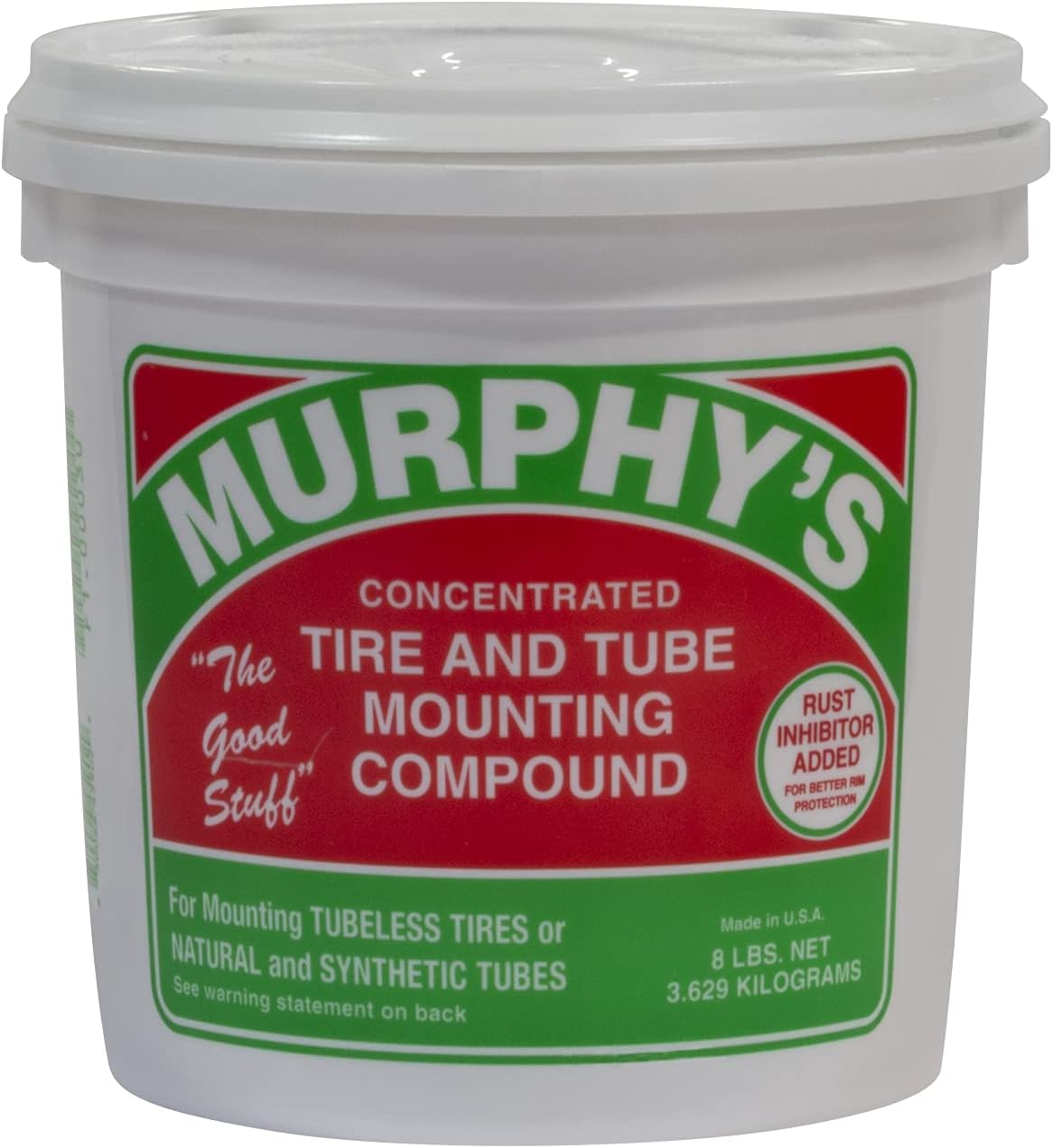
A concentrated tire and tube mounting compound designed to help simplify mounting rubber tires and tubes on passenger, semi truck, construction, and OTR applications. Its ultra-thick formula packs beads effectively and includes rust inhibitors to help protect against corrosion during use.
Low-Rolling-Resistance Tires
Verified low-rolling-resistance tires and retreads can reduce energy loss in suitable long-haul applications. Look for measured or verified performance rather than assuming that every radial tire qualifies.
Retreadable Casings
A durable commercial radial casing may deliver more than one tread life when it passes professional inspection and is approved for retreading. Casing value can significantly affect total cost per mile.
Retread suitability depends on the casing’s age, condition, repair history, application, manufacturer limits, and inspection results. A tire with severe impact, heat, separation, or structural damage may not be suitable.
Pressure and Temperature Monitoring
TPMS, automatic tire-inflation systems, and connected fleet-monitoring platforms can identify pressure loss or abnormal temperature before it causes downtime. These systems support inspections but do not replace them.
Application-Specific Design
Current radial and bias products are increasingly specialized by axle and duty cycle. A fair comparison must therefore examine two actual tire models approved for the same vehicle and service, not two construction labels in isolation.
Sources
- Michelin: How Tires Are Made — radial construction, belts, carcass, tread, and sidewall functions
- Michelin: Choosing and Mixing Tires — size selection, construction mixing, handling, and axle-placement guidance
- NHTSA TireWise — tire design, rolling resistance, fuel efficiency, labeling, and tire safety
- EPA SmartWay Low-Rolling-Resistance Tire Technologies — verified commercial-truck tire and retread efficiency guidance
- 49 CFR 393.75 — federal commercial-motor-vehicle tire condition, tread, loading, speed, and inflation requirements
- Bridgestone Commercial Tire Care Guidance — application selection, cold inflation, inspections, and speed limits
Frequently Asked Questions
Are radial tires better than bias-ply tires for trucks?
Radial tires are usually better for trucks that spend substantial time on paved roads because they commonly provide better heat control, ride comfort, steering stability, and tread wear. Bias-ply tires can remain appropriate for selected low-speed, severe-impact, agricultural, industrial, or specialty applications.
Do bias-ply tires last longer than radial tires?
Not as a general rule. Radial tires often provide more even tread wear and lower heat buildup in highway service. A bias tire may perform well in an application designed around its casing stiffness, but actual life depends on the tire model, route, speed, load, inflation, alignment, maintenance, and damage exposure.
Can radial and bias-ply tires be mixed on a commercial truck?
You should avoid mixing them unless the vehicle and tire manufacturers approve the arrangement. Different constructions can change handling, braking balance, heat, and wear. Federal commercial-tire rules do not create the simple blanket “CDL ban” sometimes claimed online, but manufacturer and fleet requirements may prohibit mixing.
Are radial tires more puncture-resistant?
Many radial tires use reinforcing belts that help protect the tread area, but construction alone does not determine puncture resistance. Tread depth, belt package, casing, compound, inflation, load, road debris, and the location of the damage all matter.
Do radial tires always improve fuel economy?
No. Radial construction often supports lower rolling resistance, but tread compound, tread depth, inflation, load, alignment, speed, and application affect fuel use. Choose a tire with measured or verified low-rolling-resistance performance when efficiency is a priority.
When should you choose a bias-ply tire?
Consider a bias-ply tire when the vehicle or equipment manufacturer approves it and the machine works mainly at low speed in an application that benefits from a firm casing or impact tolerance. Compare it with application-specific radial options before deciding.
Conclusion
Radial tires are the practical choice for most modern pickup, highway, regional, and mixed-road trucks because they usually provide better comfort, heat control, tread stability, and road efficiency. Bias-ply tires still have a place in selected low-speed and severe-service applications where their firm, layered casing matches the equipment and work.
Do not choose by construction label alone. Confirm vehicle approval, tire size, load capacity, speed rating, rim compatibility, axle position, route, damage exposure, inflation requirements, and total operating cost. The right application and maintenance program will influence safety and tire life more than any unsupported percentage or broad marketing claim.