
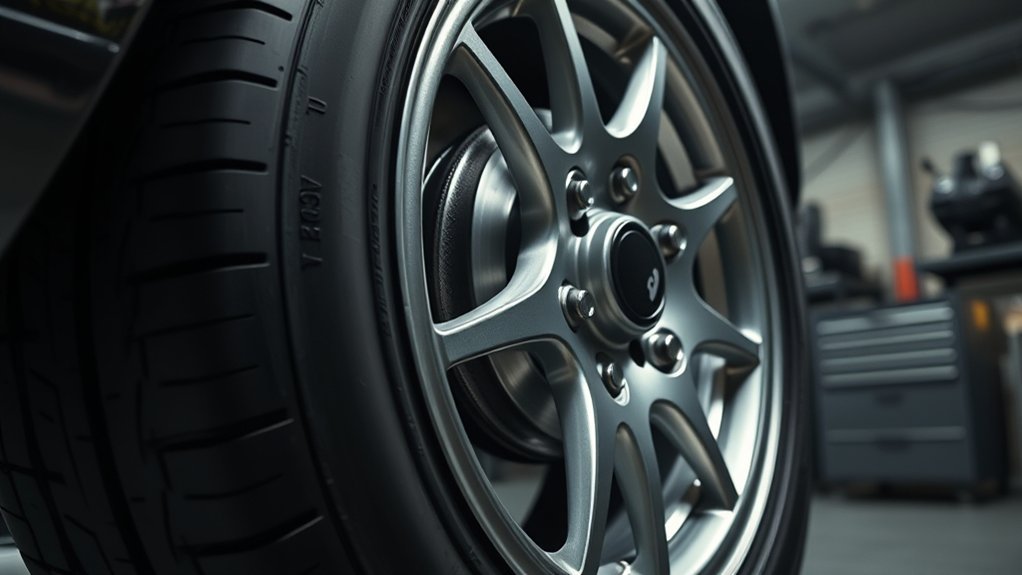
A 235 tire may fit a 6-inch-wide wheel, but the number 235 alone is not enough to decide. The full tire size—such as 235/70R15, 235/60R16, or 235/45R17—and the exact tire model determine the approved rim-width range. Some higher-profile 235 tires approve a 6-inch rim, while many lower-profile 235 tires require a wider wheel.
Quick Answer
Sometimes. A 6-inch wheel is approved for some 235 tire sizes, including certain 235/70 and 235/75 models, but it is too narrow for many 235/65, 235/60, 235/55, and lower-profile tires. Check the exact tire maker’s published rim-width range before mounting.
Key Takeaways
- “235” is only the nominal section width. You need the complete size and exact tire model to confirm rim compatibility.
- Some 235/70R15 and 235/75R15 tires approve 6-inch rims, while common 235/60, 235/55, and 235/45 examples require wider wheels.
- A tire that can be physically mounted is not necessarily approved for that wheel width.
- Wheel offset affects suspension and fender clearance, but it does not change the wheel’s bead-seat width.
- Match the tire’s load capability, speed rating, overall diameter, and recommended pressure as well as its rim-width range.
- Have tires mounted by a qualified tire professional rather than trying to compensate for an incorrect wheel width with inflation pressure.
Will a 235 Tire Fit a 6-Inch Wheel?
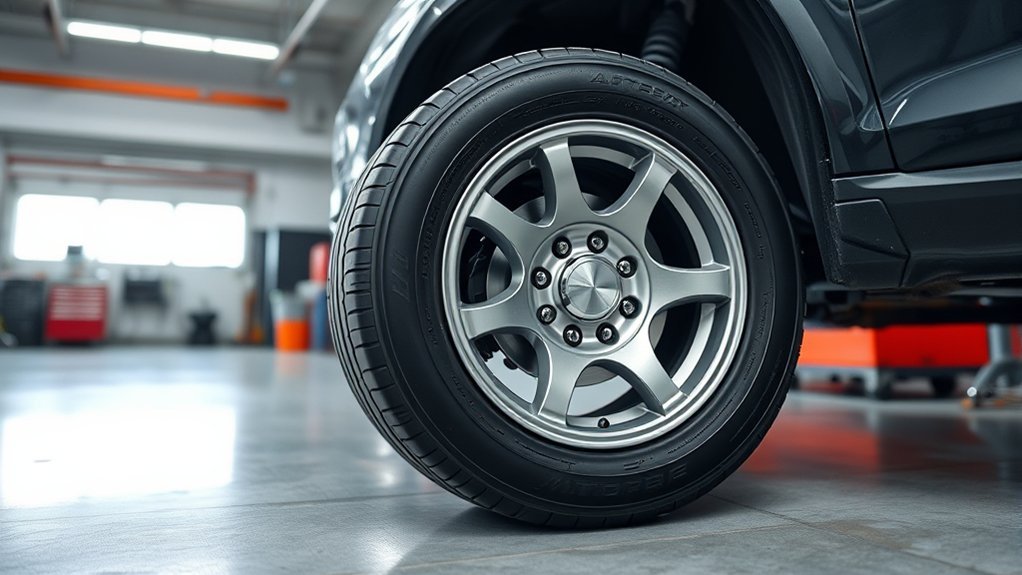
A 235 tire can fit a 6-inch wheel only when that exact tire size and model lists 6 inches within its approved rim-width range. You cannot safely make the decision from the 235 section-width number alone.
In a tire size such as 235/70R15, 235 represents the nominal section width in millimeters, 70 is the aspect ratio, R means radial construction, and 15 is the wheel diameter. Continental explains the same sizing system in its tire-size guide.
The aspect ratio matters because it changes the sidewall height and the range of rim widths for which the tire is designed. Manufacturer specifications provide a clear example. Kumho lists one 235/70R15 model for 6.0- to 8.0-inch rims, while its 235/60R16 uses a 6.5- to 8.5-inch range and its 235/45R17 uses a 7.5- to 9.0-inch range.
| Example Tire Size | Published Rim-Width Range | 6-Inch Wheel? |
|---|---|---|
| 235/70R15 | 6.0–8.0 in. | Yes, for the verified Kumho example |
| 235/75R15 | 6.0–8.0 in. | Yes, for the verified Kumho example |
| 235/60R16 | 6.5–8.5 in. | No |
| 235/55R17 | 6.5–8.5 in. | No |
| 235/45R17 | 7.5–9.0 in. | No |
Those examples show why saying “a 235 fits a 6-inch wheel” without the rest of the tire size is misleading. Even tires carrying the same 235 section-width number can have very different wheel-width requirements.
Warning: Do not mount a tire on a wheel narrower or wider than the approved range published for that exact tire. A tire may appear to mount physically while still being outside its intended fitment range.
Recommended Tire Widths for a 6-Inch Wheel
There is no universal rule saying every 195, 205, 215, or 225 tire fits a 6-inch wheel. Just as with a 235 tire, the full size and tire model determine whether a 6-inch rim is approved.
Many common 205, 215, and 225 passenger-tire sizes do include 6 inches within their approved ranges, so those widths often provide more choices for a 6-inch wheel. However, you should still look up the exact tire specification before buying.
A 215 or 225 can be a more natural choice than a 235 when the vehicle originally uses a narrower wheel, but you must also maintain the required load index, speed rating, wheel diameter, and a suitable overall tire diameter.
Do not use inflation pressure to make an otherwise unapproved tire-and-wheel combination acceptable. For normal driving, follow the vehicle manufacturer’s cold-pressure recommendation unless an approved replacement fitment requires different documented guidance.
Note: Rim width and wheel offset are different measurements. Rim width describes the distance across the wheel’s bead-seat area. Offset describes where the wheel’s mounting surface sits relative to its centerline and mainly affects vehicle clearance and wheel position.
[Products Worth Considering]

The UYYE TPMS relearn tool helps activate and relearn tire pressure monitor sensors quickly, typically in minutes. It supports TPMS learn mode resetting using a simple three-step process: enter learn mode, position the tool near the valve stem, and press the learn button. Designed for specific GM models, it streamlines sensor programming and reduces trips to dealers or tire shops.

Malco tire mounting and demounting lubricant is a ready-to-use tire lube formulated to reduce friction during tire installation for passenger cars, light trucks, farm tires, and heavy-duty equipment. It provides rust-inhibiting protection to help reduce corrosion on rims and wheels, and helps support proper tire bead seating during inflation to reduce air leakage. The silicone-free, soap-free formula is whitewall safe to help prevent discoloration on whitewall tires and sensitive sidewall markings.

The 22800 wheel stud installer makes replacing wheel studs quick and secure, saving time and effort during tire service. It uses a ratchet or impact wrench to pull new studs firmly into place, helping when existing studs are too long. Compatible with most automotive wheels and light-duty truck wheel studs, it’s designed for easy, tool-assisted installation.
How Does a 235 Tire Affect Ride and Handling?
If a particular 235 tire officially approves a 6-inch wheel, mounting it at the narrow end of its approved range can give the sidewall a more rounded profile than mounting the same tire on a wider approved rim.
That difference can affect steering feel, ride comfort, and tread behavior, but there is no dependable rule that a 235 on a 6-inch wheel will automatically provide more grip, a firmer ride, or better stability. Tire construction, pressure, vehicle weight, suspension design, tread compound, and road conditions all matter.
[Products Worth Considering]

A concentrated tire and tube mounting compound designed to help simplify mounting rubber tires and tubes on passenger, semi truck, construction, and OTR applications. Its ultra-thick formula packs beads effectively and includes rust inhibitors to help protect against corrosion during use.

This professional wheel and rim cleaning brush set lifts brake dust, grime, and dirt with soft, scratch-free microfiber and synthetic wool fibers. The rim brush bends up to 360 degrees for easy access to hard-to-reach areas around spokes, lips, and faces. Ideal for thorough cleaning of car, truck, motorcycle, bicycle, RV, and more wheel and tire surfaces.

The Tymate TM12 RV TPMS delivers real-time tire pressure and temperature monitoring with a stable 433Hz display for safer long-distance driving. It supports simultaneous monitoring across vehicle and trailer zones, includes six alarm modes for pressure, temperature, leakage, battery, and signal loss, and features easy DIY installation with auto calibration. Power is supplied via USB-C charging or solar recharging, with a wide 0–144 PSI range and up to 50 ft signal coverage for RVs and towable trailers.
Ride Comfort Changes
A narrower approved rim can allow somewhat more sidewall flex. Depending on the tire, that may soften the way small bumps reach the cabin, although the effect may be modest compared with differences in sidewall height, tire construction, inflation pressure, and suspension tuning.
| Factor | Possible Effect on a Narrower Approved Rim | What You May Notice |
|---|---|---|
| Sidewall flex | May increase | Softer response to small impacts |
| Steering response | May become less immediate | Slightly softer turn-in |
| Pressure sensitivity | Still important | Underinflation can increase heat, wear, and sluggish response |
These differences are most relevant when comparing the same tire across different wheel widths that are all approved by the tire manufacturer. They are not a reason to use a wheel outside the approved range.
Steering Response
Steering response can become slightly softer when a wide tire is installed at the narrow end of its approved rim range. The tread and sidewall can move a little more during quick steering inputs, which may make turn-in feel less direct.
On a wider approved wheel, the same tire may have more lateral sidewall support and a flatter profile. Drivers who prioritize precise steering often prefer a wheel width closer to the tire manufacturer’s measuring or recommended rim width rather than the narrowest acceptable option.
For normal daily driving, the difference may be small. Tire construction and vehicle suspension can matter just as much as rim width.
Grip And Stability
A wider nominal tire does not guarantee more usable grip when it is paired with a narrow wheel. Tire grip depends on tread compound, construction, pressure, alignment, temperature, road surface, vehicle load, and how the tire’s profile changes on the wheel.
If the 6-inch wheel is within the tire’s approved range, the combination can still provide normal, predictable performance. If 6 inches is outside the approved range, however, you should not rely on perceived grip or appearance as evidence that the setup is safe.
The decisive specification is not “235” by itself. It is the exact tire model’s published rim-width range.
Why Wheel Width Affects Tire Safety
Wheel width affects the way the tire’s beads, sidewalls, and tread are supported. The U.S. Tire Manufacturers Association’s passenger and light-truck tire service guidance defines rim width by the inside dimension between the rim flanges and emphasizes following vehicle and tire manufacturer recommendations.
If a wheel is narrower than the tire’s approved range, the sidewalls are pulled inward more than intended. That can change the tire profile, steering behavior, heat generation, and tread wear. A wheel that is too wide can create a different set of problems by pulling the sidewalls outward.
Approved rim-width ranges exist so the tire can operate with the intended bead support and carcass shape under braking, cornering, bumps, and normal loading.
The wheel itself must also have enough load and pressure capacity for the application. Changing tire size does not remove those requirements.
Pro Tip: Look up the exact tire on the manufacturer’s website or technical data sheet. The specification usually lists a “rim width range” and often a “measuring rim width.” If 6.0 inches is not within the listed range, choose another tire size or a wider wheel.
What Are the Best Alternatives to a 235 Tire?
If the 235 tire you want does not approve a 6-inch wheel, the safest alternative is not simply to choose another width at random. Start with the vehicle’s approved sizes and then find a complete tire size whose published rim-width range includes 6 inches.
Common 215 and 225 sizes often give you more 6-inch-wheel options than lower-profile 235 sizes. A 245 generally moves in the opposite direction and commonly requires an even wider wheel.
[Products Worth Considering]

Replace worn or malfunctioning GM TPMS sensors with this 433MHz pre-programmed sensor set designed for compatibility with many Chevrolet, Buick, GMC, and Cadillac models. It includes guidance for proper OBDII relearning/pairing after installation and supports reliable long-term operation with a high-performance CR2032 battery. Quality tested for durability and performance to help restore accurate tire pressure monitoring.

Masoll Gen 2 external TPMS sensors are a DIY replacement set of 4 for select GM vehicles made after 2006, helping you shut off the TPMS warning light quickly. Simply screw the sensors onto the tire valves and sync to your car ECU using the included EL-50448 relearn tool. Dual-frequency 315/433 MHz design provides OEM-level performance with accurate readings and replaceable batteries for about two years.
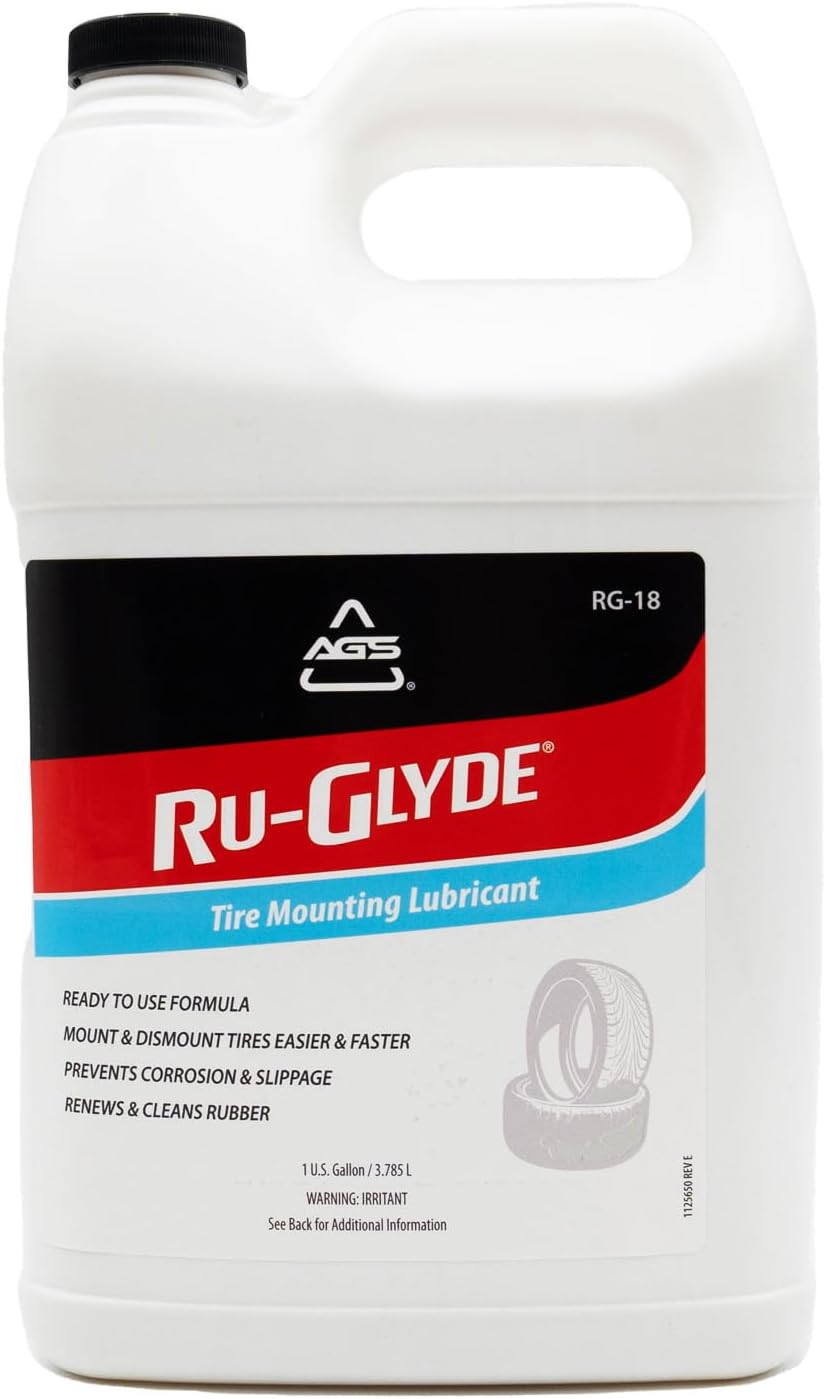
Ru-Glyde tire mounting lubricant from AGS seats tire beads smoothly on the first try with a thick, stay-put formula. It is ready to use with no mixing or dilution, helps prevent rim rust, and dries completely without causing bead slip residue. The water-based formula also conditions aged rubber, making it useful for sidewalls, gaskets, and door seals while remaining safe for tire, wheel, and technicians.
215 Tire Options
A 215 tire can be a practical alternative when you need a narrower fit for a 6-inch wheel. Many complete 215 sizes are approved for 6-inch rims, but the aspect ratio and tire model still matter.
A properly selected 215 may produce less sidewall bulge than a 235 on the same wheel and may give the tire a more neutral profile. Depending on the tire and vehicle, steering can also feel more controlled.
Before buying, compare the replacement tire’s load index, speed rating, overall diameter, rim-width range, and vehicle clearance. Do not assume that every 215 size is interchangeable with your current 235.
245 Tire Options
A 245 tire is generally not the first alternative to consider when you are trying to stay with a 6-inch wheel. Because it is nominally wider than a 235, many common 245 passenger-car and SUV sizes need rims wider than 6 inches.
If you genuinely need a 245 for performance, appearance, load capacity, or another approved application, start by checking the exact tire’s rim-width specification and be prepared to use a wider wheel.
You must also verify offset, fender clearance, suspension clearance, wheel load capacity, and overall tire diameter before making the change.
How Do You Check Your Vehicle’s Tire Specs?
Use a complete fitment check rather than comparing the 235 section width alone.
- Read the complete tire size. Record the full code, such as 235/70R15 103T, rather than only “235.”
- Confirm wheel diameter. The tire’s rim-diameter number must match the wheel diameter exactly.
- Confirm the wheel’s true rim width. Rim width is measured across the bead-seat area, not across the outside edges of the wheel lips.
- Check the tire manufacturer’s rim-width range. A 6-inch wheel is suitable only when 6.0 inches appears within that tire’s approved range.
- Check the vehicle placard and owner’s manual. Confirm the original size, load requirements, and recommended cold inflation pressure.
- Match load and speed capability. The replacement tire must provide suitable load capacity and an appropriate service rating for the vehicle.
- Check overall diameter. A large diameter change can affect clearance, speedometer behavior, gearing, ABS, stability-control operation, and other vehicle systems.
- Check offset and clearance. Verify clearance at the fender, suspension, brakes, and body through full steering lock and suspension movement.
- Confirm TPMS operation. Follow the vehicle manufacturer’s reset or relearn procedure if the vehicle requires one after tire or wheel service.
- Use professional mounting. A qualified tire technician can inspect the wheel, bead area, valve, TPMS hardware, and final seating before the vehicle returns to service.
| Source | What to Check | Why It Matters |
|---|---|---|
| Door-jamb tire placard | OE tire size and recommended cold pressure | Vehicle baseline |
| Owner’s manual | Approved sizes and vehicle-specific instructions | Vehicle compatibility |
| Tire sidewall | Full size, load index, speed rating, tire identification | Identifies the actual tire |
| Tire maker’s specification | Approved rim-width range | Confirms whether a 6-inch rim is permitted |
| Wheel specification | Width, diameter, offset, load capacity | Confirms wheel and vehicle fitment |
The National Highway Traffic Safety Administration recommends using the vehicle manufacturer’s specified cold tire pressure. The maximum pressure molded on a tire sidewall is not a universal target for everyday inflation.
Warning: Tire mounting and bead seating involve high forces and compressed air. USTMA advises that tire mounting be performed by specially trained people and warns against excessive bead-seating pressure. Do not try to force an incompatible tire onto a wheel by adding more pressure.
Frequently Asked Questions
Can I Inflate a 235 Tire to the Maximum Pressure on a 6-Inch Wheel?
Not as a general rule. For normal driving, use the vehicle manufacturer’s recommended cold pressure or the documented pressure required for an approved replacement fitment. The maximum pressure molded on the tire is not automatically the correct operating pressure. Inflation also cannot make an unapproved tire-and-rim-width combination acceptable.
Will a 235 Tire Rub the Fender on a Stock Suspension?
It depends on the complete tire dimensions, wheel width, wheel offset, factory clearance, steering angle, and suspension travel. There is no reliable percentage of stock vehicles that will clear every 235 tire. Check clearance at full steering lock and through normal suspension compression before using a changed fitment.
Does a 235 Tire Require Different TPMS Sensors?
Not simply because the tire is 235 mm wide. TPMS hardware is tied to the vehicle and wheel system rather than the section-width number alone. If you keep compatible wheels and sensors, replacement may not be necessary. Some vehicles do require a TPMS reset, relearn, or calibration after tire or wheel service, so follow the owner’s manual.
Can I Use a 235 Tire for Winter Driving on a 6-Inch Wheel?
Yes, but only if that exact 235 winter tire approves a 6-inch wheel and the size is appropriate for the vehicle. A narrower tire size can sometimes improve performance in deep snow, but putting the same 235 tire on a narrower wheel does not turn it into a narrower tire or automatically improve winter traction.
How Often Should I Inspect a 235 Tire Mounted on a 6-Inch Wheel?
Check tire pressure at least monthly and before long trips, and inspect the tread and sidewalls for cuts, bulges, unusual wear, or other damage. If you notice repeated pressure loss, vibration, rubbing, or abnormal shoulder wear, have the tire-and-wheel assembly inspected by a qualified tire shop.
Which 235 Tire Sizes Commonly Allow a 6-Inch Wheel?
Higher-profile sizes are more likely to include 6 inches in their approved range. Verified manufacturer examples include certain 235/70R15 and 235/75R15 tires with a 6.0- to 8.0-inch range. That does not mean every tire carrying those size markings is identical, so always check the exact model’s specification.
Is a 225 Tire Better Than a 235 on a 6-Inch Wheel?
It can be, because many common 225 sizes approve a 6-inch rim and may sit with a more neutral sidewall profile. However, “225” alone still does not prove compatibility. Compare the full tire size, rim-width range, load index, speed rating, overall diameter, and vehicle clearance before changing sizes.
Conclusion
A 235 tire can fit a 6-inch wheel in some applications, but it is wrong to assume that every 235 tire is approved for that rim width. Some higher-profile examples, including certain 235/70R15 and 235/75R15 tires, list 6 inches as an approved minimum. Many 235/60, 235/55, and lower-profile tires require wider wheels.
The safest approach is simple: find the exact tire model, check its published rim-width range, confirm the vehicle’s load and pressure requirements, and verify clearance. If 6 inches is outside the tire maker’s range, choose a different tire or wheel instead of trying to make the combination work.
Sources
- Kumho Tire specifications — published rim-width ranges for multiple 235 tire sizes.
- Goodyear WinterCommand specifications — manufacturer rim-width data, including a 235/55R17 example.
- Continental Tire Size Guide — explains tire width, aspect ratio, construction, and wheel-diameter markings.
- U.S. Tire Manufacturers Association — Care and Service of Passenger and Light Truck Tires — rim terminology, replacement-tire considerations, clearance, inflation, and mounting safety.
- NHTSA TireWise — vehicle tire placard, cold inflation pressure, TPMS, and tire-safety guidance.
- Continental — Wide Tires vs. Narrow Tires — current guidance on tire-width effects, including winter performance in deep snow.

