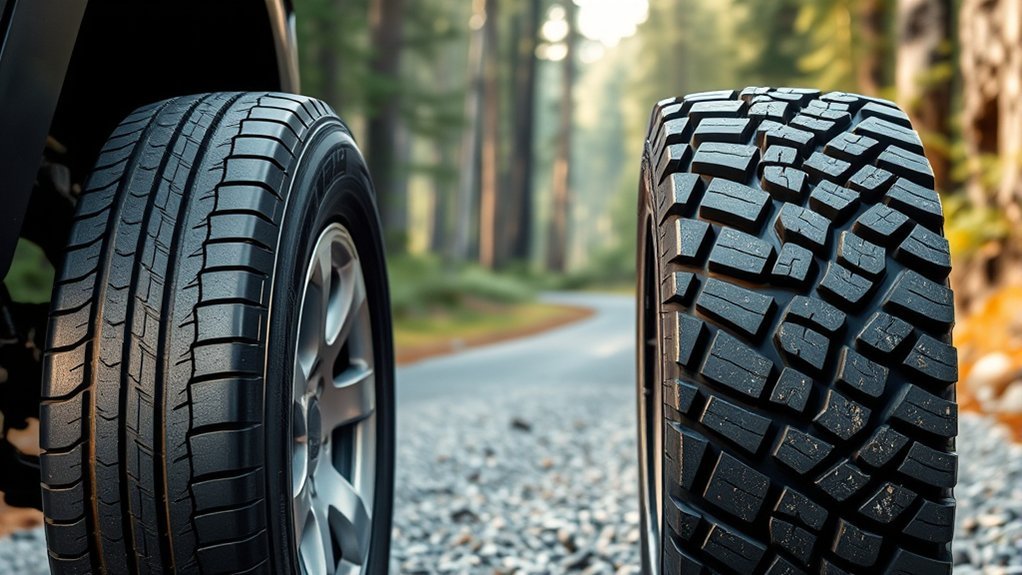
Choosing between all-season tires and all-terrain tires for your truck comes down to where you drive most, how much comfort you want, and whether you need real traction on gravel, mud, snow, or job-site roads. All-season tires are usually the better fit for pavement-heavy driving, while all-terrain tires make more sense when your truck regularly leaves smooth roads.
Quick Answer
Choose all-season tires if your truck spends most of its time on highways, city streets, and light winter roads. Choose all-terrain tires if you regularly drive on gravel, dirt, mud, rocky trails, farms, construction sites, or snowy rural roads where extra tread bite and sidewall durability matter more than quietness and fuel economy.
Key Takeaways
- All-season truck tires are best for daily commuting, highway driving, wet roads, light snow, lower road noise, and better ride comfort.
- All-terrain truck tires are best for gravel, mud, trails, job sites, rural roads, and drivers who need stronger off-road traction.
- A 3PMSF symbol means a tire meets a severe-snow-service traction standard, but it does not make every all-terrain tire a replacement for dedicated winter tires.
- Before buying, check your truck’s tire placard or owner’s manual for the correct size, load rating, speed rating, and inflation pressure.
At a Glance
| Time Required | 15–30 minutes to compare your driving needs, tire placard, load rating, and tire options |
| Difficulty | Easy, as long as you match the tire size and ratings to your truck |
| Tools Needed | Truck tire placard, owner’s manual, tire pressure gauge, and tread depth gauge |
| Cost | The decision is free; tire price varies by size, brand, load range, warranty, and installation package |
All-Season Tires: What Truck Owners Need to Know
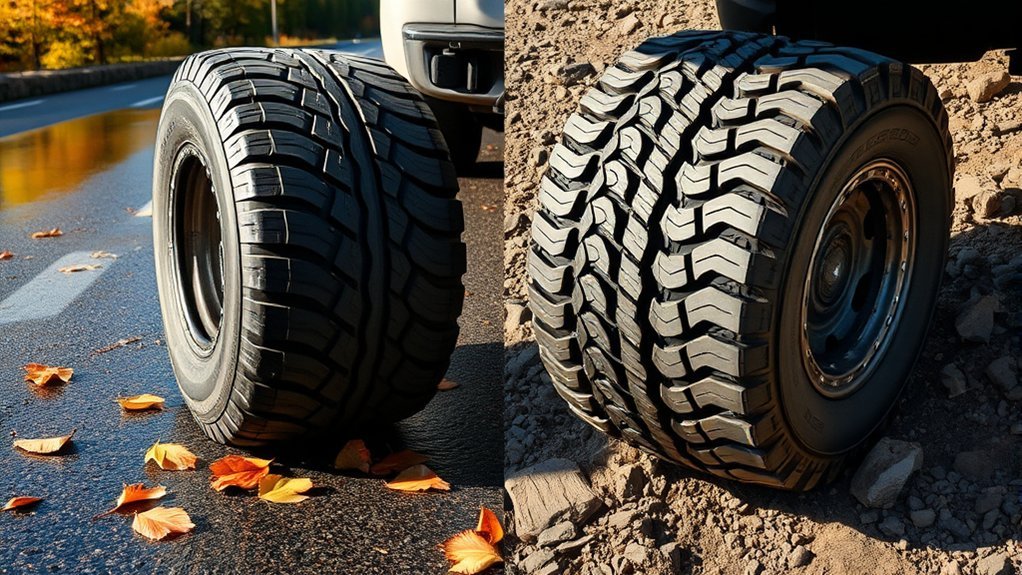
All-season tires are built for drivers who spend most of their time on paved roads. On trucks, these are often highway all-season or touring-style tires designed for dry pavement, wet roads, daily commuting, and light snow. They usually have a less aggressive tread pattern than all-terrain tires, which helps with a smoother ride, lower tread noise, and better fuel efficiency.
For most urban and suburban truck owners, all-season tires are the practical choice. They are comfortable on highways, predictable in rain, and easier to live with if your truck is mainly used for commuting, family driving, light hauling, or weekend trips.
The main limitation is traction when the road or trail gets rough. Standard all-season tires are not made for deep mud, loose rock, rutted job sites, or frequent off-road use. They can also struggle in heavy snow or icy conditions, especially if they do not carry a Three-Peak Mountain Snowflake (3PMSF) symbol.
Note: “All-season” does not mean “best in every season.” It means the tire is designed to balance dry, wet, and light winter performance. If you drive in frequent ice, deep snow, or mountain passes, consider dedicated winter tires or 3PMSF-rated options.
Benefits of All-Terrain Tires
All-terrain tires are designed to split the difference between pavement and off-road use. Their tread blocks are usually deeper and more open than all-season tires, helping the tire bite into loose dirt, gravel, mud, sand, and uneven ground. Many also use stronger casing designs or sidewall features that help resist damage when driving over rocks, roots, debris, or rough work areas.
That extra toughness is the reason many truck owners choose all-terrain tires for camping, hunting, construction sites, ranch roads, unpaved rural roads, and weekend trail driving. Tire Rack’s paved-road comparison of highway all-season and all-terrain tires notes that all-terrain tires are built for loose dirt, mud, rocky terrain, and tough job-site mobility, while highway all-season tires are better suited to smooth, quiet pavement driving. Tire Rack’s on-road tire comparison also found the all-terrain tire produced more tread noise and gave up some wet-pavement grip compared with the highway all-season tire.
Some all-terrain tires also carry the USTMA severe snow service symbol, commonly called 3PMSF. This can be useful if you drive in snowy rural areas. Still, not every all-terrain tire has that rating, so check the tire sidewall and manufacturer specifications before assuming winter capability.
Pro Tip: Buy the least aggressive tire that honestly fits your driving. If 90% of your miles are on pavement, a highway all-season or mild all-terrain tire may serve you better than a heavy, aggressive all-terrain tread.
Comparing All-Season and All-Terrain Tires: Key Differences
The biggest difference is the balance of comfort versus capability. All-season tires focus on paved-road manners. All-terrain tires focus on traction and durability when pavement ends.
| Category | All-Season Tires | All-Terrain Tires |
|---|---|---|
| Best surface | Pavement, highways, city roads | Gravel, dirt, mud, trails, rough access roads |
| Ride comfort | Usually smoother and quieter | Can feel firmer or noisier, especially with aggressive tread |
| Fuel economy | Often better due to lighter, less aggressive designs | Can be lower depending on weight, tread, pressure, and rolling resistance |
| Snow performance | Good for light snow when tread is healthy; better if 3PMSF-rated | Often better in loose snow if 3PMSF-rated, but not always ideal on ice |
| Durability | Best for normal road use and lighter-duty driving | Better suited to rocks, ruts, gravel, and sidewall scuffs |
| Best buyer | Daily driver who wants comfort, low noise, and efficiency | Driver who regularly needs off-road traction or rugged-road confidence |
[Products Worth Considering]

Accurately measure tire tread depth with a calibrated gauge marked from 0 to 1 inch in 1/32 inch increments. The color-coded bar helps you quickly identify tread condition ranges, supporting safe driving for trucks, motorcycles, automobiles, and passenger vehicles.

Check tire pressure with the Milton S-925 pencil gauge built for trucks, RVs, and bicycles. It features a single-head chuck with a built-in deflator valve, and it displays readings in both PSI and kPa for convenient use. The gauge is designed for accurate, repeatable pressure checks within its working range.

Keep your tires properly inflated with this analog VONDIOR tire pressure gauge, designed for fast, easy readings without batteries. The swiveling, two-axis hose and large glow dial help you measure at any tire angle with instant visibility. Built with a protective rubber shield, it supports durable, low-maintenance use for cars and trucks.
Best Use Cases for All-Season vs. All-Terrain Tires
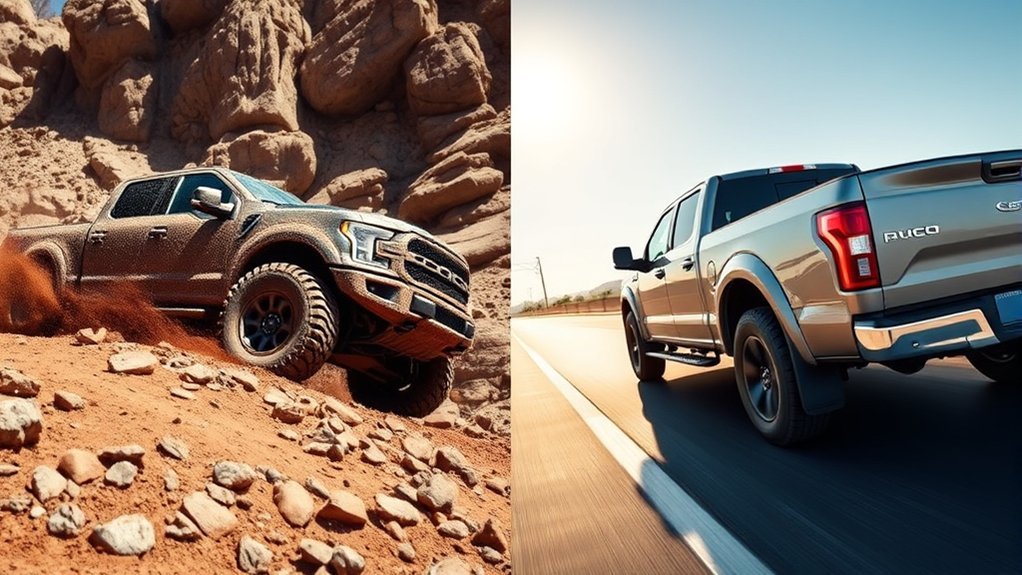
Choosing the right tires for your truck can greatly impact comfort, fuel use, traction, and confidence. Use your real driving mix instead of buying based only on appearance.
| Driving Situation | Better Choice | Why |
|---|---|---|
| Daily commuting and highway miles | All-season | Better comfort, quieter ride, and usually better fuel economy |
| Occasional gravel driveway or boat ramp | All-season or mild all-terrain | You may not need a heavy off-road tire for light dirt-road use |
| Rural roads, farms, and construction sites | All-terrain | Stronger tread and sidewall design help on ruts, gravel, and debris |
| Mud, loose dirt, and rocky trails | All-terrain | Open tread blocks provide more bite and self-cleaning ability |
| Frequent snow but mostly paved roads | 3PMSF-rated all-season, all-weather, or winter tire | Snow rating matters more than tire category name |
| Heavy towing or hauling | Correctly rated tire first, then choose tread type | Load index, load range, and inflation pressure are safety priorities |
[Products Worth Considering]

Measure tire tread depth quickly and accurately with this LUMITECO dial gauge that reads in 1/32" increments up to 14/32". The color-coded green/yellow/red zones make it easy to judge tire wear and know when replacement is needed. A rugged, compact design with a protective pouch helps keep the gauge ready for use on cars, trucks, motorcycles, and more.

The SAFELIFE dial tire tread depth gauge measures tread depth in 1/32 inch increments with clear, easy-to-read 2-inch dial face. Color zones using a traffic light system help you quickly judge whether tread is low, marginal, or ample for safer driving. Built with a durable zinc cast body and a metal detect probe for precise, comfortable use across cars, motorcycles, trucks, and buses.

Measure tyre tread depth precisely with a digital gauge that reads in both MM and inches, helping you monitor safe driving conditions. The large LCD screen is easy to operate, and the compact tool fits for cars, trucks, and motorcycles. It provides high accuracy with a 0-25.4mm range and includes a 1-year warranty for added peace of mind.
How to Choose the Right Tires for Your Truck
To make the right choice, start with safety and fitment before tread style. A great-looking tire is the wrong tire if it does not match your truck’s required size, load rating, speed rating, and inflation pressure.
- Check your tire placard and owner’s manual. The correct tire size, load information, and recommended cold tire pressure are listed on the truck’s tire placard or in the manual. Bridgestone’s truck tire guidance also recommends matching replacement tires to the vehicle’s required size and speed rating.
- Estimate your driving split. If 80–90% of your miles are paved, start with all-season or mild all-terrain options. If you regularly drive on rough roads, mud, gravel, or trails, move toward all-terrain.
- Match the tire to your load. Towing, hauling tools, carrying slide-in campers, or running heavy payloads may require a higher load rating or LT tire. Do not guess; use your placard, manual, or tire professional.
- Think about winter honestly. If snow is common, look for the 3PMSF symbol. If ice, mountain passes, or deep winter storms are normal, dedicated winter tires may be safer than either standard all-season or all-terrain tires.
- Compare noise, warranty, and wet traction. Aggressive all-terrain tires can look great but may be louder and less refined on wet pavement. Read the manufacturer specs and independent test notes before buying.
Warning: Never choose a truck tire only by appearance. The wrong size, load rating, speed rating, or inflation pressure can reduce handling, increase heat buildup, accelerate wear, or create a tire-failure risk.
[Products Worth Considering]

Monitor tire tread wear with a smart, color-coded depth gauge that shows clear condition ranges at a glance. The bar is range marked for fast, easy readings, helping you maintain safer traction and performance. Each gauge is portable with a pocket clip, and the set includes 20 units for daily use and sharing.

Upgrade your ride with a 2-pack set of 26x1.95 folding mountain bike tires built for dependable traction on mud, rocks, and trail surfaces. A reinforced puncture-resistant layer helps protect against sharp debris, while included butyl inner tubes provide strong sealing and shock absorption. Ready for fast swaps with included tire levers and universal sizing for most bikes.

ETENWOLF T300 is a calibrated digital tire pressure gauge for accurate readings from 3 to 200 PSI across light and heavy-duty vehicles. It includes thermal compensation for reliable performance in extreme cold or heat, with an auto shut-off to extend battery life and an LED for easier reading. The sturdy design supports rugged everyday use, making it ideal for pickups, RVs, and industrial applications.
Snow Ratings: What 3PMSF Really Means
The Three-Peak Mountain Snowflake symbol is important if you drive in winter weather. According to the U.S. Tire Manufacturers Association, tires designed for severe snow conditions must meet snow grip criteria based on standardized testing before they qualify for the mountain-snowflake pictograph.
That rating is useful, but it has limits. A 3PMSF-rated tire is tested for snow traction, not every possible winter hazard. Ice braking, slush, freezing rain, and deep mountain snow may still call for dedicated winter tires. Also, some all-season tires, some all-weather tires, and some all-terrain tires carry 3PMSF, so the symbol matters more than the marketing category.
The best winter choice is not simply “all-season” or “all-terrain.” It is the tire with the right snow rating, tread depth, size, load rating, and condition for your roads.
Maintenance Tips After You Choose
Good tires still need good maintenance. The NHTSA TireWise guide recommends checking tire pressure when tires are cold, inspecting tread, watching for damage, and replacing tires when tread is worn down to 2/32 inch. Commercial truck rules can be stricter; for example, 49 CFR §393.75 requires at least 4/32 inch of tread on the front wheels of certain buses, trucks, and truck tractors.
- Check tire pressure monthly and before towing, hauling, or long highway trips.
- Use the cold PSI on the truck placard, not the maximum pressure molded on the tire sidewall.
- Inspect tread and sidewalls for cuts, bulges, uneven wear, embedded objects, or cracking.
- Rotate tires on schedule if your vehicle and tire setup allow rotation.
- Get alignment checked if the truck pulls, the steering wheel is off-center, or tread wear is uneven.
- Replace damaged or worn tires promptly, especially before winter, towing, or off-road travel.
Frequently Asked Questions
Is there a downside to all-terrain tires?
Yes. All-terrain tires can be louder, heavier, and less fuel-efficient than highway all-season tires. They may also feel less sharp on wet pavement depending on tread design and compound. The tradeoff is better traction and durability on gravel, dirt, mud, and rough roads.
Are all-terrain tires good for daily driving?
They can be, especially mild all-terrain tires. However, if your truck rarely leaves pavement, an all-season or highway tire will usually be quieter, smoother, and more efficient for daily driving.
Which is better in snow: all-season or all-terrain?
It depends on the exact tire. A 3PMSF-rated all-season, all-weather, or all-terrain tire will usually be a better winter choice than a non-rated tire. For frequent ice, steep winter roads, or deep snow, dedicated winter tires are still the stronger option.
Do all-terrain tires reduce gas mileage?
They can. Fuel economy depends on tire weight, tread pattern, rolling resistance, inflation pressure, vehicle load, and driving style. More aggressive all-terrain tires often use deeper tread and heavier construction, which can reduce efficiency compared with smoother highway tires.
Do I need LT tires for my truck?
Not always. Some pickups use P-metric or metric tires from the factory, while heavier-duty trucks or towing setups may need LT tires with the proper load range. Check your tire placard, owner’s manual, and payload/towing needs before switching.
Which tire lasts longer: all-season or all-terrain?
There is no universal winner. Tread life depends on tire model, mileage warranty, alignment, inflation pressure, rotation schedule, load, terrain, and driving habits. All-season highway tires often wear well on pavement, while all-terrain tires may wear faster if used mostly on highways or if not rotated regularly.
Conclusion
Choosing between all-season and all-terrain tires for your truck is really a choice between paved-road comfort and rugged-road capability. Pick all-season tires if you mainly drive on highways, city streets, and light snow. Pick all-terrain tires if gravel, mud, trails, job sites, or rural winter roads are part of your normal routine. Before you buy, confirm the correct tire size, load rating, speed rating, winter rating, and cold inflation pressure so your truck stays safe, capable, and comfortable.
Sources
- NHTSA TireWise — tire pressure, tread depth, tire maintenance, fuel efficiency, and safety guidance
- U.S. Tire Manufacturers Association TISB 37 — severe snow service and 3PMSF tire definition
- Tire Rack Highway All-Season vs. All-Terrain Test — paved-road ride, noise, handling, and wet-traction tradeoffs
- Bridgestone Truck Tire Guidance — choosing truck tires, tire placard, size, and speed rating considerations
- USTMA Tire Care and Safety Guide — inflation, inspection, loading, rotation, and service-life factors
- 49 CFR §393.75 — commercial truck and bus tire tread-depth requirements