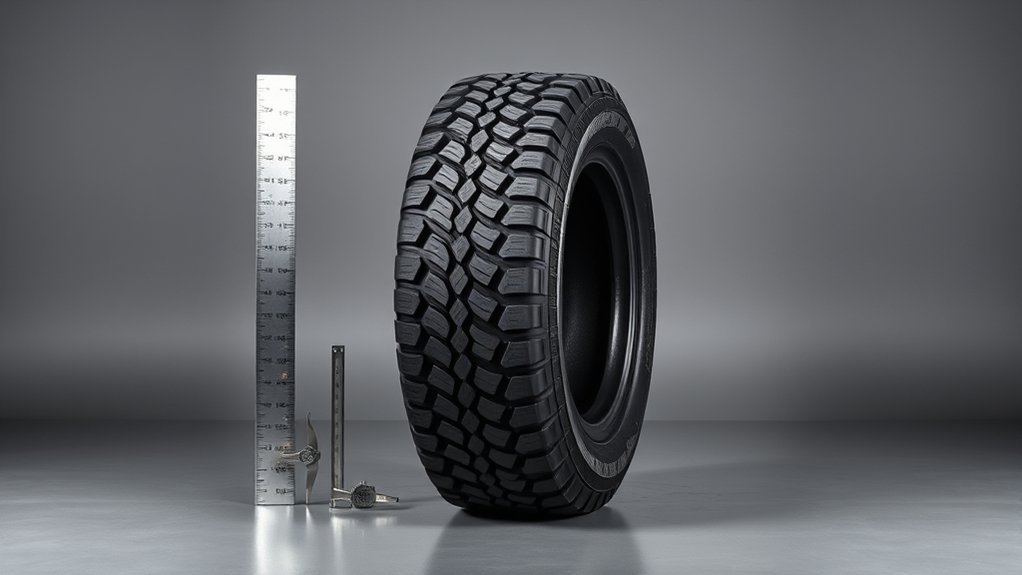
A 285 tire is about 11.2 inches wide, but that number only tells you the tire’s nominal section width. To know the full size, you need the complete code, such as 285/70R17. In that example, the tire is roughly 32.7 inches tall, about 11.2 inches wide, and made for a 17-inch wheel.
Quick Answer
A 285 tire is about 11.2 inches wide because 285 millimeters equals 11.22 inches. The tire’s height depends on the rest of the size code. A 285/70R17 is about 32.7 inches tall, while other 285 sizes can be taller or shorter.
Key Takeaways
- A 285 tire is about 11.2 inches wide, based on its 285 mm nominal section width.
- A 285/70R17 tire is usually about 32.7 inches tall overall.
- The “70” in 285/70R17 means the sidewall height is 70% of the tire’s width.
- A 285/70R17 is wider and slightly taller than a 275/70R17.
- A 285/70R17 is close to a 33-inch tire, but it is usually not the same as a true 33×12.50R17.
- Always check rim width, load rating, wheel offset, and clearance before installing 285 tires.
What Is a 285 Tire?
A 285 tire is a tire with a nominal section width of 285 millimeters. Section width means the tire’s sidewall-to-sidewall width when the tire is mounted on its approved measuring rim and inflated to specification. It is not the same as tread width, because tread width changes by tire model and tread pattern.
You will usually see 285 as part of a full tire size, such as 285/70R17. According to common tire-size formatting, the first number is tire width in millimeters, the second number is the aspect ratio, the “R” means radial construction, and the final number is the wheel diameter in inches, as explained by Bridgestone’s tire-size guide.
Note: The number 285 does not tell you the tire’s height by itself. A 285/70R17, 285/75R16, and 285/65R18 can all be 285 tires, but they do not have the same overall diameter.
How Wide Is a 285 Tire?
A 285 tire is about 11.2 inches wide. The conversion is simple:
- 285 millimeters ÷ 25.4 = 11.22 inches
- Rounded size: about 11.2 inches
That number is a nominal size, not a guarantee that every 285 tire measures exactly 11.2 inches on every wheel. Real-world section width can vary by tire brand, tread design, load range, and rim width. BFGoodrich notes that section width can vary by rim width and that some tire dimensions may vary from published values, so the final fit should always be checked against the exact tire model’s spec sheet.
A 285 tire is roughly 11.2 inches wide, but the complete size code tells you whether it is a 31-inch, 32-inch, 33-inch, or taller tire.
What Is the Diameter of a 285/70R17?
The diameter of a 285/70R17 tire is approximately 32.7 inches. Here is the math:
- Section width: 285 mm
- Aspect ratio: 70%
- Sidewall height: 285 × 0.70 = 199.5 mm
- Sidewall height in inches: 199.5 ÷ 25.4 = 7.85 inches
- Overall diameter: 17 + 7.85 + 7.85 = 32.7 inches
That is why a 285/70R17 is often described as being close to a 33-inch tire. It mounts on a 17-inch wheel, but the tire’s outside diameter is created by adding the wheel diameter plus two sidewalls.
Common 285 Tire Sizes in Inches
Because “285” only gives the width, you need the aspect ratio and rim diameter to calculate the tire’s height. These common examples show why the full code matters:
| Tire Size | Approx. Width | Approx. Diameter | Common Use |
| 285/70R17 | 11.2 in | 32.7 in | Popular truck and SUV upgrade |
| 285/75R16 | 11.2 in | 32.8 in | Common 16-inch truck size |
| 285/65R18 | 11.2 in | 32.6 in | Common 18-inch truck size |
These are calculated dimensions. Actual published specs may be slightly different, so use the manufacturer’s spec sheet before buying.
How Does 285/70R17 Compare With 275/70R17?
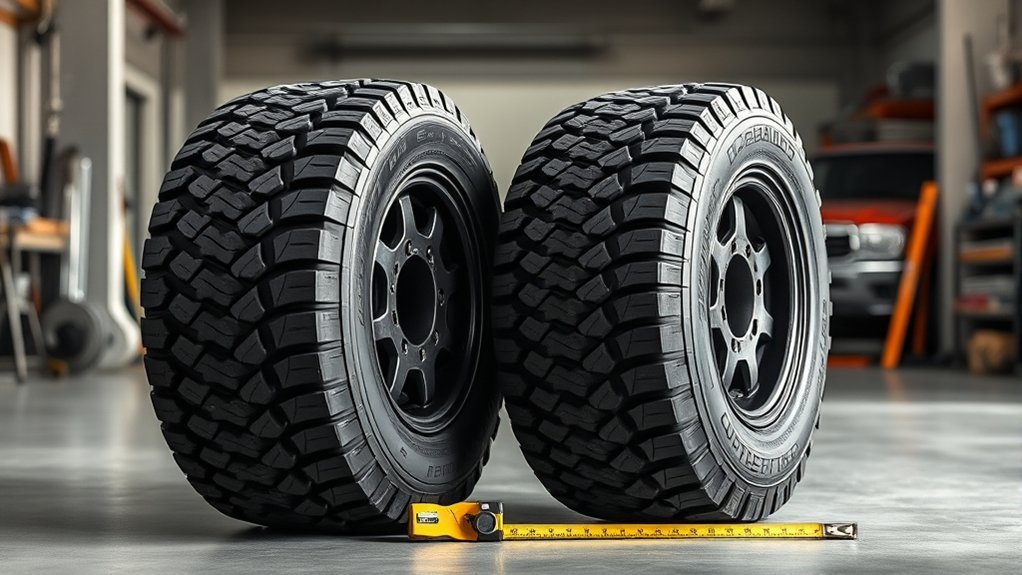
A 285/70R17 is wider and slightly taller than a 275/70R17. The 285 is about 11.2 inches wide and 32.7 inches tall, while the 275 is about 10.8 inches wide and 32.2 inches tall.
| Size | Approx. Diameter | Approx. Width | Fitment Impact |
| 275/70R17 | 32.2 in | 10.8 in | Usually easier to fit on stock setups |
| 285/70R17 | 32.7 in | 11.2 in | Adds width and height; may need clearance checks |
That extra 10 mm of section width can give the truck a wider stance and may improve grip in some conditions. The tradeoff is that it may also increase tire weight, reduce clearance, slightly affect fuel economy, and create rubbing at full steering lock or under suspension compression.
[Products Worth Considering]

This digital tire pressure gauge with built-in inflator helps you accurately check and adjust tire pressure for safer driving and better fuel efficiency. It supports multiple units (PSI, KPA, BAR, KG/CM²) and reads within 1% for reliable results. The 3-in-1 design inflates, deflates, and measures, with a quick-connect air chuck and compatible hose setup for cars, trucks, SUVs, RVs, and motorcycles.

Keep your tires properly inflated with this analog VONDIOR tire pressure gauge, designed for fast, easy readings without batteries. The swiveling, two-axis hose and large glow dial help you measure at any tire angle with instant visibility. Built with a protective rubber shield, it supports durable, low-maintenance use for cars and trucks.

The SAFELIFE dial tire tread depth gauge measures tread depth in 1/32 inch increments with clear, easy-to-read 2-inch dial face. Color zones using a traffic light system help you quickly judge whether tread is low, marginal, or ample for safer driving. Built with a durable zinc cast body and a metal detect probe for precise, comfortable use across cars, motorcycles, trucks, and buses.
How Does 285/70R17 Compare With 33×12.50R17?
A 285/70R17 measures about 32.7 inches tall and 11.2 inches wide. A 33×12.50R17 is usually closer to 33 inches tall and 12.5 inches wide. Goodyear explains that high-flotation tire sizes list overall diameter first, then section width, then rim diameter, which is why “33×12.50R17” tells you both height and width in inches.
Diameter and Width Differences
- 285/70R17: about 32.7 inches tall and 11.2 inches wide
- 33×12.50R17: about 33 inches tall and 12.5 inches wide
- Diameter gap: usually about 0.3 inches
- Width gap: usually about 1.3 inches
The height difference is small, but the width difference is more noticeable. A 33×12.50R17 can create more clearance problems near the fender liner, bumper, mud flap, suspension, or upper control arm.
Fitment and Clearance Impact
The 285/70R17 usually fits more easily than a 33×12.50R17 because it is narrower. The 33×12.50R17 gives you a broader footprint, but it may require a lift, leveling kit, wheel offset change, trimming, or other clearance work.
Warning: Do not choose a tire size by diameter alone. Check the tire information placard, owner’s manual, load rating, rim width, and manufacturer specs before replacing the original size. NHTSA recommends using the original tire size or another size recommended by the vehicle manufacturer.
Will a 285/70R17 Fit Your Truck?
A 285/70R17 can fit many trucks and SUVs, but it is not guaranteed to fit every stock setup. It is close to a 33-inch tire, and its 11.2-inch width can place the sidewall and tread closer to the fender liner, bumper, mud flap, frame, and suspension parts.
[Products Worth Considering]

Protect your spare wheel with a waterproof, dustproof tire cover made to resist sun and harsh weather. The elastic band design makes it easy to install and remove without tools, while reinforced stitching helps it keep its shape. Available in multiple sizes, it fits common RV, trailer, Jeep, SUV, and truck spare tires.

AZUNO’s digital tire inflator delivers stable, accurate pressure readings with a bright LCD and a 0.1 resolution display for confident inflation. It supports one-handed operation for inflating and quick deflating, and it’s built with rugged steel and brass components for reliable shop or garage use. With multi-unit pressure display and compatibility across cars, SUVs, motorcycles, and trucks, it’s a convenient accessory for everyday tire maintenance.

Measure tire tread depth quickly and accurately with this LUMITECO dial gauge that reads in 1/32" increments up to 14/32". The color-coded green/yellow/red zones make it easy to judge tire wear and know when replacement is needed. A rugged, compact design with a protective pouch helps keep the gauge ready for use on cars, trucks, motorcycles, and more.
285/70R17 Dimensions
- Approximate diameter: 32.7 inches
- Approximate section width: 11.2 inches
- Wheel diameter: 17 inches
- Common use: truck and SUV all-terrain, mud-terrain, highway-terrain, and winter tires
Many 285/70R17 tires are approved for rim widths around 7.5 to 9.0 or 9.5 inches, but the exact range depends on the tire model and construction. Always use the tire manufacturer’s approved rim-width range, not a generic chart, before mounting the tire.
Truck Fitment Clearance
Clearance depends on your vehicle, wheel width, wheel offset, suspension height, alignment, and tread design. An aggressive all-terrain or mud-terrain tire can measure wider in practical use because the shoulder lugs may reach farther toward the fender or suspension.
Check these areas before buying:
- Front bumper and lower valance
- Fender liner and mud flap
- Upper control arm clearance
- Frame and sway bar clearance at full lock
- Rear wheel-well clearance under compression
- Spare tire storage space
Rubbing and Modifications
If a 285/70R17 rubs on your truck, the fix depends on where the contact happens. Minor liner contact may be solved with trimming or liner adjustment. Contact near the upper control arm may require a different wheel offset or a wheel with different backspacing. Contact at the bumper or fender may require trimming, a leveling kit, or a lift.
Pro Tip: Before ordering four tires, turn your current tires to full lock both ways and measure the tightest clearance points. Then compare those measurements with the new tire’s published section width, overall diameter, and tread design.
How to Check 285 Tire Fitment
To check 285 tire fitment, compare the new tire’s diameter, width, rim requirements, load rating, and clearance needs with your current setup. Do not rely on the tire size alone.
At a Glance
| Time Required | 20–45 minutes for measuring and spec checks |
| Difficulty | Moderate; easy measuring, but fitment decisions require care |
| Tools Needed | Tape measure, flashlight, tire pressure gauge, owner’s manual, tire spec sheet |
| Cost | Free if measuring yourself; alignment, trimming, lift, or wheel changes cost extra if needed |
- Check the tire placard and owner’s manual. Confirm the original tire size, recommended pressure, load rating, and any approved alternate sizes.
- Read the exact tire spec sheet. Look for overall diameter, section width, approved rim-width range, tread depth, load index, load range, speed rating, and revolutions per mile.
- Compare rim width. Make sure your wheels fall within the tire maker’s approved range.
- Measure clearance at ride height. Check the front and rear wheel wells with the vehicle sitting normally.
- Turn to full lock. Measure clearance with the steering fully left and fully right.
- Account for compression. Leave room for suspension travel, payload, towing load, and off-road movement.
- Check wheel offset and backspacing. A wider tire may clear one part but rub another if the wheel pushes the tire inward or outward.
- Plan for speedometer changes. A taller tire travels farther per rotation, which can make the speedometer read slightly low unless recalibrated.
- Match load capacity. Do not install a tire with a lower load rating than your vehicle requires.
- Test after installation. Recheck clearance, pressure, torque, and rubbing after a short drive.
[Products Worth Considering]

This metal-free wheel and tire cleaning brush uses dense, fluffy synthetic wool to safely clean rims, spokes, fenders, and engine areas without worrying about damaging surfaces. Its flexible, comfortable design helps you reach detailed areas while maintaining durability, and the extra absorbent fibers work well with wheel spray cleaners for faster cleanup. Reusable and washable performance helps prevent grime and build-up for cleaner vehicles and easier maintenance at home.

This manual duck head tire changer kit makes tire installation and removal simpler by letting you embed the duck head into the tire with applied pressure. The integrated design and durable steel construction help reduce friction and improve efficiency and safety during use. Suitable for 16–21 inch wheels, it’s convenient for cars, trucks, SUVs, and ATV tires, with 24-hour after-sales support.

Accurately measure tire tread depth with a calibrated gauge marked from 0 to 1 inch in 1/32 inch increments. The color-coded bar helps you quickly identify tread condition ranges, supporting safe driving for trucks, motorcycles, automobiles, and passenger vehicles.
Frequently Asked Questions
Is 285 the same as 33-inch tires?
No. A 285 is not automatically the same as a 33-inch tire because 285 only describes the tire’s width in millimeters. A 285/70R17 is about 32.7 inches tall, so it is close to 33 inches, but it is not always a true 33-inch tire.
Is a 285 tire taller than a 265 tire?
Only when the aspect ratio and wheel diameter make it taller. For example, a 285/70R17 is about 1.1 inches taller than a 265/70R17. But “285” alone does not guarantee height because the aspect ratio and rim diameter also matter.
Is a 285 the same as a 35-inch tire?
No. A 285/70R17 is about 32.7 inches tall, which is roughly 2.3 inches shorter than a 35-inch tire. Some other 285 sizes may be taller, but the full tire code is needed to know the real diameter.
Is a 285 a 31-inch tire?
Usually no, but it depends on the full size. A 285/70R17 is about 32.7 inches tall, so it is closer to a 33-inch tire than a 31-inch tire. A different 285 size with a lower aspect ratio could be shorter.
What rim width do I need for a 285/70R17?
Use the exact tire manufacturer’s approved rim-width range. Many 285/70R17 tires are commonly listed around 7.5 to 9.0 or 9.5 inches, but the correct range changes by tire model, load range, and construction.
Will 285 tires affect my speedometer?
They can. If the 285 tire is taller than your original tire, it travels farther with each rotation. That can make the speedometer read slightly slower than your actual road speed unless the vehicle is recalibrated.
Conclusion
A 285 tire is about 11.2 inches wide, but the full tire code tells you the height. A 285/70R17 is roughly 32.7 inches tall, making it close to a 33-inch tire without being the same as a 33×12.50R17. Before you buy, compare the manufacturer specs with your wheel width, load rating, offset, suspension clearance, and vehicle recommendations. Good fitment is not guesswork: measure first, then choose the tire that clears safely.
Sources
- Bridgestone Tire Size Guide — explains tire width, aspect ratio, construction, and rim diameter.
- Bridgestone: How to Read and Determine Tire Size — supports aspect-ratio explanation.
- Goodyear Tire Size Chart — explains metric and high-flotation tire-size formats.
- BFGoodrich All-Terrain T/A KO3 — supports manufacturer-specific tire dimension and rim-width verification.
- NHTSA Tire Safety — supports tire safety, ratings, inflation, and replacement-size guidance.
- NHTSA Tire Safety Brochure — supports checking the tire placard, owner’s manual, and manufacturer-recommended tire sizes.