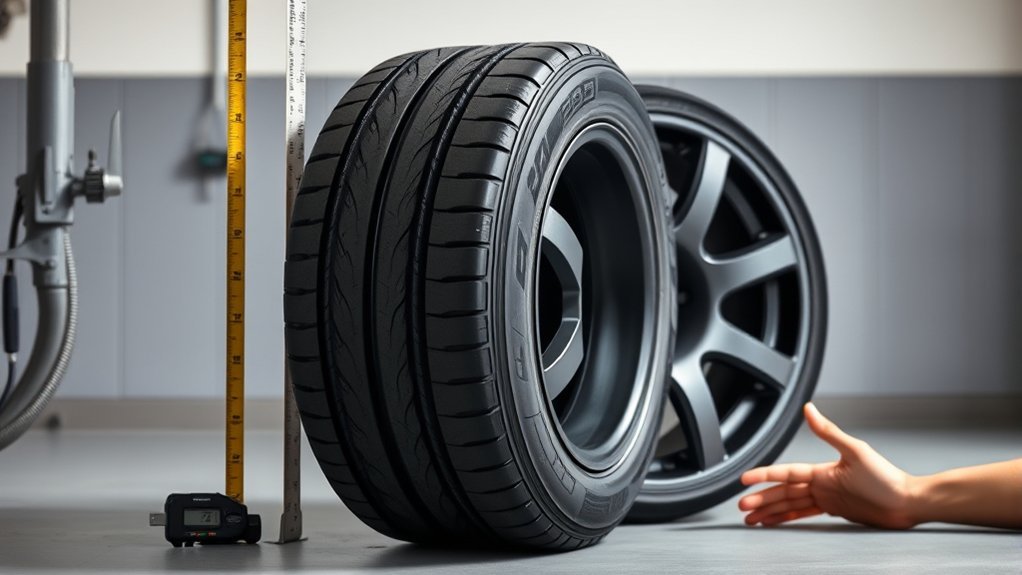
A 275 tire is 275 mm wide, or about 10.8 inches, but that number alone does not tell you the tire’s height. Overall size depends on the full code, such as 275/60R20 or 275/65R20. The aspect ratio controls sidewall height, and the final number tells you the wheel diameter.
Quick Answer
A 275 tire is about 10.8 inches wide because 275 means 275 millimeters of nominal section width. Its height depends on the full tire size. A 275/60R20 is about 33.0 inches tall, while a 275/65R20 is about 34.1 inches tall.
Key Takeaways
- “275” is the tire’s nominal section width in millimeters, not its diameter.
- A 275 tire is about 10.8 inches wide when you convert 275 mm to inches.
- A 275/65R20 is about 34.1 inches tall, while a 275/60R20 is about 33.0 inches tall.
- Many common 275/60R20 and 275/65R20 tires list a 7.5- to 9.5-inch approved rim-width range, but the exact range depends on the tire model.
- Always check your vehicle placard, owner’s manual, wheel width, offset, load index, and clearance before changing tire size.
What Does 275 Mean on a Tire?
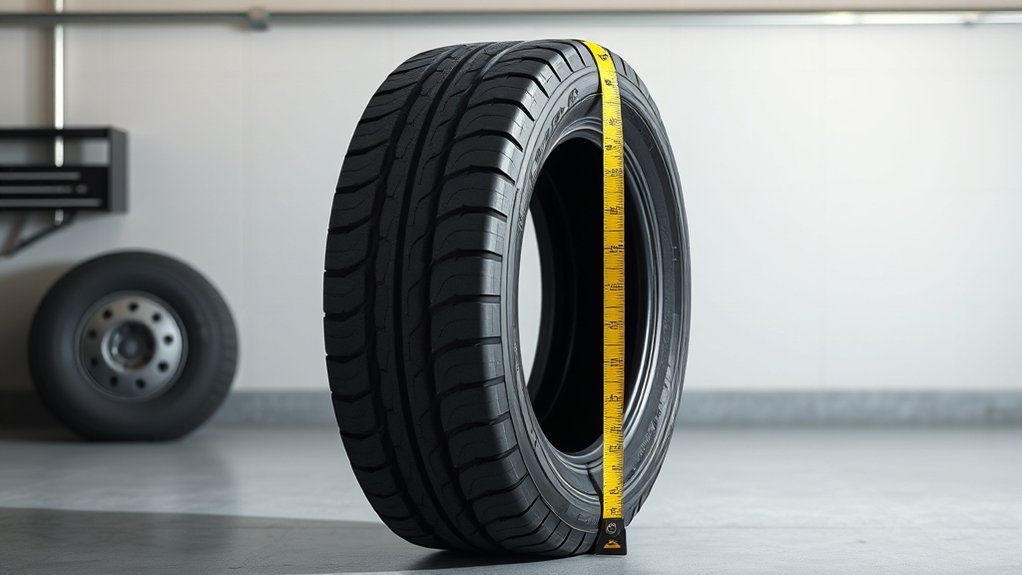
The “275” in a tire size is the tire’s nominal section width in millimeters. Section width is measured from sidewall to sidewall, not across only the tread. So a 275 tire is about 275 mm wide, which equals roughly 10.8 inches.
You still need the rest of the tire code to know the real size. In 275/65R20, the 65 means the sidewall height is 65% of the 275 mm width. The “R” means radial construction, and the 20 means the tire fits a 20-inch wheel.
Note: Published tire dimensions are nominal. The actual mounted width and height can vary by tire brand, tread design, load range, air pressure, and measuring rim width.
275 Tire Size Dimensions
A 275 tire’s width stays about the same across different sizes, but its sidewall and overall diameter change with the aspect ratio and wheel diameter. The basic formula is simple:
- Width in inches: 275 ÷ 25.4 = about 10.8 inches
- Sidewall height: width × aspect ratio
- Overall diameter: wheel diameter + sidewall height + sidewall height
- Circumference: overall diameter × 3.1416
| Tire Size | Approx. Width | Approx. Sidewall | Approx. Diameter | Best Use |
|---|---|---|---|---|
| 275/55R20 | 10.8 in | 6.0 in | 31.9 in | Lower-profile truck or SUV fitment |
| 275/60R20 | 10.8 in | 6.5 in | 33.0 in | Common full-size truck and SUV size |
| 275/65R20 | 10.8 in | 7.0 in | 34.1 in | Taller truck and SUV fitment |
| 275/70R18 | 10.8 in | 7.6 in | 33.2 in | 18-inch truck wheel setups |
Those numbers are useful for comparing sizes, but they are not a replacement for the manufacturer’s spec sheet. If you have tight fender, bumper, control-arm, or suspension clearance, use the exact tire model’s published dimensions before buying.
How Big Is a 275/65R20 Tire?
A 275/65R20 tire is about 34.1 inches tall, 10.8 inches wide, and has a sidewall height of about 7.0 inches. Its circumference is about 107.0 inches. That makes it a tall 20-inch tire commonly used on larger pickup trucks and SUVs.
| Section Width | 275 mm / about 10.8 inches |
| Sidewall Height | About 178.8 mm / 7.0 inches |
| Overall Diameter | About 34.1 inches |
| Circumference | About 107.0 inches |
| Wheel Diameter | 20 inches |
Many 275/65R20 tires are approved for wheels around 7.5 to 9.5 inches wide, but that range can vary by tire model and load range. Check the tire manufacturer’s spec sheet before mounting.
275/65R20 vs 275/60R20
The 275/65R20 and 275/60R20 share the same nominal width and the same 20-inch wheel diameter. The difference is sidewall height. The 65-series tire has a taller sidewall, so it is about 1.1 inches taller overall.
| Metric | 275/60R20 | 275/65R20 |
|---|---|---|
| Width | 10.8 in | 10.8 in |
| Sidewall | 6.5 in | 7.0 in |
| Diameter | 33.0 in | 34.1 in |
| Circumference | 103.6 in | 107.0 in |
| Main Difference | Shorter and slightly quicker-feeling | Taller with more sidewall |
If your truck came with 275/60R20 tires and you switch to 275/65R20, the taller tire can make the speedometer read low by about 3.3%. That means when the speedometer shows 60 mph, the truck may be traveling close to 62 mph. The exact result depends on the original tire size and the actual tire model.
Pro Tip: When comparing tire sizes, compare against the tire size on your door placard or owner’s manual, not against a random online size. That gives you the speedometer and clearance change that matters for your vehicle.
[Products Worth Considering]

This professional wheel and rim cleaning brush set lifts brake dust, grime, and dirt with soft, scratch-free microfiber and synthetic wool fibers. The rim brush bends up to 360 degrees for easy access to hard-to-reach areas around spokes, lips, and faces. Ideal for thorough cleaning of car, truck, motorcycle, bicycle, RV, and more wheel and tire surfaces.
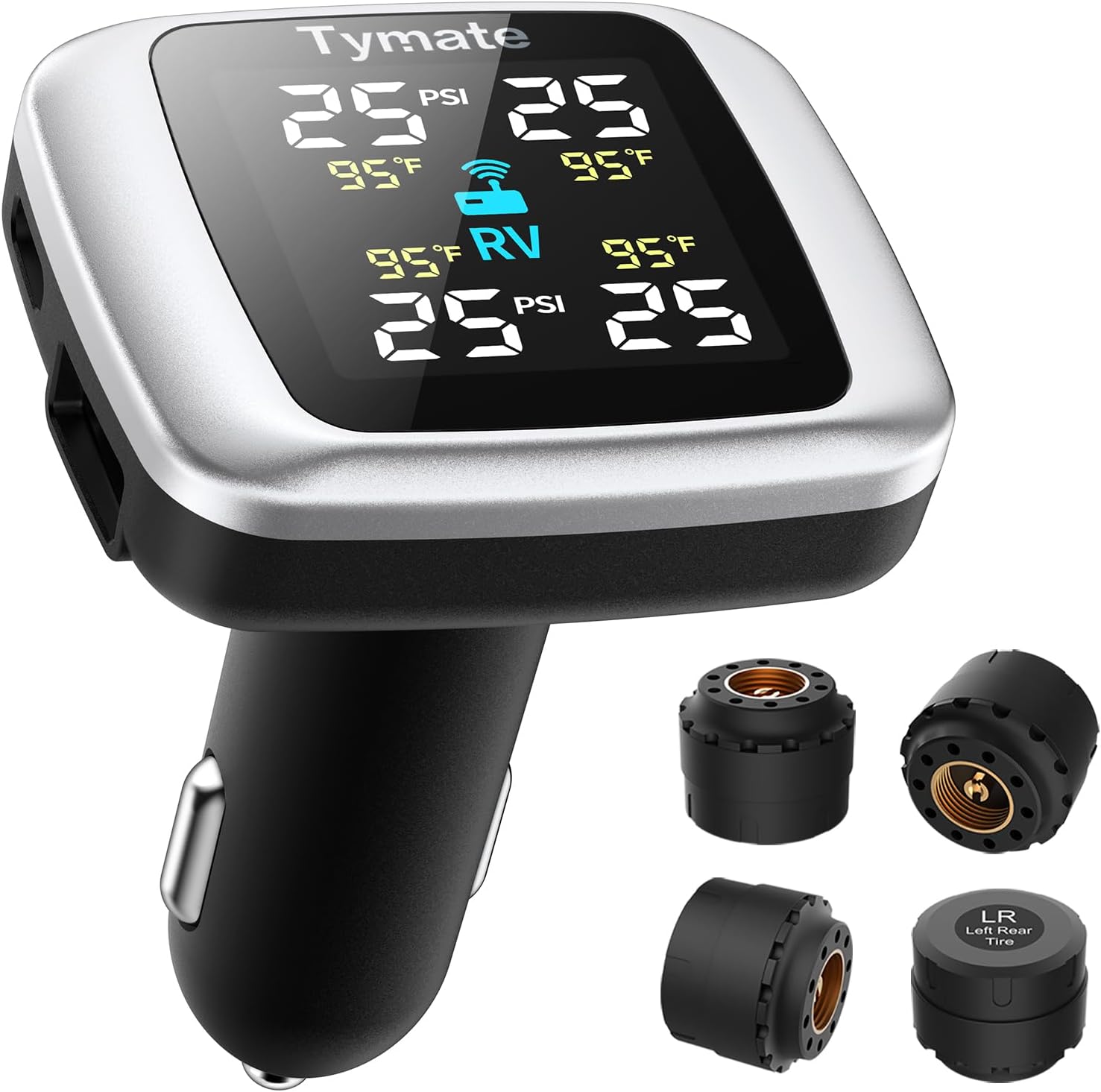
Tymate TM7 is a wireless tire pressure monitoring system that delivers real-time pressure and temperature readings for safer driving. It includes four external sensors, a bright color LCD display with adjustable backlight, and six alarm modes for high/low pressure, fast leakage, high temperature, and sensor signal or battery issues. The system covers a wide 0–144 PSI range and plugs into your vehicle’s cigarette lighter socket for quick DIY setup.

This metal-free wheel and tire cleaning brush uses dense, fluffy synthetic wool to safely clean rims, spokes, fenders, and engine areas without worrying about damaging surfaces. Its flexible, comfortable design helps you reach detailed areas while maintaining durability, and the extra absorbent fibers work well with wheel spray cleaners for faster cleanup. Reusable and washable performance helps prevent grime and build-up for cleaner vehicles and easier maintenance at home.
275/65R20 vs 35-Inch Tires
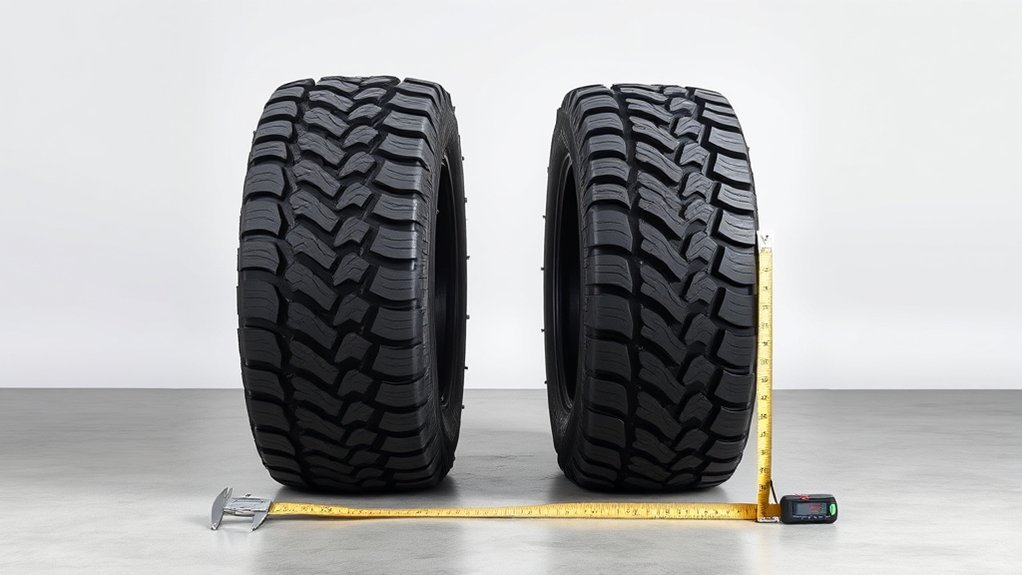
A 275/65R20 is close to a 35-inch tire in height, but it is not the same. A 275/65R20 is about 34.1 inches tall, so it is roughly 0.9 inch shorter than a true 35-inch tire. It is also usually narrower than a common 35×12.50 tire because 275 mm equals about 10.8 inches.
| Metric | 275/65R20 | Typical 35×12.50R20 |
|---|---|---|
| Approx. Diameter | 34.1 in | 35.0 in |
| Approx. Width | 10.8 in | 12.5 in |
| Fitment Impact | Usually easier to fit | More likely to need trimming, lift, or offset changes |
The 275/65R20 is the more conservative choice if you want a taller look without jumping all the way to a wide 35-inch setup. A true 35-inch tire can add ground clearance, but it can also require more fender clearance, affect gearing, add weight, and change speedometer readings.
[Products Worth Considering]

This digital tire pressure gauge with built-in inflator helps you accurately check and adjust tire pressure for safer driving and better fuel efficiency. It supports multiple units (PSI, KPA, BAR, KG/CM²) and reads within 1% for reliable results. The 3-in-1 design inflates, deflates, and measures, with a quick-connect air chuck and compatible hose setup for cars, trucks, SUVs, RVs, and motorcycles.

AZUNO’s digital tire inflator delivers stable, accurate pressure readings with a bright LCD and a 0.1 resolution display for confident inflation. It supports one-handed operation for inflating and quick deflating, and it’s built with rugged steel and brass components for reliable shop or garage use. With multi-unit pressure display and compatibility across cars, SUVs, motorcycles, and trucks, it’s a convenient accessory for everyday tire maintenance.

ETENWOLF T300 is a calibrated digital tire pressure gauge for accurate readings from 3 to 200 PSI across light and heavy-duty vehicles. It includes thermal compensation for reliable performance in extreme cold or heat, with an auto shut-off to extend battery life and an LED for easier reading. The sturdy design supports rugged everyday use, making it ideal for pickups, RVs, and industrial applications.
Will a 275 Tire Fit Your Truck?
A 275 tire may fit your truck, but the answer depends on the complete tire size, wheel specs, suspension, and vehicle requirements. A 275/60R20 is about 33.0 inches tall, while a 275/65R20 is about 34.1 inches tall. That extra height can be enough to cause rubbing on some vehicles.
Warning: Do not choose a tire size by width alone. Use the tire size on your vehicle’s Tire and Loading Information Label, owner’s manual, or a manufacturer-approved alternate size. Also confirm the load index and speed rating meet your vehicle’s requirements.
Use this fitment checklist before buying:
- Check the full tire size: 275/55R20, 275/60R20, and 275/65R20 are different heights.
- Match the wheel diameter: an R20 tire must mount on a 20-inch wheel.
- Confirm approved rim width: use the tire manufacturer’s rim-width range for that exact tire.
- Check wheel offset and backspacing: a lower offset can push the tire outward and increase fender contact.
- Test full-lock clearance: turn the steering wheel both ways and check the liner, control arm, sway bar, and bumper area.
- Check compression clearance: tires can rub when the suspension compresses over bumps or under load.
- Verify load index and speed rating: replacement tires should meet or exceed the vehicle’s requirements.
- Consider speedometer calibration: a taller or shorter tire changes revolutions per mile.
[Products Worth Considering]

ETENWOLF’s tire pressure gauge helps you quickly and accurately check tire PSI across cars, trucks, motorcycles, bikes, and more. It’s manually calibrated to ANSI B40.1 Grade A for reliable readings, includes a large glow dial for easy nighttime viewing, and features a 360-degree swivel chuck for use at any valve angle. The gauge also works consistently in extreme hot or cold weather.

Slip the Powerbuilt tire step over your vehicle’s tire to reach roof racks, engine bays, truck boxes, and more without overreaching. Its adjustable, universal design fits tires with a cross tread width up to 13 inches, including car, truck, RV, and semi tires. The non-slip cheesegrater surface and anti-slip tape provide secure grip while the open design lets mud and debris pass through. Fold-flat storage with rubber bumpers helps keep your tire and the step protected between uses.

The Chemical Guys Big Blue Stiffy Heavy Duty Cleaning Brush is designed for deep scrubbing of tires, upholstery, and carpets. Stiff synthetic bristles help lift tough dirt, grime, and tar while the ergonomic grip makes scrubbing comfortable and controlled. Use it with wheel and tire cleaners followed by dressings and protectants to help enhance and extend a lasting shine.
Wheel Width, Offset, and Clearance
Wheel width and offset can change how a 275 tire fits. The same tire may measure slightly narrower on a narrow wheel and slightly wider on a wide wheel. That matters when clearance is tight at the fender, frame, control arm, or inner liner.
For many common 275/60R20 and 275/65R20 tires, the approved wheel-width range is often around 7.5 to 9.5 inches, with 8 to 9 inches common on trucks. Still, you should treat that as a starting point, not a universal rule. Always use the spec sheet for the exact tire model you plan to buy.
Offset is just as important as width. More positive offset usually pulls the tire inward. Less positive or negative offset pushes the tire outward. Pushing the tire outward can help inner clearance, but it may create fender or bumper rubbing. The right setup balances inner clearance, outer clearance, bearing load, and steering feel.
Load Index, LT vs P, and Tire Pressure
Size is only one part of choosing a 275 tire. You also need the correct load index, speed rating, and service type. A P-metric 275 tire and an LT 275 tire can have different load capacity, pressure requirements, weight, ride feel, and sidewall stiffness.
The load index is the number near the end of the tire code that tells you how much weight the tire can support. LT tires may also show a load range, such as Load Range E. Do not assume every 275 tire has the same capacity. Read the sidewall and compare it with your vehicle requirements.
Note: Use the cold tire pressure listed on your vehicle placard unless your tire or vehicle manufacturer gives a different approved setup. The maximum pressure on the tire sidewall is not automatically the pressure your vehicle should run every day.
Frequently Asked Questions
Is a 275 the same as a 33 tire?
Not always. A 275 tire is about 10.8 inches wide, while a 33-inch tire refers to overall diameter. Some 275 sizes, such as 275/60R20 and 275/70R18, are close to 33 inches tall. A 275/65R20 is taller at about 34.1 inches.
What is a 275 tire equivalent to?
A 275 tire is about 10.8 inches wide. The height equivalent depends on the aspect ratio and wheel diameter. A 275/60R20 is roughly 33×10.8R20, while a 275/65R20 is roughly 34×10.8R20.
Are 275 tires the same as 35-inch tires?
No. A 275/65R20 is about 34.1 inches tall, so it is close to 35 inches but still shorter. It is also narrower than a common 35×12.50 tire because 275 mm is about 10.8 inches wide.
Is a 275 tire smaller than a 285?
A 275 tire is narrower than a 285 tire by 10 mm, or about 0.4 inch. The 285 may also be slightly taller if the aspect ratio and wheel diameter are the same, but you need the full tire size to compare accurately.
How wide is a 275 tire in inches?
A 275 tire is about 10.8 inches wide. The conversion is 275 divided by 25.4. Actual mounted width may vary slightly by wheel width, tire model, and manufacturer specs.
Will 275 tires affect my speedometer?
They can if the new tire’s diameter is different from your original tire. A taller tire travels farther per rotation, so the speedometer may read low. A shorter tire does the opposite. Compare the new diameter against your original size before changing.
Conclusion
A 275 tire is about 10.8 inches wide, but its total height depends on the full tire code. A 275/60R20 is about 33.0 inches tall, while a 275/65R20 is about 34.1 inches tall. That is close to a 35-inch tire, but it is not the same size.
For safe fitment, do not shop by width alone. Check the full tire size, wheel diameter, approved rim width, offset, load index, speed rating, and vehicle clearance. If the new size is taller or shorter than stock, also account for speedometer change and possible rubbing.
Sources
- Goodyear — How to Check Tire Size — tire-width, aspect-ratio, rim-diameter, load-index basics.
- Tire Rack — How Do I Calculate Tire Dimensions? — tire-size formula and nominal-dimension warning.
- Tire Rack — How to Determine Section Width — section width, measuring rim, and clearance effects.
- Tire Rack — Rim Width Range — how rim width affects section width and fitment.
- NHTSA TireWise — tire safety, tire ratings, and vehicle placard guidance.