
How Tall Is a 275 65R20 Tire? Exact Height, Width & Dimensions
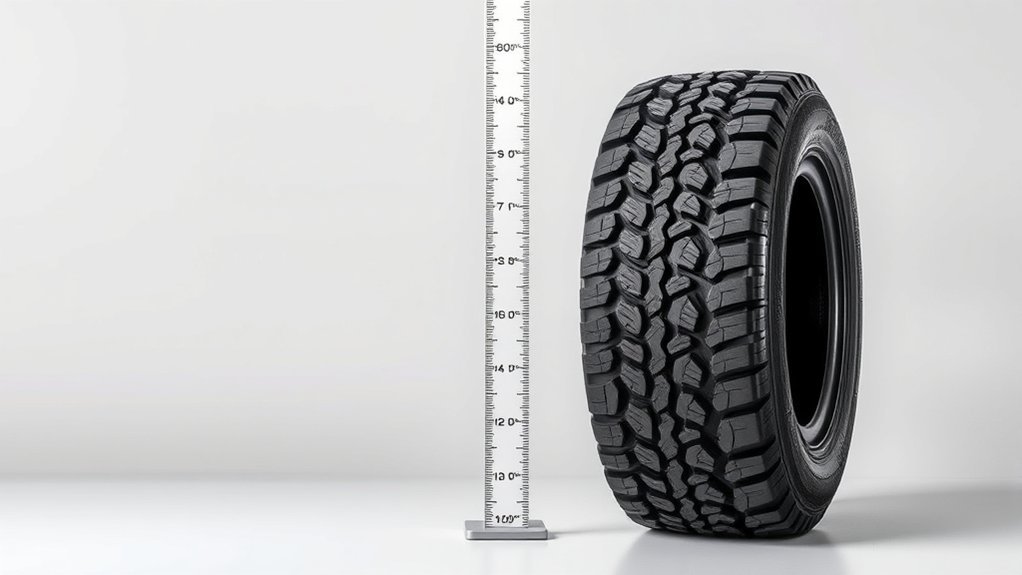
A 275/65R20 tire is about 34.1 inches tall overall, with a width of 275 mm, or 10.8 inches. You get a sidewall height near 7.0 inches, a circumference of about 107.1 inches, and roughly 592 revolutions per mile. It fits a 20-inch wheel and usually works with 7.5- to 9.5-inch rim widths. Compared with 275/60R20, it’s taller. If you keep going, you’ll see how that changes fitment, speed, and MPG.
Key Takeaways
- A 275/65R20 tire is about 34.1 inches tall, or 866 mm in overall diameter.
- It measures 275 mm wide, which is about 10.8 inches.
- The sidewall height is roughly 7.0 inches, or 179 mm.
- Its circumference is about 107.1 inches, with roughly 592 revolutions per mile.
- This size fits many stock pickup trucks, but check clearance, load rating, and wheel width first.
What Is a 275/65R20 Tire?
A 275/65R20 tire is a radial tire with a 275 mm tread width, a 65% aspect ratio, and a 20-inch wheel diameter. When you read 275/65R20, you’re seeing a technical code that defines fitment and performance. The 275/65R20 format uses an aspect ratio of 65, so the sidewall scales from tread width rather than arbitrary styling. That yields an overall diameter of about 34.1 inches, which you can use to evaluate clearance, gearing, and speedometer behavior. You also get a circumferential measure near 107.1 inches, so rotation-based readings shift if you change sizes. This tire’s radial construction helps maintain stability, traction, and controlled flex on mixed terrain. Its load capacity commonly ranges from 2,756 to 3,750 pounds per tire, so you can equip heavy-duty vehicles without surrendering capability or autonomy. Additionally, tread life is a key factor to consider when selecting tires for optimal performance in various conditions.
How Tall Is a 275/65R20 Tire?
The 275/65R20 tire stands about 34.1 inches tall overall, or 866 mm in metric terms. That tire size gives you a clear diameter reference, and you can use it to judge fitment, clearance, and gearing with confidence. In practical terms, the diameter is the key number you need when comparing options or checking if your setup keeps your vehicle free to move without constraint.
The 275/65R20 tire offers a 34.1-inch diameter, making fitment and clearance checks straightforward.
- Overall diameter: 34.1 in (866 mm)
- Sidewall height: 7.0 in (179 mm)
- Revolutions per mile: about 592
You’re looking at a tire dimension that can influence speedometer readings and vehicle response, so precision matters. If you want a setup that supports control and independence, start with the diameter first, then verify the rest of the tire size against your vehicle’s requirements. Additionally, consider the treadwear warranty associated with your tire choice as it can impact long-term performance.
275/65R20 Width, Sidewall, and Circumference
At 275 mm wide, this 275/65R20 tire measures about 10.8 inches across, giving you the baseline dimension for fitment and clearance checks. You can use a Tire Size Finder to verify that width against your wheel well and suspension space without guesswork. The sidewall height comes in at about 6.5 inches, or 178.75 mm, because the 65% aspect ratio is taken from the tire’s width. That sidewall profile gives you a direct measure of how much casing sits between the rim and the road, which matters for load support and ride behavior. The overall diameter is about 34.1 inches, and the tire’s circumference is roughly 107.1 inches. Those numbers shape speedometer accuracy, gearing feel, and rotational output. At about 592 revolutions per mile, you can quantify how the tire turns through distance and assess its effect on vehicle dynamics with precision. Additionally, understanding tire specifications can help you choose the best tires for your vehicle’s performance needs.
How Does 275/65R20 Compare to 275/60R20?
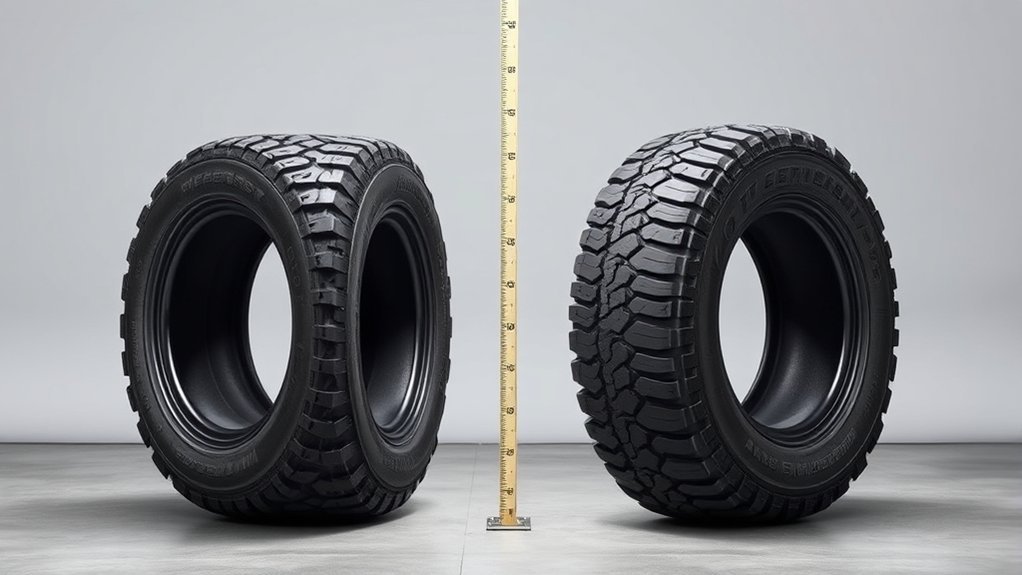
Compared with a 275/60R20, a 275/65R20 tire is noticeably taller, with an overall diameter of about 34.1 inches versus roughly 33 inches, so you gain about 1.1 inches of height. That extra 275/65R20 diameter changes how your vehicle feels, reads, and responds on the road.
- Sidewall height rises to about 7.04 inches, or 8.3% more.
- Circumference increases to roughly 107.1 inches, so your speedometer can read slightly off.
- You may get better traction, but fuel economy can dip because the tire sits higher and weighs more.
- Choosing the right tire can significantly affect ride comfort and fuel economy.
If you want more ground clearance and a larger contact patch, the 275/65R20 gives you that freedom. If you prioritize efficiency and lower rotational demand, the 275/60R20 stays the lighter, leaner choice. You’ll also need a bit more torque to turn the larger tire, so the tradeoff is real.
How Does 275/65R20 Compare to 35-Inch Tires?
A 275/65R20 tire measures about 34.1 inches tall and 10.8 inches wide, so it sits just below a typical 35-inch tire, which usually runs closer to 35.1 inches tall and about 12.5 inches wide. That means your 275/65R20 tire gives you nearly the same overall stance, but with less height and width. You’ll notice a smaller circumference too, about 107.1 inches versus roughly 110 inches, so your speedometer can read a bit differently. The sidewall also stays shorter, near 7.0 inches instead of about 8.75 inches, which tightens response and slightly reduces cushioning. From a technical view, the 275/65R20 tire carries a lighter footprint, with a load rating around 2,756 pounds, while a 35-inch tire often supports more. If you want measured performance and freedom from excess bulk, the height and width tradeoff is clear. Additionally, understanding the importance of tire quality can significantly enhance your vehicle’s performance.
Will 275/65R20 Fit Stock Pickup Trucks?
Because a 275/65R20 measures about 34.1 inches tall, it fits many stock pickup trucks without suspension modifications. Its overall diameter gives you a strong blend of ground clearance and control. For you, 275/65R20 tires can work on stock pickup trucks like the Silverado 1500 and F-150, but fitment isn’t universal. You should verify factory specs, load ratings, and clearance limits before you commit.
Because 275/65R20 tires measure about 34.1 inches tall, they often fit stock trucks without suspension mods.
- Overall diameter: about 34.1 inches
- Tread width: about 10.8 inches
- Sidewall height: about 7.0 inches
That geometry usually clears well, yet some trucks may show minor rubbing at full lock or during hard compression. If you want freedom from unnecessary lifts, this size often delivers. Still, you need to confirm your exact trim, wheel offset, and suspension tolerances. Precision matters because even small differences can change clearance behavior. When the numbers line up, you get a capable, balanced upgrade without sacrificing stock drivability or safety. Additionally, selecting the right tires can enhance wet-weather traction and ensure a smoother ride overall.
What Wheel Width Works Best for 275/65R20?
For a 275/65R20, you should target a 7.5 to 9.5-inch wheel width, with 8 inches as the most common fitment. Because the tire uses a 20-inch bead seat diameter, it fits standard 20-inch rims, but wheel width still affects handling and wear. You also need to verify offset and clearance, since a +18 offset can rub more than a +44 offset on the same tire size. Additionally, maintaining tire pressure is crucial for optimizing performance and fuel efficiency.
Ideal Wheel Width Range
The ideal wheel width for a 275/65R20 tire falls between 7.5 and 9.5 inches, with 8 inches being the most common fitment. This ideal wheel width range keeps the 275/65R20 tire’s 275 mm width properly supported and preserves its engineered profile. You’ll get cleaner steering, better road contact, and more stable traction.
- Too narrow: increased wear and vague handling
- Too wide: higher rubbing risk at suspension points
- Best practice: match width to load, offset, and backspacing
If you stay within spec, you let the tire work freely instead of forcing compromises. That precision gives you control, durability, and the kind of mechanical freedom that keeps your setup responsive on-road and off-road.
Stock Rim Fitment
A 275/65R20 tire fits best on a 7.5- to 9.5-inch wheel, with 8 inches as the standard target for ideal stock rim fitment. When you match a 275/65R20 to that width, you preserve the tire’s intended profile and keep the tire dimensions close to design spec. Its section width measures about 10.8 inches, so a properly sized stock rim supports stable tread seating and predictable contact behavior. You can run this setup on standard suspension without modification, and that’s a practical advantage for freedom from unnecessary changes. Still, you should verify fitment at full steering lock, because slight rubbing can occur if the package isn’t centered. Load ratings vary by brand, but the structure generally handles heavy duty use well.
Offset And Clearance
When you’re choosing an offset for a 275/65R20, wheel width matters, but offset can change fitment even more. You’ll want a 7.5 to 9.5 inch wheel, with about 8 inches ideal for stable dimensions and even tire seating.
- A +44 offset usually keeps the tire tucked better and improves clearance.
- A +18 offset can push the tire outward, increasing rubbing risk at full lock.
- Expect minor plastic trimming if your suspension compresses hard or your wheel wells are tight.
Because this tire measures about 34.1 inches tall, it can crowd the wheelhouse more than smaller sizes. Most stock suspensions clear it, but your vehicle’s geometry decides the final result. Measure, compare, and choose the setup that frees your build without sacrificing control.
How Do 275/65R20 Tires Affect Speedometer Accuracy?
A 275/65R20 tire’s larger 34.1-inch diameter can skew your speedometer by about 6.2%, so your displayed speed may run roughly 4 mph lower than your actual speed at 60 mph. That size change also affects your odometer, since each mile covered turns into fewer revolutions than your system expects. You may also notice altered shift behavior, because the taller effective gearing can let the transmission hold higher gears longer, especially under load. Additionally, using tires with improved handling and traction can further enhance your driving experience and help mitigate any negative effects on performance.
Speedometer Error Rate
Because a 275/65R20 tire measures about 34.1 inches in overall diameter, it can throw off a factory-calibrated speedometer that was set up for smaller tires. You’ll see speedometer inaccuracies because the diameter of the wheel increases, so each revolution covers more ground. That larger circumference means fewer revolutions per mile, and your dash can underreport speed by roughly 6.2%.
- 60 mph indicated may be about 64 mph actual
- towing or heavy loads can amplify calibration drift
- calibration adjustments restore precision and control
If you want accurate telemetry, you should recalibrate after the tire swap. Doing so helps you reclaim mechanical truth, maintain compliance, and move with confidence rather than guesswork.
Actual Versus Displayed Speed
Even though a 275/65R20 tire has an overall diameter of about 34.1 inches, it can make your speedometer read about 6.2% high, so an indicated 60 mph may actually be closer to 64 mph on the road. This actual versus displayed speed gap comes from the larger diameter, which changes wheel rotation per mile. You can compare the numbers below:
| Indicated | Actual |
|---|---|
| 30 mph | 31.9 mph |
| 50 mph | 53.1 mph |
| 60 mph | 63.7 mph |
Tire manufacturers publish fitment data, but you still need to verify your vehicle’s calibration. If you value precise control, check your speed with GPS and stay aware of the offset.
Odometer and Gear Impact
When you switch to a 275/65R20 tire, the larger 34.1-inch diameter changes wheel revolutions per mile, so your speedometer and odometer can read low or high relative to actual road speed. The error can reach about 6.2%, meaning an indicated 60 mph may be closer to 64 mph. That gap also distorts distance tracking and frees you to recalibrate with precision.
- Larger diameter lowers revolutions per mile.
- Your speedometer and odometer undercount miles.
- Gear ratios feel taller, which can blunt acceleration and towing performance.
If you keep the new size, recalibrate the cluster and, if needed, adjust axle or transmission settings. That keeps your readings honest and your vehicle operating as intended.
Do 275/65R20 Tires Affect MPG and Power?
Yes—275/65R20 tires can affect both MPG and power. When you install 275/65R20 tires, you usually see a 1-2 mpg hit because they add rotational mass and raise rolling resistance. That means your engine must work harder to keep momentum, especially in stop-and-go traffic and on hills. The taller diameter also changes your effective gearing, so you may notice slower power delivery during acceleration and more downshifting while towing or climbing grades. Because the tire is larger, your speedometer will read low; actual speed is about 6.2% faster than indicated. That error can also distort fuel economy tracking if you don’t correct it. You can reduce the penalty with proper inflation and smoother inputs, but you can’t erase the physics. In practical terms, you gain traction and stance, yet you trade some efficiency and responsiveness for that freedom. Additionally, selecting tires with long-lasting performance can help mitigate some negative effects on power and fuel economy.
Frequently Asked Questions
How Much Taller Is a 275 65 R20 Than a 275 60 R20?
A 275/65R20 is about 1.1 inches taller than a 275/60R20. In this tire size comparison, the aspect ratio impact adds roughly 0.5 inch of sidewall per tire, which increases overall diameter and circumference. You’ll notice slight ride quality differences, with a bit more cushion and a taller stance. That extra height can alter speedometer readings, gearing, acceleration, and fuel economy, so you should account for it.
Which Tire Is Taller, a 65 or 70?
The 70 tire is taller than the 65. You’re comparing tire aspect ratios, and a 70-series sidewall adds about 1.2 inches in overall diameter versus a 65-series tire of the same width. That extra height changes performance differences, giving you more ground clearance and a softer ride, while load capacity can remain similar if the tire’s construction matches. You get a more assertive stance and freer off-road movement.
Is a 275 65R20 a 33 Inch Tire?
No, you’re not looking at a true 33-inch tire. In a Renaissance workshop, you’d call it closer to 34 inches overall. Your tire specifications show about 34.1 inches in diameter, so the size differences are real. That extra inch can alter clearance and speedometer calibration, creating measurable performance impact. If you want liberation from guesswork, compare exact dimensions, not label assumptions, before you buy or lift your vehicle.
What Is the Actual Height of 275 65 20?
A 275/65R20 tire’s actual height is about 34.1 inches, or 866 mm. You can verify this from tire specifications: the 275 mm width and 65% aspect ratio create a roughly 7.0-inch sidewall on a 20-inch wheel. That size affects wheel compatibility, clearance, and performance impacts like gearing, ride height, and handling. You’ll get about 107.1 inches of circumference and roughly 592 revolutions per mile.
Conclusion
So, if you’re comparing 275/65R20 tires, you’re looking at a tire that’s tall, wide, and built for a specific fit. You get a larger overall diameter, a higher sidewall, and a bigger footprint than shorter alternatives. You also change your speedometer reading, your gearing feel, and your fuel economy. When you measure fitment, compare dimensions, compare clearance, and compare performance. That way, you’ll know whether this size works for your truck and your driving needs.

Related Articles
How Much Does a Semi Tire Weigh? Exact Weight Guide
A semi tire’s weight varies more than you think, and the exact numbers may surprise you.
Read More
Where to Find the Date on a Tire: DOT Code Location Guide
A tire’s date hides in the DOT code on the sidewall—find out exactly where to look and what those numbers really mean.
Read More
What Is a Tire Made Of? Inside Materials, Layers & Construction
Discover what hides inside a tire’s layered construction and how each material quietly shapes grip, strength, and performance.
Read More