
Toyota Hilux PCD and Bolt Pattern Specs Explained
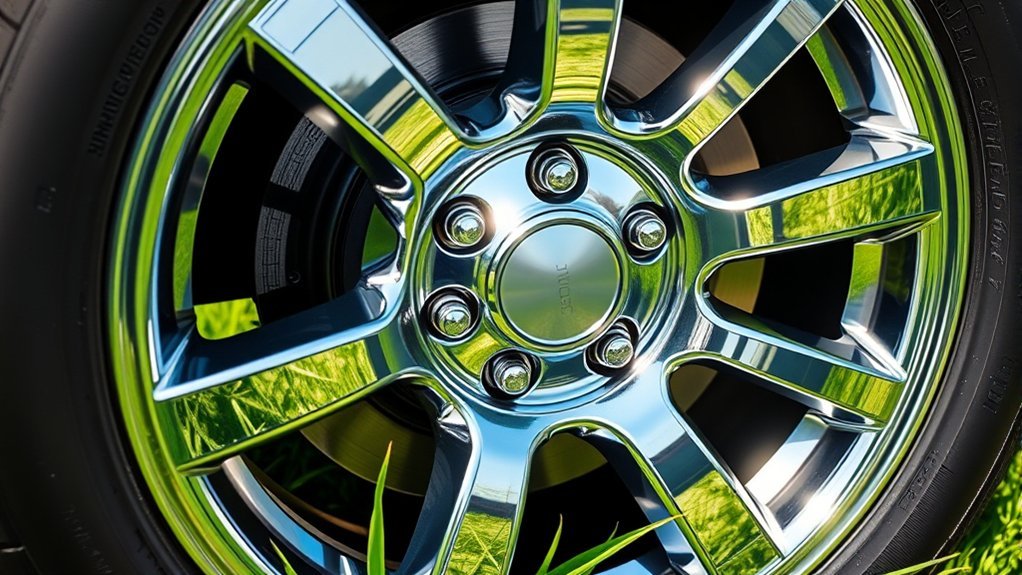
Choosing wheels for a Toyota Hilux is not just about finding a rim that looks good. The wheel must match the Hilux’s PCD, center bore, offset, load rating, brake clearance, and tyre size. Many modern Hilux models use a 6×139.7 bolt pattern, but some older 2WD variants are different, so the safest approach is to verify your exact year, market, trim, and hub measurements before buying.
Quick Answer
Most modern Toyota Hilux models use a 6×139.7 PCD with a 106.1mm center bore and M12x1.5 wheel studs. Some older 2WD Hilux variants use 5×114.3 with a smaller center bore, so always confirm your exact model by year, placard, owner’s manual, dealer, or direct measurement.
Key Takeaways
- The common modern Hilux bolt pattern is 6×139.7, but older 2WD models may use 5×114.3.
- Center bore matters as much as PCD. A wheel with the wrong bore can vibrate or fail to sit correctly on the hub.
- Offset, wheel width, tyre size, load rating, brake clearance, and suspension clearance must all be checked together.
- Use the tyre placard, owner’s manual, or Toyota dealer as your final fitment check before buying wheels or tyres.
At a Glance
| Time Required | 10–15 minutes to check specs; 30–60 minutes if measuring and test-fitting wheels |
| Difficulty | Easy for spec lookup; moderate for physical measurement and clearance checks |
| Tools Needed | Owner’s manual, tyre placard, ruler or calipers, straightedge, jack stands, and a calibrated torque wrench if fitting wheels |
| Cost | Free to check specs yourself; professional fitting, balancing, alignment, and test-fitting costs vary by shop |
Understanding the Toyota Hilux Bolt Pattern
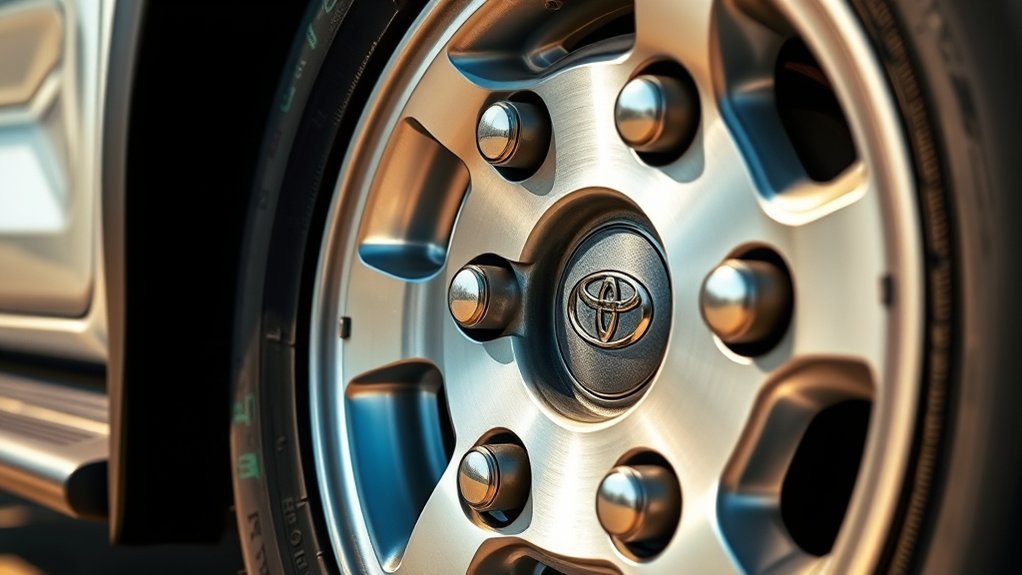
The Toyota Hilux bolt pattern is the number of wheel studs and the diameter of the circle they form. A 6×139.7 pattern means the wheel has six stud holes arranged on a 139.7mm pitch circle diameter.
For many modern Hilux models, the common fitment is 6×139.7 PCD, a 106.1mm center bore, and M12x1.5 wheel hardware. However, older 2WD Hilux variants can use 5×114.3 PCD and a smaller center bore. That is why “Hilux wheels” should never be treated as universal.
Warning: Do not install wheels based on PCD alone. A wheel can have the right bolt pattern and still be unsafe if the center bore, offset, wheel width, load rating, brake clearance, or lug seat type is wrong.
[Products Worth Considering]

Upgrade your 2024-2026 Tesla Model 3 Highland with REEVAA all-weather mud flaps designed for seamless fit along the original body lines. The set of four delivers strong splash protection against mud, gravel, and road debris while using OEM-grade durable materials. Installation is non-destructive with original hole positions and snap-in clips, and the aerodynamic design helps minimize impact on efficiency.

Upgrade your wheels with MIKKUPPA M12x1.5 mag seat lug nuts built for secure, corrosion-resistant performance. These closed-end chrome lug nuts are a direct replacement for select Toyota models, including Camry, Corolla, RAV4, Sienna, Avalon, Highlander, Matrix, Venza, and Prius. Triple-chromium plating and cold-forged, heat-treated steel help deliver strength for daily driving and replacement needs.

These M14x1.5 closed-end chrome lug nuts are a one-piece replacement designed for secure fitment on compatible GM, Ford, and select Chrysler/Dodge models. Featuring a 60-degree conical seat and anti-rust chrome plating, they help resist corrosion and maintain a bright look for everyday driving. Built for long-term durability, they include OEM-style part references and are backed by 12 months of support.
What PCD Means and Why It Matters
PCD stands for Pitch Circle Diameter. It describes the imaginary circle running through the center of the wheel studs or bolt holes. On a Hilux, the PCD must match the hub exactly, or the wheel will not sit and clamp correctly.
PCD matters because it affects:
- Wheel mounting safety: The studs must pass cleanly through the wheel holes without forcing or slotting.
- Hub alignment: The wheel must center correctly on the hub and mounting face.
- Vibration control: Poor fitment can cause steering shake, uneven tyre wear, and loose hardware.
- Brake and suspension clearance: PCD is only one part of the fitment; the wheel still has to clear the calipers, guards, and suspension.
PCD vs. Center Bore
PCD tells you whether the stud holes line up. Center bore tells you whether the wheel’s center hole fits over the raised hub lip. Most modern Hilux fitment data uses a 106.1mm hub bore, but older 2WD models may be different.
If the wheel center bore is smaller than the hub, the wheel will not fit. If it is larger, the wheel may need correctly sized hub-centric rings so it centers properly before the lug nuts are torqued.
Note: Hub-centric rings do not change the PCD, offset, load rating, or brake clearance. They only help center a wheel with a larger center bore on the vehicle hub.
Common Toyota Hilux PCD, Center Bore, and Wheel Specs
The table below is a practical fitment guide. It is not a substitute for checking your exact Hilux by VIN, market, trim, and wheel package.
| Hilux type / era | Common PCD | Common center bore | Notes |
| Modern Hilux, many 4×2 and 4×4 models | 6×139.7 | 106.1mm | Common on current and recent Hilux generations; confirm wheel package and offset before buying. |
| Hilux Vigo / N70-era 4×4 models | 6×139.7 | Usually 106.1mm | Offset and wheel width vary by trim, market, and aftermarket setup. |
| Older 2WD Hilux variants | Often 5×114.3 | Varies by year and source | Measure directly or confirm with a fitment database, Toyota dealer, or wheel specialist. |
Current Toyota Australia HiLux specifications list 17-inch and 18-inch wheel packages depending on grade, with common tyre sizes including 265/65R17 and 265/60R18. You can compare current grade-level wheel and tyre packages in the Toyota Australia HiLux specification sheet.
How to Measure PCD for Your Toyota Hilux
Measuring PCD is useful when you are checking older wheels, second-hand wheels, or a Hilux with unknown history. Use calipers if possible, and measure from the center of the holes or studs, not from the outside edges unless you are following a 5-lug measuring method.
For a 6-lug Hilux wheel
- Count the wheel studs or holes. A modern Hilux should usually have six.
- Pick one stud or hole and measure straight across to the center of the opposite stud or hole.
- The center-to-center distance is the PCD. For a common modern Hilux, this should be about 139.7mm.
- Confirm the center bore by measuring the wheel’s center hole and the hub’s raised lip.
For a 5-lug older 2WD Hilux wheel
- Count the studs or holes. If there are five, do not use the 6-lug method.
- Use a 5-lug PCD gauge, a printed template from a wheel supplier, or a caliper method recommended by the wheel manufacturer.
- Many older 2WD Hilux wheels are listed as 5×114.3, but you should still verify before buying.
- Check center bore separately because older 2WD bore sizes are not always the same as modern 4×4 Hilux hubs.
Pro Tip: If you are buying used wheels, ask the seller for a photo of the wheel stamp, PCD, offset marking, width marking, and center bore measurement. A wheel that “came off a Toyota” is not automatically correct for a Hilux.
Why Wheel Offset Is Crucial for Performance
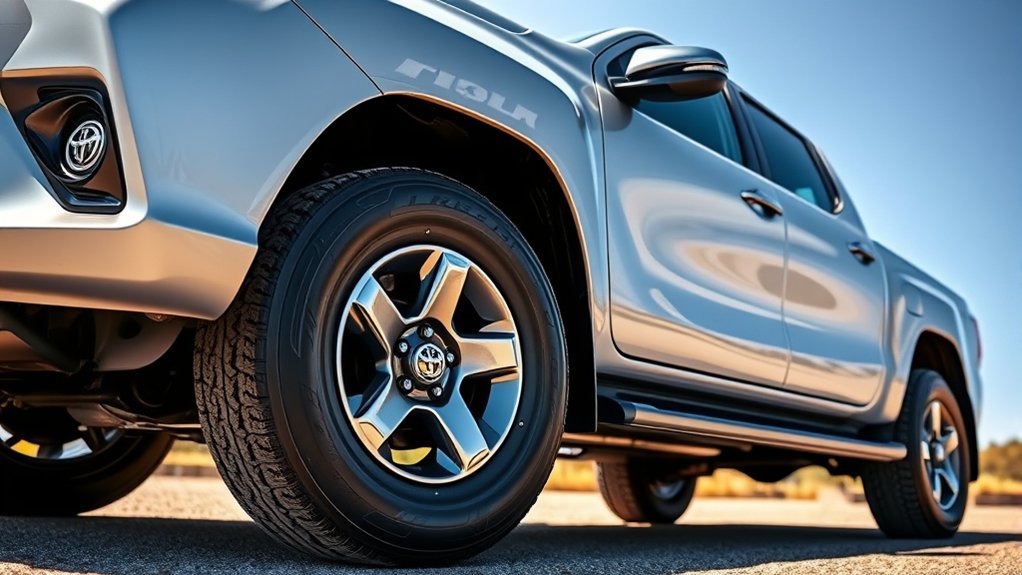
Wheel offset is the distance between the wheel’s mounting face and its centerline. It is usually written as ET followed by a number, such as ET30 or ET45.
- Higher positive offset: Pulls the wheel farther inward. Too much can cause suspension or inner-guard contact.
- Lower positive offset: Pushes the wheel farther outward. This can improve stance, but may increase guard rub, steering load, bearing stress, and legal track-width issues.
- Negative offset: Pushes the wheel outward even more. It is common on aggressive off-road builds but needs careful clearance and legal checks.
There is no single “best” Hilux offset. The right number depends on wheel width, tyre size, suspension height, flare coverage, brake package, load use, and local road rules. Before committing to aftermarket wheels, test-fit one front and one rear wheel and check full steering lock, suspension compression, brake clearance, and guard clearance.
A safe Hilux wheel fitment is the combination of PCD, center bore, offset, width, tyre size, load rating, brake clearance, and correct wheel hardware—not one number in isolation.
Recommended Wheel Sizes for Hilux Generations
Factory Hilux wheel sizes vary by generation, market, and grade. As a practical guide, many current Hilux grades use 17-inch or 18-inch wheels, while older generations may use 15-, 16-, or 17-inch wheels. Aftermarket wheels may be available in larger diameters, but larger is not automatically better.
When comparing wheel sizes, check:
- Diameter: Must clear the brakes and match a tyre size with suitable overall diameter.
- Width: Must suit the tyre manufacturer’s approved rim-width range.
- Offset: Must keep the tyre away from the suspension, chassis, guards, and mud flaps.
- Load rating: Must be suitable for the Hilux’s axle load and how you use the vehicle.
- Tyre size, load index, and speed rating: Match or exceed the manufacturer recommendation unless a qualified professional confirms an approved alternative.
For tyre safety, the NHTSA tire safety guide recommends checking the vehicle’s tyre and loading label or owner’s manual for the correct tyre size and cold inflation pressure. The U.S. Tire Manufacturers Association also advises replacement tyres to match the manufacturer-recommended size, load index, and speed rating.
How to Choose Wheels for Off-Roading vs. Urban Driving
Your best wheel setup depends on how the Hilux is used. A daily-driven work ute, a towing setup, and a lifted off-road build may all need different wheel and tyre choices.
[Products Worth Considering]

Upgrade your wheels with MIKKUPPA closed-end lug nuts designed for reliable fit and corrosion resistance. The one-piece, cold-forged and heat-treated steel construction helps resist rust and stripping, while the integrated finish delivers a durable black appearance. Built to OEM standards with a conical 60-degree seat, these nuts provide a secure solution for compatible Ford, Honda, Jeep, and Chevrolet models.

The Trivd Frol 1/2" air impact wrench delivers high performance torque up to 1500 ft-lbs with a twin hammer impact mechanism for strong, balanced blows. It features an ergonomic grip, compact lightweight design, and quick-stop control with 3 forward speeds up to 8000 RPM plus a reverse speed. Built for demanding automotive repair and tire shop work, the rear exhaust helps keep debris away from the surface.

This 1/2-inch drive breaker bar delivers powerful leverage for loosening and tightening stubborn lug nuts and automotive fasteners. The 180-degree flex head helps you reach tight spaces at the angle you need, making tire and brake jobs easier. A spring-loaded ball detent design holds 1/2-inch sockets securely while the chrome-moly head provides durable strength for everyday use.
For off-road driving
- Choose a strong wheel with a load rating suitable for rough tracks, tools, passengers, accessories, and towing.
- Consider tyres with stronger sidewalls if you drive on rocks, gravel, corrugations, or remote tracks.
- A slightly wider stance can help stability, but too much poke can cause guard rub and legal problems.
- Steel wheels can be cheaper and easier to repair in remote areas, while quality alloys can reduce weight and offer good strength.
For urban and highway driving
- Prioritize correct offset, balance, alignment, low vibration, and good wet-road tyre performance.
- Factory-size wheels often provide the best balance of comfort, steering feel, tyre availability, and legality.
- Large-diameter wheels with lower-profile tyres may look sharper but can reduce ride comfort and increase wheel-damage risk on potholes.
Ensuring Proper Fitment for Your Hilux Wheels
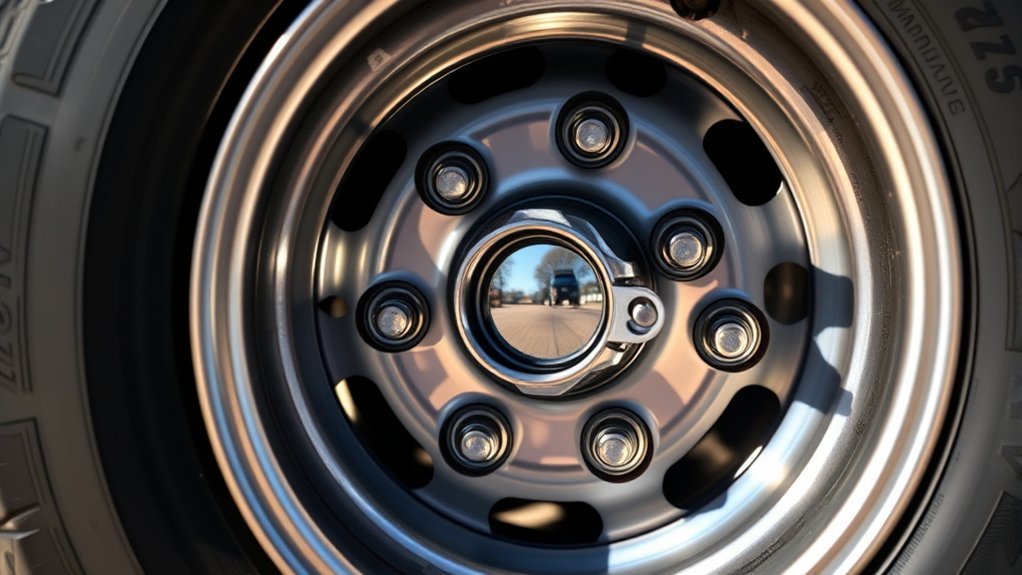
Before installing wheels on a Toyota Hilux, run through this checklist:
- PCD: Confirm 6×139.7 or 5×114.3 depending on your exact model.
- Center bore: Confirm the wheel fits the hub correctly or uses the correct hub-centric ring.
- Wheel width and diameter: Confirm the tyre is approved for that rim width.
- Offset: Check inner clearance, outer guard clearance, steering lock, and suspension movement.
- Load rating: Make sure the wheels and tyres are suitable for the Hilux’s loaded use.
- Lug hardware: Confirm thread size, lug nut seat type, shank length, and stud engagement.
- Brake clearance: Test-fit the wheel over the front brake caliper before mounting all four.
- TPMS: If your Hilux has tyre pressure monitoring sensors, confirm the wheel accepts them.
- Torque: Tighten wheel nuts with a calibrated torque wrench to the specification for your exact model and wheel type.
- Alignment: Get an alignment after major wheel, tyre, or suspension changes.
Tire Rack’s wheel-fitment guidance highlights bolt pattern, center bore, offset, hub height, brake profile, load capacity, lug hardware, TPMS, and suspension clearance as critical fitment areas. You can review those fitment factors in Tire Rack’s wheel fitment guide.
Common Mistakes to Avoid
- Assuming all Hilux wheels interchange: They do not. Older 2WD, modern 4×2, and 4×4 models can differ.
- Ignoring center bore: A correct PCD does not guarantee a hub-correct fit.
- Using the wrong lug nuts: Tapered, ball-seat, mag-seat, and shank-style nuts are not interchangeable.
- Choosing offset for looks only: Aggressive offset can damage tyres, bearings, guards, and suspension parts.
- Forgetting load rating: Hilux wheels must suit work, towing, accessories, passengers, and off-road loads.
- Skipping a test fit: Always test front brake clearance and full-lock steering clearance before driving.
Frequently Asked Questions About Hilux Wheel Specifications
Common PCD Configurations
The common modern Toyota Hilux PCD is 6×139.7. Some older 2WD variants use 5×114.3. Because Hilux specifications vary by generation and market, confirm your exact fitment before ordering wheels.
Understanding Offset Variations
Offset affects where the wheel sits in the arch. A lower offset pushes the wheel outward, while a higher offset pulls it inward. The right offset depends on wheel width, tyre size, suspension height, brake clearance, and local regulations.
| Offset change | What it does | Main risk |
| Higher positive offset | Moves the wheel inward | Inner suspension or chassis contact |
| Lower positive offset | Moves the wheel outward | Guard rub, track-width issues, and higher bearing load |
| Negative offset | Creates a more aggressive outward stance | High rubbing risk and possible road-rule non-compliance |
Wheel Compatibility Considerations
A compatible Hilux wheel should match the PCD, center bore, wheel width, offset, load rating, lug hardware, brake clearance, tyre size, and TPMS requirements. Check all of these before you buy, not after the tyres have already been mounted.
Frequently Asked Questions
Do all Toyota Hilux models have the same stud pattern?
No. Many modern Hilux models use 6×139.7, but some older 2WD variants use 5×114.3. Always check the exact year, generation, market, trim, and hub measurements before buying wheels.
What is the most common Toyota Hilux PCD?
The most common modern Hilux PCD is 6×139.7. This is widely used on recent Hilux 4×4 models and many current 4×2 models, but older 2WD models can differ.
What center bore does a Toyota Hilux use?
Many modern Hilux models use a 106.1mm center bore. Older 2WD variants may have smaller or different hub sizes, so measure the hub or confirm the specification before buying wheels.
Can I fit wider wheels on a Hilux?
Yes, but only if the wheel width, offset, tyre size, load rating, brake clearance, and guard clearance are suitable. Wider wheels may need flares, suspension changes, alignment correction, or engineering approval depending on local rules.
Do I need hub-centric rings for aftermarket Hilux wheels?
You may need hub-centric rings if the aftermarket wheel’s center bore is larger than your Hilux hub. The ring should match the Hilux hub on the inside and the wheel center bore on the outside.
Should I use the tyre placard or an online fitment chart?
Use both, but treat the vehicle tyre placard, owner’s manual, and Toyota dealer as the final authority for tyre size, pressure, and load requirements. Online charts are useful for research, but they can vary by market and trim.
Conclusion
The safest Toyota Hilux wheel fitment starts with the correct PCD, but it does not end there. Check the center bore, offset, width, tyre size, load rating, brake clearance, lug hardware, and torque requirements before you buy. For many modern Hilux models, 6×139.7 PCD and a 106.1mm center bore are the common starting point. For older 2WD variants, verify carefully because the pattern and bore can differ. When in doubt, measure the hub, check the placard and owner’s manual, and ask a qualified wheel specialist or Toyota dealer before fitting the wheels.
Sources
- Toyota Australia HiLux specification sheet — current grade-level wheel and tyre package information.
- Toyota Australia Service Information & Repair Manuals — official owner’s manual source for vehicle-specific checks.
- NHTSA Tire Safety Ratings and Awareness — tyre placard, cold tyre pressure, tyre size, and safety guidance.
- U.S. Tire Manufacturers Association: Replacing Tires — replacement tyre size, load index, and speed rating guidance.
- Tire Rack wheel fitment guide — wheel fitment factors including bolt pattern, center bore, offset, load capacity, brake profile, TPMS, and suspension clearance.
- Car-Us Toyota Hilux wheel and tyre fitment database — historical Hilux PCD, center bore, wheel, tyre, and offset reference data.
[Products Worth Considering]

The 22800 wheel stud installer makes replacing wheel studs quick and secure, saving time and effort during tire service. It uses a ratchet or impact wrench to pull new studs firmly into place, helping when existing studs are too long. Compatible with most automotive wheels and light-duty truck wheel studs, it’s designed for easy, tool-assisted installation.
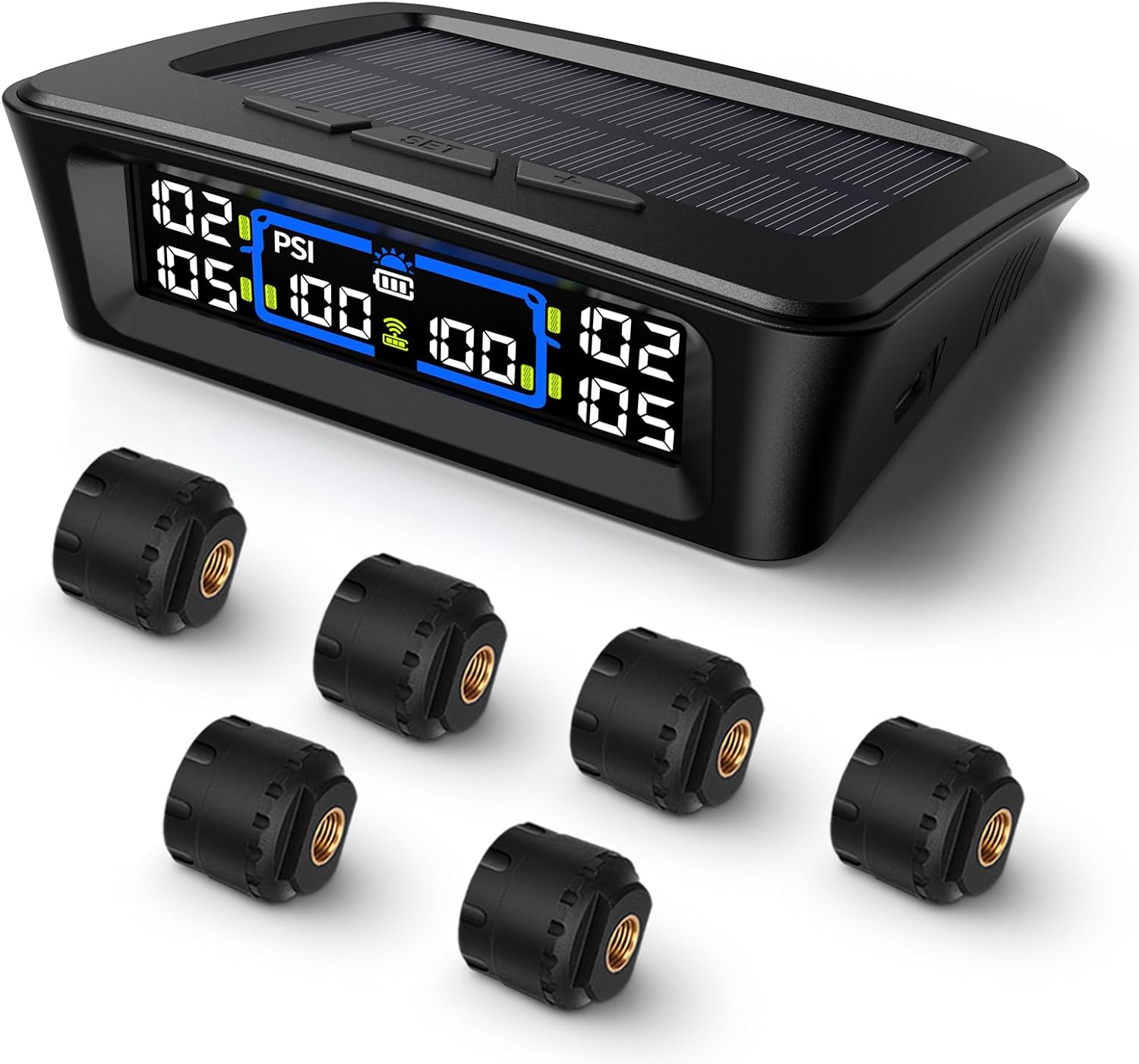
The Tymate TM12 RV TPMS delivers real-time tire pressure and temperature monitoring with a stable 433Hz display for safer long-distance driving. It supports simultaneous monitoring across vehicle and trailer zones, includes six alarm modes for pressure, temperature, leakage, battery, and signal loss, and features easy DIY installation with auto calibration. Power is supplied via USB-C charging or solar recharging, with a wide 0–144 PSI range and up to 50 ft signal coverage for RVs and towable trailers.

These aluminum alloy tire valve stem caps with an O-ring seal help protect valve stems from corrosion while adding a clean, stylish look to your vehicle. The universal fit works across cars, trucks, motorcycles, bicycles, and more, making them an easy upgrade for everyday driving and off-road use. Installation is quick, and the included four-pack keeps all your tires dressed and protected.

Related Articles

Best High-Performance Tires for Toyota Hilux
You rely on your Hilux for work, adventure, and everyday driving, so choosing high-performance tires matters more than you might think. The right tires…
Read More
Best Premium Off-Road Tires for Toyota Hilux
You rely on your Hilux to handle rough trails, heavy loads and unpredictable weather, so choosing the right premium off-road tires matters. The right…
Read More
Best Premium Winter Tires for Toyota Hilux
Choosing the right premium winter tires for your Toyota Hilux matters because you rely on strong traction and load capacity when roads turn icy…
Read More