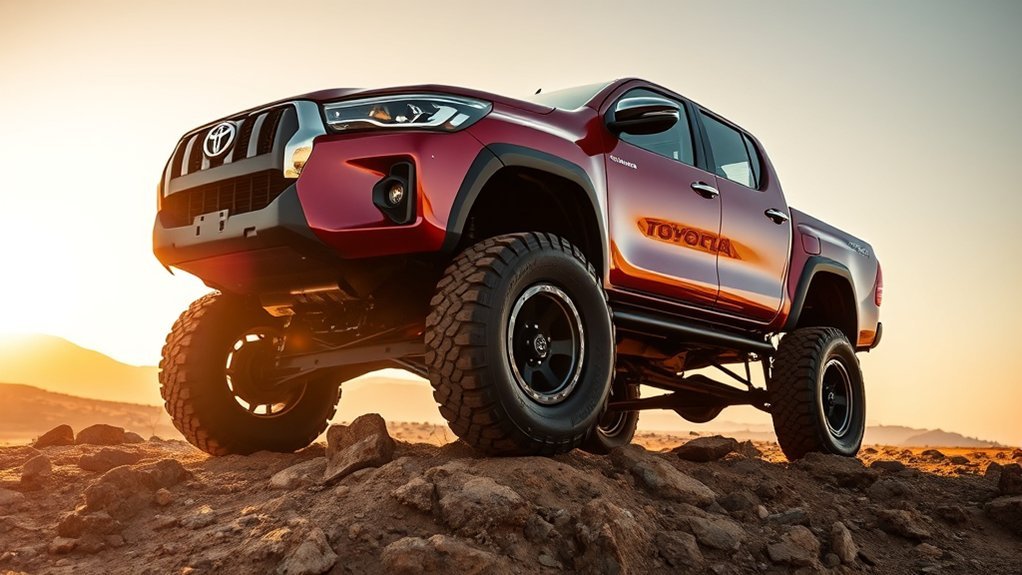
Choosing tires for a lifted Toyota Hilux is not just about picking the biggest size that looks good. The right tire depends on your Hilux year, trim, current wheel size, suspension lift, wheel offset, load rating, local modification laws, and how much rubbing you are willing to solve. A 31-inch tire is usually the easiest step up, while 32-inch and 33-inch tires need more planning.
Quick Answer
For many lifted Toyota Hilux builds, a 31- to 32-inch tire is the safest everyday upgrade. A 33-inch tire can work on some Hilux models, but it usually needs a suspension lift, careful wheel offset, alignment, clearance checks, and sometimes trimming. Always confirm tire size, load rating, and pressure from your placard, owner’s manual, or tire professional.
Key Takeaways
- Factory-equivalent modern Hilux 4×4 tire sizes are often around 30.5 inches overall, such as 265/65R17 or 265/60R18 on current Toyota Australia HiLux 4×4 variants.
- A 265/70R17 tire is a common mild upgrade at about 31.6 inches, but clearance still depends on your model, offset, suspension, and tire brand.
- A 285/70R17 or similar 33-class tire usually needs a lift, correct offset, alignment/caster work, and possible trimming to avoid rubbing.
- Match or exceed the original load rating, check speed rating rules in your area, and use LT-rated tires if you regularly carry loads or drive off-road.
- Use the tire placard or owner’s manual for cold tire pressure. The number printed on the tire sidewall is not the normal driving pressure.
At a Glance
| Time Required | 30 minutes for research and measuring; 1–3 hours for test fitting and alignment checks at a tire shop. |
| Difficulty | Easy for OEM-equivalent sizes; moderate to advanced for 32- and 33-inch fitments. |
| Tools Needed | Tire placard, tape measure, tire size calculator, pressure gauge, alignment printout, and a qualified tire fitter for final checks. |
| Cost | Varies widely: tires only for mild upgrades; add alignment, wheels, lift parts, trimming, speedometer correction, or gearing for larger builds. |
How to Choose the Right Tire Size for Your Lifted Hilux
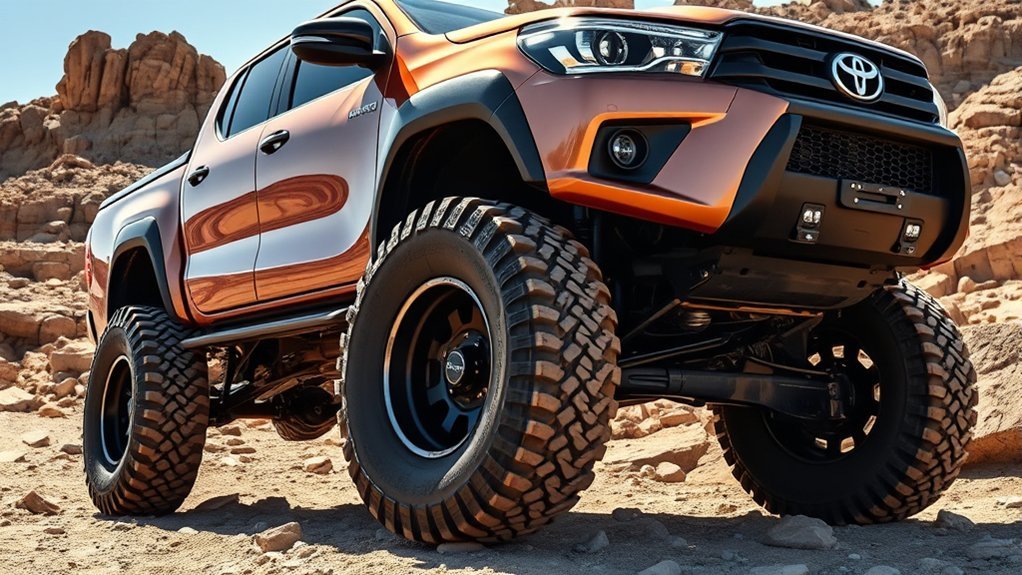
Start with your exact Hilux, not a generic tire chart. A tire that fits one Toyota Hilux may rub on another because guard shape, suspension height, wheel offset, caster, bumper design, and mud flaps can all change the clearance.
The safest method is to follow this order:
- Check the tire placard and owner’s manual. Confirm the original tire size, load index, speed rating, and recommended cold pressure.
- Measure your current clearance. Look at the front mud flap area, upper control arm clearance, inner guard, body mount, bumper edge, and rear tub clearance.
- Choose the smallest size that does the job. Bigger tires add clearance, but they also add weight and can affect gearing, braking, steering, and fuel use.
- Match the wheel width and offset. The wrong offset can create rubbing even when the tire diameter looks safe on paper.
- Test fit before committing. Turn full lock both ways, compress the suspension, check the spare location, and inspect for rubbing after the first drive.
Warning: Do not rely only on online fitment photos. Tire size, tread shoulder shape, wheel offset, and alignment settings can make two identical-size tires fit very differently. Oversized tires can also affect road legality, insurance, speedometer accuracy, braking performance, and suspension wear.
[Products Worth Considering]

Keep your tires properly inflated with this analog VONDIOR tire pressure gauge, designed for fast, easy readings without batteries. The swiveling, two-axis hose and large glow dial help you measure at any tire angle with instant visibility. Built with a protective rubber shield, it supports durable, low-maintenance use for cars and trucks.

Monitor tire tread wear with a smart, color-coded depth gauge that shows clear condition ranges at a glance. The bar is range marked for fast, easy readings, helping you maintain safer traction and performance. Each gauge is portable with a pocket clip, and the set includes 20 units for daily use and sharing.

The Big Rig Defense Tire Thumper is a truck tire pressure checker that lets you quickly check multiple tires by giving them a firm whack. Listen for a reassuring thump and feel the stick bounce when a tire is fully inflated, helping you get back on the road safely. It features a comfortable, glove-friendly handle and a secure wrist strap for confident use on busy routes.
Best Tire Sizes for Lifted Hilux Performance
For current-generation and many late-model Hilux 4×4 builds, the sizes below are useful starting points. They are not guarantees. Always confirm your placard, local rules, and real clearance before buying.
| Tire Size | Approx. Diameter | Best For | Fitment Notes |
| 265/65R17 | About 30.6 in | Factory-style 17-inch fitment | A common modern Hilux 4×4 size in some markets. Good for daily driving and load carrying when the rating matches the placard. |
| 265/60R18 | About 30.5 in | Factory-style 18-inch fitment | Works well for mixed road use, but 17-inch wheels usually offer more sidewall choice for off-road tires. |
| 265/70R17 | About 31.6 in | Mild touring upgrade | Often the easiest step up, but still check front mud flaps, inner guards, spare fitment, and speedometer error. |
| 275/70R17 | About 32.2 in | Extra clearance without going full 33 | Usually benefits from a suspension lift, correct offset, and alignment. Rubbing depends heavily on tread shape. |
| 285/70R17 | About 32.7 in | 33-class off-road look and clearance | Common on modified Hilux builds, but expect more setup work: lift, offset choice, caster/alignment, and possible trimming. |
| 255/85R16 | About 33.1 in | Tall, narrow off-road setup | Can reduce width-related rubbing compared with wide 33s, but still needs wheel, brake, and clearance checks. |
If your Hilux is a daily driver or touring ute, a 265/70R17 or similar 31.5-inch tire is often the most sensible upgrade. If your priority is mud, rocks, and clearance, a 33-class setup can be worth it, but it should be treated as a full fitment project rather than a simple tire swap.
[Products Worth Considering]

The Ziopetru adjustable magnetic wheel alignment tool helps you check and restore camber and caster positioning after removing and reinstalling undercarriage components. With a clear leveling/bubble measurement system and an easy zeroing adjustment knob, it supports precise horizontal angle checking. The strong magnetic base mounts to metal surfaces for convenient use at home on cars, motorcycles, trucks, vans, and SUVs.

These aluminum alloy tire valve stem caps with an O-ring seal help protect valve stems from corrosion while adding a clean, stylish look to your vehicle. The universal fit works across cars, trucks, motorcycles, bicycles, and more, making them an easy upgrade for everyday driving and off-road use. Installation is quick, and the included four-pack keeps all your tires dressed and protected.

This ALL-TOP auto-stop tire deflator valve kit lets you air down off-road tires quickly without watching pressure, automatically stopping when your preset PSI is reached. Each valve is individually calibrated for reliable performance with an acceptable +/- 2 PSI tolerance. The adjustable deflator range covers 10 to 30 PSI and includes four valves plus valve caps and a zipper pouch for easy setup on trucks, SUVs, RVs, UTVs, and powersports.
Selecting the Best Offset and Rim Width
Wheel offset controls where the tire sits in relation to the suspension and guards. A more positive offset keeps the tire tucked in. A lower or negative offset pushes the tire outward. Pushing the tire outward can improve stance and upper control arm clearance, but it can also increase guard rubbing, steering scrub, bearing load, and legal poke outside the guards.
[Products Worth Considering]

The 22800 wheel stud installer makes replacing wheel studs quick and secure, saving time and effort during tire service. It uses a ratchet or impact wrench to pull new studs firmly into place, helping when existing studs are too long. Compatible with most automotive wheels and light-duty truck wheel studs, it’s designed for easy, tool-assisted installation.

This manual duck head tire changer kit makes tire installation and removal simpler by letting you embed the duck head into the tire with applied pressure. The integrated design and durable steel construction help reduce friction and improve efficiency and safety during use. Suitable for 16–21 inch wheels, it’s convenient for cars, trucks, SUVs, and ATV tires, with 24-hour after-sales support.

This professional wheel and rim brush kit makes it easy to lift brake dust, grime, and dirt from wheels and tires without scratching finishes. The brushes feature soft, metal-free wool heads and a flexible 360-degree rim brush design for reaching hard-to-clean areas. Includes multiple brush types plus accessories for thorough car, motorcycle, and general vehicle detailing.
Understanding Offset Impact
For many Hilux builds, a conservative 17×8 or 17×8.5 wheel is easier to live with than a very wide, aggressive-offset wheel. A moderate positive or near-zero offset is often easier to clear than a large negative offset, especially with 285-width tires. The best offset depends on the tire width, lift height, upper control arm clearance, guard clearance, and local wheel-track rules.
Pro Tip: If two tire sizes are close, choose the setup that keeps the tire inside the guard, clears the upper control arm, and does not rub at full lock. A slightly smaller tire that fits cleanly is usually better than a larger tire that hits the body every time the suspension flexes.
Rim Width Considerations
Rim width should match the tire manufacturer’s approved rim-width range. Too narrow can pinch the tire and crown the tread. Too wide can expose the rim and change the sidewall shape. For common Hilux all-terrain and mud-terrain sizes, many owners use 17-inch wheels because they provide more sidewall than 18-inch wheels and offer a wide choice of LT-rated tires.
- For 265-width tires: 17×7.5 to 17×8.5 wheels are usually practical, depending on the tire maker’s range.
- For 275-width tires: 17×8 or 17×8.5 wheels are common starting points.
- For 285-width tires: 17×8.5 wheels are popular, but clearance becomes more sensitive to offset and tread shoulder shape.
- For heavy touring: prioritize load rating, heat resistance, and sidewall strength over stance.
Why Lift Kits Matter for Your Hilux Tire Choice
A lift kit creates more room between the tire and body, but it does not magically clear every tire. At full steering lock and full suspension compression, the tire can still hit the mud flap, front liner, bumper edge, body mount, or upper control arm.
A mild suspension lift can make 31- to 32-inch tires easier to fit. A 33-class tire usually needs more attention: suspension height, alignment, caster, wheel offset, and sometimes trimming. Body lifts and aggressive trimming may create more clearance, but they also add legal, safety, and insurance considerations.
Note: A suspension lift changes steering and suspension geometry. After fitting larger tires or lift parts, get a proper wheel alignment and ask for the printout so you can confirm the caster, camber, and toe settings are within a safe range.
Load Rating, Speed Rating, and Legal Checks
Tire size is only one part of the decision. Your Hilux also needs the correct load capacity. The replacement tire should meet or exceed the load index required for your vehicle, especially if you carry tools, drawers, canopy weight, camping gear, towing weight, or extra fuel and water.
For off-road and touring use, an LT-rated tire can be a smart choice because it is built for heavier-duty use than many passenger-construction tires. The trade-off is that LT tires can be heavier and firmer, so ride comfort and fuel use may change.
Also check your local rules before changing tire diameter, wheel track, suspension height, or speed rating. In Australia, modification guidance is handled through the Vehicle Standards Bulletin 14 / National Code of Practice and state or territory requirements. In other countries, roadworthiness, insurance, inspection, and tyre-tread rules may be different.
How Do Larger Tires Impact Fuel Efficiency and Handling?
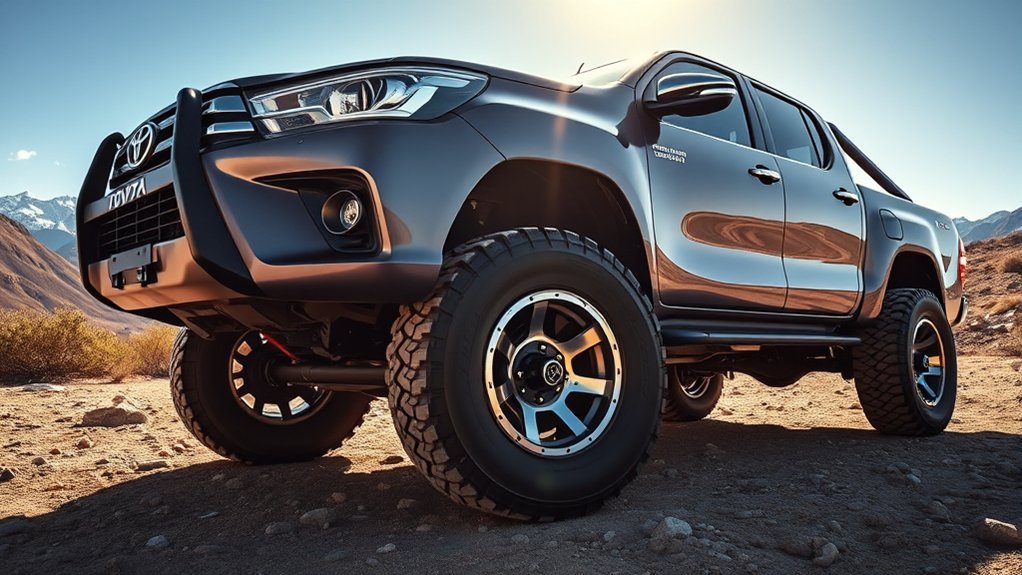
Larger tires can improve ground clearance and off-road confidence, but they also add trade-offs. A taller, heavier tire can make the engine work harder, reduce low-speed response, increase braking distance, and make the steering feel heavier. A wider tire can improve grip in some conditions, but it can also follow ruts, spray more water and mud, and rub more easily.
Fuel use depends on tire weight, tread pattern, rolling resistance, gearing, speed, pressure, roof loads, and driving style. Instead of relying on a fixed percentage, track your own fuel economy before and after the tire change. The U.S. Department of Energy’s FuelEconomy.gov notes that proper inflation can improve mileage and that under-inflated tires can lower gas mileage by about 0.2% for every 1 psi drop in the average pressure of all tires.
Speedometer accuracy can also change. A taller tire travels farther per rotation, so your actual road speed may be higher than the indicated speed. After fitting larger tires, check the speedometer with a GPS reading or diagnostic tool and correct it if needed.
The best Hilux tire is not always the largest tire. It is the largest tire that fits cleanly, stays legal, carries the load safely, and still drives well on the road you use most.
Essential Maintenance for Lifted Hilux Tires
Larger tires make maintenance more important because they add weight and can reveal small alignment or suspension problems quickly. Use the tire placard, owner’s manual, and tire manufacturer’s guidance as your baseline.
| Maintenance Task | When to Do It | Why It Matters |
| Check cold tire pressure | Monthly and before long trips | Incorrect pressure affects braking, steering, fuel use, heat buildup, and tire wear. |
| Inspect for rubbing | After fitting and after off-road trips | Fresh rub marks show where trimming, alignment, or offset correction may be needed. |
| Rotate tires | About every 5,000–8,000 miles or 8,000–12,000 km if recommended | Rotation helps reduce irregular wear, especially on heavy all-terrain or mud-terrain tires. |
| Check alignment | After lift, tire change, suspension work, or uneven wear | Poor toe or caster can cause wandering, rubbing, shoulder wear, and unstable steering. |
| Re-torque wheel nuts | After the first short drive, then as your manual or installer recommends | New wheels and tires can settle after installation. |
The NHTSA TireWise guide recommends checking the tire information label or owner’s manual for correct tire size and cold pressure, checking pressure regularly, and using proper rotation and alignment to maximize tire life and safety.
When to Upgrade Your Tires for Optimal Performance
Upgrade your Hilux tires when the old ones no longer match your driving needs or safety standards. Worn tread, sidewall damage, repeated punctures, age cracking, poor wet grip, or constant off-road cuts are all signs that it is time to replace them.
In the UK, cars, light vans, and light trailers must have at least 1.6 mm of tread across the central three-quarters of the tyre and around the entire tyre, according to GOV.UK roadworthiness guidance. Your local legal minimum may differ, and many drivers replace tires earlier for wet roads, towing, and off-road use.
Consider upgrading when:
- Your tread is near the legal minimum or no longer grips well in rain, mud, or gravel.
- You have visible cuts, bulges, exposed cords, cracking, or repeated punctures.
- Your current tires do not have the load rating you need for touring, towing, or work gear.
- You have fitted a lift and want more ground clearance, sidewall, or off-road strength.
- You want a different tread type, such as highway-terrain, all-terrain, rugged-terrain, or mud-terrain.
How to Test Fit Larger Hilux Tires
Before buying a full set, ask your tire shop whether they can test fit one front tire and one rear tire. This is especially important for 32- and 33-inch sizes.
- Fit the wheel and tire, then set the vehicle on the ground at normal ride height.
- Turn the steering from full left lock to full right lock.
- Check the mud flaps, inner guard liner, front bumper edge, body mount, brake lines, and upper control arm.
- Reverse slowly at full lock because some rubbing appears only in reverse.
- Load the vehicle as you normally use it and check rear clearance.
- Drive a short distance, then inspect for fresh rub marks on plastic, metal, and tire shoulders.
- Confirm the spare tire fits under the tray or in your chosen spare location.
If there is light plastic contact, a small trim may solve it. If the tire hits metal, suspension, brake components, or the body mount, solve the fitment properly before driving at speed or off-road.
Frequently Asked Questions
Can you fit 33s on a Hilux?
Yes, 33-class tires can fit some Toyota Hilux builds, but they are rarely a simple bolt-on upgrade. Expect to check lift height, wheel offset, caster, guard clearance, mud flaps, bumper edges, and body-mount clearance. Some setups need trimming, alignment changes, or different wheels to stop rubbing.
Will 265/70R17 fit a Hilux?
A 265/70R17 tire is about 31.6 inches tall and is a common mild upgrade on many Hilux 4x4s. It may fit easily on some models, but you still need to check front mud-flap clearance, inner guards, spare fitment, offset, speedometer error, and local legality.
What other wheels will fit a Toyota Hilux?
Many Hilux owners use 16-, 17-, or 18-inch wheels, depending on brake clearance and tire choice. The key is matching the bolt pattern, centre bore, wheel-nut seat type, load rating, rim width, and offset. A 17-inch wheel is popular for off-road use because it gives more sidewall than most 18-inch setups.
What size tyres can I put on my Hilux?
Start with the size on your tire placard. For many modern Hilux 4x4s, factory-style sizes are around 30.5 inches. A 31.5-inch tire is a common mild upgrade, 32-inch sizes need more checking, and 33-class tires usually require a proper lifted setup with careful offset and clearance work.
Do I need to re-gear my Hilux for bigger tires?
Not always. Mild tire increases may be acceptable with stock gearing, but heavier 33-class tires can reduce low-speed response and make the transmission work harder. Re-gearing is worth discussing with a 4×4 specialist if you tow, carry heavy loads, drive steep terrain, or feel a big drop in performance.
Conclusion
The best tire for a lifted Toyota Hilux is the one that fits your vehicle, load, terrain, and local rules without creating rubbing or unsafe handling. For many drivers, a 31- to 32-inch all-terrain tire is the best balance of clearance, comfort, fuel economy, and reliability. A 33-class tire can look great and work well off-road, but it needs the right lift, wheel offset, alignment, and clearance checks.
Before you buy, confirm your placard size, compare tire diameters, check load rating, test fit if possible, and use a qualified tire shop or 4×4 specialist. That extra planning can save you from rubbing, poor handling, speedometer error, and costly changes later.
Sources
- Toyota Australia HiLux specifications — current HiLux wheel and tyre examples, dimensions, payload, and specification caveats.
- NHTSA TireWise — tire size, placard, cold inflation pressure, rotation, balancing, and alignment guidance.
- FuelEconomy.gov gas mileage tips — fuel-economy impact of tire inflation.
- GOV.UK vehicle roadworthiness checks — tread-depth and tyre safety guidance for UK vehicles.
- Vehicle Standards Bulletin 14 / National Code of Practice — Australian light vehicle modification framework.