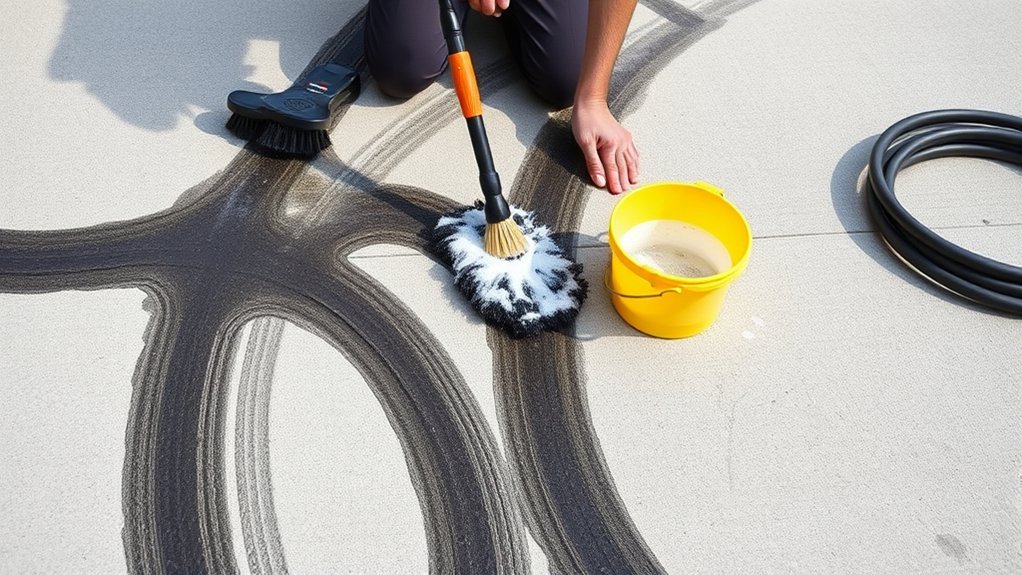
Tire skid marks on concrete are usually rubber residue pressed into a porous surface, but on sealed or coated concrete they can also be hot-tire discoloration in the sealer. The safest fix is to start with a concrete-safe cleaner, scrub before you pressure wash, and only move to stronger products after a small test spot.
Quick Answer
Sweep the concrete, protect plants and drains, then apply a concrete degreaser or pH-neutral concrete cleaner to the tire marks. Let it dwell as the label directs, usually a few minutes, without letting it dry. Scrub with a stiff nylon brush, rinse thoroughly, and repeat before trying stronger spot treatments.
Key Takeaways
- Use a concrete-safe cleaner or degreaser first; harsh solvents should be a last resort.
- Always test a hidden spot before scrubbing, pressure washing, or using any solvent.
- Keep cleaners wet while they dwell, then scrub with a stiff nylon brush before rinsing.
- Do not send detergent, degreaser, oily residue, or dirty wash water into storm drains.
- Prevent repeat marks with regular cleaning, safer parking habits, and the right sealer or tire mats for your surface.
At a Glance
| Time Required | 20–45 minutes for light marks; longer for old or repeated stains |
| Difficulty | Easy to moderate |
| Tools Needed | Broom or blower, gloves, eye protection, concrete cleaner or degreaser, stiff nylon brush, bucket, hose, and optional pressure washer |
| Cost | Usually $10–$30 for cleaner if you already own basic tools |
Prep the Concrete for Cleaning
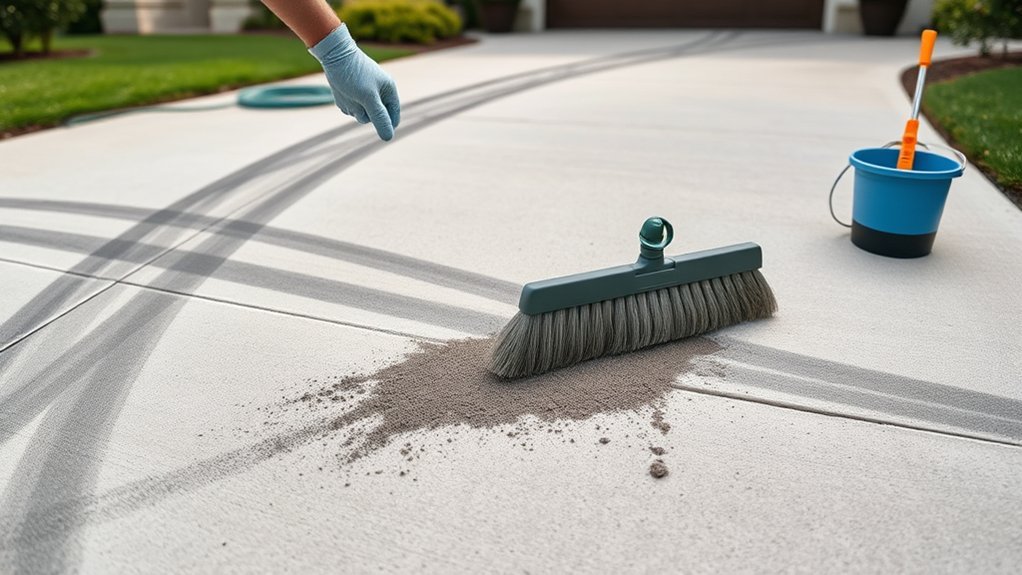
Start with a clean surface. Sweep or blow away leaves, grit, sand, and loose dirt so the cleaner can reach the rubber residue instead of sitting on debris. Move vehicles, planters, rugs, and storage bins out of the way.
Next, inspect the concrete. If the slab is cracked, flaking, newly poured, stamped, stained, sealed, or coated, clean more gently and test first. Damaged or decorative concrete can be etched by aggressive scrubbing or high-pressure washing.
Warning: Wear gloves and eye protection, keep children and pets away from the work area, and block nearby storm drains before rinsing. Do not direct dirty wash water, detergent, degreaser, or solvent residue into a storm drain.
Cover nearby plants if runoff may reach them, and rinse landscaping with clean water before and after cleaning if the product label recommends it. Work during a cool part of the day when possible. Hot concrete can dry cleaner too quickly and leave residue behind.
Choose the Right Cleaner for Tire Marks
The best cleaner depends on the surface. For bare broom-finished concrete, use a concrete cleaner or concrete degreaser made for rubber marks, oil, grease, and automotive residue. For sealed concrete, stamped concrete, epoxy, or polyaspartic garage floors, use the mildest cleaner allowed by the sealer or coating manufacturer.
Concrete cleaner/degreasers such as PROSOCO Cleaner/Degreaser are designed for concrete floors and rubber tire marks. Products such as Simple Green Oxy Solve Concrete and Driveway Cleaner are also marketed for driveways, patios, masonry, grease, and tire marks. Always follow the exact dilution, dwell time, and rinsing directions on the label.
Choose the least aggressive cleaner that removes the mark. A second round of safe cleaning is better than one round that etches concrete or damages a coating.
[Products Worth Considering]

The SPTA wheel and tire brush kit makes it easy to remove dirt from wheels, rims, and hard-to-reach areas without needing a high pressure washer. Ergonomic handles and soft, chemical-resistant bristles help you clean faster while reducing the risk of scratching. The set is versatile for cars, trucks, motorcycles, bicycles, RVs, boats, and more.
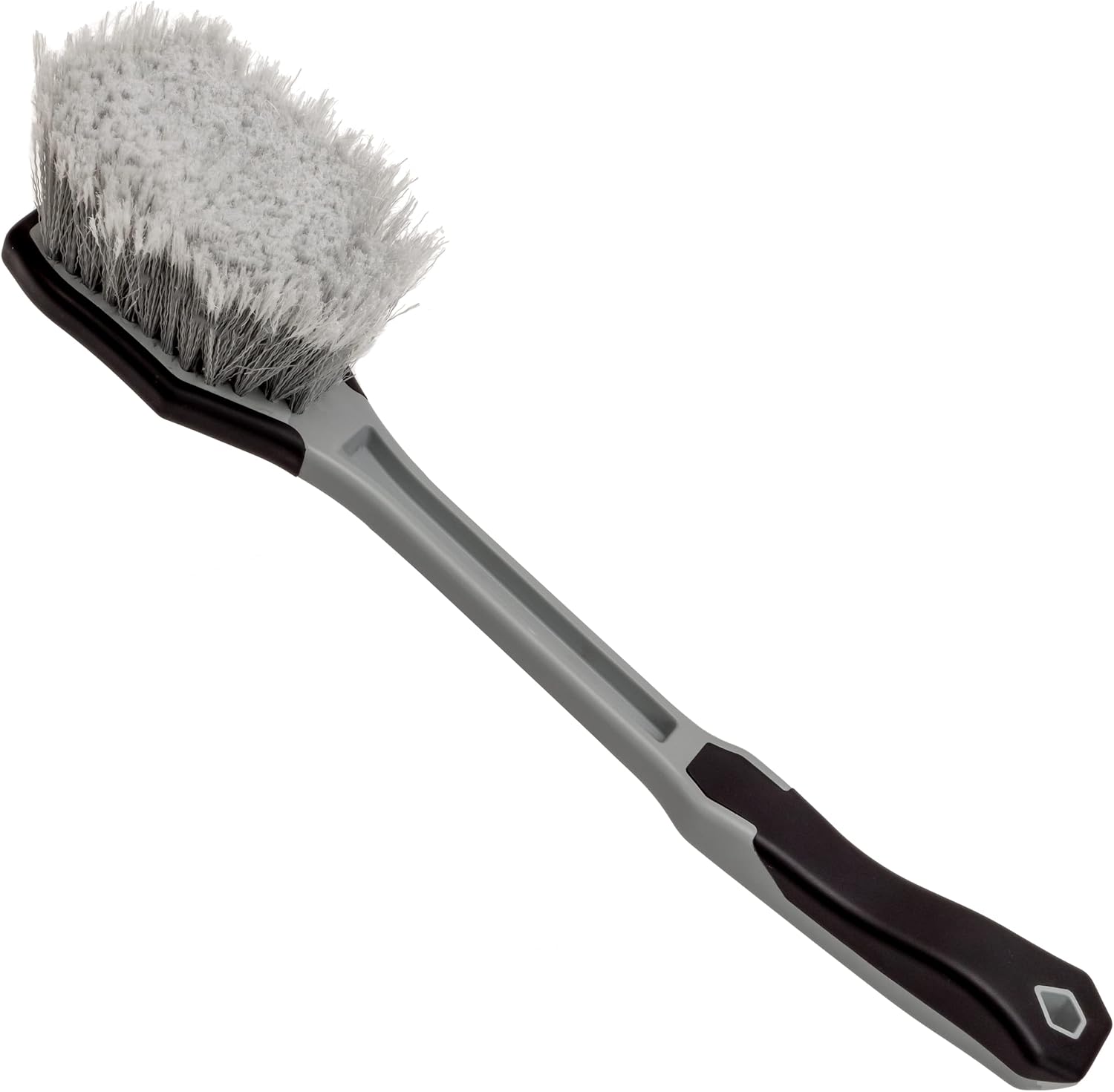
Clean grills, fenders, fender flares, bumpers, and wheel wells with a long-handled brush built for detailed car washing. The soft, triple-flagged bristles and dense scrub coverage help lift dirt gently while making coverage fast and easy. Use it with your favorite car wash soap for tires and exterior surfaces, and it also works for bike, motorcycle, boat, or RV cleaning.

This 3-piece wheel and tire brush set makes it easy to clean light, medium, and heavy dirt from wheels, rims, tires, and exterior surfaces. It includes both soft and stiff bristle options for gentle scrubbing and tough grime removal, helping lift brake dust and road buildup. The long-handle design supports comfortable cleaning across cars, trucks, SUVs, RVs, motorcycles, and more, with simple care instructions to restore brush shape.
Cleaner Guide by Surface Type
| Bare driveway concrete | Concrete cleaner, concrete degreaser, or peroxide-based driveway cleaner |
| Sealed or decorative concrete | pH-neutral or non-filming cleaner; avoid harsh solvents unless the sealer maker allows them |
| Epoxy or polyaspartic garage floor | Non-filming detergent or coating-safe degreaser; avoid abrasive pads and harsh solvents unless approved |
| Old, deep, or sticky marks | Repeat cleaner and scrubbing first; then consider a manufacturer-approved spot treatment |
Note: Avoid bleach, acid cleaners, gasoline, and random solvents for tire marks. They can discolor concrete, damage coatings, create fumes, or make runoff harder to manage.
Scrub and Rinse Without Damaging Concrete
Once the surface is prepared and the cleaner is chosen, work in small sections. A small section keeps the cleaner active and gives you time to scrub before it dries.
- Wet the surface if the label says to. Some cleaners work best on a damp surface, while others are applied directly to the mark.
- Apply cleaner to the tire mark. Cover the full black streak plus a small area around it.
- Let it dwell. Follow the product label. Many concrete cleaners need a few minutes. Do not let the cleaner dry on the concrete.
- Scrub with a stiff nylon brush. Use tight circles and steady pressure. Avoid wire brushes on sealed, coated, stamped, or decorative concrete.
- Rinse thoroughly. Use a hose first. If needed, use a pressure washer only after testing a hidden spot.
- Let the surface dry. Tire marks often look lighter when wet, so check the result after the concrete dries.
- Repeat if needed. Old rubber marks often need two light cleanings instead of one harsh treatment.
Pro Tip: If you use a pressure washer, start with a wider fan tip, keep the wand moving in overlapping passes, and hold it far enough away that it cleans without cutting lines into the surface.
For plain broom-finished driveway concrete, a pressure washer can help after the cleaner has loosened the rubber. For stamped concrete, stained concrete, exposed aggregate, weak concrete, or coatings, use gentler pressure and test first. Stop immediately if you see etching, exposed aggregate, streak lines, coating lift, or a rough patch forming.
[Products Worth Considering]

RecDec pressure washer shower nozzle tips deliver a quick-connect misting spray for car washing, outdoor cleaning, and gentle watering tasks. The stainless steel adapter features instant plug-and-play installation with a 1/4 inch quick connect for compatibility with most high-pressure washers. Choose from multiple screen hole sizes for different spray intensities and easily attach or remove as needed.

This professional wheel and rim cleaning brush set lifts brake dust, grime, and dirt with soft, scratch-free microfiber and synthetic wool fibers. The rim brush bends up to 360 degrees for easy access to hard-to-reach areas around spokes, lips, and faces. Ideal for thorough cleaning of car, truck, motorcycle, bicycle, RV, and more wheel and tire surfaces.

This 3-piece wheel brush set makes it easy to clean wheels and tires with soft, scratch-free brushes designed for lifting brake dust and grime. The flexible rim brush bends up to 360 degrees to reach hard-to-access areas for a thorough clean, while the comfortable grip helps control during detailing. A dedicated detailing brush supports gentle cleaning for sensitive surfaces, including interior use.
What to Do for Stubborn Tire Marks
If tire marks remain after the first cleaning, do not jump straight to the strongest chemical. Try these fixes in order:
- Repeat the same cleaner. Reapply, keep it wet, scrub again, and rinse well.
- Increase brush time, not chemical strength. More controlled scrubbing often works better than a harsher cleaner.
- Use a concrete-safe degreaser at the label-approved stronger dilution. Only do this if the label allows it for your surface.
- Try a poultice-style oil and grease remover for embedded residue. This can help when rubber residue has mixed with oil or driveway grime.
- Check whether the mark is in the sealer. If a sealed surface stays dark after cleaning, the stain may be hot-tire discoloration inside the sealer rather than dirt on top.
WD-40, brake cleaner, xylene, and similar solvent products should not be your first choice. WD-40 is a lubricant and penetrant, not a concrete cleaner, and its safety sheet identifies the aerosol as extremely flammable. If you try any solvent on a tiny fresh scuff, test first, work outdoors or with strong ventilation, keep it away from flames and sparks, and wash the oily residue off with detergent afterward.
Warning: If a mark is trapped in a sealer or coating, aggressive scrubbing and solvents can make the damaged area larger. When in doubt, contact the sealer or coating manufacturer before using xylene, strippers, or abrasive tools.
[Products Worth Considering]

This wheel brush kit delivers pro-level cleaning at home, lifting dirt, grime, and brake dust to help restore wheel appearance. It includes multiple brush styles and applicator pads for tackling different wheel surfaces, with gentle, metal-free bristles designed to reduce scratching risk. The flat and double-ended brushes are built for comfort and reach, making wheel care easier for cars, trucks, and RVs.

The Ptwola eye wash cup kit uses a soft silicone edge and gentle rinse action to help soothe tired, dry, or irritated eyes. It’s designed for convenient rinsing with saline solution or eye drops, offering comfort for contact lens wearers and those using eye ointments. A portable design with a storage container helps make quick eye cleansing easier at home or on the go.

This professional wheel and rim brush kit makes it easy to lift brake dust, grime, and dirt from wheels and tires without scratching finishes. The brushes feature soft, metal-free wool heads and a flexible 360-degree rim brush design for reaching hard-to-clean areas. Includes multiple brush types plus accessories for thorough car, motorcycle, and general vehicle detailing.
Why Tire Marks Keep Coming Back
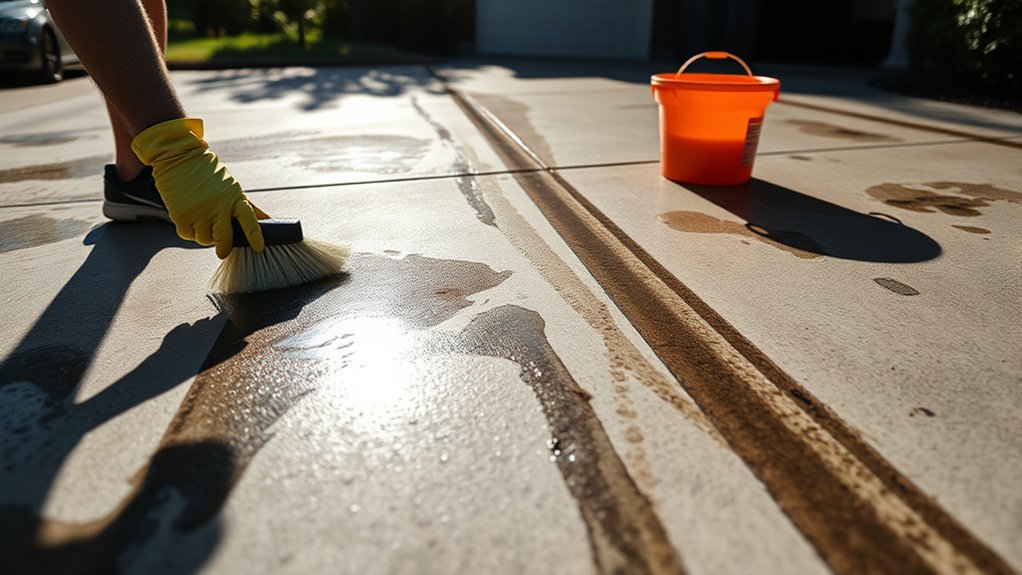
Tire marks return because rubber is transferred again every time hot tires turn, stop, or sit on the same spot. On bare concrete, the dark color can come from rubber residue, road film, oil, and dirt getting caught in the pores and surface texture.
On sealed or coated concrete, the problem can be different. Hot tires can cause plasticizer migration, which means compounds from the tire move into the sealer or coating and discolor it. Euclid Chemical notes that hot-tire marking is common on some acrylic and styrene/acrylic cure-and-seal products, while more crosslinked coatings may resist it better.
- Heat: tires warm up after driving and can transfer residue more easily.
- Friction: tight turns, hard braking, and pivoting into a garage grind rubber into the surface.
- Surface texture: rough, porous, or worn concrete traps more residue.
- Sealer type: some sealers discolor more easily from hot tires than others.
- Rubber contact: rubber-backed rugs, rubber mats, and some garage-door weatherstripping can also mark sealed or coated concrete.
Prevent Tire Marks on Concrete
You can reduce tire marks by limiting heat, friction, and direct rubber contact. Start with simple habits: avoid sharp turns on the slab, let tires cool before parking after a long drive, and sweep or rinse the area weekly so grit and road film do not help the marks stick.
| Step | Action |
|---|---|
| 1 | Sweep or rinse parking areas weekly. |
| 2 | Avoid hard braking, sharp turns, and tire pivoting on the concrete. |
| 3 | Use parking pads or tire mats that are approved for your floor coating. |
| 4 | For exterior concrete, consider a penetrating silane or siloxane sealer instead of a film-forming acrylic sealer where hot-tire marks are a problem. |
| 5 | For indoor garages, choose coatings and cleaners based on the coating manufacturer’s instructions. |
Be careful with rubber-backed rugs or cheap rubber mats on sealed or coated concrete. They can sometimes cause the same kind of discoloration you are trying to prevent. If you use mats, choose ones made for garage floors and check under them regularly.
Frequently Asked Questions
How do you get rubber skid marks off concrete?
Sweep the area, apply a concrete-safe degreaser or cleaner, let it dwell according to the label, scrub with a stiff nylon brush, and rinse thoroughly. For old marks, let the surface dry and repeat the process before using stronger products.
Does WD-40 remove tire marks from concrete?
WD-40 may loosen a small fresh rubber scuff, but it is not the best first choice for concrete. It can leave oily residue and its aerosol version is flammable. Use a concrete cleaner or degreaser first. If you test WD-40, use it only on a small spot, keep it away from flames, ventilate well, and wash the residue off afterward.
Can a pressure washer remove tire marks from concrete?
Yes, but pressure washing works best after pretreating the marks with a concrete-safe cleaner. Test a hidden spot, use a wider fan tip, keep the wand moving, and avoid aggressive pressure on stamped, stained, sealed, cracked, or weak concrete.
Do tire marks on concrete go away on their own?
Light marks may fade slightly with weather and foot traffic, but most tire marks need cleaning. Rubber residue can settle into concrete pores, and hot-tire marks on sealers or coatings may stay visible until the sealer is cleaned, repaired, or replaced.
What should you avoid when cleaning tire marks from concrete?
Avoid gasoline, bleach mixtures, acid cleaners, wire brushes on decorative surfaces, and untested solvents. Also avoid letting cleaner dry on the slab and never rinse detergent, degreaser, or dirty wash water into a storm drain.
Conclusion
You can remove most tire skid marks from concrete with a simple, controlled process: sweep first, choose a concrete-safe cleaner, let it dwell without drying, scrub with a stiff nylon brush, and rinse thoroughly. If the mark remains, repeat the safe method before trying stronger spot treatments.
For long-term prevention, keep parking areas clean, avoid sharp tire turns, use floor-safe mats or pads, and choose the right sealer for the surface. If the stain is trapped inside a sealer or coating, treat it as a coating issue rather than ordinary dirt.
Sources
- PROSOCO Cleaner/Degreaser — supports using concrete-safe degreasers for rubber tire marks and scuffs.
- Simple Green Oxy Solve Concrete and Driveway Cleaner — supports product-label dwell time, testing, rinsing, and concrete/driveway cleaner guidance.
- Euclid Chemical Technical Bulletin CP-22 — supports plasticizer migration and hot-tire marking guidance for concrete sealers and coatings.
- Washington Stormwater Center Pressure Washing Best Practices — supports storm-drain and wash-water control recommendations.
- WD-40 Multi-Use Product Safety Data Sheet — supports flammability and ventilation cautions for WD-40 aerosol.
- Brickform Concrete Cleaning Guide — supports pressure-washing technique, testing, and surface-specific cleaning cautions.