
Your 4Runner’s tires do more than hold air. They decide how well the SUV brakes, steers, rides, tracks on the highway, and hooks up on gravel, snow, mud, or rock. The good news is that most premature tire wear comes from preventable problems: low pressure, skipped rotations, imbalance, poor alignment, heat, UV damage, and trail abuse.
Quick Answer
To make 4Runner tires last longer, check cold tire pressure monthly, use the PSI on the driver-door placard, rotate every 5,000–8,000 miles, watch for vibration or pulling, inspect tread and sidewalls often, remove winter tires when temperatures stay above 45°F, and recheck tires after off-road trips.
Key Takeaways
- Use the cold PSI printed on your 4Runner’s Tire and Loading Information label, not the maximum PSI molded into the tire sidewall.
- Rotate tires every 5,000–8,000 miles, or sooner if you tow, off-road often, or see uneven wear.
- Balance tires when installing new tires, after tire repairs, or when vibration appears; check alignment if the SUV pulls, wanders, or wears tires unevenly.
- Replace tires at 2/32 inch minimum tread depth, and start planning earlier around 4/32 inch if you drive in rain, snow, or off-road conditions.
- Inspect for dry rot, cracks, bulges, cuts, exposed cords, punctures, and age-related damage before long trips or trail days.
At a Glance
| Time Required | 5 minutes for a pressure check; 15 minutes for a visual inspection; 30–60 minutes at a shop for rotation, balancing, or alignment check |
| Difficulty | Easy for checks; moderate to professional for rotation, balancing, and alignment |
| Tools Needed | Digital tire-pressure gauge, tread-depth gauge, air compressor, valve caps, flashlight, torque wrench if rotating at home |
| Cost | Usually free for inspections; about $10–$30 for a gauge; shop pricing varies for rotation, balancing, and alignment |
Check Your 4Runner’s Tire Pressure Monthly
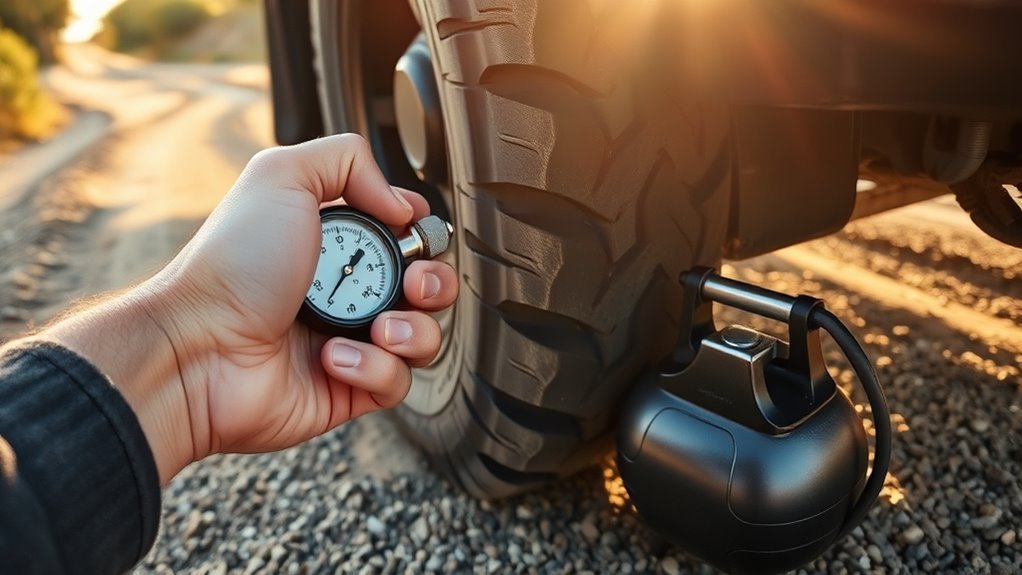
Check your 4Runner’s tire pressure at least once a month and before long highway trips, towing, camping runs, or trail days. Do not wait for the dashboard tire-pressure warning light. According to NHTSA tire-safety guidance, TPMS is not a substitute for regular tire maintenance, and pressure should be checked when the tires are cold.
Use the cold PSI printed on your driver-door Tire and Loading Information label as the final number. The Toyota 4Runner owner’s manual points owners to the vehicle’s tire and loading label for the recommended cold inflation pressure and tire size. Many stock late-model 4Runners are around the low-30s PSI range, but your exact trim, tire size, load rating, aftermarket tires, and spare setup can change the right pressure.
Warning: Never use the maximum PSI molded on the tire sidewall as your daily driving pressure. That number is a tire limit, not the vehicle manufacturer’s recommended pressure.
[Products Worth Considering]

Steelman white tire marking crayons provide high-contrast, semi-permanent marks for repairing and inspecting tires and equipment. They write on wet or dry, smooth or coarse surfaces including rubber, metal, glass, and wood, making them ideal for puncture location and damage outlining. The lead- and zinc-free crayons resist weather and fading yet wipe away when you no longer need the marks.

Monitor tire tread wear with a smart, color-coded depth gauge that shows clear condition ranges at a glance. The bar is range marked for fast, easy readings, helping you maintain safer traction and performance. Each gauge is portable with a pocket clip, and the set includes 20 units for daily use and sharing.

The Topeak SmartGauge D2 delivers precise digital tire pressure readings for bikes, motorcycles, and sports equipment up to 250 psi (17 bar). Its rotating SmartHead works with both Presta and Schrader valves, so you can check pressure quickly without adapters. The LCD display makes it easy to read results in psi, bar, or kg/cm² with an included CR2032 battery for immediate use.
How to Check 4Runner Tire Pressure Correctly
- Park the 4Runner for at least three hours, or check before driving for the day.
- Find the recommended cold PSI on the driver-door placard.
- Remove the valve cap and press a quality gauge firmly onto the valve stem.
- Add or release air until each tire matches the placard pressure.
- Check all four tires, plus the spare if your 4Runner has a full-size spare.
- Reinstall valve caps to keep dirt and moisture out of the valve stems.
Proper inflation also helps fuel economy. FuelEconomy.gov says keeping tires properly inflated can improve gas mileage by 0.6% on average and up to 3% in some cases, while underinflated tires can reduce mileage by about 0.2% for every 1 PSI drop in the average pressure of all tires.
Pro Tip: Recheck pressure after a big temperature swing. Tire pressure changes with temperature, so a cold snap can make a tire read low even if it was correct a week earlier.
Rotate Your 4Runner Tires Every 5,000–8,000 Miles
Rotate your 4Runner’s tires every 5,000–8,000 miles, unless your owner’s manual, tire manufacturer, or driving conditions call for a different interval. Rotation spreads wear across all four tire positions instead of letting one axle or corner do most of the work.
This matters because a 4Runner is heavy, tall, and often used for mixed driving. Braking, steering, acceleration, cargo weight, towing, and trail use can all create uneven wear. If you wait until the tread looks obviously uneven, you have already lost usable tire life.
Rear-Wheel-Drive and Four-Wheel-Drive Wear
The 4Runner is not a front-wheel-drive SUV. Depending on year and trim, it is built around rear-wheel-drive or four-wheel-drive layouts. Front tires still work hard because they steer and handle much of the braking load, while the rear tires handle drive torque on 2WD models and share traction loads on 4WD models.
That means you should not copy a generic front-wheel-drive rotation explanation. Use the rotation diagram in your owner’s manual or the tire manufacturer’s instructions, especially if your tires are directional, staggered, or different from the original equipment size.
Should You Include the Spare Tire?
Include the spare only if it is a full-size matching tire with the same size, load rating, wheel type, and tread pattern as the four tires on the ground. If the spare is older, mismatched, heavily worn, or a temporary-use tire, keep it out of the rotation and inspect it separately.
Maximizing Tread Life
| Interval | What to Do | Why It Helps |
|---|---|---|
| Every month | Check pressure, tread, sidewalls, and spare | Catches low PSI, punctures, cracks, and uneven wear early |
| 5,000–8,000 miles | Rotate tires using the correct pattern | Spreads wear across all tire positions |
| At rotation | Measure tread depth and note wear pattern | Shows alignment, pressure, or suspension issues before they get expensive |
| After off-road trips | Inspect for cuts, rock damage, bead leaks, and lodged debris | Prevents trail damage from becoming a highway failure |
Balance Your 4Runner’s Wheels When Vibration or Service Calls for It
Wheel balancing corrects small weight differences in the tire-and-wheel assembly. If the assembly is out of balance, you may feel vibration through the steering wheel, seat, floorboard, or body, especially at highway speeds.
[Products Worth Considering]

Measure tire tread depth quickly and accurately with this LUMITECO dial gauge that reads in 1/32" increments up to 14/32". The color-coded green/yellow/red zones make it easy to judge tire wear and know when replacement is needed. A rugged, compact design with a protective pouch helps keep the gauge ready for use on cars, trucks, motorcycles, and more.

Keep your tires properly inflated with this analog VONDIOR tire pressure gauge, designed for fast, easy readings without batteries. The swiveling, two-axis hose and large glow dial help you measure at any tire angle with instant visibility. Built with a protective rubber shield, it supports durable, low-maintenance use for cars and trucks.

This 100-piece set of snap-in tubeless tire valve stems is designed for standard 0.453 in (11.5 mm) rim holes and helps maintain reliable, steady tire pressure. Made with ozone-resistant rubber and brass cores, the valves are built for durability and long-term use. Easy to install by hand, they support safe driving and are suitable for cars, light trucks, trailers, and more.
Why Balance Matters
Balanced wheels rotate more smoothly. That helps reduce vibration, driver fatigue, uneven tread wear, and stress on steering and suspension parts. NHTSA also lists balance and alignment as tire-maintenance services that help maximize tire life.
New tires should always be balanced when installed. You should also rebalance after a tire repair, after wheel damage, when a wheel weight falls off, or when vibration appears. Some owners also ask the shop to check balance during rotation, especially if the 4Runner sees rough roads, heavy tires, or off-road use.
Signs of Imbalance
- Steering wheel shake at 50–70 mph
- Seat or floor vibration at highway speed
- Uneven cupping or scalloping on the tread
- A vibration that changes with speed, not engine rpm
- Recent tire installation, tire repair, or wheel impact
Balancing Best Practices
Ask for dynamic balancing for normal tire service. If you still feel a vibration after standard balancing, road-force balancing can help diagnose stiff spots, tire uniformity problems, wheel runout, or mounting issues. This is especially useful on larger all-terrain tires, heavier wheel-and-tire packages, and 4Runners that spend time on washboard roads.
Note: A shake is not always a balance problem. Bent wheels, worn suspension parts, bad alignment, mud packed inside the wheel, or damaged tires can feel similar.
Check Your 4Runner Alignment for Even Wear
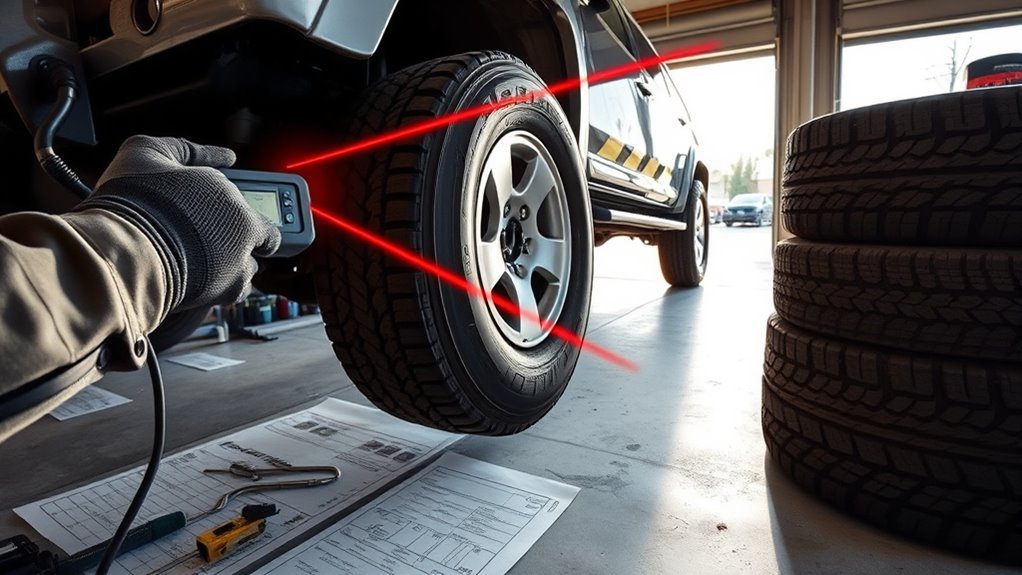
Have your 4Runner’s alignment checked about twice a year, after a hard pothole or curb hit, after suspension work, or anytime the SUV pulls, wanders, or wears tires unevenly. You may not need an adjustment every time, but checking the alignment is cheaper than replacing a set of tires early.
Alignment settings control how the tires meet the road. Toe, camber, and caster all affect tread wear, steering feel, and straight-line tracking. Even a small toe problem can scrub tread off quickly because the tire is being dragged slightly sideways as it rolls.
Alignment Symptoms to Watch
- The 4Runner pulls left or right on a flat road.
- The steering wheel is off-center when driving straight.
- One tire edge wears faster than the other.
- The tread has feathering when you run your hand across it.
- The SUV feels nervous, wanders, or needs constant steering correction.
If you lift your 4Runner, change tire size, install aftermarket control arms, add heavy armor, or change suspension height, schedule an alignment after the work is complete. Suspension geometry changes can alter how the tire sits on the road.
How Off-Roading Affects Your 4Runner Tire Life
Off-roading is one of the reasons people buy a 4Runner, but rocks, roots, ruts, mud, sand, gravel, and aired-down driving are harder on tires than daily pavement. The goal is not to avoid the trail; it is to inspect and maintain the tires like trail equipment.
Off-road miles can age a tire faster than highway miles because the tread, shoulders, and sidewalls take impacts from rocks, roots, gravel, and sharp debris.
What Trail Use Does to Tires
- Rocks cut sidewalls and shoulders. Check both the outer and inner sidewalls after rocky trails.
- Mud hides damage. Clean the tires before inspection so you can see slices, missing chunks, and punctures.
- Sand and gravel abrade tread blocks. This can round edges and accelerate wear.
- Airing down builds heat if you drive too fast. Low PSI is for low-speed off-road traction, not normal pavement speeds.
Warning: If you air down for the trail, reinflate before driving highway speeds. Driving fast on underinflated tires can overheat the sidewall and cause tire failure.
After-Trail Tire Check
- Look for cuts, chips, missing tread chunks, bulges, and exposed cords.
- Check between tread blocks for rocks, nails, screws, and sticks.
- Inspect valve stems for leaks or tearing.
- Check bead areas for dirt or leaks if you drove at low PSI.
- Recheck cold pressure the next morning.
When to Pull Your 4Runner’s Snow Tires and What to Run Next
Winter tires are built for cold weather, snow, ice, and slush. Their rubber compound stays flexible when temperatures drop, but that same soft compound wears faster in warm weather. A good rule is to remove winter tires when daily temperatures consistently stay above about 45°F.
When winter ends, switch to all-season, all-weather, highway-terrain, or all-terrain tires that match your driving. If you spend most of your time commuting, a quiet highway-terrain or all-season tire may last longer. If you drive gravel, snow, fire roads, or mild trails, an all-terrain tire may be the better compromise. If you face real winter weather every year, keep a dedicated winter set and store it correctly.
| Checkpoint | Action | Rule of Thumb |
|---|---|---|
| Temperature | Watch daily highs and lows | Remove winter tires when temperatures stay above about 45°F |
| Tread depth | Measure before storage | Plan replacement early if winter traction is fading |
| Storage | Clean, dry, label, and store out of sun | Cool, dry, dark storage slows rubber aging |
Pro Tip: Label each tire before storage: LF, RF, LR, and RR. Next season, your shop can rotate them into the correct new positions instead of guessing.
[Products Worth Considering]

Upgrade your Toyota tire setup with these corrosion-resistant, leak-proof valve stem caps designed to help protect the valve core from water, snow, and road grime. The caps feature a snug rubber seal and durable copper alloy construction to resist rust and oxidation while maintaining stable tire pressure. Ideal for replacing worn original caps and keeping your wheels looking clean and stylish.

Measure tyre tread depth precisely with a digital gauge that reads in both MM and inches, helping you monitor safe driving conditions. The large LCD screen is easy to operate, and the compact tool fits for cars, trucks, and motorcycles. It provides high accuracy with a 0-25.4mm range and includes a 1-year warranty for added peace of mind.
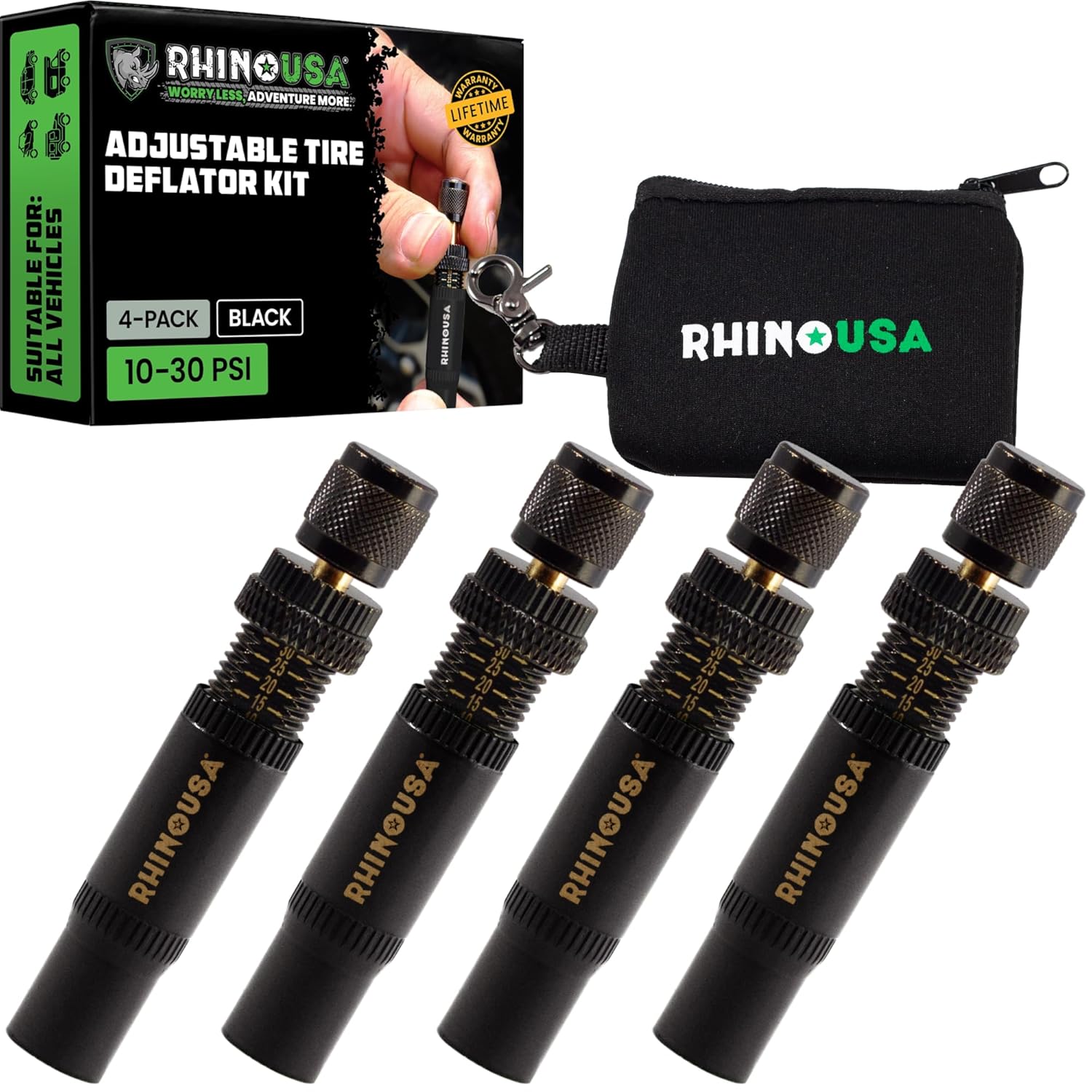
Use the Rhino USA adjustable tire deflators to air down all four tires at once by screwing one deflator onto each valve stem, letting you step away while the tires reach your preset pressure. Each deflator independently adjusts across a 10–30 PSI range with laser-etched indicators for quick setup and verification, making it ideal for beach, sand, and rocky off-road trails.
Spot Dry Rot Early: The 30-Second 4Runner Tire Inspection
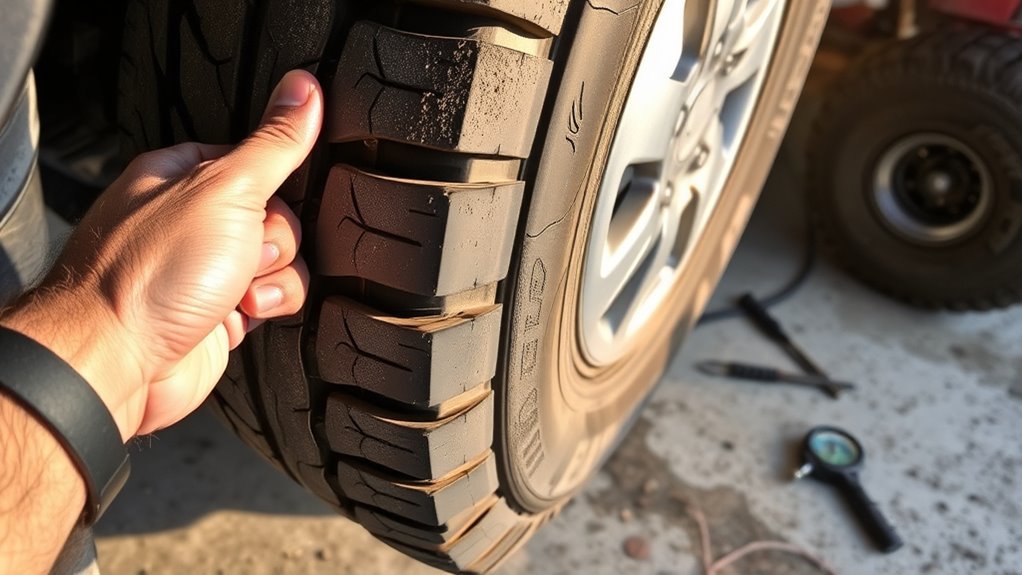
Dry rot is rubber aging. It can show up as small cracks, hard or gray rubber, sidewall checking, or cracking between tread blocks. Heat, sunlight, ozone, long storage, low mileage, poor inflation, and age all contribute.
Look closely at each tire once a month. Turn the front wheels left and right so you can see more of the inner sidewalls. Use a flashlight and check the spare too, because spare tires often age out before they wear out.
What to Look For
- Sidewall cracks: Small surface checking may need monitoring; deep cracks need professional inspection.
- Bulges or bubbles: Do not ignore them. They can signal internal tire damage.
- Cuts or exposed cords: Replace or repair only if a tire professional says it is safe and repairable.
- Hard, faded, or brittle rubber: This can point to age, heat, UV, or ozone damage.
- Old DOT date code: The last four digits show the week and year the tire was made.
NHTSA notes that some vehicle and tire manufacturers recommend replacing tires that are six to 10 years old, regardless of treadwear. If your tires are old, cracked, noisy, vibrating, or losing air repeatedly, have them inspected by a qualified tire professional.
Know When Your 4Runner Tires Are Done
Tread depth tells you how much usable grip is left, but it is not the only replacement trigger. A tire can have tread and still be unsafe because of age, impact damage, sidewall cracking, punctures, or internal separation.
| Condition | What It Means | Action |
|---|---|---|
| 2/32 inch tread | Minimum safety/legal replacement point in many situations | Replace immediately |
| Around 4/32 inch tread | Reduced wet, snow, and trail confidence | Start planning replacement, especially before winter or long trips |
| Cracks, bulges, cords, or sidewall cuts | Possible structural damage | Stop using the tire until inspected |
| Repeated air loss | Leak, puncture, valve issue, bead leak, or wheel issue | Repair only if safely repairable |
| Old tire age | Rubber can age even with good tread | Check DOT code and get professional inspection |
Frequently Asked Questions
How often should I replace my 4Runner tires?
Replace them when tread reaches 2/32 inch, when damage makes them unsafe, or when age-related cracking or performance changes show up. Many 4Runner tires may last tens of thousands of miles with good pressure, rotation, and alignment, but off-road use, towing, heavy loads, aggressive driving, and poor maintenance can shorten life fast.
What can I do to make my 4Runner tires last longer?
Check cold pressure monthly, rotate every 5,000–8,000 miles, keep alignment in spec, balance tires when needed, avoid driving winter tires in warm weather, inspect after off-road trips, and replace damaged or aged tires before they fail.
What tire pressure should a Toyota 4Runner use?
Use the cold PSI printed on your driver-door Tire and Loading Information label. Do not rely on the sidewall maximum PSI. If you changed tire size, load range, wheels, or vehicle weight, ask a tire professional to confirm the correct pressure for your setup.
Should I rotate my 4Runner tires every oil change?
Often, yes. Many owners pair tire rotation with oil-service intervals because it is easy to remember. The best interval is the one in your owner’s manual or tire warranty, adjusted for your use. Off-road driving, towing, and uneven wear may call for earlier rotation.
Do all-terrain tires need different maintenance?
All-terrain tires benefit from the same basics, but they often need closer inspection. Their larger tread blocks can cup, chip, hold rocks, or get noisy if pressure, rotation, balance, or alignment is ignored. Rotate consistently and inspect after trail use.
Conclusion
Making your 4Runner tires last longer is not complicated, but it does require consistency. Check cold pressure monthly, rotate on schedule, watch for vibration and pulling, inspect tread and sidewalls, remove winter tires when the weather warms, and treat off-road trips as a reason to inspect—not just rinse off—the tires.
Your tires are the only contact patch between the 4Runner and the road or trail. Maintain them with the same attention you give the engine, suspension, and brakes, and you will get better tread life, safer handling, stronger traction, and fewer surprise tire bills.
Sources
- NHTSA TireWise Tire Safety — monthly pressure checks, tread depth, tire aging, rotation, balance, and alignment guidance
- FuelEconomy.gov: Keeping Your Vehicle in Shape — fuel-economy impact of proper tire inflation
- Toyota 4Runner Owner’s Manuals and Warranties — owner’s manual reference for tire pressure and vehicle-specific maintenance information
- Toyota 2024 4Runner Brochure — 4Runner drivetrain and four-wheel-drive context
- AAA: When Should You Replace Your Tires for Winter? — winter tire temperature and tread-depth guidance
- Tire Rack: Winter / Snow Tires — winter tire temperature and traction context