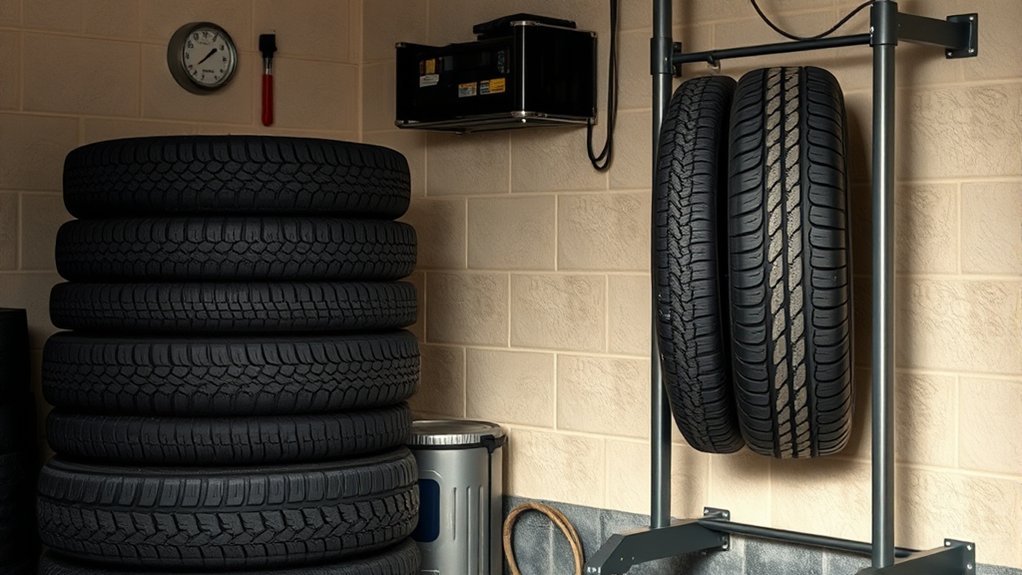
Stored tires can age faster when heat, sunlight, moisture, chemicals, or ozone attack the rubber. You can slow that damage by cleaning each tire, drying it fully, bagging it when practical, and storing it in a cool, dry, dark indoor space until the next season.
Quick Answer
To store tires properly, clean and dry them first, keep them indoors in a cool, dry, dark area, and protect them from sunlight, moisture, oils, solvents, and ozone sources. Store tires on rims stacked or hung by the rim. Store tires without rims upright when possible.
Key Takeaways
- Clean tires with mild soap and water, then dry them fully before storage.
- Use a cool, dry, dark indoor space with steady conditions and light ventilation.
- Keep tires away from sunlight, gasoline, oils, solvents, electric motors, generators, and battery chargers.
- Store tires on rims stacked flat or hung by the rim; store tires without rims upright when you have space.
- Check tread depth, sidewall condition, tire age, valve stems, and pressure before reinstalling stored tires.
At a Glance
| Time Required | 20 to 45 minutes for a set of four tires |
| Difficulty | Easy, as long as the tires are already removed from the vehicle |
| Tools Needed | Tire brush, mild soap, water, towels, marker or labels, tire pressure gauge, and large plastic bags |
| Cost | Usually $0 to $20 if you already have basic cleaning supplies |
How to Properly Store Your Tires
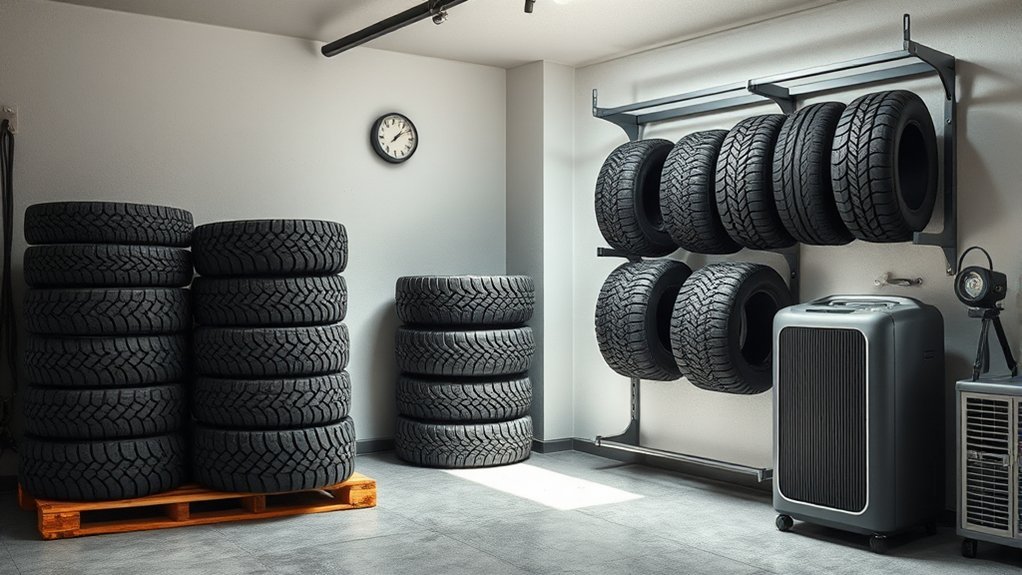
Start by choosing the right storage space. The U.S. Tire Manufacturers Association recommends indoor storage because it helps protect tires from sunlight, ozone, and other damaging conditions. A basement, climate-controlled garage, storage room, or tire shop storage area usually works better than a shed, attic, or exposed outdoor space.
Before you put the tires away, clean them with mild soap and water, remove stones from the grooves, and let them dry completely. Michelin also recommends keeping stored tires away from heat, direct sunlight, ozone sources, grease, gasoline, solvents, and oils.
Use large airtight plastic bags when you can. Continental recommends placing each dry tire in its own airtight bag, removing as much air as possible, and taping the bag shut. This helps limit air exposure and slows oil evaporation from the rubber compound.
Warning: Do not store tires near gasoline, motor oil, solvents, battery chargers, generators, electric motors, furnaces, compressors, or welding equipment. These items can expose rubber to chemicals, heat, or ozone that speeds up cracking.
Preparing Your Tires for Storage
Good tire storage starts before the tires leave the vehicle. Label the original position of each tire, clean the rubber, inspect it, and fix any obvious problem before the tire sits for months.
Label Each Tire Before Removal
Before removing the tires, mark their positions with simple labels such as front left, front right, rear left, and rear right. This helps you or your tire technician plan the next rotation and spot uneven wear patterns when the tires go back on the vehicle.
You can write on painter’s tape, use tire storage tags, or place a note inside each tire bag. Keep the label easy to read after the tire is stored.
Cleaning Tires Thoroughly
Use a tire brush, mild soap, and water to remove dirt, brake dust, salt, mud, and road grime from the tread and sidewalls. Clean the wheels too if the tires are mounted on rims.
Avoid harsh solvents, petroleum-based cleaners, and tire shine products before storage. Tire compounds already include protective ingredients, and dressings can trap grime or interfere with the rubber instead of helping it.
Inspecting for Damage
Inspect each tire before storage. Look for cuts, cracks, punctures, exposed cords, bubbles, bulges, sidewall damage, uneven wear, and objects stuck in the tread. Also check the valve stems for cracking, dry rot, or signs of leaks.
Measure tread depth before the tires sit for the season. The National Highway Traffic Safety Administration says tires are not safe and should be replaced when tread reaches 2/32 inch. If a tire already looks damaged or worn out, do not store it with the plan to reuse it later.
Optimal Temperature, Light, and Moisture for Tire Storage
Store tires in a clean, dry, shaded or dark space with mild, steady conditions. You do not need to chase one exact temperature or humidity number for normal seasonal tire storage. Instead, avoid the conditions that damage rubber: heat, freezing extremes, standing water, high humidity, direct sunlight, chemical exposure, and poor ventilation.
Continental recommends a cool, dry, moderately ventilated place and warns that most garages, sheds, and attics can experience large swings in temperature and humidity. If your garage stays dry and does not get extremely hot or cold, it can work. If it bakes in summer or gets damp in winter, choose a better indoor space.
The best storage area is boring: clean, dry, dark, steady, and away from anything that smells like fuel, solvent, smoke, or hot machinery.
[Products Worth Considering]

This tire inflator with pressure gauge delivers long-lasting performance with a durable rubber-protected gauge and sturdy build. The longer hose and 360 swivel air chuck help you seal the valve securely and keep your hands free while measuring, inflating, or deflating. It’s battery-free for reliable use and provides ±2 PSI accuracy in the mid-range for most typical tires, with universal compatibility for 1/4 NPT compressor outputs.

The Kurgo Seasonal Tire Tote helps protect your car interior, clothes, and garage from tire grime, brake dust, and residue during seasonal tire changes. Its universal design fits most passenger tires between 22" and 31" in diameter, making storage and transport simpler with less mess. Built for rugged, repeated use, it’s machine washable for easy care and comes with a lifetime warranty.

This 7-piece car wheel brush kit delivers gentle, scratch-free cleaning with extra-soft, metal-free brush heads designed to lift brake dust, dirt, and grime. The brushes bend up to 360 degrees for hard-to-reach wheel areas, while the included tire shine applicator pad helps apply tire dressing evenly with less build-up. An organizer bag is included for convenient storage, making it ideal for regular wheel and tire detailing.
Storing Mounted vs. Unmounted Tires
The best storage position depends on whether the tire is mounted on a rim. This is where many tire-storage mistakes happen.
| Tire Type | Best Storage Position | Avoid |
|---|---|---|
| Mounted on rims | Stack flat or hang by the rim on a strong tire rack or hook | Long-term upright storage if your tire maker advises against it |
| Unmounted, without rims | Stand upright when possible; turn them occasionally | Hanging, because it can distort the bead area |
| Tires on a stored vehicle | Remove vehicle weight with proper supports when safe, or move the vehicle periodically | Leaving a loaded vehicle parked in one spot for months |
[Products Worth Considering]

Monitor tire tread wear with a smart, color-coded depth gauge that shows clear condition ranges at a glance. The bar is range marked for fast, easy readings, helping you maintain safer traction and performance. Each gauge is portable with a pocket clip, and the set includes 20 units for daily use and sharing.
Chemical Guys ShineLogic Tire Shine delivers a deep wet black, high-shine finish for rubber tires with a sleek look. It’s designed for durable, one-step application with minimal drips, streaks, or runs, and it helps produce effortless, long-lasting shine. Choose aerosol or trigger spray for easy use on cars, trucks, motorcycles, RVs, and more.

This 3-piece wheel and tire brush set makes it easy to clean light, medium, and heavy dirt from wheels, rims, tires, and exterior surfaces. It includes both soft and stiff bristle options for gentle scrubbing and tough grime removal, helping lift brake dust and road buildup. The long-handle design supports comfortable cleaning across cars, trucks, SUVs, RVs, motorcycles, and more, with simple care instructions to restore brush shape.
Mounted Tire Storage Tips
If your tires are mounted on rims, keep them as tire-and-wheel assemblies. Stack them flat in a stable pile or hang them by the rims on a rack designed for the weight. Do not hang a tire by the rubber itself.
Before reinstalling the wheels, adjust inflation to the vehicle manufacturer’s recommended cold pressure listed on the tire placard or in the owner’s manual. Do not use the maximum pressure molded on the tire sidewall as your normal driving pressure.
Unmounted Tire Storage Methods
If your tires are not mounted on rims, store them upright when possible. This position helps the tire keep its shape without placing long-term weight on the sidewall. Turn each tire occasionally so one contact point does not carry the load for the whole season.
If you must stack unmounted passenger or light-truck tires because space is limited, keep the stack low, stable, clean, and sidewall-to-sidewall. Do not over-stack. Too much weight can deform the tires at the bottom.
Pro Tip: Put each tire in its own labeled bag after it dries. The label saves time later, and the bag keeps dust, moisture, and air exposure under better control.
Tires Stored on a Parked Vehicle
If the tires stay on a vehicle during long storage, reduce the load on them when you can do so safely. Use proper vehicle supports on a firm, level surface and follow the vehicle owner’s manual. If the vehicle must sit on its tires, unload extra weight, keep the tires at the recommended cold pressure, and move the vehicle periodically to reduce flat-spot risk.
USTMA recommends moving a stored vehicle at least every three months when weight remains on the tires. Some high-performance tires may need more frequent movement, especially if they use nylon belt overlays.
How to Clean Your Tires Before Storage
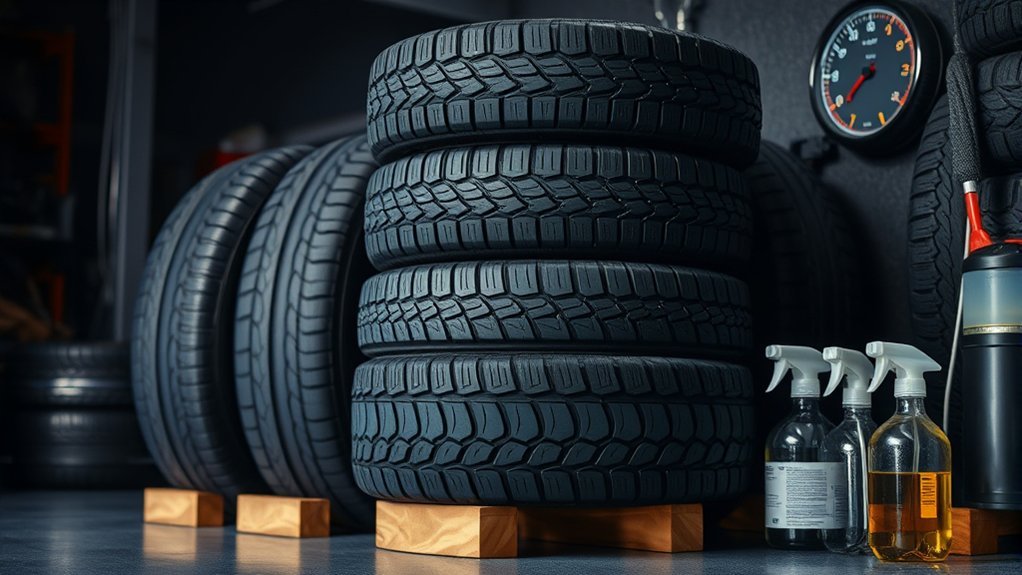
Cleaning tires before storage removes grime that can hold moisture, salt, and chemicals against the rubber. Keep the process simple. You do not need tire shine, dressing, or strong cleaners.
| Step | Action | Why It Matters |
|---|---|---|
| 1 | Brush the tread and sidewalls with mild soap and water. | Removes dirt, salt, brake dust, and grime. |
| 2 | Remove stones or debris from the grooves. | Prevents objects from sitting in the tread all season. |
| 3 | Rinse off all soap residue. | Keeps cleaner residue from drying on the rubber. |
| 4 | Dry each tire completely. | Prevents trapped moisture inside bags or covers. |
| 5 | Inspect and label the tire before storage. | Helps catch damage and plan the next rotation. |
Maintaining Proper Air Pressure During Storage
For tires mounted on rims, check pressure before storage and again before reinstalling them. Use the vehicle’s tire placard or owner’s manual for the correct cold inflation pressure. NHTSA explains that the proper tire pressure is the vehicle manufacturer’s recommended pressure, not the maximum pressure printed on the tire sidewall.
For unmounted tires, you cannot check driving pressure because the tire is not sealed to a rim. Focus on clean, dry storage and correct positioning instead. Once the tire is mounted again, inflate it to the vehicle placard pressure and have a professional check it if you see damage, bead issues, or air loss.
Note: Tire pressure changes with temperature. Always make your final pressure adjustment when the tire is cold, meaning the vehicle has not been driven for at least three hours.
Keeping Your Tires Safe From the Elements
Indoor storage works best. If you must store tires outside for a short time, raise them off the ground and cover them with an opaque waterproof cover that has vent openings. A sealed tarp without ventilation can trap heat and moisture, which can create a steam-bath effect.
Never store tires directly on black asphalt, oily floors, wet concrete, sharp pallets, or surfaces with nails or metal burrs. Use a smooth pallet, storage rack, clean shelf, or tire stand to reduce moisture contact and physical damage.
Keep the tire area away from direct sunlight and bright artificial UV light. Sunlight and heat can dry and weaken rubber over time. Also keep tires away from ozone-producing equipment such as generators, compressors, furnaces, switches, sump pumps, and central vacuum motors.
How to Check and Maintain Stored Tires
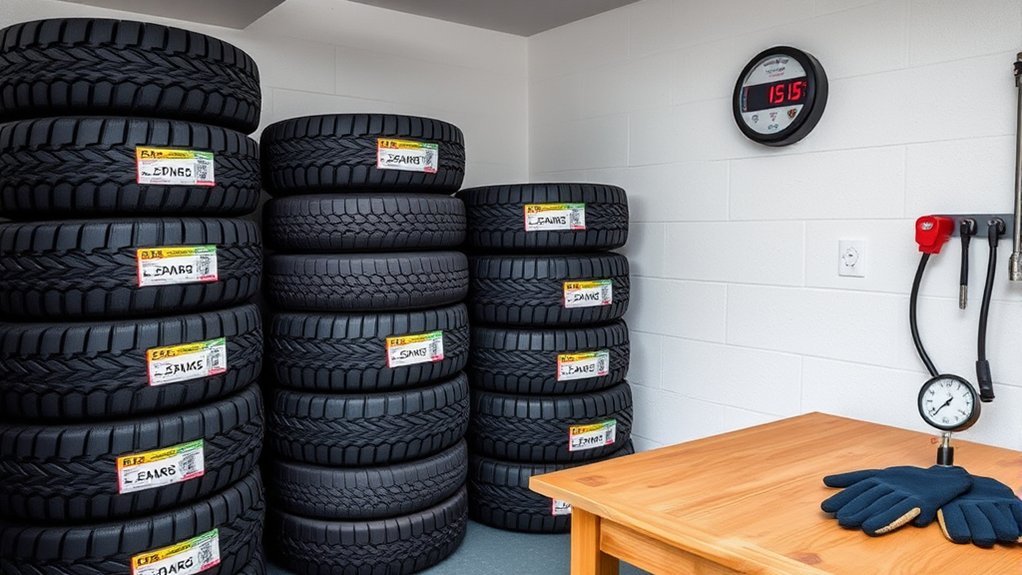
Stored tires still need attention. Check them during storage and again before they go back on the vehicle. A tire that looked fine last season can develop cracks, pressure loss, or age-related signs while sitting.
Visual Inspection Guidelines
Use this inspection checklist before reinstalling stored tires:
- Tread depth: Replace tires at 2/32 inch tread depth or sooner if your driving conditions require more tread.
- Sidewalls: Look for cuts, cracks, bubbles, bulges, blisters, or exposed cords.
- Tread grooves: Remove stones and check for cracking, punctures, nails, or uneven wear.
- Valve stems: Check for cracks, leaks, missing caps, or dry rot.
- DOT date code: Find the final four digits of the DOT code. The first two digits show the week, and the last two show the year of manufacture.
Pressure Check Recommendations
For mounted tire-and-wheel assemblies, check pressure monthly if the tires are stored for a long time. Add air only to the vehicle manufacturer’s recommended pressure when the tires are cold.
Before driving, check all four tires and the spare. Do not rely only on the Tire Pressure Monitoring System, because TPMS warnings usually appear only after pressure drops significantly.
Storage Duration Awareness
Storage slows damage when you do it correctly, but it does not stop tire aging. Michelin recommends a thorough professional inspection after five years of service and replacement 10 years after the manufacture date, even if the tire still has tread and looks usable.
If the tire has been stored for years, check both age and condition. Replace it if you see cracks, bulges, dry rot, exposed cords, tread separation, severe uneven wear, or repeated air loss.
Signs It’s Time to Replace Your Stored Tires
Do not reuse stored tires just because they still fit your vehicle. Replace or professionally inspect them if you notice any of these warning signs:
- Tread depth at or below 2/32 inch.
- Sidewall cracks, bulges, cuts, or blisters.
- Deep tread cracking or visible separation.
- Flat spots that do not smooth out after normal driving.
- Repeated air loss after inflation.
- Damaged, cracked, or leaking valve stems.
- A DOT manufacture date that makes the tire 10 years old or older.
- Vibration, pulling, or handling changes after reinstallation.
When in doubt, have a trained tire professional inspect the tire before you drive on it. Tire failure can cause a blowout, loss of control, or poor wet-weather traction.
Benefits of Professional Tire Storage Services
Professional tire storage can make sense if you do not have a clean, dry, indoor space at home. Tire shops often store seasonal tires in controlled areas, keep them off the ground, and inspect them before the next changeover.
- Better storage conditions: Professional storage keeps tires away from sunlight, moisture, chemicals, and clutter.
- More space at home: You avoid stacking bulky tires in a garage, closet, or basement.
- Seasonal convenience: Your tires are already at the shop when it is time to swap them.
- Inspection support: Technicians can check tread depth, damage, pressure, and age before installation.
If you store tires at home, you can still get good results. The key is keeping the storage area clean, dry, dark, and free from heat, chemicals, and ozone sources.
[Products Worth Considering]

Rubber Care delivers a beautiful dark black satin/matte finish on tires and other rubber or plastic surfaces, drying to the touch without oily shine. Its ceramic aircraft-grade formula helps repel dirt and brake dust residue, keeping surfaces cleaner longer. Triple nano ceramic polymer technology provides best-in-industry UV protection, restoring and protecting rubber while also working on weather stripping and de-ice boot care.

This professional wheel and rim brush kit makes it easy to lift brake dust, grime, and dirt from wheels and tires without scratching finishes. The brushes feature soft, metal-free wool heads and a flexible 360-degree rim brush design for reaching hard-to-clean areas. Includes multiple brush types plus accessories for thorough car, motorcycle, and general vehicle detailing.

Tymate TM7 is a wireless tire pressure monitoring system that delivers real-time pressure and temperature readings for safer driving. It includes four external sensors, a bright color LCD display with adjustable backlight, and six alarm modes for high/low pressure, fast leakage, high temperature, and sensor signal or battery issues. The system covers a wide 0–144 PSI range and plugs into your vehicle’s cigarette lighter socket for quick DIY setup.
Frequently Asked Questions
Can I store tires in my garage year-round?
Yes, you can store tires in a garage if it stays dry, shaded, reasonably cool, and free from chemicals or ozone-producing equipment. Avoid garages that get very hot, damp, or exposed to direct sunlight for long periods.
How long can tires be stored before they degrade?
No single storage time guarantees safety. Tires age based on manufacture date, service history, climate, maintenance, and storage conditions. Check the DOT date code, inspect the tire before reuse, and follow the tire or vehicle manufacturer’s age guidance.
Is it safe to stack unmounted tires?
Standing unmounted tires upright is usually the best home-storage method. If you must stack them, keep the stack low, stable, clean, and sidewall-to-sidewall. Never hang unmounted tires because hanging can distort the bead area.
Do I need to remove the valve stems before storage?
No. You do not need to remove valve stems for normal seasonal tire storage. Instead, inspect them for cracks, dry rot, leaks, and missing caps. Replace damaged valve stems during mounting or service.
What cleaning products should I avoid on tires?
Avoid petroleum-based cleaners, gasoline, oils, harsh solvents, bleach, and tire shine products before storage. Use mild soap, water, and a tire brush, then dry the tire fully before bagging or covering it.
Should tires be stored in bags?
Bags are a good idea if the tires are completely dry first. Use one large airtight bag per tire, remove as much air as possible, and tape the bag closed. Do not seal moisture inside the bag.
Can I store tires outside?
Outdoor storage should only be a short-term backup. Raise the tires off the ground and use an opaque waterproof cover with vent openings. Do not store tires on asphalt, wet ground, or exposed areas without protection.
Conclusion
Proper tire storage does not require special equipment, but it does require the right habits. Clean and dry each tire, label its original position, protect it from sunlight and moisture, and store it away from heat, chemicals, and ozone sources. Before reinstalling the tires, check tread depth, pressure, valve stems, sidewall condition, and tire age. If anything looks unsafe, let a tire professional inspect it before you drive.
Sources
- U.S. Tire Manufacturers Association Tire Storage Recommendations — indoor storage, outdoor storage, ozone, heat, moisture, and parked-vehicle guidance.
- Michelin: How Do I Store My Tires? — cleaning, indoor storage, on-rim storage, off-rim storage, and damage inspection.
- Continental: Storing Tires — cleaning, airtight bags, avoiding sunlight, avoiding tire dressing, and chemical exposure.
- NHTSA TireWise — tire pressure, tread depth, monthly checks, and 2/32 inch replacement guidance.
- Michelin: When to Replace Tires — tire age, DOT date code, inspection after five years, and replacement after 10 years.