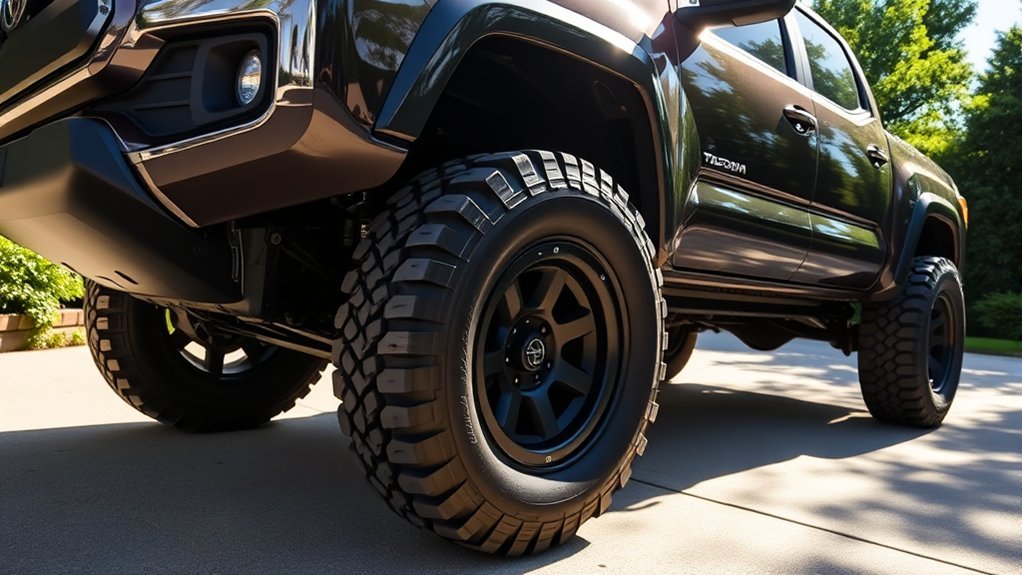
Yes, 265/75R16 tires usually fit many stock Toyota Tacoma models, especially third-generation trucks that already run 16-inch wheels. The catch is that “stock Tacoma” is not one single setup. Trim, wheel offset, mud flaps, tire brand, load range, alignment, and suspension condition can all change how much clearance you have.
Quick Answer
A 265/75R16 tire will often fit a stock 2016–2023 Toyota Tacoma on factory 16-inch wheels, but you should expect to check the front mud flaps, fender liner, cab-mount area, and full-lock steering clearance. It is about 1 inch taller than 265/70R16.
Key Takeaways
- 265/75R16 is a common “one-size-up” tire for third-gen Tacomas with stock 16-inch wheels.
- The size adds about 1.04 inches of overall diameter and about 0.52 inches of radius compared with 265/70R16.
- Most rubbing, when it happens, is near the front mud flaps, fender liner, or cab-mount area during full steering lock or reverse.
- Factory 2023 Tacoma tire sizes vary by trim, so check your door placard before ordering tires.
- Choose a tire with proper load capacity and speed rating, then test clearance after installation.
At a Glance
| Time Required | 20–45 minutes for a fitment check; 1–2 hours for tire installation at a shop |
| Difficulty | Easy to moderate, depending on whether trimming or mud-flap removal is needed |
| Tools Needed | Flashlight, tire-pressure gauge, tape measure, torque wrench, jack stands if checking compression, and trim tools if modifying mud flaps |
| Cost | Usually the cost of four tires plus mounting, balancing, and alignment if needed; trimming costs little if you do it yourself |
Tire Size Compatibility for the 2023 Tacoma
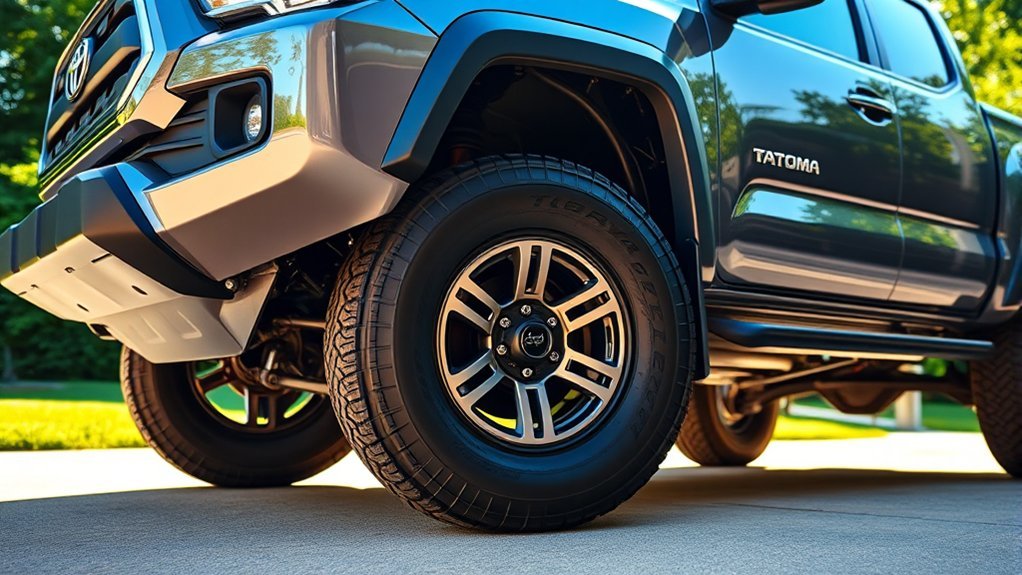
For a 2023 Tacoma, do not assume every trim starts with the same tire. Toyota’s official 2023 Tacoma brochure lists several factory tire sizes depending on trim and package, including P245/75R16, P265/70R16, P265/65R17, and P265/60R18. That matters because 265/75R16 is a simple upgrade from 265/70R16, but it is a bigger change for trims that came with a different wheel and tire package.
Note: This guide is mainly for stock third-generation Tacomas, especially 2016–2023 models using 16-inch wheels. The redesigned 2024+ Tacoma has different body, suspension, and wheel-well dimensions, so do not apply this fitment answer directly to 2024+ trucks.
| 2023 Tacoma setup | Factory tire size shown by Toyota | 265/75R16 fitment note |
| SR / SR5 16-inch wheel setups | Often P245/75R16 depending on cab, engine, and package | Possible, but this is both wider and taller than the narrower factory tire. Check clearance carefully. |
| Trail Special Edition / TRD Off-Road / TRD Pro 16-inch setups | P265/70R16 on many configurations | Usually the easiest path because the tire stays 265 mm wide and mainly adds height. |
| TRD Sport 17-inch setups | P265/65R17 | Requires 16-inch wheels to run 265/75R16. Check wheel offset and brake clearance before switching wheels. |
| Limited / 18-inch wheel packages | P265/60R18 or package-specific 18-inch sizes | Requires a wheel change. Confirm wheel specs, load rating, and clearance before buying. |
265/70R16 vs. 265/75R16: The Real Size Difference
If your Tacoma came with 265/70R16 tires, moving to 265/75R16 keeps the same 265 mm section width but increases sidewall height. Using nominal tire-size math, the 265/75R16 is about 31.6 inches tall, while the 265/70R16 is about 30.6 inches tall. Actual mounted height can vary by brand, tread design, load range, wheel width, and tire pressure.
| Measurement | 265/70R16 | 265/75R16 | Change |
| Approximate diameter | 30.6 in | 31.6 in | +1.04 in |
| Approximate radius gain | Baseline | Adds about 0.52 in | More ground clearance, less wheel-well clearance |
| Approximate circumference | 96.2 in | 99.4 in | About +3.4% |
| Speedometer effect | Baseline | Reads slow if calibrated to 265/70R16 | When the speedometer shows 60 mph, actual speed is about 62 mph |
How Upgrading to 265/75R16 Affects Tacoma Performance
Upgrading to 265/75R16 tires can make your Tacoma feel more capable off pavement, but the improvement depends on the exact tire you choose. A mild all-terrain tire in a lighter load range will feel different from a heavy LT all-terrain or mud-terrain tire.
- Off-road traction can improve: The taller sidewall can add a little ground clearance and give you more sidewall to air down on dirt, gravel, and trail surfaces.
- Acceleration may feel slightly softer: A taller and heavier tire changes effective gearing. The difference is usually modest with 265/75R16, but it can be more noticeable with heavy LT tires.
- Fuel economy may drop a little: There is no guaranteed MPG number. Tire weight, tread pattern, pressure, driving speed, and terrain all matter.
- Speedometer readings change: If your truck was calibrated for 265/70R16, the speedometer will read about 3.4% slow after the change.
- Braking and steering feel can change: Heavier tires can add rotational weight, which may slightly affect braking feel, steering response, and ride comfort.
Warning: A tire that fits physically is not automatically the right tire. Before replacing tires, check your Tacoma’s tire placard, owner’s manual, load index, speed rating, wheel rating, and spare setup. If you are unsure, consult a qualified tire professional.
What Rubbing Issues Should You Expect With 265/75R16 Tires?
On factory 16-inch wheels and stock suspension, 265/75R16 tires often clear with little or no modification. When rubbing does happen, it usually appears during full steering lock, backing up, suspension compression, or turning into a driveway.
Common contact points include:
- Front mud flaps: This is one of the most common light-rub areas. Trimming or removing the front mud flaps often solves it.
- Front fender liner: The liner can touch at full lock, especially with aggressive tread blocks or tires that run large.
- Cab-mount area: Serious cab-mount contact is more common with larger tires, negative-offset wheels, low caster, or hard compression, but it should still be checked.
- Upper control arm and frame: With stock wheels this is less likely, but aftermarket wheels, spacers, or unusual offsets can change inner and outer clearance.
- Spare-tire location: Do not forget the spare. Test whether a full-size 265/75R16 spare fits under the bed and clears the exhaust, hitch, and crossmembers.
Pro Tip: Tire model matters. Two tires labeled 265/75R16 can have different true diameters, tread widths, shoulder shapes, and weights. Check the manufacturer’s spec sheet for the exact tire before buying.
Wheel Offset and Aftermarket Wheels
If you are keeping the factory 16-inch wheels, 265/75R16 is usually a lower-drama upgrade. Aftermarket wheels can make fitment easier or harder depending on width, offset, and backspacing.
A wheel with more negative offset pushes the tire outward. That can improve the stance, but it also swings the tire through a wider arc while turning, which can increase rubbing at the mud flap, fender liner, and cab-mount area. A wheel with too much positive offset can reduce inner clearance near suspension parts. For a stock-height Tacoma, wheel specs are often just as important as tire size.
[Products Worth Considering]

This universal wheel alignment tool helps you accurately restore tire tilt angles after tire or suspension repairs using an adjustable camber gauge. It features a powerful magnetic base that firmly attaches to brake rotors for stationary, slip-free readings, improving consistency during measurement. Built from durable PC plastic, it resists wear and corrosion and is compact enough for car, truck, RV, and motorcycle alignment tasks.

These aluminum alloy tire valve stem caps with an O-ring seal help protect valve stems from corrosion while adding a clean, stylish look to your vehicle. The universal fit works across cars, trucks, motorcycles, bicycles, and more, making them an easy upgrade for everyday driving and off-road use. Installation is quick, and the included four-pack keeps all your tires dressed and protected.

Keep your tires properly inflated with this analog VONDIOR tire pressure gauge, designed for fast, easy readings without batteries. The swiveling, two-axis hose and large glow dial help you measure at any tire angle with instant visibility. Built with a protective rubber shield, it supports durable, low-maintenance use for cars and trucks.
Load Rating, Speed Rating, and Tire Pressure
Before installing 265/75R16 tires, compare the new tire’s load index and speed rating with your Tacoma’s tire placard and original tire requirements. The U.S. Tire Manufacturers Association tire replacement guidance recommends following the vehicle manufacturer’s replacement recommendations and avoiding tires with less load-carrying capacity than the OE tire at the placard pressure. The NHTSA TireWise tire-safety resource also emphasizes proper tire selection, inflation, and maintenance.
If your Tacoma originally used a P-metric tire and you switch to a heavier LT tire, the ride may feel firmer and the tire may need a different inflation strategy. Do not guess. Use the tire placard, tire manufacturer data, and a tire professional’s guidance. Also make sure all four road tires match in size, construction, load rating, and speed rating unless the vehicle manufacturer specifies otherwise.
[Products Worth Considering]

ETENWOLF T300 is a calibrated digital tire pressure gauge for accurate readings from 3 to 200 PSI across light and heavy-duty vehicles. It includes thermal compensation for reliable performance in extreme cold or heat, with an auto shut-off to extend battery life and an LED for easier reading. The sturdy design supports rugged everyday use, making it ideal for pickups, RVs, and industrial applications.
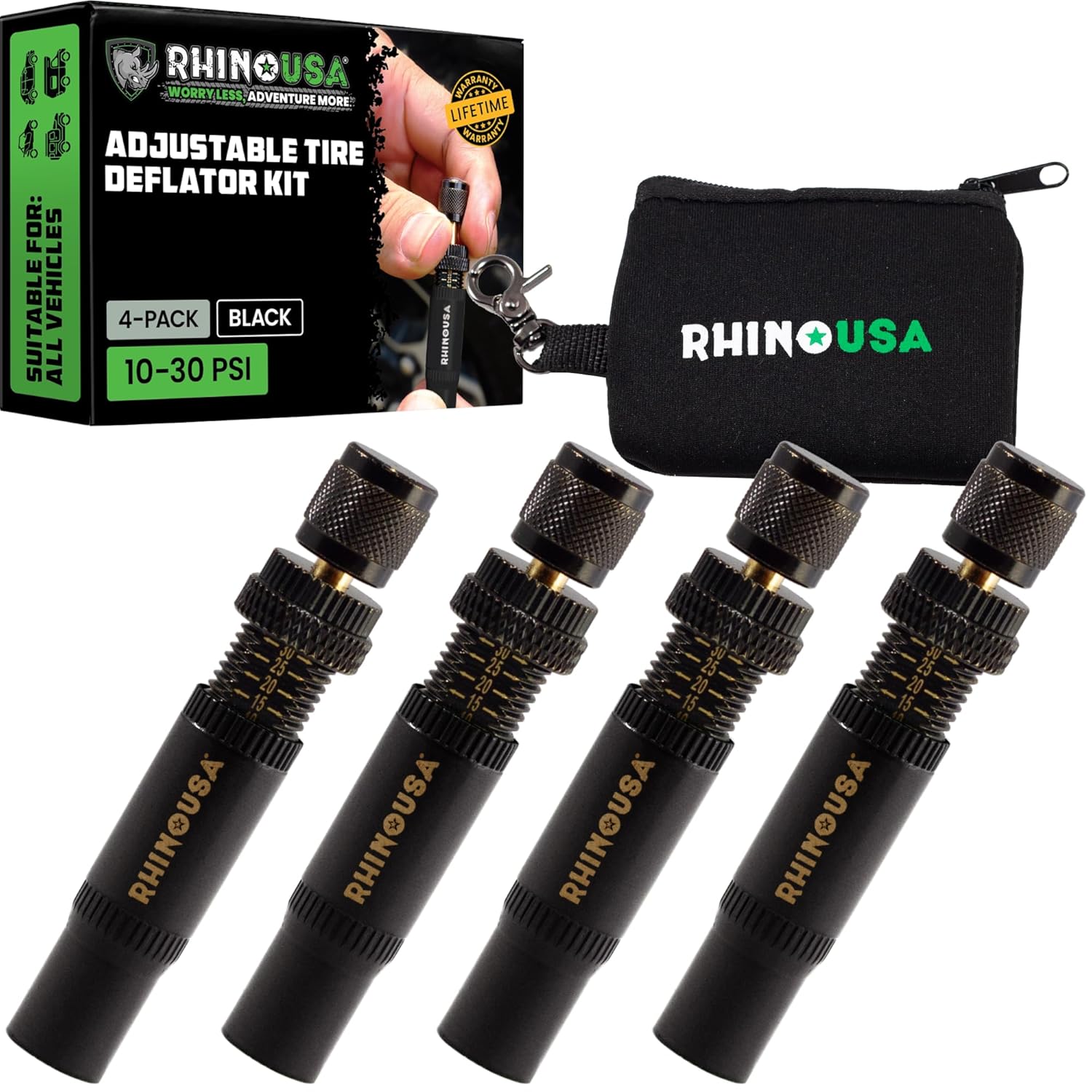
Use the Rhino USA adjustable tire deflators to air down all four tires at once by screwing one deflator onto each valve stem, letting you step away while the tires reach your preset pressure. Each deflator independently adjusts across a 10–30 PSI range with laser-etched indicators for quick setup and verification, making it ideal for beach, sand, and rocky off-road trails.

These M14x1.5 closed-end chrome lug nuts are a one-piece replacement designed for secure fitment on compatible GM, Ford, and select Chrysler/Dodge models. Featuring a 60-degree conical seat and anti-rust chrome plating, they help resist corrosion and maintain a bright look for everyday driving. Built for long-term durability, they include OEM-style part references and are backed by 12 months of support.
Tips for Tire Installation and Maintenance
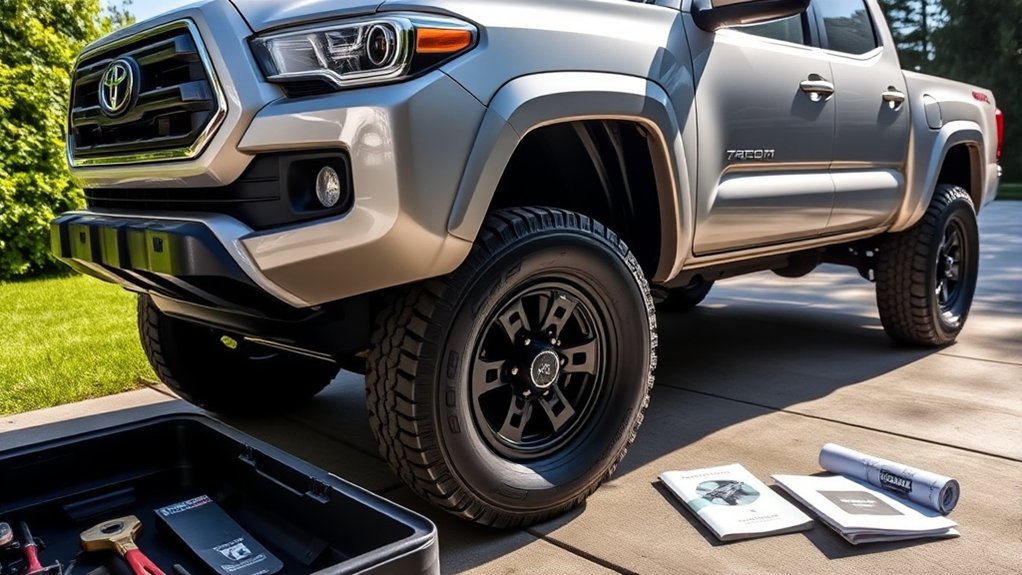
Proper installation and post-installation checks are what separate a clean 265/75R16 upgrade from an annoying rubbing problem. Use this process before and after the tires go on.
- Confirm your starting size: Read the tire size on your current sidewall and compare it with the tire placard on the driver-side door jamb.
- Check wheel size: 265/75R16 requires a 16-inch wheel. If your Tacoma has 17- or 18-inch wheels, you need compatible 16-inch wheels before running this tire size.
- Match load and speed ratings: Do not choose a tire with less load capacity than the vehicle requires.
- Install all four tires together: Mixing tire sizes or construction types can affect handling and drivetrain behavior.
- Torque the lug nuts correctly: Use the manufacturer’s torque specification for your wheel and recheck after the initial drive if your shop recommends it.
- Check cold tire pressure: Set pressure when the tires are cold, then monitor TPMS behavior.
- Inspect at full lock: Turn the steering wheel fully left and right while the truck is parked. Look for contact at the mud flaps, liner, frame, cab mount, and upper control arm.
- Test in reverse: Backing up at full steering lock often reveals rubbing that does not show while driving forward.
- Check after driving: After 25–50 miles, inspect for shiny plastic, tire scuffs, loose liner clips, or rubbing marks.
- Get an alignment if needed: Alignment, especially caster, can affect how close the tire sits to the cab-mount area.
Note: If you trim mud flaps or liner plastic, remove only what is needed for clearance. Do not cut structural metal, brake lines, wiring, or safety-related components.
[Products Worth Considering]

These universal tire valve stem caps help protect valve cores from dust, debris, and moisture while helping maintain stable tire pressure. The corrosion-resistant metal construction and sealed design provide reliable protection in road grime, mud, and winter conditions. Twist-on installation makes them quick to fit on cars, SUVs, trucks, and motorcycles.

This ALL-TOP auto-stop tire deflator valve kit lets you air down off-road tires quickly without watching pressure, automatically stopping when your preset PSI is reached. Each valve is individually calibrated for reliable performance with an acceptable +/- 2 PSI tolerance. The adjustable deflator range covers 10 to 30 PSI and includes four valves plus valve caps and a zipper pouch for easy setup on trucks, SUVs, RVs, UTVs, and powersports.

ETENWOLF’s tire pressure gauge helps you quickly and accurately check tire PSI across cars, trucks, motorcycles, bikes, and more. It’s manually calibrated to ANSI B40.1 Grade A for reliable readings, includes a large glow dial for easy nighttime viewing, and features a 360-degree swivel chuck for use at any valve angle. The gauge also works consistently in extreme hot or cold weather.
Community Insights for 265/75R16 Users
Owner feedback is helpful because Tacoma fitment can vary by tire model and setup. Many Tacoma owners like 265/75R16 because it keeps the stock 265 mm width while adding height and a stronger off-road look. That makes it less aggressive than jumping to wider 285-series tires.
Still, community reports should be treated as a starting point, not a guarantee. One driver may have no rubbing with factory wheels and no mud flaps, while another may rub with a heavier tire, different alignment, sagging front suspension, or aftermarket wheels. If you copy another owner’s setup, copy the full setup: tire model, load range, wheel width, offset, suspension, mud flaps, and alignment.
When 265/75R16 May Not Be the Right Choice
Choose a different setup if you want zero chance of trimming, if your truck already has clearance problems, or if you tow heavy and do not want the extra weight of some LT tires. A stock-size tire may be better for maximum fuel economy, factory ride quality, and speedometer accuracy. A wider or taller tire may be better only if you are also changing wheels, suspension, alignment, or your off-road needs justify it.
Frequently Asked Questions
Will 265/75R16 fit on a stock Tacoma?
Yes, 265/75R16 tires usually fit many stock third-generation Toyota Tacomas with 16-inch wheels. You should still check mud flaps, fender liner, cab-mount clearance, upper-control-arm clearance, and full-lock steering before calling the fitment complete.
Do I need a lift for 265/75R16 tires on a Tacoma?
Usually no, not if the truck is a 2016–2023 Tacoma on factory-style 16-inch wheels and the tire does not run unusually large. A lift can add clearance, but wheel offset, alignment, and mud flaps often matter more for this size.
Will 265/75R16 tires rub on a stock Tacoma?
They can. The most likely rubbing points are the front mud flaps and fender liner. Cab-mount or frame contact is more likely with aftermarket wheels, negative offset, tire spacers, low caster, worn suspension, or tires that measure large for the labeled size.
How much taller is 265/75R16 than 265/70R16?
A 265/75R16 tire is about 31.6 inches tall, while a 265/70R16 tire is about 30.6 inches tall. That is roughly a 1.04-inch diameter increase and about a 0.52-inch radius increase.
Will 265/75R16 affect my Tacoma speedometer?
Yes, if your Tacoma was calibrated for 265/70R16 tires. The 265/75R16 size has about 3.4% more circumference, so when the speedometer shows 60 mph, your actual speed may be about 62 mph. A compatible calibration tool or professional recalibration can reduce the error.
What is the best tire width for a Toyota Tacoma?
For many stock Tacoma setups, 265 mm is the easiest width because it stays close to several factory tire widths and reduces rubbing risk compared with wider 275- or 285-series tires. The best width still depends on wheel offset, tire type, suspension height, and how you use the truck.
Conclusion
For many stock Toyota Tacomas, especially 2016–2023 trucks with factory 16-inch wheels, 265/75R16 tires are a practical and popular upgrade. They add about an inch of height without adding width over 265/70R16, which helps keep rubbing manageable. The smart move is to verify your trim’s original tire size, choose the right load and speed rating, check wheel offset, and inspect clearance after installation. If the tire clears at full lock, in reverse, and after a short drive, your Tacoma should be ready for daily driving and trail use with fewer surprises.
Sources
- Toyota 2023 Tacoma eBrochure — factory wheel and tire sizes by trim and package.
- Toyota Owners Manuals and Warranties — owner manual and warranty/maintenance reference for the 2023 Tacoma.
- NHTSA TireWise — tire safety, tire selection, inflation, and maintenance guidance.
- U.S. Tire Manufacturers Association Tire Care and Safety Guide — replacement tire, load capacity, speed rating, and tire placard guidance.
- Toyo Tires 2023 Tacoma TRD Off-Road OE Fitment — example OE tire size, load index, and speed rating reference for a 2023 Tacoma TRD Off-Road.