Toyota Hilux Load Range Tires: What Each Rating Means
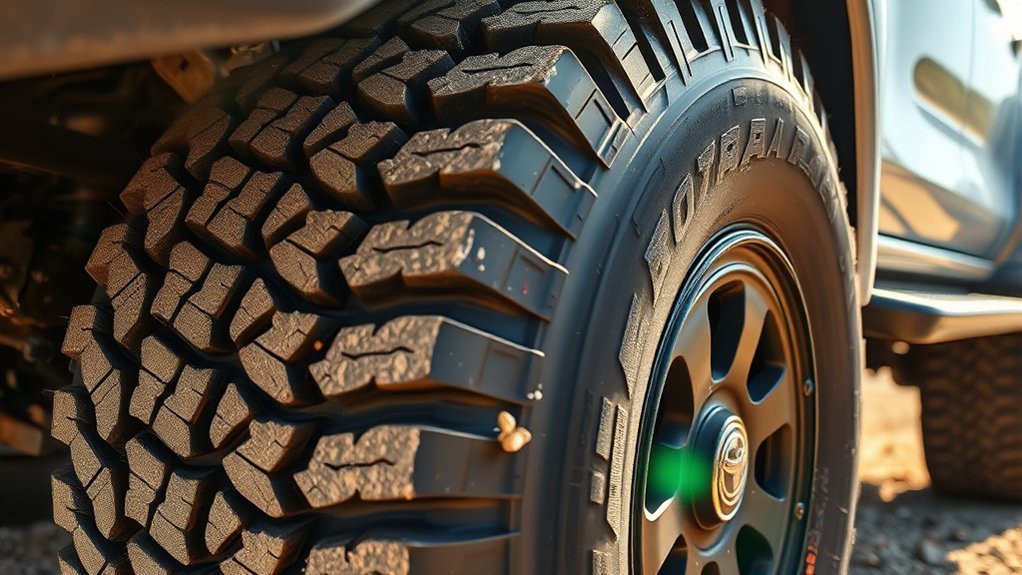
When you are choosing tires for a Toyota Hilux, Load Range E can be a strong option for towing, hauling, work use, and rough roads. The key is understanding what the rating actually means. Load Range E does not give every tire the same weight capacity; it tells you the tire’s construction strength category and its typical maximum load pressure. The exact safe load comes from the tire size, load index, sidewall markings, wheel rating, and your Hilux’s own weight limits.
Quick Answer
Load Range E tires are usually 10-ply-rated light-truck tires built for higher loads and often marked for up to 80 psi. On a Toyota Hilux, they can help with towing and hauling, but only if the tire size, load index, wheel rating, and vehicle payload limits all match your actual use.
Key Takeaways
- Load Range E is not one fixed weight limit. Always confirm the tire’s load index and sidewall maximum load.
- 80 psi is not automatically your daily tire pressure. Use the Hilux tire placard, owner’s manual, and tire load-inflation data.
- E-rated tires do not increase your Hilux’s legal payload or towing rating. GVM/GVWR, axle capacity, GCM/GCWR, wheel rating, and tow-ball download still apply.
- For heavy towing or work loads, Load Range E can improve load stability and casing strength, but it may ride firmer when unloaded.
At a Glance
| Time Required | 10–20 minutes to check placard, sidewall, pressure, tread, and load limits before buying or towing. |
| Difficulty | Easy for inspection; moderate if calculating loaded vehicle and trailer weights. |
| Tools Needed | Owner’s manual, tire placard, tire pressure gauge, tread depth gauge, tire sidewall/load table, and a weighbridge or scale for loaded setups. |
| Cost | Inspection is free. Tire cost varies by size, brand, tread type, and installation; Load Range E tires usually cost more than lighter-duty options. |
What Is Load Range E and Its Importance for Your Toyota Hilux?
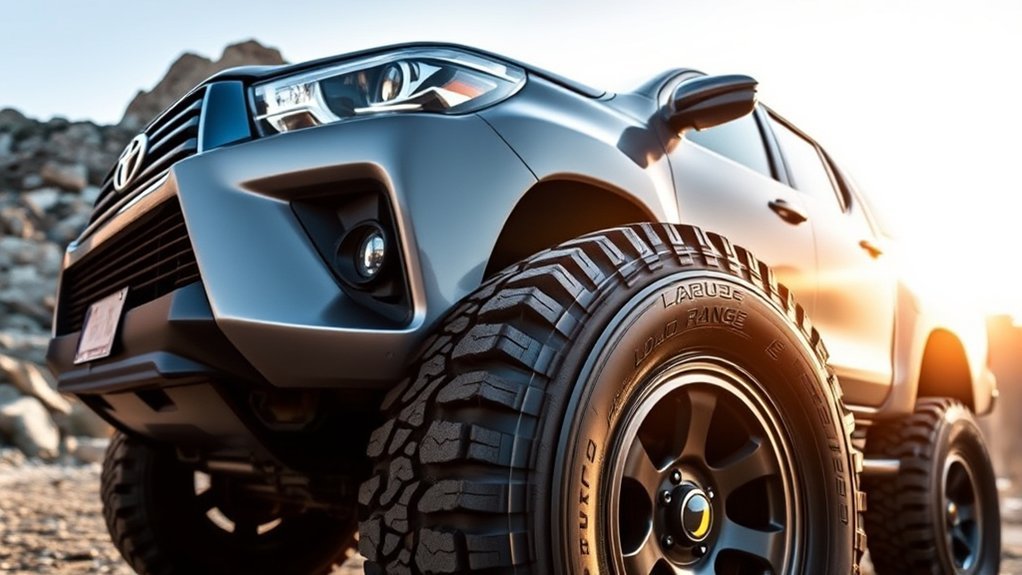
Load Range E is a light-truck tire rating commonly described as a 10-ply rating. That does not mean the tire always has 10 physical plies. It means the tire is built to a strength category that replaced older ply-count language. Tire Rack explains that modern ply ratings indicate equivalent strength, not necessarily the actual number of casing plies used in the tire.
For many LT-metric tires up to 295 mm wide, Load Range E is commonly associated with a maximum load pressure of 80 psi. Wider LT sizes can have different maximum load pressures, so the sidewall and tire manufacturer’s table matter more than the letter alone. You can review Tire Rack’s load range explanation here: What Are Load Ranges / Ply Ratings?.
For a Toyota Hilux, Load Range E can be useful when you regularly carry tools, canopy weight, camping gear, work equipment, or trailer tow-ball load. It can also add casing strength for gravel roads and job-site use. The trade-off is that E-rated tires can ride firmer and may weigh more than lighter-duty tires, especially when the truck is unloaded.
Warning: Load Range E tires do not raise your Hilux’s factory payload, axle, towing, or gross combined weight ratings. Never load the vehicle or trailer beyond the limits on the compliance plate, tire placard, owner’s manual, towbar label, wheel rating, or tire sidewall.
[Products Worth Considering]

EVOULTES heavy duty tire inflator with an integrated gauge delivers accurate pressure readings from 10–120 PSI, helping you inflate, deflate, and check tires in one tool. The 16.5-inch extended dual-head air chuck with swivel base reaches hard-to-access dual wheel valves on trucks and RVs. A brass trigger core and side-mounted air release valve make operation smooth, with standard 1/4" NPT threading and quick-connect compatibility for easy setup.

This portable cordless tire inflator delivers up to 160 PSI with fast 17 L/min airflow to help you quickly top up tires and get back on the road. It features dual power mode, running on a 21V rechargeable battery or a 12V DC adapter for convenient roadside use. An automatic shut-off with digital pressure gauge helps prevent overinflation, and a built-in LED light improves visibility in low-light conditions.

The JACO FlowPro Tire Inflator measures, inflates, and airs down tires up to 100 PSI with battery-free operation and ±2% accuracy after calibration. It features a glowing pressure dial for night visibility, a heavy-duty steel build with a hybrid hose, and a precision push-to-inflate thumb trigger. The patented Lightning Air Chuck locks on for a secure seal, and the kit includes quick-connect hardware for easy inline use with your air compressor.
Load Range E vs. Load Index: The Number That Matters Most
Many buyers look for the letter “E” and stop there. That is a mistake. Load range tells you the tire’s strength category and pressure category. Load index is the number that tells you how much weight that specific tire can carry when correctly inflated.
For example, two tires can both be marked Load Range E but carry different maximum loads because they are different sizes or designs. Michelin’s light-truck inflation charts show Load Range E examples with different capacities by size, such as LT215/85R16, LT235/85R16, LT245/75R16, and LT265/75R16. The chart also reminds users to match the tire size and sidewall markings to the correct load-inflation table. You can check the manufacturer example here: Michelin Inflation Charts for Light Truck Tires.
Before you buy, read these markings on the tire sidewall:
- Size: for example, LT265/75R16 or another size approved for your Hilux and wheels.
- Load range: such as LRE or Load Range E.
- Load index: the numerical rating that corresponds to the tire’s carrying capacity.
- Max load: the maximum weight the tire can carry in single or dual use.
- Max pressure: the pressure at which the tire reaches its rated maximum load, not automatically the correct everyday pressure.
The safest tire choice is not simply “the highest load range.” It is the tire that matches your Hilux’s approved size, load index, wheel rating, and real loaded weight.
Comparing Load Range E to Other Tire Ratings and Their Weight Capacity
Load Range E sits above C and D in typical light-truck tire strength, but below F. The table below is a practical comparison of the rating category. It is not a universal weight chart, because the actual load limit still depends on the tire size and load index.
| Load Range | Common Ply Rating | Typical Max Load Pressure for LT Tires up to 295 mm Wide | Best Use |
| C | 6-ply rating | 50 psi | Light to moderate loads, daily driving, lighter 4×4 use. |
| D | 8-ply rating | 65 psi | Moderate towing and hauling where the load index meets the vehicle requirement. |
| E | 10-ply rating | 80 psi | Frequent towing, heavy cargo, work use, and stronger light-truck casing needs. |
| F | 12-ply rating | 95 psi | Severe-duty or commercial loads when the vehicle, wheel, and tire specifications require it. |
For most Toyota Hilux owners, Load Range E is already more tire than they need for normal commuting. It makes the most sense when your real use includes regular load, trailer weight, rough surfaces, or work equipment. If the Hilux is mostly unloaded and used on smooth roads, a lighter approved tire may ride better.
Why Weight Capacity and Safety Matter With Load Range E Tires
Weight capacity matters because tires are only one part of the load system. Toyota explains that payload is affected by passengers, accessories, cargo, modifications, and how that weight is distributed across the axles. Toyota also notes that each vehicle has a maximum gross vehicle mass and individual axle capacities. You can review Toyota’s payload guidance here: Toyota Vehicle Payload Policy.
Before you rely on Load Range E tires for towing or hauling, check these limits:
- GVM or GVWR: the maximum allowed loaded vehicle weight.
- GAWR or axle capacity: the maximum allowed load on each axle.
- GCM or GCWR: the maximum combined weight of the vehicle and trailer.
- Tow-ball download: the vertical trailer load applied to the vehicle, which counts against payload.
- Wheel rating: the wheel must be rated for the tire pressure and load you plan to use.
- Tire sidewall maximum load: the tire must be rated for the actual load on that axle.
Toyota’s towing guide also warns that trailer weight and tow-ball download can affect the load-carrying capacity of the vehicle. Review the Toyota guide here: Toyota Basic Towing Guide.
Note: If you add a canopy, bull bar, winch, drawer system, long-range tank, roof rack, tools, or camping gear, your remaining payload drops. Weigh the Hilux in its real loaded setup before assuming a tire upgrade has solved the load problem.
How to Choose Load Range E Tires Based on Your Towing and Hauling Needs
Choosing the right Load Range E tires for your Toyota Hilux starts with the vehicle, not the tire shelf. Use this process before buying:
- Check the tire placard and owner’s manual. Confirm the original tire size, load index, speed rating, and cold tire pressure.
- Measure your real load. Include passengers, fuel, tools, accessories, cargo, trailer tow-ball download, and anything mounted to the vehicle.
- Compare the load to the vehicle ratings. Stay within GVM/GVWR, axle capacity/GAWR, and GCM/GCWR.
- Choose an approved tire size. The tire must fit the wheel, suspension, guards, brakes, and legal requirements in your location.
- Match or exceed the original load index. Do not use a lower load index than the placard or manual requires.
- Check the sidewall max load and pressure. Make sure the tire and wheel can safely support your loaded axle weights.
- Choose tread for the job. Highway tires suit long road use, all-terrain tires balance road and gravel, and mud-terrain tires trade comfort and economy for off-road bite.
- Set pressure correctly. Use the placard/manual for normal driving and the tire maker’s load-inflation data for heavy-load adjustments when appropriate.
Pro Tip: If you tow often, weigh the Hilux by axle when loaded and hitched. A public weighbridge gives you better data than guessing from payload stickers or trailer brochure weights.
Load Range E Tire Pressure for a Toyota Hilux
The most common pressure mistake is treating the tire’s sidewall maximum pressure as the correct everyday pressure. NHTSA says the correct cold tire pressure is the vehicle manufacturer’s recommended pressure on the tire information label or in the owner’s manual, not simply the number molded into the tire sidewall. NHTSA’s tire safety guidance is available here: NHTSA TireWise.
Use these pressure rules:
- Check pressure cold. Cold means the vehicle has not been driven for at least three hours.
- Use the placard/manual for normal loads. This is the starting point for daily driving.
- Use load-inflation data for heavy loads. If carrying or towing near the upper end of your legal limits, use the tire maker’s tables and do not exceed the tire or wheel maximum.
- Do not run 80 psi just because the tire says Load Range E. Too much pressure for the actual load can create a harsh ride and uneven center wear.
- Do not underinflate. Low pressure increases heat, sidewall flex, uneven wear, and blowout risk.
NHTSA reported 511 deaths in tire-related crashes in 2024 and lists proper inflation, rotation, balance, alignment, and tread checks as key tire maintenance steps.
[Products Worth Considering]

This portable cordless tire inflator delivers fast, efficient inflation for cars, motorcycles, bikes, and sports balls with a digital pressure gauge. Use the one-click PSI preset with auto shut-off for accurate, hands-free topping to your target pressure up to 150 PSI. It’s compact and rechargeable with a built-in emergency LED light plus valve adapters and accessories for quick, ready-to-go use.
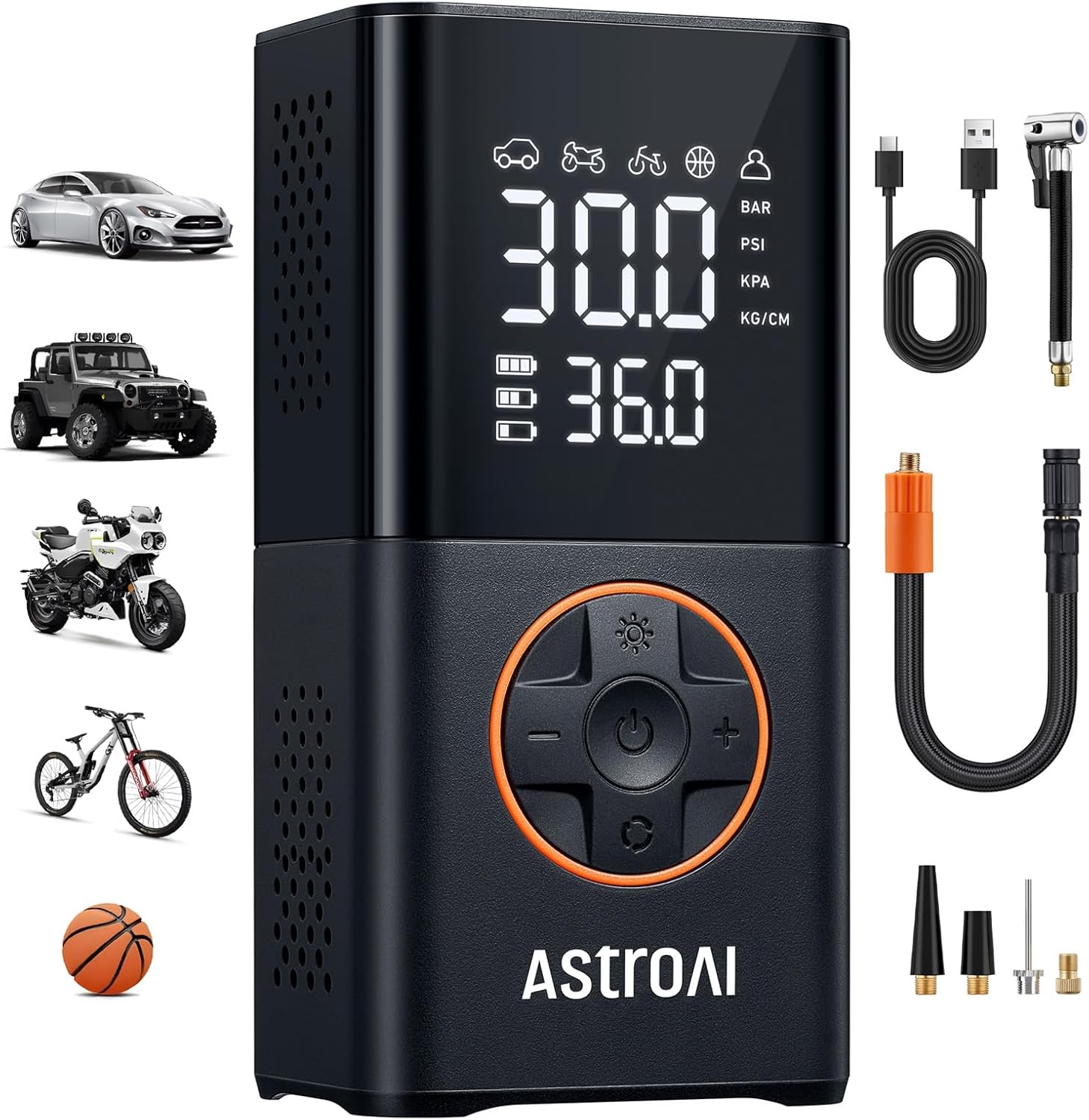
AstroAI L7 provides fast, cordless inflation for cars, motorcycles, bicycles, e-bikes, and sports balls with preset smart modes and a custom pressure option. Its compact design, dual digital display, and built-in auto-off make it easy to use for quick road-trip top-offs and emergency roadside inflation. The unit includes LED lighting and an SOS strobe flashlight for visibility, plus USB-C/USB ports for charging devices.
Maintenance Tips for Load Range E Tires on Your Toyota Hilux
Maintaining your Load Range E tires helps protect load capacity, handling, tread life, and braking performance. Heavy-duty tires still need regular checks, especially if your Hilux carries tools, tows, or spends time on gravel and off-road tracks.
- Check tire pressure monthly. Check all tires, including the spare, when cold.
- Inspect before towing. Look for cuts, bulges, nails, sidewall damage, exposed cord, or uneven wear.
- Rotate on schedule. Follow your owner’s manual. NHTSA notes that many vehicles use a 5,000–8,000 mile rotation interval when recommended by the manufacturer.
- Replace worn tires. Tires are not safe when tread is worn down to 2/32 inch. Replace sooner if traction is poor, the tire is damaged, or treadwear indicators are level with the tread.
- Check wheel alignment and balance. A Hilux that pulls, vibrates, or wears one shoulder quickly needs inspection.
- Watch the suspension. Worn shocks, springs, bushings, or bearings can shorten tire life and make heavy loads unstable.
- Clean after mud, salt, or sharp gravel. Debris can hide cuts, trapped stones, and sidewall damage.
- Check the spare. A mismatched, underinflated, or lower-rated spare can be a problem when the truck is loaded.
Common Load Range E Mistakes to Avoid
- Buying by load range only: Always check load index, size, sidewall max load, and pressure.
- Assuming E-rated tires increase payload: Your Hilux’s factory load limits still apply.
- Ignoring wheel limits: The wheel must be rated for the pressure and load.
- Running maximum pressure unloaded: This can create a harsh ride and uneven wear.
- Mixing tire ratings on the same axle: Different load ranges, tread depths, or sizes can affect handling and stability.
- Forgetting added accessory weight: Canopies, bars, winches, drawers, and tanks reduce remaining payload.
Frequently Asked Questions
Can I mix different load range tires on my Hilux?
You should not mix different load ranges on the same axle, and it is best to run four matching tires of the same size, construction, load index, speed rating, and similar tread depth. Mixing tires can affect braking, steering, stability control, traction, and wear. A temporary spare should be used only as directed in the owner’s manual.
How does tire pressure affect Load Range E performance?
Tire pressure affects heat buildup, tread wear, handling, braking, and load-carrying ability. A Load Range E tire reaches its rated maximum load only at the pressure specified for that tire and size, but your everyday pressure should come from the Hilux placard/manual unless load-inflation data supports a different loaded pressure.
What are the risks of under-inflated Load Range E tires?
Under-inflation increases sidewall flex, heat, shoulder wear, fuel use, and blowout risk. It can also make a loaded Hilux feel unstable during cornering, braking, and trailer towing. Check pressure cold and recheck after any major load change.
When should I replace my Load Range E tires?
Replace them when tread reaches 2/32 inch, when treadwear indicators are level with the tread, or when you see cracks, bulges, deep cuts, exposed cord, puncture damage that cannot be repaired, or severe uneven wear. Also inspect aging tires even if tread depth looks acceptable.
Do Load Range E tires impact fuel efficiency?
They can. Load Range E tires are often heavier and stiffer than lower-rated tires, which may slightly reduce ride comfort and fuel economy. The effect depends on tire weight, tread pattern, pressure, alignment, load, and driving style. Under-inflation can reduce efficiency further.
Will Load Range E tires increase my Toyota Hilux payload rating?
No. Stronger tires can help support the load they are rated for, but they do not change the Hilux’s manufacturer ratings. You must still stay within GVM/GVWR, axle capacity/GAWR, GCM/GCWR, towbar limits, wheel limits, and legal requirements.
Are Load Range E tires always better for off-road driving?
Not always. The stronger casing can help on sharp gravel, corrugations, and heavy touring setups, but tire tread design, sidewall construction, pressure management, and driver technique matter too. A lighter Hilux may ride better and grip better on some surfaces with a less-stiff approved tire.
Should I use 80 psi in Load Range E tires when towing?
Use 80 psi only if the tire manufacturer’s load table, tire sidewall, wheel rating, and your actual loaded axle weight support it. For many driving conditions, the correct cold pressure may be lower. Start with the Hilux placard/manual and adjust only with proper load data.
Conclusion
Load Range E tires can be a smart choice for a Toyota Hilux that tows, hauls, works off-road, or carries heavy accessories. The safest choice is not just the tire with the strongest-looking letter. Match the tire size, load index, sidewall rating, wheel limit, and pressure to your Hilux’s real loaded weight and factory limits. Do that, maintain the tires well, and your Hilux will be better prepared for heavy loads without sacrificing safety.
Sources
- Tire Rack — What Are Load Ranges / Ply Ratings? — supports load range, ply-rating, load index, and LT pressure-category explanations.
- Tire Rack — What Are North American Load & Pressure Markings? — supports sidewall maximum load and pressure guidance.
- NHTSA TireWise — supports tire pressure, tread depth, rotation, alignment, and tire safety guidance.
- Toyota Australia — Vehicle Payload Policy — supports payload, GVM, axle capacity, and load-distribution guidance.
- Toyota Basic Towing Guide — supports towing load, tow-ball download, GVM, and combined weight guidance.
- Michelin Inflation Charts for Light Truck Tires — supports size-specific Load Range E load-inflation examples.

Related Articles

Best High-Performance Tires for Toyota Hilux
You rely on your Hilux for work, adventure, and everyday driving, so choosing high-performance tires matters more than you might think. The right tires…
Read More
Best Premium Off-Road Tires for Toyota Hilux
You rely on your Hilux to handle rough trails, heavy loads and unpredictable weather, so choosing the right premium off-road tires matters. The right…
Read More
Best Premium Winter Tires for Toyota Hilux
Choosing the right premium winter tires for your Toyota Hilux matters because you rely on strong traction and load capacity when roads turn icy…
Read More