How to Check Tire Age on a Toyota Camry: Reading the DOT Date Code

To check the tire age on your Toyota Camry, find the DOT Tire Identification Number on each tire sidewall and read the final four digits. Those four digits show the tire’s manufacture week and year. Tire age matters because rubber can degrade even when the tread still looks usable.
Quick Answer
Look for the DOT/TIN code on your Toyota Camry tire sidewall. The last four digits show the week and year the tire was made. For example, 3815 means the tire was made in the 38th week of 2015. Check all four tires and the spare.
Key Takeaways
- The DOT date code is the final four digits of the tire identification number.
- The first two date-code digits are the week; the last two are the year.
- If you cannot see the full code on the outside sidewall, check the opposite side of the tire.
- Tread depth is not enough; old tires can degrade even with usable-looking tread.
- Toyota says any tire over 6 years old should be checked by a qualified technician, even if damage is not obvious.
At a Glance
| Time Required | 5 to 10 minutes |
| Difficulty | Easy |
| Tools Needed | Flashlight, phone camera, and tire pressure gauge |
| Cost | Free if you already have a gauge; about $5 to $20 for a basic tire pressure gauge |
How to Check Tire Age on a Toyota Camry
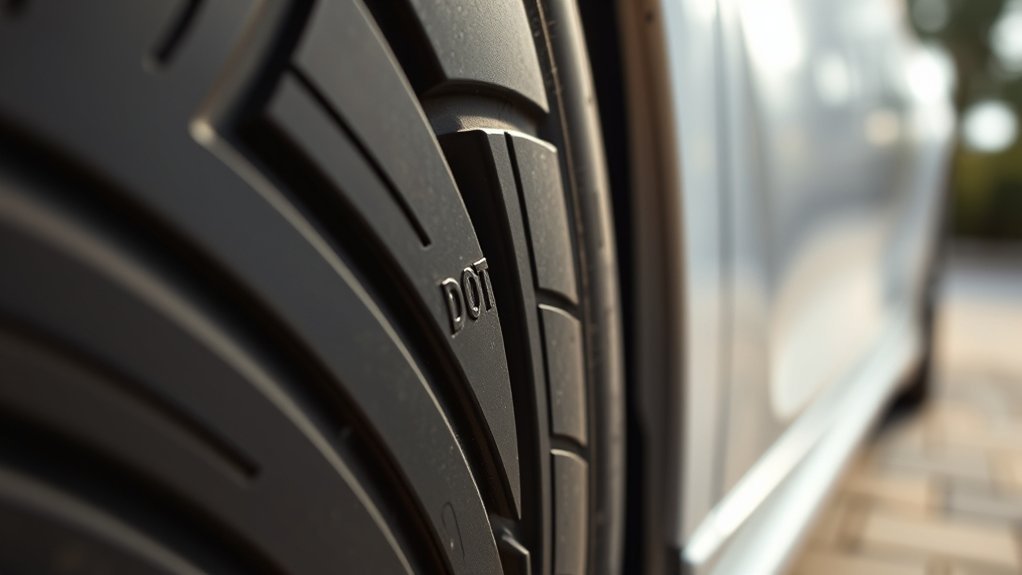
Park your Camry on level ground, set the parking brake, and inspect each tire in good light. You are looking for the code that starts with DOT. This is the tire’s Department of Transportation Tire Identification Number, often shortened to TIN.
- Start with the front tires. Turn the steering wheel to one side if it helps expose the sidewall.
- Find the letters “DOT.” The code after DOT may include letters and numbers.
- Read the final four digits. These are the date code. For example, 3815 means the tire was made in the 38th week of 2015.
- Repeat on all four tires. Tires can be different ages if one or two were replaced later.
- Check the spare tire too. A spare can age even if it has never been used.
Warning: Do not judge tire safety by tread depth alone. A tire can have deep tread and still be unsafe if it is old, cracked, bulging, damaged, or has been poorly stored.
[Products Worth Considering]

EVOULTES heavy duty tire inflator with an integrated gauge delivers accurate pressure readings from 10–120 PSI, helping you inflate, deflate, and check tires in one tool. The 16.5-inch extended dual-head air chuck with swivel base reaches hard-to-access dual wheel valves on trucks and RVs. A brass trigger core and side-mounted air release valve make operation smooth, with standard 1/4" NPT threading and quick-connect compatibility for easy setup.

The JACO FlowPro Tire Inflator measures, inflates, and airs down tires up to 100 PSI with battery-free operation and ±2% accuracy after calibration. It features a glowing pressure dial for night visibility, a heavy-duty steel build with a hybrid hose, and a precision push-to-inflate thumb trigger. The patented Lightning Air Chuck locks on for a secure seal, and the kit includes quick-connect hardware for easy inline use with your air compressor.

This portable cordless tire inflator delivers fast, efficient inflation for cars, motorcycles, bikes, and sports balls with a digital pressure gauge. Use the one-click PSI preset with auto shut-off for accurate, hands-free topping to your target pressure up to 150 PSI. It’s compact and rechargeable with a built-in emergency LED light plus valve adapters and accessories for quick, ready-to-go use.
Locating the DOT Date Code on Your Tires
The DOT code is molded into the tire sidewall. On many tires, the full code is visible from the outside of the vehicle. On some tires, the outside sidewall may show only a partial DOT code, while the full code with the date appears on the inner sidewall. The National Highway Traffic Safety Administration notes that the TIN may not be on both sides of the tire.
If you cannot see the final four digits, use a flashlight and check the opposite side of the tire. A phone camera can help you zoom in without putting your face close to the tire. If the full code is difficult to reach, ask a tire shop to inspect it instead of crawling under the car or lifting the vehicle without proper equipment.
Pro Tip: Take a clear photo of each tire’s DOT date code and save it with the tire location, such as “front left” or “rear right.” This makes future tire-age checks much faster.
Decoding the DOT Date Code
Decoding the DOT date code is simple once you know which numbers matter. The date code is the final four digits of the full tire identification number. The first two digits show the production week, and the last two digits show the production year.
Understanding DOT Format
A current new-tire TIN uses a standardized 13-symbol format after “DOT” under federal tire identification rules. Older tires may show older formats, but the age code you need is still the final four digits on tires made in 2000 or later.
- Example: DOT XXXX XXXX 3815 means the tire was made in week 38 of 2015.
- Example: DOT XXXX XXXX 0522 means the tire was made in week 5 of 2022.
- Example: DOT XXXX XXXX 4324 means the tire was made in week 43 of 2024.
Locating the Date Code
Look at the very end of the full DOT/TIN string. The last four digits are the only numbers you need for tire age. Do not confuse the tire size, load index, speed rating, or UTQG rating with the manufacture date. Those markings are useful, but they do not tell you when the tire was made.
If the code ends in only three digits, the tire was made before 2000. That makes it far too old for normal passenger-car service. Do not keep driving on it unless a qualified tire professional has inspected the tire and confirmed the correct next step; in most cases, replacement is the safe decision.
Interpreting the Numbers
After you decode the week and year, compare the tire’s age with the guidance from your Toyota owner’s manual and the tire manufacturer. Toyota’s current Camry manual guidance says any tire over 6 years old must be checked by a qualified technician even if it has seldom or never been used or visible damage is not obvious. Michelin recommends a trained professional inspection after five years of service and replacement ten years after the manufacture date as a precaution.
The date code tells you when the tire was built, but it does not prove the tire is safe. Age, tread depth, cracking, impacts, inflation, storage, heat, and driving conditions all matter.
Toyota Camry-Specific Tire Checks
After checking tire age, confirm that your Camry has the correct tire size and cold tire pressure. The correct pressure is listed on the Tire and Loading Information Label on the driver’s side door edge or doorjamb, or in your Toyota owner’s manual. Use that number, not the maximum pressure molded into the tire sidewall.
Check pressure when the tires are cold, meaning the car has been parked for at least three hours or has been driven only a short distance at low speed. NHTSA recommends checking all tires, including the spare, at least once a month. If your Camry has TPMS, treat it as a warning system, not a replacement for regular tire checks.
Note: If your Camry has different tire sizes than the factory placard shows, ask a Toyota dealer or tire professional to confirm the correct pressure and replacement size.
The Importance of Regular Tire Maintenance for Safety
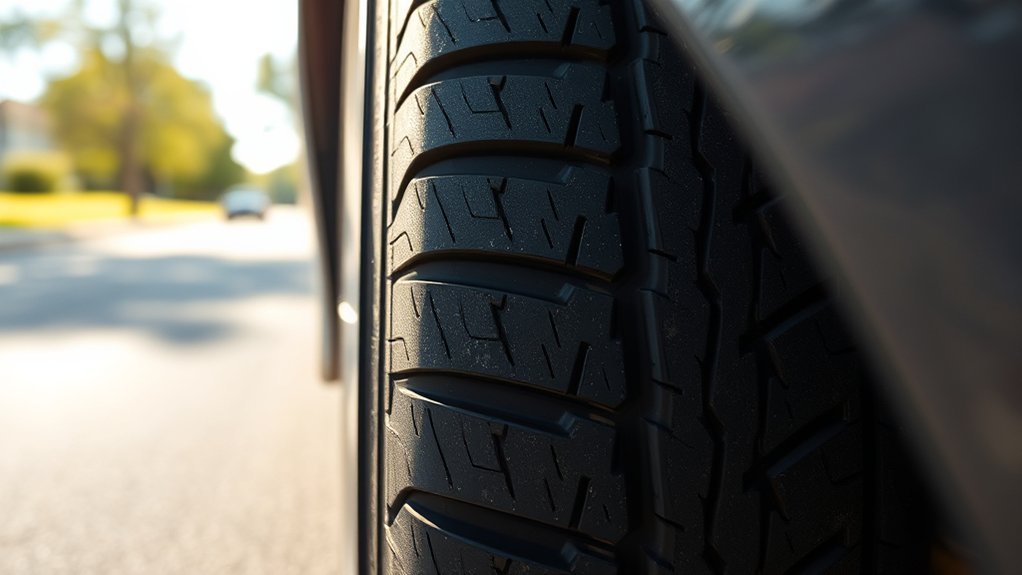
Regular tire maintenance helps your Camry stop, steer, and handle properly. According to NHTSA TireWise, proper tire pressure affects safety, durability, and fuel use. Tire tread should also be checked monthly, especially before long trips.
- Check cold tire pressure monthly, including the spare.
- Inspect tread depth monthly. Replace tires when tread reaches 2/32 inch or the treadwear bars are level with the tread.
- Rotate tires on schedule. Follow your Toyota maintenance guide or your tire shop’s recommendation.
- Watch for uneven wear. Uneven wear can point to alignment, suspension, inflation, or rotation problems.
- Check tire age at least twice a year. Also check it when buying used wheels, used tires, or a pre-owned Camry.
[Products Worth Considering]

This portable cordless tire inflator delivers up to 160 PSI with fast 17 L/min airflow to help you quickly top up tires and get back on the road. It features dual power mode, running on a 21V rechargeable battery or a 12V DC adapter for convenient roadside use. An automatic shut-off with digital pressure gauge helps prevent overinflation, and a built-in LED light improves visibility in low-light conditions.

The Fanttik X10 Pro is a cordless portable tire inflator that reaches up to 150 PSI and can inflate an R15 tire in about 35 seconds for quick roadside or home top-ups. With AccuInFlate auto-stop and smart start/stop controls, it helps maintain accurate pressure and frees your hands once the target is reached. A high-visibility digital display and preset modes make it easy to set and monitor inflation for cars, motorcycles, bikes, and balls.
How to Spot Tire Damage Beyond Age?
Tire age is only one part of the safety check. A newer tire can be unsafe if it is damaged, underinflated, overloaded, or worn unevenly. Inspect the sidewalls, tread, and driving feel together.
Visual Inspection Techniques
Walk around your Camry and inspect each tire from more than one angle. Use a flashlight so you can see the lower sidewall and tread grooves clearly.
- Look for cracks, cuts, splits, or exposed cords on the sidewall.
- Check for bulges or blisters, which can indicate internal tire damage.
- Inspect the tread for nails, screws, glass, stones, or other embedded objects.
- Use the penny test: place a penny into the tread with Lincoln’s head upside down. If you can see the top of Lincoln’s head, the tread is too low.
- Look at the built-in treadwear bars. If they are level with the tread, the tire needs replacement.
Common Damage Indicators
Replace or professionally inspect a tire right away if you notice a bulge, exposed cord, deep sidewall cut, sudden pressure loss, or vibration that was not there before. Uneven wear on one edge can mean the Camry needs alignment or suspension inspection. A thumping noise, pull to one side, or steering-wheel shake can also point to a tire, balance, or wheel problem.
Warning: Do not keep driving at highway speed on a tire with a bulge, exposed cords, severe cracking, or rapid air loss. Use your spare or roadside assistance and have the tire inspected before driving farther.
When to Replace Tires Based on Age
There is no single age number that proves every tire is safe or unsafe, because tire life depends on heat, storage, load, inflation, road impacts, driving habits, and maintenance. Use the DOT date as a starting point, then combine it with condition checks and manufacturer guidance.
- After 5 years of service: Have the tires inspected at least once a year by a trained tire professional, especially if you drive in hot climates or the car sits unused for long periods.
- After 6 years: Follow Toyota guidance and have any tire over 6 years old checked by a qualified technician, even if it looks fine.
- At 10 years from manufacture: Many tire manufacturers recommend replacement as a precaution, including spare tires, even if tread remains.
- Replace sooner: Replace tires earlier if they show cracks, bulges, exposed cords, puncture damage that cannot be repaired, tread at 2/32 inch, or handling problems.
If you recently bought a used Toyota Camry, check tire age before assuming the tires are safe. A car can be sold with tires that look clean but are already near the end of their age-based service window.
Frequently Asked Questions
How long are tires good for after the DOT date?
Tire life depends on use, storage, climate, inflation, damage, and manufacturer guidance. As a practical rule, have tires inspected professionally after about five years of service, follow Toyota’s guidance for tires over 6 years old, and do not exceed the tire maker’s maximum age recommendation.
Where is the DOT date code on Toyota Camry tires?
It is molded into the tire sidewall as part of the DOT Tire Identification Number. If the outside sidewall does not show the final four date-code digits, check the inner sidewall or ask a tire shop to find it for you.
Do I need to check the spare tire’s age?
Yes. Spare tires age even when they are not used. Check the DOT date code, pressure, and sidewall condition on the spare, especially before a long trip.
Can a tire be too old even if the tread looks good?
Yes. Rubber and internal tire materials can degrade over time. A tire with deep tread can still need inspection or replacement if it is old, cracked, bulging, vibrating, or past the manufacturer’s age limit.
Should I use the tire sidewall PSI number for my Camry?
No. The sidewall number is usually the tire’s maximum pressure, not your Camry’s recommended pressure. Use the cold tire pressure on the driver-side doorjamb Tire and Loading Information Label or in your Toyota owner’s manual.
Does TPMS mean I do not need manual tire checks?
No. TPMS warns when pressure is significantly low, but it does not replace monthly pressure checks, tread inspections, tire-age checks, or visual damage checks.
Conclusion
Checking tire age on your Toyota Camry takes only a few minutes, but it can prevent unsafe driving on old or degraded tires. Find the DOT/TIN code, read the final four digits, check every tire including the spare, and combine tire age with tread, pressure, and sidewall condition. When a tire is old, damaged, or questionable, have it inspected by a qualified tire professional before trusting it on the road.
Sources
- NHTSA Tire Buyers’ FAQ — DOT/TIN location, last-four-digit date code, tire size label guidance, and checking both sidewalls.
- NHTSA TireWise — monthly pressure checks, cold tire pressure, tread depth, penny test, TPMS limitations, tire aging, and maintenance guidance.
- Toyota 2025 Camry Owner’s Manual: Tires — Toyota guidance that tires over 6 years old must be checked by a qualified technician.
- Michelin: When to Replace Tires — professional inspection after five years and ten-year maximum recommended service life.
- 49 CFR Part 574: Tire Identification and Recordkeeping — federal tire identification number requirements.

Related Articles

Toyota Camry All-Season Tires Explained: What They Can and Can’t Do
In exploring Toyota Camry all-season tires, discover their benefits and limitations—are they really the right choice for your driving needs?
Read More
Toyota Camry Tire Traction in Ice and Snow: A Practical Winter Driving Guide
Learn essential tips for maximizing tire traction on ice and snow in your Toyota Camry, ensuring your winter driving is safe and confident. Discover more now!
Read More
Do Toyota Camry Tires Need Snow Chains? When They Help and When They Don’t
How do snow chains enhance your Toyota Camry's winter driving safety, and when should you avoid using them? Discover the essential details inside!
Read More