Disclosure: As an Amazon Associate, we earn from qualifying purchases. If you click a link on this page and make a purchase, we may receive a small commission at no extra cost to you.
Choosing a low-cost tire is not only about finding the lowest price. You also need the correct size, load rating, predictable road manners, and enough wet-weather capability for daily driving. The Forceum Ecosa 175/70R14 84T is a budget all-season touring tire aimed at small passenger cars, with a simple tread design and a 45,000-mile limited treadlife warranty listed by major retailers. It is a practical option for routine commuting, but it is not the right choice for performance driving or severe winter conditions.
Quick Verdict
Rating: 7.5/10, Recommended with caveats
Best For: Budget-minded drivers who need a basic 175/70R14 touring tire for commuting and everyday road use
Bottom Line: The Ecosa offers verified sizing, a stable rib-based tread design, and useful wet-road water channels at an entry-level price point. Its main tradeoff is that it lacks the premium refinement and severe-snow focus of more expensive alternatives.
| Specification | Detail |
|---|---|
| Brand | Forceum |
| Model | Ecosa |
| Product type | Passenger-car touring tire |
| Season | All-season |
| Size | 175/70R14 |
| Load index / speed rating | 84T |
| Maximum load | 1,100 pounds per tire |
| Load range | SL, 4-ply rated |
| Recommended rim width | 5 inches |
| Section width | 7 inches |
| Overall diameter | 23.7 inches |
| New tread depth | 9/32 inch |
| Maximum inflation shown by manufacturer | 44 PSI, not the vehicle’s recommended operating pressure |
| Treadlife coverage | 45,000-mile limited treadlife warranty listed by major retailers, subject to terms |
| Package note | Tire only, wheel or rim is not included |
Key Takeaways
- The Forceum Ecosa reviewed here is specifically the 175/70R14 84T standard-load version.
- Its stabilizer rib, twin circumferential ribs, grooves, and multiple sipes are designed for stable steering, water evacuation, and more even wear.
- The manufacturer lists a 1,100-pound maximum load, 44 PSI maximum inflation, 5-inch measured rim width, and 9/32-inch tread depth for this size.
- It is best suited to ordinary commuting and highway use, not aggressive cornering, track use, or deep-snow driving.
- Fit must be confirmed against your vehicle placard or owner’s manual before purchase.
What Is the Forceum Ecosa?
The Forceum Ecosa is an economical passenger-car tire built for everyday road use. This review covers the 175/70R14 84T version, which fits a 14-inch wheel and uses a 175 mm nominal section width with a sidewall height equal to 70 percent of that width.
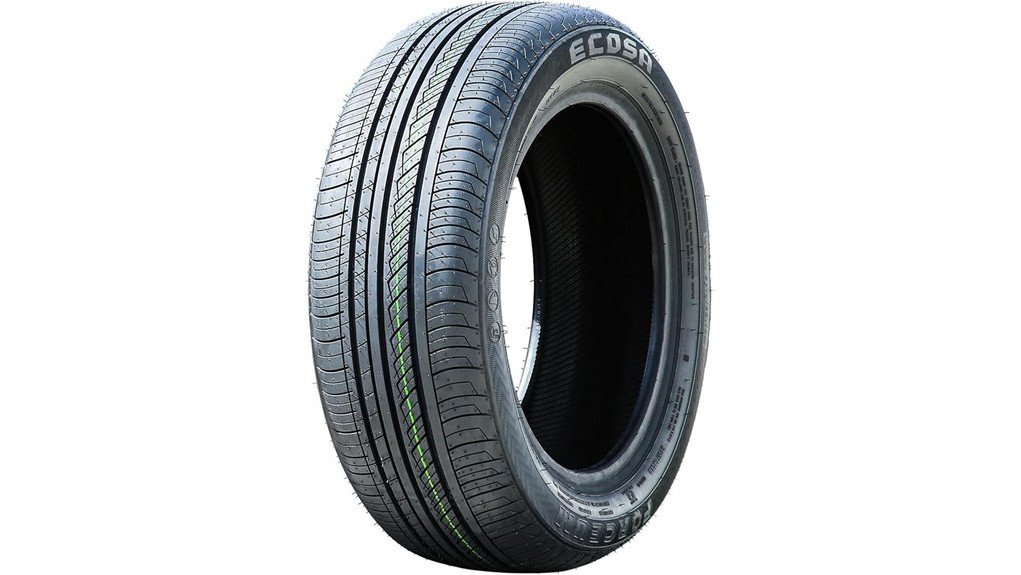
Forceum describes the Ecosa as a symmetrical tire for sedans. The design uses a stabilizer rib to help resist irregular wear, two circumferential ribs to support straight-line stability and steering response, and multiple sipes to move water away from the tread area. Those features make sense for drivers who value predictable behavior more than sporty response.
You can review the current size data on the official Forceum Ecosa product page. Product pictures may show a representative tire, so verify the size and service description before ordering.
Fit, Load, and Speed Ratings
The 175/70R14 marking does not guarantee that the tire fits every car with a 14-inch wheel. Your replacement should match the tire size, load requirement, and speed-rating guidance on the driver’s door placard or in the owner’s manual. The 84 load index on this model corresponds to the manufacturer’s listed maximum load of 1,100 pounds per tire.
The T speed symbol is suitable for normal passenger-car highway service when the tire is properly fitted, inflated, and maintained. It is not a reason to drive at the tire’s rating limit. Vehicle condition, road conditions, legal speed limits, inflation, and load all matter.
Before You Buy: Confirm 175/70R14 84T or an approved equivalent on your vehicle placard. Do not use the 44 PSI sidewall maximum as your normal inflation target. Follow the vehicle manufacturer’s cold-pressure specification.
Materials and Tread Design
The Ecosa uses radial construction with an SL, 4-ply rating and a black sidewall. The 70-series profile gives it a relatively tall sidewall compared with lower-profile performance tires. That can help absorb ordinary pavement imperfections, although ride comfort also depends on the vehicle, pressure, wheel condition, and suspension.
The central stabilizer rib is intended to spread driving pressure more evenly and reduce scalloping. Twin circumferential ribs help the tire track steadily and respond to steering input, while the multi-sipe pattern and longitudinal grooves provide paths for water to leave the contact area.
This is a basic touring design rather than a high-performance pattern. You should expect measured steering and everyday stability, not the sharp turn-in or high-grip feel of a premium performance tire.
Wet and Dry Grip
On dry roads, the continuous rib layout should give the Ecosa a stable, predictable feel during normal acceleration, braking, and lane changes. The narrow 175 mm size can also suit lighter compact cars that were designed around this footprint.
In rain, the circumferential channels and sipes are the main useful features. They help move water away and maintain more tread contact, but no tread design prevents hydroplaning at unsafe speeds or with worn tires. Slow down in standing water and replace the tire when tread depth or condition no longer provides safe service.
The Ecosa is an all-season tire, not a dedicated winter tire. NHTSA notes that winter tires are more effective than all-season tires in deep snow. Drivers facing regular snow, ice, or prolonged cold should compare a true winter or severe-snow-rated option instead of relying on the all-season label alone.
Ride Comfort, Steering, and Noise
The Ecosa’s tall sidewall and touring focus favor comfort over sharpness. On a compatible compact car, you can expect a more forgiving response over small road seams than you would get from many low-profile tires. Correct pressure is essential because overinflation can make the ride harsher and reduce the size of the contact patch.
Forceum’s twin ribs are intended to improve driving stability and steering response. In practice, this should translate to calm tracking in routine traffic rather than a sporty feel. The tire may suit drivers who want low-fuss transportation and do not push hard through corners.
Retail descriptions also position the Ecosa as a quiet touring tire. Noise varies with pavement type, alignment, wear, wheel bearings, and vehicle insulation, so it is safer to treat low-noise claims as a design goal rather than a guarantee.
How It Performs in Real Use
For Daily Commuting
The Ecosa makes the most sense for short and medium-distance commuting on paved roads. Its standard-load construction and 84T service description suit many older compact cars, provided the vehicle placard calls for the same specifications.
For Highway Driving
The continuous ribs support straight-line stability, and the T rating is appropriate for normal highway service. Before a longer trip, check cold pressure, visible damage, tread depth, and the age of every tire, including the spare if your vehicle has one.
For Rainy Conditions
The grooves and multi-sipes provide water-evacuation paths that are useful in moderate rain. Performance will decline as tread wears, so reduce speed in heavy rain and avoid sudden steering or braking when water is collecting on the road.
For Light Winter Use
The all-season pattern can handle occasional cold and light wintry conditions better than a summer-only tire. It should not be treated as a substitute for a dedicated winter tire in frequent snow, packed snow, or ice.
Installation, Pressure, and Maintenance
Tires should be mounted and balanced by a qualified technician using a compatible wheel. The listing is for a tire only, so do not expect a wheel, valve stem, mounting, balancing, or disposal service unless the seller clearly includes them.
Set pressure according to the vehicle placard when the tires are cold. The manufacturer’s 44 PSI figure is the maximum inflation specification for this size, not a universal daily setting. Check pressure at least monthly and before long trips, and do not rely only on the tire-pressure warning light.
Follow the rotation schedule in your owner’s manual and have alignment checked if you notice pulling, steering-wheel vibration, feathered tread, or uneven wear. A stabilizer rib can help resist irregular wear, but it cannot correct worn suspension parts, poor alignment, or neglected inflation.
Pro Tip: Photograph the driver’s door tire placard before shopping. Compare the size, load index, speed symbol, and recommended cold pressure with the listing, then show the photo to the installer.
Who Should Buy It?
Best For
- Drivers whose vehicle specifies 175/70R14 with an equal or lower required load index and a compatible speed rating
- Budget-focused commuters who mainly drive on paved city streets and highways
- Owners who want a basic all-season touring tire with a listed 45,000-mile treadlife warranty
Skip If
- You regularly drive in deep snow or ice and need a dedicated winter tire
- You want premium wet braking, sporty steering, or a highly refined ride
- Your vehicle requires a different size, higher load index, higher speed rating, XL construction, or run-flat capability
Pros and Cons
Pros
- Verified 175/70R14 84T specifications for easier fitment checking
- Stabilizer rib is designed to reduce irregular wear and scalloping
- Twin circumferential ribs support straight-line stability and steering response
- Multiple sipes and grooves help evacuate water in wet conditions
- 45,000-mile limited treadlife coverage is listed by major retailers
Cons
- Not designed as a dedicated severe-winter tire
- Entry-level positioning means less refinement than many mid-range or premium touring tires
- Warranty and return terms depend on the seller and require confirmation before purchase
Is It Worth the Price?
The Forceum Ecosa sits in the budget tier. Its value comes from offering the core specifications and tread features needed for everyday transportation without charging for performance-focused technology or premium-brand positioning.
It is worth considering when your main priorities are correct fit, basic all-season use, predictable steering, and a lower purchase cost. The 45,000-mile limited treadlife coverage can add value, but actual service life depends on alignment, rotation, inflation, load, driving habits, climate, and warranty eligibility.
It is not the best fit if you want maximum wet grip, winter specialization, or premium ride refinement. In those cases, paying more for a stronger touring or all-weather model may be the better long-term choice.
How It Compares to Alternatives
The Hankook Kinergy ST H735 is available in 175/70R14 84T and is worth comparing if you want a more established touring option with detailed published specifications. The General AltiMAX RT45 also comes in 175/70R14 and targets buyers who want a higher-tier grand-touring tire.
For colder regions, the Kumho Solus 4S HA32 is available in 175/70R14 and is positioned as an all-weather option. The Forceum Ecosa makes the most sense when purchase cost is the main concern and you need straightforward paved-road performance rather than a premium or severe-weather focus.
Frequently Asked Questions
Will the Forceum Ecosa 175/70R14 fit my car?
It fits only vehicles approved for this size and service description. Check the driver’s door placard or owner’s manual for 175/70R14, the required load index, speed rating, and construction before ordering.
Is the wheel included with the tire?
No. Retail listings identify this as a tire-only product, so the wheel or rim is not included. Mounting, balancing, valve service, and disposal may also cost extra.
What pressure should I use?
Use the cold tire pressure listed by your vehicle manufacturer on the door placard or in the owner’s manual. The tire manufacturer’s 44 PSI figure is a maximum specification, not the recommended pressure for every vehicle.
Is the Forceum Ecosa good for highway driving?
Yes, when the size and rating match your vehicle and the tire is properly installed and maintained. Its twin circumferential ribs are designed to support straight-line stability and steering response during normal road use.
Can I use it in snow?
It is an all-season tire and may handle light wintry conditions, but it is not a dedicated winter tire. Choose winter or severe-snow-rated tires if you regularly drive in deep snow, packed snow, or ice.
Does it have a treadlife warranty?
Major retailers list a 45,000-mile limited treadlife warranty for the Ecosa. Confirm the exact seller, registration, rotation, proof-of-purchase, and prorating requirements because warranty terms and eligibility can vary.
Should I replace one tire or all four?
That depends on tread-depth differences, drivetrain type, and the vehicle manufacturer’s requirements. Ask a qualified tire professional, especially for all-wheel-drive vehicles, because excessive circumference differences can affect handling or drivetrain operation.
Who should skip the Forceum Ecosa?
Skip it if your vehicle requires a different size or higher service rating, or if you need run-flat construction. It is also a weak match for frequent severe winter driving, aggressive performance use, or buyers seeking premium refinement.
The Bottom Line
The Forceum Ecosa 175/70R14 84T is a sensible budget tire for compatible small passenger cars used mainly for commuting and ordinary highway travel. Its rib-based tread design, verified dimensions, and listed 45,000-mile treadlife coverage are useful strengths, while its entry-level refinement and limited winter focus are the main reasons to compare alternatives before buying.
Ready to Buy?
Check the latest price, seller terms, tire size, and product details before you decide.