
Choosing between nitrogen and regular air for your Toyota Hilux tires comes down to how you drive, how often you check tire pressure, and whether the extra cost is worth a small convenience. Nitrogen can help tire pressure stay slightly steadier over time because it is dry and oxygen-reduced, but it does not turn your tires into maintenance-free parts.
Quick Answer
Nitrogen is safe for Toyota Hilux tires, but regular air is the best value for most drivers. Use the cold pressure listed on your Hilux tire placard or owner’s manual. Nitrogen may be worth it for towing, fleet use, long storage, or frequent temperature swings.
Key Takeaways
- Correct cold tire pressure matters more than whether your Hilux tires use nitrogen or regular air.
- Always use the pressure on your Toyota Hilux tire placard or owner’s manual, not the maximum PSI printed on the tire sidewall.
- Nitrogen can reduce moisture and may slow normal pressure loss, but it will not stop punctures, bead leaks, valve leaks, or wheel leaks.
- You can safely top off a nitrogen-filled tire with regular air when needed. Driving underinflated is the bigger risk.
- Check pressure when tires are cold, especially before towing, carrying heavy cargo, long highway trips, or off-road driving.
At a Glance
| Time Required | 5–10 minutes for a pressure check; longer if a shop purges and refills with nitrogen |
| Difficulty | Easy, as long as you use the correct cold PSI from your Hilux placard or owner’s manual |
| Tools Needed | Accurate tire pressure gauge, air compressor or nitrogen service, and valve caps |
| Cost | Regular air is often free or low-cost; nitrogen may be included with tire service or charged by the shop |
The Basics of Tire Inflation: Air vs. Nitrogen
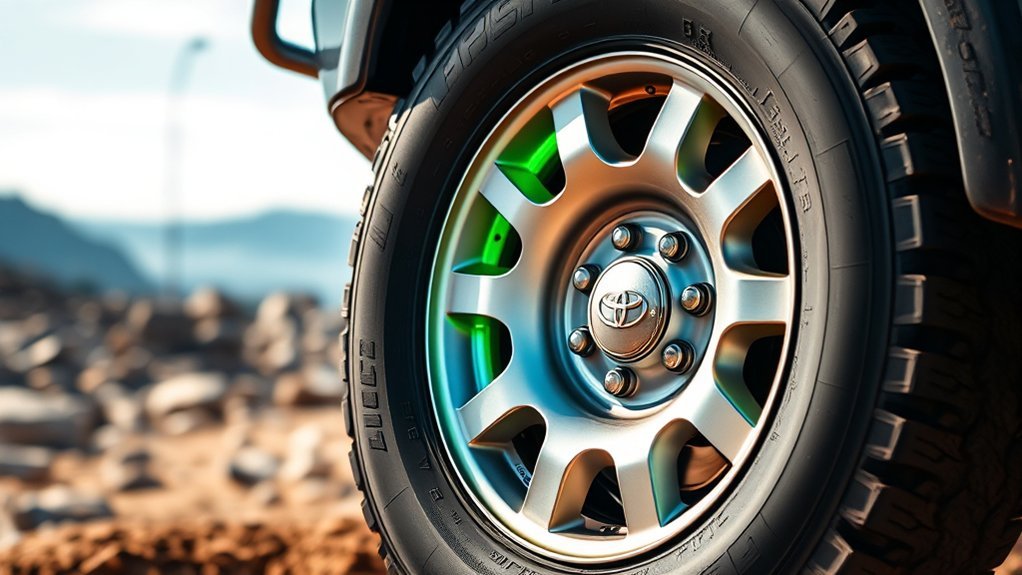
Regular compressed air is already mostly nitrogen. National Geographic explains that Earth’s atmosphere is about 78 percent nitrogen, 21 percent oxygen, and small amounts of other gases. Air from a shop compressor can also carry moisture unless the compressor and dryer system are well maintained.
Nitrogen tire inflation uses a drier, more nitrogen-rich gas. Because it contains less oxygen and moisture than normal compressed air, it may reduce pressure loss through normal permeation and reduce moisture exposure inside the tire cavity. That can be useful, but the real-world benefit for most Hilux owners is usually modest.
The main rule does not change: your Toyota Hilux tires must be inflated to the correct cold pressure for your exact vehicle, tire size, wheel package, and load. You can find that pressure on the tire placard, usually near the driver’s door area, or in the owner’s manual. Do not use the maximum PSI printed on the tire sidewall as your normal driving pressure.
Does Nitrogen Change the Recommended Hilux PSI?
No. Nitrogen does not change the recommended tire pressure for a Toyota Hilux. If your placard calls for a specific cold PSI, that is still your target whether the tire contains regular air, nitrogen, or a mix of both.
This matters because Hilux pressure can vary by model year, market, tire size, and load condition. For example, Toyota UK’s tyre pressure guide lists different general Hilux pressures by tire size, including higher pressure for 225/70 R17 tires than for some 17-inch and 18-inch Hilux tire sizes. Treat that as an example, not a replacement for your own tire placard.
Note: If your Hilux uses aftermarket wheels, replacement tire sizes, LT-rated tires, or a canopy and constant cargo, ask a qualified tire shop or Toyota dealer to confirm the right pressure for your setup.
Nitrogen vs. Air Comparison for Toyota Hilux Tires
| Factor | Regular Air | Nitrogen |
| Availability | Easy to find at service stations, tire shops, and with home compressors | Requires a tire shop, dealer, fleet service, or nitrogen inflation machine |
| Pressure Stability | Works well when checked monthly and before heavy use | May hold pressure slightly longer under normal permeation |
| Moisture | Can contain moisture if the compressor system is not well maintained | Usually drier, which helps limit moisture inside the tire cavity |
| Best Use | Daily driving, mixed road use, and budget-conscious maintenance | Fleet use, towing, heavy loads, long storage, or frequent temperature changes |
| Main Limitation | Pressure can drift if you forget regular checks | Still needs checks and does not repair leaks or tire damage |
[Products Worth Considering]

Keep your tires properly inflated with this analog VONDIOR tire pressure gauge, designed for fast, easy readings without batteries. The swiveling, two-axis hose and large glow dial help you measure at any tire angle with instant visibility. Built with a protective rubber shield, it supports durable, low-maintenance use for cars and trucks.

This tire inflator with pressure gauge delivers long-lasting performance with a durable rubber-protected gauge and sturdy build. The longer hose and 360 swivel air chuck help you seal the valve securely and keep your hands free while measuring, inflating, or deflating. It’s battery-free for reliable use and provides ±2 PSI accuracy in the mid-range for most typical tires, with universal compatibility for 1/4 NPT compressor outputs.
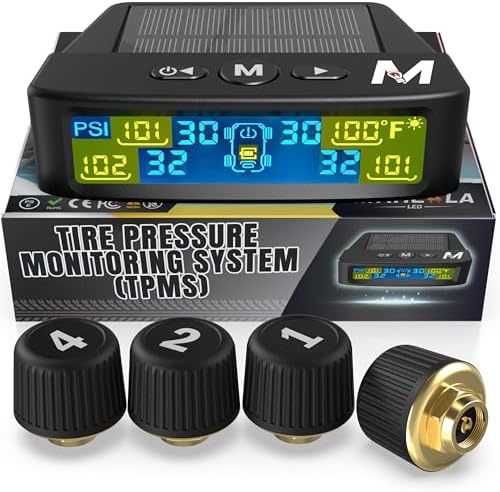
Marcala’s TPMS set of four sensors helps you monitor tire pressure and temperature in real time while driving, with updates every second. The bright color LCD uses auto-dimming for easy viewing, powered by dual solar and USB charging, and offers six alarm modes. Built for trailers, RVs, campers, trucks, and towing setups, the sensors support monitoring 1-4 wheels up to 98 PSI with IP67 waterproof protection.
Regular Air vs. Nitrogen: Which Should You Choose?
Choose regular air if you want the easiest and most practical option. It is the better everyday choice for most Hilux owners because you can top off your tires almost anywhere and keep costs low.
Choose nitrogen if your tire shop includes it free, your Hilux sits for long periods, you manage several vehicles, or you want slightly steadier pressure between checks. Nitrogen can also make sense when your Hilux regularly tows, carries heavy cargo, or operates in areas with large temperature swings.
The best choice is the one you will maintain. Regular air checked monthly is safer than nitrogen ignored for months.
The gas inside the tire matters less than the pressure you maintain. A correctly inflated air-filled tire beats an underinflated nitrogen-filled tire every time.
Common Myths About Nitrogen in Tires Debunked
Nitrogen tire inflation often gets marketed as a major upgrade, but several common claims need context. Nitrogen can help in certain conditions, yet it does not make your Hilux tires maintenance-free.
- Myth: Nitrogen means you never check pressure. You still need pressure checks because tires can lose pressure from punctures, valve leaks, bead leaks, wheel damage, and temperature changes.
- Myth: Nitrogen creates a major fuel economy gain. Proper tire pressure can help fuel economy, but the benefit comes from correct inflation, not nitrogen by itself.
- Myth: You cannot mix air and nitrogen. You can mix them safely, but adding regular air lowers the nitrogen concentration.
- Myth: Nitrogen is only for race cars and aircraft. Nitrogen is common in specialized service, but it can also be used in road vehicles. It is simply not essential for most daily driving.
- Myth: Nitrogen fixes slow leaks. It may slow normal permeation slightly, but it will not repair a nail hole, cracked valve stem, damaged rim, or poor bead seal.
How Nitrogen Can Help Your Toyota Hilux Tires
Nitrogen can be useful when you want more consistent pressure over longer periods, especially if your Hilux carries tools, camping gear, recovery equipment, or tow loads. The drier gas can also reduce moisture exposure inside the tire cavity.
That does not mean nitrogen automatically improves handling, braking, tread life, or fuel economy. Those results depend mainly on whether the tire is at the correct cold pressure. A Hilux with air-filled tires at the correct pressure is safer than a Hilux with nitrogen-filled tires that are underinflated.
Note: If your Hilux has different recommended front and rear pressures for loaded driving, towing, or high-speed use, follow the placard or owner’s manual for that condition.
How Temperature Changes Affect Hilux Tire Pressure
Temperature affects tire pressure whether you use regular air or nitrogen. Continental Tire notes that tire pressure can rise or fall by about 1 psi for every 10 degrees Fahrenheit of ambient temperature change. Nitrogen may reduce moisture-related variation, but it does not stop normal pressure changes caused by heat and cold.
This is why cold-pressure checks matter. Check your Hilux before driving, or after it has been parked long enough for the tires to cool. If you check pressure after highway driving, off-road use, or towing, the reading may be higher because the tires are warm.
Is Paying for Nitrogen Really Worth It?
Paying for nitrogen is usually not necessary if you mainly use your Toyota Hilux for commuting, school runs, light errands, or normal highway driving. Regular air is easier to find, easier to top off, and effective when you check pressure on schedule.
Nitrogen starts to make more sense when convenience matters. It may be worthwhile if your tire shop includes it free with new tires, your Hilux spends long periods parked, you tow often, you drive in areas with large temperature swings, or you manage several vehicles and want a more consistent inflation program.
If a shop charges extra, compare that cost with the value you actually receive. For most owners, a quality tire pressure gauge and a monthly cold-pressure habit will do more for safety, tire wear, and fuel economy than paying for nitrogen once and forgetting about maintenance.
[Products Worth Considering]

Monitor tire tread wear with a smart, color-coded depth gauge that shows clear condition ranges at a glance. The bar is range marked for fast, easy readings, helping you maintain safer traction and performance. Each gauge is portable with a pocket clip, and the set includes 20 units for daily use and sharing.
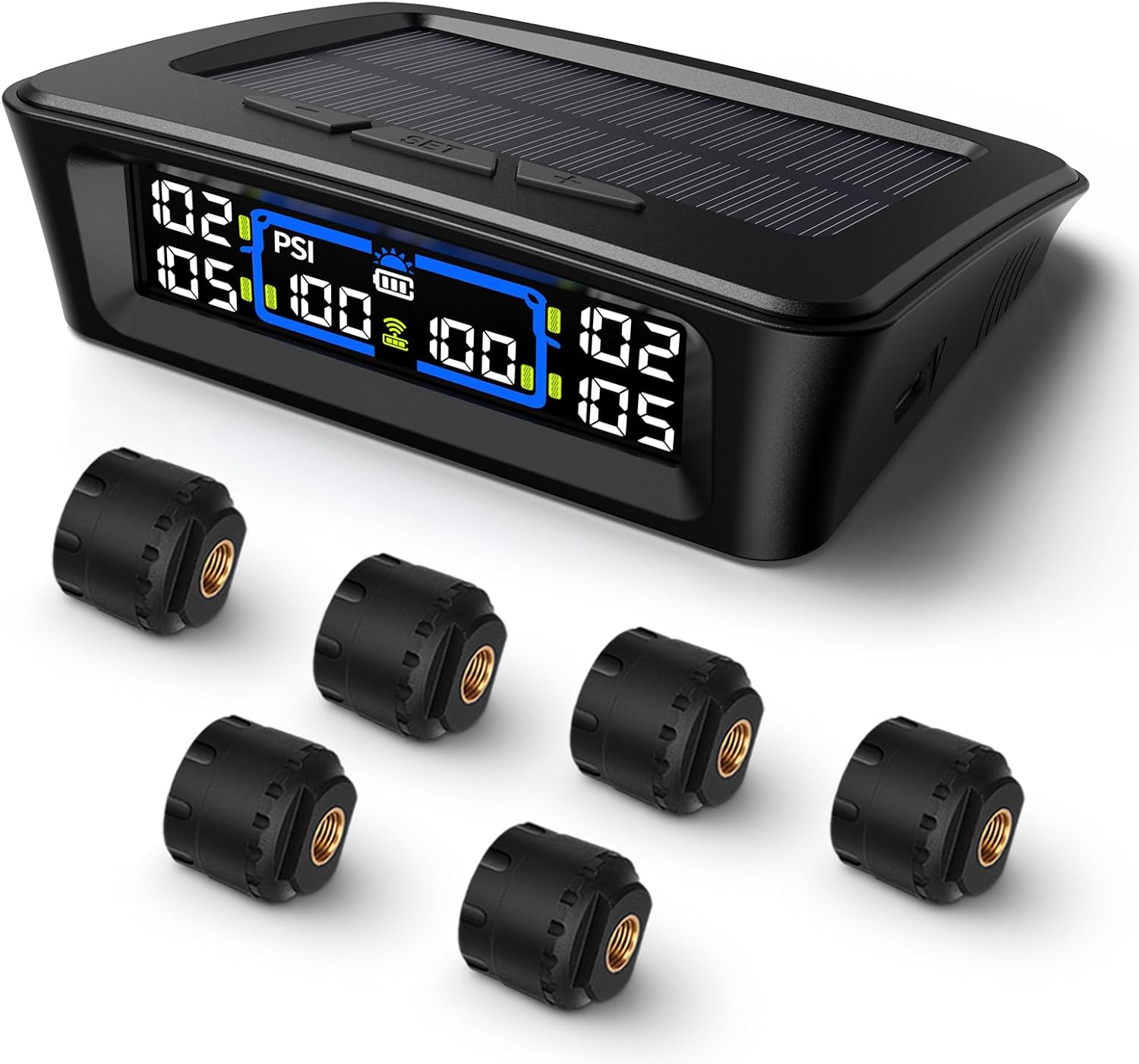
The Tymate TM12 RV TPMS delivers real-time tire pressure and temperature monitoring with a stable 433Hz display for safer long-distance driving. It supports simultaneous monitoring across vehicle and trailer zones, includes six alarm modes for pressure, temperature, leakage, battery, and signal loss, and features easy DIY installation with auto calibration. Power is supplied via USB-C charging or solar recharging, with a wide 0–144 PSI range and up to 50 ft signal coverage for RVs and towable trailers.

The ETENWOLF T600 digital tire pressure gauge delivers precise, manually calibrated readings to ANSI B40.7 Grade 2A standards with ±0.5% PSI accuracy. Its 360° rotating nozzle and display hold make it easy to check pressures from any angle, while a bleed button helps dial tires to the perfect level. With a 0–250 PSI range and support for PSI, BAR, and KPA, it’s a convenient tool for maintaining tire performance across many vehicles and seasons.
Performance Benefits of Nitrogen for Heavy-Duty Use
A Toyota Hilux often gets used harder than a typical passenger car. You may carry tools, construction supplies, camping gear, recovery equipment, or tow a trailer. In those conditions, consistent tire pressure matters because load, heat, and rough surfaces increase tire stress.
Nitrogen can help reduce moisture and may keep pressure steadier between checks, which can be useful for long trips or work vehicles. Still, the pressure must match the load. Too little pressure can increase heat buildup and sidewall flex. Too much pressure can reduce comfort, traction, and even tire wear.
Warning: Never lower tire pressure for sand, mud, or trail driving unless you know the safe range for your tires and can reinflate before returning to normal road speeds. Driving fast on underinflated tires can overheat and damage them.
What Safety Guidance Says About Tire Pressure
The key safety message from tire authorities is simple: keep your tires properly inflated, inspect them often, and use the vehicle manufacturer’s recommended pressure. The National Highway Traffic Safety Administration says underinflated tires can be hard to spot visually, recommends monthly checks with an accurate gauge, and explains that TPMS is not a substitute for regular tire maintenance.
NHTSA also advises checking all tires, including the spare, at least once a month when they are cold. Cold means the vehicle has not been driven for several hours, so heat from driving has not raised the pressure reading.
Fuel economy guidance points in the same direction. FuelEconomy.gov says proper tire inflation can improve gas mileage by 0.6 percent on average, up to 3 percent in some cases, and that properly inflated tires are safer and last longer. That benefit comes from correct pressure, whether the tire is filled with regular air or nitrogen.
Air vs. Nitrogen Efficiency
Nitrogen can reduce pressure loss from normal permeation, but that does not mean it creates a noticeable efficiency gain for every Hilux driver. Continental says nitrogen is not required for normal everyday consumer tire service, although it may marginally reduce inflation loss by permeation.
For daily driving, efficiency depends more on checking pressure, repairing leaks, rotating tires, maintaining alignment, and using the correct tire size and load rating. Nitrogen is only one small part of the tire-care picture.
Safety and Performance Impact
Proper inflation helps your Hilux steer, brake, carry weight, and maintain stable contact with the road. Underinflation can cause excess heat, poor fuel economy, and irregular wear. Overinflation can reduce comfort, alter the contact patch, and shorten tire life.
Nitrogen does not change the recommended pressure. If your placard calls for a certain cold PSI, that is the target whether you use air or nitrogen.
Mixing Air and Nitrogen: What You Need to Know
You can safely add regular air to a nitrogen-filled tire if the tire is low and nitrogen is not available. This is better than driving underinflated. The tradeoff is that the tire will no longer have the same high nitrogen concentration.
If you want to restore the nitrogen level, ask a tire shop to purge and refill the tire with nitrogen. If you do not care about keeping a high nitrogen concentration, continue using regular air and keep checking the tires cold.
Pro Tip: If one tire loses pressure faster than the others, do not blame the gas type first. Check for a puncture, valve leak, bead leak, cracked wheel, or loose valve core.
How to Switch from Air to Nitrogen
If you want nitrogen in your Hilux tires, a proper shop service works better than simply adding a little nitrogen on top of regular air. The usual process is to deflate, purge, and refill the tire so the final gas mix has a higher nitrogen concentration.
- Start with a tire inspection. Fix punctures, valve leaks, bead leaks, or damaged stems before paying for nitrogen.
- Ask whether the shop purges the tires. A nitrogen top-off alone leaves much of the original air inside.
- Set the final pressure cold. The target is still the Hilux placard or owner’s manual pressure.
- Install valve caps. Caps help keep dirt and moisture out of the valve area.
- Keep checking monthly. Nitrogen can slow pressure loss, but it does not remove the need for maintenance.
What Green Valve Caps and TPMS Do, and Do Not, Tell You
Green valve caps often suggest a tire was filled with nitrogen, but the cap is not proof. A previous owner, shop, or technician may have changed the cap without purging and refilling the tire. If nitrogen concentration matters to you, ask the shop what service they performed.
Nitrogen also does not disable TPMS. A tire pressure monitoring system reads pressure, not the exact gas type. If the TPMS light comes on, check all tires with a gauge and set them to the correct cold pressure.
How to Maintain Tire Pressure Regardless of Inflation Method

Good tire maintenance is simple, but it needs consistency. Use the same routine whether your Toyota Hilux tires contain regular air or nitrogen.
- Find the correct cold pressure. Check the Hilux tire placard or owner’s manual for your exact model, tire size, and load condition.
- Check tires cold. Measure pressure before driving or after the vehicle has been parked long enough for the tires to cool.
- Check all tires. Include the spare if your Hilux carries one.
- Add pressure when needed. Use air or nitrogen to reach the recommended cold pressure.
- Inspect for damage. Look for nails, cuts, cracks, bulges, uneven wear, missing valve caps, and slow leaks.
- Recheck after load changes. Towing, heavy cargo, and off-road trips may require extra attention.
- Reinflate after airing down. If you lower pressure off-road, reinflate before returning to normal road speeds.
Do not rely only on how the tire looks. Underinflated tires can be hard to spot by eye, especially on a pickup with taller sidewalls.
Choosing the Right Inflation Method for Your Hilux
Choose regular air if you want the easiest, cheapest, and most practical option. It is the right choice for most Hilux owners, especially if you already check tire pressure every month and before long trips.
Choose nitrogen if your shop includes it, you prefer the extra pressure stability, or your Hilux sees demanding use. It can be a useful convenience for vehicles that tow, carry heavy loads, sit for long periods, or operate in harsh temperature swings.
The final decision is simple: do not pay for nitrogen unless it solves a real maintenance problem for you. Spend money first on an accurate gauge, tire repairs, rotations, alignments, and correct load-rated tires.
[Products Worth Considering]

The TYAMATE TM8 solar-powered wireless TPMS delivers real-time tire pressure and temperature monitoring with six alarm modes for safer driving. A vibrant color LCD display shows readings clearly while windshield mounting keeps it hands-free and easy to read. With a wide 0–87 PSI range, strong 433.92 MHz signal transmission, and quick sensor pairing, it’s ideal for RV, sedan, SUV, MPV, and truck use.

This Dr.Roc tire valve stem puller tools set helps install or remove snap-in tubeless valve stems safely and efficiently. It includes ozone-resistant EPDM snap-in valve stems, a valve stem installer, and a valve core remover for quick core removal or installation during tire service. Designed for reliable tubeless tire repair on motorcycles, ATVs, lawn equipment, cars, and trucks.

Get precise tire readings with the ETENWOLF T300 Plus digital gauge, calibrated to ANSI B40.7 Grade 2A for reliable accuracy. It measures across a wide 3–200 PSI range and includes thermal compensation for dependable performance from extreme cold to heat. The bright LED display, LED illumination, and replaceable AAA batteries make it easy to check pressures quickly, even in low light.
Frequently Asked Questions
Do dealers actually put nitrogen in tires?
Some dealers and tire shops do, but not all of them include it automatically. Ask what inflation gas they used and whether the tires were purged before filling. Green valve caps often indicate nitrogen, but the cap alone is not proof.
Can I add regular air to nitrogen-filled Hilux tires?
Yes. Add regular air if the tire is low and nitrogen is not available. Driving on an underinflated tire is worse than mixing air with nitrogen. The only downside is that the nitrogen concentration drops.
Does nitrogen improve Toyota Hilux fuel economy?
Nitrogen itself is unlikely to create a noticeable fuel economy gain in normal driving. Correct tire pressure can help fuel economy, so the real benefit comes from keeping the tires properly inflated.
What tire pressure should I use for a Toyota Hilux?
Use the cold tire pressure listed on your Hilux tire placard or in the owner’s manual. The correct pressure can vary by year, market, tire size, drivetrain, load, and tire type. Do not use a generic PSI range or the maximum pressure printed on the tire sidewall.
How often should I check Hilux tire pressure?
Check tire pressure at least once a month when the tires are cold. Also check before long trips, towing, carrying heavy loads, off-road driving, or major temperature changes.
Does nitrogen affect TPMS?
No. TPMS reads tire pressure, not the type of gas inside the tire. If your TPMS warning light comes on, check the pressure with a gauge and inflate the tire to the correct cold pressure.
Do green valve caps mean my tires definitely have nitrogen?
Not always. Green valve caps often suggest nitrogen service, but they do not prove the tire was purged and refilled with nitrogen. Ask the shop if you need confirmation.
Should I use nitrogen after airing down for off-road driving?
You can, but it is not required. The priority is to reinflate to the correct road pressure before driving at normal speeds. Use regular air if that is what you have available.
Conclusion
Nitrogen is not a bad choice for Toyota Hilux tires, but it is not a must-have upgrade for most drivers. Its main advantages are drier inflation gas and slightly better pressure stability over time. Those benefits can help in heavy-duty or long-interval use, but they do not replace normal tire checks.
For everyday Hilux driving, regular air is practical, affordable, and effective. The safest approach is to use the correct cold pressure from your vehicle placard or owner’s manual, check the tires monthly, inspect for leaks or damage, and adjust pressure before towing, hauling, or heading off-road.
Sources
- NHTSA TireWise: Tires — tire pressure checks, TPMS limitations, underinflation visibility, and tire safety guidance
- NHTSA Tire Safety Month — monthly cold-pressure checks, spare tire checks, rotation, balance, and alignment guidance
- FuelEconomy.gov: Keeping Your Vehicle in Shape — proper tire pressure, fuel economy, safety, and tire-life guidance
- Continental Tire: Nitrogen vs. Air — nitrogen benefits, limits, temperature effects, permeation, and everyday-use guidance
- Toyota: How to Check Tire Pressure — Toyota guidance on checking pressure and finding the correct PSI from the door jamb sticker or owner’s manual
- Toyota UK Tyre Pressure and Size Guide — Toyota Hilux tire-size examples and guidance to use the handbook or vehicle pressure label