You should check your Hyundai Sonata’s tire pressure at least once a month, before long trips, and any time the weather changes sharply. For the most accurate reading, check the tires when they are cold and use the PSI listed on your Sonata’s driver-side door placard or owner’s manual—not the maximum pressure printed on the tire sidewall.
Quick Answer
Check your Hyundai Sonata’s tire pressure at least once a month, before long trips, and any time temperatures swing sharply or the TPMS light comes on. Measure when tires are cold—after the car has been parked at least three hours or driven less than 1 mile—and use the PSI on the door placard.
Key Takeaways
- Check tire pressure monthly, before road trips, and during big temperature changes.
- Use a reliable gauge when the tires are cold for the most accurate PSI reading.
- Use the Tire and Loading Information label on the driver’s door edge/post as your main PSI source.
- Do not use the tire sidewall’s maximum PSI as your recommended pressure.
- A TPMS warning is helpful, but it does not replace regular tire pressure checks.
At a Glance
| Time Required | 5–10 minutes |
| Difficulty | Easy beginner maintenance |
| Tools Needed | Tire pressure gauge, air compressor or gas-station air pump, valve-cap storage spot |
| Cost | Usually free if you already own a gauge; about $5–$20 for a basic gauge |
Why Tire Pressure Matters for Your Hyundai Sonata
Tire pressure affects how your Hyundai Sonata rides, handles, brakes, and wears its tires. When pressure is too low, the tire flexes more than it should. That can create extra heat, uneven tread wear, poor handling, and a higher risk of tire failure.
When pressure is too high, the ride may feel harsher, the center of the tread can wear faster, and the tire may be more vulnerable to impact damage from potholes or road debris. Hyundai warns that both underinflation and overinflation can reduce tire life and hurt vehicle handling.
Proper pressure also helps fuel economy. According to FuelEconomy.gov, keeping tires inflated to the correct pressure can improve gas mileage by 0.6% on average and up to 3% in some cases. Underinflated tires can lower gas mileage by about 0.2% for every 1 psi drop in the average pressure of all tires.
The correct tire pressure is the vehicle manufacturer’s cold inflation pressure. For your Sonata, that means the PSI on the driver-side door placard or in the owner’s manual—not the number molded into the tire sidewall.
How Often Should You Check Your Tire Pressure?
Check your Hyundai Sonata’s tire pressure at least once a month. That matches the guidance from the National Highway Traffic Safety Administration, which recommends monthly tire pressure checks even on vehicles with a Tire Pressure Monitoring System.
You should also check more often in these situations:
- Before a long trip: Highway driving creates heat, and a low tire can become a bigger problem at speed.
- After a major temperature swing: Cold weather can lower tire pressure, while warmer weather can raise readings.
- When the TPMS light comes on: Check all four tires as soon as it is safe.
- After hitting a pothole or curb: A hard impact can cause pressure loss or sidewall damage.
- If one tire keeps needing air: A slow leak, puncture, valve-stem issue, or rim problem may be present.
Warning: Do not wait for the TPMS light before checking pressure. TPMS warnings usually appear only after a tire is significantly underinflated, so a tire can be low enough to affect wear and fuel economy before the light turns on.
Best Times to Check Tire Pressure
The best time to check your Sonata’s tire pressure is in the morning or after the car has been parked long enough for the tires to cool. Hyundai defines cold tires as tires on a vehicle that has not been driven for at least three hours or has been driven less than 1 mile.
Cold readings matter because driving heats the tires and raises pressure. Hyundai notes that warm tires normally read 4–6 psi above the recommended cold pressure. That does not mean the tire is overinflated; it may simply be warm.
If you must check pressure while the tires are warm, use the reading as a temporary guide only. Add air if a tire is clearly low, drive safely, and recheck the pressure when the tires are cold.
Note: Do not release air from a warm tire just because it reads a few PSI above the door placard. Recheck when cold before lowering the pressure.
Essential Tools for Tire Pressure Checks
You do not need much equipment to maintain your Hyundai Sonata’s tire pressure, but the right tools make the job faster and more accurate.
- Tire pressure gauge: A digital or stick-style gauge works as long as it gives consistent readings.
- Air compressor or gas-station pump: Use this to add air when a tire is below the placard PSI.
- Valve caps: Keep caps installed after checking pressure to help keep dirt and moisture out of the valve stem.
- Flashlight: Helpful for checking tread, sidewalls, and valve stems in low light.
- Your owner’s manual or door placard: This is your source for the correct cold PSI.
Pro Tip: Keep a small tire pressure gauge in the glove box. Gas-station gauges can be worn or inaccurate, so your own gauge gives you a more consistent baseline.
[Products Worth Considering]

ETENWOLF’s tire pressure gauge helps you quickly and accurately check tire PSI across cars, trucks, motorcycles, bikes, and more. It’s manually calibrated to ANSI B40.1 Grade A for reliable readings, includes a large glow dial for easy nighttime viewing, and features a 360-degree swivel chuck for use at any valve angle. The gauge also works consistently in extreme hot or cold weather.

Measure tire tread depth quickly and accurately with this LUMITECO dial gauge that reads in 1/32" increments up to 14/32". The color-coded green/yellow/red zones make it easy to judge tire wear and know when replacement is needed. A rugged, compact design with a protective pouch helps keep the gauge ready for use on cars, trucks, motorcycles, and more.
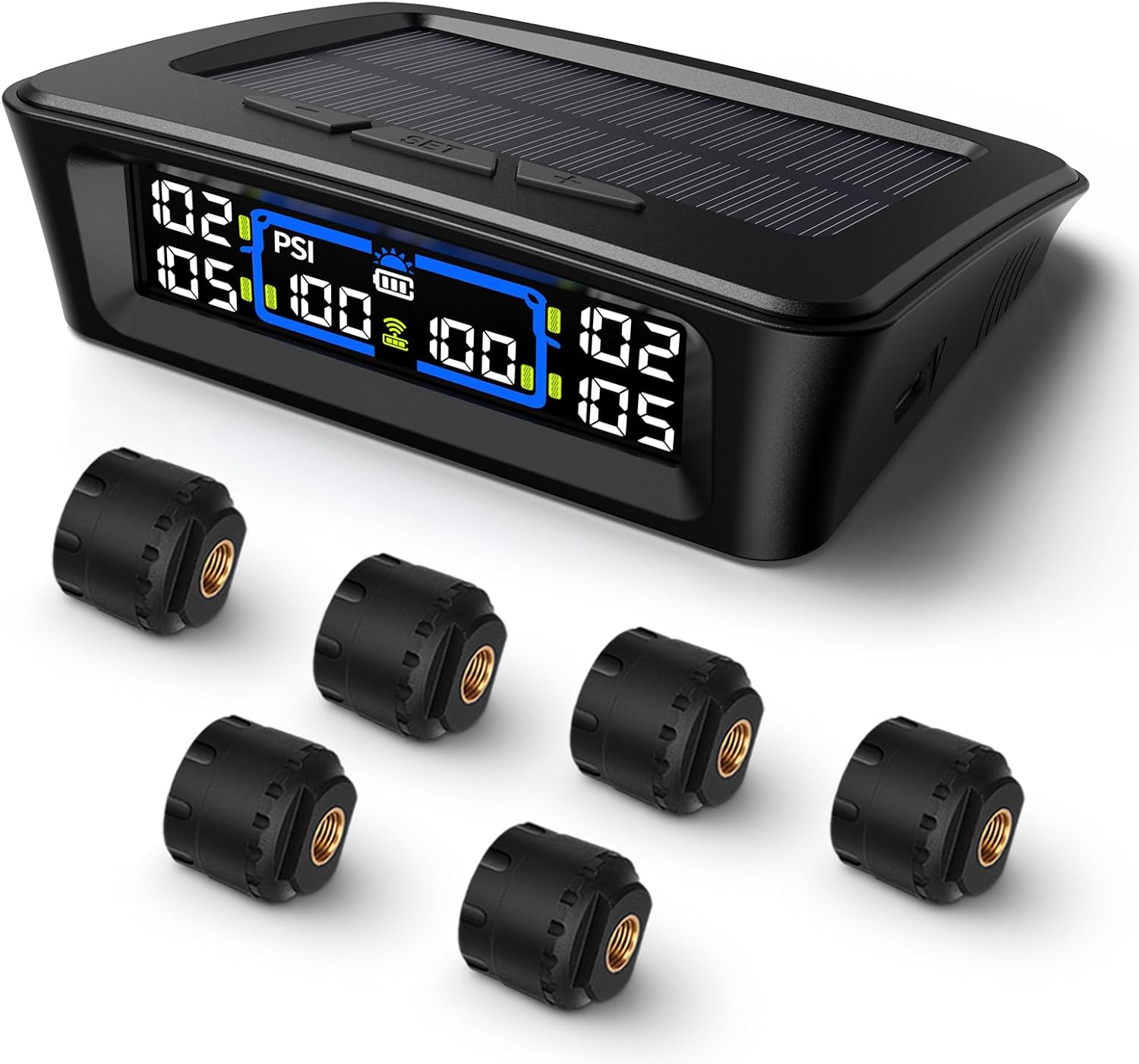
The Tymate TM12 RV TPMS delivers real-time tire pressure and temperature monitoring with a stable 433Hz display for safer long-distance driving. It supports simultaneous monitoring across vehicle and trailer zones, includes six alarm modes for pressure, temperature, leakage, battery, and signal loss, and features easy DIY installation with auto calibration. Power is supplied via USB-C charging or solar recharging, with a wide 0–144 PSI range and up to 50 ft signal coverage for RVs and towable trailers.
Recommended Tire Pressure for Your Sonata
The correct Hyundai Sonata tire pressure depends on the model year, trim, tire size, and load rating. Many Sonata models use a cold pressure in the mid-30s PSI range, and an official Hyundai Sonata owner-manual page lists 36 psi for the listed tire sizes. Still, your own car’s door placard is the final source.
To find your exact PSI, open the driver’s door and look for the Tire and Loading Information label on the door edge or door post. It should show the recommended cold tire pressure for the front and rear tires. You can also confirm it in the Hyundai owner’s manual for your model year.
Do not use the maximum PSI printed on the tire sidewall as your normal inflation target. That number is the tire’s maximum pressure rating, not the vehicle manufacturer’s recommended pressure for ride, handling, and tire wear.
How to Check Your Hyundai Sonata Tire Pressure Step by Step
Follow this simple routine once a month and before long drives:
- Park safely and let the tires cool. For the best reading, wait at least three hours after driving or check before you drive more than 1 mile.
- Find the recommended PSI. Use the driver-side Tire and Loading Information label or your owner’s manual.
- Remove the valve cap. Put it in your pocket or a small tray so it does not roll away.
- Press the gauge straight onto the valve stem. A brief hiss is normal, but a long hiss means the gauge is not seated correctly.
- Read the PSI. Compare the gauge reading with the recommended cold PSI.
- Add air if the tire is low. Add a small amount, then recheck with the gauge.
- Release air only if the tire is cold and too high. Press the valve stem briefly, then recheck.
- Repeat for all four tires. If your Sonata has a spare tire, check it too according to the owner’s manual.
- Reinstall all valve caps. Make sure each cap is snug by hand.
Key Indicators of Improper Tire Pressure
Often, drivers do not notice low tire pressure until the vehicle starts to feel different. Watch for these signs:
- TPMS warning light: A solid TPMS light usually means at least one tire is significantly underinflated.
- Uneven tread wear: Low pressure often wears the outer shoulders; high pressure often wears the center tread faster.
- Pulling or vague steering: A low tire can make the car feel less stable.
- Lower fuel economy: Underinflated tires increase rolling resistance.
- One tire repeatedly losing air: This may point to a puncture, valve-stem leak, bead leak, or wheel damage.
- Visible bulges, cuts, or cracks: Tire damage needs prompt inspection, even if pressure looks normal.
Warning: If you see a sidewall bulge, exposed cords, a deep cut, or a tire that loses pressure quickly, do not keep driving normally. Install the spare if equipped, use roadside assistance, or have the tire inspected by a qualified technician.
Adjusting Your Tire Pressure Correctly
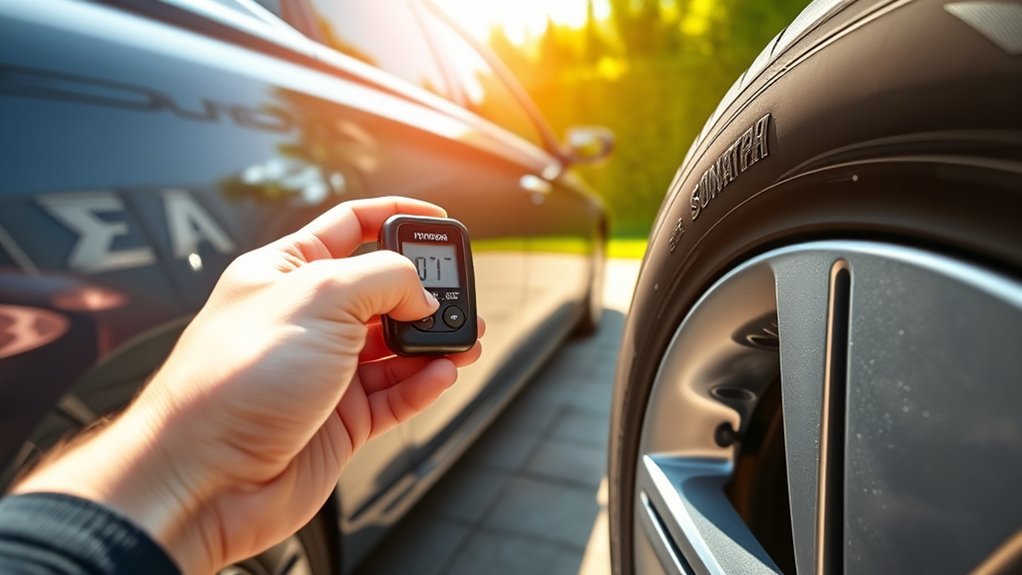
Use a reliable tire pressure gauge to measure each tire’s PSI. If a tire is below the recommended cold pressure, add air in short bursts and recheck after each burst. If a cold tire is above the recommended pressure, release a small amount of air and check again.
If the tires are warm, be careful. Hyundai explains that warm tires normally read 4–6 psi higher than the recommended cold pressure. Do not bleed air from warm tires just because they are above the placard number. Recheck when cold before making a final adjustment.
After adjusting pressure, drive for a few minutes if your Sonata’s TPMS system needs time to update. If the warning light stays on after the tires are correctly inflated, inspect for damage or schedule service.
[Products Worth Considering]

Keep your tires properly inflated with this analog VONDIOR tire pressure gauge, designed for fast, easy readings without batteries. The swiveling, two-axis hose and large glow dial help you measure at any tire angle with instant visibility. Built with a protective rubber shield, it supports durable, low-maintenance use for cars and trucks.

Milton S-921 pencil tire pressure gauge helps you maintain optimal tire pressure for passenger cars with accurate readings in PSI and kPa. It features a built-in deflator valve for convenient pressure adjustments, plus a single chuck head and nylon indicator bar for easy use on the go. Built from durable plated brass and designed for reliable performance, it’s a practical road trip and cold-weather maintenance tool.

The Big Rig Defense Tire Thumper is a truck tire pressure checker that lets you quickly check multiple tires by giving them a firm whack. Listen for a reassuring thump and feel the stick bounce when a tire is fully inflated, helping you get back on the road safely. It features a comfortable, glove-friendly handle and a secure wrist strap for confident use on busy routes.
What to Do If Your TPMS Light Comes On?
When your TPMS light comes on, check tire pressure as soon as it is safe. A low tire may have lost pressure from cold weather, a puncture, a valve-stem leak, or wheel damage.
[Products Worth Considering]
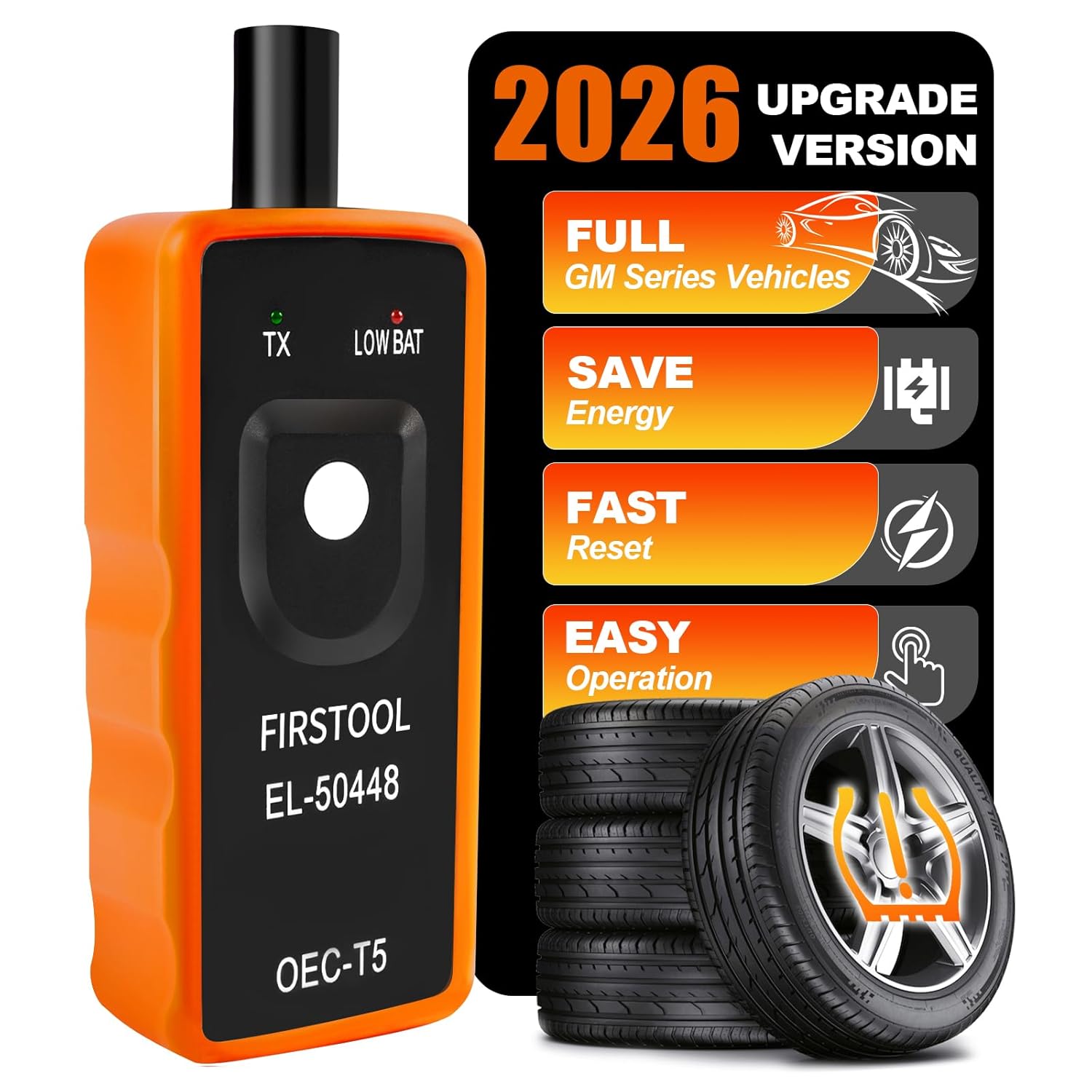
This TPMS relearn tool helps you quickly activate, match, and reset GM tire pressure sensors to keep the vehicle monitoring system working properly. It clears tire pressure alarms and dashboard warning lights after sensor replacement or tire rotation, and supports learning for common 315/433 MHz TPMS sensors. Designed for simple one-button operation, it can help you avoid unnecessary trips to repair shops.

The Airmoto portable tire inflator quickly and accurately fills car, truck, SUV, motorcycle, and bicycle tires up to 120 PSI with auto shut-off when your target pressure is reached. Its large LCD, multi-unit pressure display, and digital gauge make it easy to dial in settings and verify readings, while the built-in LED flashlight helps in low light. The included polyurethane hard carrying case and storage mesh pocket keep the inflator and accessories protected and organized.

The TYAMATE TM8 solar-powered wireless TPMS delivers real-time tire pressure and temperature monitoring with six alarm modes for safer driving. A vibrant color LCD display shows readings clearly while windshield mounting keeps it hands-free and easy to read. With a wide 0–87 PSI range, strong 433.92 MHz signal transmission, and quick sensor pairing, it’s ideal for RV, sedan, SUV, MPV, and truck use.
Check Tire Pressure Immediately
Park in a safe place and check all four tires with a gauge. Inflate any low tire to the pressure listed on the driver-side placard. If the tires are warm, treat the result as temporary and recheck when cold.
Inspect For Damage
Look for nails, screws, cuts, sidewall bulges, cracked rubber, bent wheels, and missing valve caps. Also compare the tires visually. If one tire looks lower than the others or keeps losing air, have it inspected.
Visit Service Center
If the TPMS light stays on after the tires are set correctly, a tire may still be leaking or the TPMS system may need service. NHTSA explains that a TPMS light that flashes for 60–90 seconds and then stays illuminated can indicate a system malfunction. In that case, schedule an inspection with a qualified tire shop or Hyundai service center.
Benefits of Regular Tire Pressure Monitoring
Regular tire pressure checks are one of the easiest ways to protect your Sonata’s tires and keep the car driving the way it should.
Enhanced Safety Features
Correct pressure helps your tires keep their intended contact patch with the road. That supports steering response, braking stability, traction, and heat control. It also helps safety systems such as anti-lock braking and stability control work with tires that are in better condition.
Improved Fuel Efficiency
Underinflated tires create more rolling resistance. FuelEconomy.gov reports that underinflation can lower gas mileage by about 0.2% for every 1 psi drop in the average pressure of all tires. Keeping your Sonata’s tires at the correct pressure helps reduce wasted fuel.
Extended Tire Lifespan
Correct inflation helps the tread wear more evenly. That can help your tires last longer, make rotations more effective, and reduce the chance of early replacement caused by shoulder wear, center wear, or heat-related damage.
Frequently Asked Questions
Should I check tire pressure every week?
Weekly checks are a good habit, especially in winter, during seasonal temperature swings, or before long drives. At minimum, check your Hyundai Sonata’s tire pressure once a month and whenever the TPMS light turns on.
What PSI should my Hyundai Sonata tires be at?
Use the cold tire pressure listed on your driver-side door placard or in your owner’s manual. Many Sonata models are in the mid-30s PSI range, and some official Hyundai Sonata specifications list 36 psi, but the exact number depends on your model year, trim, and tire size.
Can I use the PSI printed on the tire sidewall?
No. The sidewall number is the tire’s maximum pressure rating, not the recommended pressure for your Sonata. Use the Tire and Loading Information label on the driver’s door edge/post or the owner’s manual.
Why did my TPMS light come on during cold weather?
Cold air can lower tire pressure enough to trigger the TPMS warning. Check all four tires with a gauge, inflate them to the placard PSI, and recheck when the tires are cold.
Should I check tire pressure when the tires are hot?
Cold readings are best. If you must check hot tires, do not release air just because the reading is above the placard PSI. Warm tires normally read higher. Recheck and adjust when the tires are cold.
Conclusion
Checking your Hyundai Sonata’s tire pressure is quick, simple, and worth doing regularly. Make it a monthly habit, use a gauge when the tires are cold, and follow the PSI on the driver-side door placard. Add extra checks before road trips, during temperature swings, and any time the TPMS light appears. A few minutes of tire care can help improve safety, tire wear, handling, and fuel economy.
Sources
- Hyundai Owner’s Manual: Recommended Cold Tire Inflation Pressures — cold tire definition, warm-tire pressure behavior, and inflation cautions
- Hyundai Owner’s Manual: Tires and Wheels — Sonata tire size and inflation pressure reference
- NHTSA TireWise: Tire Safety Ratings and Awareness — monthly pressure checks, TPMS guidance, and safe pressure-check steps
- FuelEconomy.gov: Keeping Your Vehicle in Shape — tire pressure and fuel-economy figures
- 49 CFR § 571.138: Tire Pressure Monitoring Systems — federal TPMS performance standard