You should check your Hyundai Sonata tire pressure when the tires are cold, because the pressure on the driver-door placard is a cold tire pressure setting. For many 2017 Sonata models, that value is around 34 psi, but the correct number for your car is always the PSI printed on your own tire information label, not the number molded into the tire sidewall.
Quick Answer
Check your Sonata’s tire pressure cold, ideally before the first drive of the day or after the car has been parked for at least three hours. Set each tire to the PSI on the driver-door placard. Many 2017 Sonatas list about 34 psi, but your placard is the final authority.
Key Takeaways
- Use the driver-door placard or owner’s manual for the correct cold PSI; do not use the tire sidewall maximum as your target.
- Cold means the Sonata has been parked for at least three hours or driven only a very short distance at low speed.
- Hot tire pressure reads higher after driving, so do not bleed a hot tire down to the cold placard PSI.
- Temperature changes matter: a drop of about 10°F can lower pressure by roughly 1 psi.
- TPMS is helpful, but it is not a replacement for monthly manual pressure checks.
At a Glance
| Time Required | 5–10 minutes |
| Difficulty | Easy |
| Tools Needed | Accurate tire pressure gauge, air compressor, valve-cap storage spot |
| Cost | Usually free if you already have a gauge; low-cost if buying one |
Quick: What Cold Tire PSI for a Hyundai Sonata?
The correct cold tire PSI for a Hyundai Sonata is the number printed on the tire information label on the driver’s door jamb or door sill. Hyundai model years, tire sizes, trims, and load ratings can vary, so there is no single PSI that should be copied across every Sonata.
As a practical example, many 2017 Hyundai Sonata models list about 34 psi cold for the original tire setup. Treat that as a helpful example only. Before adding or releasing air, open the driver’s door and read the placard for your exact car.
Warning: The PSI molded into the tire sidewall is usually the tire’s maximum pressure rating, not the recommended pressure for your Sonata. Use the vehicle placard, not the sidewall maximum, for normal driving.
If your Sonata has replacement tires in a different size than the original tires shown on the placard, ask Hyundai, your tire installer, or a qualified tire professional for the correct inflation pressure. Do not guess based only on the old label or the sidewall maximum.
What “Cold” vs “Hot” Tire Pressure Means for a Sonata
Cold tire pressure is the pressure measured before driving, when the tires are close to the outside air temperature. A reliable rule is to check after the car has been parked for at least three hours, or before the first drive of the day.
Hot tire pressure is the pressure measured after driving. As the tire flexes and warms up, the air inside expands, so the reading rises. That does not automatically mean the tire is overinflated. It means you are no longer looking at the same cold-pressure baseline used by the vehicle placard.
A warm tire can read several PSI higher than the same tire measured cold. That is why the cold placard PSI is the number to set, record, and compare over time.
For safety guidance, the National Highway Traffic Safety Administration tells drivers to use the manufacturer’s recommended cold inflation pressure on the vehicle placard or owner’s manual and to check tire pressure when the tires are cold.
How Much Sonata Tire Pressure Changes After Driving
A Sonata’s tire pressure can rise by a few PSI after driving, and a longer or faster drive can raise it more. Road speed, outside temperature, load, tire condition, and driving time all affect the final hot reading.
Cold Vs. Hot Difference
The key difference is not that one number is “good” and the other is “bad.” The key difference is that the manufacturer’s target is a cold number. If your door placard says 34 psi cold, a hot reading above 34 psi after driving can be normal.
- Use cold readings to set your actual pressure.
- Use hot readings only as a temporary clue, not as the final adjustment target.
- Never bleed a hot tire down to the cold placard PSI.
- If a hot tire reads at or below the cold placard PSI, check it again cold and inspect for a leak.
- Record your cold readings monthly so you can spot slow pressure loss.
Typical PSI Increase
For normal driving, it is common for hot pressure to read several PSI higher than cold pressure. Instead of chasing the hot number, let the tires cool and then adjust them to the driver-door placard value.
Note: If you must add air while the tires are warm, add enough to avoid driving on an obviously low tire, then recheck and fine-tune the pressure when the tires are cold.
When & Where to Check Sonata Tire Pressure (Cold Readings)
The best time to check your Sonata’s tire pressure is in the morning before driving. The next-best time is after the car has been parked in shade for at least three hours.
- Park on a flat, safe surface.
- Read the driver-door tire information placard.
- Use a quality digital or dial gauge.
- Check all four tires, and check the spare if your Sonata has one.
- Add or release air in small amounts, then recheck.
- Reinstall the valve caps to keep dirt and moisture out of the valve stems.
Check pressure at least once a month, before long trips, before carrying a heavier load, and after a major temperature swing. The federal TPMS owner-manual language also tells drivers to check each tire monthly when cold and inflate to the vehicle placard pressure.
How Temperature & Season Affect Sonata Cold PSI
Temperature changes can make your Sonata’s tire pressure move even when the tire is not leaking. A useful rule of thumb is that pressure changes by about 1 psi for every 10°F change in outside temperature. When the weather gets colder, pressure drops. When the weather gets hotter, pressure rises.
The right response in winter is not to lower your target PSI. The right response is to check the tires cold and restore them to the placard PSI. For example, if your Sonata’s placard calls for 34 psi cold and a cold morning reading shows 29 psi, add air until the tire reaches 34 psi cold.
Pro Tip: Check pressure before sunrise or before your first drive when temperatures swing sharply. That gives you the cleanest cold reading and helps prevent chasing hot-pressure changes.
Seasonal checks are especially important because underinflated tires can hurt fuel economy. FuelEconomy.gov says underinflated tires can lower gas mileage by about 0.2% for every 1 psi drop in the average pressure of all tires.
What Low or High Pressure Does to Sonata Handling & Safety
Correct tire pressure helps your Sonata brake, steer, ride, and wear tires as designed. Both low pressure and high pressure can cause problems, but low pressure is especially dangerous because it increases heat buildup inside the tire.
Underinflation Effects On Handling
Underinflated tires flex more as they roll. That extra flex can increase heat, reduce fuel economy, shorten tire life, and make steering feel slower or less precise. It can also affect stopping ability and emergency handling.
- Steering response can feel soft or delayed.
- Tire shoulders may wear faster.
- Heat buildup can damage the tire structure.
- Fuel economy can drop because rolling resistance increases.
- A very low tire may trigger the TPMS warning light.
Overinflation Risks And Safety
Overinflation can make the ride harsh and reduce the tire’s ability to absorb bumps. It may also concentrate wear near the center of the tread. A small hot-pressure rise after driving is normal, but deliberately inflating well above the placard PSI is not a good way to improve fuel economy or handling.
If one tire is repeatedly higher or lower than the others when checked cold, inspect it. A valve-stem problem, puncture, damaged wheel, or gauge error can create confusing readings.
How to Set Correct Tire Pressure on a Sonata (Step-by-Step)
Use this process when the tires are cold. It works for regular monthly checks and for pre-trip checks.
- Find the placard. Open the driver’s door and read the tire information label on the door jamb or sill.
- Write down the target PSI. Note whether front and rear pressures are the same or different.
- Remove the valve cap. Keep it in your pocket or a small tray so it does not roll away.
- Press the gauge straight onto the valve stem. A brief hiss is normal, but a long hiss means the gauge is not seated squarely.
- Read the pressure. Check each tire at least once; repeat if the reading seems odd.
- Add air if low. Add short bursts, then recheck.
- Release air if high. Press the valve core briefly, then recheck.
- Set each tire to the placard PSI. Do not exceed the tire sidewall maximum.
- Reinstall valve caps. Tighten them by hand only.
- Check for patterns. A tire that keeps losing air needs inspection, not repeated top-offs forever.
Warning: If a tire is visibly flat, damaged, bulging, or losing air quickly, do not keep driving normally. Use your roadside-assistance plan, spare-tire procedure, tire mobility kit, or a qualified service provider.
[Products Worth Considering]

Milton S-921 pencil tire pressure gauge helps you maintain optimal tire pressure for passenger cars with accurate readings in PSI and kPa. It features a built-in deflator valve for convenient pressure adjustments, plus a single chuck head and nylon indicator bar for easy use on the go. Built from durable plated brass and designed for reliable performance, it’s a practical road trip and cold-weather maintenance tool.

Keep your tires properly inflated with this analog VONDIOR tire pressure gauge, designed for fast, easy readings without batteries. The swiveling, two-axis hose and large glow dial help you measure at any tire angle with instant visibility. Built with a protective rubber shield, it supports durable, low-maintenance use for cars and trucks.

Measure tire tread depth quickly and accurately with this LUMITECO dial gauge that reads in 1/32" increments up to 14/32". The color-coded green/yellow/red zones make it easy to judge tire wear and know when replacement is needed. A rugged, compact design with a protective pouch helps keep the gauge ready for use on cars, trucks, motorcycles, and more.
Troubleshoot Sonata TPMS & Gauge Readings
Your Sonata’s TPMS is a warning system, not a precision replacement for a manual gauge. It may not warn you until a tire is significantly underinflated, and it may also show small changes as outside temperature and driving heat change.
If the TPMS light comes on, do this:
- Pull over safely if the car feels unstable or a tire looks low.
- Check all four tires with a gauge as soon as practical.
- Inflate to the cold placard PSI if the tires are cold.
- If the tires are hot, avoid bleeding them down; recheck cold later.
- If the light flashes and then stays on, treat it as a possible TPMS malfunction and have the system inspected.
A mismatch between the dashboard and your gauge can come from heat, sensor delay, a weak TPMS sensor battery, a recently rotated tire, a different wheel, or a gauge that is out of calibration. If one tire keeps reading low after you correct it, inspect for a nail, valve leak, bead leak, cracked wheel, or tire damage.
[Products Worth Considering]
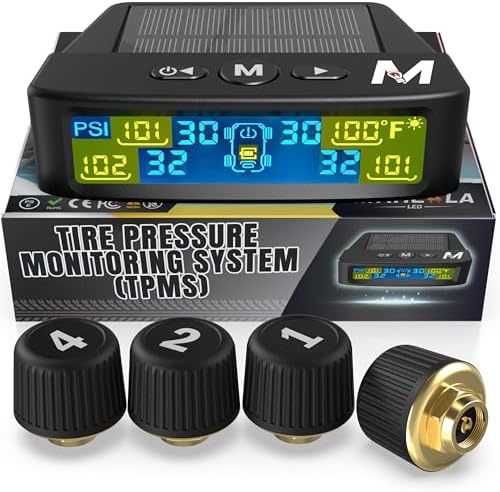
Marcala’s TPMS set of four sensors helps you monitor tire pressure and temperature in real time while driving, with updates every second. The bright color LCD uses auto-dimming for easy viewing, powered by dual solar and USB charging, and offers six alarm modes. Built for trailers, RVs, campers, trucks, and towing setups, the sensors support monitoring 1-4 wheels up to 98 PSI with IP67 waterproof protection.
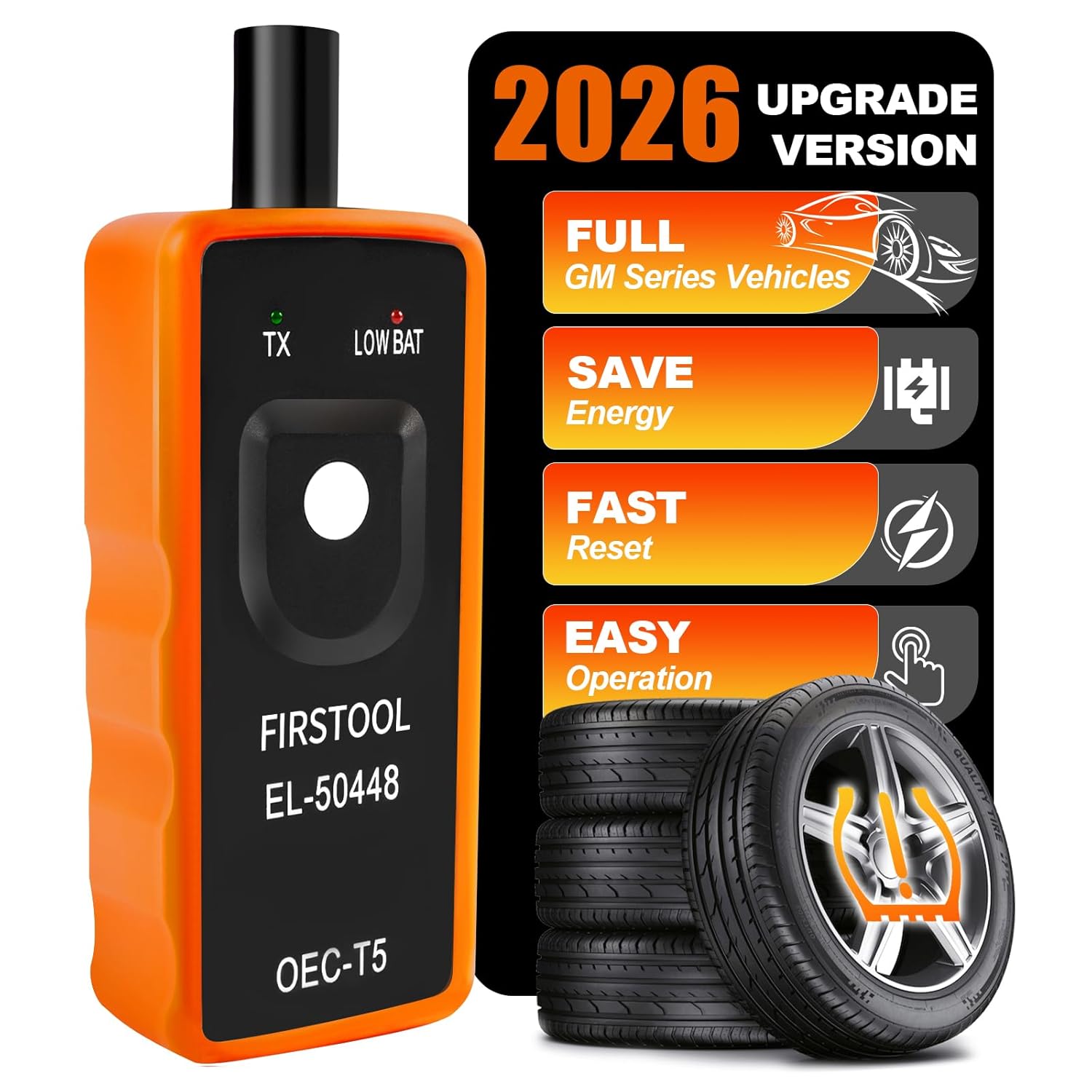
This TPMS relearn tool helps you quickly activate, match, and reset GM tire pressure sensors to keep the vehicle monitoring system working properly. It clears tire pressure alarms and dashboard warning lights after sensor replacement or tire rotation, and supports learning for common 315/433 MHz TPMS sensors. Designed for simple one-button operation, it can help you avoid unnecessary trips to repair shops.

The SAFELIFE dial tire tread depth gauge measures tread depth in 1/32 inch increments with clear, easy-to-read 2-inch dial face. Color zones using a traffic light system help you quickly judge whether tread is low, marginal, or ample for safer driving. Built with a durable zinc cast body and a metal detect probe for precise, comfortable use across cars, motorcycles, trucks, and buses.
Monthly & Pre-Trip Sonata Tire Pressure Checklist
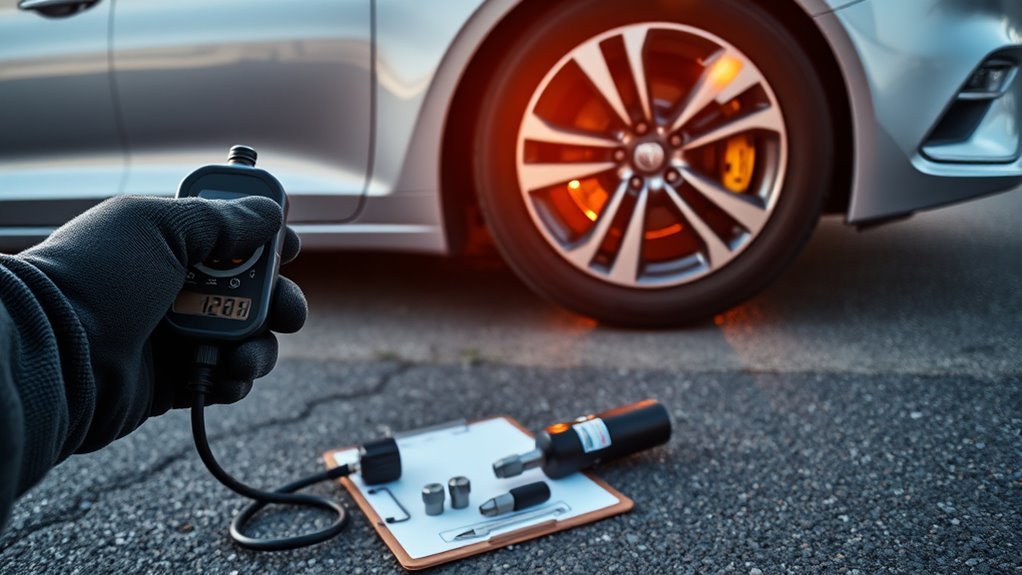
Use this checklist once a month and before long highway drives:
- Check tires cold, before driving or after three hours parked.
- Use the driver-door placard as the PSI target.
- Check all four tires, not just the one that looks low.
- Inspect tread depth, cuts, bulges, exposed cords, and uneven wear.
- Look for nails, screws, or debris in the tread.
- Confirm valve caps are installed.
- Watch for repeated loss of 2 psi or more from the same tire.
- Recheck after major weather changes.
- Do not rely only on TPMS for routine maintenance.
For owner-manual details by model year, use Hyundai’s official Owner’s Manual portal and select your Sonata year and model.
[Products Worth Considering]

The Milton S-693 straight foot dual head air chuck is designed for accurate tire pressure checks and quick, secure valve-core engagement with lock-on threads on both ends. With a 1/4" FNPT connection and a maximum 150 PSI rating, it’s built for use on inner duals and common vehicle tires, including trucks and RVs.

This tire inflator with pressure gauge delivers long-lasting performance with a durable rubber-protected gauge and sturdy build. The longer hose and 360 swivel air chuck help you seal the valve securely and keep your hands free while measuring, inflating, or deflating. It’s battery-free for reliable use and provides ±2 PSI accuracy in the mid-range for most typical tires, with universal compatibility for 1/4 NPT compressor outputs.
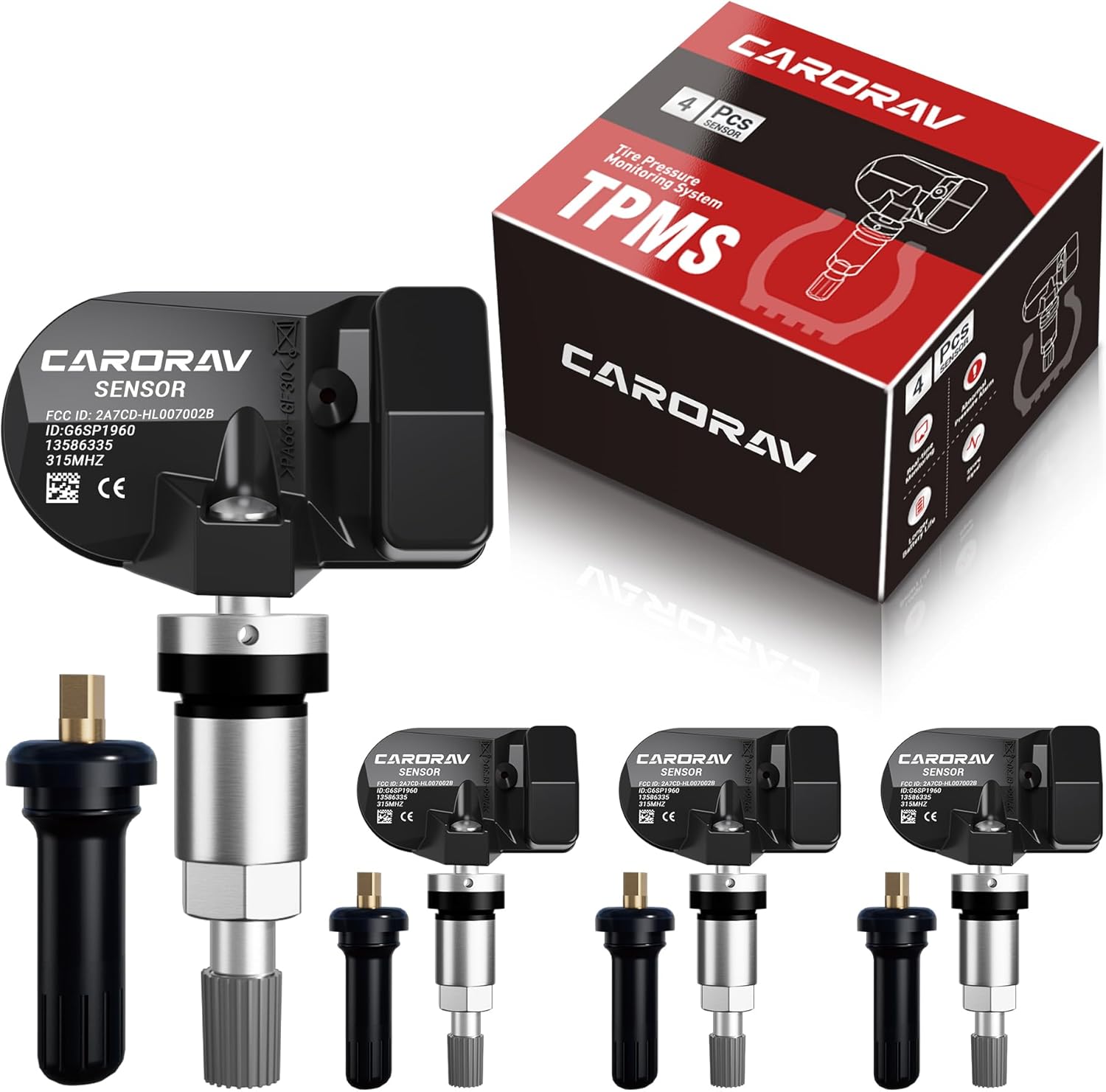
Replace worn or missing TPMS sensors with CARORAV pre-programmed GM-compatible sensors for a smoother installation experience. These 315MHz replacement sensors help monitor tire pressure in real time with long battery life, and they are designed to withstand harsh temperatures. Manual or OBDII relearn may be required to reset the system for proper recognition.
Frequently Asked Questions
Should I check my Sonata tire pressure when the tires are cold or hot?
Check tire pressure when the tires are cold. Cold pressure is the baseline used on the driver-door placard. A hot reading after driving will usually be higher, so it can lead you to release air when you should not.
How much does tire pressure increase from cold to hot?
It can rise by several PSI after driving, depending on speed, distance, load, tire condition, and outside temperature. That rise is normal. Use the cold placard PSI as your target and avoid bleeding a hot tire down to the cold number.
What tire pressure should my Hyundai Sonata have?
Use the PSI printed on your Sonata’s driver-door tire information placard. Many 2017 Sonata models are around 34 psi cold, but the correct number can vary by year, tire size, trim, and load.
Is 25 psi too low in winter?
For most Hyundai Sonata placard settings, 25 psi is too low. Check the tire cold and inflate it to the placard PSI. If the same tire keeps dropping, have it inspected for a puncture, valve leak, or wheel issue.
Should I add extra PSI for winter?
Do not invent a new winter target unless your owner’s manual or tire professional gives you one. Because cold weather lowers pressure, the usual fix is to check the tires cold and bring them back to the placard PSI.
Can I rely on the TPMS instead of a tire gauge?
No. TPMS is a safety warning system, not a substitute for regular pressure checks. Use a gauge monthly and before trips, even if the TPMS light is off.
Conclusion
Set your Hyundai Sonata tires to the cold PSI on the driver-door placard. For many 2017 Sonatas that is around 34 psi, but your own label is the number that matters. Check pressure before driving or after the car has been parked for at least three hours. Hot readings normally rise after driving, so do not bleed hot tires down to the cold target. Check monthly, before trips, and any time the TPMS light comes on.
Sources
- NHTSA Tire Safety — cold tire pressure definition, placard guidance, and tire-safety basics.
- Hyundai Owner’s Manual Portal — official Hyundai owner manual lookup by model and year.
- FuelEconomy.gov: Keeping Your Vehicle in Shape — fuel-economy impact of underinflated tires and placard guidance.
- AAA: Understanding Tire Pressure and Temperature Change — temperature-related pressure changes and seasonal checking advice.
- 49 CFR § 571.138 Tire Pressure Monitoring Systems — TPMS warning-system requirements and required owner-manual language.