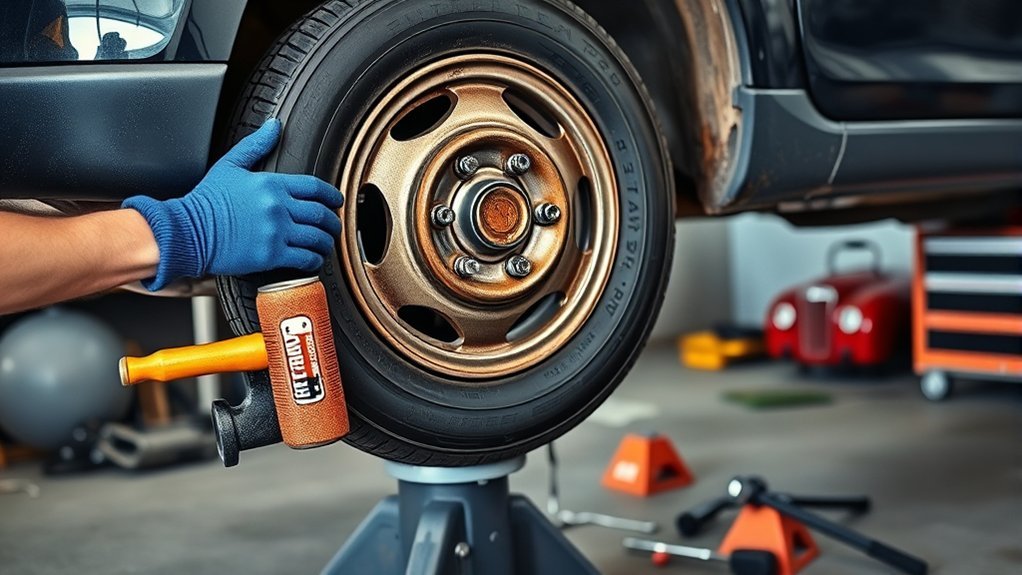
Your tire usually will not come off because the wheel is stuck to the hub, not because the rubber tire itself is locked in place. Rust, corrosion, road salt, packed debris, a missed wheel lock, or damaged/over-tightened lug hardware can hold the wheel even after the lug nuts are loose. Start with the safe basics: stabilize the vehicle, confirm every fastener is loose or removed, then use controlled tapping, penetrating oil, and careful cleaning before you escalate.
Quick Answer
A tire usually will not come off because rust or corrosion has bonded the wheel to the hub. Keep the vehicle safely supported, leave one lug nut loosely threaded as a safety catch, spray penetrant around the hub center, wait 15–30 minutes, then tap the tire sidewall evenly with a rubber mallet until the wheel breaks free.
Key Takeaways
- The wheel-and-tire assembly is usually stuck to the hub because of rust, corrosion, salt, or debris.
- Always work on level ground, chock the opposite wheels, use the parking brake, and support the vehicle correctly before applying force.
- Check for one missed lug nut, a wheel lock, a center cap, or damaged lug hardware before assuming the hub is seized.
- Use penetrating oil, a rubber mallet, and steady side-to-side movement before trying any stronger method.
- Do not heat the wheel, pry against brake parts, or drive with loose lug nuts as a DIY shortcut.
- Prevent repeat sticking by cleaning the hub face, using the correct torque spec, and keeping lubricant off lug threads and brake surfaces unless your manual says otherwise.
At a Glance
| Time Required | 10–45 minutes, depending on corrosion |
| Difficulty | Beginner to moderate; stop if the vehicle is unstable or the wheel will not move |
| Tools Needed | Wheel chocks, jack, jack stands, lug wrench or breaker bar, wheel lock key, rubber mallet, penetrating oil, wire brush, torque wrench |
| Cost | Usually $0–$25 if you already own basic tools; more if you need a torque wrench, lock key, or professional help |
Why Won’t the Wheel Come Off?
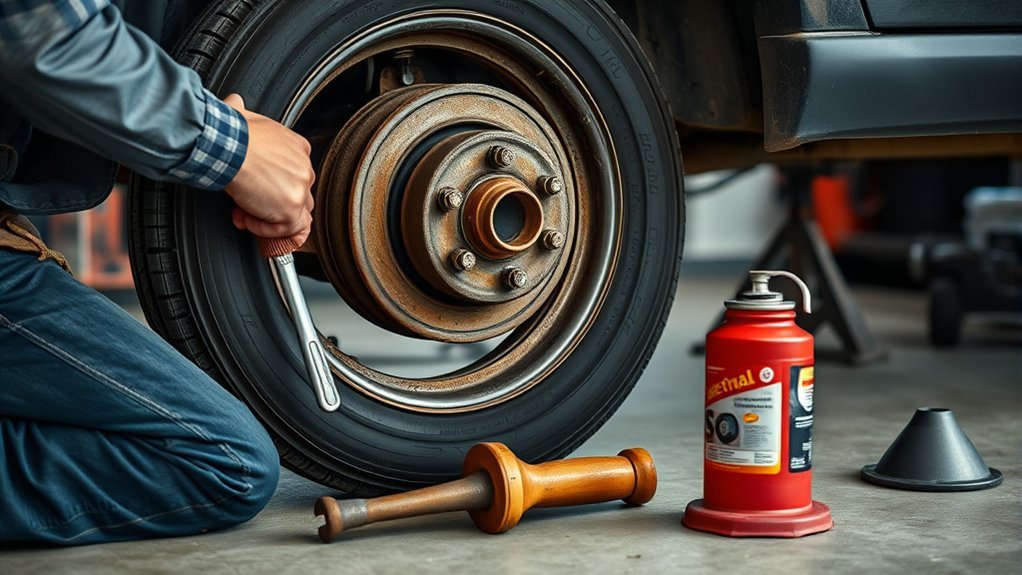
If your tire will not come off, the problem is usually at the wheel hub. The wheel’s center bore and mounting face can corrode against the hub, especially after months of road salt, rain, moisture, and brake dust. That corrosion can make the wheel feel welded in place even when every lug nut has been removed.
Other causes are possible too. A hidden wheel lock may still be installed. A lug nut may be only partly removed. A damaged stud can bind the wheel. Packed mud, road grit, or a bent wheel can also make removal harder. In short, do not jump straight to force. Confirm the fasteners first, then treat the hub bond.
Warning: Never crawl under a vehicle supported only by a jack, and do not shake the vehicle while it is lifted. If the vehicle rocks, shifts, sinks into soft ground, or sits near traffic, stop and call roadside assistance.
Before You Start: Safety Setup
A stuck wheel tempts you to use more force, so setup matters. Park on flat, solid ground. Shift to Park or first gear, set the parking brake, and chock the wheels that stay on the ground. Loosen the lug nuts slightly while the tire is still touching the ground, then lift the vehicle at the correct jack point listed in your owner’s manual.
Once lifted, support the vehicle securely before you tap, wiggle, or pull on the wheel. Keep your hands and feet out from under the tire. Leave one lug nut threaded on a few turns while breaking the wheel loose so the wheel cannot suddenly fall toward you.
Tools and Supplies That Help
- Lug wrench or breaker bar: for loosening stubborn lug nuts before the vehicle is fully raised.
- Wheel lock key: needed if the vehicle uses anti-theft lug nuts.
- Rubber mallet or block of wood: for controlled impact without gouging the wheel.
- Penetrating oil: helps loosen rusted or frozen metal parts.
- Wire brush or abrasive pad: cleans corrosion from the hub face after removal.
- Torque wrench: tightens lug nuts to the manufacturer’s spec during reinstall.
- Gloves and eye protection: protect you from rust flakes, sharp wheel edges, and chemical spray.
[Products Worth Considering]

The Chemical Guys Gerbil Wheel & Rim Brush is designed to safely clean wheels, rims, exhaust tips, tires, and engine bay components without scratching delicate finishes. Its soft natural bristles help lift brake dust, grime, and buildup while conforming to tight spaces and intricate contours. A comfort grip handle delivers control for extended detailing sessions.

This 1/2-inch drive breaker bar delivers powerful leverage for loosening and tightening stubborn lug nuts and automotive fasteners. The 180-degree flex head helps you reach tight spaces at the angle you need, making tire and brake jobs easier. A spring-loaded ball detent design holds 1/2-inch sockets securely while the chrome-moly head provides durable strength for everyday use.

This car D-wheel lock nut key provides an anti-theft solution for D-shaped wheel lock bolts, helping keep your wheels secure. It features a flower-shaped internal pattern that resists micro-adjustment theft while allowing removal and mounting of compatible locking nuts. Made for reliable performance under high torque, it’s easy to use with standard socket wrench turning for quick tire maintenance and emergency repairs.
Is Rust Seizing the Hub?
Yes. Rust is the most common reason a wheel stays stuck after the lug nuts are removed. It forms between the wheel’s center bore and the hub lip, then spreads across the mating surfaces. Aluminum wheels on steel hubs are especially prone to corrosion because dissimilar metals and moisture can speed up the bond.
Spray penetrating oil around the hub center and around the lug stud openings. Let it sit for 15–30 minutes so it can creep into the tight gap. Then tap the tire sidewall and the back side of the tire evenly with a rubber mallet. Rotate the wheel a little between taps so the force is spread around the hub instead of concentrated in one spot.
Note: Spray the hub area, not the brake rotor friction surface, brake pads, or lug nut seats. Wipe away excess oil before reinstalling the wheel.
[Products Worth Considering]

Upgrade your wheels with MIKKUPPA M12x1.5 mag seat lug nuts built for secure, corrosion-resistant performance. These closed-end chrome lug nuts are a direct replacement for select Toyota models, including Camry, Corolla, RAV4, Sienna, Avalon, Highlander, Matrix, Venza, and Prius. Triple-chromium plating and cold-forged, heat-treated steel help deliver strength for daily driving and replacement needs.

The Trivd Frol 1/2" air impact wrench delivers high performance torque up to 1500 ft-lbs with a twin hammer impact mechanism for strong, balanced blows. It features an ergonomic grip, compact lightweight design, and quick-stop control with 3 forward speeds up to 8000 RPM plus a reverse speed. Built for demanding automotive repair and tire shop work, the rear exhaust helps keep debris away from the surface.

This professional wheel and rim cleaning brush set lifts brake dust, grime, and dirt with soft, scratch-free microfiber and synthetic wool fibers. The rim brush bends up to 360 degrees for easy access to hard-to-reach areas around spokes, lips, and faces. Ideal for thorough cleaning of car, truck, motorcycle, bicycle, RV, and more wheel and tire surfaces.
Check for a Stuck Wheel Lock
A wheel lock can keep the wheel from coming off even when the regular lug nuts are removed. Look at each fastener hole before pulling on the tire. A locking lug nut usually has a patterned face instead of a standard hex shape and requires a matching key.
| Checkpoint | Action | Why It Matters |
|---|---|---|
| Glove box/tool kit | Search for the wheel lock key | Many keys are stored with the spare tools |
| Trunk/spare area | Check storage bins and pouches | The key may be loose or in a small socket case |
| Lock nut face | Seat the key fully before turning | A shallow fit can strip the pattern |
| Missing key | Call a tire shop or locksmith | Forcing it can damage the wheel and stud |
If the key is missing or damaged, do not hammer random sockets onto the lock unless you are prepared to replace damaged hardware. A tire shop can usually remove the lock with the right extraction tools.
[Products Worth Considering]

The SEESII cordless impact wrench delivers high tightening and loosening power for fast wheel bolt and industrial bolt work. Its brushless motor and variable-speed 3 forward/2 reverse modes help you control precision installs and stubborn nut removal. A dual-battery system with rapid charging and an included storage case make it ready for home, car, and jobsite use.

This spare tire tool kit is designed for the 2004 to 2018 Ford F-150 to help you loosen and tighten wheel lug nuts and manage the spare tire and provided jack functions from underneath the vehicle. It includes the lug nut wrench and extension pieces plus a convenient storage carrying case for organized transport. The jack itself is not included.

This 3-piece wheel brush set makes it easy to clean wheels and tires with soft, scratch-free brushes designed for lifting brake dust and grime. The flexible rim brush bends up to 360 degrees to reach hard-to-access areas for a thorough clean, while the comfortable grip helps control during detailing. A dedicated detailing brush supports gentle cleaning for sensitive surfaces, including interior use.
Loosen the Lug Nuts Slightly
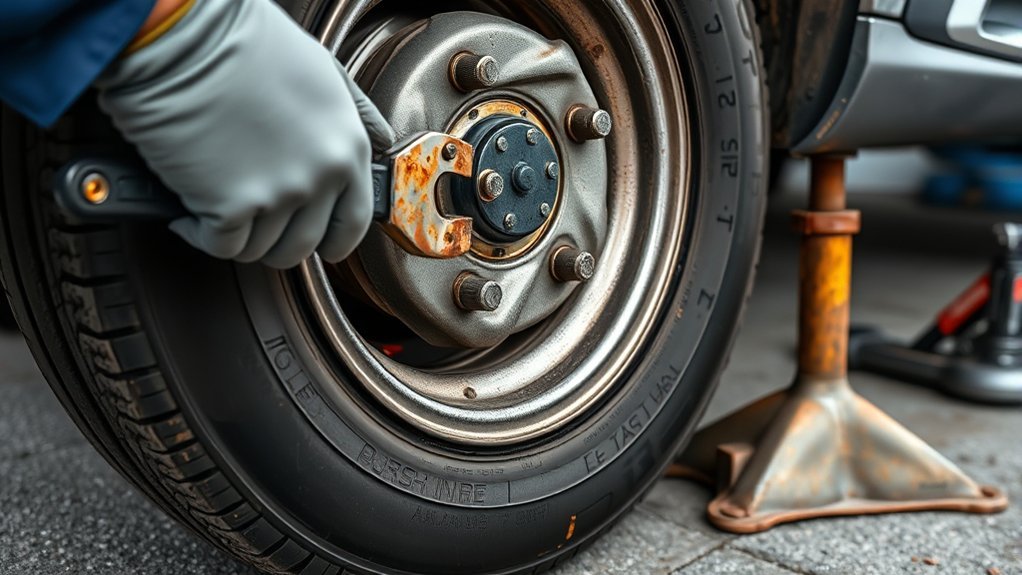
Before the vehicle is fully raised, crack each lug nut loose while the tire still touches the ground. This keeps the wheel from spinning and reduces the chance of pulling the vehicle off the jack. Once the vehicle is lifted and safely supported, remove the lug nuts but keep one lug nut loosely threaded at the top while you break the wheel free.
- Loosen in a star or crisscross pattern.
- Do not remove every lug nut before the vehicle is stable.
- Keep one lug nut loosely installed as a safety catch while tapping.
- Do not use oil or grease on lug threads unless your vehicle manual specifically says to.
If a lug nut feels gritty, binds, or will not back off smoothly, stop and inspect the stud. A damaged stud can snap or cross-thread, and that repair is better handled before the vehicle is driven again.
Tap the Tire to Break It Free
After the fasteners are confirmed loose or removed, tap the tire with a rubber mallet or a block of wood. Hit the tire sidewall, not the finished wheel face. Work around the tire at several points: left, right, top, and bottom. The goal is to shock the rust bond without bending the rim or damaging brake parts.
If the wheel still will not move, sit or kneel beside the tire and pull/push the tire at the 3 o’clock and 9 o’clock positions. Then try 12 o’clock and 6 o’clock. That rocking motion helps break the hub bond while the loose top lug nut keeps the wheel from falling off suddenly.
Pro Tip: Put the removed lug nuts in a small tray or pocket as soon as they come off. Losing one while working on a stuck wheel turns a simple job into a parts run.
Use Penetrating Oil on the Hub
Spray penetrating oil where the wheel meets the hub, especially around the center bore and lug stud holes. A rust-focused penetrant is better than a general-purpose lubricant for this job because the goal is to creep into corrosion and free stuck metal surfaces.
- Spray around the hub center.
- Spray around the lug stud openings.
- Wait 15–30 minutes.
- Tap the tire again with a rubber mallet.
- Repeat once if the corrosion is heavy.
Do not soak the brake rotor face or pads. If spray reaches the braking surface, clean it properly before driving. Penetrants can be flammable, so do not combine fresh penetrating oil with open flame or uncontrolled heat.
When to Try Heat or a Pry Bar
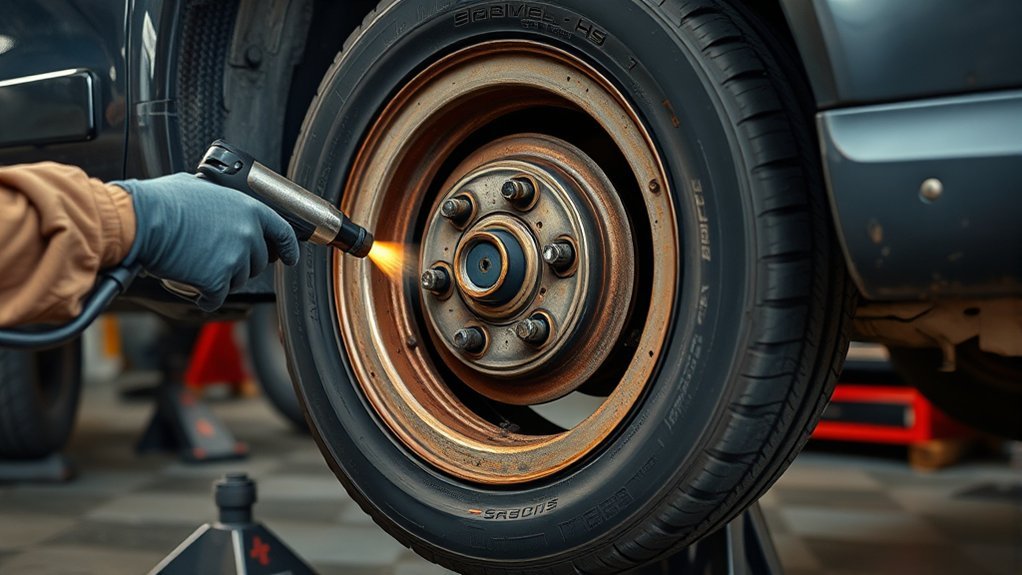
Heat and pry bars are escalation methods, not first steps. For most DIY situations, penetrating oil, controlled tapping, and side-to-side rocking are safer. If the wheel still will not release, it is usually time to get help from a tire shop or roadside technician.
Safe Heat Application
Do not use a torch on or near the tire, wheel finish, valve stem, brake hose, ABS wiring, caliper seals, or freshly sprayed penetrating oil. Heat can damage rubber, ignite chemicals, and ruin nearby components. A trained technician may use controlled heat on the hub in a shop setting, but it is not a recommended driveway shortcut.
Pry Bar Precautions
A pry bar can gouge aluminum wheels, bend dust shields, crack brake parts, or slip suddenly. If you use one, protect the contact point with wood or heavy cloth and apply only gentle pressure to a strong, non-friction surface. Never pry against the brake rotor face, brake pads, rubber brake hose, or thin dust shield.
If the wheel does not move with gentle leverage, stop. More force can create a larger repair bill than the original stuck wheel.
Step-by-Step Safe Wheel Removal
- Park safely. Use level ground, hazard lights if roadside, parking brake, and wheel chocks.
- Break lug nuts loose. Loosen them slightly while the tire is still on the ground.
- Lift correctly. Use the approved jack point from the owner’s manual and support the vehicle securely.
- Remove fasteners. Remove all regular lug nuts and wheel locks, leaving one lug nut loosely threaded as a safety catch.
- Apply penetrant. Spray around the hub center and lug holes, then wait 15–30 minutes.
- Tap evenly. Use a rubber mallet on the tire sidewall and work around the wheel.
- Rock the wheel. Pull at opposite sides of the tire to break the rust bond.
- Remove the final lug nut. Once the wheel pops loose, hold it with both hands and pull it straight off.
- Clean before reinstalling. Brush rust from the hub face and wheel mating surface.
- Reinstall correctly. Start lug nuts by hand, tighten in a star pattern, lower the vehicle, and torque to the manufacturer’s spec.
RAV4 Wheel Removal Steps
On a Toyota RAV4, the same stuck-wheel logic applies: confirm every lug nut or wheel lock is removed, check the owner’s manual for the correct jack point and wheel nut torque, then work on the hub bond. RAV4 wheels can stick after winter driving, salty roads, or long gaps between rotations.
- Use the RAV4’s specified jack point and never rely on the jack alone while applying force.
- Check for a wheel lock key in the glove box, cargo tray, spare tire area, or tool pouch.
- Spray penetrant around the center hub and lug holes, not on brake friction surfaces.
- Tap the tire sidewall evenly with a rubber mallet while one lug nut remains loosely installed.
- After removal, clean the hub face and wheel center bore before reinstalling.
Do not drive the RAV4 with loosened lug nuts to “pop” the wheel free. If the wheel will not release after safe tapping and penetrating oil, call roadside assistance or a tire shop.
How to Keep a Wheel From Sticking Again
Once the wheel is off, clean the hub face, hub lip, and wheel mating surface with a wire brush or abrasive pad. Remove flaky rust and packed dirt so the wheel sits flat against the hub. If the wheel uses a center bore that fits tightly over the hub, clean that center bore too.
A very thin film of suitable anti-seize or synthetic brake-safe lubricant can help on the hub face or center pilot where corrosion forms, but use it carefully. Keep it off lug studs, lug nut seats, brake rotors, brake pads, and tire rubber unless your vehicle manual or product instructions specifically allow that use.
When reinstalling, start each lug nut by hand to avoid cross-threading. Tighten in a star pattern, lower the vehicle until the tire touches the ground, then use a torque wrench set to the manufacturer’s specification. Recheck your owner’s manual for any retorque guidance after driving.
What Not to Do
- Do not crawl under a jack-only vehicle. A stuck wheel can require force, and force can shift the vehicle.
- Do not hit the wheel with a steel hammer. It can dent or crack the wheel and damage the finish.
- Do not pry against brake parts. Rotors, calipers, hoses, sensors, and dust shields are easy to damage.
- Do not heat a tire or wheel. Rubber, seals, valve stems, and penetrants create safety risks.
- Do not lubricate lug threads casually. Lubrication can change clamping force and torque readings.
- Do not drive with loosened lug nuts. That can damage studs, wheels, hubs, and brakes.
When to Call a Professional
Call a tire shop, mobile mechanic, or roadside assistance if the vehicle is on soft ground, the stuck wheel faces traffic, the wheel lock key is missing, a lug stud is damaged, the vehicle shifts while lifted, or the wheel still will not move after penetrant and controlled tapping. Professional tools can remove stuck wheels without bending the wheel, harming brake parts, or risking injury.
Frequently Asked Questions
How do you get a stuck tire off without a hammer?
Use penetrating oil around the hub center and lug holes, wait 15–30 minutes, then rock the tire by hand at the 3 and 9 o’clock positions. You can also use a block of wood with controlled pressure instead of striking the wheel directly. Keep one lug nut loosely installed until the wheel breaks free.
What causes a tire to get stuck?
The wheel usually gets stuck because rust, corrosion, road salt, or debris bonds the wheel to the hub. A missed lug nut, wheel lock, damaged stud, bent wheel, or seized brake component can also make the wheel difficult to remove.
Why will my tire not come off after I take out the bolts?
If all bolts or lug nuts are truly removed, the wheel is probably bonded to the hub by corrosion. Spray penetrant at the hub, wait, tap the tire sidewall evenly, and rock the wheel by hand. If one lock nut or bolt is still installed, the wheel will not come off.
Will WD-40 remove a stuck wheel?
WD-40 may help light rust, but a dedicated penetrating oil is usually better for a wheel stuck to the hub. Spray the hub area, let it soak, then use controlled tapping and rocking. Avoid spraying brake pads, rotor friction surfaces, or lug nut seats.
Can I kick the tire to get it loose?
Kicking can work, but it is easy to lose balance or shift the vehicle. A rubber mallet or block of wood is safer and more controlled. If you do kick, do it only with the vehicle securely supported, your body clear of the wheel, and one lug nut loosely installed as a safety catch.
Should I put anti-seize on lug nuts?
Usually no. Anti-seize may be useful as a very thin film on the hub face or center pilot, but keep it off lug threads and lug nut seats unless your owner’s manual specifically allows it. Lubricated threads can change torque readings and clamping force.
Conclusion
If your tire will not come off, you are usually fighting a stuck wheel-to-hub bond caused by rust, corrosion, or debris. Work in the right order: stabilize the vehicle, check every lug nut and wheel lock, apply penetrant, tap evenly, and rock the wheel by hand. Once it is off, clean the hub and reinstall the wheel with the proper torque. If the wheel still refuses to move, stop before you damage the wheel, studs, or brakes and let a professional finish the job.
Sources
- NHTSA TireWise: Tire Safety Ratings and Awareness — tire maintenance, pressure checks, tire-related crash safety context, rotation guidance.
- Toyota Manuals and Warranties — where Toyota owners can access model-specific owner manual information, including jack points and torque guidance.
- PB B’laster Penetrant — product support for using penetrating oil on rusted or frozen metal parts.
- Permatex Anti-Seize Lubricant — anti-seize use, clean-surface application, corrosion resistance, and easier disassembly claims.