
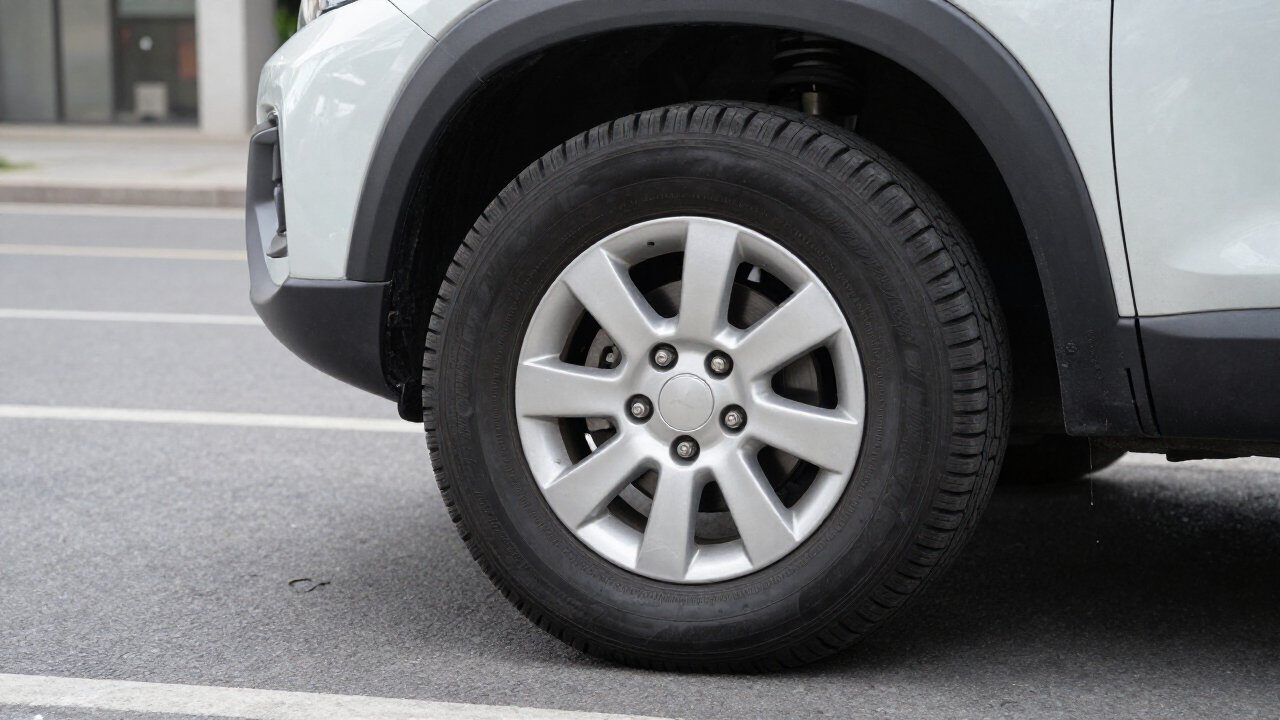
A 95T tire has a load index of 95 and a T speed rating. Load index 95 means each tire can carry up to 1,521 pounds (690 kg) at its specified inflation pressure, and T means it is rated for a maximum sustained speed of 118 mph (190 km/h) under controlled test conditions. You will find the code at the end of the tire size, for example 205/65R16 95T or 215/60R16 95T. It is common on touring all-season tires and many winter tires for sedans and small crossovers.
Last updated: November 23, 2026
Quick Answer
95T means load index 95 and speed rating T. Each tire can support up to 1,521 lb (690 kg), or 6,084 lb for a set of four, and it is rated for sustained speeds up to 118 mph (190 km/h). Use it only where your vehicle’s placard calls for a load index of 95 or less and a T speed rating or lower, unless you are fitting winter tires and your vehicle maker allows a lower speed rating.
Key Takeaways
- 95 is the load index: 1,521 lb (690 kg) per tire.
- T is the speed rating: 118 mph (190 km/h).
- A 95T carries the same weight as a 95H or 95V but has a lower speed rating than both.
- Replacing a 95H or 95V with a 95T is generally only acceptable for winter tires, and the vehicle is then limited to the lower rating.
- The required load index and speed rating are on your door placard or in the owner’s manual.
What Does 95T Mean on a Tire?
Every passenger tire has a service description after its size: a number followed by a letter. In 95T, the number is the load index and the letter is the speed rating. Neither one is a direct measurement. Both are codes you translate using standard industry charts, which tire makers such as Michelin and Pirelli publish.
| Part of code | Meaning | Value |
|---|---|---|
| 95 | Load index | 1,521 lb (690 kg) per tire |
| T | Speed rating | 118 mph (190 km/h) |
| 95 × 4 tires | Maximum load for a set | 6,084 lb (2,760 kg) |
Products Worth Considering

This tire inflator with pressure gauge delivers long-lasting performance with a durable rubber-protected gauge and sturdy build. The longer hose and 360 swivel air chuck help you seal the valve securely and keep your hands free while measuring, inflating, or deflating. It’s battery-free for reliable use and provides ±2 PSI accuracy in the mid-range for most typical tires, with universal compatibility for 1/4 NPT compressor outputs.

Measure tire tread depth quickly and accurately with this LUMITECO dial gauge that reads in 1/32" increments up to 14/32". The color-coded green/yellow/red zones make it easy to judge tire wear and know when replacement is needed. A rugged, compact design with a protective pouch helps keep the gauge ready for use on cars, trucks, motorcycles, and more.

Monitor tire tread wear with a smart, color-coded depth gauge that shows clear condition ranges at a glance. The bar is range marked for fast, easy readings, helping you maintain safer traction and performance. Each gauge is portable with a pocket clip, and the set includes 20 units for daily use and sharing.
How Does the 95 Load Index Work?
The load index runs on a scale where each step adds a set amount of capacity. A load index of 95 is a mid-range figure for passenger cars: higher than many compact cars, which often use indexes in the 80s, and lower than most SUVs and pickups, which commonly use indexes above 100. The weight applies to each individual tire when it is inflated to the pressure specified for that load, so the vehicle’s total capacity depends on all four tires together.
| Load index | lb per tire | kg per tire |
|---|---|---|
| 93 | 1,433 | 650 |
| 94 | 1,477 | 670 |
| 95 | 1,521 | 690 |
| 96 | 1,565 | 710 |
| 97 | 1,609 | 730 |
| 98 | 1,653 | 750 |
| 99 | 1,709 | 775 |
For the full chart and how to read it, see our tire load index guide.

What Is the Maximum Load of a 95T Tire?
The maximum load is 1,521 pounds (690 kg) per tire. Most passenger tires also mold a statement such as “max load 690 kg (1521 lbs)” on the sidewall together with a maximum inflation pressure. That maximum pressure is the most the tire can safely hold, often 44 or 51 psi for standard-load passenger tires; it is not the pressure you should run every day. Always inflate to the cold pressure on your vehicle’s door placard, which is set for your car’s weight and handling.
What Does the T Speed Rating Mean?
The T rating certifies that the tire can carry its rated load at speeds up to 118 mph (190 km/h) in standardized laboratory testing. It is not a recommendation to drive that fast, and real-world conditions such as heat, under-inflation, wear and damage reduce a tire’s safe speed. Speed ratings are also an indicator of construction: higher ratings usually mean stiffer constructions and stickier compounds, while lower ratings like T often favor comfort and tread life.
| Speed rating | mph | km/h | Typical use |
|---|---|---|---|
| Q | 99 | 160 | Some winter and light-truck tires |
| S | 112 | 180 | Family cars, many light-truck tires |
| T | 118 | 190 | Touring all-season and many winter tires |
| H | 130 | 210 | Sport sedans, many modern cars |
| V | 149 | 240 | Performance sedans and coupes |
| W | 168 | 270 | High-performance cars |
| Y | 186 | 300 | Ultra-high-performance cars |
Our tire speed rating chart covers every letter in detail.
95T vs. 95H vs. 95V
These three codes carry exactly the same load, 1,521 lb per tire. The only difference is the speed rating and the construction that usually comes with it.
| Code | Load per tire | Max speed | What to expect |
|---|---|---|---|
| 95T | 1,521 lb | 118 mph (190 km/h) | Softer ride and longer tread life on many touring tires |
| 95H | 1,521 lb | 130 mph (210 km/h) | Slightly firmer, sharper steering |
| 95V | 1,521 lb | 149 mph (240 km/h) | Performance-oriented construction |
See our guide to what 95V means and what 95W means for the faster versions of this load index.
Where Do You Find 95T on a Tire?
The code appears on the sidewall directly after the size. On a tire marked P215/60R16 95T:
- P means passenger tire (some tires omit it).
- 215 is the section width in millimeters.
- 60 is the aspect ratio: sidewall height is 60% of the width.
- R means radial construction.
- 16 is the wheel diameter in inches.
- 95 is the load index and T is the speed rating.
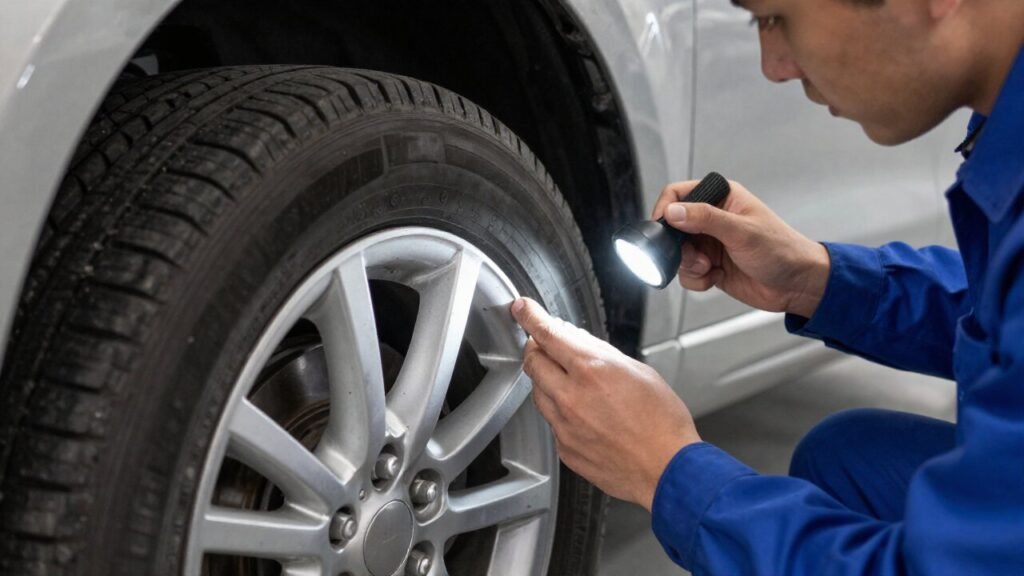
Your vehicle’s required size and service description are printed on the tire placard on the driver’s door jamb and in the owner’s manual.
Can You Replace 95T With a Different Rating?
Use the placard as your baseline and follow these rules:
| Replacement | Placard says 95T | Placard says 95H |
|---|---|---|
| 95T | Yes | Winter tires only, if the vehicle maker allows it |
| 95H or 95V | Yes, higher speed rating | Yes (95V is an upgrade) |
| 98T or 99T | Yes, higher load index | Winter tires only |
| 92T or 94T | No, lower load index | No |
A higher load index or a higher speed rating is generally acceptable. A lower load index is not. A lower speed rating is usually only accepted for winter tires, and when you do that, the whole vehicle is limited to the lowest speed rating fitted. Our guide to using a higher or lower load index explains the load side in detail.
Products Worth Considering

Replace worn tires quickly with this universal 4.80/4.00-8 tire and inner tube set designed for wheelbarrows and outdoor utility carts. The ribbed tread helps reduce turf damage while the natural rubber construction supports longer service life. Compatible with 15.5-inch outer diameter, 4-inch width, and 8-inch rim diameter wheels, it uses a straight TR-13 valve stem for easy installation. For best results, inflate with a manual pump and do not exceed 25 PSI.

Measure tyre tread depth precisely with a digital gauge that reads in both MM and inches, helping you monitor safe driving conditions. The large LCD screen is easy to operate, and the compact tool fits for cars, trucks, and motorcycles. It provides high accuracy with a 0-25.4mm range and includes a 1-year warranty for added peace of mind.

Slip the Powerbuilt tire step over your vehicle’s tire to reach roof racks, engine bays, truck boxes, and more without overreaching. Its adjustable, universal design fits tires with a cross tread width up to 13 inches, including car, truck, RV, and semi tires. The non-slip cheesegrater surface and anti-slip tape provide secure grip while the open design lets mud and debris pass through. Fold-flat storage with rubber bumpers helps keep your tire and the step protected between uses.
Can You Mix 95T With Other Speed Ratings?
It is best to fit four tires with the same speed rating. If you must mix, keep matching pairs on the same axle, and remember that the vehicle’s safe speed becomes that of the lowest-rated tire. Many tire makers recommend that, if mixing, the higher-rated pair goes on the rear axle to help stability. Mixing is not a fix for a mismatched placard requirement: every tire still has to meet the vehicle’s minimum load index.
When Should You Replace 95T Tires?
- Tread depth: replace at about 4/32 inch for good wet grip, and never below the legal 2/32 inch.
- Damage: replace for sidewall cuts, bulges, exposed cords or punctures that can’t be repaired.
- Age: check the DOT date code. Many vehicle makers recommend replacing tires around six years old. See how to find the date on a tire.
- Uneven wear or vibration that alignment and balancing do not fix.
How to Look After 95T Tires
- Check pressure monthly with the tires cold, using the placard figure.
- Rotate them on your vehicle maker’s schedule, commonly every 5,000 to 7,500 miles.
- Have the alignment checked after hitting a curb or large pothole.
- Don’t overload the vehicle beyond the payload on the placard.
- Inspect the tread and sidewalls for nails, cuts and bulges when you check pressure.
Frequently Asked Questions
What does 95T mean on a tire?
95T means the tire has a load index of 95, or 1,521 lb (690 kg) per tire, and a T speed rating of 118 mph (190 km/h).
Is 95T a good tire rating?
It is a common, practical rating for sedans and small crossovers. T-rated tires often prioritize comfort and tread life. Whether it suits your car depends on your placard’s requirements.
Can I use 95T instead of 95H?
Only in limited cases, such as winter tires where the vehicle maker permits a lower speed rating. For all-season or summer tires, match or exceed the placard’s speed rating.
Can I use 95T instead of 91T?
Yes. A load index of 95 carries more than 91, so it is a capacity upgrade with the same speed rating.
How fast can I drive on 95T tires?
The tire is rated for sustained speeds up to 118 mph under test conditions. Always obey speed limits; the rating is a construction standard, not a target.
Are winter tires usually T-rated?
Many studless winter tires carry T or lower speed ratings, which is one reason vehicle makers often allow a lower speed rating for winter tires.
Conclusion
A 95T tire carries 1,521 lb (690 kg) per tire and is rated for 118 mph (190 km/h). It is a sound choice when your placard calls for 95T or a lower specification, and a common choice for touring and winter tires. When replacing tires, match or exceed both numbers on your placard, keep matching tires on each axle, and only drop to a T speed rating where your vehicle maker allows it.
Sources
- Michelin: Understanding tire load rating and speed rating
- Michelin: Tyre load rating and speed rating chart
- Pirelli: Tire load index and chart
- BFGoodrich: Tire speed rating and tread life
- Just Tires: Load index and speed rating
Products Worth Considering

The SAFELIFE dial tire tread depth gauge measures tread depth in 1/32 inch increments with clear, easy-to-read 2-inch dial face. Color zones using a traffic light system help you quickly judge whether tread is low, marginal, or ample for safer driving. Built with a durable zinc cast body and a metal detect probe for precise, comfortable use across cars, motorcycles, trucks, and buses.

Accurately measure tire tread depth with a calibrated gauge marked from 0 to 1 inch in 1/32 inch increments. The color-coded bar helps you quickly identify tread condition ranges, supporting safe driving for trucks, motorcycles, automobiles, and passenger vehicles.

The Tymate TM2 RV tire pressure monitoring system keeps you informed with a color LCD display, automatic backlight, and solar charging for dependable operation. It supports up to 10 tire positions with four pre-paired sensors, while offering multiple alarm modes for fast leak detection, pressure extremes, temperature alerts, and low-signal warnings. Built-in monitoring uses accurate readings and reliable 433.92MHz communication to help protect your RV, trailer, truck, or SUV.