

A tire’s speed rating tells you the maximum speed it’s certified to sustain under normal driving conditions. It’s shown as the final letter in the tire’s service description — the part right after the load index, like the “Y” in 225/40 R18 94Y. Letters run from A1 (3 mph, used on specialty equipment) up through passenger-car ratings like T, H, V, W, and Y, with higher letters generally meaning better heat tolerance and high-speed stability. Here’s how to read your tire’s rating and choose the right one for your vehicle.
Quick Answer
A tire’s speed rating is the last letter in its sidewall code (the “V” in 225/40 R18 94V). Common ratings: T = 118 mph, H = 130 mph, V = 149 mph, W = 168 mph, Y = 186 mph. Always match or exceed the rating your vehicle manufacturer recommends — check your owner’s manual or the driver’s-side door jamb placard to confirm it.
Key Takeaways
- The speed rating is the last letter in your tire’s size code, right after the load index number.
- Higher-rated tires generally tolerate heat better, corner more precisely, and brake more effectively at speed.
- Never go below your vehicle manufacturer’s recommended rating — you can always go higher.
- “ZR” in a tire’s size marks it for sustained speeds above 149 mph; the actual top speed comes from the W or Y symbol later in the code.
- A tire’s speed rating is a structural limit, not a legal one — posted speed limits still apply.
What a Tire Speed Rating Is and Why It Matters
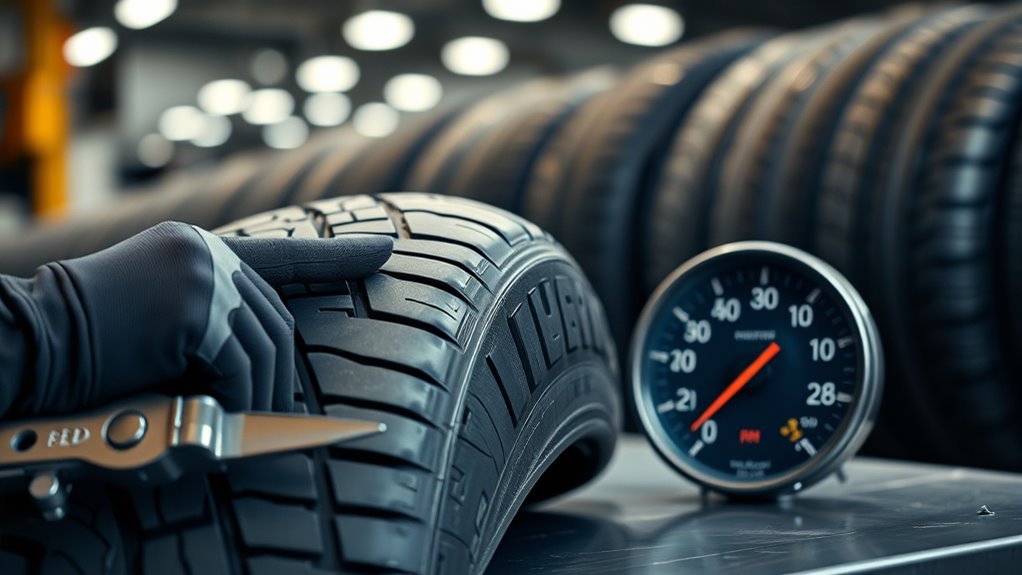
The speed rating is the letter at the end of a tire’s sidewall code, and it tells you the maximum speed the tire is certified to handle under normal driving conditions — not a target to aim for, just a structural limit. Lower-rated tires are built for everyday commuting; higher-rated tires use stiffer construction and heat-resistant compounds to stay stable at sustained higher speeds.
Fitting a tire rated below your manufacturer’s recommendation can mean reduced handling and faster heat buildup, particularly on hot pavement or under load. Matching or exceeding the recommended rating keeps the tire working within the margins it was designed for. Load, tire pressure, and road conditions all affect how close to that rated speed you can safely operate, so the letter on the sidewall is really just one part of the picture.
Quick Reference: Tire Speed-Rating Chart (Every Letter Decoded)
Ratings A1 through K (roughly 3–68 mph) cover specialty, off-road, and industrial tires you won’t find on a typical passenger car. The ratings below are the ones you’ll actually encounter shopping for car or light-truck tires:
| Letter | Max Speed (mph) | Max Speed (km/h) |
| L | 75 | 120 |
| M | 81 | 130 |
| N | 87 | 140 |
| P | 93 | 150 |
| Q | 99 | 160 |
| R | 106 | 170 |
| S | 112 | 180 |
| T | 118 | 190 |
| U | 124 | 200 |
| H | 130 | 210 |
| V | 149 | 240 |
| W | 168 | 270 |
| Y | 186 | 300 |
One quirk worth knowing: “H” sits between U and V on this chart, not after G — it’s a holdover from when the rating system only had a few categories. For a deeper technical breakdown, the Bridgestone tire speed rating guide covers the history of how the system developed.
How to Find the Speed Rating on Your Tire Sidewall
Look for a code like 225/40 R18 94Y on the sidewall — the final letter (Y, in this case) is the speed rating, meaning the tire is certified for up to 186 mph. Compare that letter against the table above, then check it against what your vehicle actually needs.
If the sidewall is worn or hard to read, your owner’s manual or the placard on the driver’s side doorjamb will list the recommended rating for your vehicle. Make sure any replacement tire matches or exceeds that number.
Tire Service Description: Load Index and Speed Rating Explained
The characters right after a tire’s size — like the “94Y” in 225/40 R18 94Y — make up the service description: a load index number and a speed rating letter together. The load index tells you how much weight the tire can carry; the speed rating tells you the certified top speed. In this example, 94 corresponds to 1,477 lbs per tire, and Y means up to 186 mph.
- Never fit a tire with a lower load index than your vehicle manufacturer specifies.
- Match the speed rating to your vehicle’s recommendation, not just your driving style.
- Factor in your typical cargo and passenger load when comparing capacity.
- Read both numbers before buying — a great speed rating doesn’t make up for an inadequate load index.
ZR, W, and Y Speed-Rating Codes: What They Mean for Performance Tires
ZR works a little differently from the other letters. Rather than mapping to one specific speed, “ZR” appears earlier in the tire’s size code (for example, 245/40ZR18) and marks a tire built for sustained speeds above 149 mph — a holdover from before the speed-rating system extended past the old “V” limit. On most modern performance tires, you’ll still see a precise speed symbol later in the service description, and that letter — usually W or Y — is what actually tells you the certified top speed, not the ZR marking itself.
W-rated tires are certified up to 168 mph, with construction tuned to manage the extra heat and lateral force that comes with sportier driving. Y-rated tires go up to 186 mph and use higher-performance compounds and casing designs built for sustained high-speed stability. Both are aimed at vehicles that are actually capable of reaching those speeds, not just badge appeal.
[Products Worth Considering]
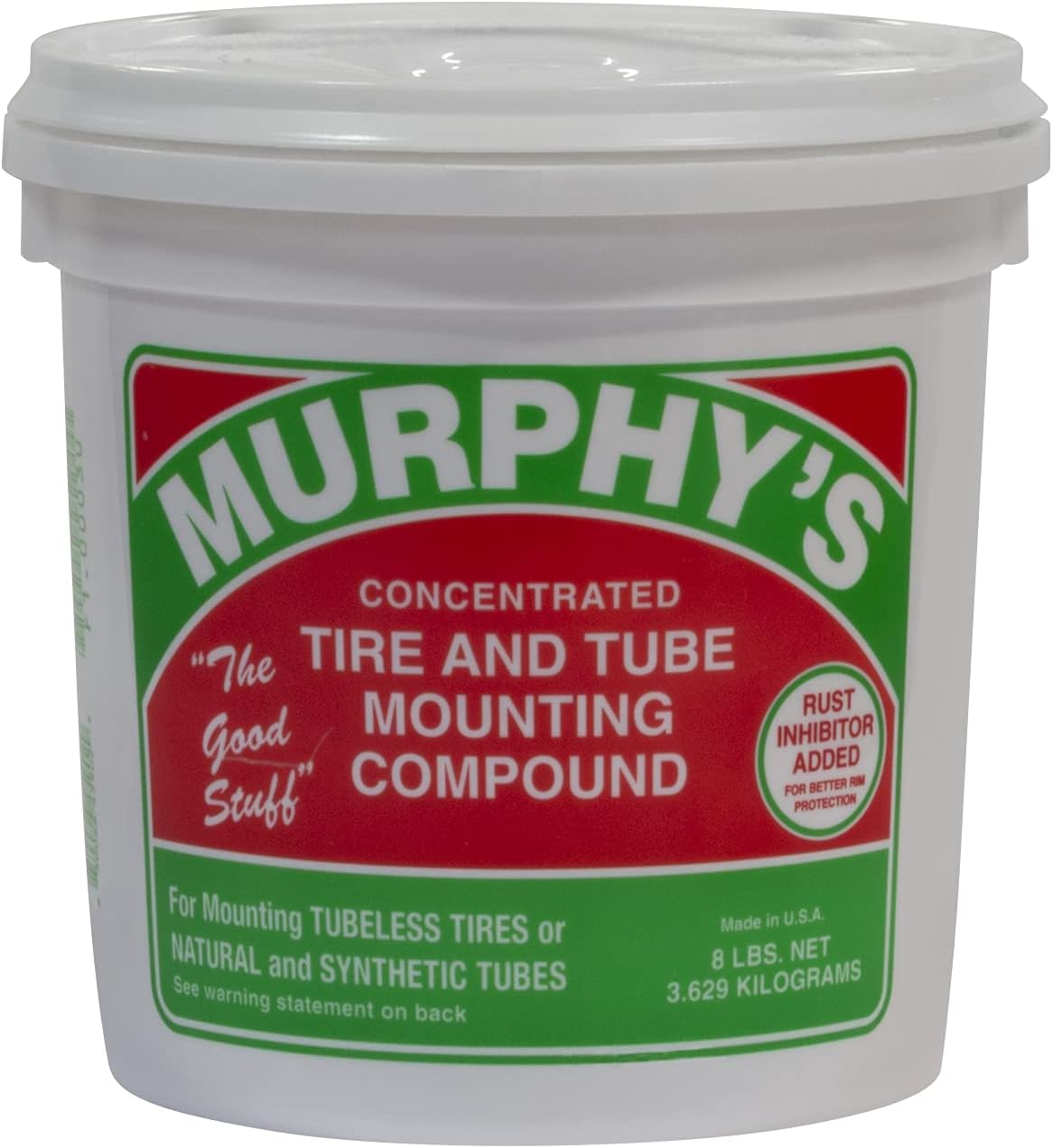
A concentrated tire and tube mounting compound designed to help simplify mounting rubber tires and tubes on passenger, semi truck, construction, and OTR applications. Its ultra-thick formula packs beads effectively and includes rust inhibitors to help protect against corrosion during use.

The Tymate TM2 RV tire pressure monitoring system keeps you informed with a color LCD display, automatic backlight, and solar charging for dependable operation. It supports up to 10 tire positions with four pre-paired sensors, while offering multiple alarm modes for fast leak detection, pressure extremes, temperature alerts, and low-signal warnings. Built-in monitoring uses accurate readings and reliable 433.92MHz communication to help protect your RV, trailer, truck, or SUV.

The SAFELIFE dial tire tread depth gauge measures tread depth in 1/32 inch increments with clear, easy-to-read 2-inch dial face. Color zones using a traffic light system help you quickly judge whether tread is low, marginal, or ample for safer driving. Built with a durable zinc cast body and a metal detect probe for precise, comfortable use across cars, motorcycles, trucks, and buses.
Can You Mix Speed Ratings on the Same Vehicle?
Ideally, all four tires carry the same speed rating. Mixing ratings can throw off stability, braking balance, and how electronic stability systems behave. If you do end up mixing, put the lower-rated tires on the front axle to reduce oversteer risk — and remember your vehicle’s effective top speed drops to whatever the lowest-rated tire can handle.
Check your owner’s manual for vehicle-specific guidance, and the NHTSA TireWise program is a solid general resource on tire safety basics.
When You Can Safely Choose a Higher or Lower Speed Rating
The right call depends mostly on how and where you drive — and the load index has to keep pace either way.
[Products Worth Considering]

The 22800 wheel stud installer makes replacing wheel studs quick and secure, saving time and effort during tire service. It uses a ratchet or impact wrench to pull new studs firmly into place, helping when existing studs are too long. Compatible with most automotive wheels and light-duty truck wheel studs, it’s designed for easy, tool-assisted installation.

Milton S-921 pencil tire pressure gauge helps you maintain optimal tire pressure for passenger cars with accurate readings in PSI and kPa. It features a built-in deflator valve for convenient pressure adjustments, plus a single chuck head and nylon indicator bar for easy use on the go. Built from durable plated brass and designed for reliable performance, it’s a practical road trip and cold-weather maintenance tool.

This universal wheel alignment tool helps you accurately restore tire tilt angles after tire or suspension repairs using an adjustable camber gauge. It features a powerful magnetic base that firmly attaches to brake rotors for stationary, slip-free readings, improving consistency during measurement. Built from durable PC plastic, it resists wear and corrosion and is compact enough for car, truck, RV, and motorcycle alignment tasks.
When Lower Ratings Are Acceptable
If your driving rarely approaches highway speeds and your vehicle isn’t performance-oriented, a slightly lower-rated tire can work — as long as you never push the car past that tire’s rated limit and all four tires match. This sometimes applies to vintage or low-use vehicles where original handling and lighter use make a modest downgrade reasonable.
- Confirm all four tires share the same rating.
- Keep speeds well under the tire’s max.
- Inspect tires regularly for signs of heat damage.
- Ask a tire professional if you’re unsure about compatibility.
Choosing Higher Ratings Safely
Going higher than the recommended rating is generally safe and can improve heat tolerance and high-speed handling. The trade-off is usually a firmer ride from stiffer sidewalls, and sometimes faster tread wear. A higher-rated tire also won’t fix unrelated suspension or alignment problems — match the tire to your vehicle’s actual capabilities rather than chasing a bigger letter for its own sake.
How Speed Rating Affects Handling, Heat, Wear, and Braking
Beyond the top-speed number, a tire’s rating reflects real differences in how it behaves day to day.
Handling and Steering Response
Higher-rated tires (H, V, W, Y) tend to use stiffer sidewalls, which sharpens steering response and cornering precision. Lower-rated tires can feel a bit duller at highway speeds by comparison. The goal isn’t to chase the highest letter available, but to match the rating to what your vehicle and driving actually call for.
Heat, Wear, and Braking
A tire’s speed rating is closely tied to how well it manages heat — higher-rated constructions and compounds dissipate heat more effectively, which lowers blowout risk on long highway stretches. Fitting a tire rated too low for your vehicle’s needs can mean faster tread wear and less predictable braking, particularly in wet conditions.
Choosing the Right Speed Rating for Your Vehicle: Step-by-Step Checks
Before you shop for replacement tires:
- Check your owner’s manual or door jamb placard for the manufacturer’s recommended speed rating, and write it down.
- Read the speed letter on your current sidewall and confirm the load index matches or exceeds spec.
- Think about how you actually drive — mostly city streets, regular highway trips, or occasional spirited driving — to decide whether a higher rating is worth it.
- Weigh ride comfort, tread life, and cost against any performance gain. A higher speed rating isn’t automatically a better tire for your needs.
Note: A speed rating describes what a tire is built to handle structurally — it isn’t a legal speed limit. Posted speed limits apply no matter how a tire is rated.
[Products Worth Considering]
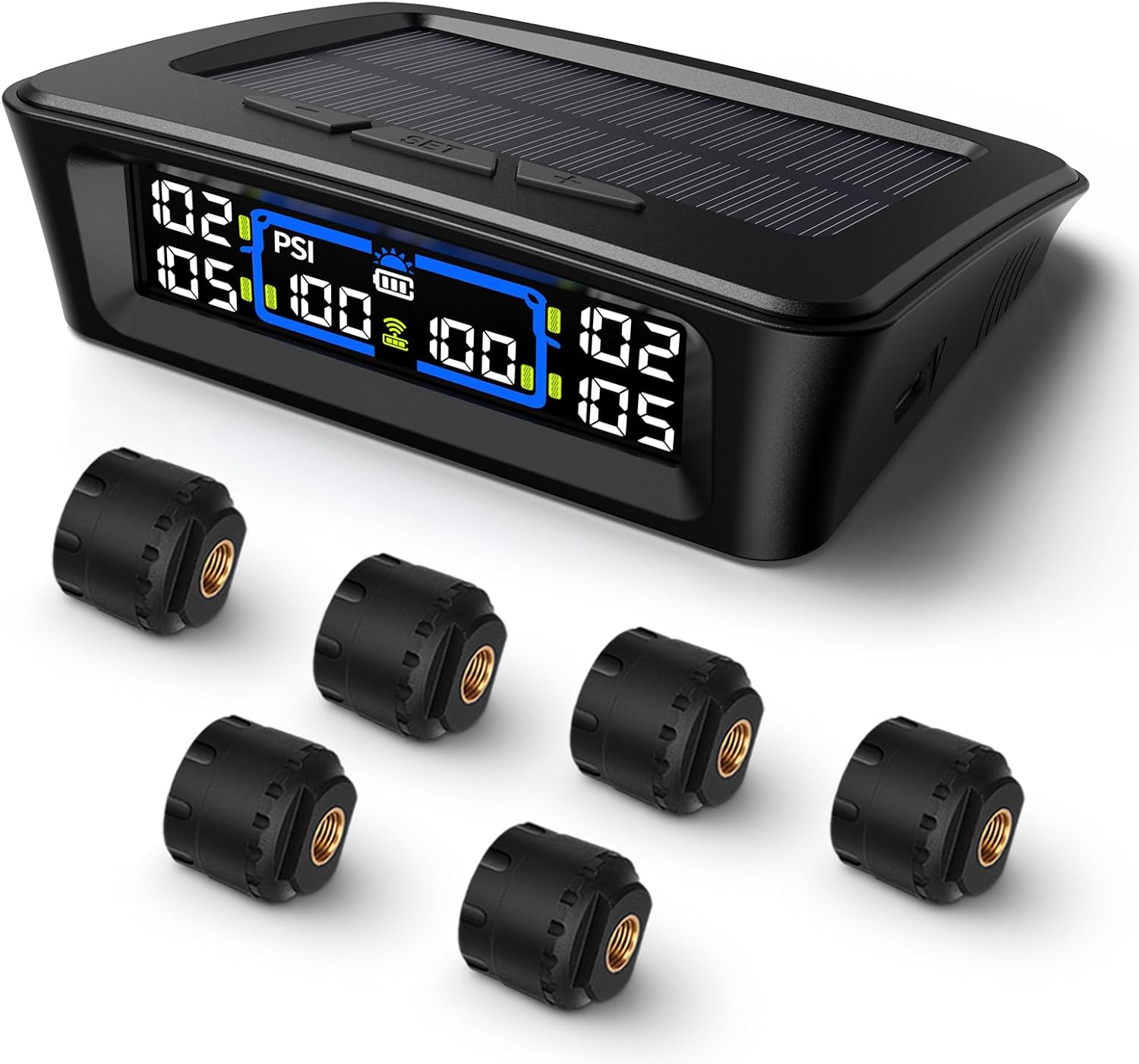
The Tymate TM12 RV TPMS delivers real-time tire pressure and temperature monitoring with a stable 433Hz display for safer long-distance driving. It supports simultaneous monitoring across vehicle and trailer zones, includes six alarm modes for pressure, temperature, leakage, battery, and signal loss, and features easy DIY installation with auto calibration. Power is supplied via USB-C charging or solar recharging, with a wide 0–144 PSI range and up to 50 ft signal coverage for RVs and towable trailers.

Measure tire tread depth quickly and accurately with this LUMITECO dial gauge that reads in 1/32" increments up to 14/32". The color-coded green/yellow/red zones make it easy to judge tire wear and know when replacement is needed. A rugged, compact design with a protective pouch helps keep the gauge ready for use on cars, trucks, motorcycles, and more.

The Airmoto portable tire inflator quickly and accurately fills car, truck, SUV, motorcycle, and bicycle tires up to 120 PSI with auto shut-off when your target pressure is reached. Its large LCD, multi-unit pressure display, and digital gauge make it easy to dial in settings and verify readings, while the built-in LED flashlight helps in low light. The included polyurethane hard carrying case and storage mesh pocket keep the inflator and accessories protected and organized.
Frequently Asked Questions
Is V or W a higher speed rating?
W is higher. V-rated tires are certified up to 149 mph, while W-rated tires go further, up to 168 mph, with construction built to handle the added heat and lateral load of higher sustained speeds.
What happens if I use tires with a lower speed rating than recommended?
As long as you never approach the lower-rated tire’s actual speed limit, it can still function safely for everyday low-speed driving. The risk shows up at sustained higher speeds, where an underrated tire can’t dissipate heat as effectively, raising the chance of structural failure over time.
Does a higher speed rating mean a better tire overall?
Not necessarily. A higher rating mainly reflects heat tolerance and high-speed structural integrity, often at the cost of a firmer ride and quicker tread wear. A tire’s overall quality also depends on tread design, compound, and how well it suits your actual driving conditions.
What does ZR mean on a tire?
ZR marks a tire built for sustained speeds above 149 mph. It’s an older designation that predates the W and Y ratings, so on modern tires the actual certified top speed comes from the W or Y symbol that appears later in the service description, not from the ZR marking itself.
Conclusion
A tire’s speed rating is really just a structural promise: how much heat and stress it’s built to handle at sustained speed. Match or exceed your vehicle’s recommended rating, check the sidewall against the chart above, and factor in your typical load and driving conditions before swapping in a different code. Get that right, and the rating becomes one less thing to think about on the road.
Sources
- Michelin USA – Tire Load Rating & Speed Rating Explained — speed rating values and replacement guidance
- NHTSA – Tire Safety (TireWise) — general tire safety standards
- Bridgestone – Tire Speed Rating — history and structure of the rating system

1 thought on “Tire Speed Rating Chart: What Every Letter Means (2026 Guide)”