
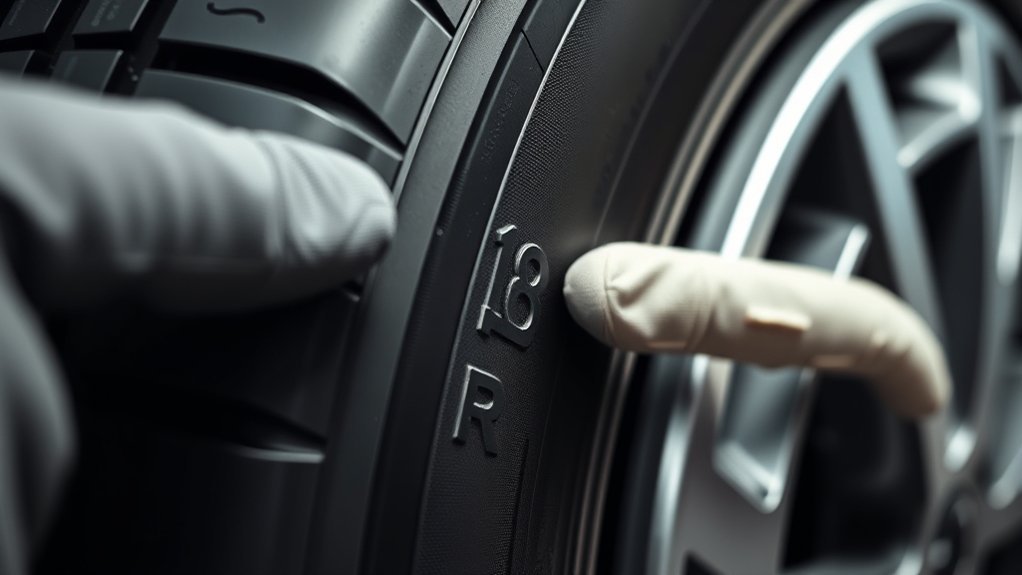
R18 on a tire means the tire uses radial construction and is made to mount on an 18-inch wheel. It is only one part of the full tire size. Before buying a replacement, you must also match the width, aspect ratio, load index, speed rating, load range, and vehicle-approved fitment.
Quick Answer
In a size such as 225/40R18, the letter R means radial construction, and 18 is the wheel diameter in inches. R18 does not describe the tire’s width, sidewall height, overall diameter, load capacity, or speed rating, so the complete sidewall code must match your vehicle.
Key Takeaways
- R means radial construction, while 18 means the tire fits an 18-inch wheel.
- R18 alone is not a complete tire size and does not guarantee vehicle or wheel compatibility.
- In 225/40R18, 225 is the width in millimeters and 40 is the sidewall height as a percentage of that width.
- The load index and speed rating appear after the size, as in 225/40R18 94Y.
- Use the driver-door tire placard and owner’s manual—not the sidewall’s maximum pressure—as your main fitment and inflation references.
What Does R18 Mean on a Tire?
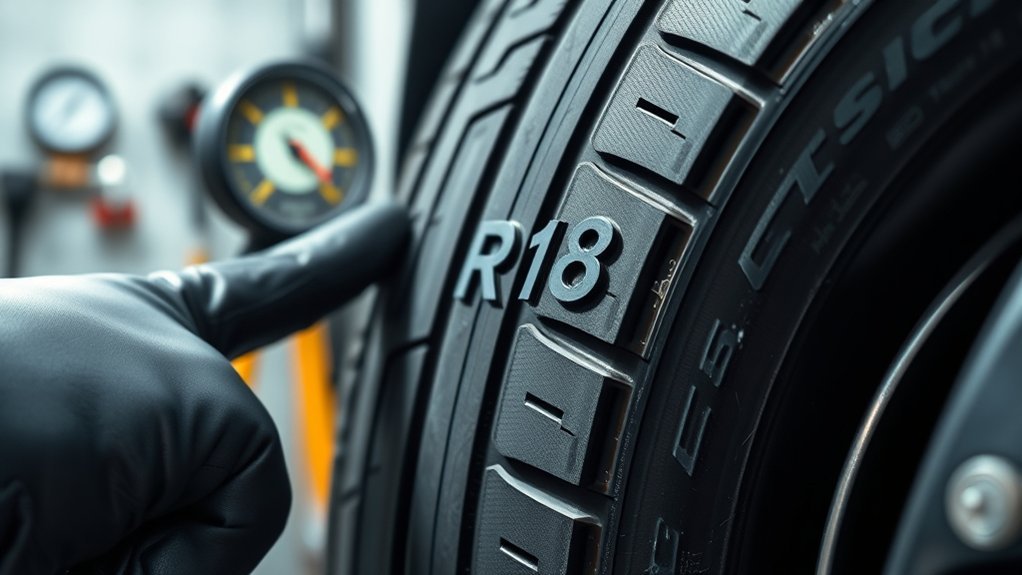
R18 has two parts. According to Michelin’s tire-marking guide, R identifies radial construction, and 18 identifies the wheel diameter in inches. The 18-inch measurement refers to the wheel’s bead-seat diameter, not the tire’s outside diameter.
Most modern passenger-vehicle tires use radial construction. In a radial tire, the body cords run across the tire from bead to bead. This construction can support a flexible sidewall and a stable tread area, but the letter R by itself does not tell you whether the tire is sporty, comfortable, fuel-efficient, or suitable for a particular vehicle.
Note: An R18 tire cannot be safely mounted on a 17-inch or 19-inch wheel. The wheel diameter and tire bead diameter must match exactly.
Tire Size Breakdown for 225/40R18
The code 225/40R18 describes the tire’s basic dimensions and construction. Read it from left to right:
| 225 | Nominal section width in millimeters, measured from sidewall to sidewall under standardized conditions. |
| 40 | Aspect ratio. The sidewall height is 40% of 225 mm, which is about 90 mm. |
| R | Radial construction. |
| 18 | Wheel diameter in inches. |
A 225/40R18 tire has an approximate unloaded overall diameter of 25.1 inches, calculated from the 18-inch wheel plus two 90 mm sidewalls. Actual published dimensions can vary slightly by tire model, approved rim width, and measuring method, so use the manufacturer’s specification sheet for exact fitment.
What R18 Does Not Tell You
R18 is not enough information to select a tire. It does not identify:
- Tire width: The first number, such as 225 or 235, gives the nominal section width.
- Sidewall height: The aspect-ratio number, such as 40 or 55, determines sidewall height relative to width.
- Overall tire diameter: Two R18 tires can have very different outside diameters.
- Approved rim-width range: An 18-inch tire may still be too narrow or too wide for a particular 18-inch wheel.
- Load capacity: This is shown by the load index and may also involve SL, XL, LT, or other load markings.
- Speed capability: This is shown by the speed-rating letter after the load index.
- Season and use: R18 does not tell you whether the tire is summer, all-season, all-weather, winter, highway-terrain, or all-terrain.
- UTQG grades or treadwear warranty: These are separate performance and warranty details.
Why R18 Affects Fit and Handling
The 18-inch wheel diameter affects fitment because the tire bead must seat on a wheel of the same diameter. However, R18 alone does not guarantee a lower sidewall, wider contact patch, firmer ride, or sharper handling. Those traits depend on the complete tire size, tire construction, tread design, rubber compound, wheel width, inflation pressure, and vehicle suspension.
When a vehicle changes from a smaller wheel to an 18-inch wheel while keeping a similar overall tire diameter, the replacement tire usually needs a lower aspect ratio. That can reduce sidewall flex and may produce quicker steering response, but it can also create a firmer ride and less protection from pothole impacts. A poorly planned size change can also affect clearance, speedometer readings, braking systems, and drivetrain behavior. Bridgestone therefore recommends staying with a manufacturer-recommended tire size unless an alternative has been properly approved.
What the Load Index Means on R18 Tires
The load index is the number after the tire size. In 225/40R18 94Y, the number 94 is the load index. It corresponds to the maximum load one tire can carry under the conditions listed by the tire manufacturer. The Goodyear load-index chart lists index 94 as 1,477 pounds, or 670 kilograms, per tire.
A replacement tire should meet or exceed the load requirement specified by the vehicle manufacturer. A higher load index does not increase the vehicle’s legal payload, gross vehicle weight rating, or axle rating. Those limits remain set by the vehicle manufacturer.
Warning: Never choose a tire with a lower load capacity than the vehicle requires. Overloading or underinflation can create excess heat and increase the risk of tire damage or failure.
What Speed Ratings Follow R18?
The speed rating is not part of “R18.” It appears after the load index in the service description. For example, the Y in 225/40R18 94Y is the speed rating. It describes the tire’s tested speed capability under specified load, inflation, and laboratory conditions; it is not a recommended driving speed.
| Q | 99 mph (160 km/h) |
| R | 106 mph (170 km/h) |
| S | 112 mph (180 km/h) |
| T | 118 mph (190 km/h) |
| H | 130 mph (210 km/h) |
| V | 149 mph (240 km/h) |
| W | 168 mph (270 km/h) |
| Y | 186 mph (300 km/h) |
The Bridgestone speed-rating guide notes that actual capability can be reduced by underinflation, overloading, wear, damage, repairs, vehicle condition, weather, and road conditions. Some charts omit the uncommon P rating, and ZR markings require additional interpretation because the final W or Y service-description symbol gives the more specific rating.
A tire’s speed rating is a laboratory-tested capability, not permission to drive at that speed or exceed legal and safe road limits.
How to Match R18 Tires to Your Vehicle
Start with the vehicle, not the tire currently installed. The National Highway Traffic Safety Administration advises checking the owner’s manual or the Tire and Loading Information label on the driver-side door edge or doorpost for the correct size and pressure.
[Products Worth Considering]

The 22800 wheel stud installer makes replacing wheel studs quick and secure, saving time and effort during tire service. It uses a ratchet or impact wrench to pull new studs firmly into place, helping when existing studs are too long. Compatible with most automotive wheels and light-duty truck wheel studs, it’s designed for easy, tool-assisted installation.

Protect tire valves from water, dust, and sand to help prevent leaks and support safe driving. These universal stem caps install quickly by hand and feature durable aluminum alloy construction with an inner sealing ring for better air retention. Compatible with cars, SUVs, trucks, motorcycles, and bicycles for everyday convenience.

This manual duck head tire changer kit makes tire installation and removal simpler by letting you embed the duck head into the tire with applied pressure. The integrated design and durable steel construction help reduce friction and improve efficiency and safety during use. Suitable for 16–21 inch wheels, it’s convenient for cars, trucks, SUVs, and ATV tires, with 24-hour after-sales support.
Check the Owner’s Manual and Tire Placard
Confirm the full factory size, recommended cold inflation pressure, and any approved alternative sizes. The sidewall’s “MAX PRESS” marking is the tire’s maximum, not the vehicle’s normal operating pressure.
Confirm the Full Size and Wheel Width
Match the width, aspect ratio, construction, and wheel diameter—not just R18. Also confirm that the wheel width falls within the tire manufacturer’s approved rim-width range. A tire can be marked R18 and still be unsuitable for an 18-inch wheel that is too narrow or too wide.
Match Load Index and Speed Rating
The load index should meet or exceed the vehicle requirement. The speed rating should generally meet or exceed the original specification unless the vehicle or tire manufacturer permits a specific exception, such as certain winter-tire applications. Michelin’s current load and speed rating guidance recommends verifying both ratings on the tire placard and in the owner’s manual.
Match the Tire Set and Drivetrain
Use tires with compatible size, construction, load capacity, speed rating, and performance category across the vehicle. Some vehicles use different front and rear sizes from the factory, so “all four tires must be the same size” is not a universal rule. AWD and 4WD vehicles may also have strict limits for tread-depth or rolling-circumference differences. Follow the vehicle manufacturer’s replacement instructions.
Pro Tip: Take a clear photo of the driver-door tire placard before shopping. It gives you a reliable reference for the approved size and cold inflation pressure.
Signs Your Tire Ratings Don’t Match
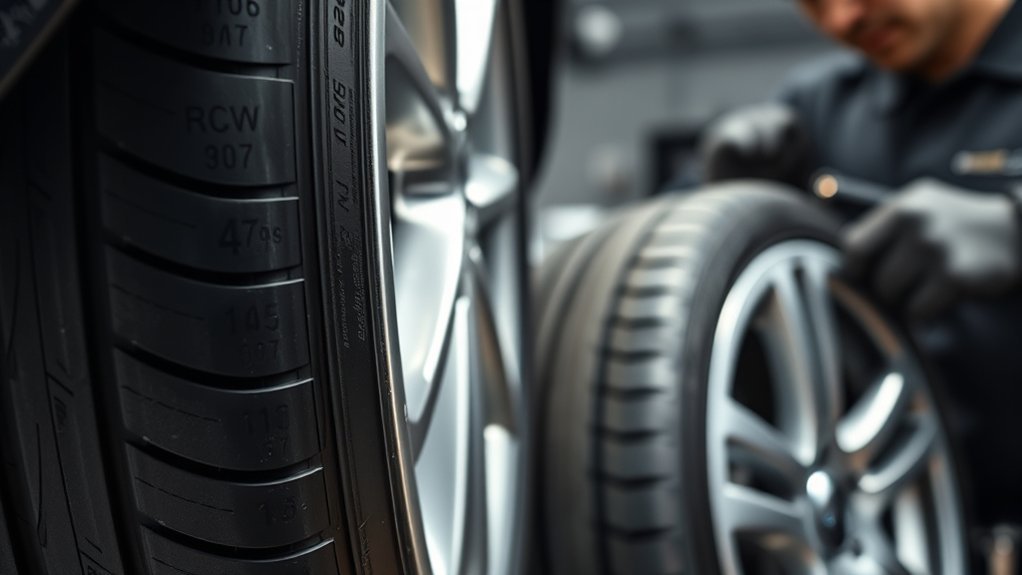
The surest way to find a mismatch is to compare every sidewall with the vehicle placard and owner’s manual. Warning signs include:
- A different wheel diameter, such as R17 or R19, from the approved R18 specification.
- A lower load index or speed rating than required.
- Different overall tire sizes where the vehicle does not use a factory staggered setup.
- Mixed tire categories, such as winter tires on one axle and all-season tires on the other.
- Steering pull, rubbing, vibration, stability-control warnings, or unexpected speedometer error after a size change.
- Uneven handling or traction caused by major tread-depth differences, especially on AWD or 4WD vehicles.
Uneven wear or vague steering can have many causes, including inflation, alignment, suspension wear, or wheel balance. They do not prove that the rating is wrong, so inspect the markings and have the vehicle checked by a qualified tire professional.
R18 Tires for Cars, SUVs, and Trucks
Cars, SUVs, crossovers, vans, and light trucks can all use 18-inch wheels, but they do not use interchangeable tires merely because each tire says R18.
- Passenger cars: Match the complete size and service description. Performance models may use low-profile or staggered sizes.
- SUVs and crossovers: Pay close attention to load index, XL or other load markings, and the vehicle’s approved pressure.
- Light trucks: Confirm whether the vehicle requires P-metric, LT-metric, C-type, or another construction and load system. Towing and hauling requirements make load selection especially important.
- Off-road use: Choose the tread type and construction for the terrain, but do not sacrifice the required size, load capacity, clearance, or speed rating.
Seasonal traction, tread pattern, wet braking, noise, treadwear, and warranty should be compared only after the tire meets the vehicle’s basic fitment requirements.
[Products Worth Considering]

The Topeak SmartGauge D2 delivers precise digital tire pressure readings for bikes, motorcycles, and sports equipment up to 250 psi (17 bar). Its rotating SmartHead works with both Presta and Schrader valves, so you can check pressure quickly without adapters. The LCD display makes it easy to read results in psi, bar, or kg/cm² with an included CR2032 battery for immediate use.

This universal wheel alignment tool helps you accurately restore tire tilt angles after tire or suspension repairs using an adjustable camber gauge. It features a powerful magnetic base that firmly attaches to brake rotors for stationary, slip-free readings, improving consistency during measurement. Built from durable PC plastic, it resists wear and corrosion and is compact enough for car, truck, RV, and motorcycle alignment tasks.

This car D-wheel lock nut key provides an anti-theft solution for D-shaped wheel lock bolts, helping keep your wheels secure. It features a flower-shaped internal pattern that resists micro-adjustment theft while allowing removal and mounting of compatible locking nuts. Made for reliable performance under high torque, it’s easy to use with standard socket wrench turning for quick tire maintenance and emergency repairs.
Where to Find Tire Ratings on the Sidewall
The main size and service description are molded into the tire sidewall, often in a sequence such as 225/40R18 94Y XL. Read it as follows:
- 225: section width in millimeters.
- 40: aspect ratio.
- R: radial construction.
- 18: wheel diameter in inches.
- 94: load index.
- Y: speed rating.
- XL: extra-load marking, when present.
Other sidewall markings include the brand and model, maximum load and pressure, DOT Tire Identification Number, manufacturing date code, UTQG grades on applicable passenger tires, seasonal symbols, and original-equipment markings. Do not confuse the sidewall maximum pressure with the vehicle manufacturer’s recommended cold pressure.
Choosing the Right R18 Replacement Tire
A safe replacement should satisfy the vehicle’s technical requirements before you compare price, warranty, tread life, or brand reputation.
[Products Worth Considering]

Replace worn or missing TPMS sensors with a pre-programmed 4-pack designed for compatible GM vehicles. These 315MHz sensors provide real-time tire pressure monitoring and alert you if pressure is too high, too low, or if a rapid air leak occurs. Most installations are ready with minimal relearn effort after mounting, helping improve safety and driving confidence.

Vigorder rubber cement glue delivers superior adhesion and cures quickly within about 30 seconds for seamless rubber bonding. Once cured, it helps provide a strong, durable, waterproof seal that holds up to vehicle weight, pressure, and heat. Suitable for cars, motorcycles, trucks, bicycles, and off-road tires, it’s designed for emergency patch and maintenance repairs.

Steelman white tire marking crayons provide high-contrast, semi-permanent marks for repairing and inspecting tires and equipment. They write on wet or dry, smooth or coarse surfaces including rubber, metal, glass, and wood, making them ideal for puncture location and damage outlining. The lead- and zinc-free crayons resist weather and fading yet wipe away when you no longer need the marks.
Match Load and Speed
Select a load index that meets or exceeds the factory requirement. Select a speed rating that follows the vehicle or tire manufacturer’s guidance. Do not assume a high speed rating automatically makes a tire better for every driver; tread compound, temperature range, comfort, wear, and intended use also matter.
Check Fitment Specs
- Confirm the complete tire size on the placard or approved fitment list.
- Verify the wheel is 18 inches in diameter and within the tire’s approved width range.
- Check load index, speed rating, load range, and any required OE marking.
- Confirm clearance at full steering lock and through suspension travel if using an approved alternative size.
- Check drivetrain rules for staggered sizes and allowable tread-depth differences.
- Use the vehicle-specified cold inflation pressure after installation.
Changing width or aspect ratio can alter overall diameter, clearance, speedometer accuracy, handling, and ride quality. A trained tire professional should review any non-factory size before installation.
R18 vs. R17 and R19
R17, R18, and R19 refer to different wheel diameters. None is automatically better. When overall tire diameter remains similar, a smaller wheel generally allows a taller sidewall, while a larger wheel generally requires a shorter sidewall.
- R17 setups may offer more ride cushioning and pothole protection, depending on the tire size.
- R18 setups often balance appearance, steering response, tire availability, and comfort.
- R19 setups may offer a shorter sidewall and quicker response but can cost more and ride more firmly.
You cannot switch between these wheel diameters by changing only the tire. The wheel, approved tire size, load capacity, clearance, and vehicle systems must all remain compatible.
Frequently Asked Questions
What does 235/55R18 mean?
It describes a tire that is nominally 235 mm wide, has a sidewall height equal to 55% of that width, uses radial construction, and fits an 18-inch wheel. The load index and speed rating appear after this code.
What does R18 mean in tire size?
R18 means radial construction for an 18-inch wheel. It does not give the tire’s width, sidewall height, overall diameter, load capacity, or speed rating.
What is the difference between R18 and R19 tires?
R18 tires fit 18-inch wheels, while R19 tires fit 19-inch wheels. Their complete sizes may also differ in width, sidewall height, and overall diameter. One cannot be mounted on the other wheel diameter.
Which is better, R17 or R18?
Neither is universally better. A properly approved R17 setup may provide a taller sidewall and more cushioning, while an R18 setup may provide a shorter sidewall and quicker steering response. The best choice is an approved size suited to the vehicle and driving conditions.
Will any R18 tire fit any 18-inch wheel?
No. The tire must also match the wheel-width range, vehicle-approved width and aspect ratio, load capacity, speed rating, clearance, and drivetrain requirements.
Does R18 mean the whole tire is 18 inches tall?
No. The 18 refers to the wheel diameter. The tire’s outside diameter is larger and depends on the width and aspect ratio. For example, a 225/40R18 tire is about 25.1 inches in overall diameter before normal model-to-model variation.
Conclusion
R18 means a radial tire designed for an 18-inch wheel, but it is only part of the fitment code. Match the full size, approved wheel width, load index, speed rating, load range, and vehicle requirements before buying. The driver-door placard, owner’s manual, tire manufacturer, and qualified installer are the best references for a safe replacement.
Sources
- Michelin: How to Read Tire Markings and Sidewall Codes — tire size, construction, wheel diameter, load, speed, pressure, and date markings.
- Michelin: Understanding Tire Load Rating and Speed Rating — service descriptions and replacement-rating guidance.
- NHTSA TireWise — vehicle placard, approved tire size, inflation pressure, and tire-safety guidance.
- Bridgestone: Tire Speed Rating — common speed symbols, laboratory conditions, and rating limitations.
- Goodyear: Tire Load Index Chart — load-index values, including index 94.

