
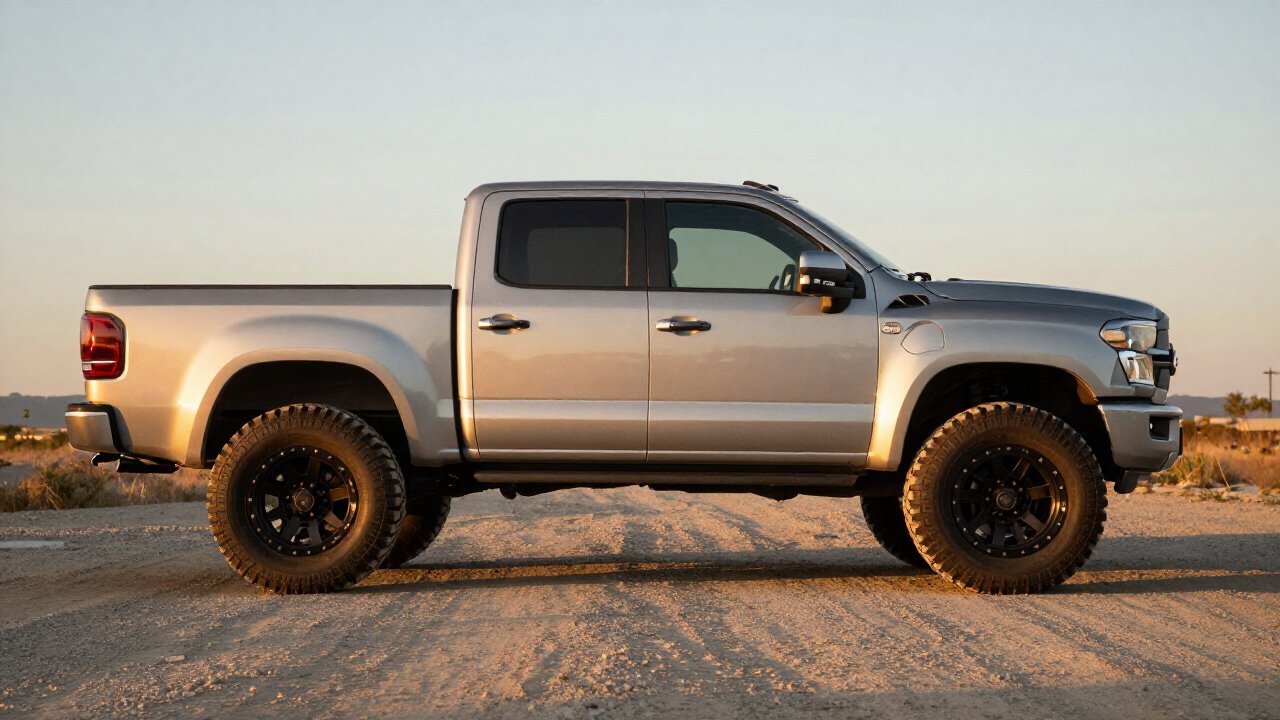
A 295/65R20 tire is about 35.1 inches tall and 11.6 inches wide, and it fits a 20-inch wheel. Each sidewall is about 7.5 inches tall. That makes 295/65R20 one of the most popular metric equivalents of a 35-inch tire, although it is almost an inch narrower than a traditional 35×12.50R20. The figures below are calculated from the size code; the exact height of a specific tire varies slightly by brand, tread design and inflation.
Last updated: November 23, 2026
Quick Answer
295/65R20 in inches: about 35.1 inches tall (overall diameter), 11.6 inches wide, with a 7.5-inch sidewall, mounted on a 20-inch wheel. Its circumference is about 110.3 inches, so it turns roughly 575 times per mile. It is usually treated as a 35-inch tire.
Key Takeaways
- Height: 35.1 in (891 mm). Width: 11.6 in (295 mm). Sidewall: 7.55 in (192 mm).
- Circumference: about 110.3 in, or roughly 575 revolutions per mile.
- It is close to a 35×12.50R20 in height but narrower, which can help clearance and steering feel.
- Compared with a stock-style 275/60R20 (about 33.0 in), it is about 2.1 inches taller and makes the speedometer read around 6% low.
- Many half-ton trucks need a leveling kit or lift for this size; check your truck’s clearance before buying.
295/65R20 Dimensions in Inches
| Measurement | Inches | Millimeters |
|---|---|---|
| Overall diameter (height) | 35.10 in | 891.5 mm |
| Section width | 11.61 in | 295 mm |
| Sidewall height | 7.55 in | 191.8 mm |
| Wheel diameter | 20 in | 508 mm |
| Circumference | 110.26 in | 2,800.7 mm |
| Revolutions per mile |
These are nominal figures from the size code. A tire’s real height depends on its tread depth, construction and the width of the wheel it is mounted on. All-terrain and mud-terrain tires with deep tread often measure slightly differently from highway tires of the same size, and a loaded tire’s rolling height is a little lower than its unloaded diameter.
Products Worth Considering

These pre-assembled 15x6.00-6 front tire and wheel assemblies are designed for quick replacement on riding lawn mowers and lawn tractors. Built with natural rubber pneumatic tires and turf-friendly tread for solid traction and improved shock absorption. A thickened welded rim and 3/4" sintered iron bushing help provide stable, heavy-duty support for everyday mowing use.

This tire inflator with pressure gauge delivers long-lasting performance with a durable rubber-protected gauge and sturdy build. The longer hose and 360 swivel air chuck help you seal the valve securely and keep your hands free while measuring, inflating, or deflating. It’s battery-free for reliable use and provides ±2 PSI accuracy in the mid-range for most typical tires, with universal compatibility for 1/4 NPT compressor outputs.

The 22800 wheel stud installer makes replacing wheel studs quick and secure, saving time and effort during tire service. It uses a ratchet or impact wrench to pull new studs firmly into place, helping when existing studs are too long. Compatible with most automotive wheels and light-duty truck wheel studs, it’s designed for easy, tool-assisted installation.
How to Calculate 295/65R20 in Inches
You can convert any metric tire size to inches with three steps. Using 295/65R20:
- Width: 295 mm ÷ 25.4 = 11.61 inches.
- Sidewall height: the aspect ratio of 65 means the sidewall is 65% of the width. 295 × 0.65 = 191.75 mm, and 191.75 ÷ 25.4 = 7.55 inches.
- Overall diameter: wheel size plus two sidewalls. 20 + (7.55 × 2) = 35.10 inches.
Circumference is the diameter times pi: 35.10 × 3.1416 = 110.26 inches. Divide 63,360 (inches in a mile) by the circumference to get about 575 revolutions per mile. For more examples, see how to figure out tire diameter and our metric vs. inch tire size conversion guide.
Is 295/65R20 a 35-Inch Tire?
Yes, for practical purposes. At about 35.1 inches tall, a 295/65R20 is generally sold and discussed as a 35-inch tire. The key difference from a flotation-sized 35×12.50R20 is width:
| Spec | 295/65R20 | 35×12.50R20 |
|---|---|---|
| Height | About 35.1 in | About 35 in (nominal) |
| Width | About 11.6 in | About 12.5 in |
| Typical appeal | Taller look with less width; often easier to fit | Wider, more aggressive stance and footprint |
| Clearance | Less risk of rubbing at full lock | More likely to need trimming or offset changes |
The narrower 295 width can reduce rubbing on the inner fender liner and frame at full steering lock, and it usually weighs a little less than an equivalent 12.50-wide tire. If you want maximum footprint for sand or mud, the wider flotation size may suit you better. Our guide to whether a 295 tire is the same as a 35-inch goes deeper into this comparison.
295/65R20 vs. Other Popular 20-Inch Sizes
| Size | Height | Width | Difference vs. 295/65R20 |
|---|---|---|---|
| 275/55R20 | 31.9 in | 10.8 in | 3.2 in shorter |
| 275/60R20 | 33.0 in | 10.8 in | 2.1 in shorter |
| 295/60R20 | 33.9 in | 11.6 in | 1.2 in shorter |
| 275/65R20 | 34.1 in | 10.8 in | 1.0 in shorter |
| 285/65R20 | 34.6 in | 11.2 in | 0.5 in shorter |
| 295/65R20 | 35.1 in | 11.6 in | Baseline |
| 305/65R20 | 35.6 in | 12.0 in | 0.5 in taller |
| 295/70R20 | 36.3 in | 11.6 in | 1.2 in taller |
If you are deciding between 275/65R20 and 295/65R20, the larger tire adds about an inch of height and 0.8 inch of width. See how tall a 275/65R20 tire is for that size’s full specs, and how tall is a 295 tire for how other 295 sizes compare.
Speedometer and Gearing Effects
A taller tire covers more ground per revolution, so your speedometer and odometer read low. The error depends on what you are replacing:
| Original size | Original height | Size increase | Actual speed at an indicated 60 mph |
|---|---|---|---|
| 275/55R20 | 31.9 in | About 10.0% | About 66 mph |
| 275/60R20 | 33.0 in | About 6.4% | About 63.8 mph |
| 275/65R20 | 34.1 in | About 3.0% | About 61.8 mph |
Most trucks can have the speedometer recalibrated with a dealer tool or an aftermarket programmer. Larger, heavier tires also reduce effective gearing, which can make the truck feel slower to accelerate and can reduce fuel economy. Trucks that tow heavy loads may benefit from a gear ratio change after a big tire upgrade.
Will 295/65R20 Tires Fit My Truck?
Fitment depends on your truck, suspension and wheels, so treat any general rule as a starting point. In broad terms:
- Stock half-ton trucks: many need at least a leveling kit, and some need minor trimming or a different wheel offset, to run a 35-inch tire without rubbing.
- Leveled or lifted half-tons: this is the most common home for 295/65R20 tires.
- Heavy-duty trucks: three-quarter and one-ton trucks often have more wheel-well room, but check the fender liner and steering stops.
- Wheel width: 295-width tires are typically approved for rims around 7.5 to 9.5 inches wide; confirm the exact range with the tire maker.
Before buying, check the tire’s load rating against your door placard. Many 295/65R20 tires are sold as LT tires in load range E, which can carry more weight but ride firmer and need specific inflation pressures. Ask your installer to check full-lock steering and suspension compression for rubbing after mounting.
Pros and Cons of 295/65R20 Tires
| Pros | Cons |
|---|---|
| 35-inch height for extra ground clearance and a bolder look | Speedometer reads low until recalibrated |
| Narrower than 35×12.50, so often easier to fit | Heavier than stock tires, affecting acceleration and economy |
| Taller sidewall than low-profile 20-inch sizes for better off-road cushioning | Usually needs a level or lift on half-ton trucks |
| Wide choice of all-terrain and mud-terrain designs | LT versions ride firmer and cost more |
Products Worth Considering

MORNYRAY universal tire covers help protect RV, truck, SUV, trailer, and camper tires from sun, rain, and snow with waterproof, anti-UV fabric and a soft inner lining. Elasticized bands and windproof buckle design help keep covers securely in place for easy on and off use. The set includes a storage bag for convenient handling when not in use.

Keep your tires properly inflated with this analog VONDIOR tire pressure gauge, designed for fast, easy readings without batteries. The swiveling, two-axis hose and large glow dial help you measure at any tire angle with instant visibility. Built with a protective rubber shield, it supports durable, low-maintenance use for cars and trucks.

Upgrade your wheelbarrow, garden wagon, hand truck, or trolley with solid flat-free 13 inch replacement tires designed to avoid punctures and eliminate inflation time. Built with durable polyurethane and thickened steel for impact resistance and smooth rotation, the serrated tread improves traction on wet or slippery surfaces. Includes spacers and pins for easier installation and a universal 5/8 inch axle bore hole for a stable fit.
How to Measure a 295/65R20 Tire’s Actual Height
Calculated sizes are a starting point. If you need an exact figure for clearance or speedometer calibration, measure the tire yourself:
- Inflate to the pressure you will run. Height changes slightly with pressure.
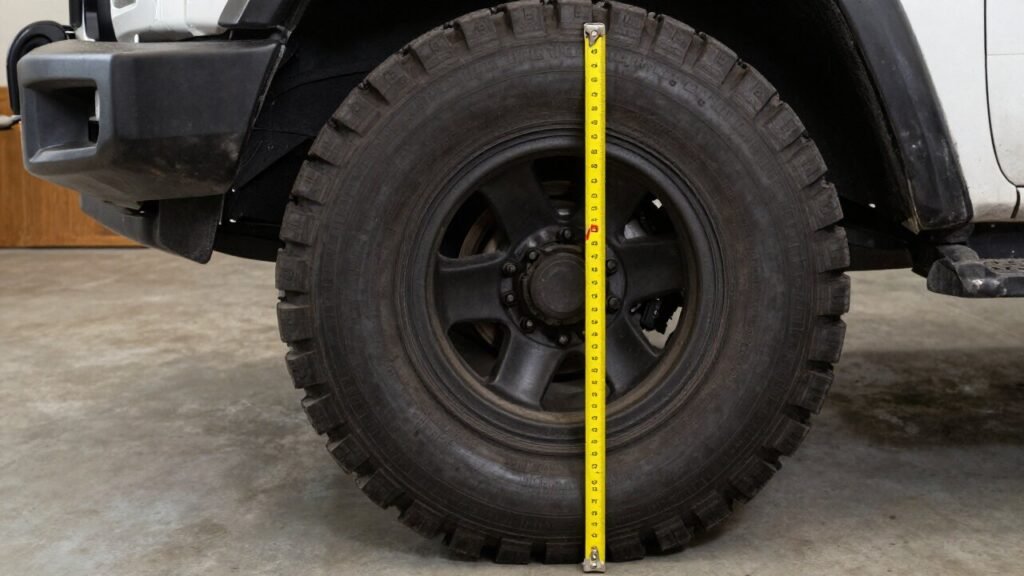
- Measure unloaded: with the tire off the vehicle and standing upright, lay a straight edge across the top of the tread and measure from the floor to the straight edge. This is the overall diameter.
- Measure loaded: with the tire on the truck, measure from the ground to the center of the hub and double it. This loaded radius is what your speedometer actually sees and is usually a little less than the unloaded diameter.
- Measure rolling circumference: mark the tread and the ground, roll the truck forward one full revolution in a straight line, and measure between the marks. This is the most accurate number for speedometer correction.
Expect a deep-tread mud-terrain tire to measure slightly taller when new and to shrink by a fraction of an inch as it wears.
What Load Ratings Do 295/65R20 Tires Come In?
This size is sold in both passenger-style and light-truck constructions, depending on the tire model:
- LT load range E (10-ply rated): the most common version for all-terrain and mud-terrain tires. It carries heavy loads and suits towing and heavy-duty trucks, but rides firmer and needs higher pressures to carry its full rating.
- LT load range F (12-ply rated): offered in some tire lines for heavy-duty trucks; the stiffest and heaviest option.
- Passenger or XL versions: available in some highway or all-terrain models and usually ride softer, but you must confirm the load index meets your truck’s placard.
Whatever version you choose, its load capacity must meet or exceed the rating on your door placard. Our guide to using a higher or lower load index explains how to compare the numbers, and load range C vs E shows how light-truck ratings differ.
All-Terrain vs. Mud-Terrain in 295/65R20
Most 295/65R20 tires are off-road oriented, so you will usually choose between two tread styles:
| Factor | All-terrain | Mud-terrain |
|---|---|---|
| Road noise | Moderate | Higher, especially at highway speeds |
| Wet and winter grip | Generally better; many carry the 3PMSF snow symbol | Weaker on wet pavement and ice |
| Mud and rock traction | Good | Excellent, with open self-cleaning lugs |
| Tread life | Usually longer | Usually shorter on pavement |
| Best for | Daily drivers that also go off-road | Dedicated off-road and mud use |
For a truck that spends most of its time on pavement, an all-terrain tire in this size is the better compromise. Choose a mud-terrain only if you regularly drive in deep mud or on rocky trails.
Frequently Asked Questions
How tall is a 295/65R20 in inches?
About 35.1 inches tall, calculated from the size code. Actual measured height varies slightly by brand and tread type.
How wide is a 295/65R20 tire?
About 11.6 inches (295 mm) section width. The tread width is narrower than the section width.
Is a 295/65R20 the same as a 35×12.50R20?
They are nearly the same height, about 35 inches, but the 295/65R20 is roughly 0.9 inch narrower than a 35×12.50R20.
Will a 295/65R20 fit a stock half-ton truck?
Some trucks can fit it with minor trimming, but many need a leveling kit or lift to avoid rubbing. Check your specific truck, wheel offset and steering lock.
How many revolutions per mile does a 295/65R20 have?
About 575 revolutions per mile, based on a circumference of roughly 110.3 inches.
What is a 295/65R20 equal to in standard sizing?
It is commonly treated as a 35-inch tire. In flotation-style notation it would be roughly 35×11.6R20.
Conclusion
A 295/65R20 is about 35.1 inches tall and 11.6 inches wide, making it a narrower metric alternative to a 35×12.50R20. It is a popular choice for leveled or lifted trucks that want 35-inch height without extra width. Before you buy, confirm clearance, load rating and wheel width, and plan to recalibrate the speedometer if you are moving up from a smaller stock size.
Sources
- Bridgestone Americas: Tire replacement manual (size and service descriptions)
- Michelin: How to read tire size, load and speed ratings
- Pirelli: Tire load index chart
Products Worth Considering

This VEVOR tire bead breaker uses a slide-hammer impact and wedge tip to separate tire beads from rims quickly and efficiently without damaging hub surfaces. The long handle and sturdy steel construction help reduce user strain while providing reliable, portable tire changing for cars, trucks, and more. Ideal for home mechanics and repair shops handling multiple vehicle tire sizes.

Replace worn pool cleaner tires with this all-purpose C10 tire set made to fit compatible Polaris automatic pool cleaners. The tires are designed for maximum traction while helping protect your pool finish, and they match Polaris OEM size and material. Each pack includes three new tires in sealed bags.

Slip the Powerbuilt tire step over your vehicle’s tire to reach roof racks, engine bays, truck boxes, and more without overreaching. Its adjustable, universal design fits tires with a cross tread width up to 13 inches, including car, truck, RV, and semi tires. The non-slip cheesegrater surface and anti-slip tape provide secure grip while the open design lets mud and debris pass through. Fold-flat storage with rubber bumpers helps keep your tire and the step protected between uses.