
Toyota Camry tires usually last about 30,000 to 60,000 miles, but the real number depends on the tire model, road quality, alignment, inflation pressure, rotation schedule, climate, and how hard you drive. Factory tires often wear sooner than premium replacement touring tires, while well-maintained replacement tires with strong treadwear warranties may last longer. Mileage is only one clue, though. You should also watch tread depth, treadwear indicators, cracking, bulges, vibration, and uneven wear.
Quick Answer
Most Toyota Camry tires last about 30,000 to 60,000 miles. Factory tires may land near the lower end, while quality replacement tires can last longer with proper pressure, rotation, alignment, and smooth driving. Replace tires sooner if treadwear indicators show, damage appears, or wear becomes uneven.
Key Takeaways
- A realistic Camry tire lifespan is about 30,000 to 60,000 miles, not one fixed number.
- Check cold tire pressure regularly and use the PSI on the driver-side tire placard or owner’s manual, not the maximum pressure on the tire sidewall.
- Rotate tires about every 5,000 to 8,000 miles, or follow your Camry’s maintenance schedule.
- Replace tires when treadwear indicators show, damage appears, cords or fabric are visible, or the tire no longer matches safe driving needs.
- A tire warranty is not a guarantee that you will get that exact mileage; road conditions, alignment, pressure, and driving style still matter.
At a Glance
| Time Required | 5 minutes for a basic visual check; 10 minutes with a tread gauge and tire pressure gauge |
| Difficulty | Easy for inspection; professional help recommended for alignment, balancing, mounting, or damage checks |
| Tools Needed | Tire pressure gauge, tread depth gauge or penny, flashlight, and your Camry’s tire placard or owner’s manual |
| Cost | Usually free for a visual check; a pressure gauge and tread gauge are inexpensive; alignment, balancing, and replacement vary by shop and tire size |
How Long Do Toyota Camry Tires Last?

Toyota Camry tires typically last around 30,000 to 60,000 miles. Some factory tires may need replacement near 30,000 miles, especially if the car sees rough roads, hard braking, high heat, skipped rotations, or poor alignment. A good replacement touring tire may last longer, but only if it is the correct size and is maintained well.
The best way to judge your tires is not mileage alone. Look at tread depth, treadwear indicators, sidewall condition, vibration, pulling, and wear pattern. A tire with 45,000 miles can still be safe if it has even tread and no damage. A tire with 20,000 miles may need replacement if it is cracked, bulging, cupped, or worn unevenly.
Also remember that tire warranties are not promises. A 60,000-mile or 70,000-mile warranty gives you a comparison point, but your Camry’s actual tire life still depends on driving style, road surfaces, tire pressure, alignment, rotation, load, and climate.
Mileage tells part of the story, but tread depth, damage, and uneven wear decide when a Camry tire is no longer safe to keep using.
What Shortens Camry Tire Life?
Several common factors can shorten Camry tire life. The biggest ones are improper tire pressure, missed rotations, bad alignment, worn suspension parts, rough roads, high heat, heavy loads, fast starts, hard braking, and aggressive cornering.
Underinflation can make the outer edges wear faster and can increase heat buildup. Overinflation can make the center of the tread wear faster and reduce ride comfort. Either problem can reduce grip and shorten tread life.
Warning: Do not keep driving on a tire with a bulge, visible cord or fabric, deep sidewall cracking, sudden vibration, or rapid air loss. Have it inspected or replaced as soon as possible.
- Potholes, rough pavement, and road debris can damage sidewalls and create uneven wear.
- Skipping rotations lets the front and rear tires wear at different speeds.
- Ignoring alignment can cause one shoulder of the tire to wear much faster than the rest.
- Driving with the wrong tire size, load index, or speed rating can affect handling and safety.
- Hard acceleration, late braking, and fast cornering scrub tread away faster.
How Long Do Camry OEM Tires Last by Brand?
Camry OEM tire life varies by model year, trim, tire size, and supplier. You may see Michelin, Hankook, Bridgestone, or another brand depending on the specific Camry and market. The name on the sidewall matters, but the exact tire line and size matter more.
For example, a Michelin Primacy MXM4 replacement tire may carry a mileage warranty up to 55,000 miles depending on the fitment, while a Hankook Kinergy GT is listed by Hankook with a 70K mileage warranty. Michelin CrossClimate2 is listed with a 60,000-mileage warranty and 3PMSF winter certification. Those warranty numbers are useful for comparison, but they do not guarantee that every Camry driver will reach those miles.
If your Camry came with factory tires, check the tire sidewall for the exact model and size. Then compare that specific tire’s warranty, UTQG rating, and owner reviews. Do not assume all Michelin, Hankook, or Bridgestone tires wear the same way.
Note: UTQG treadwear ratings are comparative ratings, not exact mileage predictions. They can help you compare tires, but road conditions, maintenance, and driving style can change real tread life a lot.
[Products Worth Considering]

The SAFELIFE dial tire tread depth gauge measures tread depth in 1/32 inch increments with clear, easy-to-read 2-inch dial face. Color zones using a traffic light system help you quickly judge whether tread is low, marginal, or ample for safer driving. Built with a durable zinc cast body and a metal detect probe for precise, comfortable use across cars, motorcycles, trucks, and buses.

Measure tire tread depth quickly and accurately with this LUMITECO dial gauge that reads in 1/32" increments up to 14/32". The color-coded green/yellow/red zones make it easy to judge tire wear and know when replacement is needed. A rugged, compact design with a protective pouch helps keep the gauge ready for use on cars, trucks, motorcycles, and more.

Monitor tire tread wear with a smart, color-coded depth gauge that shows clear condition ranges at a glance. The bar is range marked for fast, easy readings, helping you maintain safer traction and performance. Each gauge is portable with a pocket clip, and the set includes 20 units for daily use and sharing.
When Should You Replace Camry Tires?
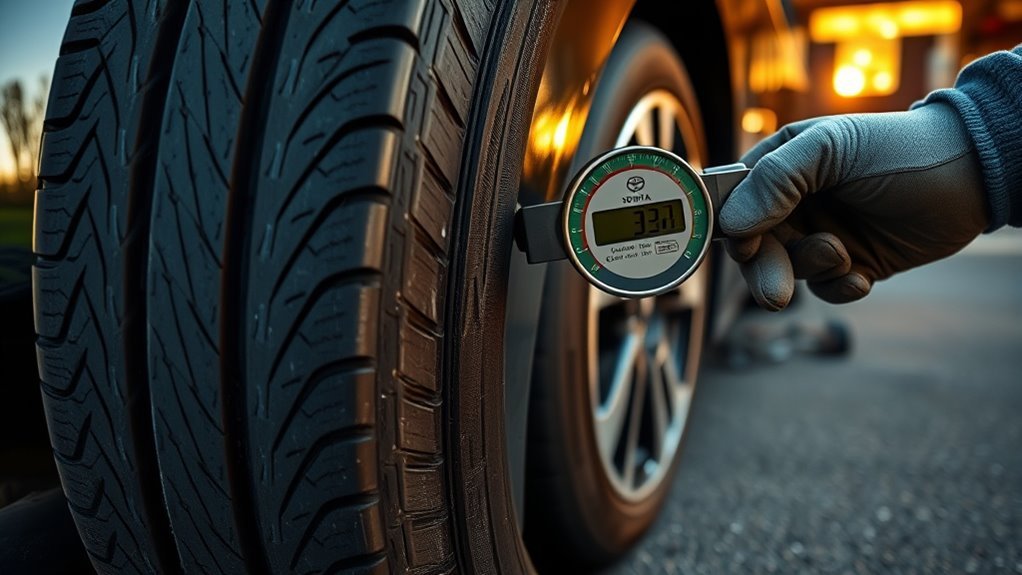
Replace Camry tires when the treadwear indicators are even with the tread, when tread is too shallow for safe wet-road grip, or when the tire shows damage. Treadwear indicators are small raised bars inside the main grooves. When the surrounding tread wears down to those bars, the tire is at the end of its service life.
Look for these replacement signs:
- Worn tread or treadwear indicators showing
- Uneven wear on one edge or across one axle
- Cracks in the sidewall or tread area
- Bulges, bubbles, cuts, or exposed steel/fabric
- Repeated pressure loss
- Vibration, thumping, pulling, or cupping
- Tires that are too old, even if the tread still looks usable
If you only replace two tires, the safer practice is to place the newer tires on the rear axle. This helps reduce the chance of losing rear traction in wet or slippery conditions.
[Products Worth Considering]

Keep your tires properly inflated with this analog VONDIOR tire pressure gauge, designed for fast, easy readings without batteries. The swiveling, two-axis hose and large glow dial help you measure at any tire angle with instant visibility. Built with a protective rubber shield, it supports durable, low-maintenance use for cars and trucks.

This tire inflator with pressure gauge delivers long-lasting performance with a durable rubber-protected gauge and sturdy build. The longer hose and 360 swivel air chuck help you seal the valve securely and keep your hands free while measuring, inflating, or deflating. It’s battery-free for reliable use and provides ±2 PSI accuracy in the mid-range for most typical tires, with universal compatibility for 1/4 NPT compressor outputs.

Accurately measure tire tread depth with a calibrated gauge marked from 0 to 1 inch in 1/32 inch increments. The color-coded bar helps you quickly identify tread condition ranges, supporting safe driving for trucks, motorcycles, automobiles, and passenger vehicles.
Check the Tire Placard Before Buying Replacements
Before buying replacement tires, open the driver-side door and read the Tire and Loading Information Label. You can also check your owner’s manual. The placard tells you the correct tire size and cold inflation pressure for your Camry.
Match these details before you buy:
- Tire size: Use the size listed on the placard or a Toyota-approved alternative.
- Load index: Do not choose a tire with a lower load index than the original specification.
- Speed rating: Use a rating that fits your Camry’s requirements and your driving needs.
- Cold PSI: Inflate to the vehicle’s recommended cold pressure, not the maximum pressure printed on the tire sidewall.
Best Replacement Tires for a Toyota Camry
The best replacement tire for a Toyota Camry depends on your weather, budget, ride-comfort preference, and tire size. Do not choose only by brand. Start with the placard size, then compare treadwear warranty, wet braking, road noise, ride comfort, winter needs, and availability.
Here are common replacement categories to consider:
- Long-wearing touring tire: Good for daily commuting, comfort, low noise, and longer tread life.
- All-weather tire: Better if you regularly drive in cold rain, light snow, or mixed seasons. Michelin CrossClimate2 is one example with 3PMSF certification and a 60,000-mileage warranty.
- Factory-style all-season tire: Good if you want familiar ride quality and predictable handling. Michelin Primacy MXM4 and Hankook Kinergy GT are examples to compare by exact size.
- Quiet comfort tire: Good if road noise matters most. Bridgestone’s current Turanza touring lineup includes comfort-focused options such as Turanza Prestige and longer-wearing options such as Turanza EverDrive.
If you drive mostly on highways, a touring all-season tire may make sense. If you drive in snow or mountain weather, an all-weather tire or dedicated winter tire may be safer. If you drive an XSE trim with larger wheels, expect replacement tires to cost more than smaller Camry tire sizes.
[Products Worth Considering]

These universal tire valve stem caps help protect valve cores from dust, debris, and moisture while helping maintain stable tire pressure. The corrosion-resistant metal construction and sealed design provide reliable protection in road grime, mud, and winter conditions. Twist-on installation makes them quick to fit on cars, SUVs, trucks, and motorcycles.

Milton S-921 pencil tire pressure gauge helps you maintain optimal tire pressure for passenger cars with accurate readings in PSI and kPa. It features a built-in deflator valve for convenient pressure adjustments, plus a single chuck head and nylon indicator bar for easy use on the go. Built from durable plated brass and designed for reliable performance, it’s a practical road trip and cold-weather maintenance tool.

Measure tyre tread depth precisely with a digital gauge that reads in both MM and inches, helping you monitor safe driving conditions. The large LCD screen is easy to operate, and the compact tool fits for cars, trucks, and motorcycles. It provides high accuracy with a 0-25.4mm range and includes a 1-year warranty for added peace of mind.
How to Extend Camry Tire Life
You can extend your Camry’s tire life by keeping pressure correct, rotating on schedule, checking alignment, and driving smoothly. These habits help the tread wear evenly across all four tires.
Maintain Proper Tire Pressure
Check tire pressure when the tires are cold. A cold tire is one that has not been driven for several hours, or has only been driven a short distance at low speed. Use the PSI listed on your Camry’s tire placard or owner’s manual.
- Check all four tires regularly.
- Check the spare tire if your Camry has one.
- Recheck pressure after major temperature changes.
- Do not use the maximum PSI printed on the tire sidewall as your normal inflation target.
Rotate And Align Regularly
Toyota recommends tire rotation as part of regular maintenance, and its general maintenance checklist recommends rotation every 5,000 to 8,000 miles. Follow your Camry’s maintenance schedule first, because tire rotation timing can vary by model, drivetrain, tire type, and driving conditions.
You should also have alignment checked if the car pulls to one side, the steering wheel is off-center, the tires show edge wear, or you hit a serious pothole. Balancing can help if you feel vibration at highway speeds.
Choose Long-Lasting Tire Models
Choose tires with the correct size, load index, speed rating, and strong wet-road performance. Then compare treadwear warranties and UTQG ratings. A higher treadwear rating can suggest longer wear compared with another tire from a similar category, but it is not a direct mileage guarantee.
- Compare the exact tire size you need, not just the tire name.
- Look for a treadwear warranty that fits your driving goals.
- Prioritize wet braking and traction if you drive in heavy rain.
- Consider all-weather or winter-rated tires if you drive in snow or cold conditions.
Pro Tip: Keep a simple tire log in your phone with tire brand, install mileage, rotation dates, PSI checks, and alignment notes. It makes warranty claims and replacement planning much easier.
Real Toyota Camry Tire Mileage Examples

Real Toyota Camry tire mileage can vary widely. A Camry driven mostly on smooth highways with correct pressure, regular rotations, and good alignment may get much more tread life than a Camry driven on pothole-heavy roads with missed rotations and hard braking.
Factory Tire Mileage
Factory tires are often designed to balance comfort, fuel economy, cost, road noise, and handling. Because of that, some original tires may wear out earlier than high-mileage replacement tires. A practical planning range for many Camry factory tires is around 30,000 to 45,000 miles, but your tires may do better or worse depending on care and conditions.
Brand Wear Comparisons
Brand helps, but the tire line matters more. Michelin Primacy MXM4, Michelin CrossClimate2, Hankook Kinergy GT, and Bridgestone Turanza models are not the same kind of tire, even if they all fit a Camry. Compare the exact model, size, speed rating, load index, treadwear warranty, wet traction, noise, and winter capability before buying.
A tire with a longer mileage warranty may still wear quickly if it is underinflated, misaligned, overloaded, or driven aggressively. A lower-warranty tire may still be the better choice if it gives stronger wet grip, better winter performance, or the ride feel you want.
Real-World Lifespan Examples
Use these examples as planning scenarios, not guarantees:
- City driving with potholes and stop-and-go traffic: tires may wear closer to 30,000 miles.
- Mixed commuting with regular rotations: tires may last around 40,000 to 55,000 miles.
- Highway driving with smooth habits and good maintenance: some replacement tires may reach 60,000 miles or more.
- Poor alignment or low pressure: tires can wear out far earlier than their warranty suggests.
Frequently Asked Questions
Is 40,000 miles a lot on Toyota Camry tires?
Yes, 40,000 miles is a solid result for many Camry tires, especially factory tires. Some replacement tires can last longer, but you should judge by tread depth, wear pattern, damage, age, and traction rather than mileage alone.
Can Toyota Camry tires last 60,000 miles?
Yes, some Camry replacement tires can last around 60,000 miles with smooth driving, correct pressure, regular rotation, and good alignment. Factory tires or performance-focused tires may wear sooner.
How often should I rotate Toyota Camry tires?
A good general interval is about every 5,000 to 8,000 miles, but your Camry’s maintenance schedule should come first. Rotate sooner if you see uneven wear or drive in harsh conditions.
Should I replace all four Camry tires at once?
Replacing all four tires is usually best for even grip and handling. If you replace only two, the newer tires should generally go on the rear axle to help maintain stability on wet or slippery roads.
Does tire age matter if the tread still looks good?
Yes. Tires can age from heat, sunlight, oxygen, and time even when tread remains. Check the DOT date code and have older tires inspected, especially if you see cracks, stiffness, or sidewall damage.
Conclusion
Your Camry’s tires will usually last about 30,000 to 60,000 miles, but the safest answer depends on tread depth, damage, tire age, and wear pattern. Smooth driving, correct cold PSI, regular rotation, and proper alignment can help you get the most life from each set. Do not wait for a blowout or a rainy-road scare. Inspect your tires regularly, follow your Camry’s maintenance schedule, and replace them when the tread, condition, or age says it is time.
Sources
- NHTSA TireWise — tire pressure, tire placard, tire size, and tire safety guidance
- Toyota Basic Car Maintenance Tips & Services Checklist — tire pressure and tire rotation maintenance guidance
- Tire Industry Association: Tire Replacement — treadwear indicators, replacement signs, UTQG explanation, and rear-axle mounting guidance
- eCFR 49 CFR 575.104 — Uniform Tire Quality Grading standards
- Michelin CrossClimate2 — 3PMSF certification and 60,000-mileage warranty information
- Hankook Kinergy GT H436 — tire category and 70K mileage warranty information