
How Often Should You Check 4Runner Tire Pressure
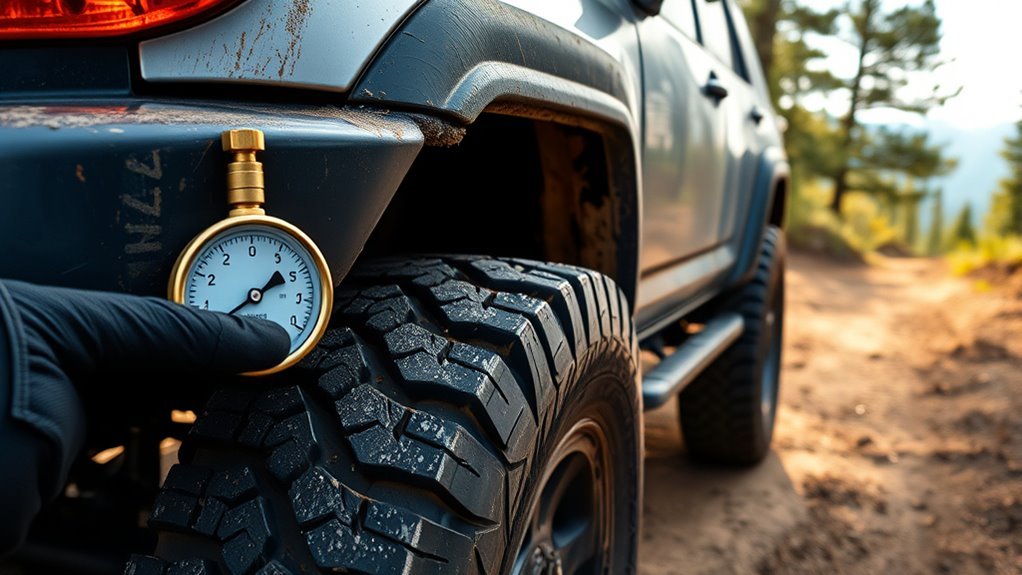
You should check your 4Runner’s tire pressure at least once a month, plus before long trips, before towing or carrying heavy cargo, after a major temperature swing, and any time the ride, handling, or TPMS light feels off. Use the cold tire pressure listed on your driver-door Tire and Loading Information label or in your owner’s manual—not the maximum PSI printed on the tire sidewall.
Quick Answer
Check your 4Runner’s tire pressure monthly when the tires are cold. Check again before road trips, before towing or hauling heavy gear, after a 20°F or larger temperature change, and whenever the TPMS light comes on. Always use the pressure on your vehicle’s door placard or owner’s manual.
Key Takeaways
- Monthly pressure checks are the baseline; pre-trip checks are non-negotiable for long drives, trail days, towing, or heavy cargo.
- Measure PSI cold, ideally before the first drive of the day or after the vehicle has been parked for at least three hours.
- The correct PSI is on your driver-door placard or in your owner’s manual. Do not use the sidewall maximum as your target pressure.
- TPMS is a backup warning, not a maintenance plan. By the time it lights up, the tire may already be significantly underinflated.
- Check the spare tire too, especially on 4Runners with an underbody-mounted spare that is easy to forget.
At a Glance
| Time Required | About 5 minutes for all four tires; 7–10 minutes if you include the spare |
| Difficulty | Easy beginner maintenance |
| Tools Needed | Digital or dial tire pressure gauge, air compressor or gas-station air pump, valve caps, and a flashlight for the spare |
| Cost | Free if you already have a gauge; usually $10–$30 for a reliable gauge |
How to Check Your 4Runner’s Tire Pressure in 5 Minutes
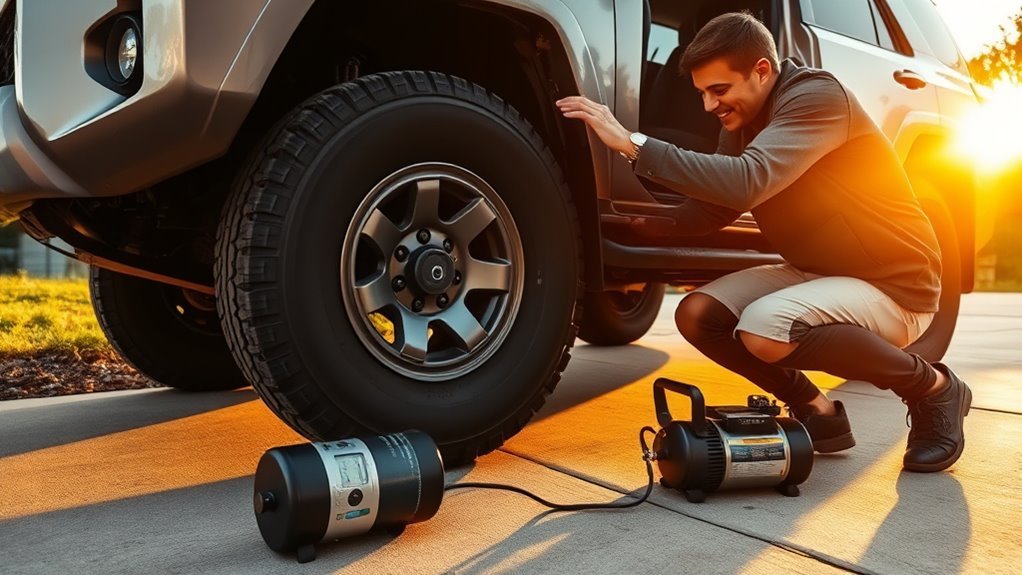
Checking your 4Runner’s tire pressure is simple: use a quality gauge, measure when the tires are cold, compare the reading with the Toyota-recommended pressure source, and adjust as needed. The correct pressure is the number on your vehicle’s Tire and Loading Information label or in the owner’s manual.
- Park long enough for a cold reading. Check before driving or after the 4Runner has been parked for at least three hours.
- Find the placard PSI. Open the driver door and read the Tire and Loading Information label. Use that pressure for the stock tire size listed on the label.
- Remove the valve cap. Keep the cap in your pocket so it does not roll away.
- Press the gauge straight onto the valve stem. If you hear hissing, reseat the gauge and measure again.
- Record all four readings. A tire that is consistently lower than the others may have a slow leak.
- Add or release air. Inflate low tires to the placard pressure. If a tire is high, release air slowly and recheck.
- Reinstall every valve cap. Valve caps help keep dirt and moisture out of the valve stem.
- Check the spare. The spare is easy to forget and may not be monitored the same way as the road tires.
Warning: The PSI printed on a tire sidewall is the tire’s maximum inflation pressure, not the recommended pressure for your 4Runner. Use the driver-door placard or owner’s manual as your starting point.
[Products Worth Considering]

EVOULTES heavy duty tire inflator with an integrated gauge delivers accurate pressure readings from 10–120 PSI, helping you inflate, deflate, and check tires in one tool. The 16.5-inch extended dual-head air chuck with swivel base reaches hard-to-access dual wheel valves on trucks and RVs. A brass trigger core and side-mounted air release valve make operation smooth, with standard 1/4" NPT threading and quick-connect compatibility for easy setup.

This portable cordless tire inflator delivers up to 160 PSI with fast 17 L/min airflow to help you quickly top up tires and get back on the road. It features dual power mode, running on a 21V rechargeable battery or a 12V DC adapter for convenient roadside use. An automatic shut-off with digital pressure gauge helps prevent overinflation, and a built-in LED light improves visibility in low-light conditions.

The JACO FlowPro Tire Inflator measures, inflates, and airs down tires up to 100 PSI with battery-free operation and ±2% accuracy after calibration. It features a glowing pressure dial for night visibility, a heavy-duty steel build with a hybrid hose, and a precision push-to-inflate thumb trigger. The patented Lightning Air Chuck locks on for a secure seal, and the kit includes quick-connect hardware for easy inline use with your air compressor.
Check Cold: Why Morning Readings Are Most Accurate
Cold tire pressure is the cleanest baseline because driving warms the tire and raises pressure. The National Highway Traffic Safety Administration explains that cold means the tire has not been driven on for at least three hours. Morning checks work well because the vehicle has usually been parked overnight.
Temperature’s Direct Impact
Air pressure changes with temperature. As the outside temperature drops, the air inside the tire contracts and PSI falls. As the tire warms from driving or hot weather, PSI rises. The U.S. Tire Manufacturers Association notes that tire pressure can change about 1–2 PSI for every 10°F temperature change.
That matters on a 4Runner because the vehicle is heavy, often loaded with gear, and frequently used for highway trips or trails. A tire that looked fine last week can be several PSI low after a cold front. Check after big weather changes instead of waiting for the monthly reminder.
Optimal Measurement Timing
The best time to check is before the first drive of the day. If you must drive to an air pump, measure the cold pressure at home first, note how many PSI each tire needs, then add that amount at the pump. Recheck later when the tires are cold again.
Pro Tip: Keep a compact digital gauge in the glove box and a small 12V or battery-powered compressor in the cargo area. That makes pre-trip checks faster and keeps you from relying on worn gas-station gauges.
What PSI Should a 4Runner Use?
Your 4Runner’s correct tire pressure is not a universal number. Some owners talk about 32 PSI, 33 PSI, 35 PSI, or 38 PSI, but the only safe starting point is the cold tire pressure listed for your exact vehicle and tire size on the door placard or in the owner’s manual.
For stock tires, follow the placard. For non-stock sizes, load-range changes, or LT tires such as LT285/70R17, do not blindly copy another owner’s PSI. Larger or heavier-duty tires may need a pressure calculation based on load capacity, tire construction, axle weight, and how the vehicle is used. A tire shop familiar with load-inflation tables can help set a safe baseline.
Note: If your 4Runner still has stock-size tires, the placard pressure is the target. If you changed tire size, load range, wheel size, or vehicle weight, treat the placard as a reference point and verify the new pressure with a qualified tire professional.
How Temperature Changes Your Tire Pressure Overnight
Temperature swings can move your tire pressure before you ever start the engine. A 30°F overnight drop can reduce pressure by roughly 3–6 PSI, depending on the tire and conditions. That is enough to affect handling, tread wear, fuel economy, and TPMS behavior.
Use this simple rule: when the weather changes by about 20°F or more, recheck all tires cold. Do not add extra pressure just because winter is coming; add only enough air to bring the cold reading back to the vehicle’s recommended pressure.
A monthly tire-pressure habit catches normal pressure loss, but a temperature-swing check catches the sudden drops that often trigger cold-morning TPMS warnings.
Don’t Skip the Spare: Pressure Checks for Your Hidden Fifth Tire
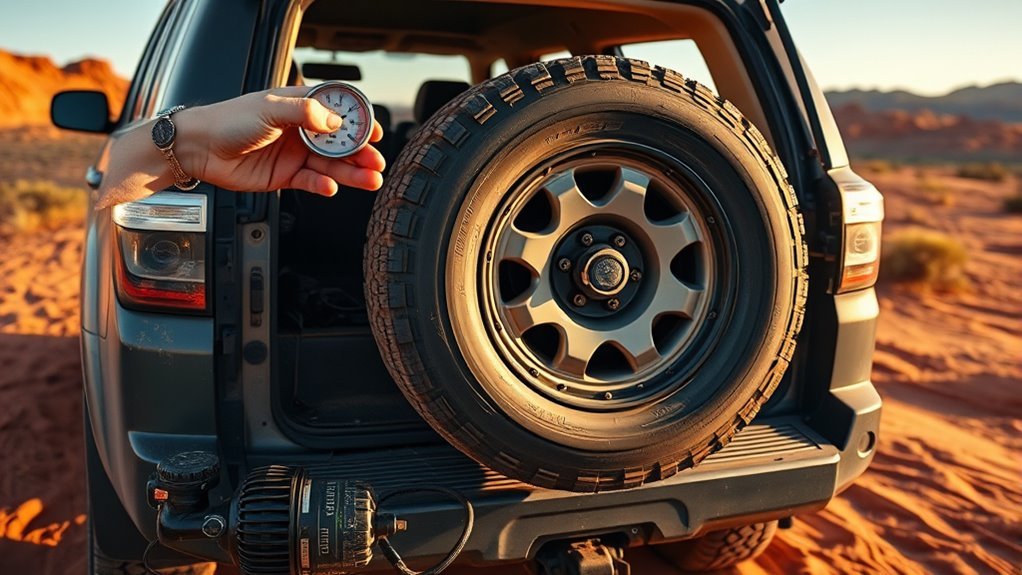
Your 4Runner’s spare tire is a safety tool, not cargo. Check it monthly with the road tires and again before road trips, remote trail drives, or bad-weather travel. A flat spare turns a simple puncture into a tow call.
Hidden Safety Asset
Because many 4Runner spares are tucked underneath the vehicle, they are easy to ignore. Road grime, age, valve-stem issues, and temperature changes still affect them. Use a flashlight, confirm the valve stem is reachable, and check the spare with the same gauge you use for the other tires.
Pressure Check Frequency
Check the spare at least once a month. Also check it before long trips, after seasonal temperature changes, and any time you rotate tires or service the wheels. If the spare is old, cracked, damaged, or repeatedly low, have it inspected before you need it on the roadside.
Dealer Delivery Oversight
When you take delivery of a new or used 4Runner, verify all five tires yourself. Do not assume the delivery pressure, used-car inspection, or last service visit left every tire at the right PSI. Set the road tires to the door-placard pressure when cold and confirm the spare is usable.
Pre-Trip Pressure Checks: The 5-Minute Safety Routine
Before a long highway run, camping trip, mountain drive, or trail day, check pressure while the tires are cold. A pre-trip check is especially important when the 4Runner is loaded with passengers, recovery gear, rooftop cargo, bikes, or camping equipment.
- Check cold PSI before loading if possible. This gives you a clean reading before tire heat or cargo changes the feel of the vehicle.
- Inspect tread and sidewalls. Look for nails, cuts, bulges, uneven wear, or exposed cords.
- Confirm valve caps are installed. Missing caps can let dirt and moisture reach the valve.
- Check the spare and tools. Make sure the jack, lug wrench, wheel-lock key, and spare-lowering tools are actually in the vehicle.
- Recheck after major temperature changes. A cold front during a trip can drop PSI overnight.
Warning: If one tire is much lower than the others, do not just inflate it and forget it. Find the cause. A nail, leaking valve stem, cracked wheel, or bead leak can leave you stranded later.
Off-Road, Towing, and Heavy-Load Pressure Checks
A 4Runner often does more than commute, so your pressure routine should match how you use it. Check PSI before towing, before carrying heavy cargo, and before any off-road trip. Extra weight increases tire workload, and low pressure can generate excess heat on the highway.
For off-road driving, some owners air down for traction and comfort on dirt, rocks, or sand. That is a terrain-specific technique, not a highway setting. If you air down, bring a reliable compressor and reinflate to safe road pressure before returning to pavement at normal speeds.
[Products Worth Considering]

The Fanttik X10 Pro is a cordless portable tire inflator that reaches up to 150 PSI and can inflate an R15 tire in about 35 seconds for quick roadside or home top-ups. With AccuInFlate auto-stop and smart start/stop controls, it helps maintain accurate pressure and frees your hands once the target is reached. A high-visibility digital display and preset modes make it easy to set and monitor inflation for cars, motorcycles, bikes, and balls.

This portable cordless tire inflator delivers fast, efficient inflation for cars, motorcycles, bikes, and sports balls with a digital pressure gauge. Use the one-click PSI preset with auto shut-off for accurate, hands-free topping to your target pressure up to 150 PSI. It’s compact and rechargeable with a built-in emergency LED light plus valve adapters and accessories for quick, ready-to-go use.
Why Your TPMS Light Means You Already Have a Problem
TPMS is a warning system, not a replacement for a tire gauge. Under federal TPMS rules, the warning light is designed around significant underinflation, including a threshold tied to 25% below the manufacturer’s recommended cold pressure or a minimum activation pressure. That means the light may not appear until the tire is already far below your normal target.
If the TPMS light turns on, pull over safely, inspect the tires, and check pressure with a gauge as soon as possible. Inflate to the proper cold-pressure target when safe. If the light flashes for about a minute and then stays on, that usually points to a TPMS malfunction rather than simple low pressure, so the system should be inspected.
Low pressure can increase heat, reduce tread life, hurt fuel economy, and affect handling and stopping ability. The safest habit is to catch pressure loss before the dashboard warning has to do the job.
New 4Runner? Why Your Tires Feel Rock-Hard at Delivery
If a new-to-you 4Runner feels unusually stiff, bouncy, or harsh over small bumps, check the tire pressure cold. Tires can be set above the placard pressure during transport, storage, or service. Even a few extra PSI can make the ride harsher and reduce the tire’s contact patch.
Dealer Over-Inflation
Do not assume the dealer, seller, or previous owner left the tires at the right pressure. Before your first long drive, check all four tires and the spare. Set stock tires to the door-placard cold pressure and recheck the next morning.
Ride Quality Impact
Overinflated tires can feel sharp over potholes, expansion joints, and gravel. Underinflated tires can feel sluggish, heat up more quickly, and wear the shoulders faster. Correct pressure gives the 4Runner the best balance of ride comfort, steering response, tread life, and safety.
Spot Slow Leaks Before Your Next Fill-Up
A slow leak is usually easier to catch on a chart than by sight. If the same tire loses more pressure than the others between checks, treat it as a problem. Reinflate it, record the PSI, and check again within a few days.
Common slow-leak causes include a small puncture, loose or damaged valve core, cracked valve stem, corrosion or dirt at the bead seat, damaged wheel, or an old repair that is starting to fail. A tire shop can usually test the tire and wheel with soapy water or a dunk tank.
Do not keep topping off the same tire for weeks without inspection. That pattern is the tire asking for attention.
Monthly Pressure Checks: Your Fuel Economy Secret Weapon
Proper tire pressure is not just about avoiding flats. It also helps fuel economy. FuelEconomy.gov reports that keeping tires inflated to the proper pressure can improve gas mileage by 0.6% on average and up to 3% in some cases, while underinflated tires can lower mileage by about 0.2% for every 1 PSI drop in the average pressure of all tires.
Monthly checks also help your tires wear evenly. Underinflation tends to punish the shoulders. Overinflation can wear the center faster and make the ride harsher. Correct pressure keeps the tread working the way it was designed to work.
Frequently Asked Questions
How often should I check my 4Runner tire pressure?
Check it at least once a month when the tires are cold. Also check before long trips, before towing or hauling heavy cargo, after a major temperature change, after tire service, and whenever the TPMS light comes on.
What PSI should I use for my Toyota 4Runner?
Use the cold tire pressure listed on the driver-door Tire and Loading Information label or in your owner’s manual. Do not use the maximum PSI printed on the tire sidewall as your target pressure.
Should I check 4Runner tire pressure hot or cold?
Check it cold whenever possible. Cold means before driving or after the vehicle has been parked for at least three hours. Hot readings are usually higher and can hide underinflation.
Do I need to check the spare tire too?
Yes. Check the spare monthly and before trips. A spare can lose air with age and temperature changes, and it may not warn you through TPMS the same way your road tires do.
What is the 4 PSI rule on tires?
The 4 PSI rule is a rough cold-to-hot pressure-rise check sometimes used by enthusiasts to judge whether cold pressure is in the right range. For normal street driving, use your 4Runner’s cold placard pressure instead of tuning by this rule.
Conclusion
For normal driving, check your 4Runner’s tire pressure monthly. For real-world 4Runner use—road trips, cold snaps, towing, camping gear, trail days, and spare-tire readiness—check more often. Use cold readings, trust the driver-door placard or owner’s manual, and treat TPMS as a backup warning rather than your first line of defense. Five minutes with a gauge can protect your tires, fuel economy, ride quality, and safety.
Sources
- Toyota Support: Recommended Tire Pressure — backs the use of the Owner’s Manual or Tire Information placard.
- NHTSA TireWise — backs cold tire checks, spare-tire checks, and TPMS limitations.
- U.S. Tire Manufacturers Association: Tire Care Essentials — backs monthly checks, cold checks, spare checks, and temperature-related PSI changes.
- FuelEconomy.gov: Keeping Your Vehicle in Shape — backs fuel-economy effects of proper tire inflation.
- 49 CFR § 571.138: Tire Pressure Monitoring Systems — backs federal TPMS warning threshold language.

Related Articles

Best Toyota 4Runner Tires Under $150 2026 – Top Budget All-Terrain Tires
You use your Toyota 4Runner for a mix of highway miles and off-road adventures, so choosing capable all‑terrain tires that cost less than $150…
Read More
Best Budget Tires for Toyota 4Runner 2026 – Top Affordable Performance Tires
You rely on your Toyota 4Runner for a mix of daily driving and weekend adventures, and the tires you choose shape safety, comfort, and…
Read More
Best On Road All Terrain Tires for Toyota 4Runner 2026 – Top Highway-Friendly A/T Tires
You want all-terrain tires that let your 2026 Toyota 4Runner feel planted and quiet on the highway while still offering capable off-road traction when…
Read More