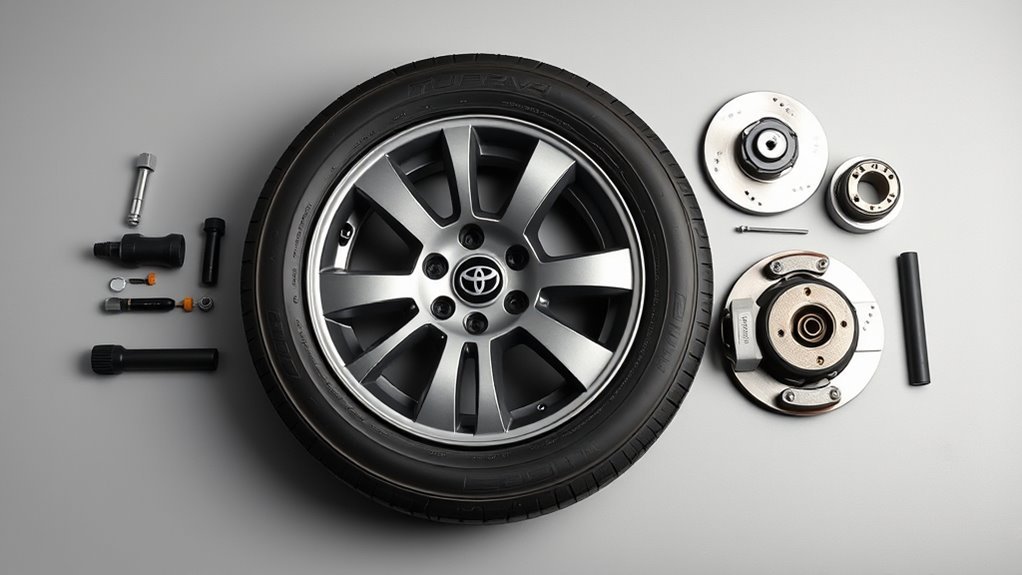
Your Toyota RAV4’s tires do more than hold air. They carry the vehicle’s weight, grip the road, absorb bumps, help braking, and affect fuel economy. Knowing the basic tire components, sidewall markings, tread depth, pressure checks, and warning signs makes it easier to maintain your RAV4 safely and avoid premature tire wear.
Quick Answer
A Toyota RAV4 tire has six main parts: tread, sidewall, belts, casing or body plies, bead, and inner liner. For safe performance, use the tire size and cold pressure listed on your driver-side door placard, check pressure monthly, rotate tires on schedule, and replace tires when wear bars show or damage appears.
Key Takeaways
- The tire size printed on the sidewall tells you what tire is installed; the correct replacement size and inflation pressure should be confirmed on the RAV4’s door placard or owner’s manual.
- Built-in tread wear bars appear when tread reaches about 2/32 inch (1.6 mm), which means the tire is worn out and should be replaced.
- Check tire pressure when tires are cold at least once a month, even if the tire pressure monitoring system has not turned on.
- Bulges, exposed cords, repeated air loss, vibration, or severe uneven wear are signs to stop guessing and have the tire inspected by a qualified technician.
At a Glance
| Time Required | 10–15 minutes for a monthly tire check |
| Difficulty | Easy for inspection and pressure checks; professional help recommended for mounting, balancing, alignment, puncture repair, and sidewall damage |
| Tools Needed | Tire pressure gauge, tread depth gauge or penny, flashlight, and your RAV4 tire placard or owner’s manual |
| Cost | About $0–$20 for basic checks; tire repair, rotation, alignment, or replacement costs vary by shop and tire type |
What You Need to Know About Your RAV4 Tires
RAV4 tires are not one-size-fits-all. Different model years and trims may use different wheel sizes, tire sizes, load ratings, and inflation pressures. Before buying tires or adding air, check the tire and loading information placard on the driver-side door jamb and confirm details in the Toyota owner’s manual.
The tire size shown on the tire sidewall helps identify what is currently installed, but it does not automatically prove that the tire is correct for your exact RAV4. Toyota’s tire information page explains that sidewall markings include tire size, DOT Tire Identification Number, treadwear indicator location, ply composition, and materials. You can compare those markings with the official information in your manual before replacing tires.
For official model guidance, Toyota says to check tires for treadwear indicators, uneven wear, and spare tire condition and pressure. Toyota also notes that tires should be replaced when treadwear indicators are showing, when damage such as cuts, cracks, or bulges appears, or when a tire repeatedly loses air.
Note: Use the pressure printed on your RAV4’s door placard, not the maximum pressure molded into the tire sidewall. The sidewall maximum is a tire limit, not the vehicle’s recommended everyday cold inflation pressure.
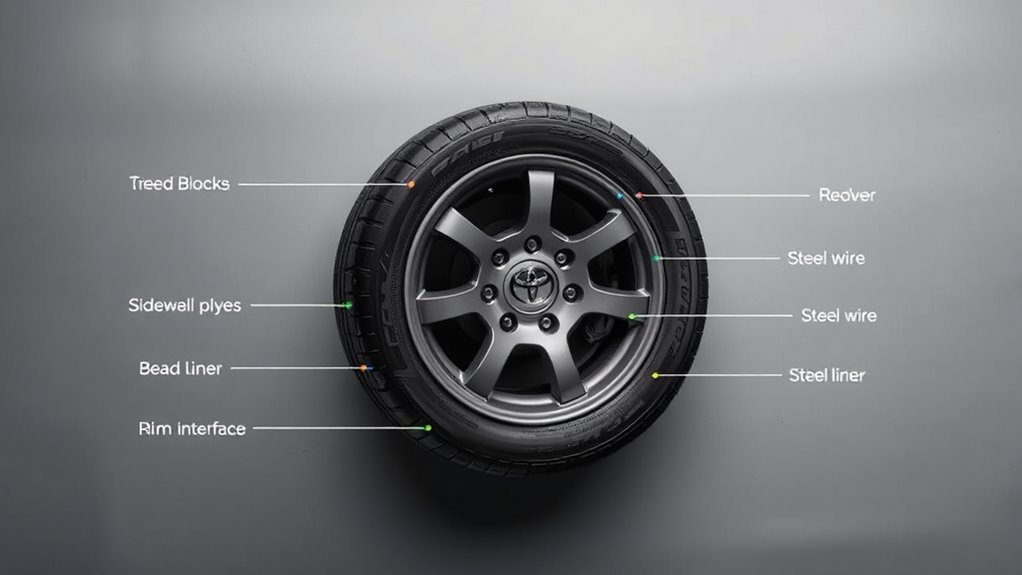
The Six Major Parts of a RAV4 Tire
Most modern RAV4 tires are radial passenger or light truck-style tires. The exact design varies by brand and tire model, but the major parts work together in the same basic way.
| Tire Part | What It Does | What to Check |
|---|---|---|
| Tread | Contacts the road and provides grip, braking traction, water evacuation, and wear resistance. | Low tread depth, uneven wear, cuts, embedded objects, and visible wear bars. |
| Sidewall | Connects the tread to the bead, flexes over bumps, and carries markings such as size, load index, speed rating, and DOT code. | Cracks, cuts, bubbles, bulges, scuffs, and missing sidewall information. |
| Belts | Reinforce the tread area and help the tire keep its shape at speed. | Vibration, tread separation, bulges, or irregular wear that may point to internal damage. |
| Casing or Body Plies | Form the tire’s internal structure and help carry the vehicle load. | Impact damage, exposed cords, run-flat damage, or repeated air loss. |
| Bead | Seats tightly against the wheel rim to hold the tire in place and help seal air inside. | Air leaks at the rim, bent wheels, corrosion, or damage after improper mounting. |
| Inner Liner | Acts as the air-retaining layer inside a tubeless tire. | Punctures, improper repairs, slow leaks, and internal damage after driving underinflated. |
How to Read RAV4 Tire Sidewall Markings
A tire sidewall can look crowded, but a few markings matter most for RAV4 owners. A size such as P225/65R17 102H breaks down like this:
- P means passenger tire. Some tires may not show the “P,” depending on tire type and market.
- 225 is the tire width in millimeters.
- 65 is the aspect ratio, meaning the sidewall height is 65% of the tire’s width.
- R means radial construction.
- 17 is the wheel diameter in inches.
- 102 is the load index, which indicates how much weight the tire can carry.
- H is the speed rating, which indicates the tire’s certified speed capability under proper conditions.
You may also see DOT followed by the Tire Identification Number. The last four digits of the DOT code show the week and year the tire was made. For example, a code ending in 2425 means the tire was manufactured in the 24th week of 2025.
Markings such as M+S mean the tire is rated by the manufacturer for mud and snow use, but that does not make it a dedicated winter tire. For severe snow service, look for the three-peak mountain snowflake symbol if you regularly drive in snow, ice, or mountain winter conditions.
Pro Tip: When replacing tires, match the size, load index, speed rating, and tire type recommended for your RAV4. Mixing tire types, tread depths, or sizes can affect handling, traction control, all-wheel-drive operation, and ride quality.
How Tire Tread Affects Performance and Safety
Tire tread is your RAV4’s main grip surface. The tread pattern, rubber compound, groove depth, and siping all affect how well the tire handles dry pavement, rain, light snow, dirt, gravel, and emergency braking.
The U.S. federal minimum tread depth for passenger car tires is 2/32 inch. At about that depth, built-in tread wear bars become flush with the tread. The U.S. Tire Manufacturers Association says a tire is worn out when a wear bar is flush with the tread surface, and Toyota says to replace tires when treadwear indicators are showing.
Tread equals traction. Once tread wears down to the wear bars, the tire has lost the groove depth needed to move water effectively and should be replaced.
Here is a practical guide to common tread designs:
| Tread Pattern Type | Best Use | Trade-Off |
|---|---|---|
| Touring All-Season | Daily commuting, highway driving, light rain, mild climates | Not ideal for deep snow, ice, or heavy off-road use |
| All-Weather | Year-round driving with more winter traction than many standard all-seasons | May ride firmer or wear faster than touring tires |
| Winter | Snow, ice, freezing temperatures, mountain winter driving | Wears faster in warm weather and should not be used year-round in hot climates |
| All-Terrain | Gravel roads, light trails, dirt, mud, rugged appearance | Can add road noise, reduce fuel economy, and ride more firmly |
| Performance | Sharper handling and higher-speed stability on pavement | May sacrifice tread life, winter grip, or ride comfort |
How to Check RAV4 Tread Depth
- Park safely on level ground and turn the steering wheel to make the front tread easier to see.
- Use a tread depth gauge in the main grooves across several spots on each tire. Check the inner, center, and outer tread.
- Look for wear bars molded across the grooves. If the bars are flush with the tread, the tire is worn out.
- Use the penny test only as a quick backup. Insert a penny upside down into the tread. If the top of Lincoln’s head is visible, the tread is at or near 2/32 inch and replacement is due.
- Check for uneven wear. One-sided wear can point to alignment issues; center wear can suggest overinflation; both-edge wear can suggest underinflation or overloading.
Warning: Do not wait for bald tires to feel unsafe before replacing them. Wet-road grip drops as tread depth disappears, and tires at the legal minimum may still perform poorly in heavy rain, snow, or emergency braking.
Understanding Tire Sidewalls and Beads: Their Role in Performance
The sidewall is the vertical part of the tire between the tread and wheel. It gives the tire flexibility, helps absorb road impacts, and carries important information such as size, load rating, speed rating, DOT code, and construction details.
Sidewall damage is serious because sidewalls flex constantly while driving. A small tread puncture may sometimes be repairable from the inside by a trained tire professional, but sidewall punctures, bubbles, exposed cords, and deep cuts are not safe to ignore. These can lead to sudden air loss or tire failure.
The bead is the reinforced edge of the tire that locks against the wheel rim. A healthy bead helps create an airtight seal. If the bead area is torn, badly chafed, or mounted on a bent or corroded wheel, the tire may slowly lose pressure even when the tread looks fine.
Tire Maintenance Tips for Longevity
Maintaining your Toyota RAV4’s tires is one of the simplest ways to protect ride quality, fuel economy, braking, and all-weather traction. The National Highway Traffic Safety Administration recommends checking tire pressure regularly, inspecting for uneven wear or damage, and following vehicle load limits.
| Maintenance Task | Recommended Frequency | Why It Matters |
|---|---|---|
| Check cold tire pressure | At least monthly and before long trips | Helps prevent underinflation, heat buildup, poor fuel economy, and irregular wear |
| Inspect tread depth | Monthly | Shows when grip is reduced and replacement is approaching |
| Look for damage | Monthly and after potholes or curb impacts | Finds cuts, cracks, bulges, nails, and sidewall issues before they become dangerous |
| Rotate tires | Follow the Toyota maintenance schedule, commonly around each 5,000-mile service interval for many RAV4 schedules | Promotes even tread wear and can extend tire life |
| Check spare tire or repair kit | Monthly | Helps ensure you are ready for a flat tire or roadside emergency |
| Check alignment and balance | When tires wear unevenly, the steering wheel vibrates, or the RAV4 pulls to one side | Prevents rapid wear and improves handling |
How to Check RAV4 Tire Pressure the Right Way
- Check tires cold. Measure pressure before driving or after the RAV4 has been parked for several hours.
- Find the recommended PSI. Use the driver-side door placard or the owner’s manual.
- Remove the valve cap and press a tire pressure gauge firmly onto the valve stem.
- Add or release air until the pressure matches the recommended cold PSI.
- Reinstall valve caps to help keep dirt and moisture out of the valve stem.
- Check the spare if your RAV4 has one, because a flat spare is useless during an emergency.
Your RAV4’s tire pressure monitoring system is helpful, but it is not a replacement for manual checks. Federal TPMS rules are designed to warn drivers about significant underinflation, not to tell you when a tire is only slightly low or when tread is worn.
Rotation, Alignment, and Balancing
Tire rotation helps even out normal wear. Front tires often wear differently from rear tires because of steering, braking, and vehicle weight transfer. All-wheel-drive RAV4 models also benefit from keeping tread depths close across all four tires.
Use the rotation pattern recommended in your owner’s manual or by a qualified technician. Directional tires must stay on the same side of the vehicle unless they are remounted, and some tire wear problems should be corrected before rotation so the pattern does not continue.
Balancing corrects vibration caused by uneven tire and wheel weight. Alignment corrects wheel angles that can cause pulling, crooked steering, and fast edge wear. If your RAV4 drifts, the steering wheel shakes, or one tire wears faster than the others, schedule an inspection rather than simply adding air.
When to Replace RAV4 Tires
Replace or professionally inspect your RAV4 tires when you notice any of the following:
- Treadwear indicators are showing. This means the tread is worn to about 2/32 inch.
- Tread is low for your weather. Even before the legal minimum, consider replacement sooner if you drive often in heavy rain, snow, or mountain conditions.
- Sidewall damage appears. Bulges, blisters, exposed cords, deep cracks, or cuts need immediate attention.
- The tire repeatedly loses air. Slow leaks can come from punctures, valve stems, beads, cracked wheels, or improper repairs.
- You feel vibration or thumping. This may point to internal tire damage, belt separation, wheel damage, or balance issues.
- The tires are older than six years. Toyota advises having any tire over six years old checked by a qualified technician, even if it has rarely been used and damage is not obvious.
Note: Tire age is not the only replacement factor. Heat, sunlight, storage, road hazards, underinflation, overloading, and driving habits can shorten tire life. Inspect by condition as well as by tread depth and age.
[Products Worth Considering]

Measure tire tread depth quickly and accurately with this LUMITECO dial gauge that reads in 1/32" increments up to 14/32". The color-coded green/yellow/red zones make it easy to judge tire wear and know when replacement is needed. A rugged, compact design with a protective pouch helps keep the gauge ready for use on cars, trucks, motorcycles, and more.

Monitor tire tread wear with a smart, color-coded depth gauge that shows clear condition ranges at a glance. The bar is range marked for fast, easy readings, helping you maintain safer traction and performance. Each gauge is portable with a pocket clip, and the set includes 20 units for daily use and sharing.

Upgrade your Toyota tire setup with these corrosion-resistant, leak-proof valve stem caps designed to help protect the valve core from water, snow, and road grime. The caps feature a snug rubber seal and durable copper alloy construction to resist rust and oxidation while maintaining stable tire pressure. Ideal for replacing worn original caps and keeping your wheels looking clean and stylish.
Troubleshooting Common Tire Issues: When to Get Help
Small tire problems can quickly become safety problems. Use this troubleshooting guide to decide what to check and when to get professional help.
| Symptom | Likely Cause | What to Do |
|---|---|---|
| TPMS light comes on | Low pressure, temperature change, puncture, sensor issue, or spare tire pressure issue on some systems | Check all tires cold with a gauge. If the light returns, have the tire and system inspected. |
| One tire keeps losing air | Nail, valve stem leak, bead leak, cracked wheel, or improper repair | Do not keep topping it off without inspection. Have it checked from the inside by a tire professional. |
| Vibration at highway speed | Out-of-balance wheel, bent rim, separated tire belt, uneven wear, or suspension issue | Schedule tire and wheel inspection. Stop driving if vibration is severe or sudden. |
| RAV4 pulls to one side | Low pressure, alignment issue, tire damage, or brake drag | Check pressure first. If pressure is correct, have alignment, tires, and brakes inspected. |
| Both tread edges worn | Underinflation, overloading, or aggressive cornering | Set pressure cold to the door placard and inspect for damage from heat buildup. |
| Center tread worn | Possible overinflation or mismatched tire/load use | Correct pressure and inspect all four tires for uneven wear. |
| Inner or outer edge worn | Alignment problem, worn suspension parts, or incorrect rotation habits | Get an alignment and suspension check before installing new tires. |
Warning: Do not drive on a tire with a bulge, exposed cords, a deep sidewall cut, or sudden severe vibration. Install the spare if safe to do so or request roadside assistance.
[Products Worth Considering]

The SAFELIFE dial tire tread depth gauge measures tread depth in 1/32 inch increments with clear, easy-to-read 2-inch dial face. Color zones using a traffic light system help you quickly judge whether tread is low, marginal, or ample for safer driving. Built with a durable zinc cast body and a metal detect probe for precise, comfortable use across cars, motorcycles, trucks, and buses.

Accurately measure tire tread depth with a calibrated gauge marked from 0 to 1 inch in 1/32 inch increments. The color-coded bar helps you quickly identify tread condition ranges, supporting safe driving for trucks, motorcycles, automobiles, and passenger vehicles.

Add style while helping protect your tire valve stems with handmade crystal rhinestone caps and a durable plastic insert. These caps resist corrosion and help keep out rain, snow, and muddy water, extending tire life. Textured non-slip design makes them easy to grip for quick install and removal when checking tire pressure.
Choosing Replacement Tires for a RAV4
The best replacement tire depends on your RAV4 model, climate, driving style, road surface, and budget. Start with the original tire size, load index, speed rating, and recommended pressure. Then choose the tire category that matches how you actually drive.
- Daily commuting and highway use: Touring all-season tires are usually the best balance of comfort, tread life, quietness, and fuel economy.
- Rain-heavy climates: Look for strong wet braking and hydroplaning resistance ratings from reputable tire tests.
- Snow and ice: Use winter tires or severe-snow-rated all-weather tires. Standard M+S all-season tires may not provide enough grip in harsh winter conditions.
- Gravel roads and light trails: Consider mild all-terrain tires, but expect possible road noise and lower fuel economy.
- Hybrid and Prime models: Pay attention to rolling resistance, load rating, and even tread depth across all tires to protect efficiency and drivability.
Whenever possible, replace all four tires as a matched set. If only two tires are replaced, ask a qualified tire professional where they should be installed based on the tire maker’s guidance, tread depth, drivetrain, and local weather conditions.
[Products Worth Considering]

Keep your tires properly inflated with this analog VONDIOR tire pressure gauge, designed for fast, easy readings without batteries. The swiveling, two-axis hose and large glow dial help you measure at any tire angle with instant visibility. Built with a protective rubber shield, it supports durable, low-maintenance use for cars and trucks.
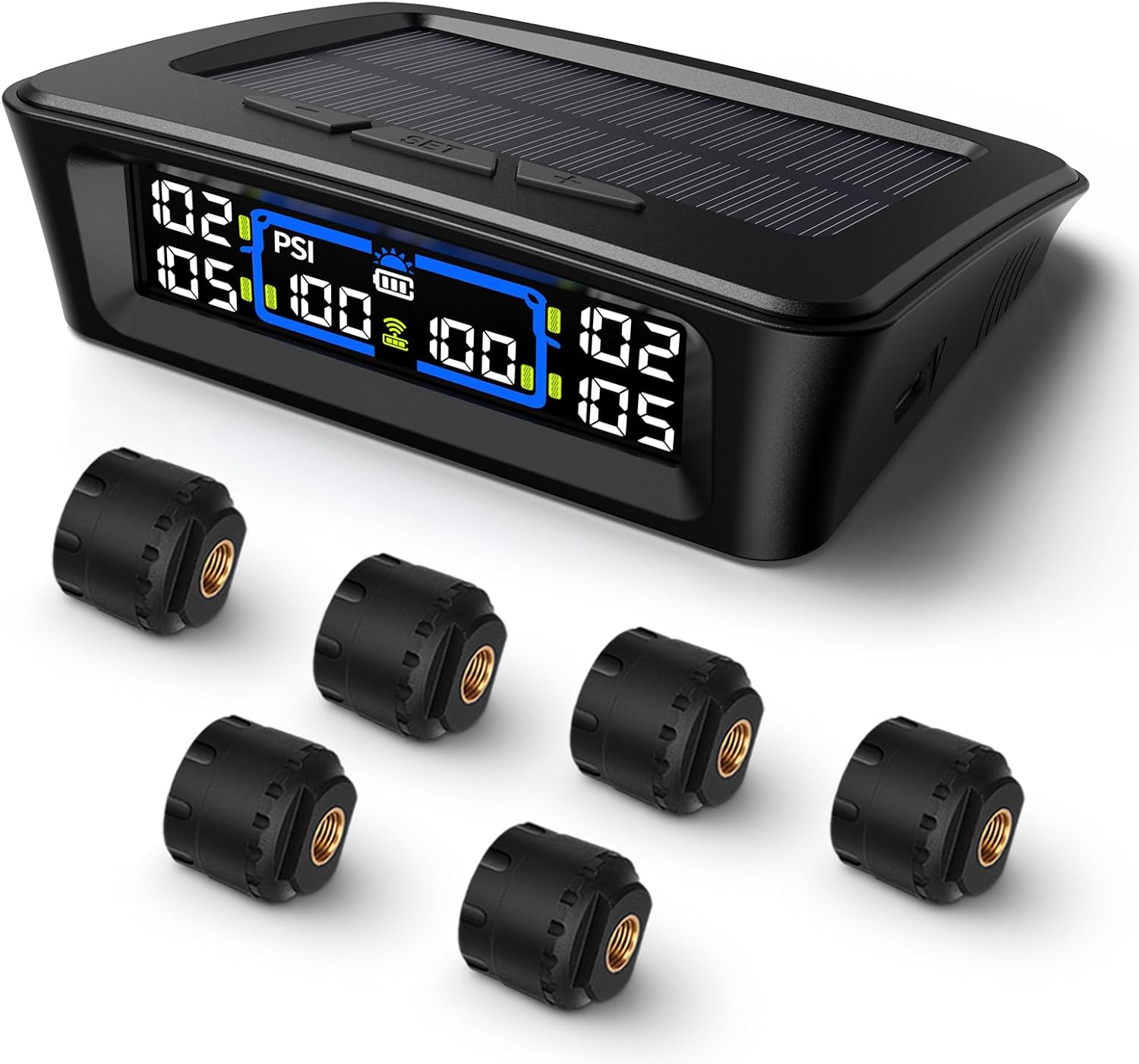
The Tymate TM12 RV TPMS delivers real-time tire pressure and temperature monitoring with a stable 433Hz display for safer long-distance driving. It supports simultaneous monitoring across vehicle and trailer zones, includes six alarm modes for pressure, temperature, leakage, battery, and signal loss, and features easy DIY installation with auto calibration. Power is supplied via USB-C charging or solar recharging, with a wide 0–144 PSI range and up to 50 ft signal coverage for RVs and towable trailers.

Milton S-921 pencil tire pressure gauge helps you maintain optimal tire pressure for passenger cars with accurate readings in PSI and kPa. It features a built-in deflator valve for convenient pressure adjustments, plus a single chuck head and nylon indicator bar for easy use on the go. Built from durable plated brass and designed for reliable performance, it’s a practical road trip and cold-weather maintenance tool.
Frequently Asked Questions
What are the six major parts of a tire?
The six major tire parts are the tread, sidewall, belts, casing or body plies, bead, and inner liner. The tread grips the road, the sidewall supports and flexes, the belts stabilize the tread, the casing carries load, the bead seals to the wheel, and the inner liner helps hold air.
What does Toyota recommend for tire rotation?
Toyota says to rotate or replace tires according to the maintenance schedule and treadwear. Many RAV4 maintenance schedules include service around 5,000-mile intervals, but you should follow the schedule for your exact model year, drivetrain, and driving conditions.
Where do I find the correct RAV4 tire size?
Find the correct tire size on the tire and loading information placard on the driver-side door jamb and in the owner’s manual. The tire sidewall shows what is currently installed, but the door placard is the better starting point for confirming the correct replacement size and pressure.
When should I replace my RAV4 tires?
Replace RAV4 tires when treadwear indicators are showing, tread depth reaches about 2/32 inch, sidewall damage appears, the tire repeatedly loses air, cords are exposed, or a qualified technician says the tire is unsafe. In rainy or snowy areas, replacement before the legal minimum may be safer.
Is M+S the same as a winter tire?
No. M+S means mud and snow, but it is not the same as a dedicated winter tire. For severe winter driving, look for a tire with the three-peak mountain snowflake symbol and choose a tire that fits your RAV4’s approved size and load requirements.
Can I rely on the TPMS light instead of checking tire pressure?
No. TPMS is a warning system for significant underinflation, not a complete maintenance tool. Check tire pressure with a gauge at least monthly and before long trips, using the cold pressure listed on the RAV4’s door placard.
Conclusion
Your RAV4’s tires are a key safety system, not just replaceable rubber. The tread provides traction, the sidewall and casing support the vehicle, the bead seals to the wheel, and the inner liner holds air. By reading the sidewall correctly, checking cold pressure monthly, watching tread depth, rotating on schedule, and acting quickly on damage or uneven wear, you help your RAV4 ride better, stop safer, and get more life from every set of tires.
Sources
- Toyota Owners: 2025 RAV4 Tires — Toyota guidance on checking tires, treadwear indicators, uneven wear, spare tire checks, and replacement conditions.
- Toyota Owners: 2025 RAV4 Tire Information — Toyota explanation of tire symbols, DOT/TIN markings, treadwear indicator location, tire size, and ply materials.
- Toyota 2025 RAV4 Warranty & Maintenance Guide — Toyota maintenance schedule reference for service intervals and tire rotation planning.
- NHTSA TireWise — Federal tire safety guidance covering tire buying, maintenance, labeling, aging, fuel efficiency, and safe driving.
- 49 CFR § 570.9 Tires — U.S. federal tread depth reference for passenger car tires and treadwear indicators.
- U.S. Tire Manufacturers Association: Care and Service of Passenger and Light Truck Tires — Tire construction, treadwear indicators, monthly inspection, damage conditions, and tire service-life guidance.