
Disclosure: As an Amazon Associate, we earn from qualifying purchases. If you click a link on this page and make a purchase, we may receive a small commission at no extra cost to you.
A small tread puncture can leave you stranded even when the tire has no visible sidewall damage. The Juehuodaji 70PCS Tire Screw Plug Kit is a compact set of threaded repair plugs marketed for quick external puncture sealing on several vehicle types. Its small size and two plug dimensions make it easy to store, but it is not an industry-approved permanent tire repair. This review explains the verified specifications, package inconsistencies, safety limits, and extra equipment you need before relying on it.
Quick Verdict
Editorial Rating: 7/10, recommended with major safety caveats
Best For: Drivers who want a compact, last-resort mobility aid for a small puncture in the central tread area
Bottom Line: The threaded plugs are compact, individually protected, and available in two listed sizes. However, a screw-in plug by itself is not a proper permanent repair, the package-count details conflict, and the current listing does not clearly confirm that an installation driver is included.
| Specification | Verified Detail |
|---|---|
| Brand | Juehuodaji |
| Model | BTJD |
| Product Type | Threaded screw-in tire repair plugs |
| Claimed Quantity | 70 pieces, although the listing’s 30-small plus 30-large breakdown totals 60 |
| Small Plug Size | 0.21 x 0.47 inches |
| Large Plug Size | 0.26 x 0.59 inches |
| Construction | Carbon-steel core with a rubber coating |
| Sealing Layer | Sealant-coated exterior with a threaded profile |
| Item Weight | 7 ounces |
| Package Dimensions | 7.24 x 5.31 x 0.87 inches |
| Marketed Compatibility | Cars, trucks, ATVs, motorcycles, agricultural vehicles, and bicycles |
| Confirmed Box Contents | Screw-in tire plugs; the current listing does not clearly confirm an installation driver |
| ASIN | B0GK9SPMS3 |
| Recommended Role | Emergency mobility aid only, followed by professional inspection and repair |
Juehuodaji 70PCS Tire Screw Plug Kit
What Is the Juehuodaji Tire Screw Plug Kit?
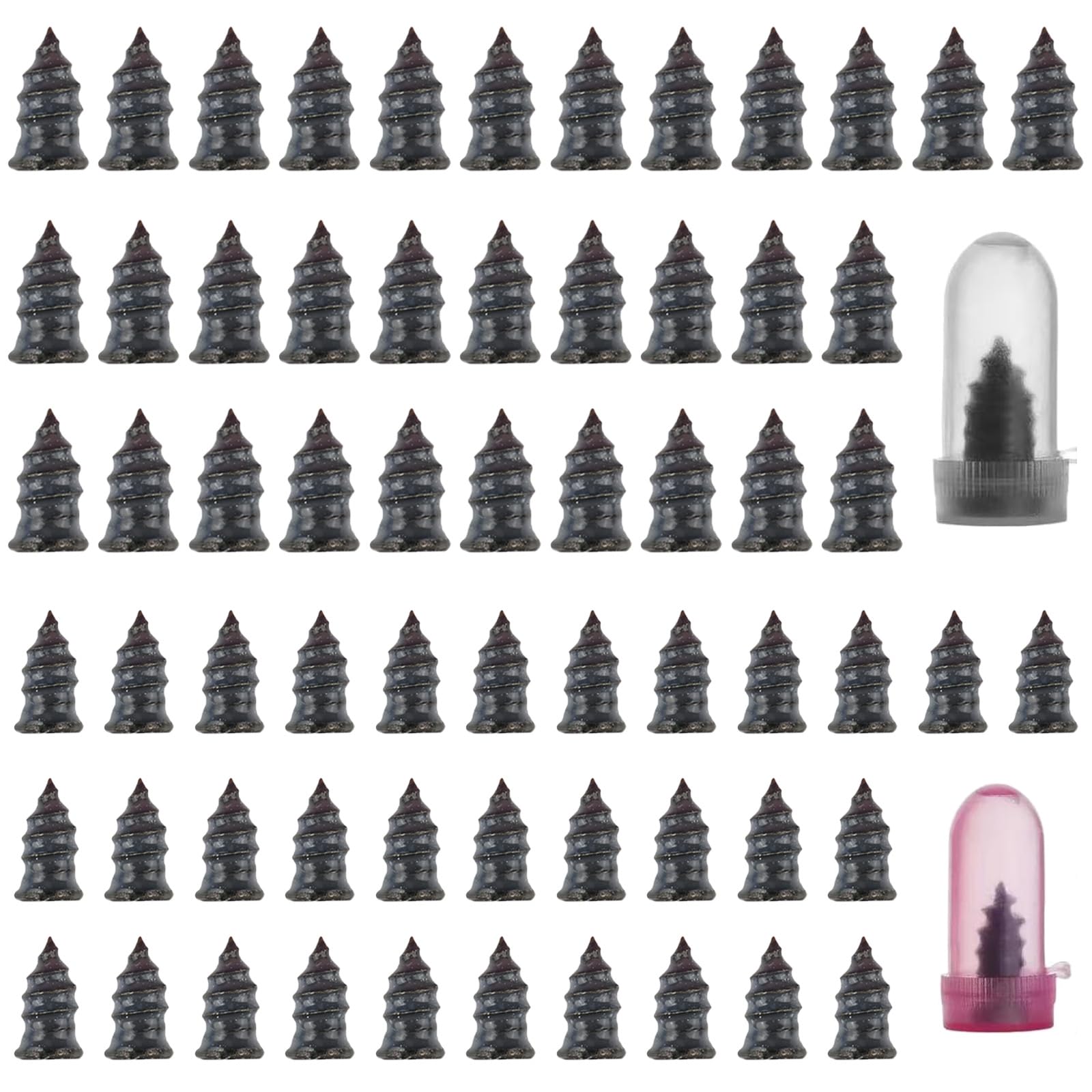
The Juehuodaji BTJD is a collection of short, threaded plugs designed to screw into a puncture from outside the tire. Each plug has a carbon-steel core, a rubber coating, and a sealant-covered surface. The spiral shape is intended to grip the puncture channel while the coating slows air loss.
The listing provides two sizes. Small plugs measure 0.21 x 0.47 inches, while large plugs measure 0.26 x 0.59 inches. This gives you a choice for different puncture openings, but plug dimensions do not determine whether a tire is safe to repair.
You should view this set as a compact emergency accessory rather than a complete flat-tire solution. It does not reinflate the tire, and the current product details do not clearly confirm that a screwdriver or dedicated installation tool is supplied.
Who Should Buy It?
Best For
- Drivers building a compact roadside emergency kit
- People who already carry an inflator, pressure gauge, pliers, and a suitable driver
- Owners who understand that an external plug requires prompt professional follow-up
Skip If
- You need a permanent, industry-standard puncture repair
- The damage reaches the shoulder, sidewall, bead, or internal tire structure
- You expect one package to contain every tool needed to locate, seal, and reinflate a tire
Before You Buy: The listing calls this a 70-piece set, but its written size breakdown lists 30 small and 30 large plugs, which totals 60. Confirm the actual quantity and whether a driver is included before ordering.
[Products Worth Considering]

This tire repair screw plug kit includes 60 pieces in two sizes to help you fix punctures quickly on the road. Choose the right screw by puncture size, then drive it in with a screwdriver for an effective seal without needing a flaring tool. The coated screws help prevent leaks and are designed for convenient emergency use across cars, trucks, ATVs, motorcycles, and bicycles.

This screw-in tire plug kit offers quick, DIY tire repairs for punctures from nails, screws, and sharp debris. Simply screw the vacuum tire mending nail into the puncture for a fast roadside fix, designed to create a strong, air-tight seal. It fits most tubeless tires for cars, trucks, motorcycles, and more, helping you avoid costly replacements until professional service is available.

This tire repair kit provides fast emergency puncture repair without removing the tire from the rim, helping you get back on the road quickly. Its screw plug system is designed for punctures in both tread and sidewall and includes a complete patch plug tool set with essential accessories. A portable storage bag makes it easy to carry for cars, trucks, SUVs, motorcycles, and heavy-duty applications.
Materials and Plug Design
The plugs use a carbon-steel core surrounded by rubber. This differs from the original article’s unsupported description of silicone-coated plugs. The product listing also describes a sealant layer on the exterior and a thicker threaded center intended to improve grip inside the puncture.
The steel core can make a plug easier to screw into place than a soft string plug, especially when access is limited. The tradeoff is that the rigid design does not inspect or seal the tire’s inner liner. A tight-looking external seal can still hide belt, liner, or sidewall damage.
Each plug is shown or described as individually protected, which helps keep its sealing surface away from dirt during storage. You should still inspect a plug before use. Do not use one if its coating is dry, cracked, contaminated, or separating from the core.
Plug Sizes and Package Contents
The listed small size is 0.21 x 0.47 inches, and the large size is 0.26 x 0.59 inches. The smaller plug is intended for a narrow puncture, while the larger design is marketed for a wider opening. Choosing a plug because it physically fits does not mean the damage qualifies for repair.
The quantity information needs attention. Amazon identifies the product as a 70-piece kit, yet the feature text describes 30 plugs of each size. That adds up to 60, not 70. The main product details also list only screw-in plugs under the box contents, so you should not assume that a screwdriver, pressure gauge, inflator, sealant bottle, or puncture-removal tool is included.
The full package weighs 7 ounces and measures 7.24 x 5.31 x 0.87 inches. Those dimensions make it easy to fit beside an inflator in a trunk, motorcycle case, ATV storage box, or workshop drawer.
Compatibility and Safety
Juehuodaji markets the plugs for cars, trucks, ATVs, motorcycles, agricultural tires, bicycles, and other common tire applications. That broad claim does not guarantee suitability for every tire. Confirm that your tire is tubeless, review the tire manufacturer’s repair policy, and check for restrictions involving run-flat, high-speed, motorcycle, bicycle, or specialty tires.
The U.S. Tire Manufacturers Association states that a repairable passenger or light-truck puncture must be limited to the tread area and no larger than 1/4 inch or 6 mm. Damage that reaches the shoulder or belt edge should not be repaired. The association also states that a proper repair requires tire removal, internal inspection, a plug or stem through the injury, and a patch sealing the inner liner.
A screw-in plug installed from outside does not meet that permanent-repair procedure. You can review the full USTMA tire repair guidance before deciding how to handle a puncture.
The listed large plug is approximately 0.26 inches wide, which is slightly larger than the 1/4-inch professional repair limit. Do not treat the plug’s physical size as permission to seal a puncture beyond the accepted repair area or injury diameter.
How It Performs in Real Use
During a Daily Commute
For a small, straight puncture in the central tread, the screw design may slow air loss long enough to help you reach a nearby service location. You still need a safe place to stop, a way to remove the puncturing object, a compatible driver, an inflator, and an accurate pressure gauge.
On a Remote Trip
The compact package takes little storage space, but the plugs alone will not rescue a fully deflated tire. Pair them with a charged compressor, pliers, gloves, a flashlight, reflective safety equipment, and your vehicle’s spare-tire tools. A spare tire or roadside-assistance plan remains the safer answer when the tire has structural damage.
For Motorcycles, ATVs, and Agricultural Equipment
The listing markets the plugs for these uses, but tire demands differ widely. A pressure loss on a two-wheel vehicle can be especially serious, and agricultural tires may have construction or service requirements that differ from passenger tires. Follow the vehicle and tire manufacturer’s guidance rather than relying only on the kit’s broad compatibility claim.
During Long-Term Storage
The individually protected plugs are easier to keep clean than loose repair materials. Store them away from direct sunlight, moisture, petroleum products, and extreme heat. Since the listing does not provide a shelf-life specification, inspect the rubber and sealant layer as part of your regular emergency-kit check.
How to Use It Correctly
First, move the vehicle fully away from traffic and stop on a stable surface. Do not attempt a roadside repair where passing vehicles, poor visibility, unstable ground, or weather conditions put you at risk.
Inspect the tire before touching the puncturing object. Do not install a plug when you see a cut, bulge, exposed cord, damaged bead, cracked sidewall, shoulder puncture, or evidence that the tire was driven while severely underinflated. Install the spare tire or request roadside assistance instead.
When you choose to use an external plug as an emergency measure, follow the product instructions and your tire manufacturer’s policy. Match the plug to the puncture without enlarging the injury unnecessarily, use a suitable driver, and avoid forcing the plug into an unknown or angled damage path.
Reinflate the tire to the cold pressure shown on the vehicle’s door-jamb label or owner’s manual, not the maximum number molded into the tire sidewall. Check for continued leakage and drive only as far and as slowly as needed to reach professional help. Stop immediately if pressure drops, the vehicle vibrates, or handling changes.
Pro Tip: Store this plug set with a 12-volt or battery-powered inflator, pressure gauge, pliers, gloves, flashlight, and reflective vest. The plugs cannot restore pressure or remove the object that caused the puncture.
Customer Feedback Snapshot
The original editorial dataset described buyer sentiment as positive, with convenience, compact storage, and the number of plugs receiving favorable attention. However, the current listing did not expose enough review detail to independently confirm the earlier star rating or review count, so those numbers are not used in this verdict.
The chart below is retained as a historical snapshot from the original article rather than a representation of current Amazon review data.

Pros and Cons
Pros
- Two listed plug sizes provide options for narrow and wider puncture openings
- Carbon-steel cores give the plugs a rigid screw-in structure
- Rubber and sealant-coated surfaces are designed to slow air leakage
- Seven-ounce package is compact enough for most vehicle storage areas
- Individually protected plugs are easier to keep clean during storage
Cons
- An external screw-in plug is not an industry-approved permanent repair
- The 70-piece title conflicts with the 30-plus-30 quantity breakdown
- The current listing does not clearly confirm a driver, inflator, gauge, or removal tool
Is It Worth the Price?
This product belongs in the budget emergency-accessory category, but online pricing and seller offers can change. Its value comes from the number of compact plugs and the convenience of keeping two sizes on hand, not from replacing a spare tire or professional repair.
It makes the most sense when you already own the supporting equipment and understand its limited role. The package offers less value when you still need to buy a driver, inflator, gauge, pliers, and storage case separately.
The count discrepancy also matters. Check the latest product photos, seller description, and box contents before judging its cost per plug.
[Products Worth Considering]
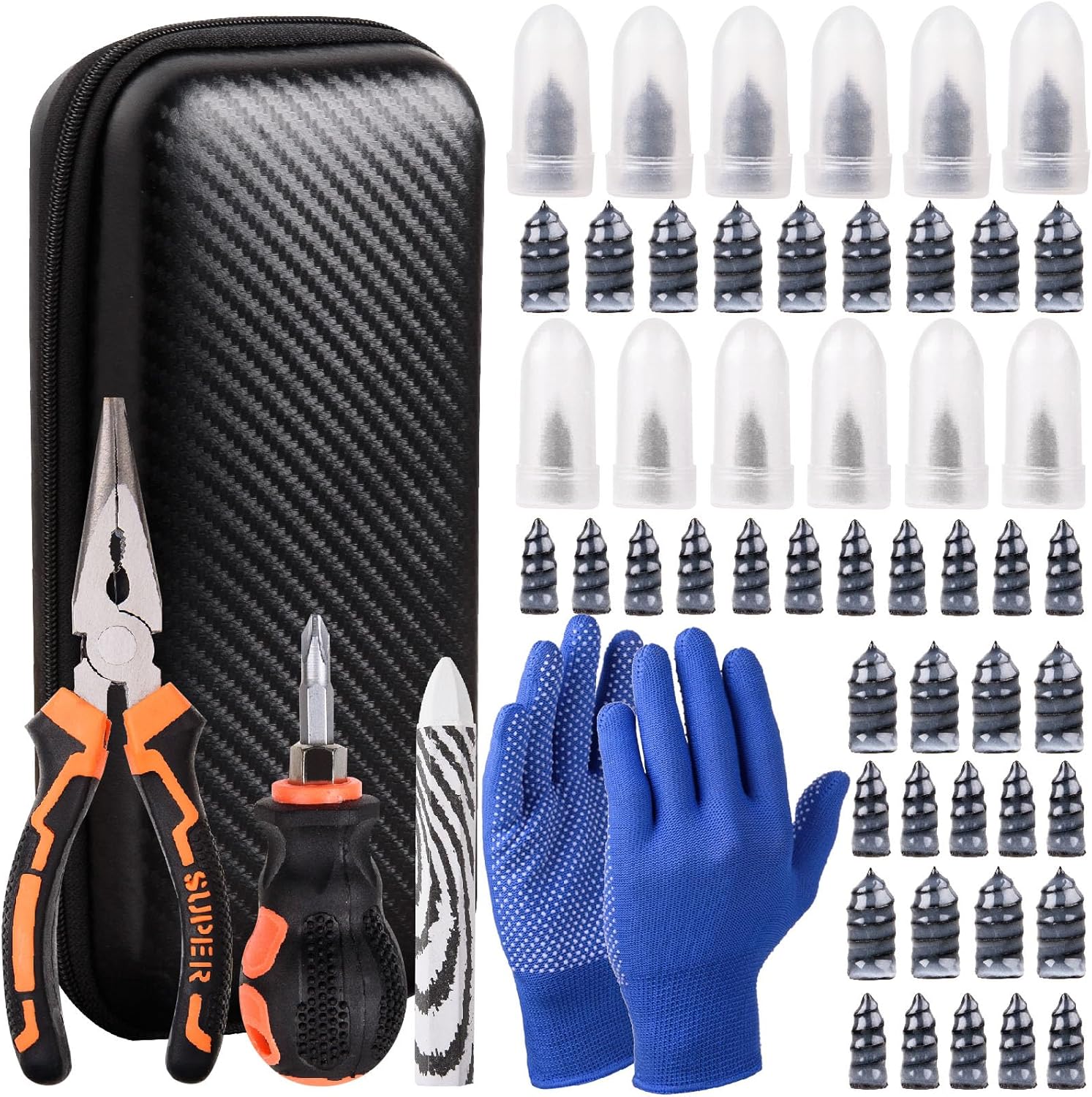
This tire sidewall puncture repair kit fixes flats fast without removing the tire, helping you get back on the road in minutes. It includes self-tapping repair nails, essential tools, gloves, and a portable storage bag for convenient roadside use. Designed for tubeless tires, it helps create a tight, leak-resistant seal for cars, motorcycles, trucks, SUVs, and ATVs.

This screw-in tire plug kit seals punctures fast using the included screwdriver, letting you repair tread damage without removing the tire or using messy glue. It includes two plug sizes for different puncture types and uses high-density rubber for an airtight, heat-resistant temporary seal that helps you reach a tire shop safely. Compact and universal, it works on tubeless tires across cars, trucks, motorcycles, tractors, and more.

This screw-in tire plug kit provides a fast, no-tire-removal fix for tubeless flat tires by aligning and screwing the plugs into the puncture. Built for a reliable, airtight seal, the thick rubber plugs create a durable repair that helps prevent slow leaks. The kit includes two plug sizes for handling different puncture widths and comes in a compact case for quick roadside use.
How It Compares to Alternatives
A conventional T-handle string-plug kit usually includes a reamer and insertion tool, giving you more leverage and clearer control over the installation. It requires more storage space and still remains an external temporary repair rather than a substitute for internal inspection.
A tire-sealant and inflator mobility kit may restore pressure without installing a rigid screw, but sealant compatibility and cleanup vary by tire and pressure-monitoring system. A professional combination patch-plug repair costs more and requires tire removal, yet it is the appropriate comparison when you need a lasting repair that follows industry procedures.
[Products Worth Considering]

This self-service tire repair nail kit includes 60 pieces (30 small + 30 large) to help seal punctures quickly without needing an auto shop visit. The nails are designed to fit different hole sizes and provide a tight connection with sealing glue to help prevent air and water intrusion. Suitable for cars, motorcycles, trucks, and other vehicles, it’s an easy, efficient way to patch roadside tire damage.
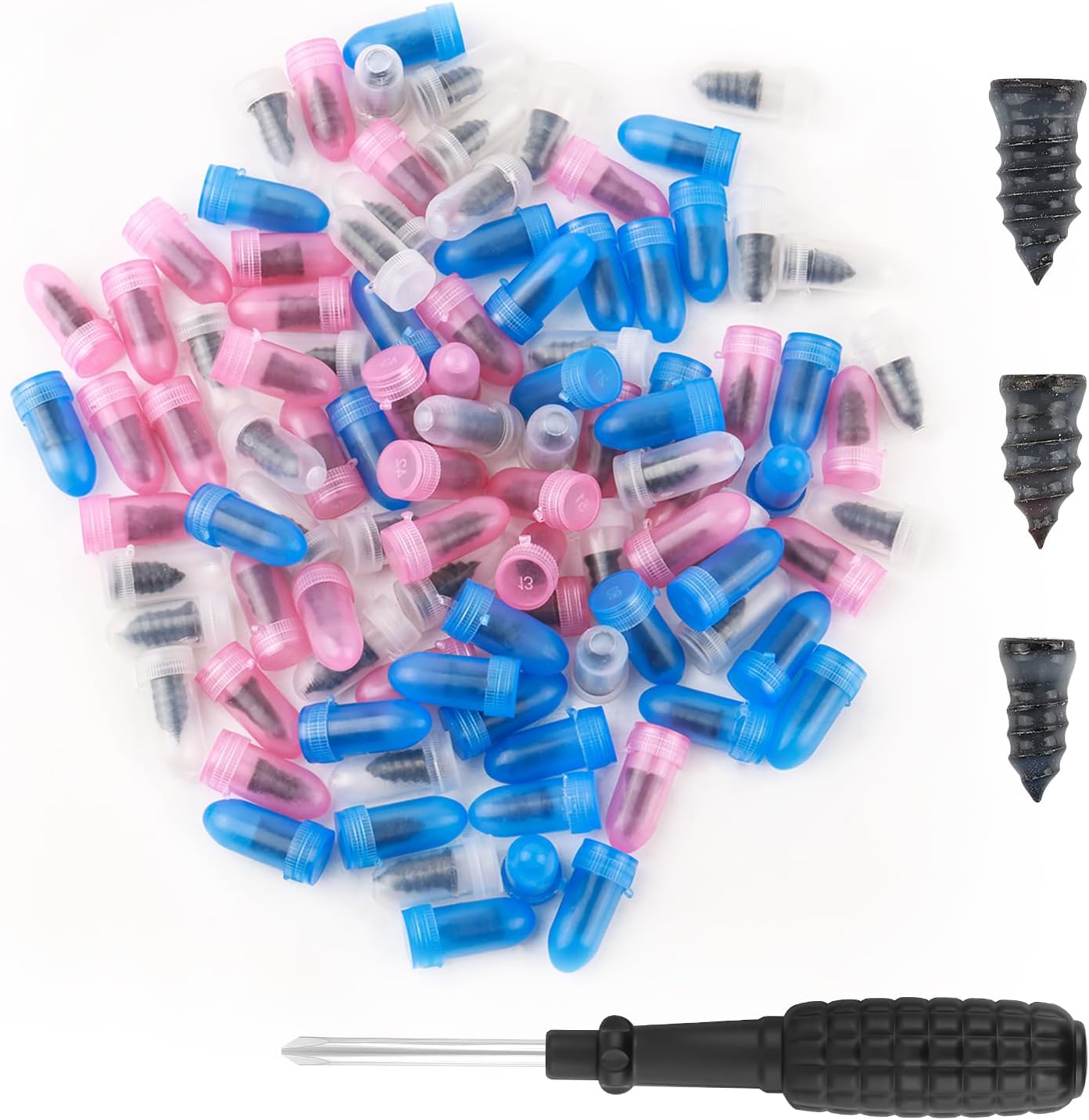
This 100-piece tire repair screw plug kit provides a fast, self-service solution for punctures on the road. Choose the correct plug size, insert it into the break, and screw it in to help seal the puncture and temporarily restore tire pressure. Thickened threads and rubber-wrapped plugs improve bite and sealing while remaining compact and easy to carry.

KEVWR self-service tire repair nails are made to firmly fix punctures with strong bite and reliable sealing, helping prevent water from entering the wound. The spiral rubber screws are easy to insert without removing the tire, providing a simple DIY repair for many vehicle and tire types. Suitable for cars, motorcycles, trucks, bikes, buses, and agricultural tires with two size options for different puncture nails.
Why People Choose It
The strongest reasons to consider this kit are its compact package, two listed plug sizes, and simple threaded design. Those features make it easy to add to an existing emergency setup without taking up the room required by a full T-handle kit.
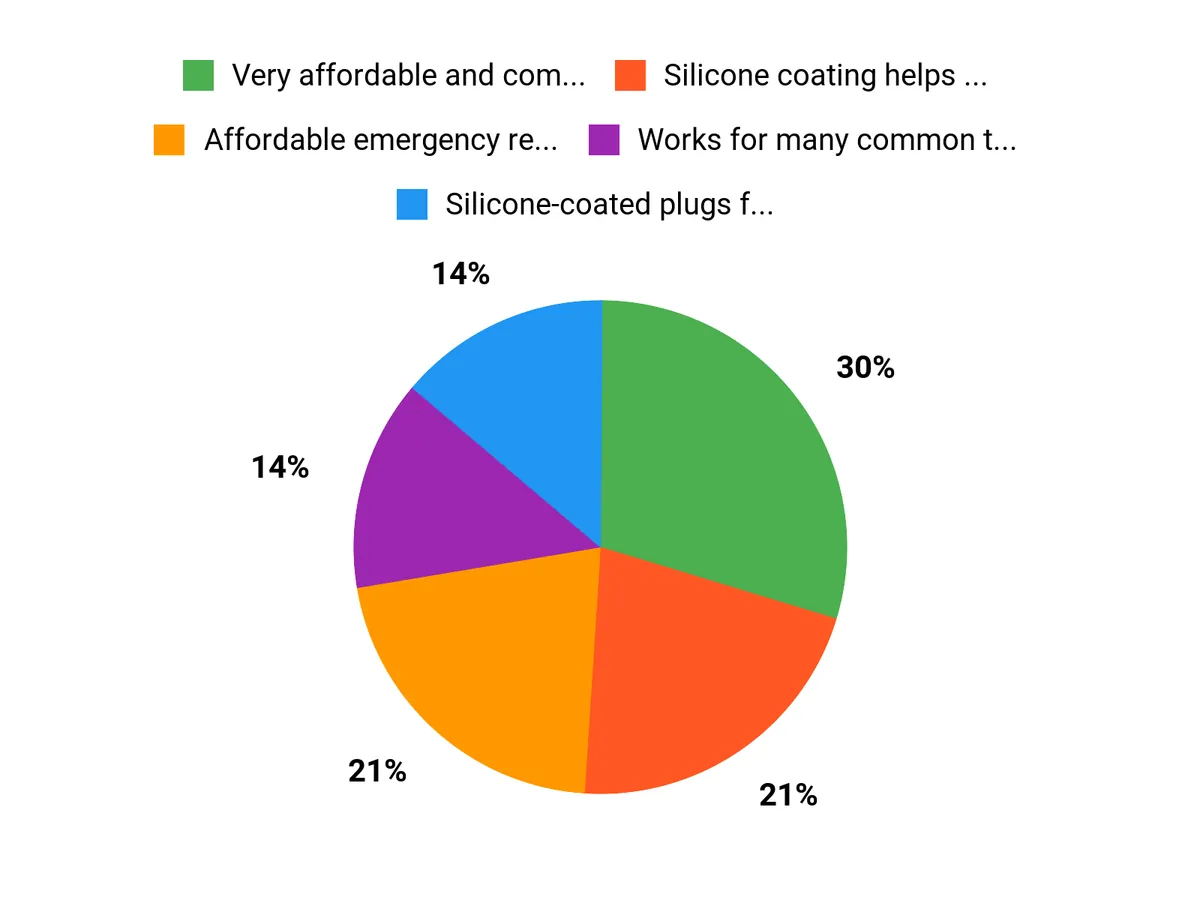
The original chart below summarizes the preference themes supplied with the source article. Treat it as an editorial snapshot, since current review totals were not independently available during verification.
Frequently Asked Questions
Is a Juehuodaji screw-in plug a permanent tire repair?
No. Industry guidance for passenger and light-truck tires requires tire removal, internal inspection, a stem or plug through the injury, and a patch sealing the inner liner. Treat this product only as a temporary mobility aid before professional service.
Can you use these plugs on a tire sidewall or shoulder?
No. Do not plug a puncture in the sidewall, shoulder, bead, or belt-edge area. Replace the tire or have it assessed by a trained tire technician.
What puncture size may qualify for professional repair?
USTMA guidance limits repairable passenger and light-truck tread injuries to 1/4 inch or 6 mm in diameter. The location, angle, internal damage, previous repairs, and tire manufacturer’s policy also affect whether repair is allowed.
Does the kit contain 70 plugs?
The title says 70 pieces, but the written breakdown lists 30 small and 30 large plugs, which totals 60. Check the latest seller information and package photos before purchasing.
Is an installation screwdriver included?
The current Amazon box-content section confirms screw-in plugs but does not clearly list a driver. Plan to supply a suitable tool unless the seller confirms one is included with the selected package.
Do you need a tire inflator with this kit?
Yes. The plugs can cover a puncture opening, but they cannot replace lost air. Carry a reliable inflator and pressure gauge so you can restore and monitor pressure safely.
Will the plugs work with every car, truck, motorcycle, or ATV tire?
No universal fit is guaranteed. Confirm the tire is compatible with an emergency external plug and follow the tire or vehicle manufacturer’s restrictions, especially for run-flat, motorcycle, bicycle, and specialty tires.
Can you resume normal highway driving after installing one?
You should not treat the plug as permission to resume normal speed or distance. Monitor pressure, drive cautiously only as needed to reach a safe service location, and stop immediately if the tire loses air or the vehicle’s handling changes.
The Bottom Line
The Juehuodaji BTJD makes sense for a prepared driver who wants a small emergency puncture-sealing option alongside an inflator, gauge, tools, and spare-tire plan. Skip it as your only flat-tire solution or when you expect a permanent repair, because an external screw plug cannot inspect or patch the tire’s inner liner.
Its compact size, two listed plug dimensions, and protected packaging are useful strengths. The package-count conflict, uncertain driver inclusion, and strict repair limitations justify the recommended-with-caveats verdict.
Ready to Check the Details?
Confirm the current quantity, included tools, seller offer, and package contents before you decide.