
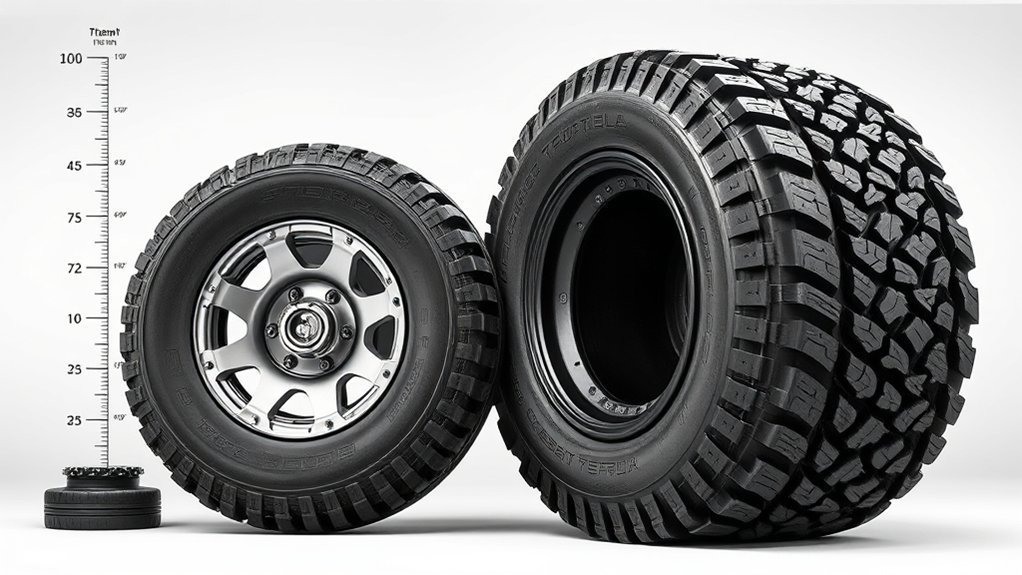
A 35-inch tire is a tire size category, not a promise that every tire will measure exactly 35.00 inches tall. Many popular 35s measure closer to 34.4 to 34.8 inches in published specs, and the height you see on your vehicle can change with wheel width, load, inflation pressure, tread design, and manufacturer construction.
Quick Answer
A 35-inch tire usually measures about 34.4 to 35.1 inches by nominal size, with many real 35×12.50R17 tires published around 34.5 to 34.8 inches tall. Common 35-inch sizes include 35×12.50R17, 315/70R17, 35×12.50R18, and 35×12.50R20.
Key Takeaways
- A “35-inch tire” is usually a nominal size; the actual published diameter may be slightly under or over 35 inches.
- Common 35-inch tire widths range from about 11.5 to 13.5 inches, but 12.50 inches is the most familiar off-road width.
- 315/70R17 is a common metric equivalent, but it calculates to about 34.4 inches, not a perfect 35.0 inches.
- Tire pressure, vehicle load, wheel width, tread depth, and construction all affect the height you measure on the vehicle.
- Fitment depends on your vehicle, wheel offset/backspacing, suspension travel, steering clearance, load rating, and speedometer calibration.
What Does a 35-Inch Tire Really Measure?
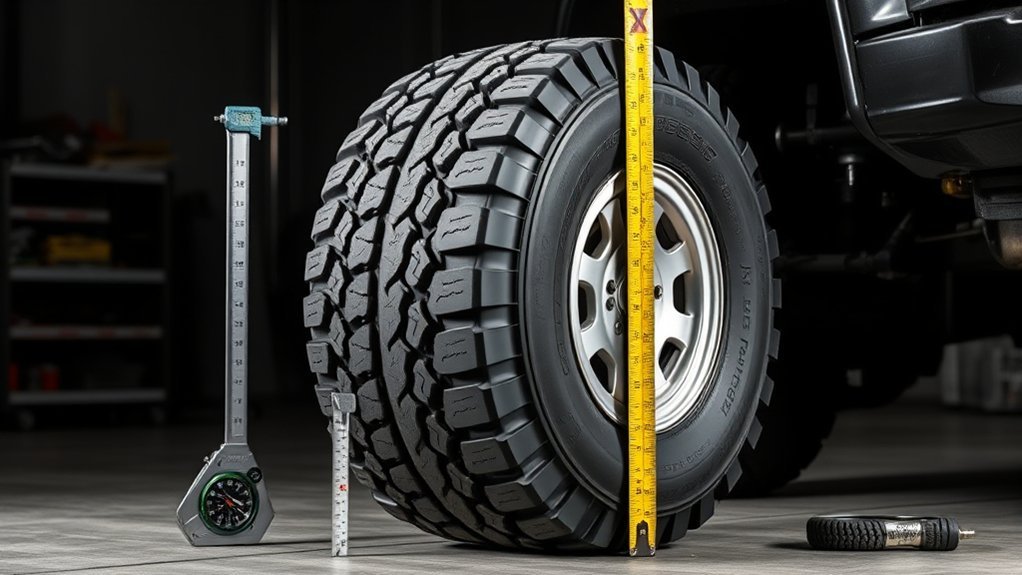
A 35-inch tire usually means the tire belongs to the 35-inch size class. It does not always mean the tire is exactly 35 inches tall when mounted, inflated, and loaded on a vehicle.
For example, a metric tire like 315/70R17 uses a formula to estimate diameter:
Overall diameter = wheel diameter + 2 × sidewall height
The sidewall height is 70% of 315 mm. That puts a 315/70R17 at about 34.4 inches nominally. Tire Rack explains that these calculations are estimates and that actual physical tire dimensions can differ from calculator results or sidewall shorthand, so close-clearance builds should use the manufacturer’s published specs for the exact tire model and size. Tire Rack’s tire-dimension guide is a useful reference for the size formula.
A 35-inch tire is best treated as a size class. For exact fitment, use the published diameter, section width, approved rim width, load rating, and revolutions per mile for the exact tire you plan to buy.
Common 35-Inch Tire Sizes
Several tire sizes are commonly treated as 35s. Some are true flotation sizes, such as 35×12.50R17, while others are metric sizes that land close to the same diameter.
| Size | Approx. Diameter | Approx. Width | Common Use |
|---|---|---|---|
| 35×12.50R17 | Often about 34.5–34.8 in by model | About 12.5 in | Popular truck, Jeep, and off-road fitment |
| 315/70R17 | About 34.4 in nominal | About 12.4 in | Metric 35-ish equivalent |
| 35×11.50R17 | About 35 in nominal | About 11.5 in | Narrower 35 for clearance and lighter steering |
| 35×12.50R18 | About 35 in nominal | About 12.5 in | Truck and SUV upgrades with 18-inch wheels |
| 295/65R20 | About 35.1 in nominal | About 11.6 in | Narrow 35-ish metric for 20-inch wheels |
Note: Published dimensions can vary between tire models even when the sidewall size is identical. Always check the exact manufacturer spec sheet before buying.
How Wide Is a 35-Inch Tire?
A typical 35-inch off-road tire is about 12.5 inches wide, but that is not the only option. You can find narrower 35s near 11.5 inches wide and wider options around 13.5 inches wide. The tire’s section width is the widest sidewall-to-sidewall measurement when the tire is mounted on a specified measuring rim.
BFGoodrich explains that the first number in a metric tire size is the tire width in millimeters, while the aspect ratio tells you the sidewall height as a percentage of that width. BFGoodrich’s sidewall guide is helpful if you want to decode metric sizes before comparing them with flotation sizes.
| Tire Example | Typical Width | What It Means |
|---|---|---|
| 315/70R17 | About 12.4 in | Common metric 35-ish size |
| 35×12.50R17 | About 12.5 in | Most familiar 35-inch off-road width |
| 35×11.50R17 | About 11.5 in | Narrower choice for clearance and snow traction |
| 35×13.50R17 | About 13.5 in | Wider footprint but higher rubbing risk |
Wheel width changes how the tire sits. A wheel near the narrow end of the approved range can pull the beads inward and make the sidewall bulge more. A wider wheel can spread the tire and increase the practical clearance you need near fenders, control arms, and sway bars.
How Tire Pressure, Load, and Tread Affect Tire Height
Tire pressure does not turn a 34.5-inch tire into a true 35.5-inch tire, but it does affect the tire’s loaded radius and footprint. A tire measured off the vehicle may be close to its published diameter. The same tire on a truck may sit lower because the vehicle’s weight compresses the sidewall.
Lower pressure usually creates more sidewall deflection and a larger contact patch, which can reduce loaded ride height. Higher pressure reduces deflection, but it should never be used as a shortcut to gain clearance.
Warning: Do not choose tire pressure by tire size alone. Use the vehicle placard, owner’s manual, or a tire manufacturer load-inflation chart. NHTSA recommends using the vehicle manufacturer’s cold inflation pressure shown on the tire information placard or certification label.
Tread depth also matters. A new mud-terrain tire with deep lugs can be taller than the same tire after thousands of miles of wear. If your fitment is already tight, worn and new tires can clear differently.
Which Tire Sizes Count as 35s?
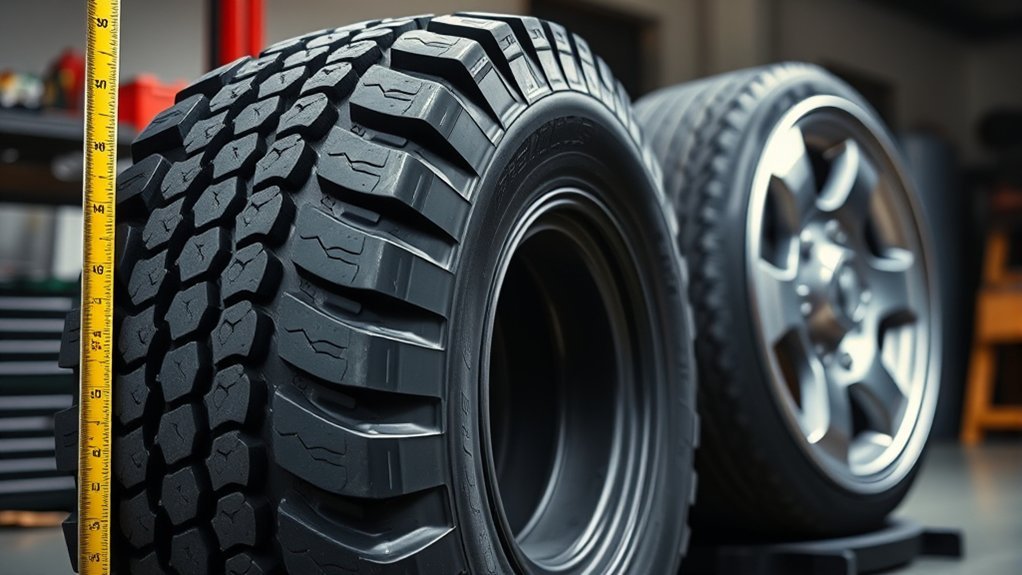
The sizes that “count” as 35s are the ones that land near the 35-inch diameter class and are commonly sold for lifted trucks, Jeeps, SUVs, and off-road builds. The most common examples are 35×12.50R17, 35×12.50R18, 35×12.50R20, and 315/70R17.
Metric sizes can be close but not exact. For example, a 315/70R17 calculates to about 34.4 inches. A 295/65R20 calculates to about 35.1 inches but is narrower than a 35×12.50. That is why a tire size calculator is useful for the first pass, but the final decision should come from the exact tire’s spec sheet.
Pro Tip: When comparing 35s, check four numbers together: overall diameter, section width, approved rim-width range, and revolutions per mile. Those numbers tell you more than the sidewall name alone.
Will 35-Inch Tires Fit on 17-Inch Wheels?
Yes, many 35-inch tires are made for 17-inch wheels. Common examples include 35×12.50R17, 315/70R17, and some narrower 35×11.50R17 options. The wheel diameter is only one part of the fitment. You also need the correct wheel width, load rating, offset/backspacing, brake clearance, and body clearance.
35-Inch Sizes on 17s
A 17-inch wheel is popular for 35s because it leaves more sidewall than an 18-, 20-, or 22-inch wheel. More sidewall can improve ride comfort, air-down performance, and off-road impact absorption.
- 315/70R17: common metric 35-ish size, about 34.4 inches nominal.
- 35×12.50R17: common flotation size, often published around 34.5 to 34.8 inches depending on model.
- 35×11.50R17: narrower option that may help with clearance and steering effort.
Common 17-Inch Fitment Checks
Before buying, confirm that the tire is approved for your wheel width. Many 35×12.50R17 tires are commonly paired with wheels around 8.5 to 11 inches wide, but the exact approved range depends on the tire model.
Also check:
- Front bumper and fender liner clearance at full lock
- Control arm, sway bar, and frame clearance
- Clearance while the suspension is compressed
- Brake caliper clearance inside the wheel
- Wheel load rating and tire load index
- Spare tire carrier, bed, or underbody spare clearance
Backspacing and Clearance Considerations
Backspacing and offset control where the tire sits in the wheel well. Less backspacing or more negative offset pushes the tire outward, which can help inner clearance but may increase fender poke and outer rubbing. More backspacing pulls the tire inward, which can help fender coverage but may create contact with suspension or frame parts.
There is no universal “best” backspacing for 35-inch tires. A Jeep Wrangler, Ford Bronco, Toyota Tacoma, Ram 2500, and Silverado 1500 can all need different wheel specs. Use your vehicle platform’s known fitment data, then verify with the actual tire dimensions.
Will 35-Inch Tires Fit on 18- to 20-Inch Wheels?
Yes, 35-inch tires can fit 18-, 19-, 20-, and even larger wheels when the tire is built for that rim diameter. Common sizes include 35×12.50R18, 35×12.50R20, and 295/65R20.
The tradeoff is sidewall height. A 35-inch tire on a 17-inch wheel has more sidewall than a 35-inch tire on a 20-inch wheel. More sidewall usually helps off-road comfort and impact absorption. Less sidewall can sharpen steering response on pavement but may ride firmer and offer less cushion when aired down.
For 20-inch wheels, pay extra attention to:
- Wheel width and offset
- Load range and maximum load capacity
- Ride quality with shorter sidewalls
- Wheel protection off-road
- Brake clearance and hub fitment
Fitment Checklist Before Buying 35-Inch Tires
A tire can fit the wheel and still rub the vehicle. Use this checklist before ordering 35s:
| Check | Why It Matters |
|---|---|
| Overall diameter | Affects ride height, rubbing, gearing, speedometer reading, and spare fitment. |
| Section width | Controls sidewall clearance near suspension, frame, and fenders. |
| Wheel width | Must fall inside the tire manufacturer’s approved rim-width range. |
| Offset/backspacing | Changes inner and outer clearance. |
| Load index/load range | Must safely support the vehicle and payload. |
| Speedometer calibration | A taller tire changes revolutions per mile and can make the speedometer read low. |
| Gearing and braking | Larger, heavier tires can reduce acceleration, braking feel, and fuel economy. |
| Spare tire location | A full-size 35 may not fit under the vehicle or on the factory carrier. |
Warning: If a tire rubs at full lock or full suspension compression, it can damage the tire, fender liner, brake lines, wiring, or suspension parts. Test fit carefully before hard off-road use.
[Products Worth Considering]

Monitor tire tread wear with a smart, color-coded depth gauge that shows clear condition ranges at a glance. The bar is range marked for fast, easy readings, helping you maintain safer traction and performance. Each gauge is portable with a pocket clip, and the set includes 20 units for daily use and sharing.

Protect your spare wheel with a waterproof, dustproof tire cover made to resist sun and harsh weather. The elastic band design makes it easy to install and remove without tools, while reinforced stitching helps it keep its shape. Available in multiple sizes, it fits common RV, trailer, Jeep, SUV, and truck spare tires.

Keep your tires properly inflated with this analog VONDIOR tire pressure gauge, designed for fast, easy readings without batteries. The swiveling, two-axis hose and large glow dial help you measure at any tire angle with instant visibility. Built with a protective rubber shield, it supports durable, low-maintenance use for cars and trucks.
Best 35-Inch All-Terrain Tires
The best 35-inch all-terrain tire depends on how you drive. Daily drivers usually need road comfort, wet traction, and tread life. Trail-focused builds need stronger sidewalls, deeper tread, and better loose-surface grip.
Popular 35-inch all-terrain and hybrid-terrain options include:
- Nitto Ridge Grappler: a hybrid-terrain tire designed to blend highway comfort with off-road performance. Nitto highlights its dynamic hybrid tread pattern, shoulder grooves, and dual sidewall design. See Nitto Ridge Grappler details.
- BFGoodrich All-Terrain T/A KO2 or KO3: strong choices for drivers who want established all-terrain performance, sidewall durability, and broad size availability. Verify current availability in your exact 35-inch size before ordering.
- Toyo Open Country A/T III: an all-terrain tire focused on off-road traction, wet performance, durability, and treadwear. Toyo lists a treadwear warranty up to 65,000 miles depending on size and application. See Toyo Open Country A/T III details.
- Goodyear Wrangler DuraTrac RT: a good candidate for drivers who want all-terrain manners with more aggressive winter and trail capability, depending on size and rating.
For a daily-driven truck, start with noise, wet traction, tread life, and load rating. For a trail rig, prioritize sidewall strength, puncture resistance, and clean-out ability in mud, gravel, or snow.
[Products Worth Considering]

These aluminum alloy tire valve stem caps with an O-ring seal help protect valve stems from corrosion while adding a clean, stylish look to your vehicle. The universal fit works across cars, trucks, motorcycles, bicycles, and more, making them an easy upgrade for everyday driving and off-road use. Installation is quick, and the included four-pack keeps all your tires dressed and protected.

Measure tire tread depth quickly and accurately with this LUMITECO dial gauge that reads in 1/32" increments up to 14/32". The color-coded green/yellow/red zones make it easy to judge tire wear and know when replacement is needed. A rugged, compact design with a protective pouch helps keep the gauge ready for use on cars, trucks, motorcycles, and more.

ETENWOLF T300 is a calibrated digital tire pressure gauge for accurate readings from 3 to 200 PSI across light and heavy-duty vehicles. It includes thermal compensation for reliable performance in extreme cold or heat, with an auto shut-off to extend battery life and an LED for easier reading. The sturdy design supports rugged everyday use, making it ideal for pickups, RVs, and industrial applications.
Best 35-Inch Mud-Terrain Tires
Choose a 35-inch mud-terrain tire when off-road bite matters more than quiet highway manners. Mud-terrain tires usually have larger voids, deeper lugs, and stronger shoulder blocks, but they can be louder, heavier, and less refined on pavement than all-terrains.
[Products Worth Considering]

The GADFISH spare tire carrier is built for reliable hauling with a reinforced welded triangular structure and a behind plate that securely holds the tire up to 150 lbs. It fits a wide range of trailer wheel lug setups, making it suitable for boat trailers as well, while the sloping design helps reduce wind resistance and provides low-ground clearance. Installation is designed to be straightforward with different length bolts and no drilling required.

The SAFELIFE dial tire tread depth gauge measures tread depth in 1/32 inch increments with clear, easy-to-read 2-inch dial face. Color zones using a traffic light system help you quickly judge whether tread is low, marginal, or ample for safer driving. Built with a durable zinc cast body and a metal detect probe for precise, comfortable use across cars, motorcycles, trucks, and buses.

This digital tire pressure gauge with built-in inflator helps you accurately check and adjust tire pressure for safer driving and better fuel efficiency. It supports multiple units (PSI, KPA, BAR, KG/CM²) and reads within 1% for reliable results. The 3-in-1 design inflates, deflates, and measures, with a quick-connect air chuck and compatible hose setup for cars, trucks, SUVs, RVs, and motorcycles.
Top Mud-Terrain Picks
- BFGoodrich Mud-Terrain T/A KM3: a strong choice for mud, rocks, and trail-focused builds.
- Yokohama Geolandar M/T G003: Yokohama highlights off-road traction, off-road durability, quiet-ride features, and tread-life design. See Yokohama Geolandar M/T G003 details.
- Toyo Open Country M/T: a maximum-traction tire for drivers who prioritize off-road grip and rugged construction. See Toyo Open Country M/T details.
- Nitto Trail Grappler M/T: a mud-terrain option often chosen by drivers who want aggressive traction with more road usability than some extreme mud tires.
Off-Road Traction Features
Look at the tread pattern before choosing a mud-terrain tire. Deep voids help clear mud. Strong shoulder lugs help in ruts and rocks. Sidewall lugs can add grip when aired down, but they also add width and may increase rubbing risk.
If your truck spends most of its life on highways, an all-terrain or hybrid-terrain tire may be a better match. If it regularly sees mud, rocks, sand, and rough trails, a mud-terrain tire can be worth the added noise, weight, and rolling resistance.
How to Measure a 35-Inch Tire at Home
You can measure a 35-inch tire at home, but the result depends on whether the tire is mounted, inflated, loaded, or unmounted. For fitment, the most useful measurement is often the loaded clearance on the actual vehicle.
At a Glance
| Time Required | 10–20 minutes |
| Difficulty | Easy |
| Tools Needed | Tape measure, tire pressure gauge, flat surface, helper if checking steering clearance |
| Cost | Free if you already own a tape measure and pressure gauge |
- Park on a flat surface. Use level ground so the measurement is not skewed.
- Check cold tire pressure. Record the pressure before measuring.
- Measure overall height. Place the tape measure at the ground and measure to the highest tread point.
- Measure section width. Measure across the widest sidewall point, not just the tread face.
- Check steering clearance. Turn the wheel fully left and right and inspect the inner and outer clearance.
- Check compression clearance. If possible, inspect clearance with the suspension flexed or after a careful test drive.
- Record the results. Keep height, width, pressure, wheel size, and vehicle setup together for future tire comparisons.
If you are measuring an unmounted tire, it may not match the loaded height on the vehicle. If you are measuring a mounted tire on the vehicle, the vehicle’s weight will compress the tire and reduce the ground-to-top measurement slightly.
Frequently Asked Questions
Is 285/70R17 a 35-inch tire?
No. A 285/70R17 is closer to a 33-inch tire. It calculates to about 32.7 inches tall and about 11.2 inches wide. It is a common upgrade size, but it is not a 35-inch equivalent.
Is a 295 tire the same as a 35?
Not by width alone. “295” only tells you the section width in millimeters. You also need the aspect ratio and wheel diameter. A 295/65R20 is about 35.1 inches nominally, while a 295/70R17 is closer to 33.3 inches. Always read the full tire size.
Is a 295/65R20 a 35-inch tire?
Yes, it is commonly treated as a narrow 35-inch metric equivalent because it calculates to about 35.1 inches tall and about 11.6 inches wide. Actual dimensions vary by manufacturer and tire model, so check the specific spec sheet before buying.
Is a 305 tire the same as a 35?
Not automatically. “305” is the width in millimeters, not the height. For example, a 305/70R17 calculates to about 33.8 inches tall, so it is closer to a tall 34 than a true 35. A different 305 size could be taller or shorter depending on aspect ratio and wheel diameter.
What is the closest metric size to a 35×12.50R17?
The common metric comparison is 315/70R17. It is about 34.4 inches tall and 12.4 inches wide by nominal calculation. It is close to a 35×12.50R17, but exact dimensions vary by tire model.
Do 35-inch tires affect the speedometer?
Yes. A taller tire travels farther per revolution, so the speedometer and odometer can read incorrectly if the vehicle was calibrated for a smaller tire. Many modern trucks and Jeeps can be recalibrated with a scan tool, programmer, or dealer-level adjustment.
Do I need a lift for 35-inch tires?
Maybe. Some vehicles clear 35s with the right wheel offset and minor trimming, while others need a suspension lift, body clearance work, or both. The answer depends on the vehicle, wheel specs, tire width, suspension travel, and how much rubbing you are willing to correct.
Conclusion
A 35-inch tire is not one exact measurement. It is a size class that usually includes tires around 34.4 to 35.1 inches tall, depending on the size format, brand, tread, wheel width, and load. A 35×12.50R17 is the classic off-road 35, while 315/70R17 and 295/65R20 are common metric sizes that sit close to the same category.
For the best fit, do not rely on the sidewall name alone. Check the exact manufacturer specs, confirm wheel width and load rating, test steering and suspension clearance, and recalibrate the speedometer if the new tire changes revolutions per mile.
Sources
- NHTSA TireWise — tire pressure, placard, load, and tire safety guidance.
- BFGoodrich: How to Read a Tire Sidewall — tire width, aspect ratio, construction, and sidewall markings.
- Tire Rack: How Do I Calculate Tire Dimensions? — tire diameter formula and nominal-vs-actual size caution.
- Nitto Ridge Grappler — hybrid-terrain tire features and manufacturer product details.
- Toyo Open Country A/T III — all-terrain tire features, durability, and warranty details.
- Yokohama Geolandar M/T G003 — mud-terrain tire features and manufacturer product details.

