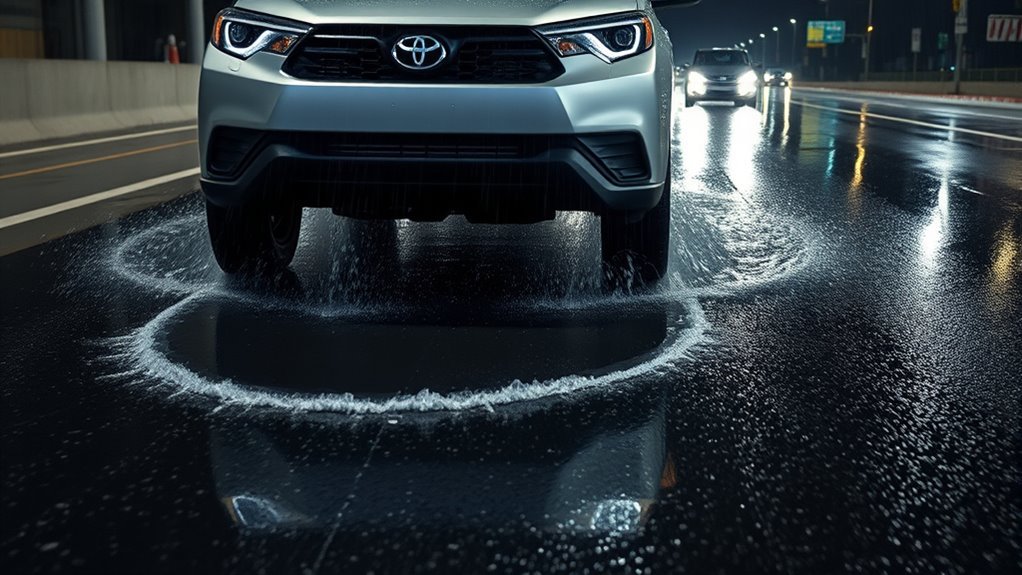
Tire hydroplaning happens when your Toyota RAV4’s tires ride on top of water instead of gripping the road. It can happen quickly in heavy rain, on roads with standing water, or when tires are worn, underinflated, or not designed to move water away well. The best prevention is simple: slow down before water, keep your tires properly inflated, check tread depth every month, and drive smoothly in wet weather.
Quick Answer
To prevent your Toyota RAV4 from hydroplaning, reduce speed in rain, avoid standing water, turn off cruise control, maintain the tire pressure listed on the driver-side door placard, and replace tires when tread is worn. If hydroplaning starts, ease off the accelerator, keep steering smooth, and avoid sudden braking.
Key Takeaways
- Hydroplaning is caused by water lifting the tire away from the pavement, reducing steering, braking, and acceleration control.
- Speed, water depth, tread depth, tire pressure, pavement condition, and tire design all affect hydroplaning risk.
- Check tire pressure and tread monthly; the NHTSA says tires should be replaced when tread reaches 2/32 inch.
- Toyota recommends rotating tires every 5,000 to 7,500 miles, though the right interval can vary by driving habits and road conditions.
- All-wheel drive, traction control, and ABS can help with some loss-of-traction events, but they cannot make worn tires grip through standing water.
At a Glance
| Time Required | 5–10 minutes for a tire pressure and tread check |
| Difficulty | Easy |
| Tools Needed | Tire pressure gauge, tread depth gauge or penny, owner’s manual or tire placard |
| Cost | Usually $0–$15 for checks; tire replacement cost varies by tire size and model |
What Is Tire Hydroplaning and How Does It Happen?
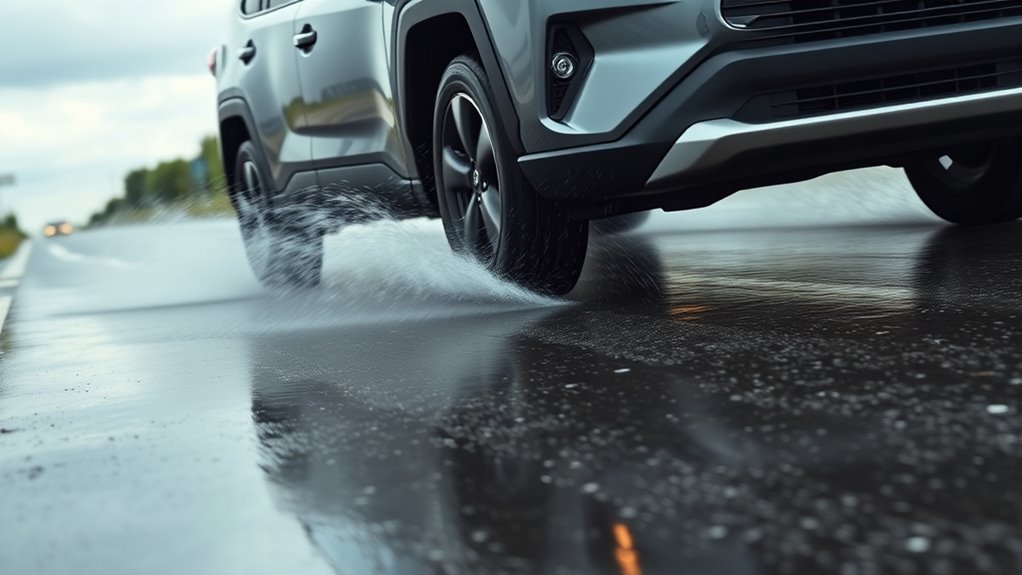
Tire hydroplaning happens when water builds up faster than your tires can push it out of the way. Instead of the rubber staying firmly on the pavement, a wedge or film of water separates the tire from the road. When that happens, your RAV4 may feel like it is floating, sliding, or not responding normally to steering, braking, or acceleration.
The National Highway Traffic Safety Administration explains that wet pavement can create a complete loss of traction under certain conditions, and that tire tread depth and pavement texture help control the risk. Hydroplaning is not caused by one factor alone. It depends on how fast you are driving, how much water is on the road, your tire tread depth, tire inflation, tire design, vehicle load, and the condition of the pavement.
Speed matters because tires need time to move water through their tread grooves. The faster you drive, the less time the tire has to clear water from the contact patch. The Federal Highway Administration notes that even a thin layer of water can initiate hydroplaning at speeds as low as 35 mph. That does not mean hydroplaning happens every time you drive 35 mph in rain; it means you should slow down well before puddles, wheel ruts, and standing water.
Wet roads are not a minor risk. The Federal Highway Administration reports that 75% of weather-related vehicle crashes occur on wet pavement and 47% happen during rainfall.
How to Maintain Your Tires to Prevent Hydroplaning
Good tires are your RAV4’s first defense against hydroplaning. Tire maintenance will not make deep water safe, but it gives your vehicle a better chance of keeping contact with the road in normal rain.
[Products Worth Considering]

Measure tire tread depth quickly and accurately with this LUMITECO dial gauge that reads in 1/32" increments up to 14/32". The color-coded green/yellow/red zones make it easy to judge tire wear and know when replacement is needed. A rugged, compact design with a protective pouch helps keep the gauge ready for use on cars, trucks, motorcycles, and more.

Monitor tire tread wear with a smart, color-coded depth gauge that shows clear condition ranges at a glance. The bar is range marked for fast, easy readings, helping you maintain safer traction and performance. Each gauge is portable with a pocket clip, and the set includes 20 units for daily use and sharing.

The SAFELIFE dial tire tread depth gauge measures tread depth in 1/32 inch increments with clear, easy-to-read 2-inch dial face. Color zones using a traffic light system help you quickly judge whether tread is low, marginal, or ample for safer driving. Built with a durable zinc cast body and a metal detect probe for precise, comfortable use across cars, motorcycles, trucks, and buses.
Check Tire Tread Depth Monthly
Tread grooves are designed to move water away from the tire. When tread gets too shallow, the tire has less room to channel water, and hydroplaning risk rises. The NHTSA tire safety guide says tire tread should be checked at least once a month and that tires are not safe once tread is worn down to 2/32 inch.
- Use a tread depth gauge for the most accurate reading.
- Use the penny test if you do not have a gauge: place a penny into the tread with Lincoln’s head upside down and facing you. If you can see the top of Lincoln’s head, replace the tire.
- Check several grooves across each tire, not just one spot, because uneven wear can hide on the inside or outside edge.
Warning: The 2/32-inch tread depth is a minimum replacement point, not a wet-road performance goal. If your RAV4 feels slippery in rain, shows uneven tread wear, or takes longer to stop, have the tires inspected even if they are not yet at the wear bars.
Keep Tire Pressure at the RAV4 Recommended PSI
Underinflated tires can change the shape of the contact patch and reduce stable road contact. Overinflated tires can also reduce grip by shrinking the tire’s footprint. Use the tire pressure listed on your RAV4’s driver-side door placard or in your owner’s manual, not the maximum PSI printed on the tire sidewall.
For the most accurate reading, check pressure when the tires are cold, meaning the vehicle has been parked for at least three hours. The NHTSA recommends checking all tires, including the spare if equipped, at least once a month. Newer RAV4 models have a Tire Pressure Monitoring System, but TPMS should not replace regular gauge checks because it usually warns only after a tire is significantly underinflated.
Rotate and Inspect Your Tires on Schedule
Tire rotation helps even out wear so all four tires can maintain more consistent wet-road grip. Toyota’s scheduled maintenance guidance recommends rotating tires every 5,000 to 7,500 miles, while noting that the best timing can vary based on driving habits and road surface conditions.
- Follow the maintenance guide for your exact RAV4 model year.
- Have alignment checked if the RAV4 pulls to one side or the tires wear unevenly.
- Balance tires when vibration appears or when new tires are installed.
- Replace tires with the correct size, load rating, and speed rating for your RAV4.
Pro Tip: Keep a small tire pressure gauge in the glove box and check pressure before your first drive of the day. A two-minute cold-pressure check is more useful than guessing by appearance because underinflation can be hard to spot visually.
Driving Techniques to Avoid Hydroplaning
Tire maintenance matters, but your driving choices matter just as much. In rain, your goal is to reduce the amount of water the tires must clear and give yourself more time to react.
[Products Worth Considering]

Accurately measure tire tread depth with a calibrated gauge marked from 0 to 1 inch in 1/32 inch increments. The color-coded bar helps you quickly identify tread condition ranges, supporting safe driving for trucks, motorcycles, automobiles, and passenger vehicles.

Measure tyre tread depth precisely with a digital gauge that reads in both MM and inches, helping you monitor safe driving conditions. The large LCD screen is easy to operate, and the compact tool fits for cars, trucks, and motorcycles. It provides high accuracy with a 0-25.4mm range and includes a 1-year warranty for added peace of mind.

ETENWOLF’s tire pressure gauge helps you quickly and accurately check tire PSI across cars, trucks, motorcycles, bikes, and more. It’s manually calibrated to ANSI B40.1 Grade A for reliable readings, includes a large glow dial for easy nighttime viewing, and features a 360-degree swivel chuck for use at any valve angle. The gauge also works consistently in extreme hot or cold weather.
Slow Down Before Standing Water
Reduce speed before you reach puddles, water-filled ruts, or shiny patches of pavement. Do not wait until you are already in standing water to brake or steer sharply. Smooth speed reduction helps the tires keep contact with the road.
- Drive below the posted speed limit when roads are wet.
- Slow more in heavy rain, at night, on curves, and near intersections where water collects.
- Avoid sudden acceleration when pulling away from a stop on wet pavement.
Increase Following Distance
Wet pavement lowers tire-pavement friction and increases stopping distance. The FHWA explains that poor tire and pavement conditions lower adhesion and increase stopping distance. Leave extra room between your RAV4 and the vehicle ahead so you do not have to brake suddenly.
Turn Off Cruise Control in Rain
Cruise control is useful on dry highways, but it is not a good choice on wet roads. If the RAV4 begins to hydroplane while cruise control is active, the system may delay the smooth, manual response you need. Keep your foot in control so you can ease off the accelerator as soon as traction feels light.
Use Smooth Steering and Braking
Quick steering corrections and hard braking can make a small traction loss worse. Use gentle steering inputs, brake early, and avoid last-second lane changes through puddles. If you need to slow down on wet pavement, apply steady pressure and give the tires time to respond.
What Makes Your RAV4 Hydroplane?
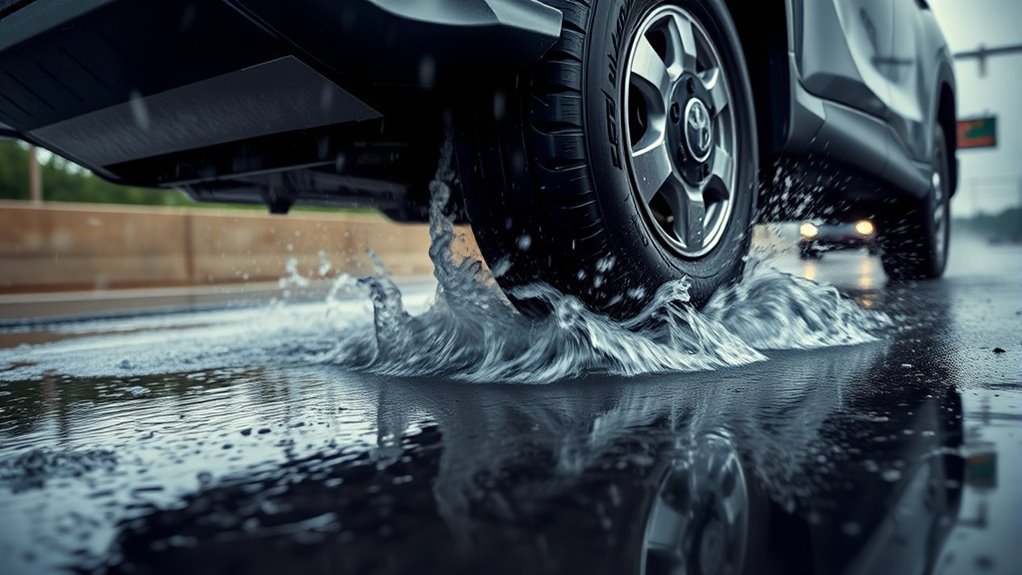
Your Toyota RAV4 can hydroplane when the tires cannot clear water quickly enough to stay in contact with the pavement. The RAV4’s weight, available all-wheel drive, and safety systems may help in many driving situations, but they do not cancel the laws of physics. If a tire is lifted onto water, it has little grip no matter what badge is on the vehicle.
The biggest hydroplaning risk factors are speed, water depth, tire tread depth, tire inflation, road surface condition, tire design, and vehicle load. A loaded RAV4 may feel more planted, but added weight also requires more distance to slow down. Worn tires, incorrect pressure, or mismatched tires can make the vehicle less predictable in rain.
| Factor | Impact on Hydroplaning | Recommended Action |
|---|---|---|
| Tire Tread Depth | Shallow tread moves less water away from the contact patch | Check monthly and replace tires at 2/32 inch or sooner if wet grip feels poor |
| Speed | Higher speed gives tires less time to clear water | Slow down before puddles, curves, and heavy rain |
| Water Accumulation | Standing water can lift the tire away from pavement | Avoid puddles, wheel ruts, and flooded lanes |
| Tire Inflation | Incorrect pressure can reduce stable road contact | Use the cold PSI on the driver-side door placard |
| Tire Type | Some tread designs evacuate water better than others | Choose tires with strong wet-traction ratings for your climate |
| Road Surface | Ruts, smooth pavement, oil, and poor drainage increase risk | Use extra caution when rain first starts and near low spots |
Note: AWD can help distribute power when tires still have grip, but it cannot prevent hydroplaning once the tire is riding on water. Wet-road safety still depends on speed, tires, and road conditions.
How to Handle Hydroplaning
If your RAV4 starts to hydroplane, the most important step is to stay calm and avoid sudden inputs. The vehicle may feel light, the steering may stop responding normally, or the engine may rev without the vehicle moving as expected. Use these steps to regain control safely:
- Ease off the accelerator. Let the vehicle slow naturally. Do not stomp on the gas or try to power through the slide.
- Keep your eyes where you want to go. Look down the lane or toward a safe open path, not at the puddle or guardrail.
- Steer gently in the direction you want the vehicle to travel. Make small corrections only. Overcorrecting can cause a skid when traction returns.
- Avoid sudden braking. If braking is necessary and your RAV4 has ABS, use firm, steady pressure. If driving an older vehicle without ABS, brake gently to avoid wheel lockup.
- Wait for the tires to reconnect. You may feel the steering weight return when the tires regain contact with the road.
- Pull over when safe if the vehicle feels damaged or unstable. Check tires and wheels before continuing.
Warning: Never drive through flooded water when you cannot tell how deep it is. Hydroplaning is only one danger; deep water can stall the engine, hide road damage, or sweep a vehicle off course.
More Tips to Prevent Hydroplaning in Wet Conditions
Hydroplaning prevention is about stacking small safety habits together. The more you reduce speed, improve tire condition, and avoid water buildup, the safer your RAV4 will feel in rain.
[Products Worth Considering]
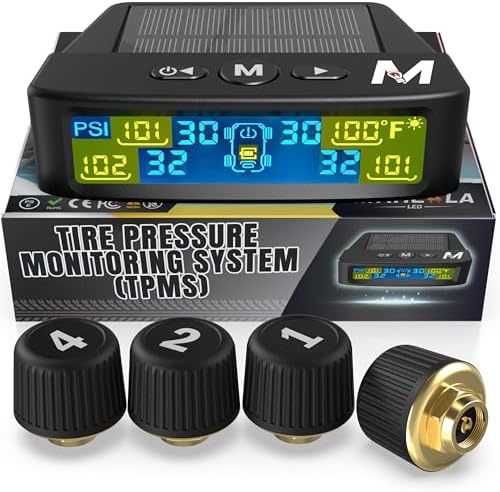
Marcala’s TPMS set of four sensors helps you monitor tire pressure and temperature in real time while driving, with updates every second. The bright color LCD uses auto-dimming for easy viewing, powered by dual solar and USB charging, and offers six alarm modes. Built for trailers, RVs, campers, trucks, and towing setups, the sensors support monitoring 1-4 wheels up to 98 PSI with IP67 waterproof protection.
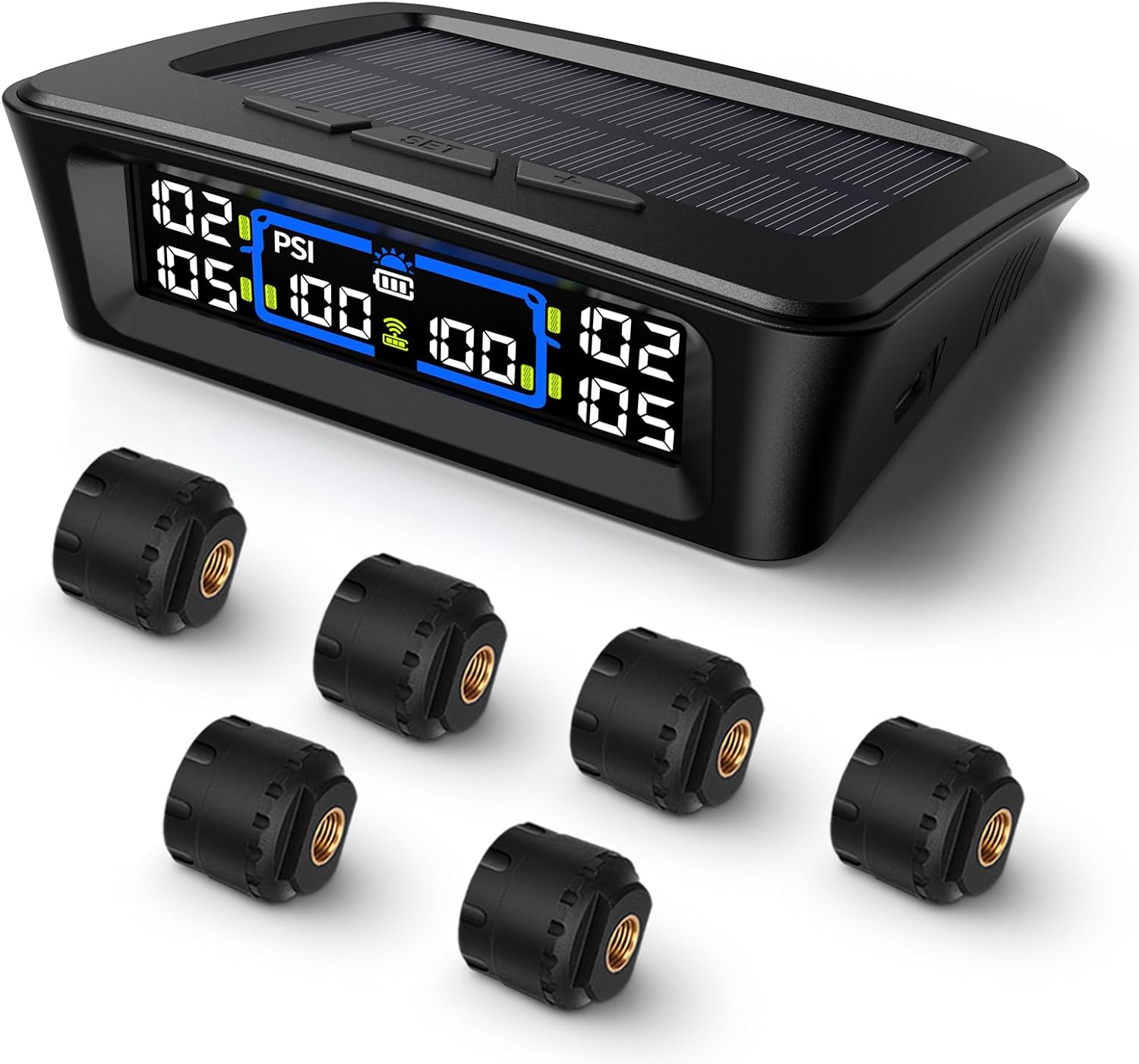
The Tymate TM12 RV TPMS delivers real-time tire pressure and temperature monitoring with a stable 433Hz display for safer long-distance driving. It supports simultaneous monitoring across vehicle and trailer zones, includes six alarm modes for pressure, temperature, leakage, battery, and signal loss, and features easy DIY installation with auto calibration. Power is supplied via USB-C charging or solar recharging, with a wide 0–144 PSI range and up to 50 ft signal coverage for RVs and towable trailers.

Check tire pressure with the Milton S-925 pencil gauge built for trucks, RVs, and bicycles. It features a single-head chuck with a built-in deflator valve, and it displays readings in both PSI and kPa for convenient use. The gauge is designed for accurate, repeatable pressure checks within its working range.
Choose a Safer Lane Position
Water often collects in outside lanes, low spots, and wheel ruts made by heavy traffic. When safe and legal, drive in a lane with less visible standing water. Avoid following large trucks too closely because spray can reduce visibility and hide puddles.
Avoid Puddles and Flooding
Steer around puddles when it is safe to do so. If you cannot avoid a shallow puddle, slow down before you reach it and keep the steering wheel steady as you pass through. Do not make a sharp lane change at the last second.
- Watch for water collecting near curbs, underpasses, and bridge approaches.
- Avoid the shiny, smooth-looking parts of the lane during heavy rain.
- Use extra care during the first part of rainfall, when water can mix with oil and grime on the road surface.
Replace Wipers and Keep Visibility Clear
Hydroplaning is more likely to become dangerous when you do not see standing water early. Replace worn wiper blades, keep washer fluid filled, and use headlights in rain so other drivers can see you. Clean the inside of the windshield too; glare and fog can hide puddles at night.
Choose the Right Tires for Rain
When buying replacement tires, look beyond price and tread life. Wet traction matters for a daily-driven RAV4, especially if you commute on highways or live where heavy rain is common. The NHTSA’s Uniform Tire Quality Grading information explains that traction grades indicate a tire’s ability to stop on wet pavement. A higher wet-traction grade can help, but it still must be paired with proper pressure, adequate tread depth, and safe speed.
Do a Quick Rainy-Day Check
Before a rainy drive, spend one minute checking the basics:
- Look for visibly low tires, bulges, cuts, or exposed cords.
- Confirm the TPMS light is off, then use a gauge if you have time.
- Check that wipers clear the windshield without streaks.
- Remove loose items that could roll under the pedals.
- Plan a route that avoids flood-prone roads when storms are expected.
Common Mistakes That Increase Hydroplaning Risk
Many hydroplaning situations are made worse by habits that seem harmless on dry pavement. Avoid these mistakes when rain starts:
- Driving the posted speed limit no matter what: The speed limit is for good conditions. Rain calls for slower driving.
- Relying only on AWD: AWD does not help much if all four tires lose contact with the road surface.
- Waiting for the TPMS light: TPMS is a warning system, not a monthly maintenance plan.
- Using cruise control in rain: Manual throttle control gives you a faster, smoother response.
- Buying tires only by treadwear rating: Long tread life is useful, but wet traction is a safety priority.
- Ignoring uneven wear: One worn edge can reduce wet grip even when the center tread looks acceptable.
Frequently Asked Questions
What causes tires to hydroplane?
Tires hydroplane when water builds between the tire and road faster than the tread can move it away. The tire can lift onto the water layer, causing a loss of steering, braking, and acceleration control. Speed, standing water, worn tread, tire pressure, and pavement condition all play a role.
What two things can you control to help prevent hydroplaning?
The two biggest things you can control are your speed and your tire condition. Slow down in rain, avoid standing water, keep tires properly inflated, check tread depth monthly, and replace tires when they are worn or losing wet-road grip.
Can a Toyota RAV4 hydroplane even with all-wheel drive?
Yes. All-wheel drive can help distribute power when the tires still have traction, but it cannot prevent hydroplaning if the tires ride on top of water. Tire tread, tire pressure, speed, and water depth matter more than the drivetrain in a hydroplaning event.
Should I brake if my RAV4 starts hydroplaning?
Avoid sudden braking. First ease off the accelerator and steer smoothly in the direction you want to travel. If braking is necessary and your RAV4 has ABS, apply steady pressure. Do not pump ABS brakes. For older vehicles without ABS, use gentle braking to avoid locking the wheels.
How often should I check RAV4 tire pressure and tread?
Check tire pressure and tread depth at least once a month and before long trips. Use the cold tire pressure on the driver-side door placard or owner’s manual. Also inspect for uneven wear, cuts, cracks, bulges, vibration, or any change in wet-weather handling.
Conclusion
Hydroplaning can be scary, but most prevention comes down to habits you can control. Keep your Toyota RAV4’s tires inflated to the correct cold pressure, check tread depth monthly, rotate and inspect tires on schedule, slow down in rain, and avoid standing water whenever possible. If hydroplaning does happen, stay calm, ease off the accelerator, steer smoothly, and avoid sudden braking. A few minutes of tire care and a lighter foot in wet weather can make your RAV4 much safer and more predictable on rainy roads.
Sources
- NHTSA TireWise: Tire Safety Ratings and Awareness — tire pressure, monthly checks, tread depth, penny test, TPMS, rotation, and wet traction guidance.
- Toyota Scheduled Maintenance Guide — Toyota tire rotation interval of 5,000 to 7,500 miles and maintenance guidance.
- Toyota 2024 RAV4 Owner’s Manual: Tire Inflation Pressure — RAV4 tire pressure and owner’s manual reference.
- FHWA Road Weather Management: Rain and Flooding — wet pavement and rainfall crash statistics.
- FHWA: How Storm Run-Off Affects Roadway Safety — hydroplaning risk on thin water layers and wet roadway drainage hazards.
- NHTSA Hydroplaning Interpretation — hydroplaning as loss of traction on wet pavement and the role of tread depth and pavement texture.