
Tire speed ratings matter because they tell you whether a tire is built to handle your RAV4’s speed, load, heat, and handling demands. The right rating helps your Toyota RAV4 feel stable on the highway, brake predictably, and avoid unnecessary tire stress. The safest choice is simple: match or exceed the tire speed rating listed on your driver-side door placard or in your owner’s manual.
Quick Answer
For a Toyota RAV4, choose replacement tires with a speed rating that matches or exceeds the rating on the vehicle tire placard or owner’s manual. Many RAV4 tires are H-rated or V-rated, but the correct rating depends on model year, trim, wheel size, and tire size.
Key Takeaways
- The speed rating is the final letter in the tire service description, such as the H in 225/65R17 102H.
- A speed rating is not a recommended driving speed; it is a controlled-test capability rating for a properly inflated, undamaged tire.
- Never choose a tire below the manufacturer’s required rating unless a tire professional confirms a safe winter-tire exception.
- Load index matters just as much as speed rating. Your replacement tires should meet or exceed both ratings.
- Mixing speed ratings is not ideal because your vehicle’s safe tire performance is limited by the lowest-rated tire.
At a Glance
| Time Required | 5 minutes |
| Difficulty | Easy |
| Tools Needed | Tire sidewall, driver-side door placard, owner’s manual, tire pressure gauge |
| Cost | Free to check; tire replacement cost depends on size, brand, and rating |
What Is Tire Speed Rating and Why Does It Matter?

A tire speed rating is a letter code that shows the maximum speed a tire is designed to sustain under controlled test conditions when it is properly inflated, properly loaded, and undamaged. You will usually find it at the end of the tire’s service description, right after the load index.
For example, in 225/65R17 102H, the 102 is the load index and the H is the speed rating. An H-rated tire is rated up to 130 mph under specified conditions, according to tire-industry speed rating charts from manufacturers such as Bridgestone and Michelin.
Note: A tire speed rating is not permission to drive at that speed. Always obey speed limits, road conditions, weather conditions, and Toyota’s tire recommendations.
For your RAV4, the safest move is to match or exceed Toyota’s recommended speed rating. A lower-rated tire may not manage heat, load, and handling the way the vehicle was designed to perform, especially during highway driving, emergency braking, or hot-weather trips.
How the Right Speed Rating Keeps You Safe
The right tire speed rating helps your RAV4 stay predictable. It supports steering response, braking stability, heat resistance, and load-carrying performance. Speed rating is not the only tire specification that matters, but it works together with tire size, load index, pressure, tread design, and tire condition.
Proper Load Capacity Matters
A tire’s load index tells you how much weight each tire can carry when inflated correctly. This is especially important on an SUV like the RAV4 because passengers, cargo, roof-rack loads, and trailer tongue weight can all add stress to the tires.
RAV4 load index requirements vary by year, trim, and tire size. Some common RAV4 tire examples may show load indexes around 100, 101, or 102, but you should not rely on a generic number. Check the driver-side door placard and owner’s manual for your exact vehicle.
- Stability: Correct load capacity helps the tire support the vehicle during braking, cornering, and highway driving.
- Durability: A proper load rating reduces excess heat and sidewall stress.
- Safety: A tire with too little load capacity can overheat, wear faster, or fail under heavy loads.
Enhanced Handling Performance
Speed ratings often reflect more than top-speed capability. They can also relate to heat resistance, tire construction, and steering feel. That does not mean a higher speed rating is automatically better for every driver, but it does mean you should not downgrade below Toyota’s required rating.
| Speed Rating | Maximum Rated Speed | What It Means for RAV4 Owners |
|---|---|---|
| S | 112 mph | Usually too low unless specifically approved for your vehicle and tire type |
| T | 118 mph | Common on some passenger vehicles, but do not use if your RAV4 requires H or V |
| H | 130 mph | Common on many SUV and crossover tire fitments |
| V | 149 mph | Often used on larger wheels or more performance-oriented fitments |
| W | 168 mph | Higher-performance rating; usually unnecessary unless specified |
| Y | 186 mph | High-performance rating; uncommon for a typical RAV4 setup |
Safety Under Various Conditions
Real-world tire performance depends on more than the letter on the sidewall. Heat, tire pressure, tread depth, road damage, vehicle alignment, and cargo weight all affect how safely a tire performs. The National Highway Traffic Safety Administration recommends keeping tires properly inflated, inspecting them for wear or damage, and following the vehicle’s tire and load limits.
Warning: Speed ratings do not apply the same way to damaged, under-inflated, overloaded, repaired, or excessively worn tires. A tire can be unsafe even if the sidewall rating looks correct.
What Happens if You Use Tires With Inadequate Ratings?
Using tires with a speed rating below Toyota’s recommendation can reduce your RAV4’s safety margin. The tire may build heat faster, feel less stable during quick maneuvers, or perform differently from what the suspension and safety systems were designed around.
| Issue | Possible Consequence |
|---|---|
| Speed rating below OEM requirement | Reduced heat resistance and less predictable highway performance |
| Wrong load index | Higher risk of overheating, sidewall stress, or tire damage under load |
| Mixing different ratings | Vehicle performance is limited by the lowest-rated tire |
| Ignoring tire pressure | Poor handling, faster wear, reduced fuel economy, and greater failure risk |
There is one common exception: some winter tires may carry a lower speed rating than the original all-season tire. That does not make them unsafe when used correctly, but you must stay below the tire’s rated speed and follow local rules, tire-shop guidance, and Toyota’s recommendations.
How to Read Tire Speed Ratings on Your RAV4
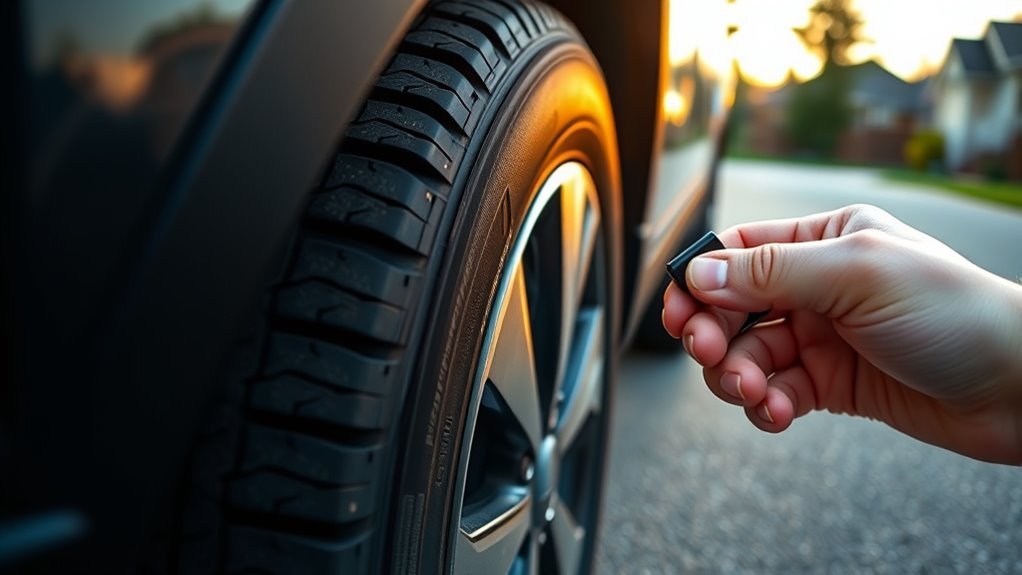
You can check your RAV4’s tire speed rating in three places: the tire sidewall, the driver-side door placard, and the owner’s manual. The sidewall tells you what is installed now. The placard and manual tell you what Toyota recommends for your specific vehicle.
- Find the tire size code: Look for a code such as 225/65R17 102H or 235/55R19 101V.
- Read the load index: The two- or three-digit number before the final letter is the load index.
- Read the speed rating: The final letter, such as H or V, is the speed rating.
- Compare it to the placard: Open the driver-side door and check the tire information placard for the recommended tire size and pressure.
- Confirm in the owner’s manual: Toyota’s owner information explains tire symbols, tire size, DOT codes, and tire inspection details.
Pro Tip: When buying tires online, filter by your exact RAV4 year, trim, drivetrain, and wheel size. Then still confirm the load index and speed rating before checkout.
How Speed Ratings Affect Your RAV4’s Safety and Handling
Speed ratings affect your RAV4 most during sustained highway driving, hot weather, emergency maneuvers, and heavy loading. A tire that meets Toyota’s required speed rating is designed to operate within the performance range expected for the vehicle.
Going higher than the required speed rating is usually acceptable if the tire also matches the correct size, load index, load range, and fitment requirements. However, a higher speed rating can sometimes mean a firmer ride, different tread life, or higher cost. Compare the whole tire, not just the letter.
The best RAV4 tire is not simply the highest-rated tire. It is the tire that matches Toyota’s size, load, speed, pressure, and usage requirements for your exact vehicle.
What Do the Different Speed Ratings S, T, H, V, W, and Y Mean?
Speed rating letters can be confusing because they do not follow a perfect alphabetical order. For most RAV4 owners, the most relevant ratings are T, H, and V, though the exact requirement depends on your tire size and trim.
- S rating: Up to 112 mph. Common on some older or basic tire applications, but not typically the right choice if your placard calls for H or V.
- T rating: Up to 118 mph. Suitable for some passenger vehicles, but only use it on a RAV4 if it meets Toyota’s specification for your exact fitment.
- H rating: Up to 130 mph. Common on many crossover and SUV tires.
- V rating: Up to 149 mph. Often used where the vehicle or tire size calls for a higher performance rating.
- W rating: Up to 168 mph. Usually found on performance-oriented tires.
- Y rating: Up to 186 mph. Generally used on high-performance vehicles and rarely needed for normal RAV4 driving.
If you are replacing only two tires, the safest practice is to match the existing correct rating and place the newer tires according to your tire professional’s recommendation. On AWD RAV4 models, matching tire size, type, and tread depth is especially important for smooth drivetrain operation.
[Products Worth Considering]

Keep your tires properly inflated with this analog VONDIOR tire pressure gauge, designed for fast, easy readings without batteries. The swiveling, two-axis hose and large glow dial help you measure at any tire angle with instant visibility. Built with a protective rubber shield, it supports durable, low-maintenance use for cars and trucks.

Monitor tire tread wear with a smart, color-coded depth gauge that shows clear condition ranges at a glance. The bar is range marked for fast, easy readings, helping you maintain safer traction and performance. Each gauge is portable with a pocket clip, and the set includes 20 units for daily use and sharing.

The ETENWOLF T600 digital tire pressure gauge delivers precise, manually calibrated readings to ANSI B40.7 Grade 2A standards with ±0.5% PSI accuracy. Its 360° rotating nozzle and display hold make it easy to check pressures from any angle, while a bleed button helps dial tires to the perfect level. With a 0–250 PSI range and support for PSI, BAR, and KPA, it’s a convenient tool for maintaining tire performance across many vehicles and seasons.
How Tire Load Ratings Complement Speed Ratings
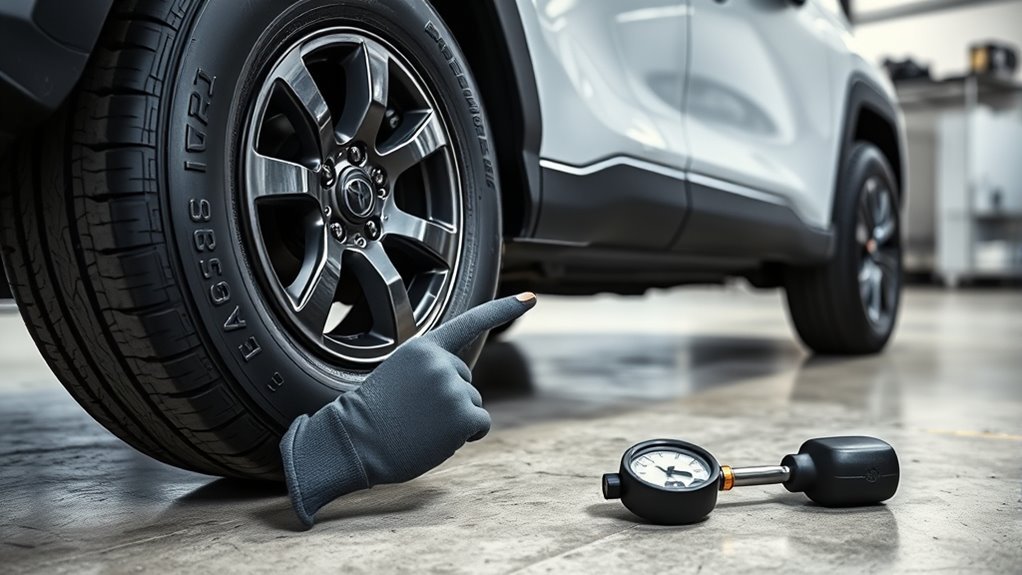
Speed rating and load rating work together. The speed rating tells you the maximum speed capability under specified conditions. The load index tells you the maximum weight the tire can carry when properly inflated. You need both to be correct.
According to the Tire Industry Association, the service description includes both the load index and speed symbol. That is why a tire listed as 102H should not be treated the same as a tire listed as 100H or 102T. The numbers and letters both matter.
Installing a higher load index may be acceptable, but it does not increase your RAV4’s legal or safe payload capacity. Your maximum load is still limited by Toyota’s vehicle specifications, axle ratings, wheels, tires, and placard information.
[Products Worth Considering]

Measure tire tread depth quickly and accurately with this LUMITECO dial gauge that reads in 1/32" increments up to 14/32". The color-coded green/yellow/red zones make it easy to judge tire wear and know when replacement is needed. A rugged, compact design with a protective pouch helps keep the gauge ready for use on cars, trucks, motorcycles, and more.

The SAFELIFE dial tire tread depth gauge measures tread depth in 1/32 inch increments with clear, easy-to-read 2-inch dial face. Color zones using a traffic light system help you quickly judge whether tread is low, marginal, or ample for safer driving. Built with a durable zinc cast body and a metal detect probe for precise, comfortable use across cars, motorcycles, trucks, and buses.
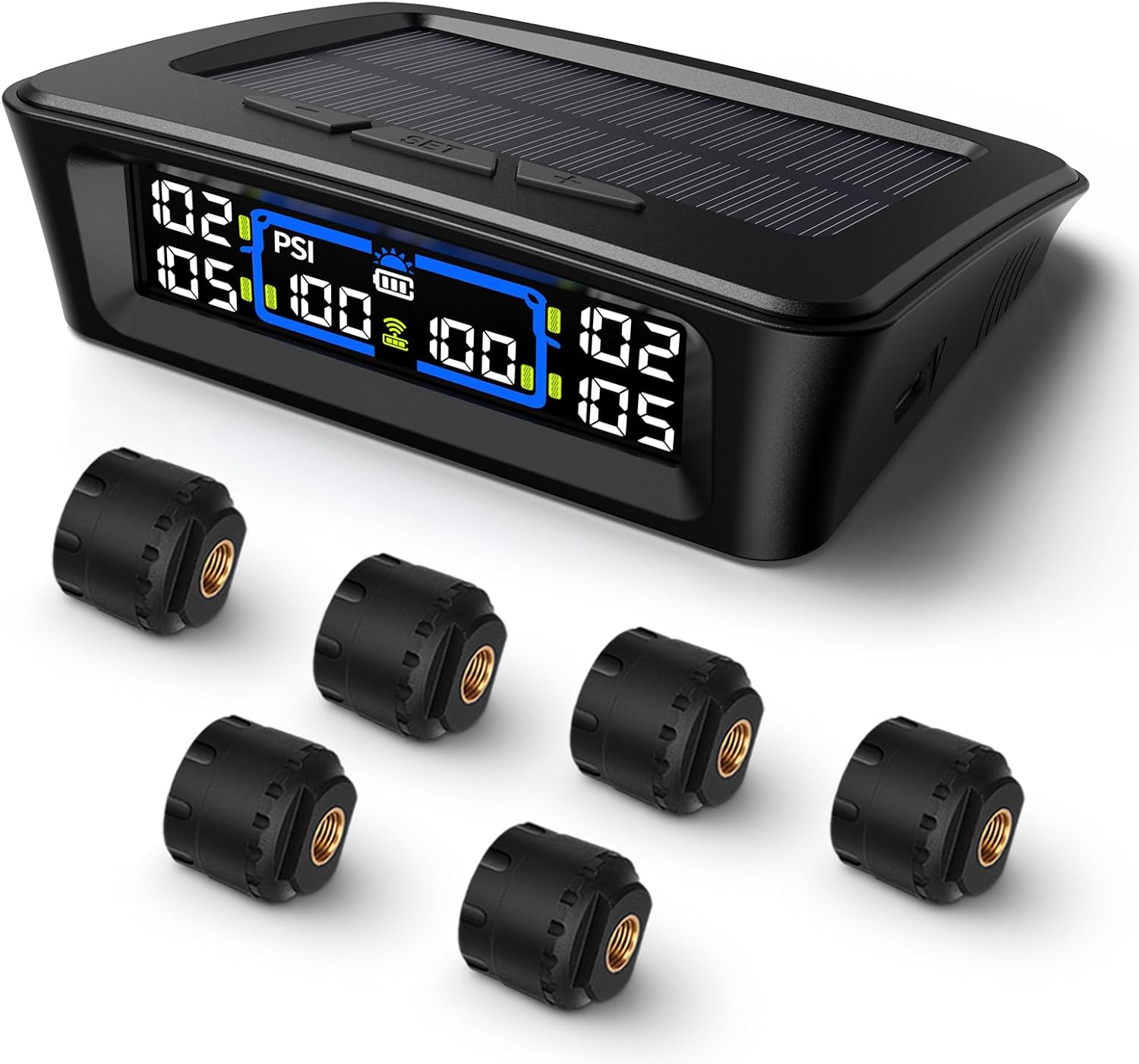
The Tymate TM12 RV TPMS delivers real-time tire pressure and temperature monitoring with a stable 433Hz display for safer long-distance driving. It supports simultaneous monitoring across vehicle and trailer zones, includes six alarm modes for pressure, temperature, leakage, battery, and signal loss, and features easy DIY installation with auto calibration. Power is supplied via USB-C charging or solar recharging, with a wide 0–144 PSI range and up to 50 ft signal coverage for RVs and towable trailers.
RAV4 Owners Share Their Experiences With Tire Speed Ratings
Many RAV4 owners notice the biggest difference in ride feel when switching between tire models, not just speed ratings. A touring all-season tire, all-terrain tire, winter tire, and performance-oriented all-season tire can all feel different even when the speed rating is the same.
Common owner observations include:
- H-rated all-season tires often provide a comfortable balance for daily commuting and highway driving when they match the OEM requirement.
- V-rated tires may feel sharper on some larger-wheel trims, but they can cost more depending on the brand and tread design.
- Winter tires may use a different rating, but they should be driven within their rating and installed as a complete matching set whenever possible.
- All-terrain tires can add traction on gravel or light trails, but they may also change road noise, fuel economy, and ride comfort.
The lesson is simple: use the speed rating as a safety requirement, then compare tread type, weather rating, warranty, noise, comfort, and price to choose the tire that fits how you drive.
Expert Recommendations for Choosing Tires for Your RAV4
When choosing replacement tires for your RAV4, start with the vehicle—not the tire sale page. Your tire must fit your RAV4’s wheel size, load requirement, speed rating, and intended use.
- Check the placard first: Use the driver-side door placard for the correct tire size and cold inflation pressure.
- Match or exceed the OEM speed rating: Do not downgrade from H to T or from V to H unless a qualified tire professional confirms it is appropriate.
- Match or exceed the load index: Never choose a tire with a lower load index than Toyota specifies.
- Choose the right tire category: All-season, all-weather, winter, highway, and all-terrain tires are built for different conditions.
- Keep all four tires compatible: Use the same size, construction, and similar tread depth, especially on AWD models.
- Ask before changing tire type: If you are upsizing wheels, towing, driving off-road, or switching to winter tires, confirm fitment with a tire professional.
[Products Worth Considering]

The TYAMATE TM8 solar-powered wireless TPMS delivers real-time tire pressure and temperature monitoring with six alarm modes for safer driving. A vibrant color LCD display shows readings clearly while windshield mounting keeps it hands-free and easy to read. With a wide 0–87 PSI range, strong 433.92 MHz signal transmission, and quick sensor pairing, it’s ideal for RV, sedan, SUV, MPV, and truck use.

Get precise tire readings with the ETENWOLF T300 Plus digital gauge, calibrated to ANSI B40.7 Grade 2A for reliable accuracy. It measures across a wide 3–200 PSI range and includes thermal compensation for dependable performance from extreme cold to heat. The bright LED display, LED illumination, and replaceable AAA batteries make it easy to check pressures quickly, even in low light.

Milton S-921 pencil tire pressure gauge helps you maintain optimal tire pressure for passenger cars with accurate readings in PSI and kPa. It features a built-in deflator valve for convenient pressure adjustments, plus a single chuck head and nylon indicator bar for easy use on the go. Built from durable plated brass and designed for reliable performance, it’s a practical road trip and cold-weather maintenance tool.
How to Keep Your Tires Performing Their Best Over Time
Even the correct speed rating cannot protect you from poor maintenance. Tire pressure, rotation, alignment, tread depth, age, and damage inspections all affect how safely your RAV4 rides.
Regular Tire Maintenance
The NHTSA tire safety brochure explains that proper pressure, load limits, road-hazard avoidance, and regular inspections are key steps for reducing tire failure risk. For RAV4 owners, that means making tire checks a normal part of vehicle care.
- Check tire pressure monthly: Measure pressure when tires are cold and use the pressure listed on the door placard, not the maximum PSI printed on the tire.
- Rotate tires on schedule: Follow Toyota’s maintenance schedule or your tire warranty requirements.
- Inspect tread depth: Replace tires before they become unsafe for rain, snow, or emergency braking.
- Look for damage: Bulges, cracks, cuts, punctures, or uneven wear deserve immediate attention.
- Check the DOT date code: The last four digits show the week and year of manufacture, such as 2924 for the 29th week of 2024.
Correct Inflation Pressure
Correct inflation pressure helps your RAV4 steer, brake, and carry weight properly. Under-inflation increases heat and tire flex. Over-inflation can reduce ride comfort and change the tire’s contact patch. Both can shorten tire life.
Use a reliable tire pressure gauge and check your tires before long trips, when seasons change, and after carrying heavy cargo. If the Tire Pressure Monitoring System light comes on, do not ignore it. Stop safely, check the pressure, and inspect for leaks or damage.
Frequently Asked Questions
Can I mix tires with different speed ratings on my RAV4?
It is best not to mix speed ratings. If different ratings are installed, the vehicle’s tire performance is limited by the lowest-rated tire. For the most predictable handling, use four matching tires that meet or exceed Toyota’s required size, load index, and speed rating.
How do weather conditions affect tire speed ratings?
Rain, snow, heat, and rough roads do not change the letter printed on the sidewall, but they can reduce real-world tire performance. A speed rating is based on controlled conditions. Bad weather, low tread, under-inflation, or heavy loads can make a tire less capable than its rating suggests.
Do speed ratings change with tire wear?
The printed rating does not change, but a worn, damaged, old, under-inflated, or repaired tire may no longer perform like a new tire with the same rating. Replace tires when tread is low, damage is visible, or a tire professional says the tire is unsafe.
Are speed ratings the same for all tire brands?
The rating letters follow standardized speed categories, so an H rating means the same maximum rated speed category across brands. However, tires with the same rating can still differ in tread life, wet grip, ride comfort, road noise, snow traction, and warranty.
How often should I check my tire speed ratings?
Check the speed rating whenever you buy tires, rotate tires, install winter tires, repair a tire, or buy a used RAV4. For normal maintenance, focus more often on tire pressure, tread depth, visible damage, and uneven wear.
Can I use a higher speed rating than Toyota recommends?
Usually yes, as long as the tire also matches the correct size, load index, load range, wheel fitment, and tire type for your RAV4. A higher rating does not increase legal speed limits or vehicle payload capacity, and it may change ride comfort or cost.
Can I use a lower speed rating for winter tires?
Sometimes, winter tires may have a lower speed rating than the original tires. Use them only if they are appropriate for your RAV4, installed correctly, and driven below their rated speed. Ask a tire professional if you are unsure.
Conclusion
Tire speed ratings are not just technical letters on the sidewall. They help show whether a tire is built for your RAV4’s required speed, load, heat, and handling performance. For the safest result, match or exceed Toyota’s recommended speed rating and load index, keep all four tires compatible, and maintain proper tire pressure. Your RAV4 will drive better, your tires will last longer, and every trip will feel more controlled.
Sources
- NHTSA TireWise — tire safety ratings, tire maintenance, and tire safety guidance.
- NHTSA Tire Safety Brochure — tire pressure, load limits, inspections, and basic tire maintenance.
- Bridgestone Tire Speed Rating Guide — speed rating definitions, speed chart, and rating limitations.
- Michelin Load Rating and Speed Rating Guide — service description, load index, speed rating, and replacement guidance.
- Tire Industry Association Sidewall Guide — service description, load index, speed symbol, DOT code, and tire date code.
- Toyota RAV4 Owner’s Manual: Tire Information — Toyota tire symbols, tire markings, DOT/TIN details, and tire information reference.