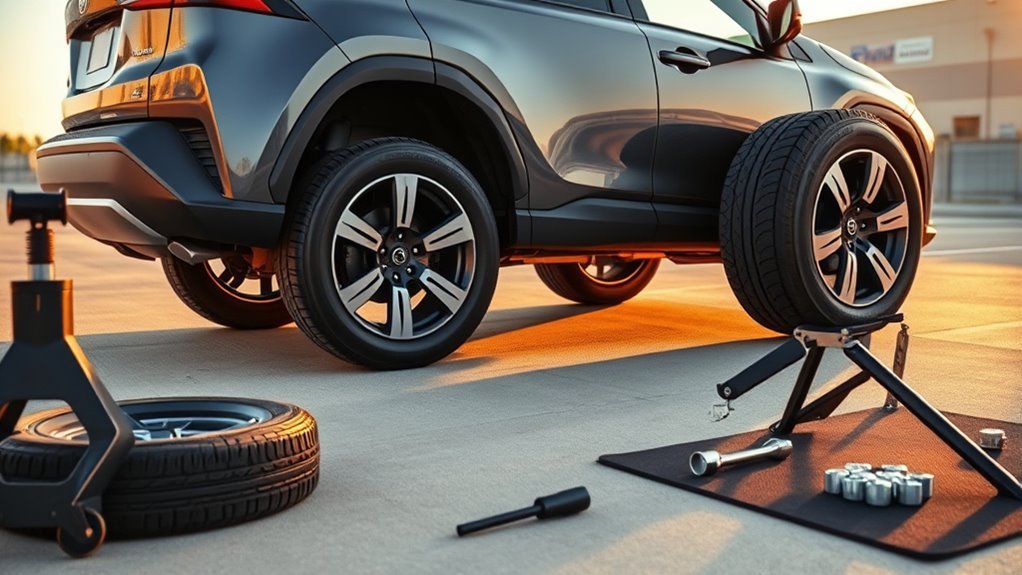
Toyota RAV4 wheel upsizing can be worth it when you want a sharper look and quicker steering response, but the safest setup keeps the tire’s overall outside diameter close to the factory size. A larger rim alone does not add ground clearance. The full wheel-and-tire package must match the RAV4’s tire placard, load capacity, speed rating, bolt pattern, center bore, offset, brake clearance, TPMS needs, and snow-chain clearance.
Last updated: July 7, 2026 · Reviewed for tire-fitment accuracy against Toyota tire-size guidance, NHTSA tire-safety guidance, and tire plus-sizing references.
Quick Answer
Upsizing RAV4 wheels is worth considering if you want a sportier look and slightly sharper steering, but only when the replacement tire stays close to the factory outside diameter and meets the correct load rating, speed rating, offset, brake clearance, and TPMS requirements. For daily comfort, fuel economy, snow-chain clearance, and tire cost, the factory wheel size or a mild plus-size setup is usually the safer choice.
Key Takeaways
- Wheel size and tire outside diameter are different. A larger rim does not raise ground clearance unless the tire’s overall diameter also increases.
- Keep the replacement setup close to the factory diameter, and use your door-jamb tire placard, owner’s manual, or a qualified tire professional as the final authority.
- Bigger wheels often use shorter tire sidewalls, which can improve steering response but make the ride firmer and louder.
- Wider or heavier tires can increase rolling resistance and rotational weight, which may reduce MPG or electric range on a RAV4 Hybrid or RAV4 Prime.
- Before buying, confirm bolt pattern, wheel offset, center bore, rim width, brake clearance, load index, speed rating, TPMS compatibility, and snow-chain clearance.
At a Glance
| Time Required | 30–60 minutes to compare sizes and check fitment; longer if a shop test-fits the wheels |
| Difficulty | Moderate; easy to compare sizes, but final fitment should be confirmed professionally |
| Tools Needed | Door-jamb tire placard, owner’s manual, tire-size calculator, offset/bolt-pattern specs, tire-pressure gauge |
| Cost | Varies widely; budget for wheels, tires, mounting, balancing, TPMS service, alignment, and possible fitment corrections |
Best RAV4 Wheel Size by Driving Goal
Use your driving goal first, then choose the smallest change that achieves it. The best RAV4 wheel upgrade is not always the largest wheel. It is the setup that improves one priority without creating new fitment, comfort, or efficiency problems.
| Your Priority | Best Direction | Why It Works | Watch For |
| Daily comfort | Stay close to the factory wheel size | Taller sidewalls absorb bumps better | Avoid heavy all-terrain tires if quietness matters |
| Sportier steering | Use a mild plus-size package | A shorter sidewall can reduce tire squirm | Check ride harshness and pothole risk |
| Rugged look | Consider a stronger-looking wheel with a suitable tire | Design and tire tread change the stance | Aggressive tires can add noise, weight, and rolling resistance |
| Best MPG or range | Choose lighter wheels and efficient tires | Rolling resistance and weight affect energy use | Do not shop by rim diameter alone |
[Products Worth Considering]

Measure tire tread depth quickly and accurately with this LUMITECO dial gauge that reads in 1/32" increments up to 14/32". The color-coded green/yellow/red zones make it easy to judge tire wear and know when replacement is needed. A rugged, compact design with a protective pouch helps keep the gauge ready for use on cars, trucks, motorcycles, and more.

Monitor tire tread wear with a smart, color-coded depth gauge that shows clear condition ranges at a glance. The bar is range marked for fast, easy readings, helping you maintain safer traction and performance. Each gauge is portable with a pocket clip, and the set includes 20 units for daily use and sharing.

Keep your tires properly inflated with this analog VONDIOR tire pressure gauge, designed for fast, easy readings without batteries. The swiveling, two-axis hose and large glow dial help you measure at any tire angle with instant visibility. Built with a protective rubber shield, it supports durable, low-maintenance use for cars and trucks.
Benefits of Upsizing Wheels on a RAV4
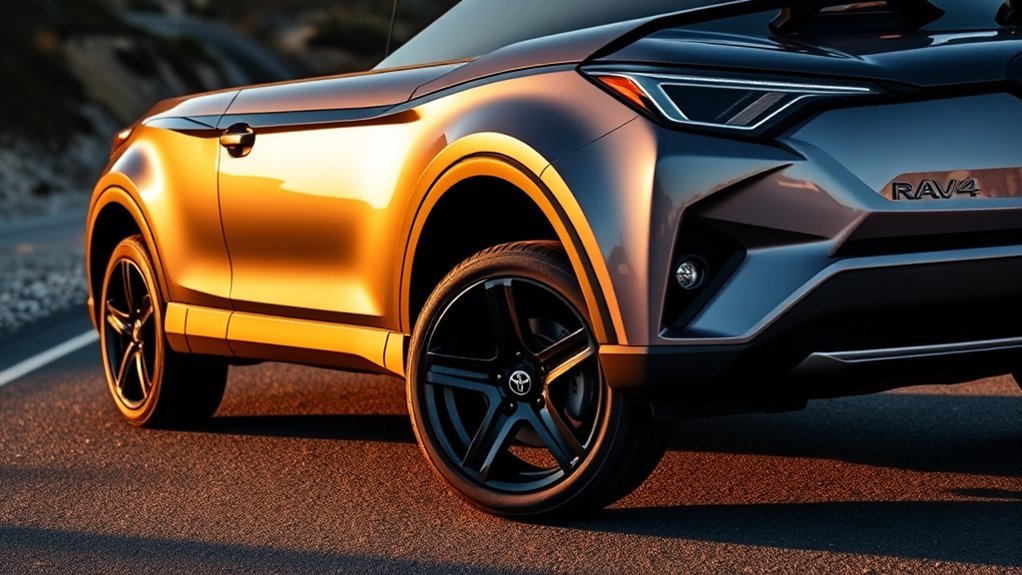
When you consider upsizing the wheels on your Toyota RAV4, the biggest benefits are usually appearance, steering feel, and tire choice. A larger wheel can give the RAV4 a more aggressive stance, especially when paired with a tire that fills the wheel well cleanly without rubbing.
On smooth pavement, a larger wheel with a shorter sidewall may feel more direct during steering inputs because the tire sidewall flexes less. That can make the RAV4 feel more planted during lane changes and cornering. The improvement is not automatic, though. Tire compound, tread pattern, tire pressure, alignment, and wheel weight all matter.
For drivers who want a rugged look, a slightly larger tire outside diameter can add a small amount of ground clearance. However, that is a tire-diameter change, not a wheel-diameter change by itself. If you install a larger rim but keep the tire’s outside diameter close to stock, ground clearance stays nearly the same.
Note: Toyota RAV4 tire sizes vary by model year, trim, market, and package. Always check the tire information placard on your driver-side door jamb before choosing a new size.
Essential Considerations Before Upsizing Your RAV4 Wheels
Upsizing your RAV4’s wheels can improve the look of the vehicle, but the setup must fit the vehicle as a complete wheel-and-tire package. Do not judge fitment by rim diameter alone.
Before buying, confirm these details:
- Overall tire diameter: Keep the new tire close to the factory diameter to reduce speedometer, odometer, clearance, ABS, traction-control, and driver-assistance issues.
- Load index: The new tire must meet or exceed the load rating required for your RAV4.
- Speed rating: The new tire should meet or exceed the factory requirement unless Toyota or a tire professional confirms otherwise.
- Wheel offset: Offset affects how far the wheel sits inward or outward. The wrong offset can cause rubbing or extra suspension and bearing stress.
- Rim width: The tire must be approved for the wheel width you plan to use.
- Center bore and bolt pattern: The wheel must mount correctly and center properly on the hub.
- Brake clearance: Some smaller-diameter aftermarket wheels may not clear the brake calipers, especially on hybrid or plug-in hybrid models.
- TPMS compatibility: Make sure the tire-pressure monitoring sensors can be transferred or replaced correctly.
- Snow-chain clearance: If you use chains or traction cables, confirm inner clearance in the owner’s manual before changing size.
- Alignment and balancing: Any wheel/tire change should be mounted, balanced, pressure-checked, and inspected for rubbing.
Warning: The safest replacement tire is the same size as the original tire or another size recommended by the manufacturer. Check the door-jamb placard, owner’s manual, and a qualified tire dealer before installing a non-factory size.
[Products Worth Considering]

Upgrade your wheels with MIKKUPPA M12x1.5 mag seat lug nuts built for secure, corrosion-resistant performance. These closed-end chrome lug nuts are a direct replacement for select Toyota models, including Camry, Corolla, RAV4, Sienna, Avalon, Highlander, Matrix, Venza, and Prius. Triple-chromium plating and cold-forged, heat-treated steel help deliver strength for daily driving and replacement needs.

This professional wheel and rim brush kit makes it easy to lift brake dust, grime, and dirt from wheels and tires without scratching finishes. The brushes feature soft, metal-free wool heads and a flexible 360-degree rim brush design for reaching hard-to-clean areas. Includes multiple brush types plus accessories for thorough car, motorcycle, and general vehicle detailing.

Upgrade your 2024-2026 Tesla Model 3 Highland with REEVAA all-weather mud flaps designed for seamless fit along the original body lines. The set of four delivers strong splash protection against mud, gravel, and road debris while using OEM-grade durable materials. Installation is non-destructive with original hole positions and snap-in clips, and the aerodynamic design helps minimize impact on efficiency.
What Factory RAV4 Tire Sizes Should You Compare Against?
Start with the tire size printed on your own RAV4, not a size from another trim. Current and late-model RAV4 references commonly include 225/65R17, 225/60R18, and 235/55R19, but the correct baseline depends on model year, trim, drivetrain, market, and package.
This matters because a 19-inch upgrade may be close to one factory setup and too aggressive for another. The door-jamb placard gives the original tire size and cold inflation pressure for your exact vehicle. Use that size as the baseline before comparing any plus-size option.
Fitment rule: If the replacement tire is taller, wider, heavier, or mounted on a wheel with a more aggressive offset, check clearance with the steering turned fully left and right and with the suspension loaded.
Wheel Size vs. Tire Size: Why the Difference Matters
A common mistake is saying “bigger wheels” when the real issue is the tire’s outside diameter. A wheel is the metal rim. A tire wraps around it. You can move from a 17-inch wheel to an 18-inch or 19-inch wheel while keeping the total tire diameter close to stock by using a shorter tire sidewall.
For example, a 225/65R17 tire has a sidewall height equal to 65% of 225 mm, mounted on a 17-inch wheel. A 225/60R18 tire uses a larger wheel but a shorter sidewall, so its outside diameter remains close to the 17-inch setup.
| Example Size | Approx. Diameter | Compared With 225/65R17 | What It Means |
| 225/65R17 | 28.5 in. | Baseline | Common reference size; verify your actual placard |
| 225/60R18 | 28.6 in. | About +0.4% | Larger rim, similar outside diameter |
| 235/55R19 | 29.2 in. | About +2.3% | Still close, but must be checked for your trim |
| 245/65R17 | 29.5 in. | About +3.6% | May be too large from this baseline; requires expert fitment check |
The numbers above are examples, not universal RAV4 recommendations. A size that is close for one factory setup may be too large for another. Always compare the new tire against the exact size listed on your RAV4’s tire placard.
Will Bigger RAV4 Wheels Affect the Speedometer or Safety Systems?
Bigger wheels can affect the speedometer only when the tire’s outside diameter changes. A taller tire travels farther with each wheel revolution, so the vehicle can move faster than the speedometer suggests. A shorter tire does the opposite.
Diameter changes can also affect odometer readings, ABS logic, traction control, stability control, and some driver-assistance calculations. That is why plus sizing focuses on keeping the overall tire diameter close to the original tire, even when the wheel diameter increases.
How Upsizing Affects Fuel Economy
Larger wheels and tires can reduce fuel economy, but the amount depends on weight, tread design, rolling resistance, inflation pressure, and outside diameter. A heavier wheel/tire package takes more energy to accelerate. A wider or more aggressive tire may also create more rolling resistance.
The National Academies explains that rolling resistance is affected by tire geometry, tread compounds, inflation pressure, alignment, operating temperature, load, and construction. NHTSA also notes that low-rolling-resistance tires reduce energy loss and can improve fuel economy. A useful benchmark is that a 10% reduction in rolling resistance can improve vehicle fuel economy by about 1–2%, so moving toward heavier or higher-resistance tires can matter over time.
For a RAV4 Hybrid or RAV4 Prime, the effect can also show up as slightly reduced electric range or hybrid efficiency if the new tire is heavier, wider, or more aggressive than the factory tire.
Pro Tip: If fuel economy matters, compare tire weight and rolling-resistance information, not just size. A lighter wheel with an efficient tire can perform better than a heavy “bigger is better” setup.
How Bigger Wheels Affect Ride Comfort
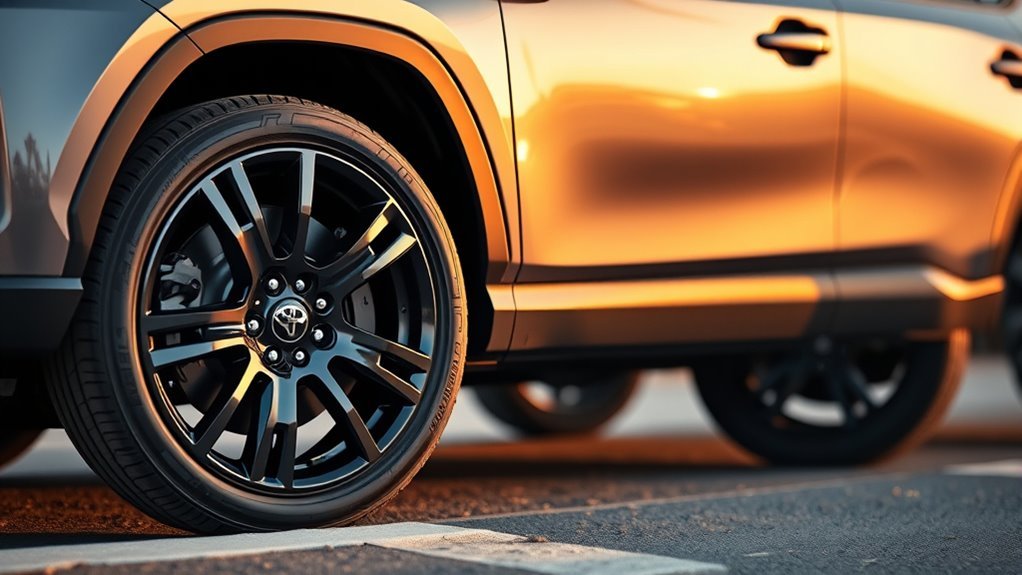
When you upsize the wheels on your Toyota RAV4, you may notice a firmer ride. That usually happens because a larger wheel needs a shorter tire sidewall to keep the total tire diameter close to stock. A shorter sidewall has less rubber and air volume to absorb potholes, expansion joints, and rough pavement.
Increased Road Vibrations
Shorter sidewalls can transmit more vibration into the cabin. On smooth roads, this may feel sporty and controlled. On broken pavement, gravel, or winter-damaged roads, it can feel busy and harsh.
Road noise may also increase if the new tire has a wider tread, a more aggressive pattern, or a lower comfort-focused design. This is especially noticeable on highways and coarse pavement.
Harsher Ride Quality
Upsizing can make the RAV4 feel sharper, but comfort often takes a step back. Here is the typical trade-off:
| Aspect | Factory-Style Setup | Larger Wheel Setup |
|---|---|---|
| Sidewall Height | Taller | Shorter |
| Shock Absorption | Better | Reduced |
| Ride Comfort | Smoother | Firmer |
| Cabin Noise | Usually quieter | Can be louder |
| Wheel Protection | More sidewall cushion | More rim-damage risk |
Reduced Shock Absorption
Reduced sidewall height limits how much the tire can flex over bumps. That can make impacts feel sharper and may increase the risk of wheel damage on potholes. If you drive on rough roads, a modest wheel size with a taller sidewall is often the better daily-driver choice.
How Bigger Wheels Can Enhance Performance
Bigger wheels can improve the driving feel of a Toyota RAV4 when they are paired with the right tires and kept close to the factory outside diameter. The main benefit is usually steering response. A shorter tire sidewall flexes less, so the vehicle can feel more precise during cornering.
Wider tires may also increase the contact patch, but traction is not guaranteed by width alone. Tire compound, tread design, road temperature, tire pressure, and surface condition can matter more than width. A high-quality tire in a factory size can outperform a cheap or mismatched tire in a larger size.
Upsizing can also create room for larger brake components on some vehicles, but that does not happen automatically on a RAV4. Unless you are installing a complete brake upgrade, larger wheels do not improve braking by themselves.
Why Bigger Wheels Upgrade Your RAV4’s Aesthetic
Many RAV4 owners upsize wheels for appearance first. A larger wheel can make the SUV look more modern, sporty, or trail-ready. The right design can also complement black trim, roof rails, fender cladding, and off-road-style accessories.
The best RAV4 wheel upgrade is not the biggest wheel you can fit. It is the setup that improves the look without hurting safety, comfort, clearance, or tire availability.
Color and finish matter too. Black, bronze, machined, and dark gray wheels can all work well on a RAV4, depending on the paint color and trim. Just make sure the wheel’s technical specs match the vehicle before choosing based on style.
Common Drawbacks of Upsizing RAV4 Wheels
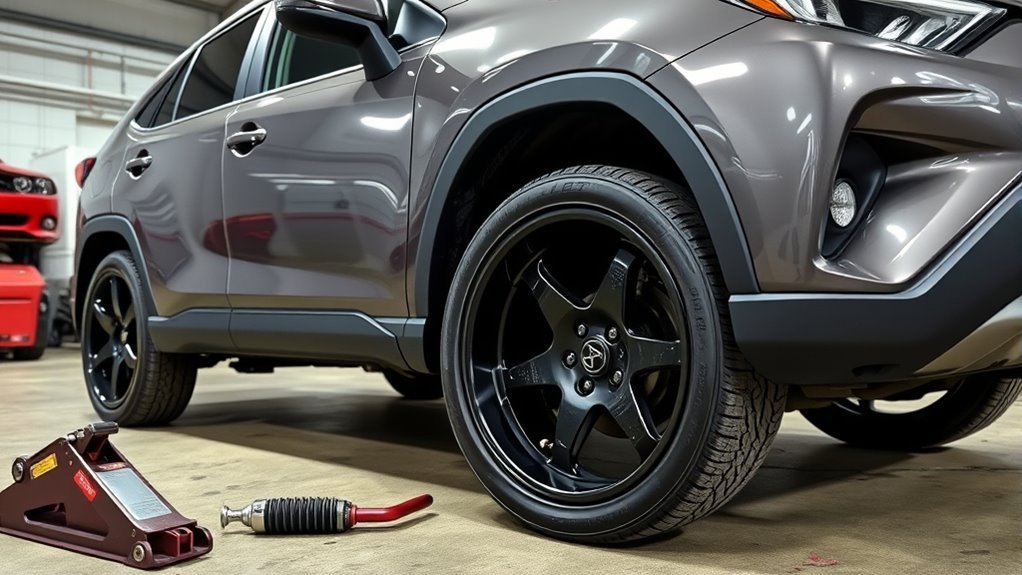
Upsizing your RAV4’s wheels can look great, but the drawbacks are real:
- Lower fuel economy: Heavier wheels and higher-rolling-resistance tires can reduce MPG.
- Firmer ride: Shorter sidewalls absorb less impact.
- More road noise: Wider or more aggressive tires may be louder.
- Rubbing risk: Incorrect diameter, width, or offset can contact the fender liner, strut, mud flap, or suspension.
- Speedometer error: A tire with a larger or smaller outside diameter changes how far the vehicle travels per wheel revolution.
- Higher tire cost: Larger wheel sizes can make tires more expensive.
- Reduced wheel protection: Shorter sidewalls leave the rim more exposed to pothole damage.
- Possible chain-clearance problems: If you use snow chains or traction cables, check the owner’s manual before changing size.
Balancing aesthetics, comfort, efficiency, and safety is the key. A mild plus-size setup is usually easier to live with than an extreme change.
How to Ensure Your Wheels Fit Right
Use this checklist before installing upsized RAV4 wheels:
- Start with your placard size. Open the driver-side door and write down the original tire size and cold inflation pressure.
- Compare outside diameter. Use a tire-size calculator and keep the replacement close to the factory diameter.
- Check load and speed ratings. Do not install tires with a lower required load capacity.
- Confirm wheel specs. Match bolt pattern, center bore, offset, and compatible rim width.
- Verify brake clearance. Test-fit the wheel if there is any doubt, especially on hybrid and plug-in hybrid models.
- Inspect full steering lock. Turn the wheel left and right and check for rubbing at the liner, strut, and mud flaps.
- Check loaded clearance. Recheck clearance with passengers or cargo if the new tire is taller, wider, or more aggressive.
- Mount and balance correctly. Poor balancing can cause vibration even when the size is correct.
- Set cold tire pressure. Use the pressure recommended for your vehicle and tire setup.
- Get an alignment if needed. Alignment is especially important if the vehicle pulls, the steering wheel is off-center, or tire wear becomes uneven.
[Products Worth Considering]

The TYAMATE TM8 solar-powered wireless TPMS delivers real-time tire pressure and temperature monitoring with six alarm modes for safer driving. A vibrant color LCD display shows readings clearly while windshield mounting keeps it hands-free and easy to read. With a wide 0–87 PSI range, strong 433.92 MHz signal transmission, and quick sensor pairing, it’s ideal for RV, sedan, SUV, MPV, and truck use.

The Tymate TM2 RV tire pressure monitoring system keeps you informed with a color LCD display, automatic backlight, and solar charging for dependable operation. It supports up to 10 tire positions with four pre-paired sensors, while offering multiple alarm modes for fast leak detection, pressure extremes, temperature alerts, and low-signal warnings. Built-in monitoring uses accurate readings and reliable 433.92MHz communication to help protect your RV, trailer, truck, or SUV.

The SAFELIFE dial tire tread depth gauge measures tread depth in 1/32 inch increments with clear, easy-to-read 2-inch dial face. Color zones using a traffic light system help you quickly judge whether tread is low, marginal, or ample for safer driving. Built with a durable zinc cast body and a metal detect probe for precise, comfortable use across cars, motorcycles, trucks, and buses.
When You Should Not Upsize RAV4 Wheels
Upsizing is not the best choice for every RAV4 owner. You may be better off staying with the factory size if:
- You prioritize comfort, quietness, and low tire cost.
- You regularly drive on potholes, gravel, rough rural roads, or winter-damaged pavement.
- You use snow chains or traction devices and need maximum inner clearance.
- You tow, carry heavy cargo, or need the most predictable load capacity.
- Your RAV4 is leased and must be returned in factory condition.
- You do not want any risk of rubbing, speedometer error, or warranty-related questions.
In many cases, the best upgrade is not a larger wheel. It is a better tire in the original size.
Expert Tips for Making the Best Choice
Compatibility With Vehicle Specs
Start with the specifications Toyota provides for your exact RAV4. Then compare any new wheel and tire package against those specs. A setup that works on one RAV4 year or trim may not work on another.
Be careful with online forum fitment claims. They can be useful, but they often leave out important details such as wheel offset, suspension changes, tire brand, actual measured tire diameter, mud flaps, and whether rubbing occurs only when loaded or turning.
Performance Trade-Offs
The performance trade-off is simple: a shorter sidewall can feel sharper, while a taller sidewall usually rides better. A wider tire can add grip in some conditions, but it may also add weight, noise, and rolling resistance.
For most daily-driven RAV4s, a conservative plus-size setup is the sweet spot. It improves the look without making the vehicle feel harsh or inefficient.
Tire Size Considerations
Tire size is only one part of the decision. Also compare:
- Actual tire weight: Heavier tires can slow acceleration and reduce efficiency.
- Tread pattern: Highway tires are quieter; all-terrain tires look tougher but can add noise and rolling resistance.
- Wet traction: A stylish tire is not worth it if it performs poorly in rain.
- Availability: Common sizes are easier and cheaper to replace during travel.
- Spare tire compatibility: A very different outside diameter can be a problem if you need to use the spare temporarily.
Frequently Asked Questions
What are the disadvantages of larger rims on a Toyota RAV4?
Larger rims can reduce ride comfort, increase road noise, raise tire costs, add weight, and make wheels more vulnerable to pothole damage. If the tire outside diameter, width, or offset is wrong, they can also cause rubbing or speedometer error.
What are the benefits of upsizing tires?
Upsizing tires can improve stance, steering feel, and grip when the new tire is high quality and properly matched to the wheel. A slightly larger outside diameter can add a small amount of clearance, but it must be checked carefully for rubbing, speedometer error, and manufacturer compatibility.
Do bigger rims waste more gas?
They can. Bigger rims often come with heavier wheels and wider tires, which may increase rotational weight and rolling resistance. The MPG loss depends on the tire model, tread design, pressure, wheel weight, and how much the outside diameter changes.
Can I put 20-inch wheels on a Toyota RAV4?
A 20-inch wheel may physically fit some RAV4 setups, but it is usually a comfort and clearance trade-off rather than the best daily-driver choice. Before using 20-inch wheels, confirm tire outside diameter, wheel width, offset, load rating, brake clearance, TPMS fit, and full-lock rubbing clearance with a tire professional.
Will upsizing wheels void my RAV4 warranty?
A wheel change does not automatically void the whole vehicle warranty, but damage caused by an incorrect wheel or tire setup may not be covered. Keep the setup within safe specifications and save the invoice showing tire size, load rating, speed rating, and wheel specs.
How much tire-size difference is safe?
Many tire shops use a small outside-diameter difference as a rule of thumb, but the safest answer is to use the original size or another manufacturer-recommended size. Your door-jamb placard, owner’s manual, and a qualified tire professional should guide the final choice.
Do I need an alignment after upsizing RAV4 wheels?
You should at least have the alignment checked if the steering wheel is off-center, the vehicle pulls, or tire wear is uneven. Even when alignment angles do not change from the wheel swap itself, mounting, balancing, pressure setting, and clearance checks are still important.
Conclusion
Upsizing your RAV4 wheels can make the vehicle look sharper and feel more responsive, but the upgrade only works when the full wheel-and-tire package is chosen carefully. Focus on total tire diameter, load rating, speed rating, offset, brake clearance, TPMS compatibility, snow-chain clearance, comfort, and fuel economy before focusing on style.
If you want the safest daily-driver result, stay close to the factory tire diameter and use a high-quality tire. If you want a more aggressive look, have the setup confirmed by a tire professional before installation. The goal is simple: a RAV4 that looks better without becoming louder, harsher, less efficient, or less reliable.
Sources
- Toyota UK — Toyota tyre pressure and size guide — supports common RAV4 tire-size references and the need to verify the exact vehicle specification.
- NHTSA Tire Safety Brochure — supports tire-size, placard, inflation-pressure, tread, balance, and alignment guidance.
- NHTSA TireWise — supports tire safety ratings and low-rolling-resistance fuel-economy context.
- National Academies — Tires and Passenger Vehicle Fuel Economy — supports the relationship between tire construction, rolling resistance, traction, wear, and vehicle fuel economy.
- Tire Rack — What Are Plus Size Wheels & Tires? — supports maintaining overall tire diameter during plus sizing to protect speedometer and vehicle system accuracy.
- eCFR 49 CFR §575.106 — supports consumer-information framing around replacement tire fuel efficiency, safety, and durability.