
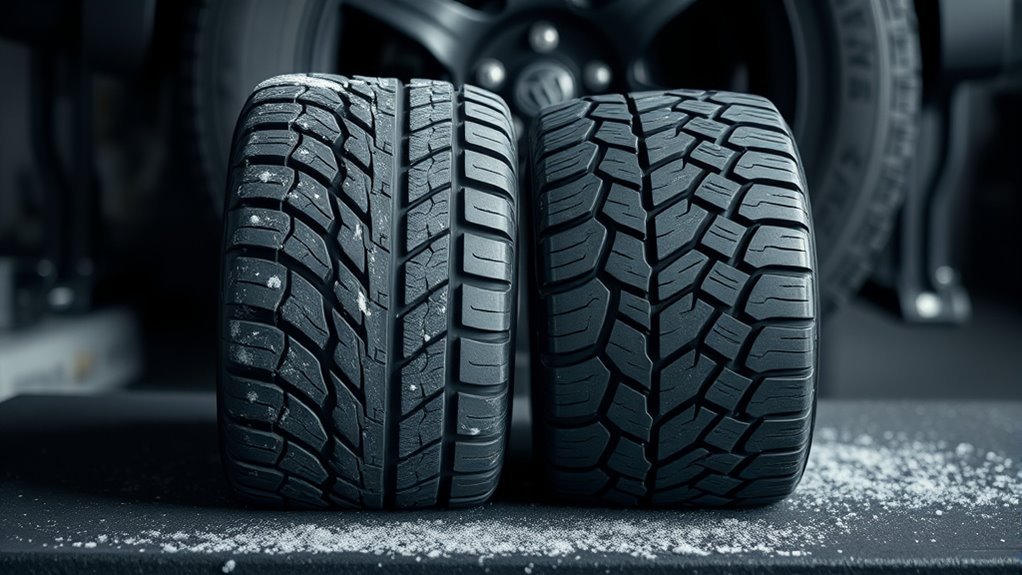
If your Toyota RAV4 regularly sees cold mornings, snow, slush, or icy roads, tire compound matters more than the drivetrain badge. All-wheel drive can help you get moving, but your tires decide how well the vehicle brakes, turns, and stays predictable when temperatures drop.
Quick Answer
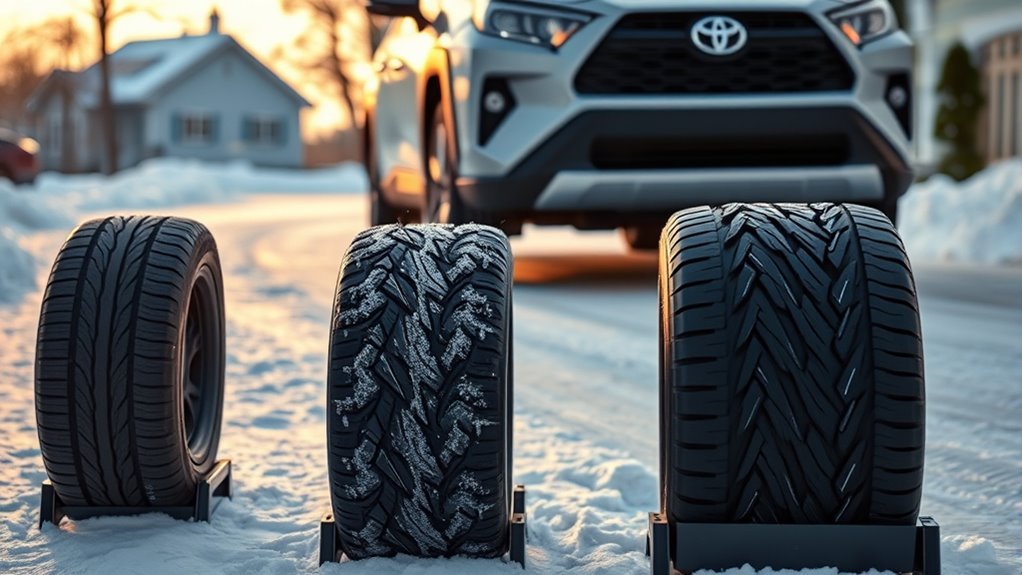
Use winter-compound tires on your RAV4 when daily temperatures consistently fall below about 45°F (7°C), especially if you drive on snow, ice, or slush. Stick with all-season tires only in mild climates where cold snaps are brief and roads are mostly clear.
Key Takeaways
- Choose winter tires when your RAV4 often runs below 45°F (7°C), not just when snow is already on the ground.
- Winter compounds stay more flexible in cold weather, while many all-season compounds stiffen and lose bite.
- Look for the three-peak mountain snowflake (3PMSF) symbol for verified severe-snow traction; M+S alone is not the same thing.
- Install winter tires in a full set of four so braking, steering, and stability control stay balanced.
- Check tread depth, tire age, tire pressure, and local chain or traction-device rules before winter driving.
Winter vs All-Season Compounds for a RAV4
Choose a winter compound for your RAV4 when cold weather is routine. Winter tires use rubber compounds designed to stay flexible in low temperatures, helping the tread conform to cold pavement, packed snow, and ice. Michelin recommends installing winter tires when daily temperatures consistently fall below 45°F because winter compounds remain more flexible while summer and many all-season compounds harden as temperatures drop. Michelin winter tire guidance
All-season tires are designed for broad, year-round use. That makes them convenient in mild climates, but they are a compromise in real winter weather. On a RAV4, that compromise shows up as longer braking distances, less steering precision, and more stability-control intervention on slick roads.
| Property | Winter Compound | All-Season Compound |
|---|---|---|
| Cold flexibility | High below about 45°F | Reduced as temperatures fall |
| Snow and ice traction | Optimized for winter surfaces | Acceptable only in light or occasional winter conditions |
| Wet slush control | Deeper grooves and dense siping help evacuate slush | Varies by model and tread depth |
| Warm-weather wear | Wears faster if used in warm weather | Usually lasts longer in warm and mixed conditions |
| Best use | Frequent cold, snow, ice, mountain passes | Mild winters, mostly clear roads |
Note: “All-weather” tires are different from standard all-season tires. Many all-weather tires carry the 3PMSF mark and can be a good compromise for drivers who see cold weather but not constant deep snow or ice.
How Tread and Sipes Help on Ice and Snow
A winter tire is not just a softer tire. The tread pattern, groove depth, and sipe density work together to help your RAV4 maintain contact with the road instead of sliding on packed snow, slush, or a thin film of meltwater.
Tread Pattern Channels Water and Slush
Winter tread blocks usually have deeper channels than all-season tires. Those channels move snow, slush, and water away from the contact patch so more rubber can touch the road. This matters most during braking and cornering, when a small loss of grip can turn into a long slide.
| Feature | Function | Result |
|---|---|---|
| Wide grooves | Move slush and loose snow outward | Better contact with the road surface |
| Dense sipes | Create small biting edges | Improved grip on packed snow and ice |
| Cold-weather compound | Stays flexible in low temperatures | More predictable braking and steering |
Sipes Increase Edge Grip
Sipes are the narrow cuts across the tread blocks. They open slightly as the tire rolls, creating extra biting edges that help the tire grip packed snow and icy surfaces. On a RAV4, that can make steering inputs feel cleaner because the front tires can generate more lateral grip instead of pushing wide.
Snow Packing Can Improve Traction
Winter tread patterns also use controlled snow packing. Snow can stick to snow better than smooth rubber sticks to loose snow, so the tread design allows some snow to pack into the grooves while still clearing excess slush. This helps the tire create mechanical grip rather than relying only on rubber friction.
How Braking and Steering Change on Your RAV4

On winter roads, stopping and turning are the two big safety differences. All-wheel drive can help a RAV4 accelerate, but it does not shorten stopping distance by itself. Michelin notes that AWD helps with acceleration, while tires determine grip for braking and handling on snow and ice. Michelin AWD and winter tire safety
Shorter Stopping Distances
Winter tires can dramatically reduce stopping distance on ice compared with all-season tires. In Tire Rack’s ice-braking test from 10 mph, the studless winter tire stopped in about 21 feet, while the all-season tire took nearly 40 feet. Tire Rack ice braking test
At neighborhood speeds on ice, the right tire compound can be the difference between stopping short and sliding through the space you needed.
That difference matters in a RAV4 because SUVs carry more mass than small cars. A few extra feet can be the space between a safe stop and a bumper impact at an intersection, driveway, or crosswalk.
Sharper Steering Response
Winter tires also help steering feel more predictable in cold conditions. A flexible compound and dense siping let the tire grab microscopic surface irregularities. That improves front-end response and reduces the delayed, vague feeling many drivers notice when all-season tires harden in freezing weather.
| Driving Feel | Winter Tires | All-Season Tires in Cold Weather |
|---|---|---|
| Initial steering | More immediate | More muted |
| Braking on ice | Shorter and more controlled | Longer and more ABS activity |
| Cornering on snow | More bite | More understeer risk |
| Stability control | Less frequent intervention | More frequent intervention |
Tire Wear and Seasonal Cost for RAV4 Owners
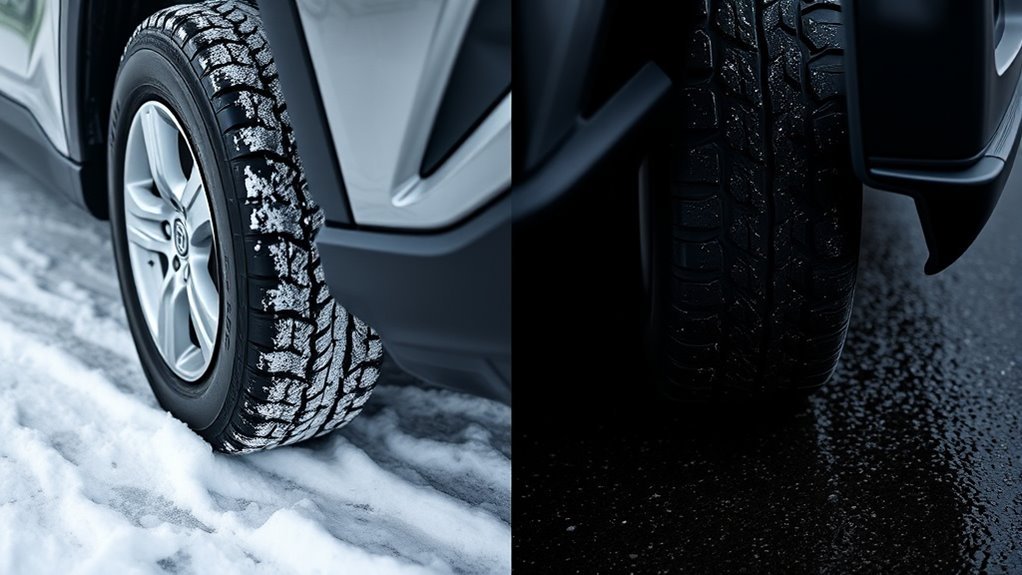
Winter tires add cost, but they also spread mileage across two sets of tires. Your all-season tires rest during winter, and your winter tires rest during warm months. The total value depends on how many winter miles you drive, whether you buy a dedicated wheel set, and how carefully you store the off-season tires.
At a Glance
| Time Required | 30–90 minutes for a seasonal wheel swap; longer if tires must be mounted and balanced |
| Difficulty | Easy at a tire shop; moderate DIY work with proper tools and torque specs |
| Tools Needed | Tread-depth gauge, tire-pressure gauge, torque wrench if changing wheels at home |
| Cost | Varies by tire size, wheel choice, mounting fees, storage, and local labor rates |
AAA advises monitoring snow tire tread depth and replacing tires before they fall below 4/32 inch. AAA also notes that snow tire lifespan depends on tire quality and use, with many lasting about three to five winter seasons. AAA snow tire guidance
- Dedicated winter wheels can save money over time. They reduce repeated mounting and demounting costs and lower the risk of bead or wheel damage.
- Warm pavement wears winter rubber faster. Swap back to all-season or summer tires once temperatures consistently rise above the winter-tire range.
- Pressure checks matter. Cold air lowers tire pressure, so check pressures more often during temperature swings.
- Storage affects tire life. Store off-season tires in a cool, dry, dark location away from petroleum products and direct sunlight.
Pro Tip: If you keep your RAV4 for several winters, a second set of wheels often makes seasonal swaps faster and cleaner. Label each tire by position before storage so you can rotate correctly next season.
How to Identify Real Winter Tires: 3PMSF vs M+S
Check the sidewall before buying. A true severe-snow-rated tire carries the three-peak mountain snowflake symbol, often shortened to 3PMSF. Tire Rack explains that the 3PMSF mark identifies tires that meet a snow-traction performance standard, but the test is for acceleration traction on medium-packed snow; it does not test braking, cornering, or ice grip. Tire Rack 3PMSF explanation
The M+S mark means “mud and snow,” but it is not the same as 3PMSF. M+S is based mainly on tread geometry and does not prove severe-snow performance. For a RAV4 that sees real winter roads, prioritize 3PMSF over M+S-only markings.
| Marking | What It Means | Best Use |
|---|---|---|
| 3PMSF | Meets a severe-snow traction standard | Cold regions, snow, mountain roads, frequent winter travel |
| M+S | Mud-and-snow tread designation | Light snow or regions where law accepts it, but not proof of winter-tire performance |
| No winter marking | No snow-performance claim | Warm or mild climates only |
[Products Worth Considering]

The Kurgo Seasonal Tire Tote helps protect your car interior, clothes, and garage from tire grime, brake dust, and residue during seasonal tire changes. Its universal design fits most passenger tires between 22" and 31" in diameter, making storage and transport simpler with less mess. Built for rugged, repeated use, it’s machine washable for easy care and comes with a lifetime warranty.

Monitor tire tread wear with a smart, color-coded depth gauge that shows clear condition ranges at a glance. The bar is range marked for fast, easy readings, helping you maintain safer traction and performance. Each gauge is portable with a pocket clip, and the set includes 20 units for daily use and sharing.

Measure tire tread depth quickly and accurately with this LUMITECO dial gauge that reads in 1/32" increments up to 14/32". The color-coded green/yellow/red zones make it easy to judge tire wear and know when replacement is needed. A rugged, compact design with a protective pouch helps keep the gauge ready for use on cars, trucks, motorcycles, and more.
RAV4 Fitment and Installation Checks Before You Buy
Before buying winter tires, confirm your exact RAV4 model year, trim, wheel size, and tire size. Toyota’s RAV4 winter-driving guidance says to fit four snow tires and make sure all tires are the same size and brand. It also notes that tire chains cannot be mounted on RAV4 models equipped with 235/55R19 tires. Toyota RAV4 winter driving tips
Warning: Do not install only two winter tires on a RAV4. Mixing winter tires on one axle with all-season tires on the other can create uneven grip and unpredictable handling during braking or cornering.
- Match the original size or approved alternate size. Use your door placard, owner’s manual, or a trusted tire shop’s fitment database.
- Install four matching tires. The same model, size, speed rating, and load rating keep the RAV4 stable.
- Check wheel clearance. This is especially important if you are considering chains, cables, or a smaller winter wheel package.
- Relearn or service TPMS if needed. A dedicated winter wheel set may need compatible tire-pressure sensors.
- Torque wheels correctly. Recheck lug-nut torque after the first short drive if wheels were removed.
[Products Worth Considering]

These universal tire valve stem caps help protect valve cores from dust, debris, and moisture while helping maintain stable tire pressure. The corrosion-resistant metal construction and sealed design provide reliable protection in road grime, mud, and winter conditions. Twist-on installation makes them quick to fit on cars, SUVs, trucks, and motorcycles.
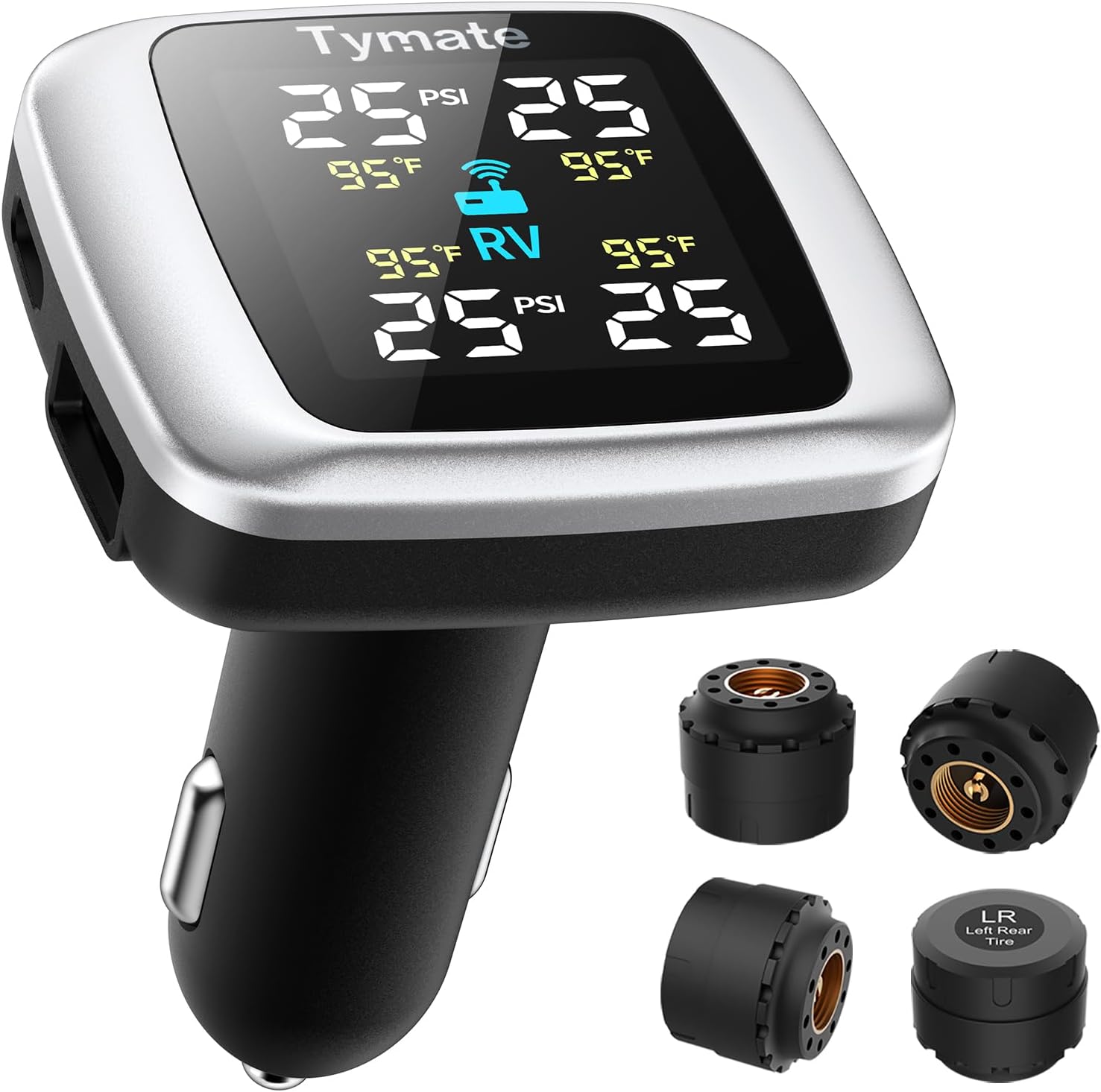
Tymate TM7 is a wireless tire pressure monitoring system that delivers real-time pressure and temperature readings for safer driving. It includes four external sensors, a bright color LCD display with adjustable backlight, and six alarm modes for high/low pressure, fast leakage, high temperature, and sensor signal or battery issues. The system covers a wide 0–144 PSI range and plugs into your vehicle’s cigarette lighter socket for quick DIY setup.

The SAFELIFE dial tire tread depth gauge measures tread depth in 1/32 inch increments with clear, easy-to-read 2-inch dial face. Color zones using a traffic light system help you quickly judge whether tread is low, marginal, or ample for safer driving. Built with a durable zinc cast body and a metal detect probe for precise, comfortable use across cars, motorcycles, trucks, and buses.
Best Tire Setup by Region: What to Buy and Next Steps
Your best RAV4 tire setup depends on winter severity, road-clearing quality, elevation, and local traction-device rules. Use your real driving conditions instead of buying by label alone.
| Your Winter Conditions | Best RAV4 Tire Setup | Why It Works |
|---|---|---|
| Long, cold winters with frequent snow or ice | Dedicated 3PMSF winter tires on all four wheels | Best cold-weather braking, steering, and snow traction |
| Mountain passes or chain-control areas | Dedicated winter tires plus approved chains or cables if your tire size allows | Improves control and helps meet local traction-device rules |
| Cold but mostly plowed urban roads | 3PMSF all-weather tires or dedicated winter tires | Balances winter traction with year-round convenience |
| Mild climate with rare snow | Quality all-season tires with good wet traction | Better warm-weather wear and everyday comfort |
Check state or provincial rules before winter trips. Some mountain roads require chains or approved traction devices even for AWD vehicles, and some tire sizes have chain-clearance limits. If your RAV4 uses a tire size that cannot accept chains, plan an alternate route, approved traction device, or winter wheel package before the storm.
[Products Worth Considering]

TIRESHIELD PRO RV tire covers in a set of four deliver year-round protection against UV rays, cracking, fading, water, and snow. The StormLock-System helps keep the covers securely fastened through high wind, while heavy-duty, double-stitched construction supports long-lasting performance. Designed for universal fit, they’re intended for RV, camper, truck, car, and trailer tires within the 26–28.75 inch diameter range, with easy wipe-clean care and storage in the included bag.

The Trivd Frol 1/2" air impact wrench delivers high performance torque up to 1500 ft-lbs with a twin hammer impact mechanism for strong, balanced blows. It features an ergonomic grip, compact lightweight design, and quick-stop control with 3 forward speeds up to 8000 RPM plus a reverse speed. Built for demanding automotive repair and tire shop work, the rear exhaust helps keep debris away from the surface.

Steelman white tire marking crayons provide high-contrast, semi-permanent marks for repairing and inspecting tires and equipment. They write on wet or dry, smooth or coarse surfaces including rubber, metal, glass, and wood, making them ideal for puncture location and damage outlining. The lead- and zinc-free crayons resist weather and fading yet wipe away when you no longer need the marks.
Frequently Asked Questions
What are the best all-season tires for a Toyota RAV4?
The best all-season tire for a RAV4 depends on your tire size, climate, budget, and driving style. For mild winters, look for strong wet braking, low road noise, correct load rating, and good treadwear. If you see regular cold weather, consider a 3PMSF all-weather tire instead of a standard all-season tire.
Can you put snow tires on a RAV4?
Yes. You can put snow tires on a Toyota RAV4, and Toyota recommends fitting four snow tires rather than only two. Make sure all four tires are the correct size, brand, type, load rating, and speed rating for your model year and trim.
Do I need winter tires if my RAV4 has AWD?
AWD helps your RAV4 accelerate from a stop, but it does not create extra braking grip. Winter tires are still the better safety upgrade for stopping, steering, and cornering on snow or ice.
Is M+S enough for winter driving?
M+S may be acceptable for light snow or for certain legal definitions, but it is not the same as a 3PMSF severe-snow rating. If your RAV4 faces frequent snow, ice, or mountain travel, choose 3PMSF tires.
When should I switch back from winter tires?
Switch back when daily temperatures consistently stay above about 45°F (7°C) and winter road conditions are no longer expected. Running winter tires in warm weather can increase wear and reduce dry-road handling sharpness.
How much tread depth should winter tires have?
For winter driving, do not wait until the legal minimum. Begin planning replacement around 4/32 inch of tread, and replace sooner if traction feels weak, the rubber is cracking, or the tire is aging out.
Conclusion
For a Toyota RAV4, winter-compound tires are the right choice when temperatures regularly fall below 45°F (7°C) or when snow, slush, and ice are part of your normal driving. All-season tires are fine for mild climates, but they cannot match the cold-weather grip, braking control, and steering confidence of a true winter tire.
Choose four matching 3PMSF winter tires for serious winter regions, consider 3PMSF all-weather tires for mixed climates, and reserve standard all-season tires for places where winter is brief and mostly wet. The safer setup is the one matched to your actual roads, not just your RAV4’s AWD badge.
Sources
- Michelin: Winter Tire Timing & PSI Tips — supports the 45°F winter-tire switching guidance and cold-weather compound explanation.
- Michelin: AWD vs Winter Tires — explains why AWD helps acceleration but tires control braking and handling.
- Tire Rack: Testing on Ice — backs the ice-braking comparison between winter and all-season tires.
- Tire Rack: Three-Peak Mountain Snowflake Symbol — explains what 3PMSF does and does not certify.
- Toyota: RAV4 Winter Driving Tips — supports using four snow tires and checking chain compatibility.
- AAA: Snow Tire Tips — supports snow tire tread-depth and lifespan guidance.

