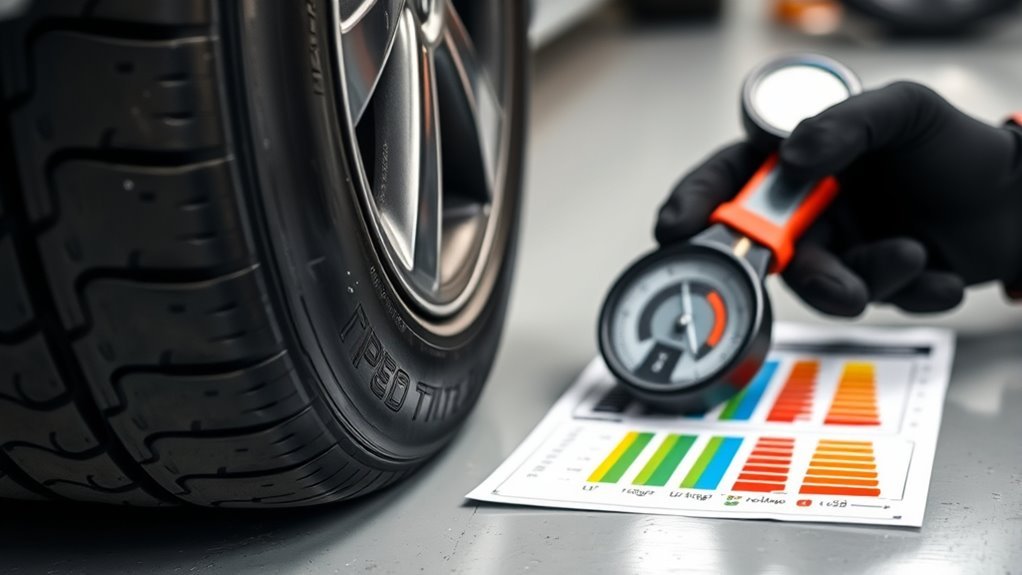
A tire speed rating is the letter on your tire sidewall that tells you the maximum sustained speed the tire can safely handle under load. Manufacturers set it through controlled testing (ECE and SAE spin cycles), and it appears alongside the size and load index (e.g., 205/60R15 91V). You should match or exceed your vehicle’s specified rating and avoid mixing different ratings on an axle to keep handling, traction, and heat resistance in check. Check your owner’s manual and the doorjamb placard for proper selection.
Quick Answer
- The speed rating is the last letter in the tire size code on your sidewall (e.g., the “V” in 205/60R15 91V).
- Each letter corresponds to a tested maximum speed: T = 118 mph, H = 130 mph, V = 149 mph, W = 168 mph, Y = 186 mph.
- Always match or exceed your vehicle manufacturer’s recommended rating. Never go lower.
- Don’t mix different speed ratings on the same axle. The lowest-rated tire limits the whole vehicle.
What Is a Tire Speed Rating : and Where to Find It
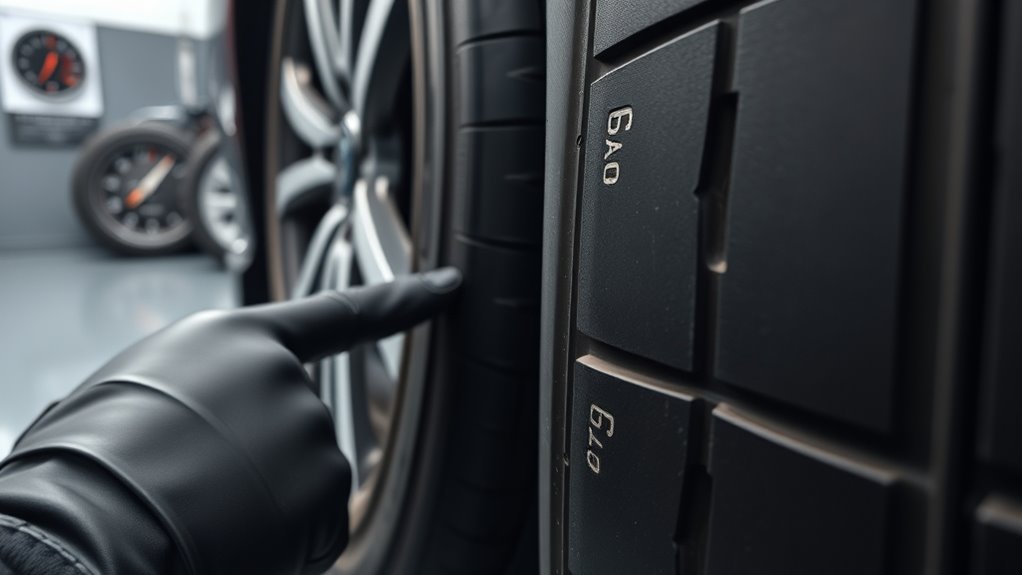
A tire’s speed rating tells you the maximum speed it can safely sustain under load. Always check that letter code before fitting or replacing tires.
The rating is a single letter at the end of the size and load index on the sidewall. In the code 205/60R15 91V, the “V” is the speed rating, and it corresponds to 149 mph. To find yours, look at the tire sidewall, then cross-reference it with the vehicle owner’s manual or the sticker on your driver’s-side doorjamb.
When replacing tires, match or exceed the original equipment rating. Writing down both the letter and its mph equivalent makes it easier to stay compliant. This habit cuts mismatch risk and helps preserve handling, stability, and load performance.
Why Speed Ratings Matter : and How They’re Tested
Speed ratings matter because they define the maximum sustained speed under load, which directly affects tire performance and safety. Manufacturers test tires under ECE and SAE protocols using controlled spin cycles. They gradually increase speed until the tire fails, which verifies the threshold for each rating.
Mixing different ratings on the same vehicle pulls everything down to the lowest-rated tire’s capability, which hurts handling and speeds up wear.
| Test Aspect | Purpose |
|---|---|
| Load condition | Simulate real-world weight |
| Speed increment | Determine limit point |
| Duration | Assess heat buildup |
| Failure mode | Identify weak point |
| Compliance | Meet standards (ECE/SAE) |
Use uniform ratings across all four tires to preserve handling, longevity, and safety.
Complete Tire Speed Rating Chart
Here’s a full chart of the most common tire speed ratings, from lowest to highest. Note that the letter H falls out of alphabetical order, sitting between U and V.
| Rating | Max Speed (mph) | Max Speed (km/h) | Typical Use |
|---|---|---|---|
| L | 75 | 120 | Off-road, light trucks |
| M | 81 | 130 | Temporary spare tires |
| N | 87 | 140 | Some light trucks |
| P | 93 | 150 | Light trucks, some passenger cars |
| Q | 99 | 160 | Winter tires, some SUVs |
| R | 106 | 170 | Heavy-duty light trucks |
| S | 112 | 180 | Family sedans, minivans |
| T | 118 | 190 | Family sedans, minivans |
| H | 130 | 210 | Sports sedans, coupes |
| V | 149 | 240 | Sports cars, performance sedans |
| W | 168 | 270 | Exotic sports cars |
| Y | 186 | 300 | Exotic sports cars, supercars |
| ZR | 149+ | 240+ | High-performance (may appear in size code) |
The ZR designation works a bit differently. According to Michelin, tires with a maximum capability over 149 mph may carry a “ZR” in the size code, while those rated above 186 mph are required to include it.
Common Tire Speed Rating Letters and What They Mean
The most common speed-rating letters you’ll encounter are T (118 mph), H (130 mph), V (149 mph), and ZR (over 149 mph). These appear at the end of the tire size code and define the tire’s certified maximum speed. When selecting tires, match or exceed your vehicle manufacturer’s recommended rating and avoid mixing different-rated tires on the same axle. Higher ratings generally improve handling and heat resistance but can reduce ride comfort and shorten tread life.
Common Letter Definitions
Speed ratings use single letters (and sometimes combinations like ZR) stamped on the sidewall to show the maximum sustained speed the tire can safely handle. The most common ones are T (118 mph), H (130 mph), and various letters covering speeds above 149 mph.
The scale runs from A through Y, with increasing maximum speeds. A1 starts at just 3 mph (designed for industrial equipment), T covers 118 mph, H covers 130 mph, and Y tops out at 186 mph. ZR indicates designs built for sustained very high speeds. Each letter reflects tested heat tolerance, structural limits, and steering response.
Selecting the right speed rating category matters because mismatched or lower-rated tires reduce handling and increase risk. Never mix ratings across an axle.
Practical Selection Tips
Now that you know what each letter stands for, you can use those codes to pick tires that match your vehicle’s performance and your driving habits.
Choose a speed rating that equals or exceeds your vehicle’s top capabilities and your typical driving conditions. The lowest-rated tire on the vehicle sets the safe speed limit for all four. For daily highway commuting, T or H usually works well. For spirited or performance-oriented driving, V or ZR gives you better tire performance, heat tolerance, and handling.
Check the sidewall during maintenance or replacement. The speed rating is always the last letter in the size code. If you tow or carry heavy loads, consider going up a rating to preserve heat resistance and safety.
| Scenario | Typical Rating | Purpose |
|---|---|---|
| Commute/highway | T/H | Economy, stability |
| Sporty driving | V/ZR | High-speed handling |
| Heavy load/towing | H/V | Heat tolerance, safety |
How Speed Ratings Affect Handling, Safety, and Tire Wear
Your choice of tire speed rating affects cornering stability, braking performance, and how the tread handles heat and wear. Higher-rated tires (V, W, Y) typically provide better lateral grip and shorter stopping distances. They also dissipate heat more effectively, which limits tread degradation and reduces blowout risk. Mixing ratings forces the whole vehicle down to the lowest-rated tire, cutting handling precision, braking traction, and thermal tolerance.
Cornering And Stability
Higher speed ratings require materials and construction tuned for sharper handling. That’s why V-, ZR-, and similar-rated tires deliver improved cornering stability and quicker steering response.
To get the most from enhanced grip and reduced sidewall flex, use smooth inputs, controlled entry speeds, and consistent throttle. The stability gains come from stiffer sidewalls, optimized tread compounds, and heat-resistant construction that keeps the contact patch intact under lateral load.
Avoid mixing speed-rated tires. The vehicle’s handling defaults to the lowest-rated tire, which can cause unexpected understeer or oversteer during high-speed maneuvers. Monitor tread wear, pressure, and alignment regularly. High-performance compounds can wear faster, so proactive maintenance keeps your handling predictable and your safety margins intact.
Braking And Traction
The same stiffer sidewalls and heat-resistant construction that sharpen cornering also improve braking response and traction under emergency loads.
When tires match the correct speed rating, the compound and structure handle higher temperatures and lateral forces. That shortens braking distance and keeps lock-up thresholds predictable. Higher speed-rated tires deliver more mechanical grip, so traction control systems get more consistent inputs and intervene less aggressively, improving stability during abrupt stops.
Fitting lower-rated tires and exceeding their design envelope risks delayed braking, reduced lateral adhesion, and faster degradation that erodes control. Check pressure, tread, and sidewall condition regularly, and never mix different speed ratings to maintain consistent braking performance.
Tread Wear And Heat
Although speed ratings primarily indicate safe top speeds, they also govern how a tire manages the heat and wear that build up during high-speed driving.
Higher-rated tires use a tire composition (compounds, belts, and carcass architecture) engineered for superior heat dissipation and structural integrity. As speed rises, internal temperatures climb. Properly rated tires maintain tread stiffness and contact patch stability, limiting accelerated tread wear and reducing blowout risk.
Fitting lower-rated tires leads to faster degradation, reduced steering response, and a higher chance of overheating under sustained speed. Match or exceed the manufacturer’s speed rating, inspect tires regularly for wear and heat damage, and stay within rated limits to preserve handling, safety, and service life.
Winter Tires and Speed Ratings
Winter tires usually carry lower speed ratings than summer or all-season tires, often Q (99 mph), S (112 mph), or T (118 mph). This is by design. Their softer rubber compounds and aggressive tread patterns prioritize cold-weather grip over high-speed stability.
Using a winter tire with a lower speed rating than your vehicle’s original spec is generally accepted. Michelin notes that lower speed-rated tires can be used if they are winter-capable tires marked with the 3-Peak Mountain Snowflake (3PMSF) symbol. In Europe, regulations specifically allow this exception for winter and all-season tires. In North America, no federal law prohibits it, but your vehicle should always operate within the tire’s rated capability.
If you’re stepping down from V- or W-rated summer tires, an H-rated winter tire can be a good middle ground for vehicles that feel less responsive on very low-rated tires. Just be aware of the lower speed limit and drive accordingly.
[Products Worth Considering]

These universal tire valve stem caps help protect valve cores from dust, debris, and moisture while helping maintain stable tire pressure. The corrosion-resistant metal construction and sealed design provide reliable protection in road grime, mud, and winter conditions. Twist-on installation makes them quick to fit on cars, SUVs, trucks, and motorcycles.

Monitor tire tread wear with a smart, color-coded depth gauge that shows clear condition ranges at a glance. The bar is range marked for fast, easy readings, helping you maintain safer traction and performance. Each gauge is portable with a pocket clip, and the set includes 20 units for daily use and sharing.

Vigorder rubber cement glue delivers superior adhesion and cures quickly within about 30 seconds for seamless rubber bonding. Once cured, it helps provide a strong, durable, waterproof seal that holds up to vehicle weight, pressure, and heat. Suitable for cars, motorcycles, trucks, bicycles, and off-road tires, it’s designed for emergency patch and maintenance repairs.
Choosing the Right Tire Speed Rating for Your Car and Driving

Choosing the right tire speed rating matters because it defines the maximum sustained speed and handling characteristics your tires can safely deliver. Consult your owner’s manual or the driver’s-side door placard and pick tires that meet or exceed the original equipment rating.
Evaluate tire performance metrics like maximum safe speed, grip, steering response, and expected tread life against your driving style. Are you mostly commuting, doing spirited driving, or hitting the track? For typical daily driving, S or T ratings are enough. For high-performance vehicles, go with V, W, or Y to preserve handling at higher speeds.
Never mix different speed ratings across an axle. The vehicle’s dynamics will default to the lowest-rated tire, which degrades safety and control. Expect higher-rated tires to trade some comfort and tread life for increased responsiveness.
[Products Worth Considering]

Steelman white tire marking crayons provide high-contrast, semi-permanent marks for repairing and inspecting tires and equipment. They write on wet or dry, smooth or coarse surfaces including rubber, metal, glass, and wood, making them ideal for puncture location and damage outlining. The lead- and zinc-free crayons resist weather and fading yet wipe away when you no longer need the marks.

Secure your trailer or RV tires with a scissor-style wheel chock stabilizer that applies opposing force to help prevent wheel shift. It fits tight wheel gaps from 3.5 inches up to 12 inches and works for travel trailers, campers, fifth wheels, toy haulers, and heavy-duty trucks. The surface uses new electrophoretic technology to help prevent rust for reliable travel use.

AstroAI AIRUN H is a compact 12V tire inflator designed for fast, convenient inflation with an easy-to-read digital pressure gauge. Set your target pressure with programmable controls and let the auto shut-off turn off the pump when the preset is reached. It also includes a backlit screen and LED flashlight for nighttime use, with a ToughUltra durability design for longer service life.
Checklist: Checking, Matching, and Replacing Speed-Rated Tires
Start by reading the sidewall code. The speed rating is the final letter in the size sequence (for example, “205/60R15 91V” means a V rating). Verify that every tire on the vehicle has the same or a higher speed rating than the manufacturer’s specification.
Next, inspect all four sidewalls and check the driver’s doorjamb or owner’s manual for the recommended load index and speed rating. Don’t mix ratings on the same axle, because mismatched tires alter the understeer/oversteer balance and reduce stability.
When replacing tires, choose equivalents or higher-rated units approved by the manufacturer. Make this part of your routine tire maintenance. And don’t fall for the myth that you always need a higher letter. A higher rating isn’t always necessary, but never fit a lower-rated tire than what your vehicle requires.
[Products Worth Considering]

Upgrade your vehicle’s style with sparkling rhinestone valve caps that add a unique luxury look. Built with an O-ring seal and rotating thread design, they help prevent air leakage while keeping dust and road grime out. The universal fit works on standard American tire valves for cars, trucks, SUVs, and motorcycles, and installs easily without special tools.

Measure tire tread depth quickly and accurately with this LUMITECO dial gauge that reads in 1/32" increments up to 14/32". The color-coded green/yellow/red zones make it easy to judge tire wear and know when replacement is needed. A rugged, compact design with a protective pouch helps keep the gauge ready for use on cars, trucks, motorcycles, and more.

The Kurgo Seasonal Tire Tote helps protect your car interior, clothes, and garage from tire grime, brake dust, and residue during seasonal tire changes. Its universal design fits most passenger tires between 22" and 31" in diameter, making storage and transport simpler with less mess. Built for rugged, repeated use, it’s machine washable for easy care and comes with a lifetime warranty.
Frequently Asked Questions
What Is Better, H or V Rating on Tires?
V is better for high-speed handling and cornering, with a max of 149 mph. H offers solid capability up to 130 mph and tends to be more comfortable for commuting. Match or exceed the OEM speed rating on your vehicle to maintain safety and driving dynamics.
Which Speed Rating Is Better, S or T?
T is the higher rating (118 mph vs. S’s 112 mph), so it offers improved handling at higher speeds. S provides a comfortable ride at lower speeds. Pick the one that matches your vehicle’s spec and your typical driving conditions.
Is the Y Rating Better Than W?
Yes. Y supports up to 186 mph versus W’s 168 mph, so it offers better high-speed grip and handling. That said, most drivers will never reach those speeds. Make sure the rating matches your vehicle requirements for safety.
Are Zr or R Tires Better?
ZR tires are built for high-speed, sporty driving with sharper handling, while R-rated tires suit everyday comfort at lower speeds (106 mph max). Choose based on your vehicle’s capability, your driving style, and your need for heat dissipation at sustained speeds.
Can I Use a Higher Speed-Rated Tire Than Recommended?
Yes, you can always go higher than the manufacturer’s recommended speed rating. A higher-rated tire is safe to use, though it won’t necessarily improve your daily driving experience. Higher-rated tires may ride a bit firmer and wear faster, so weigh the trade-offs.
Conclusion
Tire speed ratings, those little letters on the sidewall, map directly to real performance limits. Check the sidewall, match ratings across all four tires, and never downgrade below your vehicle’s spec. The testing protocols behind each letter determine how your tires handle grip, heat, and wear. When it’s time to replace tires, follow manufacturer guidance to keep handling and safety where they should be.