
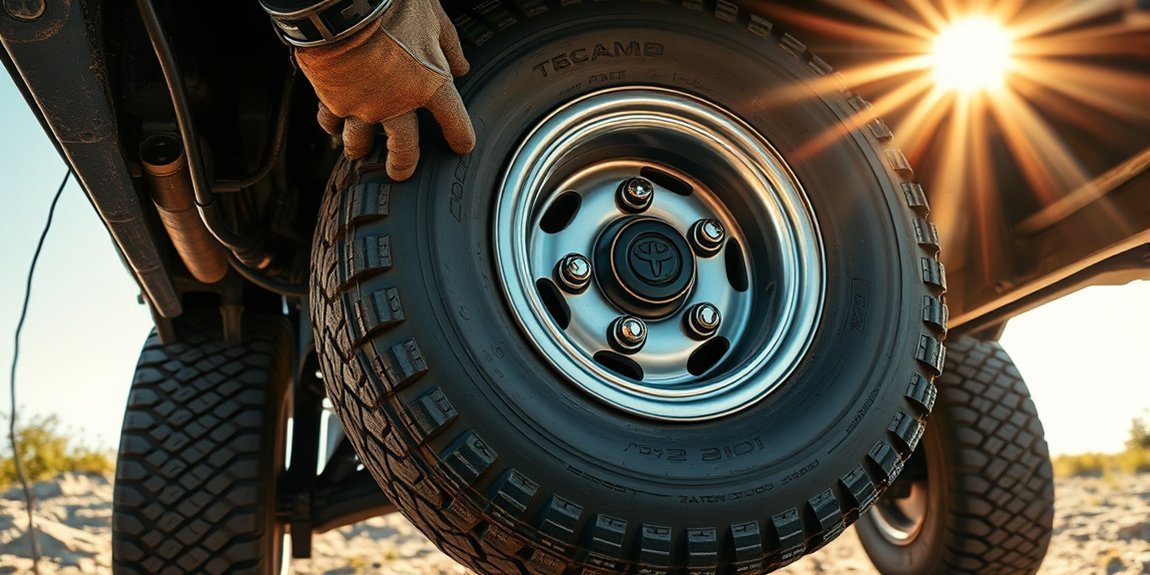
Mounting a spare tire under a Toyota Tacoma bed usually means reinstalling the wheel and tire on the factory under-bed hoist, not drilling a new carrier into the truck bed. The process is simple when the hoist, cable, holding bracket, and spare tire are in good condition, but oversized spares need careful clearance checks around the brackets, hitch, exhaust, and rear suspension.
Quick Answer
To mount a spare tire under a Toyota Tacoma bed, lower the factory hoist cable, place the holding bracket through the wheel center, crank the tire up with the jack handle extension, then confirm the tire is centered, tight, inflated, and clear of the exhaust, hitch, brackets, and leaf spring hardware.
Key Takeaways
- Use the factory under-bed hoist and holding bracket if your Tacoma still has the original spare tire system.
- Do not drill into the bed for a factory under-bed spare reinstall; drilling applies to some aftermarket in-bed carriers.
- A 285/70R17 spare may fit many Tacoma under-bed locations, but the exact tire model, wheel offset, hitch, and exhaust clearance matter.
- Check spare tire pressure monthly when cold and before long trips.
- If the hoist cable is rusty, kinked, stuck, or frayed, replace or service it before trusting it off-road.
At a Glance
| Time Required | 10–20 minutes for a normal spare; longer if test-fitting an oversized tire |
| Difficulty | Easy for a stock-size spare; moderate for 33-inch fitment checks |
| Tools Needed | Tacoma jack handle extensions, wheel nut wrench, tire pressure gauge, gloves, flashlight, and optional rust penetrant |
| Cost | $0 if the factory hoist, tools, and spare are already present; replacement tools or hoist parts vary by seller |
Check Your Tacoma’s Compatibility
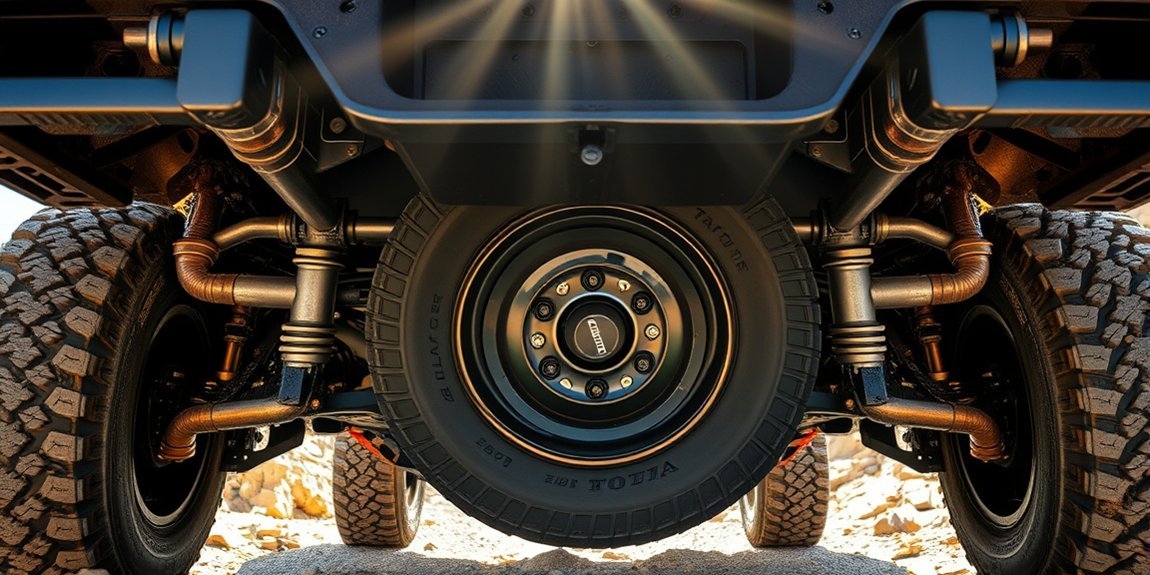
Before you raise a spare tire into place, confirm which setup you have. Most Tacoma owners using the under-bed location are working with the factory spare tire hoist: a cable, lowering screw, and holding bracket that lifts the wheel under the rear of the truck. Toyota’s owner information describes this style of spare tire system and the tool-based lowering process in its Tacoma manual resources.
For 2016–2023 Toyota Tacoma models, the factory under-bed location is the usual spare storage spot. However, your exact fit depends on cab, bed length, hitch receiver, wheel offset, tire size, exhaust position, and any suspension or bumper modifications. If your truck is a 2024 or newer Tacoma, check the exact owner’s manual for your model year because the fourth-generation truck has different packaging and parts.
Warning: Do not drill into the bed or frame just to reinstall a spare tire in the factory under-bed location. Drilling applies to some aftermarket bed-mounted carriers, not the factory hoist system.
If you are using an aftermarket bed-mounted spare tire carrier, follow that product’s instructions instead. For example, Rough Country’s Tacoma bed-mounted carrier is listed for 2016–2023 Tacoma models, requires drilling, uses rubber gaskets, and allows up to a 40-inch tire. That is a different setup from the under-bed factory spare location.
Selecting the Right Spare Tire Size for Under-Bed Mounting
The safest spare is a properly inflated tire and wheel that matches the rolling diameter, bolt pattern, and load needs of the tires on your Tacoma. Toyota’s 2023 Tacoma brochure lists factory tire sizes such as P245/75R16, P265/70R16, P265/65R17, and P265/60R18 depending on trim and package, so stock spare sizing is not identical across every truck.
[Products Worth Considering]

The Dr.Roc spare tire tool kit helps you release, lower, or raise your spare tire with reliable extension tools and a lug nut wrench. It is made from rustproof automotive-grade steel and includes an organized carry case for convenient storage. Designed for compatibility with select GM models from the late 1990s through 2019, it uses upgraded extension components to install and remove spare tires with less hassle.

Mount your spare tire directly to the inside wall of an enclosed trailer or garage to save space and keep your tire secure. This wall-mount spare tire carrier is designed for universal trailer tire fit and includes a fixed plate and chute for convenient screw replacement. Nylon insert hex lock nuts help prevent the tire from falling off, and wing hardware enables faster load and unload during maintenance.

This side-mounted U-bolt spare tire bracket helps keep a trailer spare wheel secure and protected while you travel. It supports trailer frames up to 2–3 inches wide and fits up to 15-inch tires for 4- or 5-lug wheels. The galvanized steel threaded carrier is built for long-lasting corrosion resistance and installs easily with included lug nuts and U-bolt.
Tire Diameter Considerations
A stock-size spare should fit the factory hoist location without drama if the carrier is working correctly. A 33-inch spare, such as a 285/70R17, is often the largest practical under-bed choice for many Tacoma owners, but it should never be treated as guaranteed. The same labeled tire size can vary in true diameter from one tire model to another.
Real-world Tacoma fitment reports show that a 285/70R17 can fit in the spare location, but it may be tight and may not sit as flush as the stock spare. Larger sizes, including many 285/75R17 tires, can be closer to a 34-inch tire and may need a different carrying solution.
Width and Compatibility Factors
Tire width matters because the spare sits between fixed parts under the truck. Before fully cranking the spare into place, check the tire’s clearance to the support brackets, hitch receiver, exhaust, leaf spring hangers, rear axle, and heat shield.
| Tire Size | Approximate Width | Under-Bed Fitment Note |
|---|---|---|
| 245/75R16 | About 9.6 in. | Common stock-size fitment |
| 265/70R16 | About 10.4 in. | Common Tacoma all-terrain size |
| 265/65R17 | About 10.4 in. | Common 17-inch stock-size fitment |
| 285/70R17 | About 11.2 in. | Often possible, but tight; test-fit carefully |
| 285/75R17 | About 11.2 in. | Usually harder to fit because it is taller |
Impact on Ground Clearance
An oversized spare can hang lower than the stock spare even when the hoist is fully tightened. That can reduce departure clearance and increase the chance of dragging the tire off-road. After mounting the spare, crouch behind the truck and view it from the side to confirm it does not hang below nearby hardware more than you can accept for your driving conditions.
Note: Do not rely only on the tire size printed on the sidewall. Check the tire manufacturer’s actual diameter and section width for your exact tire model.
Step-by-Step Guide to Mounting Your Spare Tire
These steps apply to reinstalling a spare tire in the factory under-bed location. If your truck has missing tools, a damaged hoist cable, or a non-factory carrier, repair the system or follow the carrier manufacturer’s instructions before using it.
[Products Worth Considering]

This spare tire tool kit is designed for the 2004 to 2018 Ford F-150 to help you loosen and tighten wheel lug nuts and manage the spare tire and provided jack functions from underneath the vehicle. It includes the lug nut wrench and extension pieces plus a convenient storage carrying case for organized transport. The jack itself is not included.

Secure a full-size spare on your trailer with this powder-coated steel spare tire mount bracket. It fits most 4-, 5-, and 6-lug wheel bolt patterns and mounts to trailer tongues up to 4 in wide and 5 in tall. Built for reliable carry with a max 150 lb load rating and includes zinc-plated hardware for straightforward installation.

These aluminum alloy tire valve stem caps with an O-ring seal help protect valve stems from corrosion while adding a clean, stylish look to your vehicle. The universal fit works across cars, trucks, motorcycles, bicycles, and more, making them an easy upgrade for everyday driving and off-road use. Installation is quick, and the included four-pack keeps all your tires dressed and protected.
Required Tools And Materials
- Toyota jack handle extensions
- Wheel nut wrench or factory crank tool
- Gloves
- Flashlight or headlamp
- Tire pressure gauge
- Optional: rust penetrant for a sticky lowering screw or hoist mechanism
- Optional: portable air compressor if you carry an oversized spare that was aired down for storage
You should not need a drill, socket set, or new mounting bracket when using the original under-bed spare tire hoist.
Installation Steps Overview
- Park safely. Stop on a flat, solid surface, set the parking brake, and keep the truck away from traffic.
- Inspect the spare. Check the tread, sidewalls, wheel, valve stem, and cold tire pressure before raising it under the bed.
- Inspect the hoist. Look for a frayed cable, bent bracket, rusted lowering screw, or a holding bracket that does not sit flat through the wheel center.
- Lower the hoist cable. Assemble the jack handle extension and turn the lowering screw counterclockwise until the cable and bracket are low enough to work with.
- Position the wheel. Slide the holding bracket through the wheel center. Make sure it sits flat and cannot pull sideways through the wheel opening.
- Raise the spare slowly. Turn the jack handle clockwise. Pause as the tire nears the underside of the bed so you can guide it into the correct position.
- Check clearances. Confirm the tire is not touching the exhaust, heat shield, hitch receiver, support brackets, leaf spring hanger, rear axle, or brake lines.
- Tighten the hoist. Continue cranking until the tire is snug against the support points and the hoist no longer feels loose.
- Shake-test the tire. Push and pull the spare by hand. It should not swing, rattle, or shift.
- Recheck after driving. After a short drive, inspect the spare again to confirm it stayed centered and tight.
Pro Tip: Test-fit your spare at home before a trail trip. It is much easier to solve a stuck hoist, missing tool, or oversized-tire clearance problem in your driveway than on the side of the road.
What Tools Do I Need for Installation?
For the factory under-bed spare tire system, the key tool is the Tacoma jack handle extension that reaches the lowering screw. The wheel nut wrench usually works as the handle to turn the extension. Keep the full factory tool kit in the truck, because without it you may not be able to lower or raise the spare.
A tire pressure gauge is just as important as the crank tool. Federal tire-pressure warning language says each tire, including the spare if provided, should be checked monthly when cold and inflated to the vehicle placard or owner-manual pressure. The Tire Industry Association also recommends checking tire pressure once a month and before long trips.
A spare tire that fits perfectly under the bed is still useless if it is flat, cracked, or impossible to lower when you need it.
[Products Worth Considering]

The GADFISH spare tire carrier is built for reliable hauling with a reinforced welded triangular structure and a behind plate that securely holds the tire up to 150 lbs. It fits a wide range of trailer wheel lug setups, making it suitable for boat trailers as well, while the sloping design helps reduce wind resistance and provides low-ground clearance. Installation is designed to be straightforward with different length bolts and no drilling required.

The SAFELIFE dial tire tread depth gauge measures tread depth in 1/32 inch increments with clear, easy-to-read 2-inch dial face. Color zones using a traffic light system help you quickly judge whether tread is low, marginal, or ample for safer driving. Built with a durable zinc cast body and a metal detect probe for precise, comfortable use across cars, motorcycles, trucks, and buses.

This universal spare tire mount fits 4, 5, and 6 lug trailer wheels with bolt patterns from 4" to 5.5" and helps keep your tire securely locked in place. Its reinforced triangular structure with a sturdy behind plate is designed to handle up to 150 lbs, making it suitable for boat, camper, and RV spare tire mounting. The angled raised design reduces wind resistance and installation is straightforward with different length bolts and no drilling required.
Fitment Issues: Common Problems & Solutions
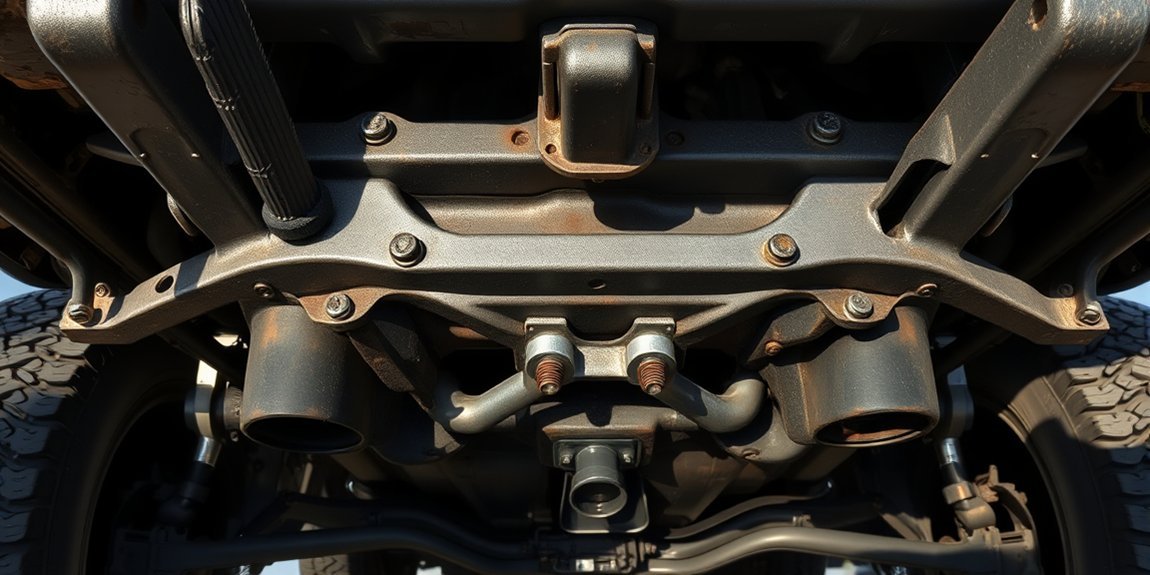
Fitment issues are most common when you carry a larger spare than the stock tire. A 285/70R17 spare can be workable on many Tacoma setups, but you should expect a tight fit and check every contact point before trusting it off-road.
| Problem | Likely Cause | Solution |
|---|---|---|
| Tire will not sit flat | Holding bracket is off-center or wheel offset is causing interference | Lower the spare, recenter the bracket, and raise it slowly while guiding the tire |
| Tire rubs support brackets | Oversized diameter or width | Use a smaller spare, test a different tire model, or move the spare to a bed or swing-out carrier |
| Tire is too close to exhaust | Large spare or modified exhaust routing | Do not let rubber touch the exhaust or heat shield; choose another storage option if clearance is poor |
| Hoist cable will not move | Corrosion, dirt, or seized mechanism | Do not force it hard enough to snap the cable; clean, lubricate, or replace the hoist |
| Spare hangs low | Tire is too large or not seated in the support points | Lower and recenter it; if it still hangs too low, use a different spare location |
Warning: Do not store a spare at very low pressure unless you also carry a compressor and inflate it before driving. A spare that is aired down for storage is not ready for road use.
Maintenance Tips for Long-Lasting Tire Storage
Under-bed spare tires live in a harsh spot. They are exposed to road spray, mud, salt, heat, and debris, so a spare that looked fine last year may be low on air or stuck in the hoist when you need it.
- Check pressure monthly when cold. Use the pressure on your door placard, owner’s manual, or tire guidance for the exact spare size.
- Inspect before long trips. Look for cracks, bulges, punctures, dry rot, wheel corrosion, and valve-stem damage.
- Cycle the hoist. Lower and raise the spare a few times per year so the cable and lowering screw do not seize.
- Clean the wheel and tire. Rinse off mud and road salt, especially after winter driving or beach trips.
- Check the cable and bracket. Replace parts that are frayed, bent, heavily rusted, or hard to operate.
- Verify clearance after modifications. Recheck the spare after adding a hitch, bumper, exhaust, lift kit, leaf pack, or larger tires.
If you rotate five matching tires, include the spare only when the wheel, tire size, tread depth, load rating, and TPMS setup make sense for your Tacoma. If the spare is an emergency-only tire or a different size, keep it as a temporary backup and replace it with a matching tire as soon as practical.
Frequently Asked Questions
What is the 50/50 rule on spare tires?
The 50/50 rule usually means driving no more than 50 miles and no faster than 50 mph on a compact temporary spare. It is not a universal rule for every full-size spare. If your Tacoma has a matching full-size spare in good condition, follow the tire sidewall, vehicle placard, and owner’s manual instead.
Will a 285/70R17 spare fit under a Toyota Tacoma?
Often, yes, but it depends on the exact tire, wheel, hitch, exhaust, bed length, and suspension setup. Test-fit the tire at usable pressure and check all clearance points before relying on it.
Do I need to drill holes to mount a spare tire under the Tacoma bed?
No. The factory under-bed spare system uses a hoist cable and holding bracket. Drilling is only relevant for some aftermarket bed-mounted tire carriers that sit inside the truck bed.
Can I store the spare under the bed if it touches the exhaust heat shield?
No. The tire should not touch the exhaust or heat shield. Heat and rubbing can damage rubber over time. Use a smaller spare or move the spare to a bed carrier, hitch carrier, or swing-out bumper if clearance is poor.
How often should I check my Tacoma spare tire?
Check the spare tire pressure monthly when cold and before long trips. Also inspect the hoist, cable, bracket, wheel, valve stem, and tire sidewalls a few times per year.
Conclusion
Mounting a spare tire under a Toyota Tacoma bed is straightforward when you use the factory hoist correctly: inspect the spare, center the holding bracket, raise the tire slowly, check every clearance point, and confirm it is tight. The biggest mistakes are treating an aftermarket bed carrier as the same thing as the factory under-bed system, ignoring tire pressure, or assuming every 33-inch spare fits the same. Take a few minutes to test-fit and maintain the spare now, and it will be ready when a flat tire tries to ruin your trip.
Sources
- Toyota Owners Manuals and Warranties — official Tacoma manual access and owner resources.
- 2023 Toyota Tacoma eBrochure — factory trim and tire-size reference.
- NHTSA TireWise — tire safety, tire maintenance, and tire-risk awareness.
- 49 CFR § 571.138 TPMS owner-manual language — monthly cold tire-pressure check language, including the spare if provided.
- Tire Industry Association: Tire Inflation Pressure — monthly and before-trip tire-pressure guidance.
- Rough Country Bed Mount Spare Tire Carrier — aftermarket in-bed carrier fitment, drilling, gasket, and 40-inch tire claims.
