Upgrading the spare tire on your Toyota Tacoma is not just about fitting the biggest tire under the bed. The right spare should match your road tires closely, clear the exhaust and frame, use the correct wheel and lug hardware, and be ready to install safely when you are stuck on the road or trail.
Quick Answer
To upgrade a Toyota Tacoma spare tire, match the spare’s overall diameter to your current tires, verify the wheel bolt pattern, offset, center bore, lug-seat style, and load rating, then test-fit it under the bed with at least safe clearance from the exhaust, hitch, frame, and suspension.
Key Takeaways
- Start with the tire size on your driver-door placard and the tires currently installed on your Tacoma.
- Keep the spare close in overall diameter to your road tires to reduce driveline, ABS, and traction-control issues.
- A 255/80R17 or 285/70R17 spare can work on some builds, but both require a real test-fit before you rely on them.
- Aftermarket wheels may need different lug nuts, a different socket, and a center-bore check.
- Check spare tire pressure at least monthly, including before long trips and off-road drives.
At a Glance
| Time Required | 30–60 minutes for measuring and test-fitting; longer if brackets, exhaust clearance, or wheel hardware need changes |
| Difficulty | Moderate DIY; professional help recommended for non-OEM wheel and oversized tire fitment |
| Tools Needed | Owner’s manual, tire pressure gauge, tape measure, Tacoma jack tools, lug wrench/socket, torque wrench, wheel chocks, flashlight, gloves, compressor |
| Cost | Usually the cost of one tire and possibly one matching wheel; extra cost if you need lug hardware, a heat shield, relocation parts, or professional mounting |
How to Choose the Right Tire Size for Your Tacoma
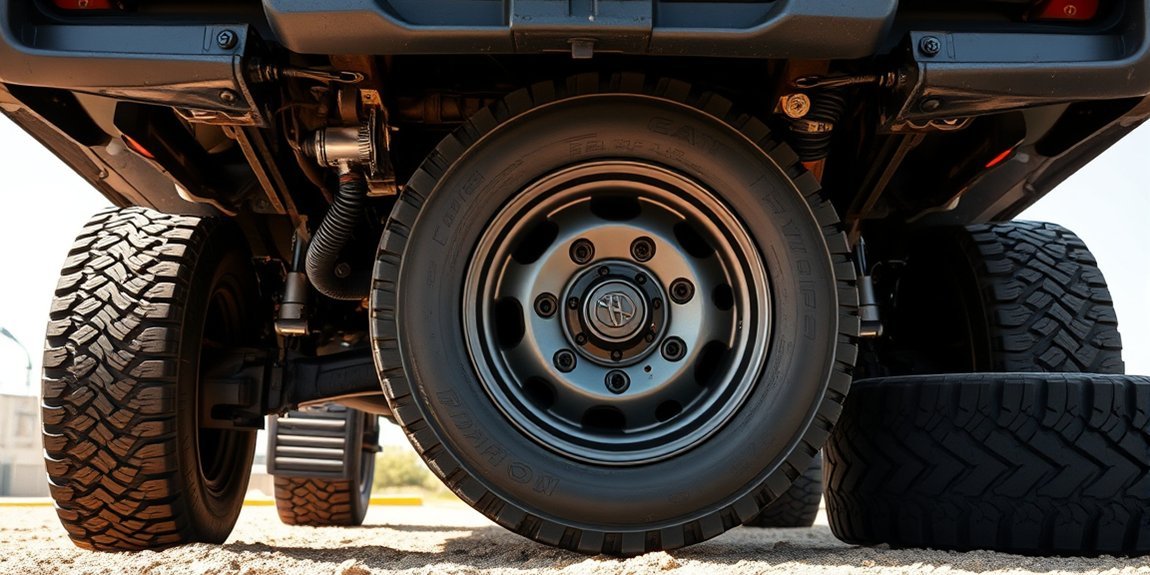
Start by checking three things: the tire size on your driver-door placard, the size printed on your current tires, and the tire information in your owner’s manual. Toyota’s recent Tacoma tire data includes sizes such as 245/70R17, 265/70R17, and 265/65R18, but the correct size depends on the year, trim, package, and whether the truck has a factory lift or aftermarket suspension changes.
The most important number is overall diameter. A spare that is much taller or shorter than the tires on the ground can confuse traction control, ABS, and four-wheel-drive driveline behavior. For a full-size spare, aim to stay as close as practical to the diameter and tread depth of the other tires.
Warning: Do not assume a tire fits because another Tacoma owner used it. Cab style, trim, suspension lift, wheel offset, hitch setup, exhaust position, and tire brand can all change spare-tire clearance.
A size like LT255/80R17 is a tall, narrow option that some Tacoma owners like because it can be easier to tuck under the bed than a wider tire. A 285/70R17 is also common in off-road builds, but it is wider and may create clearance problems. Treat both as fitment candidates, not automatic answers.
Compare Diameter Before You Buy
Before ordering a spare, use a tire-size calculator or the manufacturer’s listed specifications to compare the spare against your road tires. Here are approximate diameters for common sizes:
| Tire Size | Approx. Diameter | Fitment Note |
|---|---|---|
| 245/70R17 | About 30.5 in. | Common Tacoma OEM-size range; check trim |
| 265/70R17 | About 31.6 in. | Common Tacoma road-tire size |
| 265/65R18 | About 31.6 in. | Similar diameter to 265/70R17 |
| 285/70R17 | About 32.7 in. | Needs careful spare-bay, exhaust, and width check |
| LT255/80R17 | About 33.1 in. | Tall and narrow; may fit better than some wide 33s, but still must be tested |
Note: Tire dimensions vary by brand, model, tread depth, and load range. Always check the tire manufacturer’s actual mounted diameter and section width, not just the size printed on the sidewall.
Evaluating Compatibility of Aftermarket Wheels
Upgrading your spare often means buying a matching or compatible wheel. That wheel must fit the Tacoma hub, brakes, lugs, and spare carrier. The wheel’s looks matter far less than whether it installs safely during a flat-tire emergency.
| Wheel Check | What to Verify | Why It Matters |
|---|---|---|
| Bolt pattern | Must match your Tacoma generation and model year | A wrong bolt pattern will not mount safely |
| Center bore | Wheel must seat correctly on the hub | Poor centering can cause vibration or unsafe seating |
| Offset and backspacing | Compare with your current wheel and tire setup | Affects brake, suspension, and carrier clearance |
| Lug-seat style | Conical, ball, mag, or shank-style seat as required by the wheel | Wrong lug nuts can loosen or damage the wheel |
| Load rating | Wheel and tire must be rated for your truck’s load | Important for towing, payload, and off-road use |
Popular off-road wheel styles can work well, but you still need the correct specs. Do not rely on “Tacoma compatible” in a product title alone. Confirm the wheel with the seller, the wheel manufacturer, or a tire shop that knows Toyota truck fitment.
[Products Worth Considering]

This spare tire tool kit is designed for the 2004 to 2018 Ford F-150 to help you loosen and tighten wheel lug nuts and manage the spare tire and provided jack functions from underneath the vehicle. It includes the lug nut wrench and extension pieces plus a convenient storage carrying case for organized transport. The jack itself is not included.

The Dr.Roc spare tire tool kit helps you release, lower, or raise your spare tire with reliable extension tools and a lug nut wrench. It is made from rustproof automotive-grade steel and includes an organized carry case for convenient storage. Designed for compatibility with select GM models from the late 1990s through 2019, it uses upgraded extension components to install and remove spare tires with less hassle.

These aluminum alloy tire valve stem caps with an O-ring seal help protect valve stems from corrosion while adding a clean, stylish look to your vehicle. The universal fit works across cars, trucks, motorcycles, bicycles, and more, making them an easy upgrade for everyday driving and off-road use. Installation is quick, and the included four-pack keeps all your tires dressed and protected.
Essential Tips for Fitting Your Spare Tire
A larger spare tire can sit lower than the original spare and may get closer to the exhaust, tow hitch, bed crossmembers, or rear suspension. Before you drive with it, test-fit it at home on level ground.
- Measure first: Compare the new spare’s diameter and section width against the tire currently under the truck.
- Lower the original spare: Use the Tacoma spare-tire tool system described in the owner’s manual and remove the holding bracket from the spare.
- Install the new wheel and tire on the carrier: Make sure the carrier plate or bracket sits flat and centered.
- Raise it slowly: Stop before it is fully tight and check all sides for contact.
- Check the exhaust side: Confirm the tire is not touching the tailpipe, exhaust hanger, or heat source.
- Shake-test the spare: Once fully raised, push on the tire firmly. It should not swing, rattle, or shift.
- Road-test carefully: Listen for rubbing or rattling after a short drive, then recheck the carrier tension.
Pro Tip: Test-fit the spare before a road trip or trail run. A tire that technically fits under the bed but cannot be lowered, installed, or tightened with your roadside tools is not a useful spare.
How to Install Your Spare Tire Safely
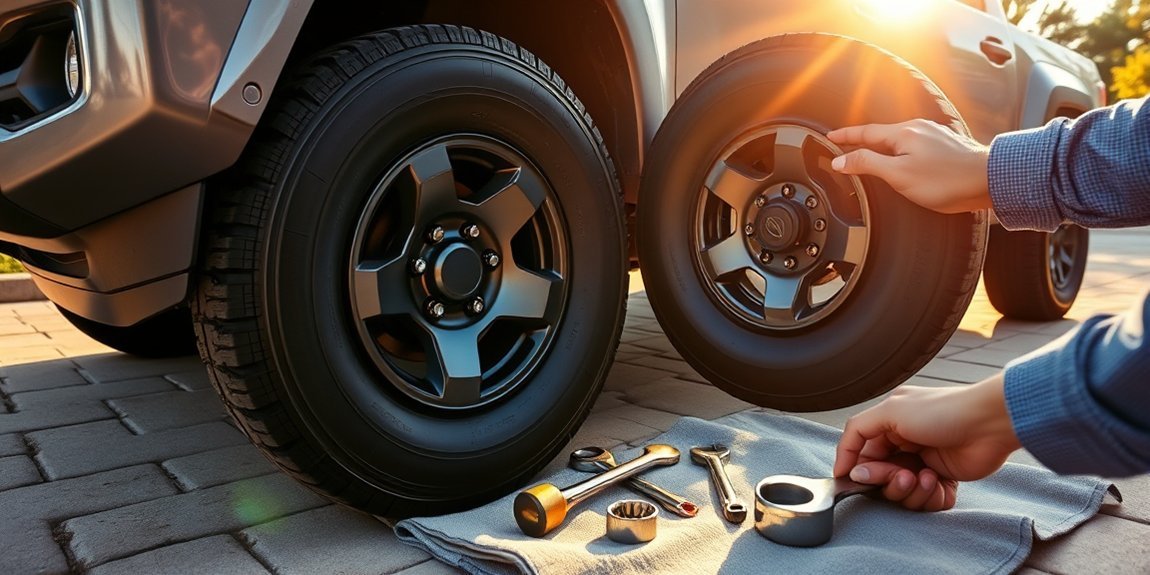
When you use the upgraded spare on the road, follow your Tacoma owner’s manual first. The basic process below is a safety-focused overview, not a replacement for the factory procedure.
Selecting Compatible Tires
A compatible spare should be close in diameter to the tires on the ground, have an equal or appropriate load rating, and be mounted on a wheel that fits the truck. If your Tacoma uses four-wheel drive, matching tire circumference becomes more important because different tire diameters rotate at different speeds.
If your upgraded spare is a full-size match, consider rotating it with the other four tires when appropriate. This keeps tread depth closer across all five tires and makes the spare more useful when one road tire fails.
Ensuring Proper Installation
- Move to a safe location: Stop on firm, level ground away from traffic when possible.
- Set the parking brake: Keep the truck stable before lifting.
- Chock the correct tire: Use a wheel chock or a solid object according to the factory flat-tire procedure.
- Loosen wheel nuts slightly before lifting: Break them loose while the tire is still on the ground.
- Use the correct jack point: Follow the Tacoma owner’s manual. Never crawl under a truck supported only by a jack.
- Install the spare: Seat the wheel flat against the hub and hand-thread all lug nuts before tightening.
- Tighten in a star pattern: Snug the nuts evenly, lower the truck, then torque to the owner’s manual specification.
- Recheck soon: After driving a short distance, stop safely and confirm the wheel is still seated and the spare is holding pressure.
Warning: A jack is for lifting, not for supporting a vehicle while you work underneath it. If you need to inspect the underside closely, use properly rated jack stands on a solid surface or have a shop inspect the truck.
Managing Exhaust Contact During Installation
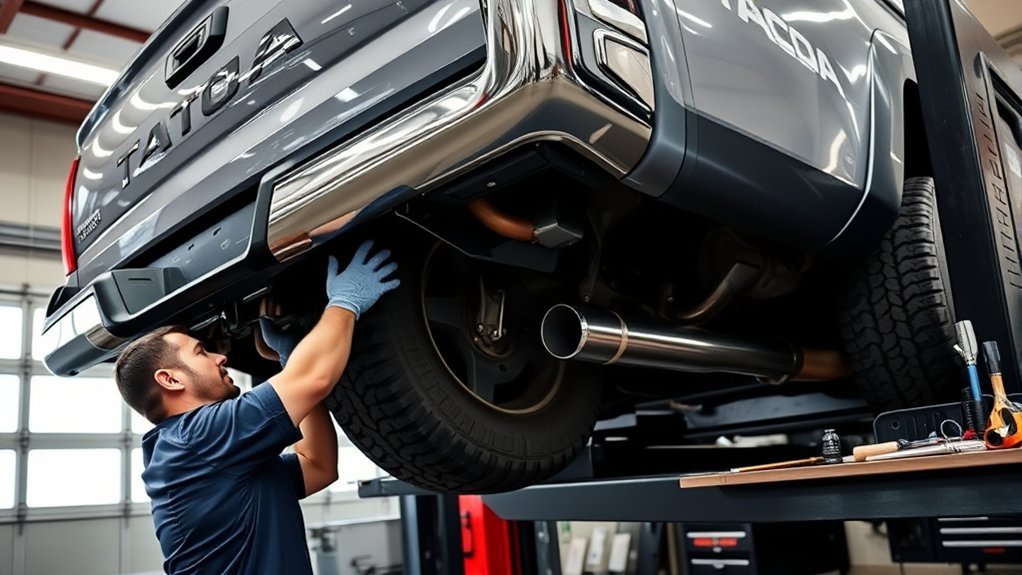
Exhaust clearance is one of the most common problems with a larger Tacoma spare. A wider or taller tire can sit closer to the tailpipe, muffler, or exhaust hanger. Rubber should not touch hot exhaust parts, and it should not sit so close that heat can damage the sidewall over time.
Use this checklist after raising the spare:
- Check the tailpipe side first: Look for direct contact or very tight gaps.
- Check after a short drive: Heat, vibration, and suspension movement can reveal contact that was not obvious in the driveway.
- Inspect the sidewall: Look for shiny rub marks, cuts, soft spots, or heat discoloration.
- Use a heat shield if needed: A properly installed shield can help protect the tire, but it should not hide a tire that is actually touching the exhaust.
- Do not force the fit: If the carrier has to bend or the tire is jammed into place, choose a smaller spare or a relocation solution.
Essential Tools for Upgrading Your Spare Tire
The best spare tire is only useful if you can install it with the tools in your truck. Aftermarket wheels and oversized tires often require more than the factory tool kit.
- Owner’s manual: Keep the flat-tire procedure available in the glove box or downloaded to your phone.
- Tire pressure gauge: Use it monthly and before long trips.
- Portable compressor: Helpful when the spare loses pressure or after off-road airing down.
- Correct lug socket: Aftermarket lugs may need a thin-wall socket or different size.
- Torque wrench: Use it to tighten lug nuts to the factory specification after the truck is on the ground.
- Wheel chocks: Important for safe roadside lifting.
- Gloves and flashlight: Small items that matter at night, in mud, or on the shoulder.
- Tire plug kit: Useful for tread punctures, but it does not replace a spare for sidewall damage or major tire failure.
- Lock key: If you use locking lug nuts, keep the key in the truck, not in the garage.
[Products Worth Considering]

Secure a full-size spare on your trailer with this powder-coated steel spare tire mount bracket. It fits most 4-, 5-, and 6-lug wheel bolt patterns and mounts to trailer tongues up to 4 in wide and 5 in tall. Built for reliable carry with a max 150 lb load rating and includes zinc-plated hardware for straightforward installation.

These M14x1.5 closed-end chrome lug nuts are a one-piece replacement designed for secure fitment on compatible GM, Ford, and select Chrysler/Dodge models. Featuring a 60-degree conical seat and anti-rust chrome plating, they help resist corrosion and maintain a bright look for everyday driving. Built for long-term durability, they include OEM-style part references and are backed by 12 months of support.

Keep your tires properly inflated with this analog VONDIOR tire pressure gauge, designed for fast, easy readings without batteries. The swiveling, two-axis hose and large glow dial help you measure at any tire angle with instant visibility. Built with a protective rubber shield, it supports durable, low-maintenance use for cars and trucks.
Preparing for Emergencies: Key Spare Tire Tools
Before a long drive, trail day, or towing trip, do a five-minute spare tire check:
- Check cold pressure: Inflate the spare to the pressure recommended for that tire and your vehicle setup.
- Inspect the tread and sidewall: Look for cracks, cuts, punctures, dry rot, or bulges.
- Check the DOT date code: Replace an old spare if the rubber is aged, cracked, or no longer safe.
- Lower and raise the spare once: Make sure the carrier is not seized and the tools actually work.
- Confirm lug compatibility: Carry the correct lug nuts and socket for the spare wheel.
A spare tire that is flat, seized under the bed, or mounted on a wheel with the wrong lug nuts is not a backup plan. Check the tire and the tools before you need them.
[Products Worth Considering]

The GADFISH spare tire carrier is built for reliable hauling with a reinforced welded triangular structure and a behind plate that securely holds the tire up to 150 lbs. It fits a wide range of trailer wheel lug setups, making it suitable for boat trailers as well, while the sloping design helps reduce wind resistance and provides low-ground clearance. Installation is designed to be straightforward with different length bolts and no drilling required.

Upgrade your wheels with MIKKUPPA M12x1.5 mag seat lug nuts built for secure, corrosion-resistant performance. These closed-end chrome lug nuts are a direct replacement for select Toyota models, including Camry, Corolla, RAV4, Sienna, Avalon, Highlander, Matrix, Venza, and Prius. Triple-chromium plating and cold-forged, heat-treated steel help deliver strength for daily driving and replacement needs.

Mount your spare tire off the floor and onto your wall using an e-track spare tire carrier that helps you stay organized in trailers, garages, and warehouses. The upgraded double-fittings design improves stability versus single-fittings and supports greater load bearing. Install by snapping into e-track anchor points and securing the tire with a lug-nut style bolt setup for quick, secure storage.
Community Experiences: Learning From Tacoma Owners
Tacoma owners often share useful real-world fitment notes, especially for sizes like 255/80R17, 285/70R17, and other 33-inch-class tires. Those reports are helpful, but they are not a substitute for checking your own truck.
Common Fitment Challenges
- Exhaust rubbing: The spare may sit too close to the tailpipe or muffler.
- Carrier limits: The hoist may raise the tire, but not hold it securely.
- Hitch interference: Tow hitches and aftermarket bumpers can reduce spare-tire space.
- Wheel offset changes: A wheel that fits the hub may still change how the tire sits under the bed.
- Different lug hardware: Factory lug nuts may not fit aftermarket wheels.
Practical Modification Solutions
If the spare does not fit, do not grind, bend, or force parts without understanding the risk. Safer options include choosing a narrower spare, using a wheel with better backspacing for the carrier, adding a proper heat shield, adjusting a compatible holding bracket, or relocating the spare to a bed mount or swing-out carrier.
Note: A bed-mounted or rear-bumper-mounted spare can improve clearance under the truck, but it may affect cargo space, rear visibility, departure angle, weight distribution, and tailgate access.
Common Challenges With Spare Tires and Solutions
| Problem | Likely Cause | Solution |
|---|---|---|
| Spare rubs the exhaust | Tire is too wide, too tall, or poorly positioned | Use a narrower tire, improve heat shielding, or relocate the spare |
| Spare hangs low | Oversized diameter or carrier limit | Test carrier security; choose a smaller tire if it cannot lock tightly |
| Lug nuts do not seat correctly | Wrong lug-seat style or thread | Carry the lug nuts specified by the wheel manufacturer |
| Warning lights after installing spare | Diameter mismatch, TPMS issue, or low pressure | Check pressure, confirm diameter match, and drive cautiously until repaired |
| Spare is flat when needed | Slow air loss or skipped maintenance | Check spare pressure monthly and before trips |
Future Upgrades: Planning for Your Tacoma’s Tires
If you plan to upgrade all four tires later, choose the spare with that future setup in mind. For example, if you are moving from a 31.6-inch tire to a 33-inch-class tire, buying a matching full-size spare now can save money later. Just be sure it fits under the truck today and can be safely installed with your current wheel hardware.
Also consider how tire changes affect more than ground clearance. Larger or heavier tires can change acceleration, braking feel, fuel economy, speedometer accuracy, spare-bay clearance, and the stress placed on suspension and driveline parts. If your Tacoma is used for towing or loaded travel, pay close attention to load rating and inflation requirements.
Frequently Asked Questions
What is the best spare tire size for a Toyota Tacoma?
The best spare tire size is the one that closely matches the tires currently on your Tacoma and fits safely in the spare location. Check your driver-door placard, current tire size, owner’s manual, and actual tire diameter before buying.
Will a 285/70R17 fit in the Tacoma spare tire location?
A 285/70R17 can fit under some Tacoma builds, but it is not guaranteed. The tire is wider and taller than many factory sizes, so you must check exhaust clearance, hitch clearance, carrier security, and wheel offset before relying on it.
Is a 255/80R17 a good Tacoma spare tire?
A 255/80R17 is a tall, narrow tire that some Tacoma owners use as a 33-inch-class spare. Its narrower width can help with under-bed storage, but its height still requires careful clearance and diameter matching.
Do I need different lug nuts for an aftermarket spare wheel?
You might. Aftermarket wheels can require different lug-seat styles, shank lengths, thread engagement, or socket sizes. Keep the correct lug nuts and socket in the truck so the spare can be installed during an emergency.
Does the spare tire need TPMS?
Do not rely on TPMS to maintain the spare. Many spare setups are not monitored the same way as the four road tires. Check spare tire pressure manually with a gauge at least monthly and before long drives.
Can I drive normally on a full-size Tacoma spare?
If the spare is a true full-size match, properly inflated, in good condition, and close in tread depth to the other tires, it can usually be used more confidently than a temporary spare. Still, repair or replace the damaged tire as soon as practical and follow your owner’s manual.
Conclusion
Upgrading your Toyota Tacoma spare tire is one of the smartest reliability upgrades you can make, especially if you drive off-road, tow, or run larger-than-stock tires. The safest setup is not always the biggest spare; it is the spare that matches your road tires, fits securely, clears the exhaust, uses the right wheel hardware, and stays properly inflated.
Before calling the job done, lower the spare, test-fit it, check the tools, verify the lug nuts, and inspect the clearance from every angle. That small amount of preparation can turn a stressful flat tire into a manageable roadside stop.
Sources
- Toyota Owners: 2025 Tacoma — If You Have a Flat Tire — factory spare removal, chocking, and flat-tire procedure guidance
- Toyota Owners: 2025 Tacoma — Maintenance Data — Tacoma tire-size references by configuration
- Toyota Owners: 2025 Tacoma — Tire Information — tire symbols, DOT/TIN, treadwear indicators, and spare tire information
- NHTSA Tire Safety Checklist — monthly pressure checks, including the spare, and cold-pressure guidance
- eCFR: FMVSS No. 138 Tire Pressure Monitoring Systems — TPMS under-inflation warning requirements
- Tire Rack: Matching Tires on AWD and 4WD Vehicles — why tire diameter and tread-depth matching matters