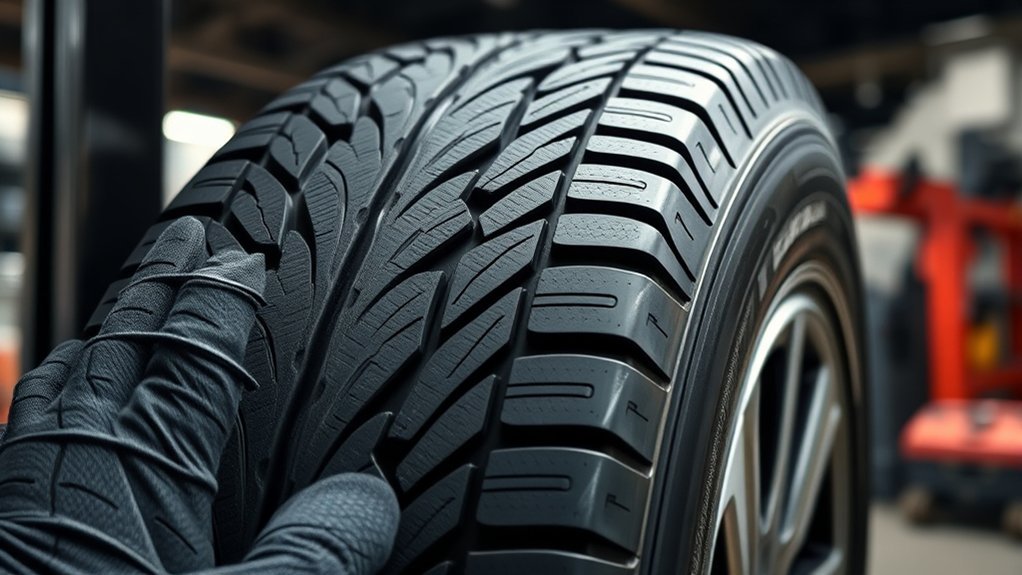
Tire feathering is uneven tread wear where each tread block develops a sawtooth feel: one edge feels sharp and the opposite edge feels rounded. It most often points to a wheel alignment problem, especially incorrect toe, but worn suspension parts, tire imbalance, and incorrect tire pressure can make it worse. Catching it early helps protect traction, reduce noise, and prevent a new set of tires from wearing out too soon.
Quick Answer
Tire feathering is a sawtooth tread-wear pattern. The tire feels smooth when you rub the tread one way and rough when you rub it the other way. It is usually caused by bad toe alignment, worn suspension parts, imbalance, or incorrect pressure. Fix the cause first; replace the tire if wear is severe.
Key Takeaways
- Tire feathering creates sharp, sawtooth-like tread edges that feel rough in one direction and smoother in the other.
- Incorrect toe alignment is the most common cause, but worn bushings, ball joints, tie rods, shocks, struts, imbalance, and poor pressure can contribute.
- Feathered tires can become noisy, vibrate, reduce predictable handling, and shorten tire life.
- An alignment or suspension repair can stop new damage, but it cannot grow worn tread back.
- Replace feathered tires if tread is low, cords are visible, vibration is severe, or a tire professional says the wear pattern is unsafe.
At a Glance
| Time Required | 5–10 minutes for a basic hand-and-visual check; longer if a shop checks alignment and suspension. |
| Difficulty | Easy to spot; professional help is recommended to correct the root cause. |
| Tools Needed | Tire pressure gauge, tread-depth gauge or penny, flashlight, and clean gloves. |
| Cost | Inspection is usually free or low-cost; alignment, balancing, suspension repair, or tire replacement varies by vehicle and tire size. |
What Is Tire Feathering?
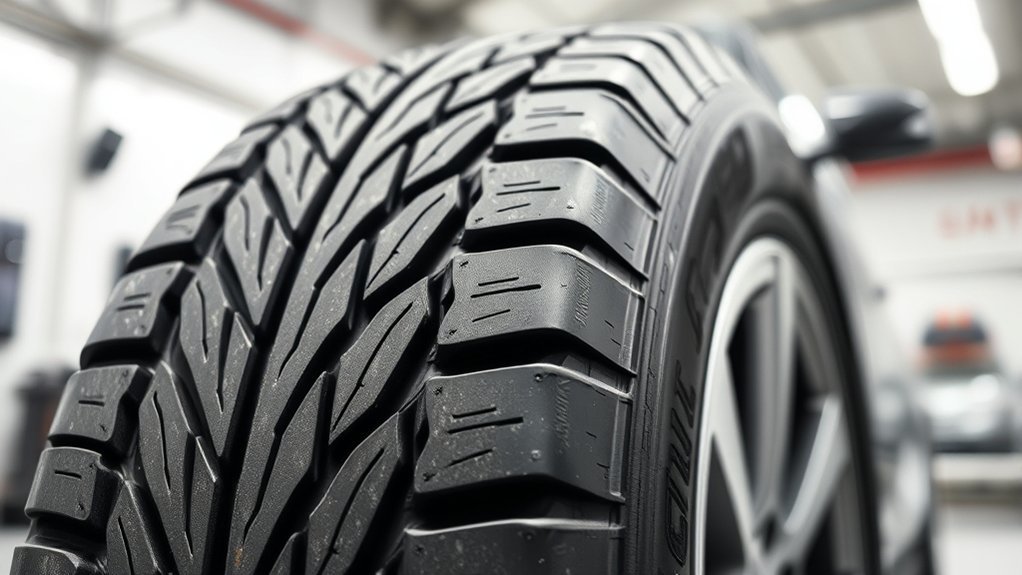
Tire feathering is a tread wear pattern where the front edge and rear edge of each tread block wear unevenly. Run your hand across the tread and one direction may feel smooth, while the opposite direction feels rough, sharp, or jagged.
This pattern is different from normal tread wear. A normally worn tire loses rubber fairly evenly across the tread. A feathered tire has directional wear, which means the tire is being scrubbed across the road instead of rolling cleanly. That usually points to alignment, suspension, pressure, or balance trouble.
Feathering is sometimes described as heel-and-toe wear because one side of the tread block wears lower than the other. Light feathering can sometimes be quiet and hard to see. Heavy feathering can make the tire noisy, rough, and less predictable during braking or cornering.
Note: Feathering is a symptom, not the root problem. If you only replace the tire without fixing the alignment or suspension issue, the new tire can develop the same wear pattern.
How to Spot Tire Feathering
You can often spot tire feathering with a simple visual and touch test. Park on a level surface, let the tires cool, turn the steering wheel if you need better access to the front tires, and inspect all four tires instead of only the tire that looks worst.
Visual Signs Of Feathering
Look closely at the tread ribs and blocks. Feathering often appears as uneven, angled, or sawtooth wear across the tread. One edge of a tread block may look sharper, thinner, or more worn than the opposite edge.
- Check the inner and outer shoulders of each tire.
- Compare the tread blocks across the same tire.
- Compare the left tire with the right tire on the same axle.
- Look for one shoulder wearing faster than the other.
- Use a flashlight if the pattern is hard to see.
Touch Test For Feathering
The touch test is the easiest way to confirm feathering. Lightly slide your palm across the tread from inside to outside, then outside to inside. Next, slide your hand forward and backward around the tire. Feathering often feels smooth one way and rough the other.
- Wear gloves if the tread has stones, wires, or sharp debris.
- Move your hand gently across the tread blocks.
- Feel for sharp edges, ridges, or a sawtooth texture.
- Repeat on all four tires.
- Write down which tire and which edge feels roughest.
Warning: Do not keep driving normally if you see exposed cords, bulges, deep cracks, rapid air loss, or strong vibration. Use a spare or roadside help if needed and have the tire inspected before driving farther.
What Causes Tire Feathering?
Tire feathering usually happens when the tire is forced to scrub sideways across the road surface. The most common cause is incorrect toe alignment, but several problems can work together.
Alignment And Suspension Issues
Wheel alignment controls the angles at which the tires meet the road. Toe is especially important for feathering. If the fronts of the tires point too far inward or outward, the tread can drag instead of rolling straight.
Out-of-alignment conditions can be caused by worn suspension parts, pothole impacts, curb hits, spring sag, ride-height changes, or newly installed suspension parts. Tire Rack notes that incorrect alignment settings usually result in faster tire wear, and alignment should be checked when unusual tire wear appears or after a major road hazard impact. Tire Rack explains the main alignment settings here.
Common mechanical triggers include:
- toe out of specification
- worn control-arm bushings
- loose ball joints
- worn tie rods
- weak shocks or struts
- camber or caster drift
- bent or damaged suspension parts after an impact
Tire Pressure And Balance
Incorrect pressure changes the tire’s contact patch. Too little pressure can make the shoulders work harder. Too much pressure can change the way the center tread contacts the road. Either condition can speed up irregular wear if the alignment or suspension is already off.
Balance matters too. An unbalanced tire can shake, bounce, or skip slightly at speed. That motion can add uneven forces to the tread and may make feathering, cupping, or patchy wear worse.
NHTSA recommends checking tire pressure monthly when tires are cold, using the pressure listed on the driver-side placard or in the owner’s manual, not the maximum pressure printed on the tire sidewall.
Driving And Road Impact
Driving style can speed up feathering. Hard braking, fast cornering, frequent pothole impacts, and repeated curb strikes all add stress to the tread and suspension. A single pothole hit may be enough to knock alignment out of spec, especially if the tire begins pulling, vibrating, or wearing unevenly soon afterward.
Is Tire Feathering Bad for Driving?
Yes, tire feathering is bad for driving when it is noticeable, spreading, noisy, or paired with vibration. It means the tire is no longer wearing evenly, and it often points to a mechanical issue that will continue damaging the tire until corrected.
Feathered tires may cause:
- humming, growling, or droning road noise
- steering-wheel vibration at certain speeds
- less predictable handling on wet or rough roads
- faster tire wear
- reduced comfort
- extra stress on suspension and steering parts
Light feathering does not always mean the tire is immediately unsafe, but it should not be ignored. Severe feathering, low tread depth, exposed cords, or strong vibration are signs to stop delaying inspection.
Tire Feathering vs. Tire Cupping
Tire feathering and tire cupping are both uneven wear patterns, but they do not look or feel the same. The difference matters because each pattern points to different likely causes.
| Wear Pattern | What It Feels Like | Common Causes |
| Feathering | Smooth one direction, rough or sharp the other direction | Toe alignment, worn steering/suspension parts, pressure issues |
| Cupping | Repeating dips, scallops, or low spots around the tire | Weak shocks/struts, imbalance, worn suspension, wheel/tire bounce |
| One-side shoulder wear | One inner or outer edge is much lower than the rest | Camber problem, toe problem, worn parts, aggressive cornering |
| Center or both-edge wear | Center is low, or both shoulders are low | Pressure, load, tire construction, or long-term maintenance issues |
Feathering Wear Patterns
Feathering wear patterns show up as sharp edges on one side of the tread block and rounded edges on the other. The tread may not look deeply damaged at first, but your hand can usually feel the directional roughness.
If feathering appears mostly on the inside or outside shoulder, alignment is a strong suspect. If it appears across several tires, check rotation history, tire pressure, and suspension condition too.
Cupping Wear Patterns
Cupping looks more like scooped-out dips or scallops around the tire. Instead of sharp tread edges, you feel repeating high and low spots. This often points to bounce, imbalance, or worn shocks and struts.
Cupping can also cause road noise and vibration, so it is easy to confuse with feathering from the driver’s seat. The tread feel is the key difference: feathering feels sharp in one direction; cupping feels wavy or hollow in spots.
How Bad Alignment Causes Feathering
Bad alignment causes feathering when the tire points slightly away from its intended path. Even a small toe error can make the tread scrub across the pavement thousands of times per mile. That repeated scrub wears one side of each tread block faster than the other.
Common alignment-related clues include:
- steering wheel off center
- vehicle pulls left or right
- tire shoulder wear on one side
- rough tread feel in one direction
- new vibration after a pothole or curb strike
- uneven wear that returns after tire rotation
Correcting alignment early can stop the damage from getting worse. It will not restore tread already worn away, but it can help the remaining tread wear more evenly if the tire is still safe to use.
Feathering is usually not a tire-only problem. It is a tire telling you that alignment, suspension, pressure, balance, or rotation needs attention.
How Suspension Problems Wear Tires Unevenly
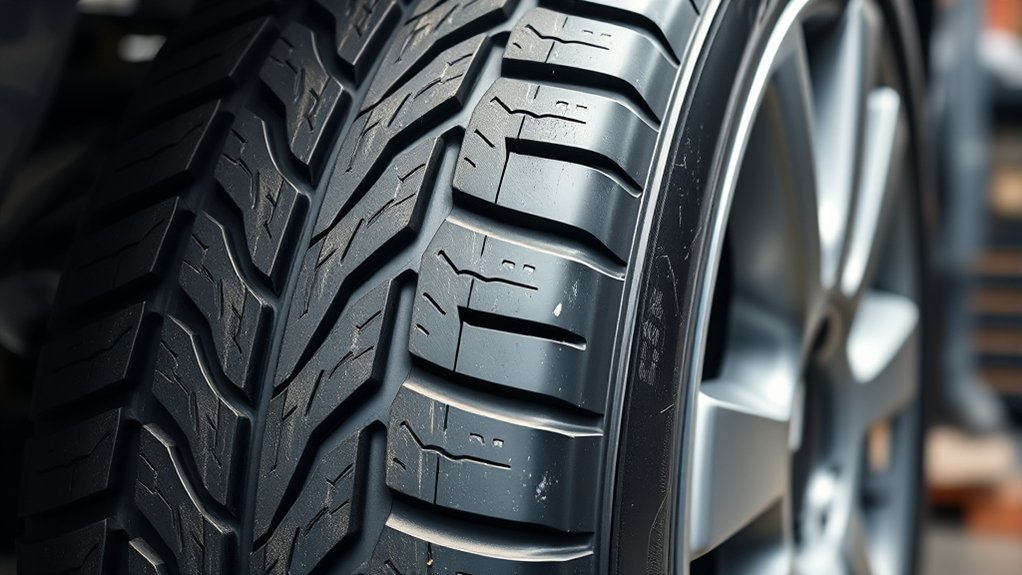
Suspension parts keep the tire planted squarely on the road. When those parts wear out, the tire can move at the wrong angle, bounce, or shift under load. That movement can create feathering, cupping, shoulder wear, or a mix of several wear patterns.
Parts that deserve inspection include:
- shocks and struts
- control-arm bushings
- ball joints
- tie rods
- wheel bearings
- springs
- strut mounts
Weak shocks or struts can let the tire bounce. Worn bushings and ball joints can let the wheel move out of position. Loose tie rods can change toe while the vehicle is moving. Any of these can make a tire wear unevenly even after a basic alignment.
How to Prevent Tire Feathering
To prevent tire feathering, keep the tires, alignment, and suspension working together. The goal is simple: the tread should meet the road squarely and roll straight instead of dragging sideways.
- Check tire pressure at least once a month when tires are cold.
- Use the pressure listed on the vehicle placard or owner’s manual.
- Check tread depth monthly while checking pressure.
- Rotate tires according to the owner’s manual; if recommended by the vehicle manufacturer, NHTSA lists 5,000 to 8,000 miles as a common rotation range, or sooner if uneven wear appears.
- Balance tires when new tires are installed or when vibration appears.
- Check alignment after pothole hits, curb strikes, suspension work, or unusual tire wear.
- Inspect shocks, struts, bushings, ball joints, and tie rods during routine service.
NHTSA notes that balance, alignment, rotation, tread checks, and proper inflation all help tire safety and tire life. Its TireWise tire-maintenance guide is a useful reference for pressure, tread, balance, alignment, and rotation.
Pro Tip: If you install new tires, ask for alignment and suspension checks at the same visit. New tires can feather quickly if the old root cause is still there.
[Products Worth Considering]

The SAFELIFE dial tire tread depth gauge measures tread depth in 1/32 inch increments with clear, easy-to-read 2-inch dial face. Color zones using a traffic light system help you quickly judge whether tread is low, marginal, or ample for safer driving. Built with a durable zinc cast body and a metal detect probe for precise, comfortable use across cars, motorcycles, trucks, and buses.

The Ziopetru adjustable magnetic wheel alignment tool helps you check and restore camber and caster positioning after removing and reinstalling undercarriage components. With a clear leveling/bubble measurement system and an easy zeroing adjustment knob, it supports precise horizontal angle checking. The strong magnetic base mounts to metal surfaces for convenient use at home on cars, motorcycles, trucks, vans, and SUVs.

Measure tire tread depth quickly and accurately with this LUMITECO dial gauge that reads in 1/32" increments up to 14/32". The color-coded green/yellow/red zones make it easy to judge tire wear and know when replacement is needed. A rugged, compact design with a protective pouch helps keep the gauge ready for use on cars, trucks, motorcycles, and more.
What To Do If You Find Tire Feathering
If you find feathering, do not only rotate the tires and hope it goes away. Rotation may move the noise, but it does not fix the cause. Use this order:
- Check tread depth. If the tire is near 2/32 inch, replacement is the safer choice.
- Check pressure cold. Correct all tires to the vehicle placard pressure.
- Inspect all four tires. Note which tires and which shoulders are feathered.
- Listen and feel while driving. Note vibration, pulling, humming, or steering-wheel shake.
- Schedule alignment. Ask for before-and-after alignment readings.
- Ask for suspension inspection. Alignment may not hold if bushings, joints, or tie rods are worn.
- Decide whether the tire can stay in service. A tire professional can judge tread depth, damage, and ride quality.
USTMA recommends monthly tire inspections and says drivers should seek professional help immediately when they find a tire condition that concerns them. USTMA also recommends periodic professional tire care, including inspection, rotation, balancing, and alignment services.
Can Feathered Tires Be Repaired?
Feathered tread cannot be repaired in the way a puncture can be repaired. Once rubber has worn unevenly, that lost tread cannot be restored. What you can repair is the cause of the feathering.
If feathering is light and the tire still has safe tread depth, correcting alignment, pressure, balance, or suspension problems may allow you to keep using the tire. The ride may improve after rotation and continued wear, but the tire will not return to brand-new condition.
If feathering is heavy, noisy, or causing vibration, replacement may be the better choice. Before replacing the tire, correct the root problem so the new tire does not wear the same way.
[Products Worth Considering]

Monitor tire tread wear with a smart, color-coded depth gauge that shows clear condition ranges at a glance. The bar is range marked for fast, easy readings, helping you maintain safer traction and performance. Each gauge is portable with a pocket clip, and the set includes 20 units for daily use and sharing.

Vigorder rubber cement glue delivers superior adhesion and cures quickly within about 30 seconds for seamless rubber bonding. Once cured, it helps provide a strong, durable, waterproof seal that holds up to vehicle weight, pressure, and heat. Suitable for cars, motorcycles, trucks, bicycles, and off-road tires, it’s designed for emergency patch and maintenance repairs.

Accurately measure tire tread depth with a calibrated gauge marked from 0 to 1 inch in 1/32 inch increments. The color-coded bar helps you quickly identify tread condition ranges, supporting safe driving for trucks, motorcycles, automobiles, and passenger vehicles.
When to Replace Feathered Tires
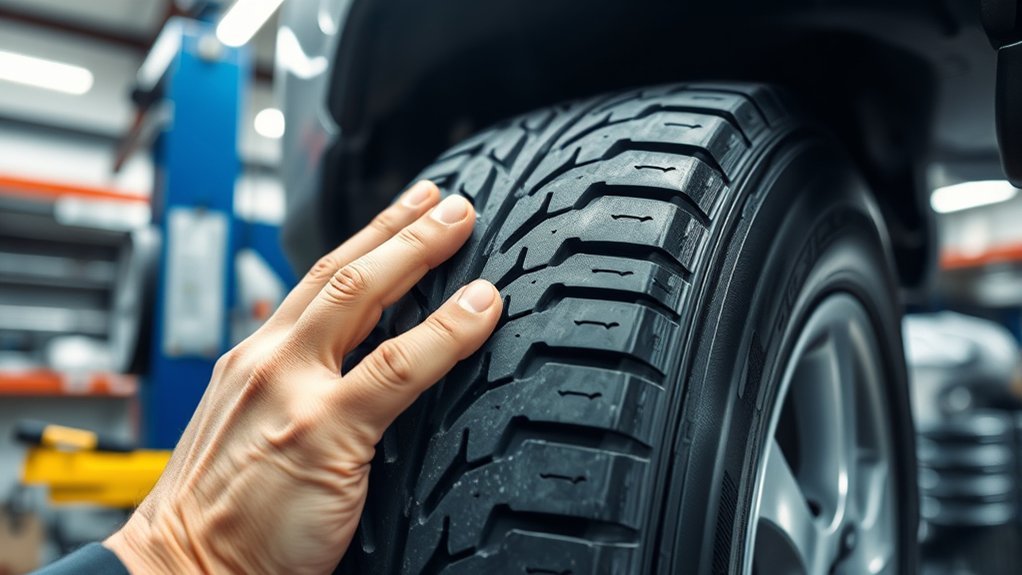
Replace feathered tires when the wear affects safety, tread depth, or ride quality. NHTSA says tires are not safe and should be replaced when tread is worn down to 2/32 of an inch. Tires also have built-in treadwear indicators that show when the tread has reached the replacement point.
Replacement is usually the right move if you see or feel any of these signs:
- tread depth at or near 2/32 inch
- visible cords or steel belts
- bulges, cracks, cuts, or sidewall damage
- strong vibration that remains after balancing
- loud humming or growling from the feathered tire
- uneven wear across multiple tires
- feathering that returns soon after rotation
- a tire professional says the tire is unsafe
If only one tire is badly feathered, ask the tire shop whether replacing one, two, or all four tires is appropriate for your vehicle. Some all-wheel-drive vehicles have stricter tire matching requirements, so the owner’s manual matters.
[Products Worth Considering]

Malco tire mounting and demounting lubricant is a ready-to-use tire lube formulated to reduce friction during tire installation for passenger cars, light trucks, farm tires, and heavy-duty equipment. It provides rust-inhibiting protection to help reduce corrosion on rims and wheels, and helps support proper tire bead seating during inflation to reduce air leakage. The silicone-free, soap-free formula is whitewall safe to help prevent discoloration on whitewall tires and sensitive sidewall markings.

AstroAI’s heavy-duty digital tire pressure gauge delivers quick, accurate readings with 0.1 increments and a secure valve-stem seal. It features a green backlit LCD and built-in flashlight for easy use in low light, plus an ergonomic non-slip stainless-steel design. The wide 0–230 PSI range works across common vehicle tires, with unit selection and an auto shut-off to save battery.

This universal wheel alignment tool helps you accurately restore tire tilt angles after tire or suspension repairs using an adjustable camber gauge. It features a powerful magnetic base that firmly attaches to brake rotors for stationary, slip-free readings, improving consistency during measurement. Built from durable PC plastic, it resists wear and corrosion and is compact enough for car, truck, RV, and motorcycle alignment tasks.
Frequently Asked Questions
Can tire feathering be fixed?
The cause can usually be fixed, but the worn tread itself cannot be restored. Start with an alignment check, tire pressure correction, balancing if needed, and a suspension inspection. If the feathering is minor and tread depth is still safe, the tire may remain usable. Severe feathering often means replacement.
Is it safe to drive on feathered tires?
Light feathering may not be an immediate emergency, but it should be inspected soon because it points to uneven wear or a mechanical problem. Do not keep driving normally if the tire has low tread, exposed cords, bulges, rapid air loss, or strong vibration.
What does feathering look like on tires?
Feathering looks like tread blocks with one edge sharper or more raised than the opposite edge. It may be hard to see at first, so touch is often easier than sight. Rub your hand across the tread: feathering usually feels smooth one way and rough the other.
Does tire feathering cause vibration?
Yes, tire feathering can cause vibration, especially when the wear is heavy or combined with imbalance, cupping, or worn suspension parts. You may feel it through the steering wheel, seat, or floor. Have the tire inspected and balanced, and ask for alignment and suspension checks.
Will an alignment fix feathered tires?
An alignment can fix the condition that caused the feathering, but it will not restore tread that is already worn unevenly. If the tire is still safe, alignment can help prevent the wear from getting worse. If the tire is noisy, low on tread, or badly worn, replacement may still be needed.
Should I rotate feathered tires?
Rotation can help even out mild wear, but it should not be the only fix. If you rotate feathered tires without correcting alignment, pressure, balance, or suspension problems, the wear pattern can return or move to another position.
Can bad shocks or struts cause tire feathering?
Yes. Bad shocks or struts can let the tire bounce or lose even contact with the road. That can create cupping, patchy wear, or feathering-like irregular wear. If feathering appears with bouncing, nose-diving, or poor ride control, have the suspension inspected.
Conclusion
Tire feathering may look minor at first, but it is an early warning that the tire is not rolling cleanly. The tread may feel rough in one direction, the cabin may get louder, or the steering may start to vibrate. The right fix is to find the cause: alignment, suspension, tire pressure, balance, or rotation history.
If you catch feathering early, you may be able to correct the root problem and keep the tire in service. If the tire is badly worn, noisy, low on tread, or unsafe, replacement is the better choice. Either way, fix the mechanical cause before you trust the next set of tires to last.
Sources
- NHTSA TireWise: Tires — tire pressure, tread depth, balance, alignment, rotation, and tire-safety guidance.
- U.S. Tire Manufacturers Association: Tire Care & Safety — monthly inspection guidance and when to seek professional tire help.
- Tire Rack: What Are The Different Alignment Settings? — alignment angles, suspension wear, pothole/curb impacts, and alignment-related tire wear.