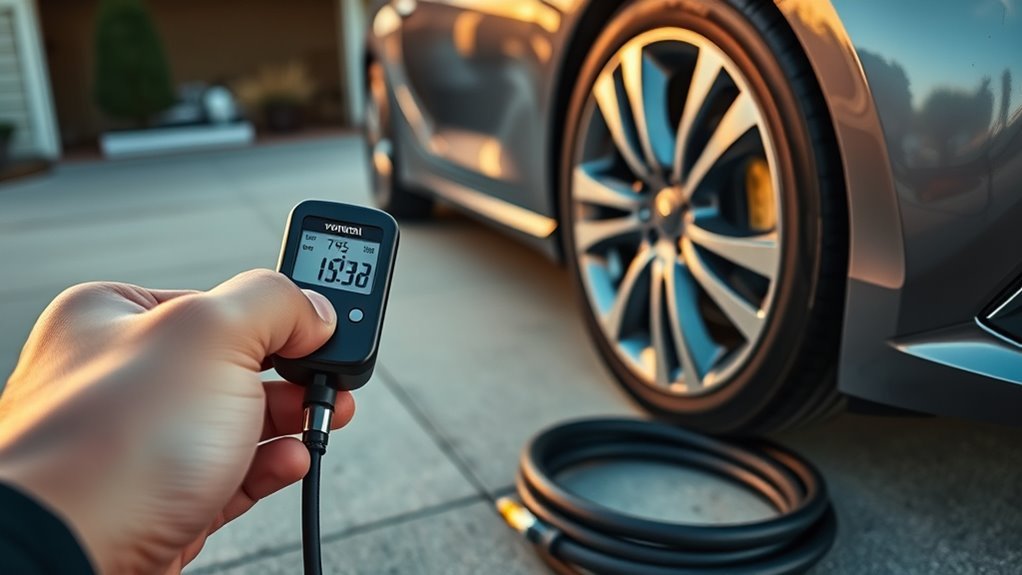
Low tire pressure can make your Hyundai Sonata feel sloppy, wear tires unevenly, and waste fuel. You can avoid that with a cold-pressure check and the PSI listed on the driver’s door-jamb placard. This guide shows you how to find the correct PSI, check each tire with a gauge, and adjust pressure safely.
Quick Answer
Find the recommended PSI on the tire placard inside the driver’s door jamb. Let the tires cool for at least 3 hours, then check each tire with a reliable gauge. Add or release air until each tire matches the front or rear PSI shown on the placard.
Key Takeaways
- Use the driver’s door-jamb placard, not the tire sidewall, to find your Sonata’s correct PSI.
- Check tire pressure when tires are cold for the most accurate reading.
- Use a reliable gauge and press it straight onto the valve stem.
- Adjust pressure in small steps, then recheck each tire before replacing the valve cap.
- Check tire pressure at least once a month and before long trips.
Find the Recommended PSI on Your Hyundai Sonata
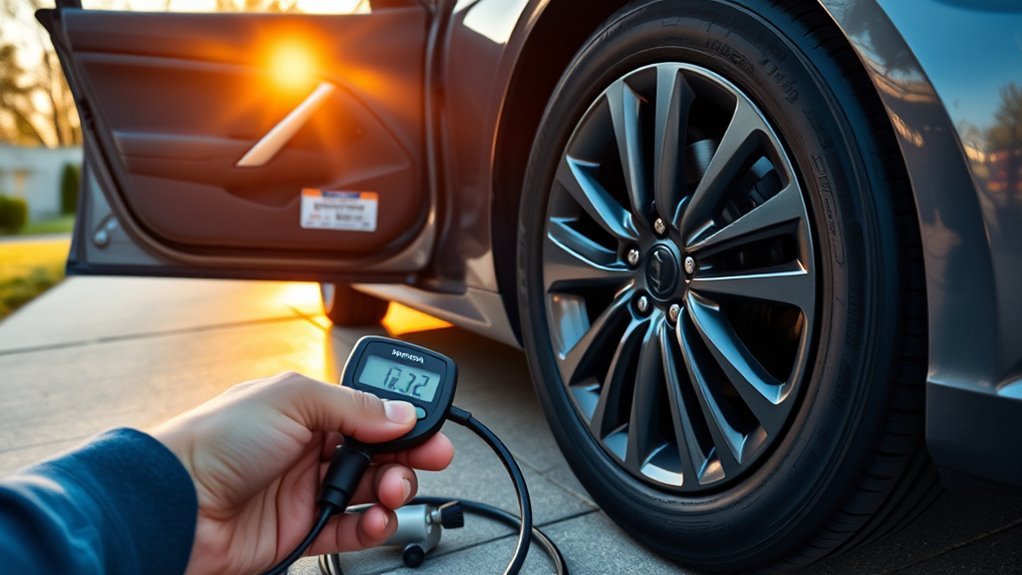
Where do you find the recommended PSI for your Hyundai Sonata? Look at the tire pressure label on the driver’s side door jamb. That placard gives you the correct front and rear tire pressure for the tires fitted to your vehicle.
You may see different PSI values for the front and rear tires, depending on model year, trim, load, and tire size. Many Sonata models list cold tire pressure in the 30 to 35 PSI range, but you should confirm the exact number on your own placard. Don’t use the maximum PSI printed on the tire sidewall as your target pressure.
Always measure when tires are cold, which means the car has been parked for at least 3 hours or driven less than 1 mile at low speed. Cold readings give you the best baseline because tire pressure rises as tires heat up during driving.
What You’ll Need to Check Tire Pressure
Gather the right tools before you start so you can measure and adjust pressure without guessing. You only need a few basic items:
- A reliable tire pressure gauge, either digital or analog
- A portable air compressor or access to an air pump
- A flashlight or headlamp for low-light checks
- A notebook or phone note to record each tire’s reading
Digital gauges with lit displays help at night, but a good analog gauge can also work well. Check your gauge from time to time against another trusted gauge. Replace it if readings jump around or the seal leaks when you press it on the valve stem.
Carry a compact portable compressor that can run from your vehicle battery or a 12-volt outlet. That lets you restore pressure before a long drive or after a warning light comes on.
[Products Worth Considering]

ETENWOLF T300 is a calibrated digital tire pressure gauge for accurate readings from 3 to 200 PSI across light and heavy-duty vehicles. It includes thermal compensation for reliable performance in extreme cold or heat, with an auto shut-off to extend battery life and an LED for easier reading. The sturdy design supports rugged everyday use, making it ideal for pickups, RVs, and industrial applications.
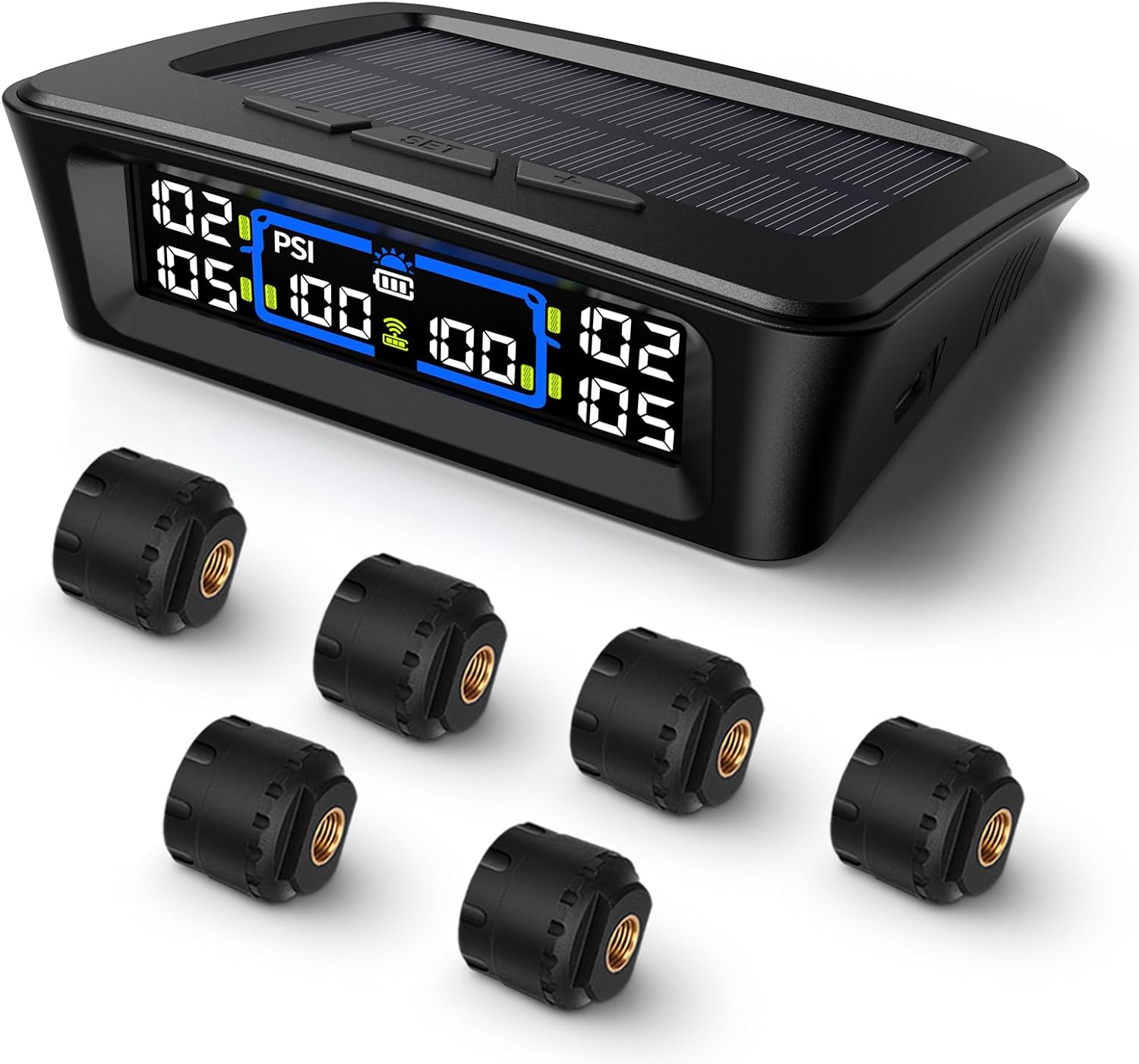
The Tymate TM12 RV TPMS delivers real-time tire pressure and temperature monitoring with a stable 433Hz display for safer long-distance driving. It supports simultaneous monitoring across vehicle and trailer zones, includes six alarm modes for pressure, temperature, leakage, battery, and signal loss, and features easy DIY installation with auto calibration. Power is supplied via USB-C charging or solar recharging, with a wide 0–144 PSI range and up to 50 ft signal coverage for RVs and towable trailers.

Keep your tires properly inflated with this analog VONDIOR tire pressure gauge, designed for fast, easy readings without batteries. The swiveling, two-axis hose and large glow dial help you measure at any tire angle with instant visibility. Built with a protective rubber shield, it supports durable, low-maintenance use for cars and trucks.
Check Hyundai Sonata Tire Pressure Cold: Step-by-Step
Estimated time: 10 to 15 minutes.
Start by parking the Sonata on level ground and letting it sit for at least 3 hours. Locate the tire pressure label on the driver’s door jamb and note the recommended PSI for your tire size.
- Remove the valve stem cap from the first tire and place it somewhere safe.
- Press the tire pressure gauge straight onto the valve stem until the hissing stops.
- Read the pressure on the gauge and compare it with the door placard.
- Record the reading for that tire so you can spot patterns later.
- Repeat the same process for all four tires.
If one tire reads lower than the others, inspect it for a nail, cut, damaged valve stem, or slow leak. After you finish each check, replace the valve stem cap to help keep dirt and moisture out of the valve.
Pro tip: Check the spare tire too if your Sonata has one, because it can lose air while stored.
[Products Worth Considering]

Check tire pressure quickly and accurately with the Accutire MS-4021B digital gauge, featuring a large backlit LCD for easy visibility. The angled head and rubber-coated handle make it comfortable to grip, while unit switching lets you read psi, bar, kPa, or kg/cm2. An automatic shutoff helps preserve battery life, and it measures 5–150 PSI in small increments for confident tire maintenance.

The Tymate TM2 RV tire pressure monitoring system keeps you informed with a color LCD display, automatic backlight, and solar charging for dependable operation. It supports up to 10 tire positions with four pre-paired sensors, while offering multiple alarm modes for fast leak detection, pressure extremes, temperature alerts, and low-signal warnings. Built-in monitoring uses accurate readings and reliable 433.92MHz communication to help protect your RV, trailer, truck, or SUV.

This tire inflator with pressure gauge delivers long-lasting performance with a durable rubber-protected gauge and sturdy build. The longer hose and 360 swivel air chuck help you seal the valve securely and keep your hands free while measuring, inflating, or deflating. It’s battery-free for reliable use and provides ±2 PSI accuracy in the mid-range for most typical tires, with universal compatibility for 1/4 NPT compressor outputs.
Inflate or Release Air Safely to Reach the Correct PSI
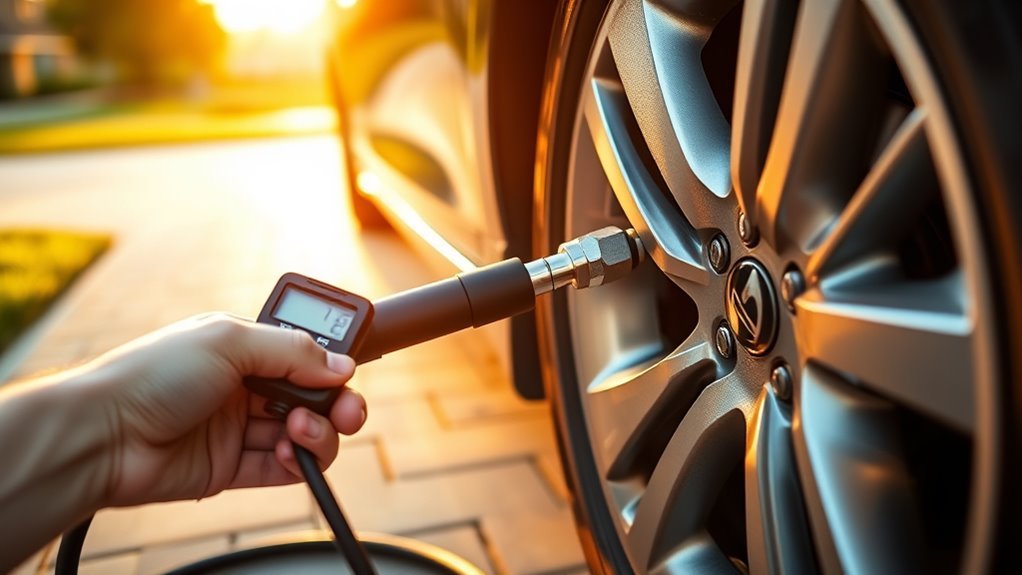
With your cold-pressure readings recorded, adjust each tire to match the PSI on the driver’s door label. Park safely, engage the parking brake, and keep the compressor hose clear of belts, fans, and hot engine parts.
Attach the compressor nozzle firmly to the valve stem. Inflate in short bursts, then pause and recheck with your gauge. This helps you avoid overfilling the tire.
If pressure sits above the placard value, press the valve core gently with the gauge tip or a small valve tool. Release air in short bursts and recheck after each release. Replace the valve cap once the tire reaches the correct PSI.
Warning: Do not inflate a damaged, cracked, or bulging tire, because it may fail under pressure.
[Products Worth Considering]

Replace worn or malfunctioning GM TPMS sensors with this 433MHz pre-programmed sensor set designed for compatibility with many Chevrolet, Buick, GMC, and Cadillac models. It includes guidance for proper OBDII relearning/pairing after installation and supports reliable long-term operation with a high-performance CR2032 battery. Quality tested for durability and performance to help restore accurate tire pressure monitoring.

AstroAI’s calibrated digital tire pressure gauge delivers precise readings across a 0–150 PSI range, with high clarity from a backlit LCD. Built for everyday road use, it features one-button operation, an anti-slip ergonomic grip, and support for multiple pressure units plus auto shutoff. Powered by AAA batteries, it’s an all-weather essential for checking tire health and TPMS warnings.

The TYAMATE TM8 solar-powered wireless TPMS delivers real-time tire pressure and temperature monitoring with six alarm modes for safer driving. A vibrant color LCD display shows readings clearly while windshield mounting keeps it hands-free and easy to read. With a wide 0–87 PSI range, strong 433.92 MHz signal transmission, and quick sensor pairing, it’s ideal for RV, sedan, SUV, MPV, and truck use.
What the TPMS Light Means After You Adjust Pressure
Your Sonata may use a tire pressure monitoring system (TPMS) to warn you when one or more tires fall below the proper range. After you adjust tire pressure, the light may stay on until you drive for several minutes. The system needs time to read the updated pressure.
If the TPMS light stays on after you correct all four tires, check the pressure again with a gauge. A slow leak, faulty sensor, weak sensor battery, or mismatched tire pressure can keep the warning active. Follow your owner’s manual for the reset process for your model year.
Troubleshooting and How Often to Check Tire Pressure
Check your Hyundai Sonata’s tire pressure at least once a month and before long trips. Measure after the car has been parked for at least 3 hours, so you get an accurate cold reading. Use the driver’s-side door placard as your target PSI.
If a tire loses more than 1 to 2 PSI compared with the others over a short period, inspect it closely. Look for nails, cuts, rim damage, or valve-stem leaks. Have a tire shop repair or replace the tire if you find damage.
Check tire pressure monthly and before trips. Use the door placard, measure cold, inspect for leaks, and repair damage quickly.
- Read the placard before you check pressure.
- Measure each tire with a reliable gauge.
- Correct each tire to the recommended PSI.
- Document the readings so you can spot slow leaks.
Temperature changes can also affect pressure. A sharp drop in outdoor temperature can lower PSI, so check tires after major weather swings.
Frequently Asked Questions
Can Tire Pressure Affect My Sonata’s Fuel Economy Noticeably?
Yes. Low tire pressure increases rolling resistance, which can reduce fuel economy and make tires wear faster. Keep each tire at the placard PSI to support better handling, braking, and tread life.
Do Tire Pressure Sensors Need Battery Replacement?
Many tire pressure sensors use sealed batteries that last for years. When a sensor battery dies, you usually replace the full sensor rather than the battery alone. A tire shop can test the sensor if the warning light stays on after you set the correct PSI.
Will Aftermarket Wheels Change the Recommended PSI?
Aftermarket wheels can affect pressure needs if they change tire size, load rating, or fitment. Start with the vehicle placard, then confirm safe pressure with the tire maker or a qualified tire technician. Never rely on appearance alone to judge pressure.
Can I Use Nitrogen Instead of Air in My Tires?
Yes, you can use nitrogen instead of regular air. Inflate to the same recommended PSI on the driver’s door placard. You still need to check pressure often because nitrogen-filled tires can still lose pressure through leaks or valve issues.
Does Tire Pressure Impact My Sonata’s Warranty?
Poor tire maintenance can affect tire wear claims if incorrect pressure causes damage. Keep records of pressure checks, rotations, repairs, and inspections. Follow the tire maker’s warranty terms and your Sonata owner’s manual.
Conclusion
The safest target pressure for your Hyundai Sonata comes from the driver’s door-jamb placard. Check the tires cold, use a reliable gauge, and adjust each tire in small steps until it matches the listed PSI. Make the check part of your monthly routine and repeat it before long trips. Small pressure checks help your Sonata handle better, wear tires evenly, and keep you ready for the next drive.
References
- Tires — National Highway Traffic Safety Administration
- Vehicle Safety: Tires — National Highway Traffic Safety Administration
- Keeping Your Car in Shape — U.S. Department of Energy