
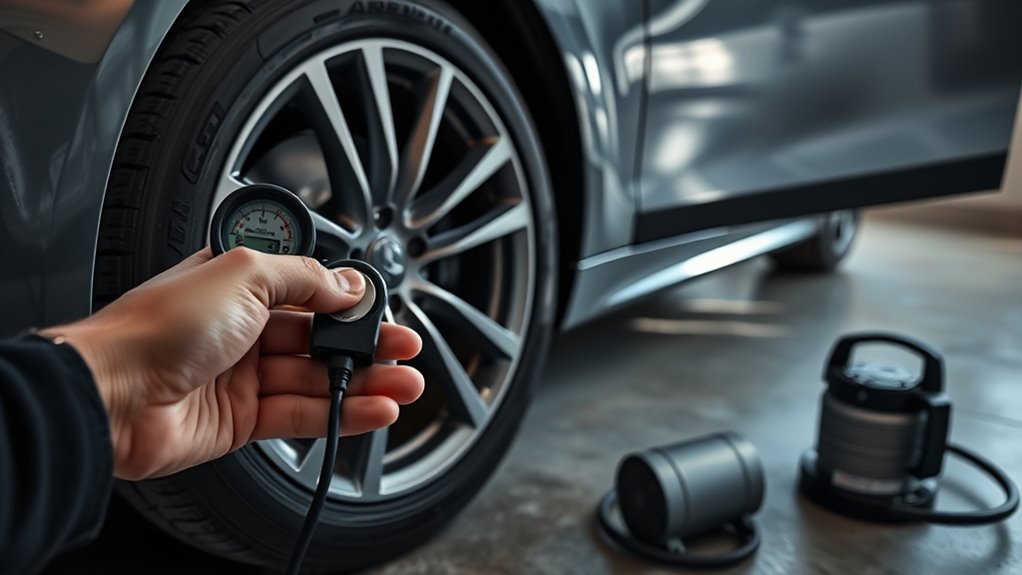
Wrong tire pressure can make your car feel unstable, wear out tires faster, and trigger warning lights at the worst time. The right number is not the maximum PSI printed on the tire sidewall. Use the cold tire pressure on your driver’s door placard or in your owner’s manual, then check and adjust each tire before you drive.
Quick Answer
Check the driver’s door placard or owner’s manual for your car’s recommended cold tire pressure. Measure each tire when it has been parked for at least three hours, then inflate or bleed air until it matches the listed PSI. Do not use the tire sidewall maximum as your everyday pressure setting.
Key Takeaways
- Use the manufacturer’s recommended cold PSI from the door placard or owner’s manual.
- Check tires before driving or after the car has been parked for at least three hours.
- Treat the tire sidewall PSI as a maximum limit, not a daily driving target.
- Adjust pressure for heavy loads, cold weather, and special driving conditions.
- Check pressure with a gauge even when the tire pressure monitoring system shows no alert.
Find Your Car’s Recommended Tire Pressure
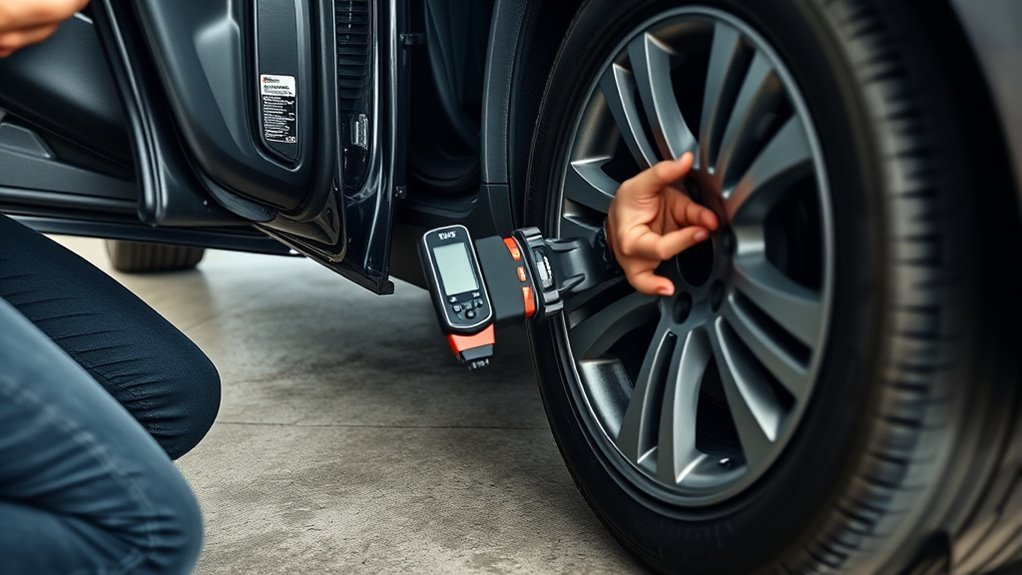
Start with your owner’s manual or the sticker on the driver’s door jamb. That placard lists the manufacturer’s recommended tire pressure in pounds per square inch (PSI), often with separate numbers for front and rear tires.
Record each specified PSI before you add air. These values reflect your vehicle’s weight, tire size, suspension, and intended load.
Ignore the common myth that higher pressure always means safer driving. The tire sidewall shows the tire’s maximum inflation pressure and load rating, not your vehicle’s recommended operating pressure.
What You’ll Need Before Checking Tire Pressure
Gather a few simple items before you start. You need a tire pressure gauge, access to an air compressor, and your vehicle’s door placard or owner’s manual.
- Use a digital or pencil-style tire gauge that gives steady readings.
- Keep valve caps nearby so they don’t roll away.
- Check the spare tire if your vehicle carries one.
- Use a small notebook or phone note if you want to track pressure changes.
Estimated total time: about 10 to 15 minutes for all four tires and the spare.
[Products Worth Considering]

The ETENWOLF T600 digital tire pressure gauge delivers precise, manually calibrated readings to ANSI B40.7 Grade 2A standards with ±0.5% PSI accuracy. Its 360° rotating nozzle and display hold make it easy to check pressures from any angle, while a bleed button helps dial tires to the perfect level. With a 0–250 PSI range and support for PSI, BAR, and KPA, it’s a convenient tool for maintaining tire performance across many vehicles and seasons.
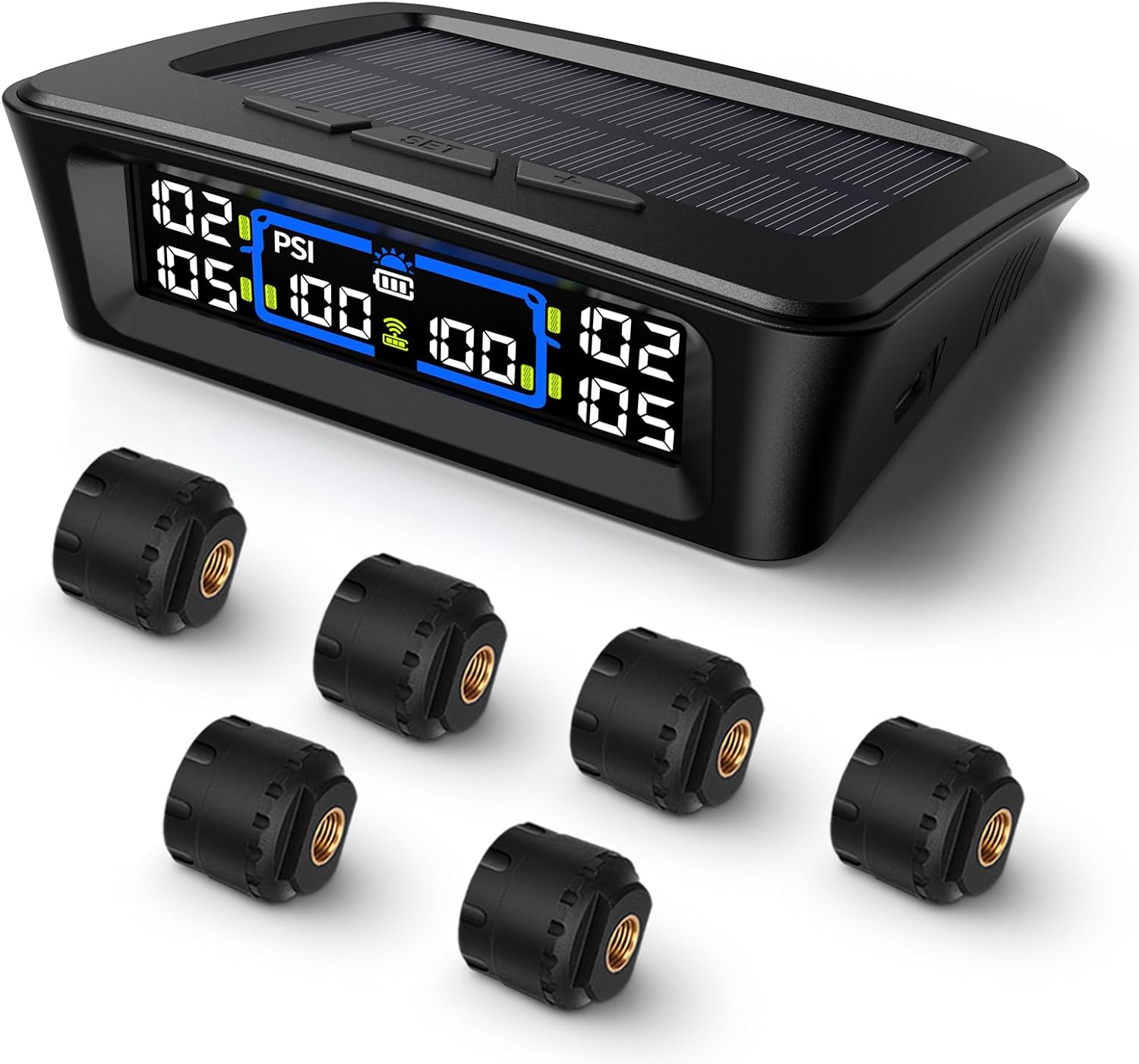
The Tymate TM12 RV TPMS delivers real-time tire pressure and temperature monitoring with a stable 433Hz display for safer long-distance driving. It supports simultaneous monitoring across vehicle and trailer zones, includes six alarm modes for pressure, temperature, leakage, battery, and signal loss, and features easy DIY installation with auto calibration. Power is supplied via USB-C charging or solar recharging, with a wide 0–144 PSI range and up to 50 ft signal coverage for RVs and towable trailers.

This tire inflator with pressure gauge delivers long-lasting performance with a durable rubber-protected gauge and sturdy build. The longer hose and 360 swivel air chuck help you seal the valve securely and keep your hands free while measuring, inflating, or deflating. It’s battery-free for reliable use and provides ±2 PSI accuracy in the mid-range for most typical tires, with universal compatibility for 1/4 NPT compressor outputs.
Check Tire Pressure: Step By Step (Cold Tires)
Check tire pressure when the tires are cold. For the best reading, test them before driving or after the car has been parked for at least three hours.
- Find the recommended cold PSI on the driver’s door placard or in the owner’s manual.
- Remove the valve cap from the first tire and place it somewhere safe.
- Press the tire gauge firmly onto the valve stem until the hissing stops.
- Read the PSI on the gauge and compare it with the recommended pressure.
- Inflate the tire if the reading is low, then recheck it with the gauge.
- Release a small amount of air if the reading is high, then check again.
- Replace the valve cap and repeat the same process on every tire.
Small changes matter, so adjust one tire at a time. Keep checking until each tire matches the placard value.
Pro tip: Keep a tire gauge in your glove box so you can verify pressure before long trips.
Read Your Tire Sidewall And Door Placard (What Each Number Means)
Your tire sidewall and door placard show different types of information. The sidewall lists the tire’s maximum inflation pressure and maximum load capacity. The door placard lists the cold tire pressure your vehicle manufacturer recommends for normal driving.
Use the door placard for daily settings. Use the sidewall only to understand tire limits and confirm that the tire suits your vehicle’s load needs.
| Item | What It Shows | How You Should Use It |
|---|---|---|
| Sidewall | Maximum pressure and load rating | Use it to understand tire limits |
| Door placard | Recommended cold tire pressure | Use it for everyday inflation |
Warning: Do not inflate tires to the sidewall maximum unless your vehicle or tire guidance specifically calls for it.
Adjust Tire Pressure For Load, Temperature, And Driving Conditions
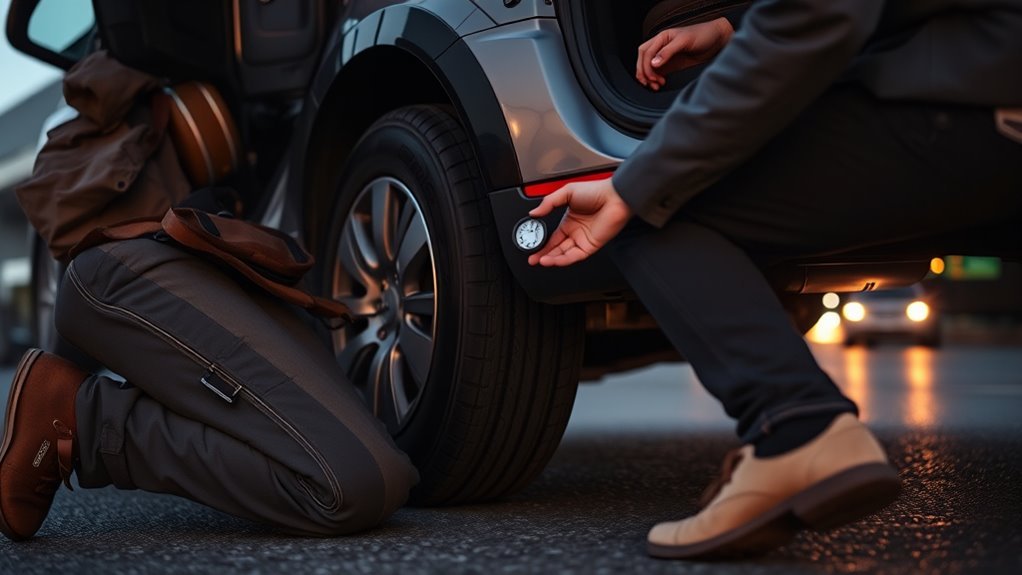
Extra weight, cold weather, and unusual driving conditions can change the pressure your tires need. Start with the placard value, then follow your owner’s manual for towing, cargo, or high-load guidance.
As a general rule, tire pressure changes by about 1 PSI for every 10°F change in air temperature. A cold snap can lower pressure enough to trigger a warning light.
Heavy loads may require more pressure, but your vehicle manual should guide the exact change. Never exceed the tire or vehicle limits listed by the manufacturer.
[Products Worth Considering]

The Topeak SmartGauge D2 delivers precise digital tire pressure readings for bikes, motorcycles, and sports equipment up to 250 psi (17 bar). Its rotating SmartHead works with both Presta and Schrader valves, so you can check pressure quickly without adapters. The LCD display makes it easy to read results in psi, bar, or kg/cm² with an included CR2032 battery for immediate use.

The TYAMATE TM8 solar-powered wireless TPMS delivers real-time tire pressure and temperature monitoring with six alarm modes for safer driving. A vibrant color LCD display shows readings clearly while windshield mounting keeps it hands-free and easy to read. With a wide 0–87 PSI range, strong 433.92 MHz signal transmission, and quick sensor pairing, it’s ideal for RV, sedan, SUV, MPV, and truck use.

Milton S-921 pencil tire pressure gauge helps you maintain optimal tire pressure for passenger cars with accurate readings in PSI and kPa. It features a built-in deflator valve for convenient pressure adjustments, plus a single chuck head and nylon indicator bar for easy use on the go. Built from durable plated brass and designed for reliable performance, it’s a practical road trip and cold-weather maintenance tool.
How Often Should You Check Tire Pressure?
Check tire pressure at least once a month and before long trips. You should also check after major temperature swings, after adding heavy cargo, or when a tire looks low.
Tire pressure monitoring systems help, but they do not replace a gauge. Many systems alert you only after pressure drops well below the recommended level.
Troubleshoot TPMS Alerts And Common Pressure Problems
If your tire pressure monitoring system (TPMS) light turns on, check your tire pressures right away. A solid light often points to low pressure, while a blinking light can point to a system fault.
Use a calibrated gauge, compare each tire with the door placard, and correct the PSI. If one tire keeps losing pressure, inspect it for a nail, damaged valve stem, rim leak, or tread damage.
| Alert | Likely Cause | What To Do |
|---|---|---|
| Blinking | TPMS fault or sensor issue | Check pressure, then inspect the system |
| Solid | One or more tires may be low | Inflate to spec and inspect for leaks |
| Intermittent | Temperature-related pressure changes | Recheck when cold and adjust as needed |
[Products Worth Considering]
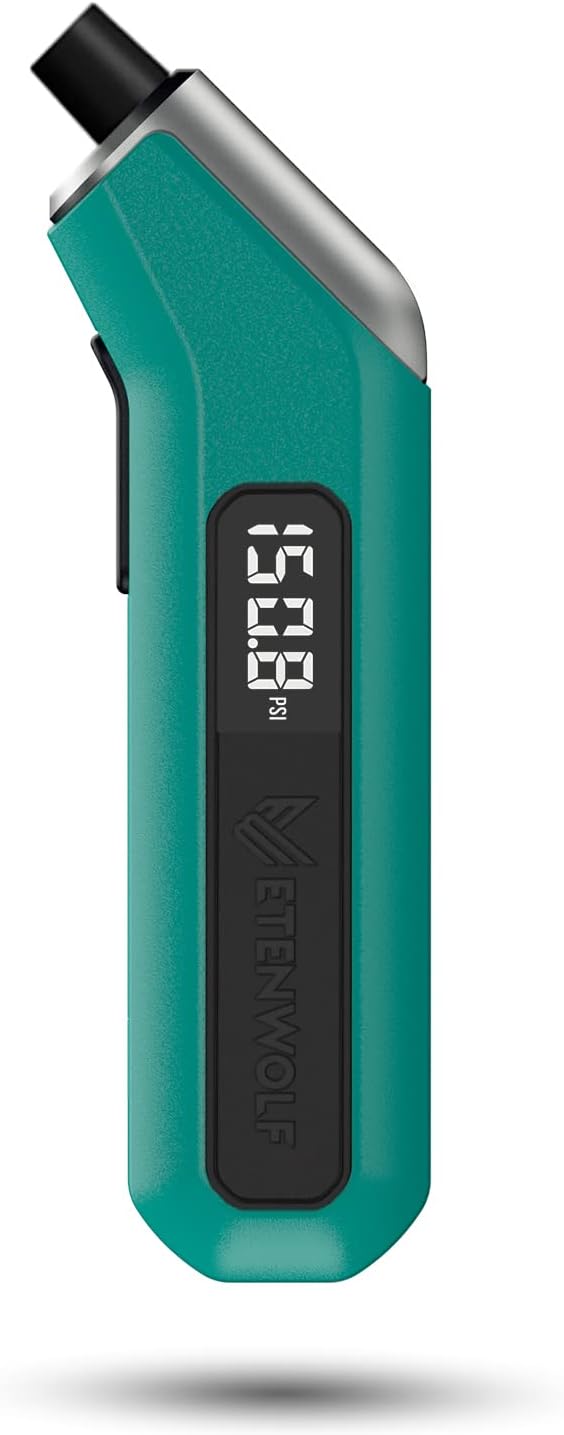
ETENWOLF T300 is a calibrated digital tire pressure gauge designed for reliable readings across low and high pressure ranges. It includes thermal compensation for stable performance in extreme cold or heat, an LED light for visibility, and an auto shut-off to help preserve battery life. Ideal for pickups, RVs, and heavy-duty vehicles, it delivers accurate PSI measurements with sturdy durability.

The JACO FlowPro Tire Inflator measures, inflates, and airs down tires up to 100 PSI with battery-free operation and ±2% accuracy after calibration. It features a glowing pressure dial for night visibility, a heavy-duty steel build with a hybrid hose, and a precision push-to-inflate thumb trigger. The patented Lightning Air Chuck locks on for a secure seal, and the kit includes quick-connect hardware for easy inline use with your air compressor.

Replace worn or malfunctioning GM TPMS sensors with this 433MHz pre-programmed sensor set designed for compatibility with many Chevrolet, Buick, GMC, and Cadillac models. It includes guidance for proper OBDII relearning/pairing after installation and supports reliable long-term operation with a high-performance CR2032 battery. Quality tested for durability and performance to help restore accurate tire pressure monitoring.
Common Tire Pressure Mistakes To Avoid
Avoid shortcuts that can give you a false reading or unsafe pressure. Most problems come from checking tires when hot or using the wrong PSI target.
- Do not use the sidewall maximum as your normal pressure setting.
- Do not check pressure right after highway driving unless you have no safer choice.
- Do not ignore a tire that loses air faster than the others.
- Do not trust visual checks, since a tire can look normal while underinflated.
Frequently Asked Questions
Can Overinflated Tires Cause Uneven Wear or Handling Issues?
Yes, overinflated tires can cause uneven wear and reduce grip. You may notice center tread wear, a harsher ride, and less stable handling.
How Often Should I Replace the Tire Pressure Gauge?
Replace a tire pressure gauge every few years or sooner if readings become inconsistent. You should also replace it after drops, damage, or signs of wear.
Can I Use Nitrogen Instead of Air for Filling Tires?
Yes, you can use nitrogen instead of regular air. Nitrogen may reduce pressure loss over time, but you still need to check pressure and maintain the right PSI.
Do Performance Tires Require Different Pressure Practices?
Yes, performance tires often need closer pressure checks. Follow the vehicle and tire manufacturer’s guidance, then adjust only in small steps for load, temperature, and handling needs.
Will Aftermarket Wheels Change Recommended Tire Pressures?
Aftermarket wheels can affect load capacity, fitment, and handling. Check the wheel specifications, tire load rating, and rim width before you change pressure from the vehicle guidance.
Conclusion
The safest tire pressure starts with your vehicle’s recommended cold PSI, not the number molded into the sidewall. Check each tire with a reliable gauge before driving, then adjust pressure to match the door placard. Recheck after temperature swings, heavy loads, and long trips. Small pressure checks give you better control, longer tire life, and more confidence on the road.


1 thought on “Tire Pressure Guide: Check and Set PSI in 10 Minutes”