
You should switch your Toyota Hilux to winter tires when daily temperatures consistently stay at or below 45°F (7°C), or earlier if snow, ice, mountain travel, or local winter tire laws are expected. Winter tires are not just for deep snow; they are built to stay flexible in cold weather so your Hilux can brake, steer, and climb with better control.
Quick Answer
Switch to winter tires on your Toyota Hilux when temperatures are consistently around 45°F (7°C) or colder. Do it before the first major snowfall, install a matching set of four, choose tires with the Three-Peak Mountain Snowflake symbol, and check tread depth, tire pressure, and local winter tire rules before driving.
Key Takeaways
- Use 45°F (7°C) as the main temperature trigger, not the first snowfall.
- Choose winter tires with the Three-Peak Mountain Snowflake (3PMSF) symbol for severe snow service.
- Install four matching winter tires with the correct Hilux size, load index, and speed rating.
- For snow-covered roads, replace winter tires before they get close to 4 mm (5/32 inch) of tread.
- Check cold tire pressure often because pressure drops as outdoor temperatures fall.
At a Glance
| Time Required | 30–90 minutes for a professional seasonal tire change; 10–15 minutes for a home tread and pressure check. |
| Difficulty | Easy for inspection; moderate for wheel swaps if you have the correct tools and torque specs; professional service is safest. |
| Tools Needed | Tire pressure gauge, tread depth gauge, owner’s manual or tire placard, gloves, tire bags, and a torque wrench if swapping mounted wheels. |
| Cost | Inspection is usually free or low-cost; seasonal changeover and storage costs vary by region, wheel setup, and shop. |
Signs It’s Time to Replace Your Tires
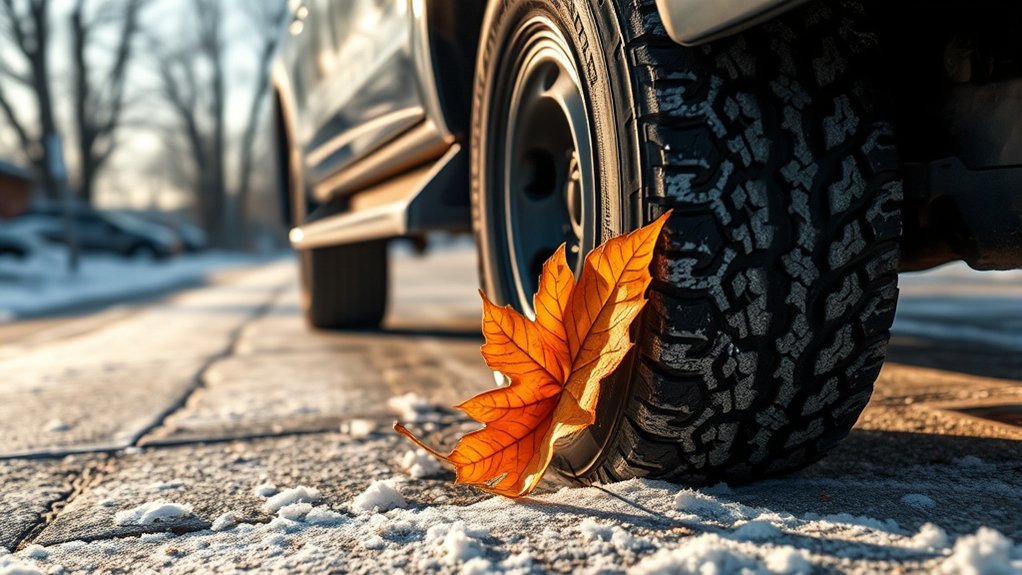
Before winter arrives, inspect every tire on your Hilux, including the spare if your model has one. Tire condition matters as much as tire type. A winter tire with hardened rubber, shallow tread, or sidewall damage will not give you the grip you expect on snow, ice, slush, or cold rain.
Start with tread depth. The National Highway Traffic Safety Administration says tires are not safe and should be replaced when tread is worn down to 2/32 of an inch. For winter driving, do not wait that long. Transport Canada warns against using winter tires worn close to 4 mm, or about 5/32 inch, on snow-covered roads.
- Low tread depth: Replace winter tires before they get close to 4 mm (5/32 inch) if you drive on snow-covered roads.
- Cracks, cuts, or bulges: Sidewall damage can point to internal tire weakness and should be inspected by a tire professional.
- Uneven wear: Feathering, cupping, or one-sided wear can signal alignment, suspension, balancing, or inflation problems.
- Old tire age: Check the DOT date code. NHTSA notes that some vehicle and tire manufacturers recommend replacement at six to 10 years regardless of treadwear.
- Loss of grip: If your Hilux slides, spins, or takes longer to stop in cold wet weather, inspect the tires before winter gets worse.
Warning: Do not rely on the legal 2/32-inch tread minimum for winter performance. A tire can be legal and still perform poorly in snow, slush, and freezing rain.
Understanding the Benefits of Winter Tires
Winter tires are designed for cold pavement, snow, ice, and slush. Their rubber compounds stay more flexible in low temperatures, and their tread blocks, sipes, and grooves help bite into snow while moving slush and water away from the contact patch.
This matters on a Toyota Hilux because the truck may be used for towing, carrying tools, driving on rural roads, or traveling over uneven winter surfaces. Four-wheel drive can help you move forward, but it does not shorten stopping distance by itself. Your tires still determine how much grip the truck has when you brake, steer, or make an emergency correction.
Look for the Three-Peak Mountain Snowflake symbol, also called 3PMSF or the Alpine symbol. Tires with this symbol meet specific snow-traction performance requirements and are designed for severe snow conditions.
Four-wheel drive helps your Hilux get moving, but winter tires help it stop, steer, and stay controlled when the road is cold and slippery.
When to Make the Switch: Temperature Guidelines
The best time to install winter tires is before winter weather becomes a problem. A simple rule is to switch when daily temperatures consistently stay at or below 45°F (7°C). At that point, all-season and summer tires can begin to lose elasticity, while winter tires are built to keep grip in colder conditions.
Do not wait for the first snowfall. Tire shops and dealerships get busy right after the first storm, and waiting can leave you driving on cold roads with tires that are not suited for the conditions. If your area gets early freezes, mountain snow, icy mornings, or frequent winter rain, book your changeover early.
- Switch in fall: Install winter tires when temperatures are consistently around 45°F (7°C) or colder.
- Switch before trips: Install them earlier if you are driving into mountains, rural roads, ski areas, or regions with winter tire laws.
- Switch back in spring: Remove winter tires when temperatures consistently stay above 45°F (7°C), because warm pavement can wear winter rubber faster.
Pro Tip: Use a seven-day forecast, not one cold morning, to time the change. If the week ahead is mostly at or below 45°F (7°C), it is a good time to install winter tires.
Choosing Winter Tires for Your Hilux
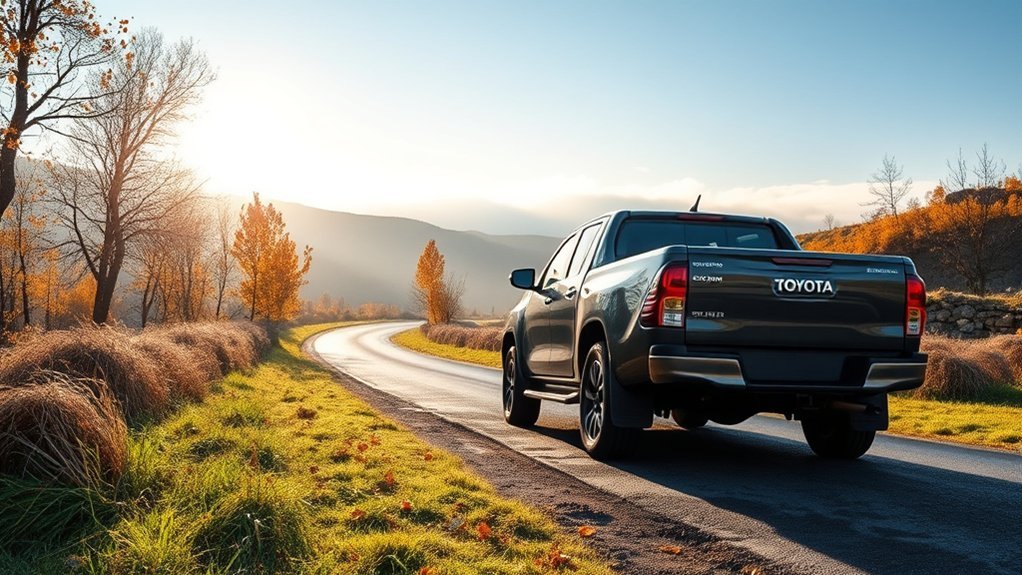
Choose winter tires that match your exact Hilux model, trim, wheel size, load needs, and driving conditions. The safest starting point is the tire information placard on the driver’s door area and the owner’s manual. Toyota also advises checking the owner’s manual or tire placard for the recommended tire pressure and specifications.
- Correct size: Match the approved tire size for your Hilux. If you change wheel size, confirm the fit with a qualified tire professional.
- Correct load index: A Hilux may carry cargo or tow, so the replacement tire must meet or exceed the required load rating.
- Correct speed rating: Use a tire rating suitable for the vehicle and local rules.
- 3PMSF marking: Choose tires with the Three-Peak Mountain Snowflake symbol for severe snow service.
- Matching set of four: Use the same type, size, tread pattern, construction, load index, and speed rating on all four wheels whenever possible.
Warning: Do not install only two winter tires on a Hilux. Mixing winter tires with all-season tires can reduce stability, especially during braking, cornering, and emergency maneuvers.
[Products Worth Considering]

Measure tire tread depth quickly and accurately with this LUMITECO dial gauge that reads in 1/32" increments up to 14/32". The color-coded green/yellow/red zones make it easy to judge tire wear and know when replacement is needed. A rugged, compact design with a protective pouch helps keep the gauge ready for use on cars, trucks, motorcycles, and more.

The SAFELIFE dial tire tread depth gauge measures tread depth in 1/32 inch increments with clear, easy-to-read 2-inch dial face. Color zones using a traffic light system help you quickly judge whether tread is low, marginal, or ample for safer driving. Built with a durable zinc cast body and a metal detect probe for precise, comfortable use across cars, motorcycles, trucks, and buses.

Monitor tire tread wear with a smart, color-coded depth gauge that shows clear condition ranges at a glance. The bar is range marked for fast, easy readings, helping you maintain safer traction and performance. Each gauge is portable with a pocket clip, and the set includes 20 units for daily use and sharing.
The Impact of Tire Maintenance on Performance
Winter tires only work well when they are maintained. Pressure, rotation, alignment, balance, and tread depth all affect how your Hilux handles winter roads.
Check tire pressure when the tires are cold. Bridgestone notes that tire pressure changes by about 1 PSI for every 10°F change in ambient temperature, so a tire that was correct in mild weather may be underinflated after a cold snap. Use the pressure listed for your Hilux on the tire placard or in the owner’s manual, not the maximum pressure printed on the tire sidewall.
- Pressure: Check monthly, before long trips, and after big temperature swings.
- Rotation: Follow the Hilux owner’s manual or your tire shop’s rotation advice to reduce uneven wear.
- Alignment: Get alignment checked if the truck pulls, the steering wheel is off-center, or tread wear is uneven.
- Balancing: Rebalance tires if you feel vibration at road speed.
- Inspection: Look for nails, cuts, bulges, missing tread blocks, and cracks before winter travel.
Get Your Hilux Ready for Winter Driving
Winter tires are one part of a safe winter setup. Before the cold season, prepare the truck as a complete system: tires, pressure, brakes, lights, battery, wipers, washer fluid, emergency gear, and local road rules.
- Install winter tires before temperatures stay at or below 45°F (7°C).
- Confirm all four tires match in size, type, load index, speed rating, and tread pattern.
- Check tread depth before the first storm, not after the truck starts sliding.
- Set pressure when the tires are cold and recheck after major temperature drops.
- Carry a pressure gauge, flashlight, gloves, scraper, blanket, and basic emergency kit.
- Check whether your route requires winter tires, chains, or cables.
Note: Snow chains or cables are not a substitute for correct winter tires. If chains are required, follow your Hilux owner’s manual and local rules for placement, speed limits, and road conditions.
[Products Worth Considering]

The Trivd Frol 1/2" air impact wrench delivers high performance torque up to 1500 ft-lbs with a twin hammer impact mechanism for strong, balanced blows. It features an ergonomic grip, compact lightweight design, and quick-stop control with 3 forward speeds up to 8000 RPM plus a reverse speed. Built for demanding automotive repair and tire shop work, the rear exhaust helps keep debris away from the surface.

The Kurgo Seasonal Tire Tote helps protect your car interior, clothes, and garage from tire grime, brake dust, and residue during seasonal tire changes. Its universal design fits most passenger tires between 22" and 31" in diameter, making storage and transport simpler with less mess. Built for rugged, repeated use, it’s machine washable for easy care and comes with a lifetime warranty.

Accurately measure tire tread depth with a calibrated gauge marked from 0 to 1 inch in 1/32 inch increments. The color-coded bar helps you quickly identify tread condition ranges, supporting safe driving for trucks, motorcycles, automobiles, and passenger vehicles.
Debunking Myths About Winter Tires
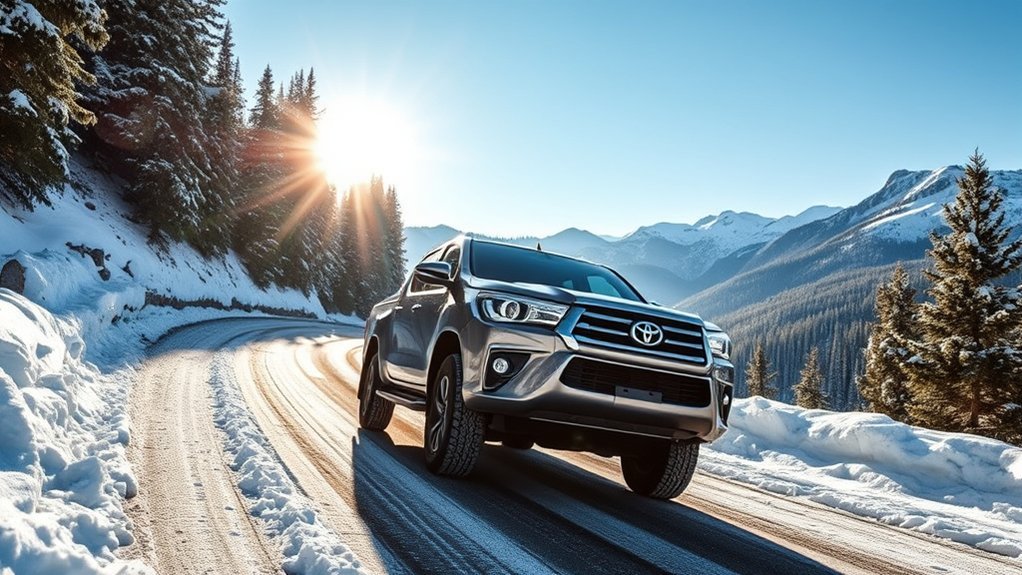
Winter tires are often misunderstood, especially by drivers who have four-wheel drive or use all-season tires year-round. Here are the myths that cause the most problems.
Myth: Four-Wheel Drive Means You Do Not Need Winter Tires
Four-wheel drive can improve acceleration on slippery surfaces, but it does not create extra grip for braking or cornering. Winter tires help all four contact patches grip the road, which is why they matter even on a 4×4 Hilux.
Myth: All-Season Tires Are Enough for Real Winter
All-season tires can work in mild conditions, but they are not the same as dedicated winter tires. When temperatures fall near or below 45°F (7°C), winter tires are the better choice for regular snow, ice, slush, and cold-weather driving.
Myth: Winter Tires Are Only for Snow
Winter tires are for cold roads, not just white roads. They can help on freezing rain, compacted snow, cold wet pavement, and icy shaded roads where all-season rubber may not respond as well.
Myth: You Can Use Winter Tires All Year
Winter tires are made for cold conditions. Running them through warm months can increase wear and may reduce handling response on hot pavement. Switch back to suitable all-season, all-weather, or summer tires when temperatures consistently stay above 45°F (7°C).
How to Store Tires During the Off-Season
Proper storage helps winter tires last longer and perform better when you reinstall them. Heat, direct sunlight, moisture, oil, and ozone can speed up rubber aging. Clean the tires before storage and keep them in a cool, dry, dark place.
Proper Cleaning Techniques
- Rinse off salt, mud, brake dust, and road grime.
- Use mild soap and water; avoid harsh solvents or petroleum-based cleaners.
- Let the tires dry completely before bagging or stacking.
- Label each tire by position, such as front left or rear right, to make rotation easier next season.
Ideal Storage Conditions
Store tires away from sunlight, electric motors, heaters, fuel, oil, and chemicals. If the tires are unmounted, stack them flat or stand them upright according to the tire shop’s guidance. If they are mounted on wheels, they can be stacked or hung carefully. Use tire bags or covers to reduce exposure to dust and moisture.
Tire Rotation Recommendations
Rotation helps even out wear, but the correct pattern depends on tire direction, wheel size, and vehicle setup. Directional winter tires must stay on the correct side of the vehicle unless they are dismounted and remounted. Follow the owner’s manual or ask your tire professional to mark the rotation plan.
Where to Get Winter Tire Change Services for Your Hilux
You can get a winter tire change for your Toyota Hilux at a Toyota dealer, a qualified tire shop, or an independent workshop with the right lifting equipment, torque tools, and tire-balancing machine. If Toyota of Somerset is your local dealer, confirm its current seasonal tire services, appointment availability, storage options, and tire fitment support before booking.
Choose a service provider that will do more than simply bolt the wheels on. A proper winter tire change should include pressure setting, tread inspection, sidewall inspection, wheel balancing if needed, torque to specification, and a reminder to recheck lug nut torque if the shop recommends it.
[Products Worth Considering]

Measure tyre tread depth precisely with a digital gauge that reads in both MM and inches, helping you monitor safe driving conditions. The large LCD screen is easy to operate, and the compact tool fits for cars, trucks, and motorcycles. It provides high accuracy with a 0-25.4mm range and includes a 1-year warranty for added peace of mind.

This 1/2-inch drive breaker bar delivers powerful leverage for loosening and tightening stubborn lug nuts and automotive fasteners. The 180-degree flex head helps you reach tight spaces at the angle you need, making tire and brake jobs easier. A spring-loaded ball detent design holds 1/2-inch sockets securely while the chrome-moly head provides durable strength for everyday use.

Steelman white tire marking crayons provide high-contrast, semi-permanent marks for repairing and inspecting tires and equipment. They write on wet or dry, smooth or coarse surfaces including rubber, metal, glass, and wood, making them ideal for puncture location and damage outlining. The lead- and zinc-free crayons resist weather and fading yet wipe away when you no longer need the marks.
Common Questions About Winter Tire Performance
Key Benefits Of Winter Tires
The main benefits are better cold-weather flexibility, improved snow and ice grip, more stable handling, and stronger braking control in winter conditions. For a Hilux used on rural roads, job sites, hills, or winter highways, those benefits can make daily driving less stressful and more predictable.
When To Replace Tires
Replace winter tires when tread is too shallow for snow, when sidewalls are cracked or bulging, when wear is uneven, when the tire has damage that cannot be safely repaired, or when age has become a concern. For winter driving, replace them before they get close to 4 mm (5/32 inch) if you rely on them in snow.
| Tire Condition | Action Required |
|---|---|
| Close to 4 mm / 5/32 inch in snow use | Plan replacement for winter performance |
| 2/32 inch tread | Replace immediately |
| Cracks, bulges, cuts, or exposed cords | Stop using and have inspected |
| Six to 10 years old | Check manufacturer guidance and inspect carefully |
Maintenance Tips For Longevity
To help winter tires last, keep them properly inflated, rotate them as recommended, remove them in warm weather, avoid aggressive braking and cornering, and store them clean, dry, and away from heat. Good maintenance protects both the tires and the way your Hilux handles.
Frequently Asked Questions
Is October too early to put winter tires on a Toyota Hilux?
October is not too early if temperatures in your area are consistently around 45°F (7°C) or colder, or if you expect snow, ice, mountain travel, or early winter storms. If October is still warm where you live, wait until the forecast shows steady cold weather.
What month should you put winter tires on?
Many drivers switch in October or November, but the right month depends on your climate. Use the temperature rule first: when daily temperatures consistently stay near or below 45°F (7°C), it is time to install winter tires.
What temperature is good to switch to winter tires?
Switch when temperatures are consistently about 45°F (7°C) or lower. Winter tires are designed to stay flexible in cold conditions, while all-season and summer tires can lose elasticity as temperatures drop.
Do I need four winter tires on a 4×4 Hilux?
Yes. Install a matching set of four winter tires. A 4×4 system can help with traction when accelerating, but mismatched tires can make braking and cornering less stable on ice, snow, and cold wet roads.
What does the Three-Peak Mountain Snowflake symbol mean?
The Three-Peak Mountain Snowflake, or 3PMSF, means the tire meets specific snow-traction performance requirements and is designed for severe snow service. It is a stronger winter-performance signal than a basic M+S marking alone.
When should I remove winter tires from my Hilux?
Remove winter tires when temperatures consistently stay above 45°F (7°C). Warm pavement can wear winter tire rubber faster, so switching back to suitable all-season, all-weather, or summer tires helps preserve the winter set.
Conclusion
Switch your Toyota Hilux to winter tires when temperatures consistently reach 45°F (7°C) or colder, and do it before snow or ice makes driving risky. Choose 3PMSF-rated tires in the correct Hilux size and load rating, install all four as a matching set, check pressure when cold, and replace tires before tread gets too shallow for snow. With the right timing and maintenance, your Hilux will be better prepared for cold roads, winter trips, and sudden weather changes.
Sources
- Transport Canada — Using winter tires — backs up 7°C guidance, 3PMSF symbol meaning, four-tire installation, and 4 mm tread caution.
- NHTSA TireWise — backs up tire tread replacement, tire aging, pressure checks, and tire safety basics.
- Toyota Support — Recommended tire pressure — backs up using the owner’s manual or tire placard for pressure guidance.
- Bridgestone — Tire inflation — backs up cold pressure checks and the effect of temperature on tire pressure.
- Continental — Winter tire markings — backs up 3PMSF, M+S context, and winter tread-depth recommendations.