Toyota Tacoma TPMS, short for Tire Pressure Monitoring System, warns you when a monitored tire is significantly underinflated or when the system has a malfunction. A solid tire-pressure warning light means you should check every tire with a gauge first. If the light flashes for about a minute and then stays on, treat it as a TPMS fault rather than simply adding air. Use the cold pressure on the driver-door Tire and Loading Information label, not the maximum PSI molded into the tire sidewall. After a tire rotation, pressure-setting change, wheel change, or sensor replacement, your Tacoma may also need initialization, wheel-position learning, or sensor-ID registration depending on model year.
Last updated: August 18, 2026. Procedures and sources were rechecked against current Toyota owner resources and U.S. TPMS guidance.
Quick Answer
Toyota Tacoma TPMS uses wheel-mounted pressure transmitters on equipped models to warn about significant underinflation and system faults. Check pressure first when the light is solid. If it flashes for about a minute and then stays on, diagnose the TPMS. A reset or initialization sets the pressure baseline; it does not replace sensor-ID registration when a new transmitter must be learned.
Key Takeaways
- A solid TPMS light usually means one or more tires are low and should be checked with a tire gauge as soon as it is safe.
- A TPMS light that flashes for about a minute and then stays on usually points to a system fault, dead sensor, unregistered sensor, or communication problem.
- Use the cold tire pressure on your Tacoma’s driver-door placard, not the maximum PSI printed on the tire sidewall.
- Newer Tacomas may use a TPWS menu in the multi-information display instead of a simple reset button.
- Do not assume the spare tire is monitored unless your Tacoma’s display or owner’s manual confirms it.
At a Glance
| Time Required | 5–10 minutes for a pressure check. Current Toyota initialization procedures can require about 10–30 minutes of driving at roughly 25 mph (40 km/h) or more; older Tacoma procedures vary by model year. |
| Difficulty | Easy for checking pressure and basic initialization; intermediate if sensor IDs or new wheels must be registered. |
| Tools Needed | Accurate tire pressure gauge, air compressor, valve caps, and possibly a compatible TPMS scan/programming tool for replacement sensors. |
| Cost | Usually free if you only need air; sensor replacement or registration may require a tire shop or Toyota dealer service charge. |
Which Tacoma TPMS Procedure Do You Need?
Before pressing a reset button or opening the TPWS menu, match the symptom to the job. This prevents a common mistake: trying to “reset” a failed or unregistered sensor when the truck actually needs diagnosis or ID registration.
| What You See or Changed | Start With | Likely Next Step |
|---|---|---|
| Solid warning light | Check every road tire cold with a gauge. | Correct pressure and inspect for a leak; initialize only if your model-year procedure requires it. |
| Light flashes for about a minute, then stays on | Confirm tire pressure is safe. | Scan for a failed, missing, incompatible, or unregistered sensor rather than repeatedly resetting the system. |
| Tire rotation or pressure-setting change | Set the correct cold pressure. | Follow your Tacoma owner’s manual for initialization or wheel-position learning. |
| New sensor or second wheel set | Verify the sensor is compatible with your exact model year. | Register the transmitter ID or select the registered wheel set, then initialize if the manual calls for it. |
[Products Worth Considering]

Replace your worn or missing TPMS sensors with pre-programmed, direct-fit sensors for compatible Ford, Lincoln, and select Mazda models. Each sensor comes ready to activate with a scan tool, helping restore accurate tire pressure monitoring and trouble-free installation. Built with a long-life CR2032 battery and tested before factory release, this set provides dependable performance with a one-year warranty.
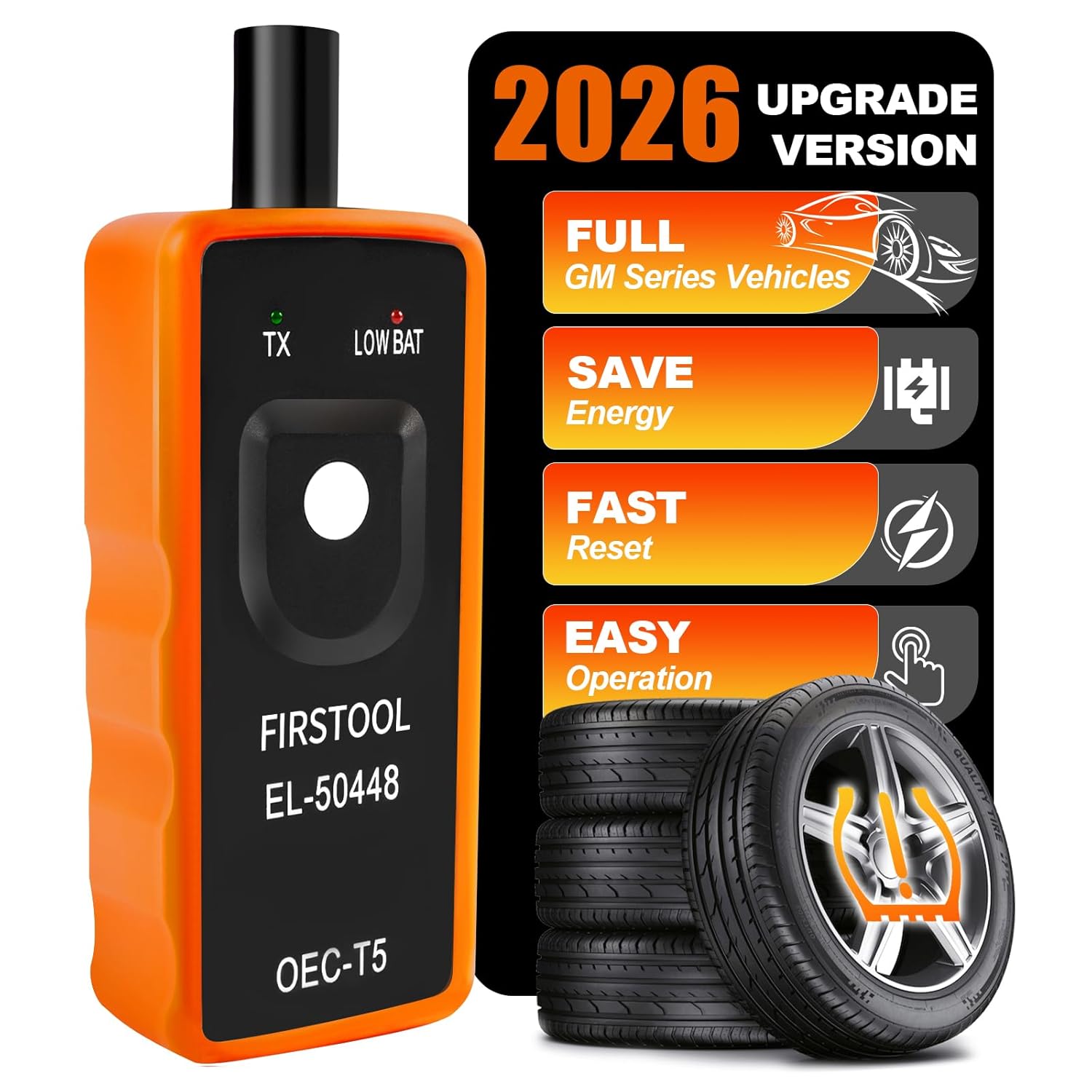
This TPMS relearn tool helps you quickly activate, match, and reset GM tire pressure sensors to keep the vehicle monitoring system working properly. It clears tire pressure alarms and dashboard warning lights after sensor replacement or tire rotation, and supports learning for common 315/433 MHz TPMS sensors. Designed for simple one-button operation, it can help you avoid unnecessary trips to repair shops.

The VEHLIVE SU-50448 II TPMS relearn tool provides a fast activation reset to restore accurate tire pressure monitoring after sensor replacement or tire rotation. It supports 315 MHz and 433 MHz GM series sensors and helps clear dashboard pressure warnings. With simple two-button operation and horn-confirmed relearning order, you can reprogram sensors conveniently at home.
What Is TPMS and Why Is It Important for Your Tacoma?
The Tire Pressure Monitoring System is a safety system that warns the driver when tire pressure is significantly below the recommended cold inflation pressure. Under Federal Motor Vehicle Safety Standard No. 138, covered light vehicles must warn when pressure in one or more monitored tires reaches the standard’s low-pressure threshold, generally 25% below the vehicle manufacturer’s recommended cold pressure or the applicable minimum activation pressure, whichever is higher.
On your Tacoma, correct tire pressure matters because underinflated tires can heat up, wear unevenly, reduce fuel economy, and make the truck feel sloppy or unstable. Overinflated tires can also reduce ride comfort and affect traction. TPMS gives you a warning, but you should still check your tires with a gauge because the system may not alert you until pressure is already significantly low.
Warning: If the TPMS light comes on while driving, slow down, avoid sharp steering or hard braking, and stop in a safe place to inspect the tires. Do not keep driving at highway speed on a visibly low, damaged, or overheating tire.
How Does Direct TPMS Work in the Tacoma?
Tacoma models equipped with Toyota’s direct tire pressure warning system use a tire pressure warning valve and transmitter in each monitored wheel. The transmitter measures inflation pressure and sends data wirelessly to the truck’s receiver/ECU, which can trigger the warning light and, on supported trims, display individual tire pressures.
When the system sees pressure that is too low, it turns on the tire pressure warning light and may show a message or individual tire pressure readings in the multi-information display, depending on your Tacoma’s model year and trim.
Sensor Functionality Explained
A direct TPMS sensor is more accurate than an indirect system because it reads pressure at the wheel instead of estimating pressure from wheel speed. However, the sensor still depends on a small internal battery, correct registration, and good communication with the truck.
If a sensor battery dies, a sensor is damaged during tire service, or a replacement sensor is not registered correctly, the system may flash the TPMS light or show missing pressure readings.
Pressure Monitoring Process
The Tacoma’s TPMS compares tire pressure against a learned baseline or the system’s warning threshold. That is why many Toyota procedures tell you to adjust all tires to the correct cold tire pressure before initialization. When you initialize the system, the current tire pressures become the benchmark pressure.
Note: For a reliable cold reading, NHTSA recommends checking tire pressure after the vehicle has been parked for at least three hours. Driving warms the tires and raises pressure, so a hot reading should not be treated as the cold placard target.
Data Transmission Mechanism
Each wheel sensor transmits pressure information to the vehicle. The truck then uses that data to decide whether to display normal pressure readings, a low-pressure warning, or a system malfunction. Some Toyota TPWS designs can store more than one registered wheel set, but availability and menu wording vary. Confirm this feature in the owner’s manual for your exact Tacoma before relying on a second-set switching function.
| Feature | What It Means |
|---|---|
| Sensor location | Inside each monitored tire and wheel assembly, usually near the valve stem. |
| Data sent | Tire inflation pressure information for the monitored wheel. |
| Service concern | Sensors can be damaged, lose battery power, or need registration after replacement. |
Comparing Direct and Indirect TPMS: Key Differences
Direct and indirect TPMS both warn about low pressure, but they work differently. Direct TPMS uses wheel-mounted pressure sensors. Indirect TPMS estimates pressure loss by comparing wheel speed data, because a low tire may rotate at a slightly different speed.
| System Type | How It Works | Main Tradeoff |
|---|---|---|
| Direct TPMS | Uses a pressure sensor/transmitter in each monitored wheel. | More accurate pressure data, but sensors can fail or need registration. |
| Indirect TPMS | Uses wheel-speed data to estimate a possible pressure change. | No wheel pressure sensors, but less direct and usually needs recalibration after pressure changes. |
For Tacoma owners, the practical point is simple: if your truck shows individual tire pressures, it is using sensor data. After tire service, new wheels, or replacement sensors, you may need more than an air top-off. You may need initialization, wheel-position identification, or sensor ID registration.
Benefits of Direct TPMS for Safety and Performance

Direct TPMS helps Tacoma drivers catch low pressure before it causes bigger problems. That is especially useful for trucks that tow, carry payload, drive on rough roads, or see big temperature swings.
Enhanced Safety Features
Low tire pressure can increase heat buildup and tire flex. In a Tacoma, that can affect steering feel, braking, load stability, and tread wear. TPMS gives you an early warning so you can pull over, check pressure, and inspect for punctures or damage.
A TPMS warning light is not just a dashboard annoyance. Treat it as a prompt to check the tire with a gauge and look for visible damage.
Improved Performance Monitoring
Correct tire pressure helps the Tacoma ride, steer, brake, and wear tires as intended. It also helps avoid uneven tread wear caused by chronic underinflation or overinflation. TPMS is useful because it can alert you between routine pressure checks, but it should not replace monthly manual checks.
Pro Tip: Check pressure before a long trip, before towing, after a sharp temperature drop, and after off-road driving. Always return tires to road pressure before highway driving if you aired down on a trail.
Limitations of Direct TPMS
Direct TPMS is accurate, but it has limits. The transmitters sit inside the wheel, so poor tire-service technique can damage them, corrosion can affect valve hardware, and a non-transmitting sensor may require replacement. If the warning flashes after tire or wheel service, diagnosis should confirm whether the problem is the sensor itself, its registration, or communication with the truck before parts are replaced.
Direct TPMS also does not automatically fix itself after every tire or wheel change. A tire rotation, replacement tire, replacement sensor, or second wheel set may require initialization or registration so the Tacoma knows which sensors it should read.
Note: Do not assume your spare tire is being monitored. Some systems monitor only the four road wheels, while some vehicles can display or register additional sensors. Check your Tacoma’s display and owner resources for your specific year and trim.
Resetting Your Tacoma’s TPMS After Tire Changes
“Resetting TPMS” can mean different jobs, and using the wrong procedure can leave the warning unresolved. Toyota’s 2024 Tacoma owner guidance, for example, lists tire-pressure-system initialization after pressure-setting changes, tire rotation, and transmitter ID-code registration. Older Tacoma procedures can differ, so use the manual for your exact model year.
On a Tacoma, you may be doing one of three jobs:
- Adding air: Inflate tires to the correct cold pressure and drive until the warning clears.
- Initializing pressure: Teach the truck the current cold tire pressures as the new baseline.
- Registering sensors or wheel positions: Tell the truck which sensor IDs or wheel set it should use.
[Products Worth Considering]

This TPMS sensor training and relearn reset tool is customized for Ford, Lincoln, and Mercury vehicles to help activate tire pressure programming after sensor replacement or tire rotation. It can activate individual tire pressure sensors with one-button operation, helping prevent TPMS warning light illumination. It is not a sensor programming tool and cannot program replacement sensors—use it to trigger/activate sensors only.

Replace worn or malfunctioning GM TPMS sensors with this 433MHz pre-programmed sensor set designed for compatibility with many Chevrolet, Buick, GMC, and Cadillac models. It includes guidance for proper OBDII relearning/pairing after installation and supports reliable long-term operation with a high-performance CR2032 battery. Quality tested for durability and performance to help restore accurate tire pressure monitoring.
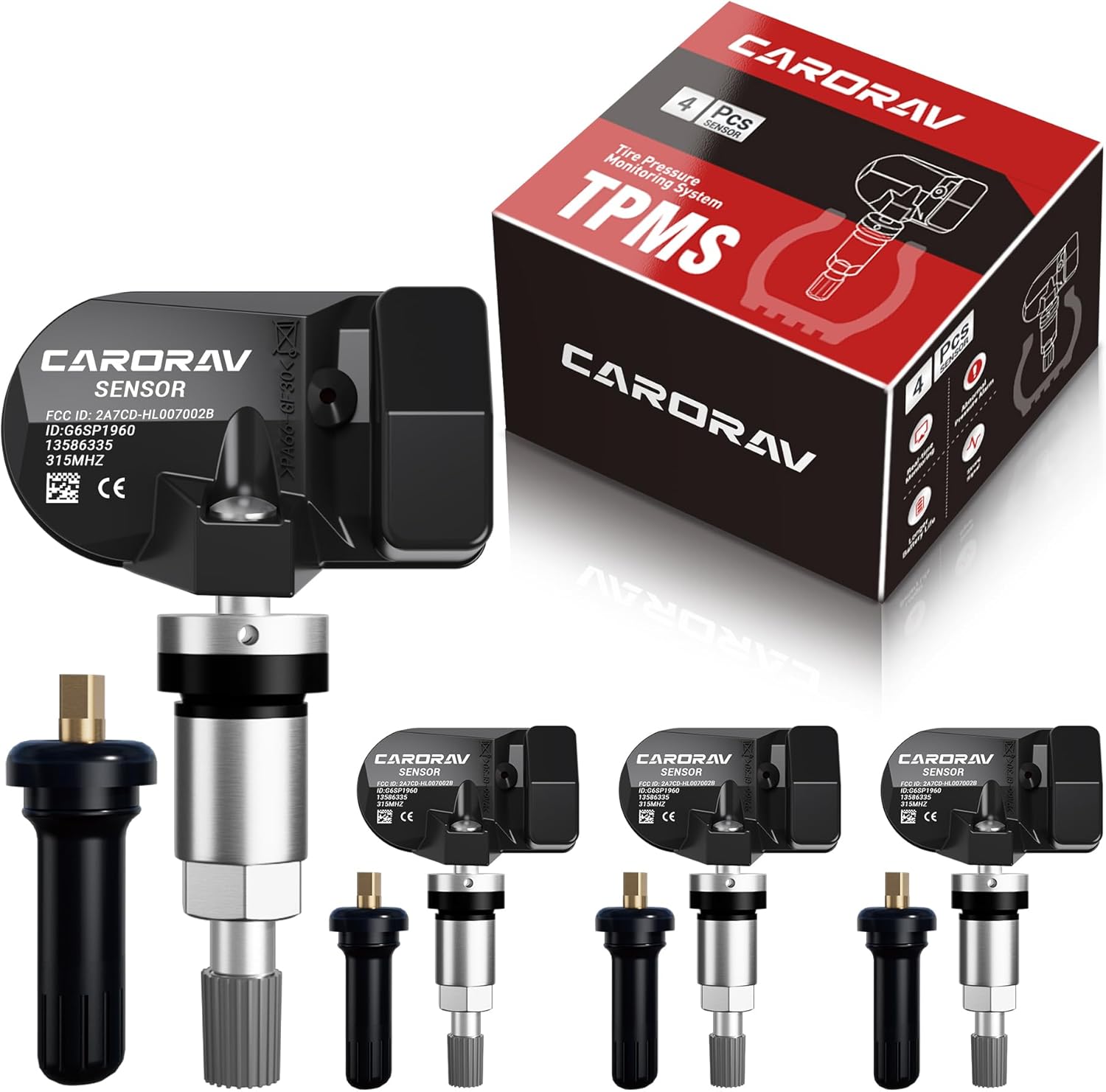
Replace worn or missing TPMS sensors with CARORAV pre-programmed GM-compatible sensors for a smoother installation experience. These 315MHz replacement sensors help monitor tire pressure in real time with long battery life, and they are designed to withstand harsh temperatures. Manual or OBDII relearn may be required to reset the system for proper recognition.
Before You Reset the System
- Park safely and let the tires cool.
- Find the recommended cold tire pressure on the driver-door placard.
- Check all four road tires with a reliable gauge.
- Inspect for nails, cuts, sidewall bulges, cracked valve stems, or a tire that keeps losing air.
- Inflate or deflate each tire to the placard pressure.
- Reinstall valve caps to keep dirt and moisture out of the valve stems.
For Tacomas That Use a TPWS Menu
Some later Tacoma configurations use the multi-information display for TPWS setup rather than relying only on a physical reset switch. Menu wording and the exact sequence vary by model year, so treat the steps below as a model-year-safe outline and confirm the labels in your owner’s manual.
- Park in a safe place, turn the engine switch off, and wait about 20 minutes so the tires cool.
- Adjust all tires to the specified cold tire pressure.
- Start the engine or place the truck in the operating mode specified by your owner’s manual, without moving the vehicle.
- Use the steering-wheel meter controls to open Settings or Vehicle Settings.
- Select TPWS, TPWS setting, or a similar tire pressure warning system menu.
- Choose Setting Pressure, Initialize, or the equivalent pressure-system setup option shown for your model year.
- Hold the select/OK control as directed until the tire pressure warning light blinks three times or the display confirms that initialization has started.
- If your manual calls for a driving relearn, drive straight with occasional gentle turns at about 25 mph (40 km/h) or more for roughly 10–30 minutes.
- When initialization is complete, the tire pressures should display normally and the warning should clear if no fault remains.
For Older Tacomas With a Reset Button
Many older Tacomas use a physical tire-pressure warning reset or SET switch in the lower driver-side dash area. Location and the required waiting/driving step vary by year. If your Tacoma has this switch, the basic sequence is:
- Set all tires to the correct cold pressure.
- Turn the ignition to ON without starting or moving the truck.
- Press and hold the TPMS reset button until the warning light blinks several times.
- Complete the waiting or driving step specified for your model year so the system can store or confirm the pressure baseline.
Warning: Do not reset or initialize TPMS while the tires are intentionally underinflated for off-road driving. If you set trail pressure as the baseline, the system may not warn you correctly for normal road driving.
When Sensor ID Registration Is Needed
Initialization is not the same as registering a new sensor. Every replacement transmitter has an ID that the truck must recognize. Depending on Tacoma generation and equipment, registration may be performed through an in-vehicle TPWS function or with a compatible TPMS/diagnostic tool. If you install a second wheel set, first confirm that your exact Tacoma supports storing or switching between multiple registered sets instead of assuming the feature is present.
If the display shows “–” for pressure after new wheels or sensors, the system may still be learning, the wrong wheel set may be selected, or the sensor IDs may not be registered.
What Do Your TPMS Warning Lights Indicate?
The tire pressure warning light gives you an important clue, but the pattern matters. Use this table as a first check:
| Warning Pattern | Likely Meaning | What To Do |
|---|---|---|
| Solid TPMS light | One or more tires may be significantly low. | Check all tires with a gauge, inflate to placard pressure, inspect for leaks, and drive to confirm the light clears. |
| Flashes for about a minute, then stays on | Possible TPMS malfunction, dead sensor, unregistered sensor, or communication fault. | Check pressure manually first, then have the TPMS scanned if the light returns. |
| Pressure display shows “–” | The system may be initializing, registering, missing a sensor signal, or using the wrong wheel set. | Drive through the learning procedure if you just reset it; otherwise check wheel-set selection and sensor registration. |
| Light appears after tire rotation | The system may need initialization or wheel-position learning. | Set cold pressure, initialize TPWS, and drive as directed by your Tacoma’s display. |
How to Keep Your Tacoma’s TPMS in Top Shape
Good TPMS maintenance starts with good tire maintenance. The system works best when tire pressure, valve hardware, and sensor registration are all correct.
- Check pressure monthly. NHTSA recommends checking all tires at least once a month when cold, even when the TPMS light is off.
- Use the door placard pressure. For Tacoma-specific examples and why the number varies by tire package, see the Toyota Tacoma tire pressure chart by model and trim. The sidewall maximum is not the truck’s normal target pressure.
- Check pressure cold. Hot tires can read several PSI higher after driving.
- Reinitialize after tire service. Do this after rotations, tire changes, pressure baseline changes, or wheel-set changes when your Tacoma requires it.
- Protect valve stems. Replace missing valve caps and avoid harsh metal caps that can seize on some valve stems.
- Tell the tire shop you have TPMS. The technician should use TPMS-safe service procedures to avoid damaging sensors.
Troubleshooting Common TPMS Issues on Your Toyota Tacoma
If the TPMS light will not go away, work through the problem in order. Do not start with a reset if you have not confirmed the tires are safe.
[Products Worth Considering]
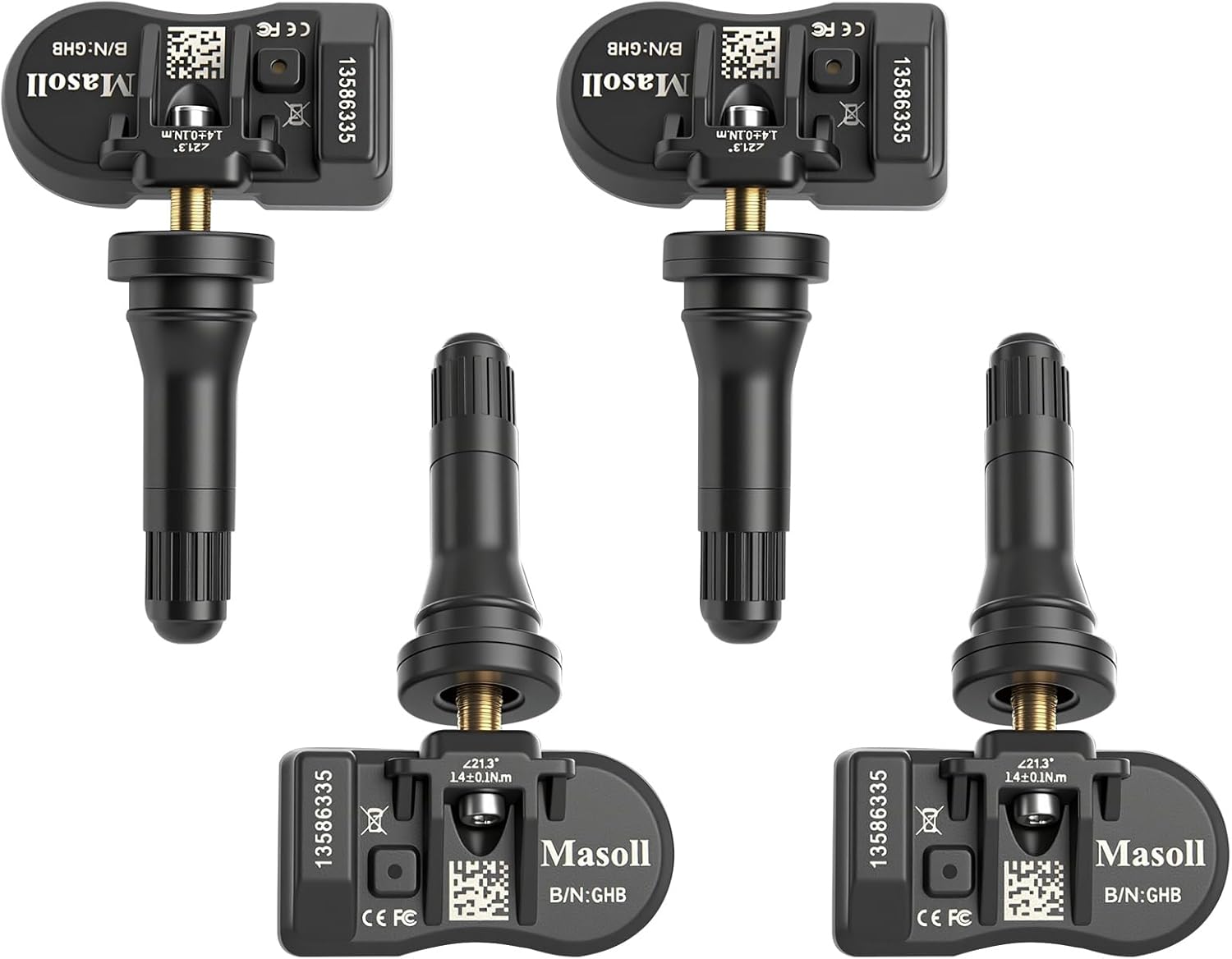
Masoll TPMS sensors are designed for most GM vehicles after 2006, helping you clear tire pressure warnings with OEM-level 315/433MHz compatibility. The 4-pack includes pre-programmed sensors, but re-learning is required after installation using a GM TPMS relearn tool or scan tool. Built with a dual-antenna design and a long-life CR2050 battery, these sensors deliver reliable performance in extreme temperatures with corrosion-resistant valve construction.

Masoll Gen 2 external TPMS sensors are a DIY replacement set of 4 for select GM vehicles made after 2006, helping you shut off the TPMS warning light quickly. Simply screw the sensors onto the tire valves and sync to your car ECU using the included EL-50448 relearn tool. Dual-frequency 315/433 MHz design provides OEM-level performance with accurate readings and replaceable batteries for about two years.

The AICEL TPMS relearn tool helps you quickly reset or relearn tire pressure sensors after replacement, tire rotation, or resolving tire pressure alarms. It provides an activation reset function so your vehicle’s TPMS can operate optimally, saving time and money on frequent visits to an auto shop. Designed for easy use on most vehicles, it works by placing the tool near the valve stem and using the learn button.
TPMS Light Stays On After Adding Air
- Recheck all tires when cold.
- Make sure you used the placard pressure, not the tire sidewall maximum.
- Drive for several minutes so the system can update.
- If the light remains on, inspect for a slow leak or valve-stem problem.
TPMS Light Flashes Then Stays On
- Check pressure manually first to rule out an unsafe tire.
- Think about recent service: new tires, tire rotation, new wheels, or sensor replacement.
- Look for missing pressure readings or “–” on the display.
- Have the sensors scanned if the warning returns after correct initialization. For a broader diagnostic sequence, see the TPMS sensor malfunction troubleshooting guide.
TPMS Light Came On After Cold Weather
Cold air lowers tire pressure. A Tacoma that was fine in warm weather may trigger TPMS after a cold night. Set the tires to the correct cold pressure in the morning, then drive normally and confirm the light clears.
TPMS Light After Off-Road Airing Down
This is expected if you lower tire pressure for trail driving. Reinflate to the correct road pressure before highway driving. Do not initialize TPMS at off-road pressure unless you understand the consequences and will reset it again for normal driving.
New Wheels or Winter Tires Trigger TPMS
If your new wheels have no sensors, incompatible sensors, or unregistered sensors, the TPMS light will stay on or flash. Use sensors compatible with your Tacoma’s year and have the IDs registered or the correct wheel set selected.
Frequently Asked Questions
Can I drive if the TPMS light is on?
Only after you safely check the tires. If one tire is visibly low, damaged, or losing air quickly, do not keep driving on it. If all tires are at the correct cold pressure and the light still stays on or flashes, the truck may have a TPMS system fault that should be diagnosed.
How do Toyota Tacoma TPMS sensors work?
Most late-model Tacoma TPMS sensors are mounted inside the wheel near the valve stem. They measure tire pressure and transmit that information to the truck. If pressure is too low, or if a sensor signal is missing, the system turns on the tire pressure warning light.
Why is my Tacoma TPMS light flashing?
A flashing TPMS light that later stays on usually means the system has a malfunction, not just a low tire. Common causes include a dead sensor battery, damaged sensor, unregistered replacement sensor, wrong wheel set, or communication issue.
Do I need to reset TPMS after rotating Tacoma tires?
It depends on model year, but many Tacoma procedures do require initialization or wheel-position learning after rotation. Toyota’s 2024 Tacoma owner guidance specifically lists initialization after tire rotation. Set the tires to the correct cold pressure first, then follow the procedure for your exact year.
Why does the TPMS light come back after I add air?
The tire may still be below the placard pressure, the pressure may have been checked while hot, another tire may be low, or there may be a slow leak. If the light flashes before staying on, the problem may be a sensor or registration fault instead of pressure.
Does TPMS replace checking tire pressure manually?
No. TPMS is a warning system, not a maintenance schedule. Check your Tacoma’s tire pressure with a gauge at least monthly, before long trips, before towing, and after major temperature changes.
Where is the TPMS reset button on a Toyota Tacoma?
The location depends on model year. Many older Tacomas use a physical tire-pressure warning reset or SET switch in the lower driver-side dash area. Some later configurations use TPWS controls in the multi-information display. If you do not see a reset switch, check the owner’s manual for your exact year before pressing unrelated dash controls.
How long does a Tacoma TPMS relearn take?
Current Toyota initialization guidance can require about 10–30 minutes of driving at roughly 25 mph (40 km/h) or more while the system learns tire positions or pressure data. Older Tacoma procedures can use a different waiting or driving step, so follow the model-year manual if the readings remain blank or the light does not clear.
Conclusion
Your Tacoma’s TPMS is most useful when you act on the warning pattern instead of trying to erase the light. Check cold pressure first when the light is solid. If it flashes for about a minute and then stays on, move to sensor and system diagnosis. After rotations, pressure-setting changes, new sensors, or wheel changes, follow the exact initialization or registration procedure for your model year. Keep the tires at the driver-door placard pressure, inspect any tire that repeatedly loses air, and use a TPMS reset only after the tires themselves are confirmed safe.
Sources
- 49 CFR § 571.138 — Tire Pressure Monitoring Systems — federal TPMS warning and malfunction requirements.
- NHTSA TireWise — cold-pressure checks, driver-door placard guidance, and monthly tire-pressure maintenance.
- Toyota 2024 Tacoma — Items to Initialize — official Tacoma guidance listing when TPWS initialization is required.
- Toyota 2026 Tacoma Manuals & Warranties — current official owner-manual access for model-specific procedures.
- Toyota 2025 Tacoma Tire Inflation Pressure — official Toyota tire-inflation guidance.