
What Do Tire Sidewall Numbers Mean on a Toyota Tundra? Simple Guide
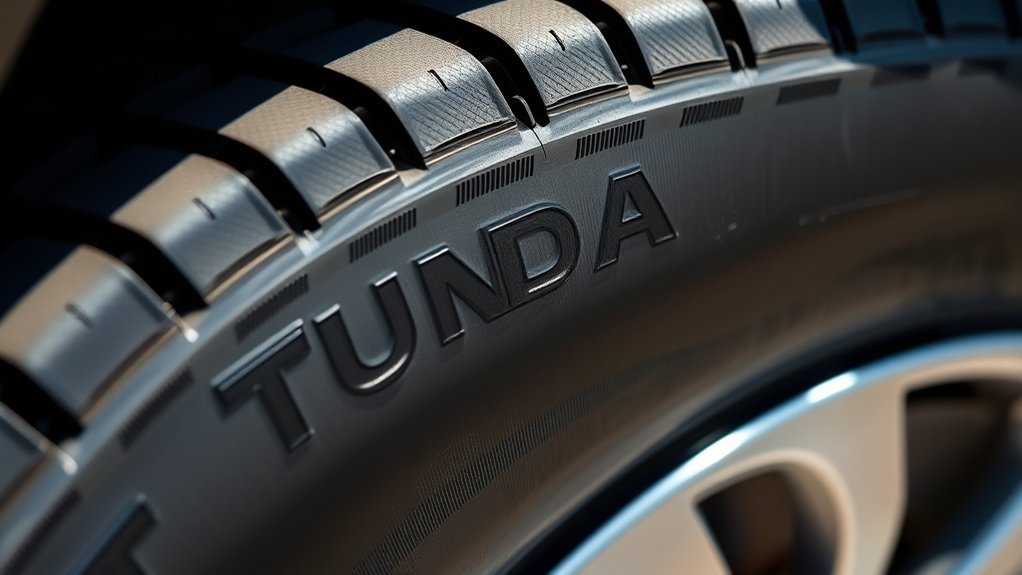
Tire sidewall numbers on your Toyota Tundra tell you more than the tire’s size. They also show the tire’s construction, load capacity, speed rating, DOT identification, and treadwear information. The safest way to use those numbers is to compare them with the Tire and Loading Information Label on your driver-side doorjamb and the Toyota owner’s manual for your exact model year and trim.
Quick Answer
Toyota Tundra tire sidewall numbers identify the tire’s width, sidewall height, construction, wheel diameter, load index, and speed rating. For example, 265/60R20 112H means a 265 mm wide radial tire for a 20-inch wheel, with load index 112 and H speed rating.
Key Takeaways
- The sidewall shows what tire is installed; the driver-door placard shows what Toyota specified for your Tundra.
- Never choose a replacement tire with a lower load index or speed rating than the placard or owner’s manual requires.
- Treadwear grades are relative ratings, not guaranteed mileage numbers.
- Upsizing to 33-inch or 35-inch tires can affect clearance, braking, speedometer accuracy, fuel economy, and spare-tire fitment.
At a Glance
| Time Required | 5–10 minutes |
| Difficulty | Easy |
| Tools Needed | Tire sidewall, driver-door tire placard, owner’s manual, tire pressure gauge, tread depth gauge or penny |
| Cost | Free, unless you buy a gauge or replacement tires |
Decode Toyota Tundra Tire Size Numbers

Most Toyota Tundra tire sizes use a code that reads from left to right. A common example is 265/60R20 112H. Some replacement or off-road tires may use an LT prefix, such as LT285/65R18, or a flotation-style size, such as 33×12.50R18LT. The format changes slightly, but the goal is the same: identify the tire’s size, construction, load capacity, and speed capability.
| Sidewall part | What it means | Example |
| P, LT, T, or no prefix | Tire service type. P means passenger, LT means light truck, T means temporary spare, and no prefix usually means Euro-metric. | LT285/65R18 |
| 265 | Section width in millimeters on metric tire sizes. | 265 mm wide |
| 60 | Aspect ratio. The sidewall height is 60% of the tire width. | 265 × 0.60 = 159 mm sidewall |
| R | Radial construction, the standard construction type for modern passenger and light-truck tires. | R = radial |
| 20 | Wheel diameter in inches. | Fits a 20-inch wheel |
| 112H | Service description: load index plus speed rating. | 112 load index, H speed symbol |
Warning: The tire sidewall tells you what is currently mounted. Before buying replacements, check the driver-side Tire and Loading Information Label and your Toyota owner’s manual. Do not rely on appearance, internet size charts, or the old tire alone.
For the safest fit, match the tire size, load rating, and speed symbol Toyota lists for your exact Tundra. If you are changing wheel size, adding a lift, towing heavy loads, or moving from P-metric to LT tires, confirm the fitment with a qualified tire professional before installation.
[Products Worth Considering]

This portable cordless tire inflator delivers fast, efficient inflation for cars, motorcycles, bikes, and sports balls with a digital pressure gauge. Use the one-click PSI preset with auto shut-off for accurate, hands-free topping to your target pressure up to 150 PSI. It’s compact and rechargeable with a built-in emergency LED light plus valve adapters and accessories for quick, ready-to-go use.

The JACO FlowPro Tire Inflator measures, inflates, and airs down tires up to 100 PSI with battery-free operation and ±2% accuracy after calibration. It features a glowing pressure dial for night visibility, a heavy-duty steel build with a hybrid hose, and a precision push-to-inflate thumb trigger. The patented Lightning Air Chuck locks on for a secure seal, and the kit includes quick-connect hardware for easy inline use with your air compressor.

This portable cordless tire inflator delivers up to 160 PSI with fast 17 L/min airflow to help you quickly top up tires and get back on the road. It features dual power mode, running on a 21V rechargeable battery or a 12V DC adapter for convenient roadside use. An automatic shut-off with digital pressure gauge helps prevent overinflation, and a built-in LED light improves visibility in low-light conditions.
Understand Load Index, Speed Rating, and Load Range
The load index is a number that corresponds to the maximum load each tire can carry when it is properly inflated. For example, according to Goodyear’s tire load index chart, load index 112 equals 2,469 pounds per tire. That does not mean your Tundra can automatically carry four times that amount; vehicle payload, axle ratings, tire pressure, and the door placard still control the safe limit.
The speed rating is the letter after the load index. An H rating, for example, is listed by Goodyear’s speed rating chart as 130 mph. This is a tire capability rating under controlled conditions, not permission to exceed posted speed limits or ignore load, heat, pressure, or road conditions.
Light-truck tires may also show a load range, such as Load Range C, D, E, or F. You may also see two load indexes on LT tires, such as 125/122. The first number is for single-wheel use, and the second is for dual-wheel use. A Toyota Tundra uses single rear wheels, so the single-load number is the one to compare when checking replacement capacity.
Note: The maximum PSI molded on the tire sidewall is not the normal daily inflation pressure. Use the cold tire pressure listed on the driver-door placard unless Toyota or a tire professional gives you a different approved setup for a specific load or tire conversion.
How Tire Construction Impacts Tundra Performance
The letter R in a tire size means radial construction. Radial tires use cords that run across the tire from bead to bead, helping the tread stay flatter on the road. For a Toyota Tundra, radial construction supports everyday ride comfort, highway stability, heat control, and predictable handling.
That said, construction is only one part of performance. Tread design, rubber compound, load rating, tire pressure, wheel size, sidewall height, and alignment all matter. A highway all-season tire may feel quieter and more efficient on pavement, while an all-terrain tire can add grip on dirt, gravel, and light mud. A mud-terrain tire can help in deep mud or rocks but often brings more road noise, weight, and wet-road compromise.
Pro Tip: If your Tundra tows, hauls, or runs off-road often, shop by load rating and use case first, then compare tread pattern. A tire that looks aggressive is not automatically the safest choice for towing, rain, or highway miles.
Read Treadwear, Traction, Temperature, and Wear Bars
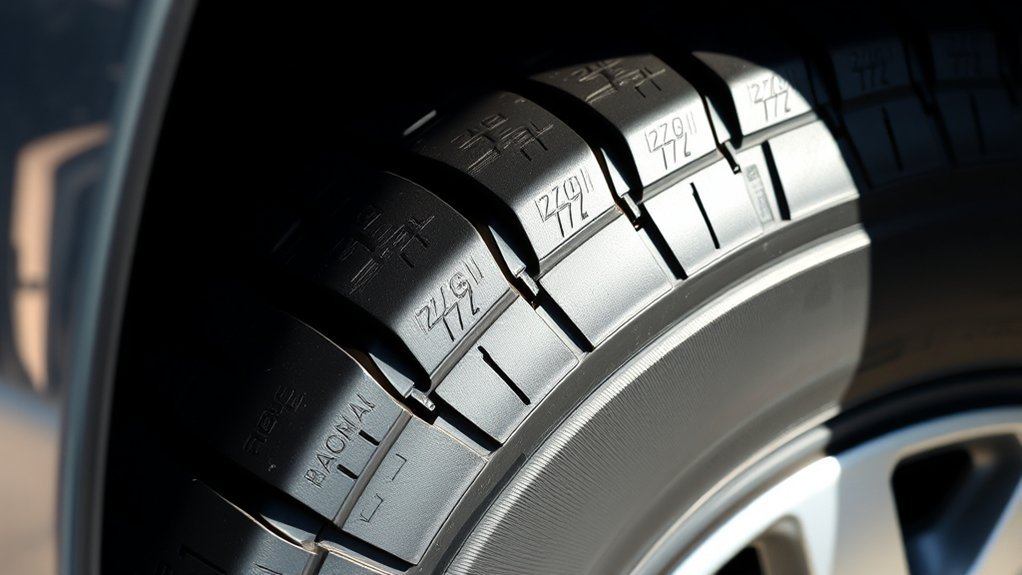
Many passenger and light-truck tires show UTQG ratings on the sidewall. The National Highway Traffic Safety Administration explains that the Uniform Tire Quality Grading system compares tires for treadwear, wet traction, and temperature resistance.
- Treadwear: A number such as 400 is a relative comparison to a control tire. It is not a guaranteed mileage promise. Driving style, rotation, pressure, alignment, road surface, and tire type can all change real tread life.
- Traction: Grades run from AA to C. They measure wet straight-line stopping performance, not snow traction, cornering grip, mud performance, or hydroplaning resistance.
- Temperature: Grades run from A to C. They show the tire’s resistance to heat under test conditions.
- Treadwear indicators: Wear bars sit in the tread grooves. When the tread is level with the bars, the tire is at about 2/32 inch, or 1.6 mm, and should be replaced.
NHTSA reports that 511 people died in tire-related crashes in 2024, which is why tire size, pressure, tread depth, and load rating are safety checks—not just shopping details.
Check tread depth at least once a month when you check tire pressure. NHTSA also recommends the penny test: place a penny into the tread with Lincoln’s head upside down and facing you. If you can see the top of Lincoln’s head, it is time to replace the tire.
Check the DOT Date Code Before Buying
The DOT Tire Identification Number, or TIN, is another important sidewall marking. It begins with DOT and ends with a four-digit date code on tires made since 2000. The first two digits are the production week, and the last two digits are the production year. For example, 3525 means the tire was made in the 35th week of 2025.
Age matters because rubber hardens over time, even when tread depth still looks usable. If you are buying used tires, old stock, a spare, or a truck that has sat for a long time, check the DOT date code and inspect for cracking, bulges, cuts, uneven wear, and repairs.
[Products Worth Considering]

EVOULTES heavy duty tire inflator with an integrated gauge delivers accurate pressure readings from 10–120 PSI, helping you inflate, deflate, and check tires in one tool. The 16.5-inch extended dual-head air chuck with swivel base reaches hard-to-access dual wheel valves on trucks and RVs. A brass trigger core and side-mounted air release valve make operation smooth, with standard 1/4" NPT threading and quick-connect compatibility for easy setup.

This tire valve adapter kit lets you connect a 3/4-inch garden hose to tire valves to fill tires with air or liquid. It includes two adapters for standard bore and large bore valves plus a convenient bleeder valve to release trapped air. Designed for tractor tire tubes and compatible air/water valves and extensions, it’s a practical repair tool for getting back on the road or field quickly.
Tips for Choosing the Best Tires for Your Toyota Tundra
Choosing the right tires for your Toyota Tundra starts with the placard, not the biggest size that fits. The placard lists the original tire size and cold inflation pressure for your truck. Your owner’s manual explains tire information, tire rotation, and tire safety warnings for your model year.
Match Your Real Driving Use
- Daily highway driving: Choose highway-terrain or touring all-season tires for lower noise, smoother ride, and predictable wet-road braking.
- Towing and hauling: Prioritize load index, heat resistance, proper inflation, and stable handling. Do not drop below Toyota’s required load rating.
- Mixed pavement and trails: All-terrain tires are usually the best balance for gravel, dirt, light mud, and daily driving.
- Deep mud or rocks: Mud-terrain tires can add off-road bite, but they may be louder, heavier, and less comfortable on pavement.
- Snow and ice: Look for winter tires or all-weather tires with the three-peak mountain snowflake symbol if winter traction is a major concern.
Be Careful With Wider Tires
Wider tires can increase contact patch in some conditions, but they are not automatically better. They can add weight, increase rolling resistance, rub on suspension or body parts, reduce wet-weather performance, and change steering feel. Always confirm wheel width, offset, clearance, load rating, and spare-tire compatibility before moving to a wider size.
What About 33-Inch and 35-Inch Tires?
Many Tundra owners consider 33-inch or 35-inch tires for looks and off-road clearance. A 33-inch tire is usually easier to fit than a 35-inch tire, but both can still require careful wheel offset and clearance checks. A 35-inch tire is more likely to require a lift, trimming, aftermarket wheels, recalibration, or changes to the spare-tire plan.
Warning: Upsizing can affect braking distance, acceleration, fuel economy, speedometer accuracy, suspension clearance, and trailer stability. If you tow, haul, or drive at highway speeds often, do not treat tire upsizing as only a cosmetic change.
Maintenance Checks After You Buy Tundra Tires
The best tire choice can still perform poorly if it is underinflated, overloaded, misaligned, or worn unevenly. Use this simple routine after installing tires on your Tundra:
- Check cold pressure monthly: Measure pressure when the truck has been parked for at least three hours.
- Inspect the spare: Make sure the spare is inflated, compatible, and usable, especially if you changed tire size.
- Rotate on schedule: Follow Toyota’s rotation guidance for your model and tire setup.
- Watch for uneven wear: Cupping, feathering, or one-edge wear can point to alignment, balance, inflation, or suspension problems.
- Recheck after towing or off-roading: Look for cuts, sidewall damage, punctures, missing chunks, and embedded stones.
- Do not ignore TPMS: A tire pressure warning means at least one tire may be significantly underinflated and should be checked promptly.
Frequently Asked Questions
What’s better for a Toyota Tundra: 33-inch or 35-inch tires?
It depends on your goal. A 33-inch tire is usually the easier upgrade because it is less likely to need major trimming or lift changes. A 35-inch tire can add ground clearance and off-road presence, but it is more likely to affect fuel economy, braking, gearing, rubbing, spare fitment, and speedometer accuracy.
How do you read a Toyota Tundra tire size?
Read it from left to right. In 265/60R20 112H, 265 is width in millimeters, 60 is the aspect ratio, R means radial construction, 20 is the wheel diameter in inches, 112 is the load index, and H is the speed rating.
Where is the correct tire size listed on a Toyota Tundra?
Check the Tire and Loading Information Label on the driver-side doorjamb or door edge. You can also confirm tire information in the Toyota owner’s manual for your exact model year. The tire currently installed may not be the original or safest recommended size.
Can I use LT tires instead of P-metric tires on my Tundra?
Sometimes, but do not assume they are interchangeable. LT tires can be stronger for hauling or off-road use, but they may ride firmer, weigh more, need different inflation guidance, and change handling. Confirm the load rating, wheel compatibility, and pressure requirements before switching.
What does 112H mean on a Tundra tire?
112 is the load index, which corresponds to 2,469 pounds per tire on standard load-index charts. H is the speed rating, commonly listed as 130 mph. These ratings must meet or exceed the specifications on your Tundra’s placard and owner’s manual.
When should Toyota Tundra tires be replaced?
Replace tires when tread reaches 2/32 inch, when treadwear bars are level with the tread, or sooner if you see cracks, bulges, exposed cords, puncture damage, severe uneven wear, or age-related rubber deterioration. For rain, snow, towing, or off-road use, replacing before the legal minimum can be safer.
Conclusion
Understanding Toyota Tundra tire sidewall numbers helps you choose tires that fit correctly, carry the right load, and match your driving needs. Start with the door placard and owner’s manual, then decode the tire width, aspect ratio, construction, wheel diameter, load index, speed rating, DOT date code, and UTQG ratings. When in doubt, choose the tire that meets Toyota’s specifications first and your preferred look second.
Sources
- Tire Industry Association — Reading a Tire Sidewall — sidewall code structure, prefixes, aspect ratio, radial construction, rim diameter, and service description.
- NHTSA TireWise — Tire Safety Ratings and Awareness — UTQG ratings, tire pressure, tread depth, tire maintenance, and tire-related crash safety context.
- NHTSA Interpretation 11497AWKM — treadwear indicators at the 2/32-inch tread depth level.
- Toyota Owners — 2025 Tundra Tire Information — Toyota Tundra tire symbols, tire size, DOT/TIN, treadwear indicators, and tire ply information.
- Toyota Owners — 2025 Tundra Tires — Toyota tire safety guidance, load rating, speed symbol, and rotation information.
- Goodyear — Load Index and Speed Rating — tire load index and speed rating reference guidance.

Related Articles
Toyota Tundra Tire and Wheel Package: What to Consider Before Buying
Unlock the secrets to choosing the perfect tire and wheel package for your Toyota Tundra—essential tips await to enhance your ride.
Read More
Do Bigger Tires Void a Toyota Tundra Warranty? Magnuson-Moss Act Explained
Bigger tires might not void your Toyota Tundra warranty, but understanding the Magnuson-Moss Act is crucial—discover how to protect your investment effectively.
Read More
Toyota Tundra Tire Rack Setup: Garage Storage Ideas for Seasonal Sets
Better tire storage for your Toyota Tundra awaits—discover essential tips to maximize space and protect your seasonal sets in the garage!
Read More