
A Toyota Camry tire is not made from one material or one universal recipe. Most Camry tires are radial passenger-car tires built from several rubber compounds, steel belt cords, textile body plies, an airtight inner liner, and steel bead wire. The exact construction, tread compound, size, load rating, and speed rating depend on the tire manufacturer, Camry model year, trim, drivetrain, and wheel package.
Quick Answer
Toyota Camry tires are usually made from natural and synthetic rubber, carbon black or silica fillers, steel belt cords, textile body plies, a butyl-based inner liner, and steel bead wire. Exact materials, tread compounds, size, load rating, and speed rating vary by tire maker, Camry model year, trim, and wheel package.
Key Takeaways
- A Camry tire contains several rubber compounds plus steel, textile fibers, fillers, oils, and curing chemicals.
- The tread provides grip, while belts, body plies, beads, sidewalls, and the inner liner support the tire and retain pressure.
- Toyota specifies approved fitment and inflation information, but tire manufacturers design and produce the tires.
- Always verify tire size, load rating, speed rating, and cold pressure for your exact Camry rather than relying on a generic number.
The Essential Materials in a Toyota Camry Tire
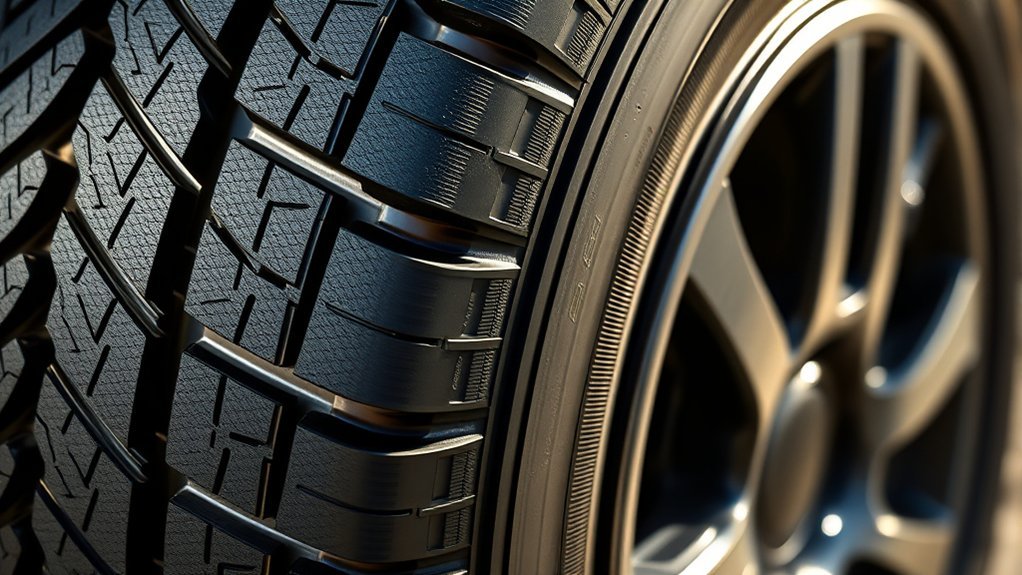
When you look at a Toyota Camry tire from the outside, you mainly see the tread and sidewall. Inside, however, is a layered structure designed to carry the vehicle’s weight, retain air, resist heat and impacts, and keep the tread in stable contact with the road.
According to Continental’s tire-production guide, modern passenger tires commonly use natural rubber, synthetic rubber, high-strength steel, and textile fibers such as rayon, nylon, polyester, or aramid. A passenger tire may use as many as 12 rubber compounds, although the number and formulas vary by tire model.
Rubber is mixed with other ingredients to give each part the properties it needs. Common ingredients include carbon black or silica fillers, processing oils and resins, sulfur and other curing chemicals, antioxidants, and anti-ozone agents. These materials can affect grip, wear, heat resistance, flexibility, rolling resistance, and resistance to aging.
| Tire Component | Common Materials | Main Purpose |
|---|---|---|
| Tread | Natural and synthetic rubber, carbon black, silica, oils, and additives | Provides road contact, traction, water evacuation, wear resistance, and braking performance |
| Cap ply, where used | Often nylon embedded in rubber | Helps control belt movement and tire shape at speed |
| Steel belts | Rubber-coated high-strength steel cords | Stabilize the tread, strengthen the crown, and improve resistance to many road hazards |
| Body ply or carcass | Polyester, rayon, nylon, or another textile cord in rubber | Carries load, contains inflation forces, and allows controlled flexing |
| Inner liner | Airtight butyl-based rubber compound | Slows air loss in a tubeless tire |
| Sidewall | Flexible natural and synthetic rubber compounds | Protects the body ply and flexes as the tire absorbs road inputs |
| Bead core | High-strength steel wire embedded in rubber | Locks the tire securely against the wheel’s bead seat |
How Rubber Compounds Enhance Tire Performance
The rubber compounds in a Camry tire must balance several competing goals. A very soft tread compound may produce strong grip but wear faster. A harder compound may last longer but offer different cold-weather or wet-road behavior. Tire manufacturers adjust the mixture for the tire’s intended use, speed rating, mileage target, climate range, and rolling-resistance goal.
Natural rubber contributes strength and flexibility, while synthetic rubbers can be selected for traits such as abrasion resistance, heat control, wet grip, or low-temperature performance. Carbon black can strengthen rubber and improve wear resistance. Silica is commonly used in tread compounds to help manufacturers balance wet traction and rolling resistance.
The tread compound deforms as it contacts the road. That controlled deformation helps the tire follow small surface changes and generate grip. The rubber beneath the tread must also bond securely to the belt package. This helps the tread and belts act as one structure during braking, acceleration, and cornering.
Note: Toyota does not use one universal rubber formula for every Camry. Original-equipment and replacement tires from different manufacturers can have different compounds, tread patterns, warranties, and internal details while still meeting the required vehicle fitment.
Structural Layers: The Anatomy of a Tire
Each structural layer has a different job. Together, the layers maintain the tire’s shape, carry the vehicle’s load, retain pressure, protect against road damage, and keep the tread stable.
- Tread area: The patterned outer rubber contacts the road. Grooves and channels help move water away from the contact patch, while tread blocks provide braking and cornering edges.
- Cap ply, where fitted: Many passenger tires use one or more cap plies over the steel belts. These are often made from nylon and help limit belt movement at higher speeds.
- Steel belts: Rubber-coated steel cords strengthen the crown and help the tread maintain a flatter, more stable footprint.
- Body ply: Textile cords run across the tire from bead to bead. In a radial tire, these cords generally run at about 90 degrees to the direction of travel.
- Inner liner: This airtight layer replaces the separate inner tube used in older tube-type designs.
- Sidewall: The flexible sidewall protects the body cords and helps absorb bumps while carrying steering and cornering forces.
- Bead assembly: The steel bead core and surrounding rubber components hold the tire against the wheel rim.
The “R” in a size such as 215/60R16 means the tire uses radial construction. Nearly all modern Camry passenger tires are radial, but the exact number of body plies, steel belts, and cap plies is shown on the tire sidewall and can vary by model.
How Reinforcement Materials Enhance Tire Safety and Longevity
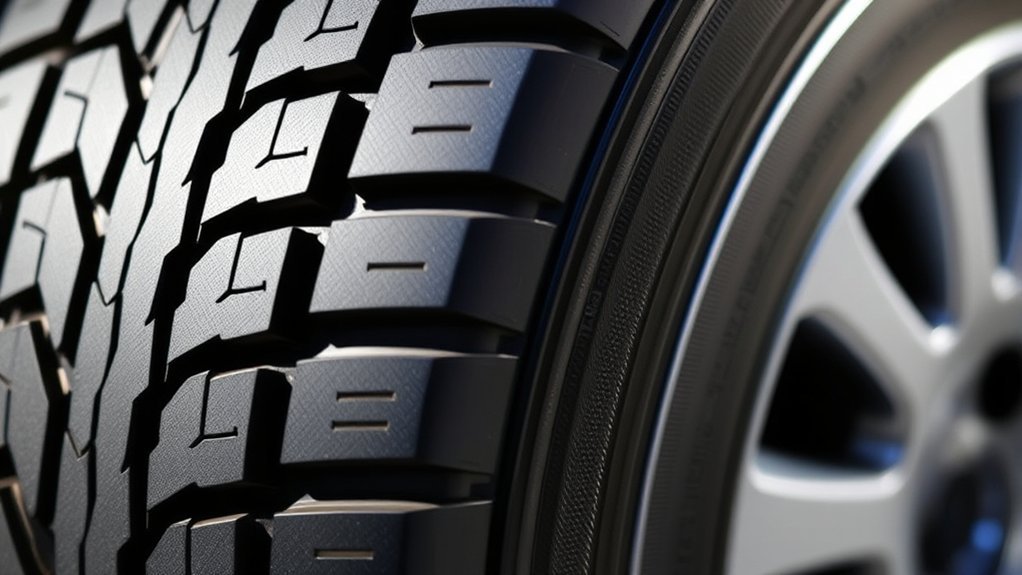
Reinforcement materials include steel cords and textile fibers such as polyester, rayon, nylon, or aramid. The exact combination depends on the tire. These materials allow the casing to carry weight while still flexing as the tire rolls.
The body ply helps contain inflation forces and supports the load. Steel belts reinforce the tread area and help the tire maintain stable road contact. A cap ply, when present, can help control growth and movement in the belt package at speed.
Reinforcement can improve durability, but it cannot prevent every failure. A tire may still be damaged by underinflation, overloading, pothole impacts, punctures, bead damage, aging, improper repairs, or driving while flat. Proper pressure and regular inspection remain essential.
A tire’s strength comes from the complete structure—not from one layer. Rubber compounds, belts, body plies, beads, the inner liner, correct pressure, and proper fitment must work together.
[Products Worth Considering]

The SAFELIFE dial tire tread depth gauge measures tread depth in 1/32 inch increments with clear, easy-to-read 2-inch dial face. Color zones using a traffic light system help you quickly judge whether tread is low, marginal, or ample for safer driving. Built with a durable zinc cast body and a metal detect probe for precise, comfortable use across cars, motorcycles, trucks, and buses.

The Tymate TM12 RV TPMS delivers real-time tire pressure and temperature monitoring with a stable 433Hz display for safer long-distance driving. It supports simultaneous monitoring across vehicle and trailer zones, includes six alarm modes for pressure, temperature, leakage, battery, and signal loss, and features easy DIY installation with auto calibration. Power is supplied via USB-C charging or solar recharging, with a wide 0–144 PSI range and up to 50 ft signal coverage for RVs and towable trailers.

Monitor tire tread wear with a smart, color-coded depth gauge that shows clear condition ranges at a glance. The bar is range marked for fast, easy readings, helping you maintain safer traction and performance. Each gauge is portable with a pocket clip, and the set includes 20 units for daily use and sharing.
Why Steel Belts Matter for Your Tire’s Strength
Most modern radial passenger tires use rubber-coated steel belts beneath the tread. These belts provide several benefits:
- Tread stability: The belts help the tread maintain its shape during acceleration, braking, and cornering.
- Consistent road contact: A stable belt package helps keep the tread footprint more even as the tire rolls.
- Road-hazard resistance: Steel reinforcement can improve resistance to many cuts and penetrations in the crown area, although no conventional tire is puncture-proof.
- Controlled deformation: Belts limit excessive movement in the tread area while the sidewalls and body ply continue to flex.
- Heat and wear management: A properly designed belt package can help the tire maintain its intended shape and wear pattern.
Steel belts do not independently guarantee better fuel economy. Rolling resistance depends on the complete tire design, including tread compounds, casing construction, pressure, temperature, alignment, load, and driving conditions.
The Importance of Tire Beads for Security and Performance
The bead assembly secures the tire to the wheel rim. Its core is normally made from high-strength steel wire embedded in rubber. The surrounding bead apex, chafer, and reinforcement materials help transfer forces between the sidewall and wheel.
A correctly seated bead creates a secure fit and helps prevent air leakage at the rim. Improper mounting, corrosion, wheel damage, contamination, or bead damage can cause pressure loss, vibration, or an unsafe fit. Wheel alignment is a separate issue and is a more common cause of one-sided or feathered tread wear.
Tire Bead Composition Materials
- Steel bead wire: Forms the strong circular core that anchors the tire to the wheel.
- Rubber coating: Encases the wire, bonds it to nearby components, and helps form the bead shape.
- Bead apex or filler: A firm rubber section above the bead that affects steering response and sidewall stiffness.
- Chafer and reinforcement: Rubberized textile or other protective material may be used around the bead to resist rim chafing and control movement.
Aramid or nylon may be used in bead reinforcement on some tire designs, but the main bead core in a conventional passenger tire is generally steel wire.
Functionality in Tire Performance
The bead must remain firmly seated during braking, acceleration, and cornering. Damage can compromise the seal or weaken the connection between the tire and wheel. A tire with a torn, kinked, exposed, or badly distorted bead should not be installed.
| Aspect | Impact on Tire Performance |
|---|---|
| Bead core | Anchors the tire to the wheel and resists movement under load |
| Rubber apex and reinforcement | Supports the lower sidewall and affects steering response |
| Correct bead seating | Supports an even fit and reliable air seal at the rim |
| Bead or wheel damage | Can cause leakage, vibration, improper mounting, or tire failure |
| Professional installation | Helps protect the bead, wheel, and tire-pressure sensor during mounting |
Warning: Do not install or continue using a tire with bead damage, exposed cords, a sidewall bulge, deep cuts, repeated air loss, or evidence that it was driven while flat. Have it removed and inspected by a qualified tire professional.
How Camry Tire Materials and Sizes Vary
There is no single tire used on every Toyota Camry. Fitment changes with the model year, trim, drivetrain, market, and optional wheel package. Toyota’s current Camry specifications, for example, include different 16-, 18-, and 19-inch wheel packages across the lineup.
Some Camry configurations have used sizes such as 215/60R16 or 235/45R18, but those numbers are examples rather than universal replacement sizes. A tire that fits one Camry generation or trim may have the wrong diameter, load capacity, speed rating, or wheel-width range for another.
[Products Worth Considering]

Measure tire tread depth quickly and accurately with this LUMITECO dial gauge that reads in 1/32" increments up to 14/32". The color-coded green/yellow/red zones make it easy to judge tire wear and know when replacement is needed. A rugged, compact design with a protective pouch helps keep the gauge ready for use on cars, trucks, motorcycles, and more.

Keep your tires properly inflated with this analog VONDIOR tire pressure gauge, designed for fast, easy readings without batteries. The swiveling, two-axis hose and large glow dial help you measure at any tire angle with instant visibility. Built with a protective rubber shield, it supports durable, low-maintenance use for cars and trucks.

Replace worn or malfunctioning GM TPMS sensors with this 433MHz pre-programmed sensor set designed for compatibility with many Chevrolet, Buick, GMC, and Cadillac models. It includes guidance for proper OBDII relearning/pairing after installation and supports reliable long-term operation with a high-performance CR2032 battery. Quality tested for durability and performance to help restore accurate tire pressure monitoring.
Original-Equipment Versus Replacement Tires
Original-equipment tires are selected to meet the vehicle manufacturer’s targets for ride, noise, steering response, fuel economy, load, and other characteristics. They may be supplied by several tire brands.
A replacement tire does not always need the identical tread pattern or rubber formula, but it must be approved for the vehicle and wheel. It should have the correct size and an adequate load index and speed rating. Mixing substantially different tire types or tread patterns can also change handling, especially in rain or snow.
How to Verify the Correct Camry Tire
- Check the driver-door placard: It lists the original tire size and recommended cold inflation pressure for that vehicle.
- Check the owner’s manual: Use Toyota’s manual and warranty library for your exact model year.
- Match the complete size: Confirm section width, aspect ratio, construction, and wheel diameter.
- Confirm load index: The replacement tire must provide adequate load capacity for the vehicle.
- Confirm speed rating: Use the Toyota specification or an approved equivalent recommended by a qualified tire retailer.
- Check all four tires: Look for differences in size, type, construction, tread depth, and condition.
Pro Tip: Take a clear photo of the tire-and-loading placard on the driver’s doorjamb before shopping. It gives you a reliable reference for the original size and cold pressure even when you are away from the vehicle.
Key Maintenance Tips for Your Camry Tires
Tire materials can only perform as intended when the tires are correctly fitted, inflated, rotated, inspected, and replaced. Focus on rotation, pressure, tread depth, visible damage, and age.
[Products Worth Considering]

The TYAMATE TM8 solar-powered wireless TPMS delivers real-time tire pressure and temperature monitoring with six alarm modes for safer driving. A vibrant color LCD display shows readings clearly while windshield mounting keeps it hands-free and easy to read. With a wide 0–87 PSI range, strong 433.92 MHz signal transmission, and quick sensor pairing, it’s ideal for RV, sedan, SUV, MPV, and truck use.

Replace your worn or missing TPMS sensors with pre-programmed, direct-fit sensors for compatible Ford, Lincoln, and select Mazda models. Each sensor comes ready to activate with a scan tool, helping restore accurate tire pressure monitoring and trouble-free installation. Built with a long-life CR2032 battery and tested before factory release, this set provides dependable performance with a one-year warranty.
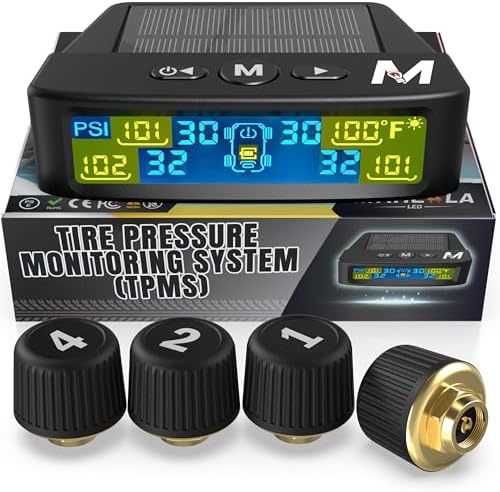
Marcala’s TPMS set of four sensors helps you monitor tire pressure and temperature in real time while driving, with updates every second. The bright color LCD uses auto-dimming for easy viewing, powered by dual solar and USB charging, and offers six alarm modes. Built for trailers, RVs, campers, trucks, and towing setups, the sensors support monitoring 1-4 wheels up to 98 PSI with IP67 waterproof protection.
Regular Tire Rotation
- Follow the rotation interval and pattern in the maintenance guide for your exact Camry and tire setup.
- A 5,000- to 7,500-mile interval is common for many passenger vehicles, but it is not a universal rule.
- Use the correct pattern for the drivetrain, tire type, and whether the front and rear tire sizes match.
- Have balance, alignment, and suspension condition checked if wear is uneven or the vehicle vibrates or pulls.
- Follow any TPMS wheel-position registration instructions that apply after rotation.
Toyota’s tire-rotation guide notes that rotation frequency and pattern are vehicle-specific. The owner’s manual and tire warranty should take priority over a generic interval.
Proper Inflation Levels
Correct inflation is essential for handling, braking, ride quality, tread life, and fuel use. Underinflation causes excessive flexing and heat buildup and can wear the shoulders. Overinflation can create a harsher ride, reduce impact absorption, and contribute to center wear.
Warning: Do not inflate a Camry tire from a generic 30–35 PSI range or from the maximum pressure molded on the tire sidewall. Use the recommended cold pressure on the driver-door placard or in the model-specific owner’s manual.
The National Highway Traffic Safety Administration recommends checking all tires at least once a month when they are cold. “Cold” generally means the vehicle has been parked for at least three hours. Check before long trips and include the spare if the vehicle has one.
The tire pressure monitoring system is a warning system, not a replacement for a gauge. A TPMS warning may not appear until a tire is significantly underinflated, and it may not provide immediate warning of a sudden rupture.
Tread Depth Monitoring
Regular tread checks help you judge wear, wet-road capability, and whether an alignment or inflation problem is developing.
- Use a tread-depth gauge: Measure several grooves across each tire rather than checking only one point.
- Replace at the wear bars: NHTSA advises replacing passenger tires when tread reaches 2/32 inch.
- Plan for wet weather: Wet braking and water evacuation can decline before the tire reaches 2/32 inch. Michelin notes that drivers who regularly face heavy rain may choose to replace tires around 4/32 inch for an added wet-weather margin.
- Look for uneven wear: One-sided wear, feathering, cupping, shoulder wear, or center wear may indicate alignment, balance, suspension, inflation, or rotation problems.
- Compare all four tires: Large differences in tread depth can affect traction and may be especially important on all-wheel-drive models.
Inspect Damage and Tire Age
Check for cuts, cracks, bulges, blisters, embedded objects, exposed cords, flat spots, and repeated pressure loss. A sidewall bulge can indicate broken internal cords and requires immediate professional inspection.
You can find a tire’s manufacturing date in the last four digits of its DOT tire identification code. The first two digits are the production week and the last two are the year. For example, “2324” means the tire was manufactured in the 23rd week of 2024.
Age alone does not tell you whether a tire is safe, but older tires need closer inspection. Follow the tire manufacturer’s age guidance and Toyota’s recommendations for your model. Heat, sunlight, storage, inflation history, impact damage, and use all affect aging.
Frequently Asked Questions
What type of tires does the Toyota Camry have?
Many Camry models leave the factory with radial all-season passenger tires, but the exact type depends on model year, trim, market, and wheel package. Some performance-oriented configurations may use a different category. Check the sidewall, door placard, and owner’s manual for your vehicle.
Are Toyota Camry tires made by Toyota?
Toyota establishes vehicle fitment and performance requirements, but tire manufacturers produce the tires. A new Camry may be equipped with an approved original-equipment tire from one of several brands, depending on the trim, factory, region, and supply arrangements.
What tire size fits a Toyota Camry?
There is no single Camry tire size. Sizes vary by model year, trim, drivetrain, and wheel package. Use the driver-door placard and owner’s manual, then confirm the load index and speed rating before buying a replacement.
What tire pressure should a Toyota Camry use?
Use the recommended cold pressure printed on the tire-and-loading placard on the driver’s doorjamb or listed in the owner’s manual for the exact vehicle. Do not use the maximum pressure molded on the tire sidewall as the normal operating pressure.
Can I mix different tire brands on a Camry?
Matching all four tires is usually the best way to preserve predictable handling. When that is not possible, use tires with compatible size, construction, type, load capacity, speed rating, and similar tread depth. Avoid mixing radial and non-radial tires, summer and winter tires, or unapproved sizes. Consult a qualified tire professional for an all-wheel-drive Camry or any staggered setup.
Conclusion
A Toyota Camry tire is a carefully layered structure rather than a single piece of rubber. Natural and synthetic rubber compounds form the tread and sidewall, steel belts stabilize the crown, textile body plies support the casing, a butyl-based liner retains air, and steel bead wire secures the tire to the wheel.
Those basic materials are common across modern passenger tires, but the exact recipe and construction vary by tire model. For safe replacement and dependable performance, verify the approved size, load index, speed rating, and cold inflation pressure for your exact Camry. Regular pressure checks, rotation, tread measurements, and damage inspections help every layer perform as intended.
Sources
- Continental — Tire Production — materials, rubber compounds, steel cord, textile reinforcement, bead wire, and manufacturing stages
- National Highway Traffic Safety Administration — TireWise — pressure checks, placard guidance, TPMS limitations, damage inspection, and tread-depth safety
- Toyota Manuals and Warranties — model-year-specific tire size, pressure, TPMS, and maintenance guidance
- Toyota Camry Specifications — current trim and wheel-package variation
- Toyota — Tire Rotation Guide — vehicle-specific rotation schedules and patterns
- Michelin — Tire Tread Depth — tread measurement, wear bars, and wet-weather replacement considerations