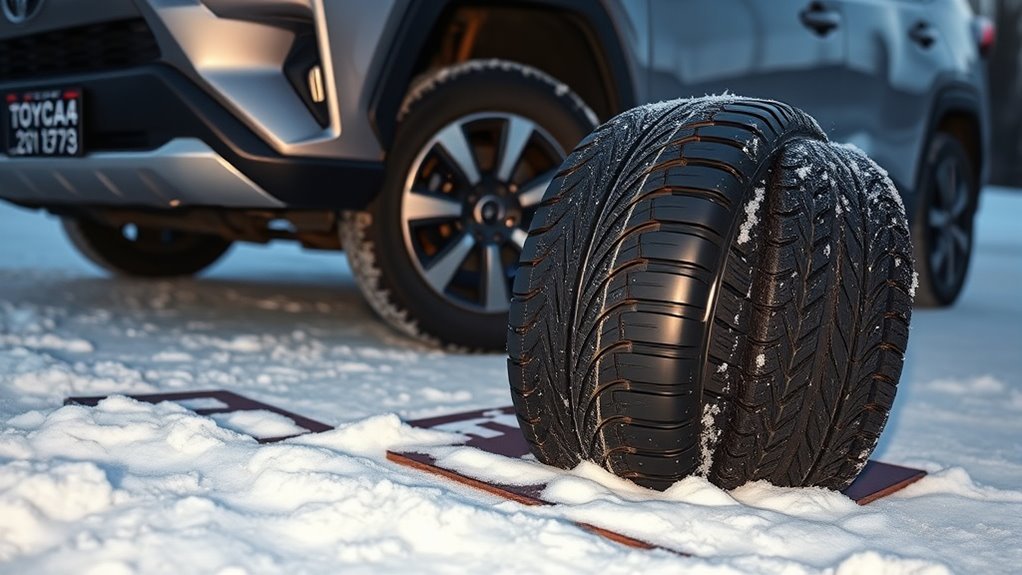
For a Toyota RAV4, the real choice is not usually “winter tires vs. snow tires” as two completely separate products. In everyday tire shopping, snow tire is often used as a casual name for a dedicated winter tire. The better question is whether your RAV4 needs dedicated winter/snow tires, all-weather tires, all-season tires, or studded tires for the roads you actually drive.
Quick Answer
For a Toyota RAV4, choose 3PMSF-rated winter tires if you regularly drive below about 45°F, on snow, ice, slush, rural roads, hills, or unplowed streets. “Snow tires” usually means the same thing: dedicated winter tires built for severe snow traction. Install them on all four wheels.
Key Takeaways
- Winter tires and snow tires are often the same category: dedicated cold-weather tires with rubber compounds and tread designs made for snow, slush, and ice.
- Look for the three-peak mountain snowflake symbol, also called 3PMSF, which indicates the tire meets severe snow service performance criteria.
- Use four matching tires on your RAV4, not just two. Toyota recommends snow tires on all wheels and tires that match the original size, construction, and load capacity.
- All-weather tires can be a good middle ground if you see occasional snow but do not want to swap tires twice a year.
- All-season tires are not the same as winter tires and are weaker in heavy or loose snow, especially during braking and turning.
What Winter Tires and Snow Tires Mean for a RAV4

Winter tires are tires designed for cold weather, snow, slush, and ice. Snow tires is the older, more common name many drivers still use for dedicated winter tires. When you shop, you will usually see tire makers and retailers use “winter tire” because the tire is built for more than deep snow: it also helps in cold rain, packed snow, slush, and icy conditions.
The key feature to check is the three-peak mountain snowflake symbol, often shortened to 3PMSF. The U.S. Tire Manufacturers Association defines severe snow service tires as tires that meet snow traction performance criteria using recognized test methods such as ASTM snow traction testing. In plain English, the symbol means the tire has been tested for severe snow performance, not just styled to look winter-ready.
That matters for the Toyota RAV4 because its available all-wheel drive can help you get moving, but it does not shorten stopping distance by itself. Tires are the only part of the vehicle touching the road, so your braking, cornering, and emergency steering still depend heavily on tread compound, tread depth, and tire condition.
Note: The “M+S” marking means mud and snow, but it is not the same as the 3PMSF severe snow symbol. For real winter driving, prioritize 3PMSF-rated tires.
How Winter Tires Work in Cold Weather
Winter tires help your RAV4 in three main ways: softer cold-weather rubber, deeper tread blocks, and many small biting edges called sipes. Together, these features help the tire stay flexible and grip uneven snow and ice better than a typical all-season tire.
- Cold-weather compound: Winter tire rubber is designed to stay more flexible in low temperatures, which helps the tread conform to the road surface.
- Deeper tread and open grooves: Larger channels help move snow, slush, and water away from the tire’s contact patch.
- Sipes: Tiny cuts in the tread create extra biting edges for packed snow and icy surfaces.
- 3PMSF testing: The severe snow symbol confirms the tire meets a defined snow-traction performance threshold.
NHTSA says winter tires are more effective than all-season tires in deep snow, and Toyota recommends snow tires for snow-covered or icy roads.
Winter Tires vs. Snow Tires vs. All-Weather Tires vs. All-Season Tires
The terms can get confusing because drivers often use them loosely. Here is the practical difference when choosing tires for a RAV4:
| Tire Type | Best For | What to Know |
|---|---|---|
| Winter tires | Cold weather, snow, slush, and ice | The best choice for serious winter driving. Look for the 3PMSF symbol. |
| Snow tires | Usually the same use case as winter tires | Often a common name for dedicated winter tires, not always a separate category. |
| All-weather tires | Year-round use with occasional winter weather | Many carry the 3PMSF symbol, but they are usually a compromise compared with dedicated winter tires. |
| All-season tires | Mild climates and light winter conditions | Adequate for many drivers, but weaker than snow tires in heavy or loose snow. |
| Studded winter tires | Frequent ice, steep grades, and rural roads where legal | Excellent on ice, but noisy, less pleasant on dry pavement, and restricted by many state or local laws. |
[Products Worth Considering]

Measure tire tread depth quickly and accurately with this LUMITECO dial gauge that reads in 1/32" increments up to 14/32". The color-coded green/yellow/red zones make it easy to judge tire wear and know when replacement is needed. A rugged, compact design with a protective pouch helps keep the gauge ready for use on cars, trucks, motorcycles, and more.

These universal tire valve stem caps help protect valve cores from dust, debris, and moisture while helping maintain stable tire pressure. The corrosion-resistant metal construction and sealed design provide reliable protection in road grime, mud, and winter conditions. Twist-on installation makes them quick to fit on cars, SUVs, trucks, and motorcycles.

The SAFELIFE dial tire tread depth gauge measures tread depth in 1/32 inch increments with clear, easy-to-read 2-inch dial face. Color zones using a traffic light system help you quickly judge whether tread is low, marginal, or ample for safer driving. Built with a durable zinc cast body and a metal detect probe for precise, comfortable use across cars, motorcycles, trucks, and buses.
How to Choose the Right Winter Tire for Your RAV4
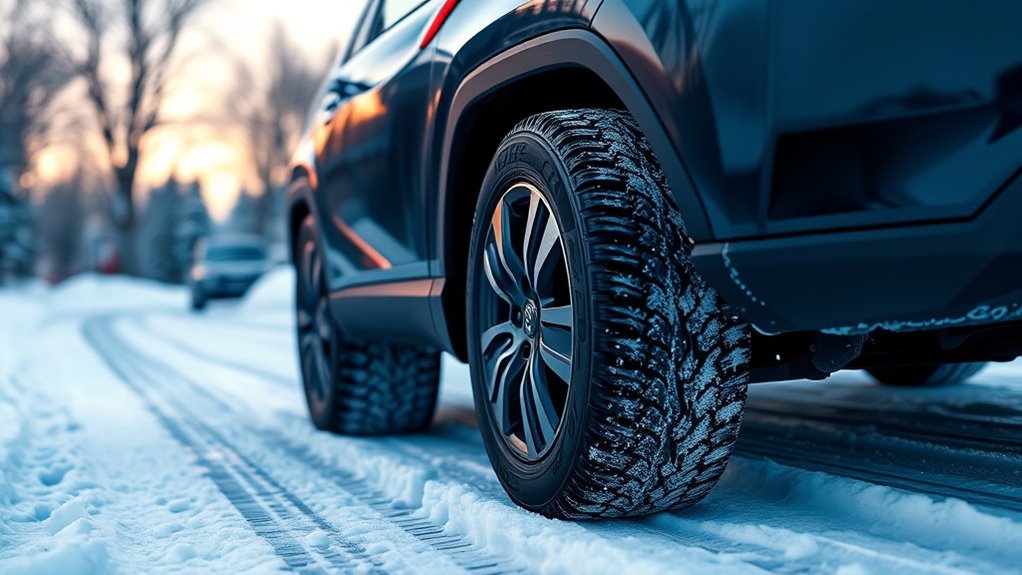
At a Glance
| Time Required | 10–20 minutes to choose the right type; longer if comparing brands and prices |
| Difficulty | Easy |
| Tools Needed | RAV4 owner’s manual, driver-door tire label, tire size, and local winter driving conditions |
| Cost | Varies by tire size, brand, wheel package, installation, and seasonal storage |
Use this simple decision process before buying winter or snow tires for your Toyota RAV4:
- Check your climate. If winter temperatures are often near or below freezing and roads get snow, ice, or slush, dedicated winter tires are the safest choice.
- Check your route. Hills, bridges, rural roads, shaded roads, and unplowed streets make winter tires more valuable.
- Look for 3PMSF. Choose tires with the three-peak mountain snowflake symbol for severe snow service.
- Match Toyota’s requirements. Toyota says snow tires should match the originally installed tires for size, construction, and load capacity.
- Install four tires. Use winter tires on all four wheels, even if your RAV4 has AWD.
- Plan seasonal swaps. Dedicated winter tires should come off when warm weather returns because they wear faster and handle less crisply in heat.
Warning: Do not install only two winter tires on a RAV4. Mixing winter tires with all-season tires can reduce stability because the front and rear axles will not have the same grip.
[Products Worth Considering]

Accurately measure tire tread depth with a calibrated gauge marked from 0 to 1 inch in 1/32 inch increments. The color-coded bar helps you quickly identify tread condition ranges, supporting safe driving for trucks, motorcycles, automobiles, and passenger vehicles.

Upgrade your Toyota’s wheels with durable aluminum alloy valve stem caps that help protect valve cores from corrosion and direct exposure to road grime, clay, water, and snow. Rubber rings improve sealing to help prevent air leakage and maintain stable tire pressure for safer driving. These caps are easy to install or remove without tools and add a unique, stylish look to your car.

Monitor tire tread wear with a smart, color-coded depth gauge that shows clear condition ranges at a glance. The bar is range marked for fast, easy readings, helping you maintain safer traction and performance. Each gauge is portable with a pocket clip, and the set includes 20 units for daily use and sharing.
RAV4-Specific Winter Tire Fitment Rules
The safest winter setup for a RAV4 is simple: four matching tires in the correct size, with the correct load rating, installed at the correct pressure. Toyota’s owner information says that if snow tires are needed, they should be the same size, construction, and load capacity as the original tires, and snow tires should be installed on all wheels.
For many late-model RAV4 trims, tire sizes may include 17-inch, 18-inch, or 19-inch fitments depending on trim and market. Do not guess based on another RAV4 online. The correct tire size is printed on the driver-side door-jamb tire label and in the owner’s manual for your exact model year and trim.
- FWD RAV4: Still benefits from four winter tires because braking and rear stability matter as much as drive traction.
- AWD RAV4: Four matching tires are especially important because mismatched rolling circumference can stress drivetrain components and confuse stability systems.
- RAV4 Hybrid and Prime: Use tires that meet the correct size and load requirements for the vehicle’s weight and trim.
- Chains and cables: Some RAV4 manuals restrict tire chains on specific tire sizes, including 235/55R19 on certain model years. If chains are required in your area, verify compatibility before buying winter tires or wheels.
Pro Tip: If you keep your RAV4 for several winters, buying a second set of wheels for winter tires can make seasonal swaps easier and may reduce mounting costs over time.
When All-Weather Tires Make More Sense
All-weather tires can be a smart choice if your RAV4 sees occasional snow but you do not want to store a second tire set. Many all-weather tires carry the 3PMSF symbol, so they are more winter-capable than standard all-season tires.
Choose all-weather tires if you mostly drive in:
- cities where roads are plowed quickly;
- areas with mixed rain, cold, and occasional snow;
- mild winter regions where deep snow is rare;
- places where you want one tire set year-round but still need better winter traction than a basic all-season tire.
Choose dedicated winter tires instead if you drive through heavy snow, packed snow, mountain passes, frequent ice, steep roads, or long rural commutes. All-weather tires are convenient, but they are still a compromise.
[Products Worth Considering]

These aluminum alloy tire valve stem caps with an O-ring seal help protect valve stems from corrosion while adding a clean, stylish look to your vehicle. The universal fit works across cars, trucks, motorcycles, bicycles, and more, making them an easy upgrade for everyday driving and off-road use. Installation is quick, and the included four-pack keeps all your tires dressed and protected.

Milton S-921 pencil tire pressure gauge helps you maintain optimal tire pressure for passenger cars with accurate readings in PSI and kPa. It features a built-in deflator valve for convenient pressure adjustments, plus a single chuck head and nylon indicator bar for easy use on the go. Built from durable plated brass and designed for reliable performance, it’s a practical road trip and cold-weather maintenance tool.

Keep your tires properly inflated with this analog VONDIOR tire pressure gauge, designed for fast, easy readings without batteries. The swiveling, two-axis hose and large glow dial help you measure at any tire angle with instant visibility. Built with a protective rubber shield, it supports durable, low-maintenance use for cars and trucks.
How Regional Weather Affects RAV4 Tire Choice
Your best tire choice depends more on your roads than on the RAV4 itself. A RAV4 in Minnesota, Colorado, Vermont, or rural Iowa may need a different setup than a RAV4 in coastal Oregon or North Carolina.
| Driving Environment | Best Tire Choice | Why |
|---|---|---|
| Heavy snow and long winters | Dedicated winter tires | Best grip in snow, slush, and cold temperatures |
| Mountain roads and steep hills | Dedicated winter tires, possibly studded where legal | More control during braking and downhill turns |
| Mild winters with occasional snow | All-weather tires | Better winter traction than all-season tires without seasonal swaps |
| Mostly dry, warm winters | All-season tires | Adequate when snow and ice are rare |
| Frequent black ice | Premium winter tires or legal studded tires | Ice traction is the hardest condition for any tire |
Winter Tire Maintenance for a RAV4
Buying the right tire is only half the job. Winter tires need regular checks to keep your RAV4 predictable in bad weather.
- Check pressure monthly. Tire pressure drops as outside temperature falls. NHTSA recommends using the vehicle manufacturer’s pressure, not the maximum pressure printed on the tire sidewall.
- Check pressure cold. A cold tire means the vehicle has not been driven for at least three hours.
- Watch tread depth. Legal minimum tread may be 2/32 inch, but winter traction drops much earlier. Toyota notes reduced snow tire effectiveness below about 0.16 inch, which is roughly 4/32 inch.
- Rotate regularly. Follow your maintenance schedule so all four tires wear evenly.
- Store them correctly. Keep off-season tires clean, dry, cool, and away from direct sunlight and ozone sources.
- Remove them in warm weather. Winter tires are not designed for hot pavement and can wear faster outside their intended season.
Frequently Asked Questions
Can you put snow tires on a RAV4?
Yes. Toyota recommends snow tires for snow-covered or icy roads. Choose tires that match the original size, construction, and load capacity, and install them on all four wheels. For the best winter traction, choose tires with the 3PMSF severe snow symbol.
Are winter tires and snow tires the same?
In most modern tire shopping, yes. “Snow tire” is commonly used to mean a dedicated winter tire. The term “winter tire” is more accurate because these tires are designed for cold pavement, snow, slush, and ice, not just deep snow.
What is the 3% tire rule?
The 3% tire rule is a common fitment guideline that says replacement tire diameter or circumference should stay close to the original size, often within about 3%. For a RAV4, the safer rule is simpler: use Toyota’s specified tire size and keep all four tires matched, especially on AWD models.
Does a Toyota RAV4 with AWD still need winter tires?
Yes, if you drive in real winter conditions. AWD helps the RAV4 accelerate, but it does not create extra grip for braking or steering on ice. Winter tires improve the grip available at all four corners of the vehicle.
What is the weakness of the Toyota RAV4 in winter?
The RAV4’s main winter limitation is the same as any SUV: traction depends on the tires. AWD can make the vehicle feel confident when pulling away, but braking and turning on ice still require proper tires, correct pressure, safe speed, and extra following distance.
Are studded tires worth it for a RAV4?
Studded tires can help on frequent ice, but they are noisy, can reduce comfort on dry roads, and are restricted or banned in many places. For most RAV4 drivers, a high-quality studless winter tire is the better everyday winter choice.
When should you switch back from winter tires?
Switch back when winter weather is over and temperatures are consistently warm. Dedicated winter tires wear faster on warm pavement and usually feel less sharp than all-season, all-weather, or summer tires in warm conditions.
Conclusion
For most Toyota RAV4 owners, “winter tires vs. snow tires” comes down to terminology. A modern snow tire is usually a dedicated winter tire, and the best one to buy is a properly sized, 3PMSF-rated tire installed on all four wheels. If you regularly face snow, ice, slush, steep roads, or long cold-weather commutes, dedicated winter tires are the safest pick. If your winters are milder, all-weather tires can be a practical middle ground. Either way, match Toyota’s tire requirements, keep pressures correct, and remember that AWD helps you move, but tires help you stop.
Sources
- Toyota Owners Manual: RAV4 Tire Information — Toyota guidance on snow tire size, construction, load capacity, radial construction, and installing snow tires on all wheels.
- Toyota Owners Manual: RAV4 Winter Driving Tips — Toyota winter driving precautions, tire pressure reminders, snow tire use, and chain restrictions for certain tire sizes.
- NHTSA Winter Weather Driving Tips — tire pressure, cold tire checks, tread inspection, and winter driving safety guidance.
- NHTSA Tire Safety Ratings and Awareness — tire type comparisons and NHTSA statement that winter tires are more effective than all-season tires in deep snow.
- U.S. Tire Manufacturers Association TISB 37 — severe snow service tire definition and three-peak mountain snowflake reference.