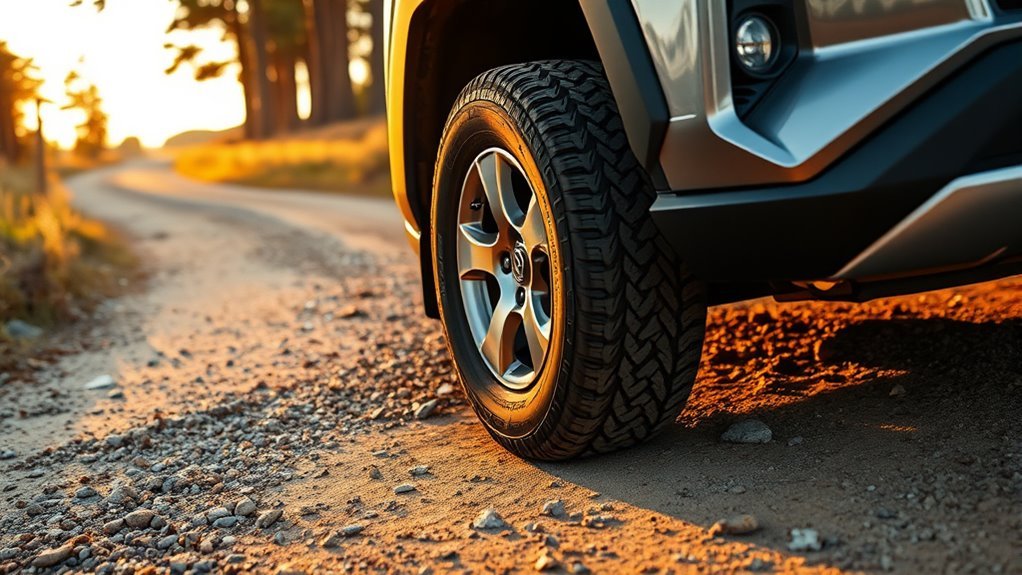
All-terrain tires can make your Toyota RAV4 feel more confident on gravel roads, muddy trailheads, campsite access roads, light snow, and broken pavement. The key is choosing a tire built for a crossover SUV, not an overly heavy truck tire that hurts ride comfort, fuel economy, or handling. Use this guide to understand the real benefits, trade-offs, fitment checks, and maintenance steps before you upgrade.
Quick Answer
All-terrain tires are worth considering for a Toyota RAV4 if you regularly drive on gravel, dirt, wet roads, snow, or light trails. Choose a crossover-focused all-terrain tire in the correct factory size, load rating, and speed rating. Expect better traction and durability, with possible trade-offs in road noise, ride firmness, and fuel economy.
Key Takeaways
- For most RAV4 owners, a CUV/SUV all-terrain tire is a better match than a heavy light-truck all-terrain tire.
- Check the driver-side door placard and Toyota owner’s manual before changing tire size, load rating, or wheel size.
- Look for the Three-Peak Mountain Snowflake symbol if you need better packed-snow traction, but use dedicated winter tires for severe ice and deep-winter conditions.
- All-terrain tires can improve grip and puncture resistance, but they may add road noise and slightly reduce fuel efficiency.
- Proper pressure, rotation, alignment, and tread inspections matter more with aggressive tread patterns.
At a Glance
| Best For | Daily driving with gravel, dirt roads, trailheads, rain, and light snow |
| Difficulty | Easy if you stay with factory size; moderate if changing wheel or tire size |
| Tools Needed | Tire pressure gauge, tread depth gauge, torque wrench if rotating at home |
| Cost | Commonly several hundred to over $1,000 for a set of four, depending on size, model, installation, and local pricing |
Understanding All-Terrain Tires
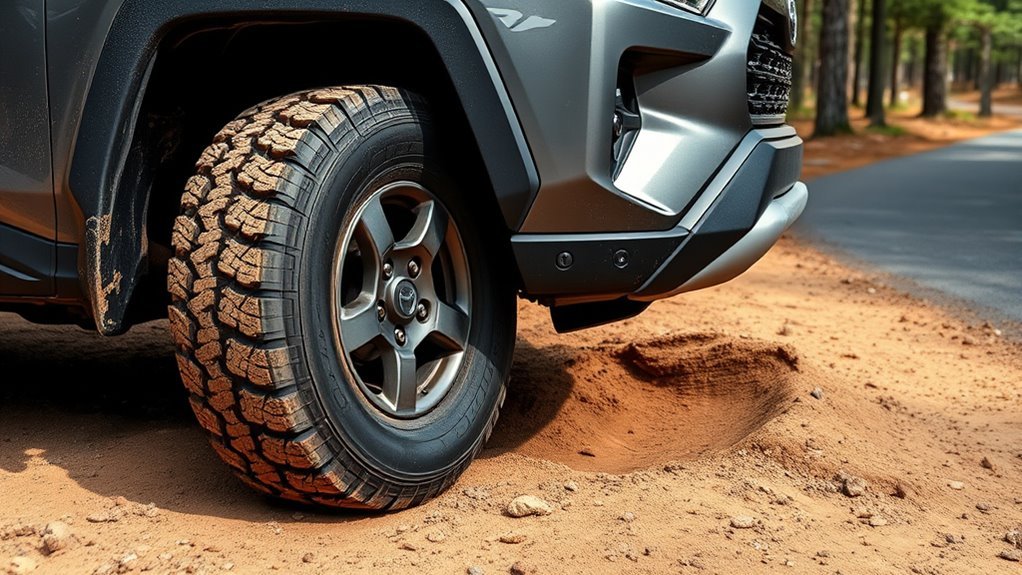
All-terrain tires sit between regular highway/all-season tires and aggressive mud-terrain tires. They use deeper tread blocks, more open grooves, tougher shoulders, and extra biting edges to improve grip on loose or uneven surfaces. On a Toyota RAV4, the best match is usually a passenger, SUV, or crossover-focused all-terrain tire because the RAV4 is a unibody crossover, not a body-on-frame truck.
That distinction matters. A tire designed for pickups may be too heavy, stiff, noisy, or inefficient for a RAV4. Crossover-focused options, such as the Falken Wildpeak A/T Trail or BFGoodrich Trail-Terrain T/A, are built to blend light off-road traction with everyday road manners.
Many all-terrain tires also carry the Three-Peak Mountain Snowflake, or 3PMSF, symbol. According to Tire Rack’s explanation of the 3PMSF rating, that symbol identifies tires that meet a snow-traction performance requirement. It is helpful for packed snow, but it does not make an all-terrain tire equal to a dedicated winter tire on ice or in severe winter weather.
Note: Always check the tire size, load index, speed rating, and inflation pressure listed on your RAV4’s driver-side door placard before buying replacement tires. The sidewall’s maximum pressure is not the recommended daily driving pressure.
Key Benefits of All-Terrain Tires for Your RAV4
All-terrain tires are not just about looks. When chosen correctly, they can make your RAV4 more useful in real-world driving conditions without turning it into a harsh-riding trail-only vehicle.
Enhanced Light Off-Road Capability
Upgrading to all-terrain tires can improve your RAV4’s grip on gravel roads, dirt tracks, campsite entrances, forest roads, wet grass, and rutted parking areas. The deeper tread pattern helps the tire bite into loose surfaces, while reinforced shoulders can better resist damage from small rocks and debris.
| Feature | Why It Helps Your RAV4 |
|---|---|
| Open tread blocks | Help find grip on gravel, dirt, and light mud |
| Extra siping | Adds biting edges for rain and light snow traction |
| Stronger shoulder design | Improves durability on rough roads and trail debris |
| CUV/SUV casing options | Keeps ride quality more comfortable than many heavy truck tires |
Improved Year-Round Confidence
A good all-terrain tire can give you better traction in mixed weather than a basic touring tire, especially on wet gravel, slush, and packed snow. If winter grip is part of your reason for upgrading, choose a tire with the 3PMSF symbol and compare it against all-weather or winter tire options.
For example, the Yokohama Geolandar A/T G015 is marketed as an all-terrain tire with a severe snow service rating, while many other crossover all-terrain models also focus on wet and light-snow performance. Still, drivers in areas with frequent ice, steep snowy roads, or long winters should consider dedicated winter tires.
Better Durability for Rough Roads
All-terrain tires are usually built with tougher tread compounds and stronger shoulder areas than standard touring tires. That can be useful if your RAV4 often sees potholes, construction roads, gravel driveways, sharp stones, or trailhead parking lots.
Pro Tip: If your driving is 90% highway and 10% occasional gravel, choose a mild all-terrain or all-weather tire. If you regularly drive rocky trails, prioritize sidewall protection and tread durability, but confirm the tire is still appropriate for a RAV4.
All-Terrain vs. Standard Tires: Key Differences
The biggest difference between all-terrain tires and standard tires is the balance between comfort, efficiency, and rough-surface grip. Standard all-season tires are usually quieter and more efficient on pavement. All-terrain tires give up some of that refinement for better traction and durability on mixed surfaces.
| Category | All-Terrain Tires | Standard All-Season Tires |
|---|---|---|
| Best use | Mixed pavement, gravel, dirt, light trails, rough roads | Mostly pavement, commuting, highway driving |
| Tread design | Larger tread blocks, deeper grooves, stronger shoulders | Smaller blocks and ribs designed for smooth road contact |
| Noise | Can be slightly louder, depending on tread pattern | Usually quieter on highways |
| Fuel economy | May reduce MPG due to weight and rolling resistance | Usually more efficient |
| Snow traction | Better if 3PMSF-rated, but not always equal to winter tires | Varies widely; many are limited in snow and ice |
| Ride feel | Can feel firmer, especially in heavy-duty designs | Usually smoother and lighter |
The best all-terrain tire for a RAV4 is not the most aggressive tire you can fit. It is the one that gives you the traction you need without hurting daily comfort, safety, or efficiency more than necessary.
[Products Worth Considering]

Accurately measure tire tread depth with a calibrated gauge marked from 0 to 1 inch in 1/32 inch increments. The color-coded bar helps you quickly identify tread condition ranges, supporting safe driving for trucks, motorcycles, automobiles, and passenger vehicles.

Monitor tire tread wear with a smart, color-coded depth gauge that shows clear condition ranges at a glance. The bar is range marked for fast, easy readings, helping you maintain safer traction and performance. Each gauge is portable with a pocket clip, and the set includes 20 units for daily use and sharing.

Keep your tires properly inflated with this analog VONDIOR tire pressure gauge, designed for fast, easy readings without batteries. The swiveling, two-axis hose and large glow dial help you measure at any tire angle with instant visibility. Built with a protective rubber shield, it supports durable, low-maintenance use for cars and trucks.
Choosing the Best All-Terrain Tires for You
Start with fitment, then think about terrain. Your RAV4’s correct tire size depends on model year, trim, wheel size, and package. Common RAV4 sizes across recent years include 225/65R17, 225/60R18, and 235/55R19, but you should always verify your exact vehicle’s door placard and owner’s manual before ordering.
[Products Worth Considering]

Measure tire tread depth quickly and accurately with this LUMITECO dial gauge that reads in 1/32" increments up to 14/32". The color-coded green/yellow/red zones make it easy to judge tire wear and know when replacement is needed. A rugged, compact design with a protective pouch helps keep the gauge ready for use on cars, trucks, motorcycles, and more.

The SAFELIFE dial tire tread depth gauge measures tread depth in 1/32 inch increments with clear, easy-to-read 2-inch dial face. Color zones using a traffic light system help you quickly judge whether tread is low, marginal, or ample for safer driving. Built with a durable zinc cast body and a metal detect probe for precise, comfortable use across cars, motorcycles, trucks, and buses.

Measure tyre tread depth precisely with a digital gauge that reads in both MM and inches, helping you monitor safe driving conditions. The large LCD screen is easy to operate, and the compact tool fits for cars, trucks, and motorcycles. It provides high accuracy with a 0-25.4mm range and includes a 1-year warranty for added peace of mind.
Check Size, Load Rating, and Speed Rating
Your replacement tires should match the original size, load index, and speed rating unless a qualified tire professional confirms the alternative is safe. Toyota’s owner information warns against using wheel sizes that are not recommended for the vehicle because improper fitment can affect handling control. Review the relevant Toyota owner’s manual and tire placard before changing sizes.
Warning: Do not buy oversized all-terrain tires just because they look rugged. Too much diameter or width can cause rubbing, speedometer error, reduced clearance, worse braking, and possible AWD or stability-control issues.
Choose the Right Tire Type for Your Driving
- Mostly commuting with occasional gravel: Choose a mild crossover all-terrain or all-weather tire for better comfort and lower noise.
- Frequent dirt roads and trailheads: Look for stronger shoulders, good wet traction, and a 3PMSF rating if you see snow.
- Snowy winters: Choose 3PMSF-rated tires at minimum, but use dedicated winter tires if you deal with ice, deep snow, or mountain passes.
- Rocky trails or deep mud: Be realistic. Tires help, but the RAV4 still has crossover ground clearance, suspension travel, and drivetrain limits.
Consider Crossover-Focused All-Terrain Models
Popular RAV4-friendly all-terrain choices often include the Falken Wildpeak A/T Trail, BFGoodrich Trail-Terrain T/A, Yokohama Geolandar A/T G015, and Nitto Nomad Grappler. Availability depends on your wheel size, load rating, and local market, so compare current specs before buying.
When comparing tires, look beyond the tread pattern. Check the tire’s weight, treadwear warranty, wet braking reputation, snow rating, road-noise reviews, and whether it is available in your exact factory size.
Safety and Fitment Checks Before You Buy
Before you commit to all-terrain tires for your RAV4, run through these fitment and safety checks:
- Confirm the tire size on the door placard. This is the safest starting point for replacement tires.
- Match or exceed the required load index. A tire that cannot carry the required load is not safe.
- Use an appropriate speed rating. Do not downgrade without professional guidance.
- Check wheel clearance. Wider or taller tires can rub at full steering lock or when the suspension compresses.
- Protect TPMS function. Tire pressure monitoring sensors should remain working after installation.
- Keep all four tires matched on AWD models. Different tire sizes or uneven tread depths can stress the AWD system.
- Ask about alignment. New tires can wear quickly if the alignment is off.
- Check snow chain rules. Some RAV4 wheel/tire combinations have limited chain clearance.
The National Highway Traffic Safety Administration recommends checking tire pressure, inspecting tread, respecting load limits, and rotating tires as part of safe tire care. Those basics matter even more when using aggressive tread designs.
[Products Worth Considering]

ETENWOLF’s tire pressure gauge helps you quickly and accurately check tire PSI across cars, trucks, motorcycles, bikes, and more. It’s manually calibrated to ANSI B40.1 Grade A for reliable readings, includes a large glow dial for easy nighttime viewing, and features a 360-degree swivel chuck for use at any valve angle. The gauge also works consistently in extreme hot or cold weather.

This tire inflator with pressure gauge delivers long-lasting performance with a durable rubber-protected gauge and sturdy build. The longer hose and 360 swivel air chuck help you seal the valve securely and keep your hands free while measuring, inflating, or deflating. It’s battery-free for reliable use and provides ±2 PSI accuracy in the mid-range for most typical tires, with universal compatibility for 1/4 NPT compressor outputs.

These universal tire valve stem caps help protect valve cores from dust, debris, and moisture while helping maintain stable tire pressure. The corrosion-resistant metal construction and sealed design provide reliable protection in road grime, mud, and winter conditions. Twist-on installation makes them quick to fit on cars, SUVs, trucks, and motorcycles.
Debunking Common Myths About All-Terrain Tires
Myth: All-Terrain Tires Ruin On-Road Comfort
That depends on the tire. Old-school truck all-terrain tires can feel loud and stiff on a crossover, but many modern CUV/SUV all-terrain tires are designed for daily pavement use. Choose a mild tread pattern if comfort matters more than maximum trail grip.
Myth: All-Terrain Tires Are Always Good in Snow
Not all all-terrain tires are equal in winter. If snow traction matters, look for the 3PMSF symbol. Even then, remember that dedicated winter tires usually perform better on ice and in severe cold.
Myth: Bigger Tires Are Always Better
Bigger tires can add ground clearance and style, but they can also create rubbing, reduce acceleration, change speedometer accuracy, add unsprung weight, and hurt fuel economy. For most RAV4 owners, staying close to the factory tire diameter is the safer choice.
Myth: All-Terrain Tires Last Forever
All-terrain tires can be durable, but tread life depends on tire model, alignment, inflation, rotation habits, vehicle load, road surface, and driving style. Aggressive driving and under-inflation can wear them out quickly.
Tips for Maintaining All-Terrain Tires on Your RAV4
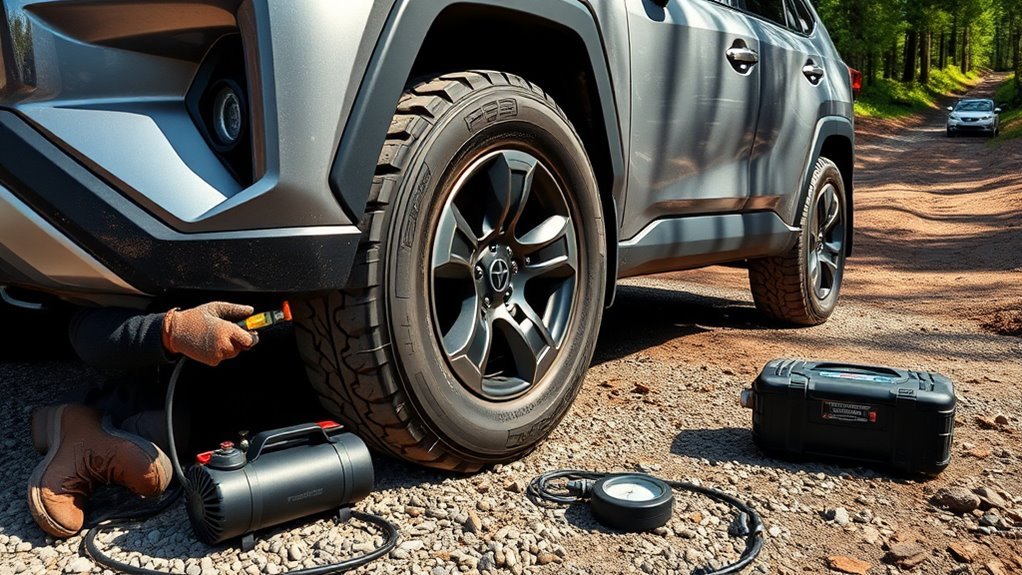
Maintaining your all-terrain tires is essential for performance, safety, and tread life. Aggressive tread patterns can hide uneven wear at first, so make inspections part of your normal routine.
- Check pressure when tires are cold. Use the pressure listed on your RAV4’s door placard, not the maximum pressure stamped on the tire sidewall.
- Rotate on schedule. Follow Toyota’s maintenance schedule and the tire maker’s warranty requirements. Many owners rotate every 5,000 to 7,500 miles, but your manual and tire warranty should guide the interval.
- Inspect tread depth. Use a tread depth gauge and replace tires when treadwear indicators show or when traction is no longer safe for your driving conditions.
- Watch for uneven wear. Cupping, feathering, or one-sided wear can point to alignment, balancing, or suspension issues.
- Rebalance if vibration appears. Heavier tread blocks can make imbalance more noticeable at highway speeds.
- Clean out packed stones. Small rocks stuck in grooves can create noise and may contribute to tread damage over time.
- Check the spare. Toyota owner information recommends checking spare tire condition and pressure if your vehicle has one.
Note: If you change tire size, ask the installer to confirm clearance, load rating, speed rating, TPMS compatibility, and whether the new rolling diameter may affect speedometer accuracy.
Frequently Asked Questions
How do all-terrain tires affect fuel efficiency?
All-terrain tires can reduce fuel efficiency because they may be heavier and have more rolling resistance than standard touring tires. The exact MPG change depends on tire weight, tread design, tire pressure, driving speed, and road conditions.
Can all-terrain tires be used year-round?
Yes, many all-terrain tires can be used year-round, especially in mild climates. For snowy areas, choose a 3PMSF-rated model. For frequent ice, deep snow, or extreme winter driving, dedicated winter tires remain the better choice.
What is the expected lifespan of all-terrain tires?
Many crossover all-terrain tires are sold with treadwear warranties in the 50,000- to 65,000-mile range, but real-world life varies. Proper inflation, rotation, alignment, load management, and driving style have a major effect on tread life.
Are all-terrain tires noisy on highways?
Some are, but not all. Mild crossover all-terrain tires are usually quieter than aggressive truck all-terrain or mud-terrain tires. If highway comfort matters, compare noise reviews and choose a tire designed for on-road manners.
Do all-terrain tires require special maintenance?
They do not need exotic maintenance, but they do need consistent care. Check pressure, rotate regularly, inspect tread depth, remove stuck stones, and correct alignment issues quickly to prevent uneven wear.
What size all-terrain tires should I put on a Toyota RAV4?
Use the factory size listed on your driver-side door placard unless a qualified tire professional confirms an alternative fitment. Staying with factory size helps protect clearance, speedometer accuracy, handling, TPMS function, and AWD compatibility.
Will all-terrain tires void my RAV4 warranty?
Simply installing replacement tires normally does not void the entire vehicle warranty. However, incorrect size, load rating, speed rating, or modifications that cause damage may affect coverage for related components. Keep documentation and follow Toyota’s fitment guidance.
Are all-terrain tires good for deep mud?
Mild all-terrain tires can handle light mud better than standard tires, but they are not the same as mud-terrain tires. Deep mud also depends on ground clearance, AWD traction control, momentum, and driver skill, so avoid pushing a RAV4 beyond its limits.
Conclusion
All-terrain tires can be a smart upgrade for your Toyota RAV4 if your driving includes gravel roads, bad weather, trailheads, campsites, or rough pavement. The best choice is usually a crossover-friendly all-terrain tire in the correct factory size and rating, not the most aggressive tire on the shelf. Match the tire to your real driving conditions, confirm fitment before buying, and keep up with pressure checks, rotations, and tread inspections. With the right setup, your RAV4 can feel more capable without giving up the daily comfort that makes it useful in the first place.
Sources
- Toyota Owners Manuals and Warranties — factory guidance for tire size, tire care, wheel fitment, and maintenance information
- NHTSA TireWise — tire pressure, tread, load limit, rotation, and tire safety guidance
- Tire Rack: Three-Peak Mountain Snowflake Symbol — explanation of the 3PMSF snow traction rating
- Falken Wildpeak A/T Trail — crossover-focused all-terrain tire design and RAV4-oriented fitment context
- BFGoodrich Trail-Terrain T/A — crossover/SUV all-terrain tire features and treadwear warranty information
- Yokohama Geolandar A/T G015 — all-terrain tire features, 3PMSF rating, and on/off-road performance claims