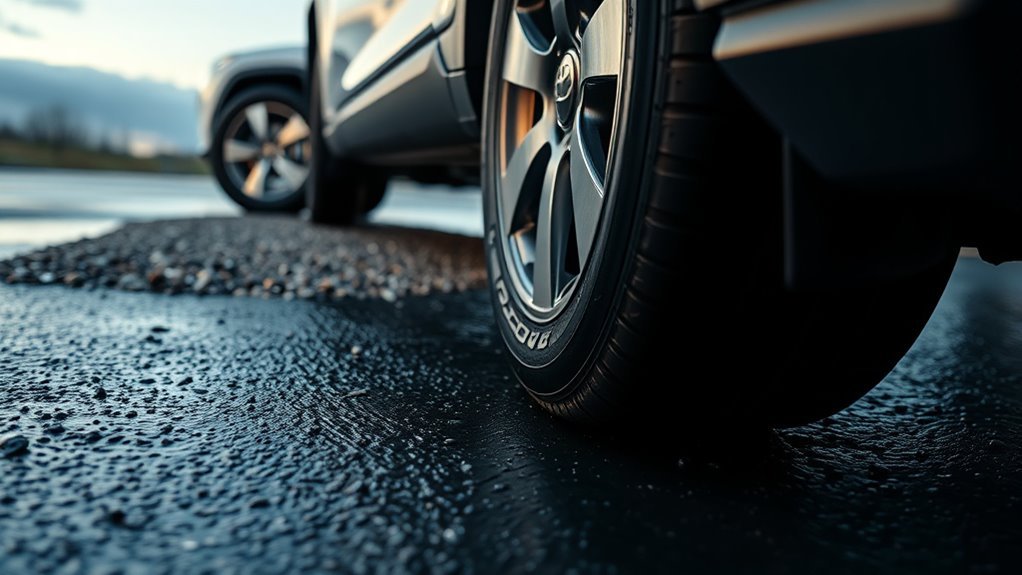
Tire traction ratings help you compare how well tires stop on wet pavement, but they are only one part of choosing safe tires for your Toyota RAV4. A higher UTQG traction grade, such as AA or A, can give you a stronger wet-braking safety margin, while the right tire size, load rating, speed rating, tread depth, pressure, and tire type all matter just as much in real driving.
Quick Answer
For most Toyota RAV4 drivers, choose tires with a UTQG traction rating of A or AA. AA is the highest wet-braking grade, but A-rated tires are also strong for everyday driving. Always match your RAV4’s correct tire size, load index, speed rating, and cold tire pressure from the driver-side door placard.
Key Takeaways
- AA is the highest UTQG traction grade, followed by A, B, and C.
- The grade measures straight-line wet braking on controlled asphalt and concrete test surfaces, not snow grip, cornering, hydroplaning resistance, or off-road traction.
- For a RAV4, tire choice should also include the correct size, load index, speed rating, season type, and tread depth.
- Check tire pressure when tires are cold, rotate on schedule, and replace tires when treadwear indicators show or tread depth is too low.
At a Glance
| Time Required | 5–10 minutes to check a tire sidewall or tire listing |
| Difficulty | Easy |
| Tools Needed | Tire pressure gauge, tread depth gauge or penny, and your RAV4 door placard |
| Cost | Free to inspect; replacement cost depends on tire size, brand, and tire type |
Understanding Tire Traction Ratings: Essential for Safe Driving in Your RAV4
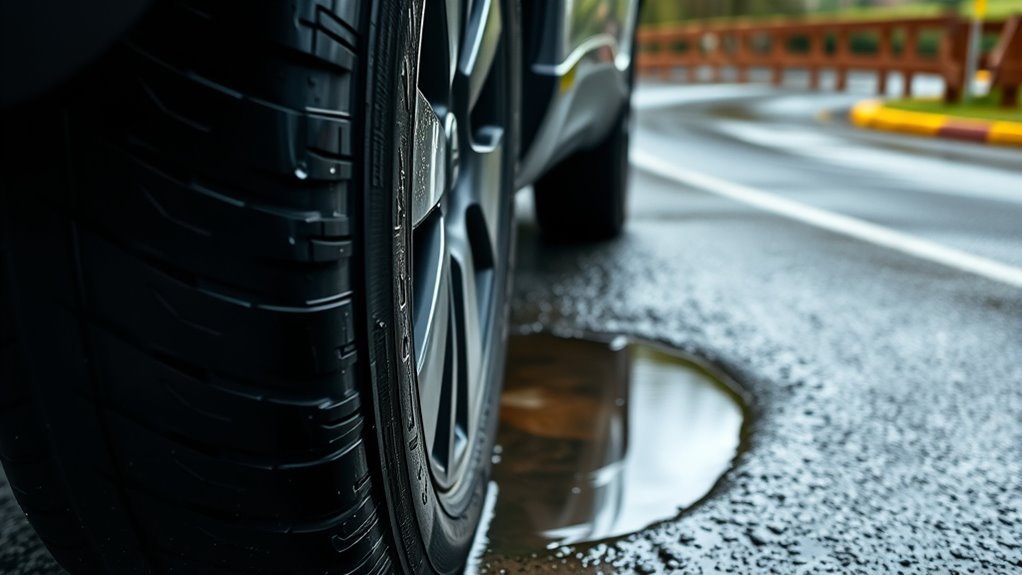
Tire traction ratings are part of the Uniform Tire Quality Grading system, often shortened to UTQG. You may see it printed on a tire sidewall or listed online in a format like Treadwear 600 Traction A Temperature A.
The traction part uses four grades: AA, A, B, and C. According to the federal UTQG standard, those grades represent a tire’s ability to stop on wet pavement under controlled straight-ahead braking tests on government-specified asphalt and concrete surfaces.
A tire’s UTQG traction grade is useful for comparing wet braking, but it does not measure acceleration, cornering, hydroplaning resistance, snow traction, ice traction, or off-road grip.
For your Toyota RAV4, this matters because wet braking is one of the most common safety concerns in daily driving. A higher traction grade can help when you need to slow down on rain-soaked roads, but it should not be treated as the only number that matters. A worn AA-rated tire can perform worse than a fresh A-rated tire, and the wrong tire size or load rating can create safety problems even if the traction grade looks good.
Understanding the Impact of Traction Ratings on Wet Weather Driving
When roads are wet, your RAV4’s tires need to push water away and keep enough rubber in contact with the pavement. The UTQG traction rating helps compare one part of that performance: straight-line wet stopping ability.
| Traction Rating | What It Means | Best Use Case |
|---|---|---|
| AA | Highest wet-braking grade in UTQG testing | Drivers who want the strongest wet-road safety margin |
| A | Strong wet-braking performance | A solid choice for most RAV4 daily driving |
| B | Lower wet-braking performance than A or AA | Mostly dry, mild driving conditions |
| C | Lowest UTQG wet-traction grade | Not ideal if you often drive in rain |
For a Toyota RAV4 used as a family vehicle, commuter SUV, or road-trip vehicle, A-rated tires should usually be your minimum target. Choose AA-rated tires if you often drive in heavy rain, on high-speed highways, through hilly areas, or anywhere sudden stops are more likely.
Warning: Do not assume a high traction rating makes a tire safe in every condition. UTQG traction does not rate snow, ice, cornering, hydroplaning, off-road grip, or braking with badly worn tread.
How Are Tire Traction Ratings Tested?
UTQG traction testing uses a controlled wet-traction procedure. The test focuses on how a tire performs in a locked-wheel, straight-ahead braking test on wet asphalt and wet concrete. The result is not a real-world stopping-distance promise for your RAV4, but it does give shoppers a standardized way to compare passenger tires.
| Traction Rating | Wet Asphalt Test Threshold | Wet Concrete Test Threshold | Performance Level |
|---|---|---|---|
| AA | More than 0.54 | More than 0.38 | Highest |
| A | More than 0.47 | More than 0.35 | High |
| B | More than 0.38 | More than 0.26 | Moderate |
| C | 0.38 or less | 0.26 or less | Lowest |
These numbers are adjusted traction coefficients from the federal standard. In plain English, a higher grade means the tire achieved stronger wet-braking friction in the test. Still, real roads add variables the lab cannot fully match, including road texture, water depth, tire wear, vehicle load, temperature, driver reaction time, and the condition of your brakes and suspension.
Selecting the Best Traction Rating for Your Conditions
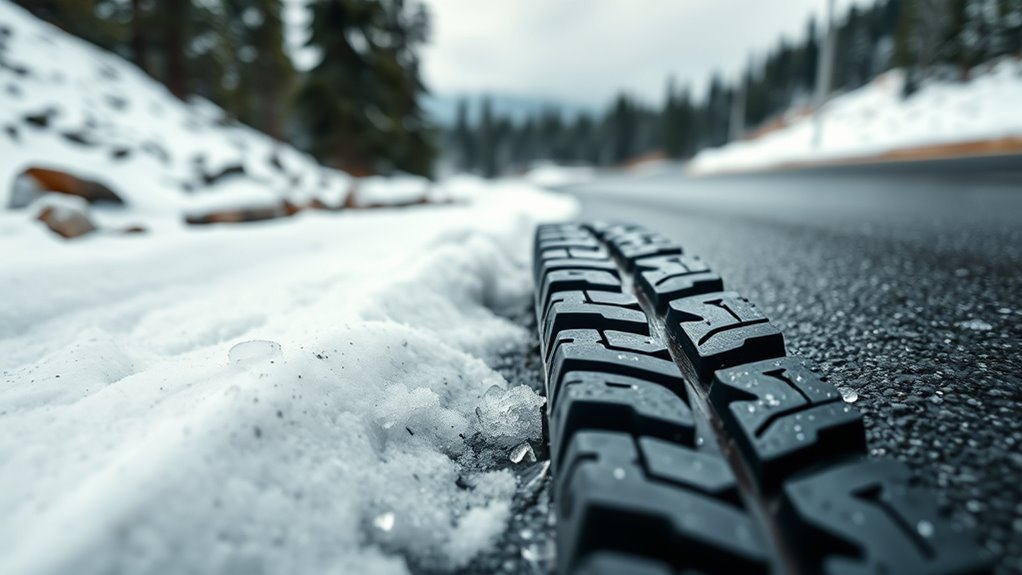
Choosing the right tire for your Toyota RAV4 starts with the traction grade, but it should not end there. Use this checklist before buying:
- Start with the correct tire size: Match the size listed on your current tire and your driver-side door placard. RAV4 tire sizes vary by model year and trim.
- Check the load index: The tire must be rated to carry the weight required for your RAV4. Do not choose a lower load index than Toyota specifies.
- Check the speed rating: A higher speed rating is not automatically “better” for every driver, but the replacement tire should meet or exceed the original equipment requirement unless a tire professional confirms otherwise.
- Choose A or AA traction for wet roads: A is a good minimum for everyday use. AA is the best UTQG wet-traction grade.
- Match the tire type to your climate: All-season tires work for many drivers. If you see real winter conditions, consider winter tires or all-weather tires with the right severe-snow rating instead of relying only on UTQG traction.
- Compare tread pattern and reviews: UTQG traction does not tell the whole story for hydroplaning, ride comfort, noise, tread life, or winter grip.
Note: Some specialty tires, including winter-type snow tires and certain deep-tread tires, may not use the same UTQG grading format. If you drive in snow or ice, look beyond the UTQG traction letter.
[Products Worth Considering]

The SAFELIFE dial tire tread depth gauge measures tread depth in 1/32 inch increments with clear, easy-to-read 2-inch dial face. Color zones using a traffic light system help you quickly judge whether tread is low, marginal, or ample for safer driving. Built with a durable zinc cast body and a metal detect probe for precise, comfortable use across cars, motorcycles, trucks, and buses.

Measure tire tread depth quickly and accurately with this LUMITECO dial gauge that reads in 1/32" increments up to 14/32". The color-coded green/yellow/red zones make it easy to judge tire wear and know when replacement is needed. A rugged, compact design with a protective pouch helps keep the gauge ready for use on cars, trucks, motorcycles, and more.

Monitor tire tread wear with a smart, color-coded depth gauge that shows clear condition ranges at a glance. The bar is range marked for fast, easy readings, helping you maintain safer traction and performance. Each gauge is portable with a pocket clip, and the set includes 20 units for daily use and sharing.
A Simple RAV4 Tire Buying Checklist
Before you order tires for your RAV4, confirm each item below. This helps you avoid choosing a tire based only on one attractive rating.
- Size: Match the tire size for your exact year, trim, and wheel package.
- Load index: Choose a tire that meets or exceeds the original load rating.
- Speed rating: Choose a tire that meets your vehicle’s requirement and your driving needs.
- Traction rating: Aim for A or AA for wet-road confidence.
- Temperature rating: Prefer A when available, especially for highway driving and hot climates.
- Treadwear rating: Use it as a comparison tool within the same brand or tire category, not as a guaranteed mileage number.
- Tire category: Touring, highway all-season, performance all-season, all-weather, winter, or all-terrain tires all behave differently.
- Warranty and road-hazard coverage: Helpful, but never more important than correct fitment and safety ratings.
Pro Tip: If two tires fit your RAV4 and cost about the same, choose the one with the stronger wet-traction grade, better wet-braking test results from reputable tire tests, and a tread pattern suited to your climate.
[Products Worth Considering]

Keep your tires properly inflated with this analog VONDIOR tire pressure gauge, designed for fast, easy readings without batteries. The swiveling, two-axis hose and large glow dial help you measure at any tire angle with instant visibility. Built with a protective rubber shield, it supports durable, low-maintenance use for cars and trucks.

Measure tyre tread depth precisely with a digital gauge that reads in both MM and inches, helping you monitor safe driving conditions. The large LCD screen is easy to operate, and the compact tool fits for cars, trucks, and motorcycles. It provides high accuracy with a 0-25.4mm range and includes a 1-year warranty for added peace of mind.

Accurately measure tire tread depth with a calibrated gauge marked from 0 to 1 inch in 1/32 inch increments. The color-coded bar helps you quickly identify tread condition ranges, supporting safe driving for trucks, motorcycles, automobiles, and passenger vehicles.
Tips for Maintaining Tire Traction and Performance on Your RAV4
Even the best tire traction rating will not help much if your tires are underinflated, worn out, mismatched, or overdue for rotation. The NHTSA TireWise guidance recommends checking tire pressure when tires are cold and using the vehicle manufacturer’s recommended cold inflation pressure from the tire information placard or certification label.
[Products Worth Considering]

This tire inflator with pressure gauge delivers long-lasting performance with a durable rubber-protected gauge and sturdy build. The longer hose and 360 swivel air chuck help you seal the valve securely and keep your hands free while measuring, inflating, or deflating. It’s battery-free for reliable use and provides ±2 PSI accuracy in the mid-range for most typical tires, with universal compatibility for 1/4 NPT compressor outputs.

Steelman white tire marking crayons provide high-contrast, semi-permanent marks for repairing and inspecting tires and equipment. They write on wet or dry, smooth or coarse surfaces including rubber, metal, glass, and wood, making them ideal for puncture location and damage outlining. The lead- and zinc-free crayons resist weather and fading yet wipe away when you no longer need the marks.

Milton S-921 pencil tire pressure gauge helps you maintain optimal tire pressure for passenger cars with accurate readings in PSI and kPa. It features a built-in deflator valve for convenient pressure adjustments, plus a single chuck head and nylon indicator bar for easy use on the go. Built from durable plated brass and designed for reliable performance, it’s a practical road trip and cold-weather maintenance tool.
1. Check Tire Pressure When the Tires Are Cold
Use the pressure listed on your RAV4’s driver-side door placard, not the maximum pressure printed on the tire sidewall. Toyota’s owner guidance also notes that the tire pressure warning system does not replace routine tire inflation checks.
For the most accurate reading, check pressure after the vehicle has been parked for at least three hours or before you have driven more than about one mile. Underinflation can increase heat, wear the edges of the tread, reduce fuel economy, and weaken handling. Overinflation can make the center of the tread wear faster and reduce ride comfort.
2. Rotate Tires on Schedule
Rotation helps even out front and rear tread wear. Toyota recommends replacing or rotating tires in accordance with the maintenance schedule and treadwear condition, so check the maintenance guide for your exact RAV4 model year. Many RAV4 service schedules include tire rotation around regular 5,000-mile service visits, but your exact interval should come from your owner’s manual or Toyota maintenance guide.
3. Watch Tread Depth and Treadwear Indicators
Wet traction drops as tread wears down because shallow grooves cannot move water as effectively. Toyota’s tire guidance says to replace tires if the treadwear indicators are showing. These indicators are small raised bars inside the tread grooves, and their location is usually marked on the sidewall with “TWI” or a small triangle symbol.
A tire that has reached 2/32 inch of tread depth is at the common legal minimum in many places, but wet-road performance can decline before that point. If you often drive in rain, consider shopping before your tires are fully worn to the bars.
4. Keep Tires Matched on AWD RAV4 Models
If your RAV4 has all-wheel drive, avoid mixing tire sizes, brands, tread patterns, or tread depths unless a qualified tire professional confirms it is safe. Mismatched rolling diameter can create handling issues and may put extra stress on AWD components.
5. Fix Alignment or Suspension Problems Quickly
If your RAV4 pulls to one side, the steering wheel sits off-center, or one tire wears faster than the others, schedule an inspection. Alignment, suspension, and worn steering parts can reduce tire contact with the road, which weakens braking and cornering even when the tire’s traction rating is high.
What Traction Ratings Do Not Tell You
A UTQG traction grade is helpful, but it is not a complete tire review. It does not tell you:
- How well the tire resists hydroplaning in standing water
- How it handles turns on wet roads
- How it performs on snow or ice
- How quiet or comfortable it feels on the highway
- How long it will last on your specific roads
- How it performs during emergency maneuvers with ABS and stability control
- How it behaves on gravel, mud, rocks, or trails
That is why the best tire choice for a RAV4 is usually the tire that balances wet traction, correct fitment, climate performance, braking, ride comfort, tread life, and budget.
Frequently Asked Questions
What is better, traction A or B?
Traction A is better than traction B in the UTQG system. A-rated tires achieve a higher wet-braking traction level than B-rated tires in the controlled government test. For a Toyota RAV4, A is a better everyday minimum if you drive in rain.
Is traction AA better than A?
Yes. AA is the highest UTQG traction grade, and A is the next level down. AA can be a smart upgrade if you frequently drive on wet highways, in heavy rain, or in areas where short stopping distance is a top priority.
Which tire speed rating is better, T or H?
H is a higher speed rating than T, but that does not automatically make it the best tire for every RAV4. Choose a tire with a speed rating that meets or exceeds Toyota’s requirement for your exact model, trim, and tire size. Also compare traction, load index, tire type, tread life, and ride comfort.
Does UTQG traction rating matter for snow?
Not very much. UTQG traction is based on wet straight-ahead braking, not snow or ice testing. If you drive in winter weather, look for tires designed for winter or all-weather use and check snow-specific ratings, tread design, and cold-weather performance.
Where do I find the traction rating on a tire?
Look on the tire sidewall for the UTQG line. It may read something like “Treadwear 600 Traction A Temperature A.” The traction letter is the wet-braking grade. Online tire listings often show the same information in the specifications section.
What tire pressure should I use for my Toyota RAV4?
Use the cold tire pressure printed on your RAV4’s driver-side door placard or certification label. Do not rely on a universal PSI number because recommended pressure can vary by model year, trim, wheel size, tire size, and load conditions.
Conclusion
Choosing the right traction rating for your Toyota RAV4 is a smart way to improve wet-road confidence, but it works best as part of a complete tire decision. Aim for A or AA traction, confirm the correct size and load rating, choose the right tire type for your climate, and keep up with pressure checks, rotations, and tread inspections. Do that, and your RAV4 will have a much better chance of stopping, steering, and handling safely when the road gets slick.
Sources
- eCFR — 49 CFR § 575.104 Uniform Tire Quality Grading Standards — backs up UTQG traction grades, test thresholds, and rating limitations.
- NHTSA Consumer Guide to Uniform Tire Quality Grading — explains treadwear, traction, and temperature grades for passenger tires.
- NHTSA TireWise Tire Safety — backs up cold tire pressure checks and tire safety maintenance guidance.
- Toyota Owners — RAV4 Tire Inflation Pressure — backs up checking tire pressure when tires are cold and using a tire pressure gauge.
- Toyota Owners — RAV4 Tires — backs up tire replacement, treadwear indicators, and rotation guidance.