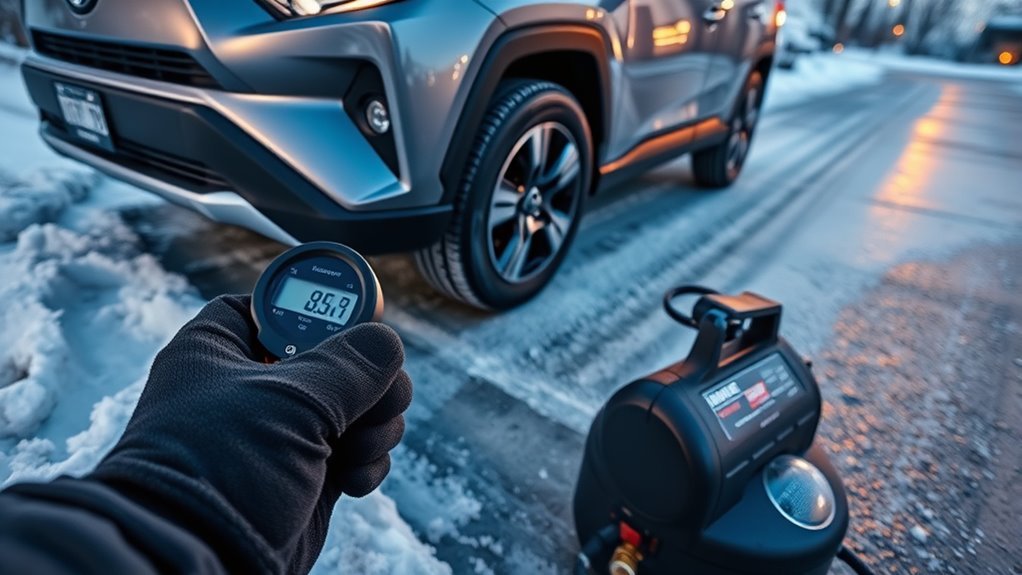
Winter weather can make your Toyota RAV4’s tire pressure drop faster than many drivers expect. The right fix is not to guess or blindly overinflate. The safest approach is to check the tires when they are cold and adjust them to the cold PSI listed on your RAV4’s driver-side door placard or in the owner’s manual.
Quick Answer
Yes, you should adjust your Toyota RAV4’s tire pressure in winter, but adjust it to the recommended cold tire pressure, not automatically above it. Cold weather can lower pressure by roughly 1 psi for every 10°F drop, so check monthly and after major temperature swings.
Key Takeaways
- Use the PSI on your RAV4’s tire information placard, usually on the driver-side door jamb, not the maximum PSI printed on the tire sidewall.
- Check tire pressure when the tires are cold, before driving or after the vehicle has been parked for at least three hours.
- A cold-morning TPMS light should not be ignored, even if it turns off after the tires warm up.
- Check all four tires and the spare, if equipped, at least once a month and before long winter trips.
At a Glance
| Time Required | 5–10 minutes |
| Difficulty | Easy |
| Tools Needed | Quality tire pressure gauge, air compressor or air pump, owner’s manual or door-jamb placard |
| Cost | Free if you already own a gauge; usually low cost for a basic gauge or portable inflator |
Why Tire Pressure Matters in Winter Conditions
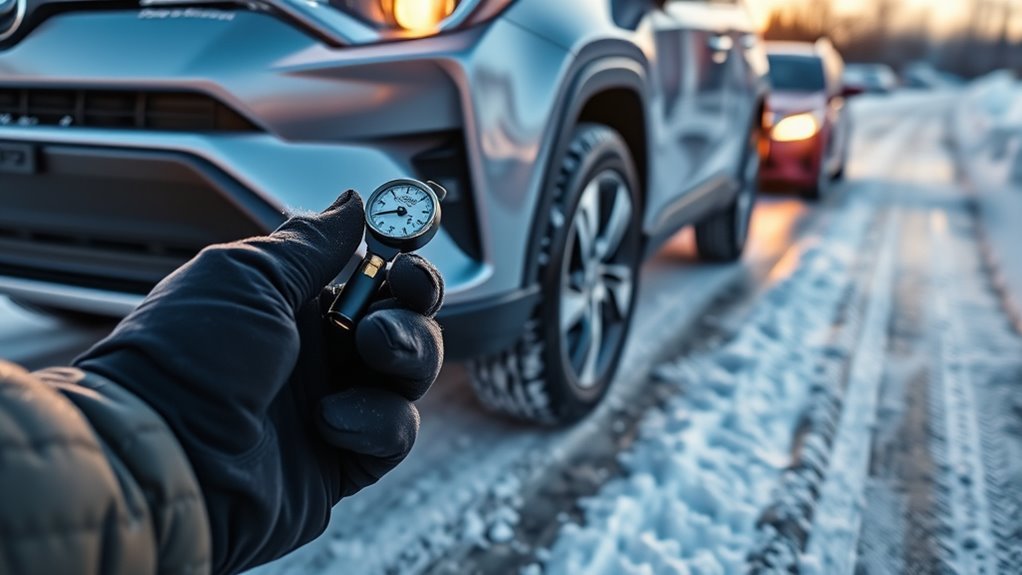
Cold air contracts, so the pressure inside your RAV4’s tires can drop when temperatures fall. A common rule of thumb is that tire pressure changes by about 1 psi for every 10°F change in temperature. That means tires that were correct in mild weather may become underinflated after a hard freeze.
Proper tire pressure supports steering response, braking, tread wear, ride comfort, and fuel economy. NHTSA advises drivers to use the vehicle manufacturer’s recommended cold inflation pressure and to check tires regularly, including the spare. Toyota also says to check tire pressure when the tires are cold and to use the driver-side door post or owner’s manual for the recommended pressure.
Warning: Do not use the maximum PSI printed on the tire sidewall as your target pressure. That number is the tire’s maximum rating, not the recommended pressure for your Toyota RAV4.
How Cold Weather Impacts Tire Pressure
Winter pressure changes happen even when the tire has no leak. If you set your tire pressure correctly in the fall and the temperature later drops by 30°F, the cold reading may be several psi lower. That loss can be enough to trigger a tire pressure warning light, especially if the tires were already close to the low end.
A tire that was properly inflated in warm weather can become underinflated after a winter temperature drop, even without a puncture.
Temperature-Pressure Relationship
The pressure reading on your gauge reflects the tire’s temperature. A tire checked after driving may read higher because driving warms the tire. For the most accurate winter reading, check your RAV4’s tires before driving or after the vehicle has been parked for at least three hours.
If you fill the tires in a heated garage and then drive into freezing outdoor weather, the pressure may drop once the tires cool to outside temperature. Recheck the pressure outdoors when the tires are cold if the temperature difference is large.
TPMS Sensitivity Issues
Your RAV4’s Tire Pressure Monitoring System, or TPMS, is a helpful safety system, but it is not a replacement for a tire pressure gauge. Toyota explains that if the tire pressure monitoring system senses seriously low pressure, the warning icon appears and the driver should check the tires and refill, repair, or replace any that are below the proper pressure.
A cold-morning TPMS light may turn off after you drive because the tires warm up and pressure rises. That does not prove the cold tire pressure is correct. Check the tires with a gauge as soon as it is safe.
Essential Tire Pressure Adjustments for Your RAV4 in Winter
The best winter adjustment is simple: bring each tire back to the recommended cold PSI for your exact RAV4. The correct number can vary by model year, trim, tire size, and market, so use your own vehicle’s placard instead of a generic internet number.
- Open the driver’s door and look for the tire and loading information label on the door edge or door jamb.
- Find the recommended cold tire pressure for the front and rear tires.
- Check the owner’s manual if the placard is damaged or unreadable.
- Check the spare tire pressure too, if your RAV4 is equipped with one.
- Adjust the tires to the recommended cold PSI before driving whenever possible.
Pro Tip: Keep a small tire gauge in your glove box. Winter air pumps and gas-station gauges can be inconsistent, so your own gauge helps you compare readings more reliably.
[Products Worth Considering]

These universal tire valve stem caps help protect valve cores from dust, debris, and moisture while helping maintain stable tire pressure. The corrosion-resistant metal construction and sealed design provide reliable protection in road grime, mud, and winter conditions. Twist-on installation makes them quick to fit on cars, SUVs, trucks, and motorcycles.

Monitor tire tread wear with a smart, color-coded depth gauge that shows clear condition ranges at a glance. The bar is range marked for fast, easy readings, helping you maintain safer traction and performance. Each gauge is portable with a pocket clip, and the set includes 20 units for daily use and sharing.
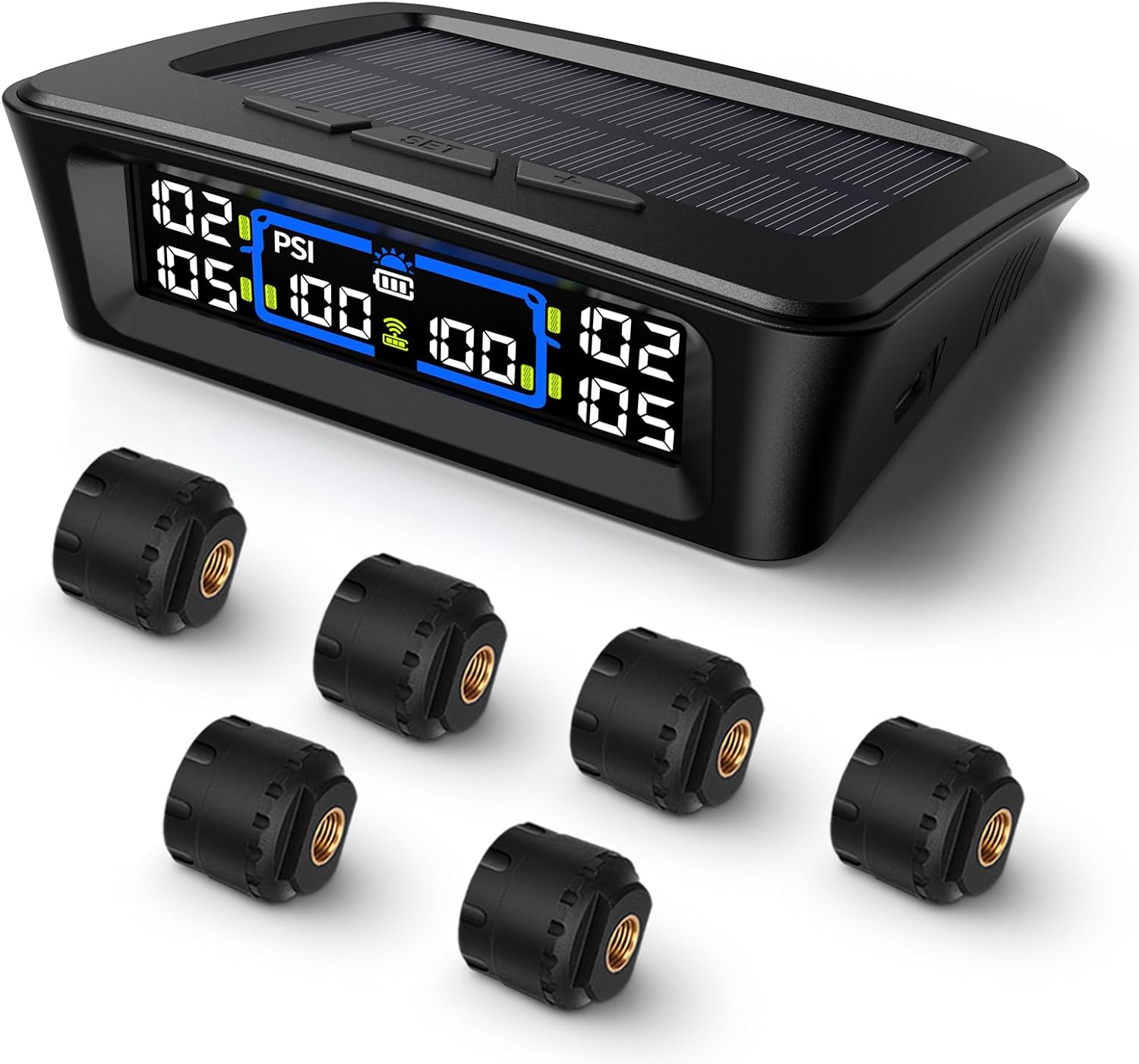
The Tymate TM12 RV TPMS delivers real-time tire pressure and temperature monitoring with a stable 433Hz display for safer long-distance driving. It supports simultaneous monitoring across vehicle and trailer zones, includes six alarm modes for pressure, temperature, leakage, battery, and signal loss, and features easy DIY installation with auto calibration. Power is supplied via USB-C charging or solar recharging, with a wide 0–144 PSI range and up to 50 ft signal coverage for RVs and towable trailers.
Common Myths About Tire Pressure and Winter Driving
Tire pressure myths can cause poor handling, uneven wear, or a warning light that keeps returning. Use this table to separate safe winter practice from guesswork.
| Myth | Reality |
|---|---|
| Tire pressure should stay the same all winter. | Cold weather can lower pressure, so winter checks need to be more consistent. |
| You should always add 2–3 psi above Toyota’s recommendation. | Use the recommended cold PSI on your RAV4’s placard. Do not overinflate unless your owner’s manual or a Toyota service professional gives a specific reason. |
| The TPMS light is probably false if it comes on in cold weather. | Treat the warning as real until you confirm pressure with a gauge. |
| The PSI on the tire sidewall is the target pressure. | The sidewall shows the tire’s maximum rating. Your RAV4’s target pressure is on the vehicle placard. |
| Correct pressure replaces winter tires or good tread. | Proper pressure helps tires work as designed, but it cannot replace adequate tread or the right tire type for snow and ice. |
Steps to Effectively Check Your Tire Pressure
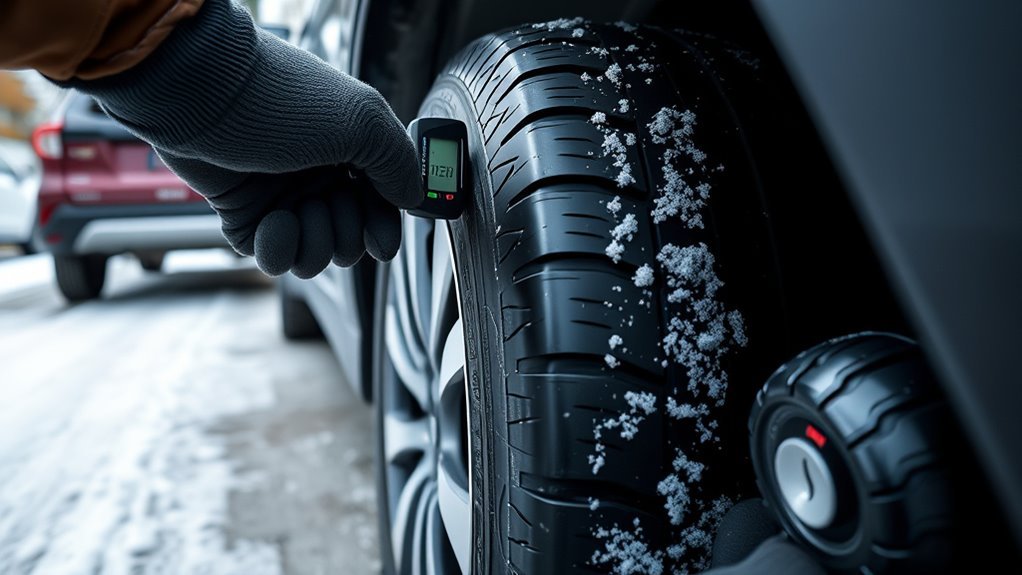
Checking tire pressure takes only a few minutes. The key is to do it when the tires are cold and to compare each reading with the pressure listed for your RAV4, not with a random number online.
- Park safely and let the tires cool. Check before driving or after the RAV4 has been parked for at least three hours.
- Find the recommended PSI. Use the driver-side door placard or owner’s manual.
- Remove the valve cap. Keep it in your hand or pocket so it does not roll away.
- Press the gauge firmly onto the valve stem. A quick hiss is normal, but a long hiss usually means the gauge is not sealed straight.
- Read and record the pressure. Check all four tires and the spare if equipped.
- Add air if the reading is low. Add only the amount needed to reach the recommended cold PSI.
- Release air if the reading is high. Press the valve core briefly, then recheck with the gauge.
- Reinstall the valve cap. Valve caps help keep dirt and moisture out of the valve.
- Drive and monitor the TPMS. If the light remains on or returns, recheck pressure and inspect for damage or a slow leak.
Essential Tools Needed
You do not need a full garage setup to maintain tire pressure in winter. These basic tools are enough for most RAV4 owners:
- Tire pressure gauge: A digital, dial, or quality pencil gauge works if it reads accurately.
- Portable air compressor or pump: Useful during cold weather when gas-station pumps are busy or out of service.
- Owner’s manual or door placard: Your source for the correct cold PSI.
- Flashlight: Helpful for checking tires on dark winter mornings.
Ideal Timing For Checks
Check your RAV4’s tire pressure at least once a month, before long trips, and after a major temperature swing. Winter is also a good time to check tread depth, look for sidewall cuts or bulges, and inspect valve caps.
Note: If your area has extreme cold, Toyota advises checking with a Toyota dealership for proper procedures. This is especially smart if your TPMS warning keeps returning after you set the tires to the correct cold pressure.
Common Measurement Mistakes
A few small mistakes can make your reading unreliable. Avoid these common winter tire pressure errors:
- Checking pressure immediately after highway driving.
- Using the maximum PSI on the tire sidewall as the target.
- Ignoring the spare tire.
- Assuming the TPMS light is wrong because it turns off after driving.
- Failing to recheck after adding air.
- Leaving valve caps off after inflation.
When to Check Your Tire Pressure During Winter
The best time to check tire pressure is in the morning before driving. If that is not possible, wait until the RAV4 has been parked for at least three hours. This gives the tires time to cool and gives you a reading closer to the recommended cold PSI.
During winter, check more often when temperatures swing sharply. A tire set correctly at 50°F can read lower when the temperature drops below freezing. The fix is to check and top up to the recommended cold pressure.
How TPMS Helps You Keep an Eye on Tire Pressure
The TPMS helps warn you when tire pressure is significantly low. Under federal TPMS requirements, the system is designed to warn drivers when a tire is significantly underinflated, generally around 25% below the recommended cold inflation pressure or a specified threshold, depending on the tire. You can read the standard in 49 CFR 571.138.
Still, TPMS is not a substitute for regular pressure checks. If the warning light appears, inspect the tires and check them with a gauge. If the TPMS light flashes for about a minute and then stays on, that can indicate a system malfunction rather than simple low pressure. In that case, follow your owner’s manual or contact a Toyota service center.
[Products Worth Considering]

Keep your tires properly inflated with this analog VONDIOR tire pressure gauge, designed for fast, easy readings without batteries. The swiveling, two-axis hose and large glow dial help you measure at any tire angle with instant visibility. Built with a protective rubber shield, it supports durable, low-maintenance use for cars and trucks.

Measure tire tread depth quickly and accurately with this LUMITECO dial gauge that reads in 1/32" increments up to 14/32". The color-coded green/yellow/red zones make it easy to judge tire wear and know when replacement is needed. A rugged, compact design with a protective pouch helps keep the gauge ready for use on cars, trucks, motorcycles, and more.
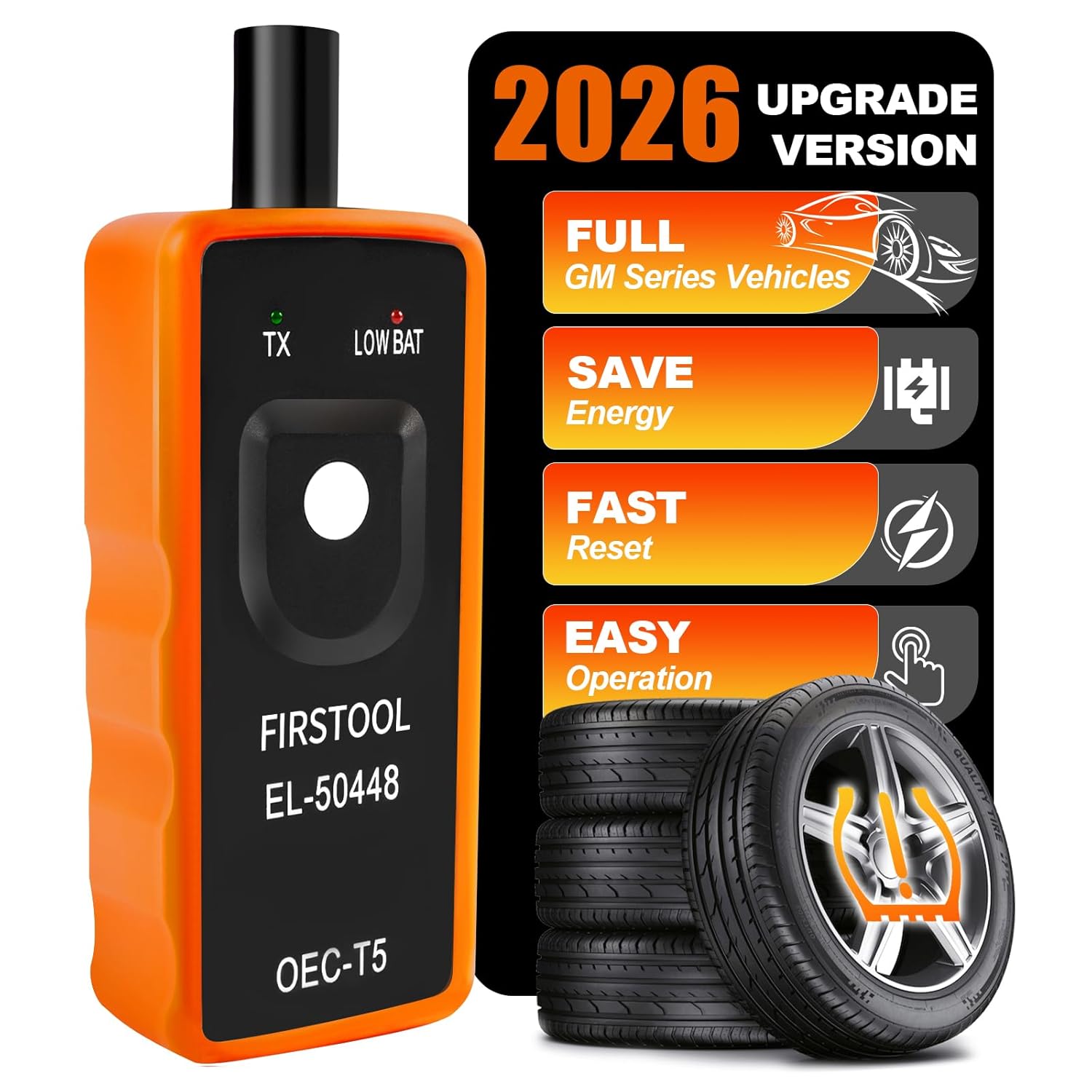
This TPMS relearn tool helps you quickly activate, match, and reset GM tire pressure sensors to keep the vehicle monitoring system working properly. It clears tire pressure alarms and dashboard warning lights after sensor replacement or tire rotation, and supports learning for common 315/433 MHz TPMS sensors. Designed for simple one-button operation, it can help you avoid unnecessary trips to repair shops.
Key Strategies for Ensuring Tire Performance in Cold Weather
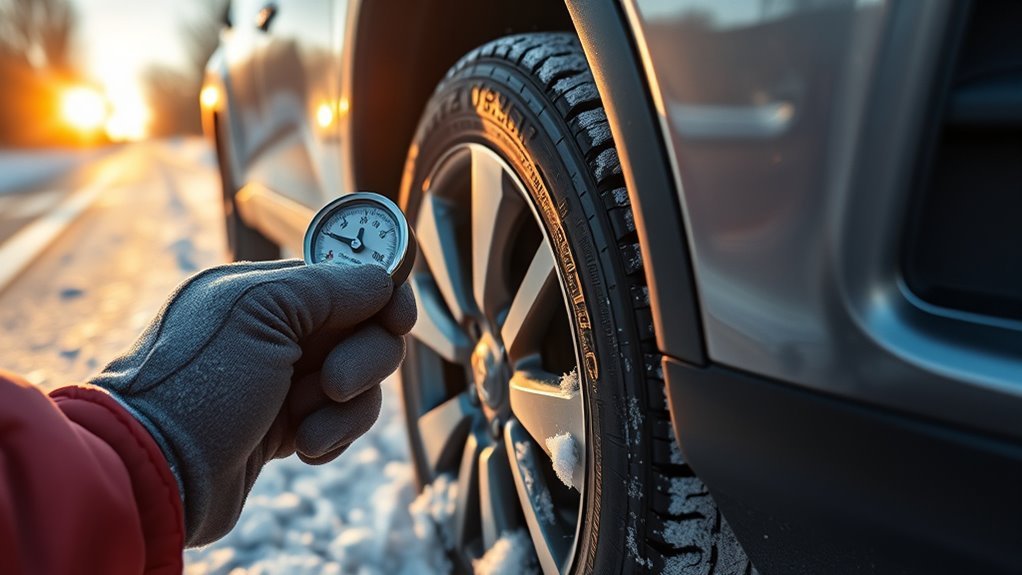
Correct pressure is only one part of winter tire safety. Your tires also need enough tread, even wear, and the right design for your driving conditions. If you drive in frequent snow, ice, or freezing slush, consider whether dedicated winter tires or severe-snow-rated all-weather tires make sense for your area.
To help your RAV4’s tires perform well in cold weather:
- Set tire pressure to the recommended cold PSI on the placard.
- Check pressure monthly and before road trips.
- Inspect tread depth and uneven wear.
- Rotate tires according to your maintenance schedule.
- Do not overload the vehicle.
- Have slow leaks, punctures, or repeated TPMS warnings inspected promptly.
Proper pressure can also help fuel economy. FuelEconomy.gov states that underinflated tires can lower gas mileage and that properly inflated tires are safer and last longer.
What to Do If Your RAV4 TPMS Light Comes On in Winter
If the TPMS warning light comes on during cold weather, do not panic and do not ignore it. Use this quick troubleshooting flow:
- Pull over safely if handling feels wrong. A very low tire can affect control.
- Visually inspect each tire. Look for a flat tire, obvious damage, nails, or sidewall bulges.
- Check pressure with a gauge when safe. If the tires are warm, treat the reading as temporary and recheck cold later.
- Inflate low tires to the recommended cold PSI. Do not keep adding air beyond the placard pressure just to shut off the light.
- Drive normally and monitor the light. Some systems need a short drive to update.
- Get help if the light stays on or flashes. You may have a slow leak, damaged sensor, or TPMS issue.
[Products Worth Considering]

Milton S-921 pencil tire pressure gauge helps you maintain optimal tire pressure for passenger cars with accurate readings in PSI and kPa. It features a built-in deflator valve for convenient pressure adjustments, plus a single chuck head and nylon indicator bar for easy use on the go. Built from durable plated brass and designed for reliable performance, it’s a practical road trip and cold-weather maintenance tool.

The Airmoto portable tire inflator quickly and accurately fills car, truck, SUV, motorcycle, and bicycle tires up to 120 PSI with auto shut-off when your target pressure is reached. Its large LCD, multi-unit pressure display, and digital gauge make it easy to dial in settings and verify readings, while the built-in LED flashlight helps in low light. The included polyurethane hard carrying case and storage mesh pocket keep the inflator and accessories protected and organized.

Upgrade your Toyota’s wheels with durable aluminum alloy valve stem caps that help protect valve cores from corrosion and direct exposure to road grime, clay, water, and snow. Rubber rings improve sealing to help prevent air leakage and maintain stable tire pressure for safer driving. These caps are easy to install or remove without tools and add a unique, stylish look to your car.
Sources
- Toyota Support: Proper way to check tire pressure — backs up using the driver-side door post or owner’s manual and checking tires cold.
- Toyota Support: How the Tire Pressure Monitoring System works — backs up TPMS warning response guidance.
- NHTSA TireWise — backs up cold inflation pressure, monthly checks, spare tire checks, and TPMS limitations.
- 49 CFR 571.138 Tire Pressure Monitoring Systems — backs up federal TPMS warning requirements.
- FuelEconomy.gov: Gas Mileage Tips — backs up the fuel-economy benefit of proper tire inflation.
Frequently Asked Questions
What should tire pressure be in winter for a Toyota RAV4?
Use the cold tire pressure listed on your RAV4’s driver-side door placard or in the owner’s manual. The correct PSI can vary by model year, trim, and tire size, so your vehicle’s placard is the safest source.
Should I set my RAV4 tire pressure higher in the winter?
You should check and adjust pressure more often in winter, but the target is still the recommended cold PSI on the placard. Do not automatically add 2–3 psi above Toyota’s recommendation unless your owner’s manual or a Toyota service professional gives that specific instruction.
What happens if my RAV4 tire pressure is too low?
Low tire pressure can reduce handling, increase tire wear, hurt fuel economy, and raise the risk of tire damage. In winter, it can also make the TPMS light come on more often because cold air lowers pressure.
Why does my RAV4 tire pressure light come on in the morning and turn off later?
Cold overnight temperatures can lower tire pressure enough to trigger the TPMS light. After driving, the tires warm up and pressure rises, so the light may turn off. You should still check the tires cold with a gauge.
Can I use the PSI number printed on the tire sidewall?
No. The sidewall number is the tire’s maximum pressure rating, not the recommended pressure for your RAV4. Use the tire information placard on the vehicle or the owner’s manual.
Should I check tire pressure if my RAV4 has TPMS?
Yes. TPMS is a warning system, not a routine maintenance tool. Check tire pressure with a gauge at least once a month, before long trips, and after major winter temperature drops.
Conclusion
You should adjust your Toyota RAV4’s tire pressure in winter, but the safest adjustment is to bring the tires back to the recommended cold PSI on your vehicle’s placard. Cold weather lowers pressure, so check more often, use a reliable gauge, and do not dismiss a TPMS light just because it appears on a cold morning. With the right pressure, good tread, and prompt attention to warnings, your RAV4 will be better prepared for winter roads.