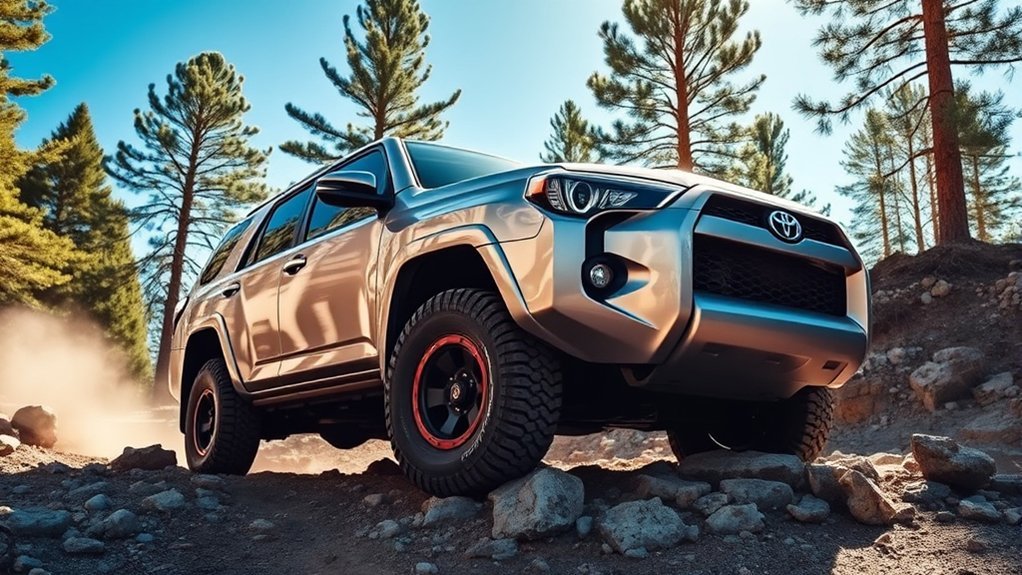
You can install run-flat tires on some Toyota 4Runner configurations, but only when an exact tire is approved for your model year, trim, wheel, load requirement, and driving conditions. A run-flat that merely has a similar diameter is not automatically safe. The decision also depends on whether you mainly drive on pavement or regularly travel on rough, remote trails.
Quick Answer
Run-flat tires may work on a Toyota 4Runner if the exact tire matches the vehicle’s required size, load index, speed rating, wheel specifications, and inflation pressure. However, run-flats are rarely the best choice for serious off-road use. Frequent trail drivers will usually be better served by four matching all-terrain tires and a usable full-size spare.
Last updated: July 17, 2026.
Key Takeaways
- Use the tire size and cold-pressure information on your driver-door label, not a generic size found online.
- The replacement tire must meet or exceed the required load index and comply with the wheel and vehicle manufacturer’s specifications.
- Install four closely matched tires on a 4WD 4Runner unless your owner’s manual and tire professional approve another arrangement.
- Run-flat construction provides temporary mobility after some pressure-loss events, but it does not make a tire puncture-proof or trail-ready.
- Keep a usable spare or another dependable recovery plan when driving in remote areas.
Can Run-Flat Tires Fit Your Toyota 4Runner?
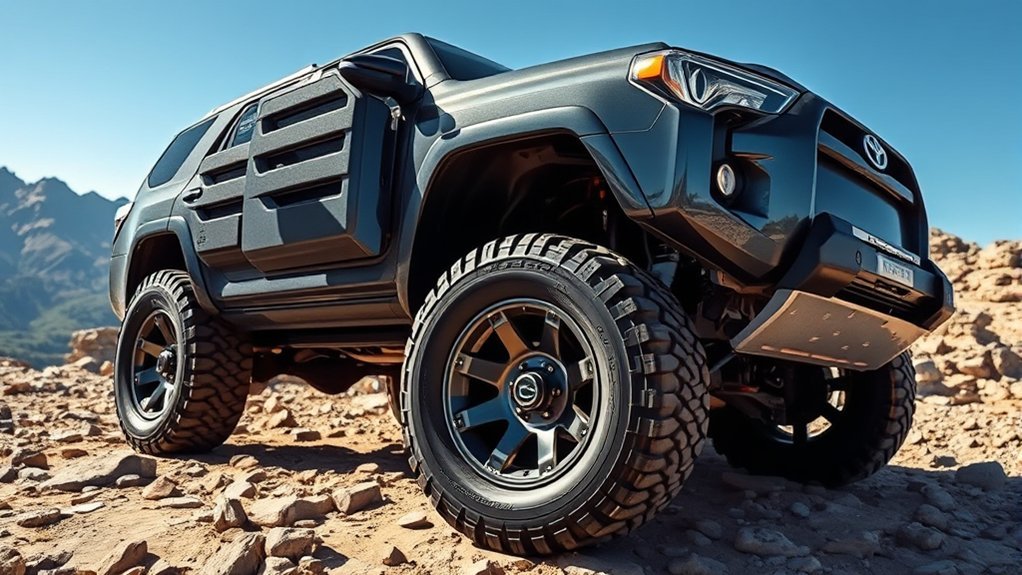
A run-flat tire can fit only when the complete specification matches your particular 4Runner. Toyota has offered different wheel and tire configurations across model years and trims. Current 4Runner information includes 17-, 18-, and 20-inch wheel applications, while off-road grades use larger all-terrain fitments. You should therefore avoid treating a size such as 235/55R18 as a universal 4Runner recommendation.
Start with the Tire and Loading Information label inside the driver’s door area. Confirm the original tire size, recommended cold pressure, and vehicle loading information. You can also review the specifications for your model year through the official Toyota 4Runner specifications.
A suitable replacement should satisfy all of the following:
- Correct tire size: The diameter, width, and sidewall profile must be appropriate for the vehicle and wheel.
- Adequate load capacity: The load index must meet or exceed the vehicle manufacturer’s requirement.
- Suitable speed rating: The tire must meet the required service description unless Toyota or the tire manufacturer approves an alternative.
- Approved wheel fit: The tire manufacturer must approve the wheel diameter and width for that exact run-flat model.
- Working TPMS: The tire-pressure monitoring system must operate correctly because a deflated run-flat may not look visibly flat.
- Appropriate intended use: A highway-oriented run-flat is not a substitute for an all-terrain tire on rocks, mud, sand, or deeply rutted trails.
Note: A matching outside diameter alone does not prove compatibility. Load capacity, wheel fit, inflation requirements, clearance, handling, and the tire manufacturer’s vehicle application must also be checked.
Advantages of Run-Flat Tires for Your 4Runner
The main benefit of a run-flat tire is temporary mobility after certain punctures or pressure-loss events. Reinforced sidewalls help support the vehicle for a limited distance, giving you a chance to leave a dangerous shoulder or reach a nearby service location.
Potential benefits include:
- Less roadside exposure: You may not need to stop immediately beside fast traffic to change a tire.
- More predictable initial control: The reinforced construction can help the tire retain more of its shape after pressure loss.
- Temporary mobility: You may be able to reach a safe location without installing the spare immediately.
- Convenience for paved-road travel: A compatible run-flat can provide useful reassurance when service locations are nearby.
Run-flat capability is a temporary escape route after pressure loss, not permission to finish a trip on a damaged tire.
The commonly quoted “50 miles at 50 mph” figure is not a universal rule. The allowed speed, distance, vehicle load, and operating conditions vary by exact tire. Follow the limits published on the tire or in its manufacturer documentation.
Are There Downsides to Using Run-Flats Off-Road?
Run-flat tires are generally less attractive for frequent off-road use. Their reinforced sidewalls can create a firmer ride on broken pavement and uneven trails. Run-flat construction also does not guarantee the tread pattern, sidewall protection, flotation, or traction needed for mud, sharp rocks, loose gravel, or deep sand.
A serious trail impact can cut a sidewall, damage the bead, bend the wheel, or create internal damage that defeats the run-flat system. Replacement availability may also be limited in small towns or remote areas, particularly when the 4Runner uses a less common size or load specification.
Warning: Do not continue driving merely because the tire is labeled run-flat. Stop and arrange assistance if you see sidewall separation, exposed cords, wheel damage, smoke, unusual heat, severe vibration, poor steering control, or damage outside the tire’s approved zero-pressure conditions.
Drivers who regularly air down their tires should be especially cautious. Do not assume a run-flat can be operated at reduced trail pressure in the same way as a conventional all-terrain tire. Follow the tire manufacturer’s minimum-pressure and off-road guidance.
What Key Factors Should You Consider Before Switching?
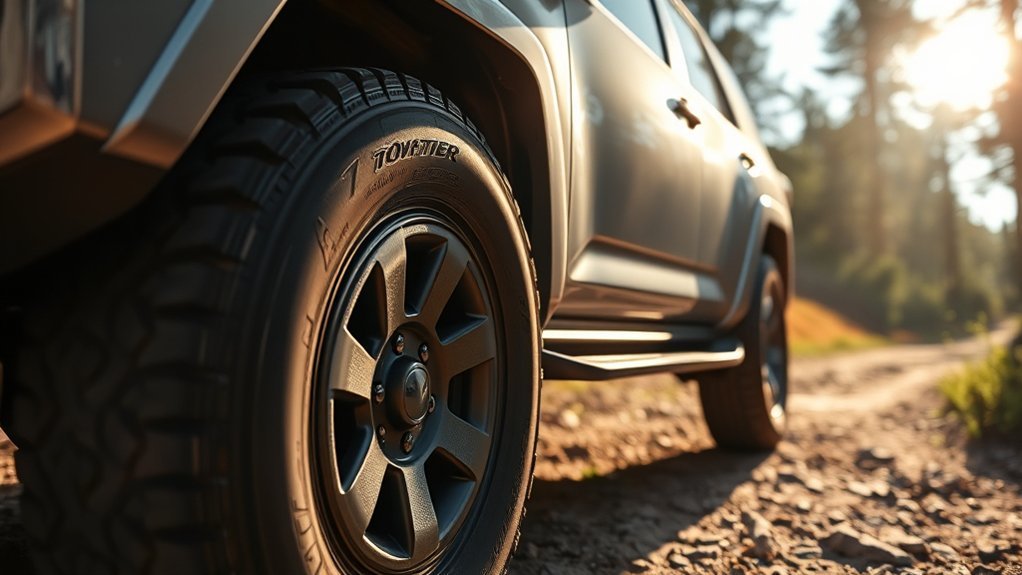
Before switching, evaluate more than puncture convenience. The tire must work with your exact 4Runner and support how you use the vehicle.
Model Year, Trim, and Original Tire Specification
Confirm the model year, trim, drivetrain, wheel diameter, and original service description. A tire that fits one 4Runner trim may be unsuitable for another because wheel size, load requirements, suspension tuning, and intended use can differ.
Four-Tire Matching
Toyota cautions 4WD owners against mixing different tire makes, models, tread patterns, or substantially different levels of wear. The safest approach is usually to install four tires of the same brand, model, size, construction, load index, and similar tread depth. Review the tire guidance in your model-specific owner’s manual, including Toyota’s instructions for matching tires on 4WD models.
Ride and Handling
Reinforced sidewalls can transmit more vibration and road impact into the cabin. A test drive is worthwhile when possible, especially if ride comfort is a priority or your 4Runner has larger wheels with shorter sidewalls.
Availability and Replacement Planning
Confirm that the exact tire is available from more than one nearby retailer. A rare run-flat size may require a special order. This matters when you travel far from large service centers.
Spare Tire and Recovery Equipment
Do not remove a usable factory spare merely because run-flat tires are installed. A spare can still be necessary after severe sidewall damage, wheel damage, bead failure, or a puncture that exceeds the tire’s operating limit.
Towing and Heavy Loads
Vehicle load can reduce a damaged tire’s remaining operating capability and increase heat. Follow the run-flat manufacturer’s instructions when towing or carrying heavy cargo. Stop and arrange a tow when the documentation does not clearly approve continued operation under your conditions.
Pro Tip: Ask the installer to record the exact tire size, load index, speed rating, recommended cold pressure, and zero-pressure limit on your invoice. Keep a copy in the glove box for emergencies.
How to Check Run-Flat Compatibility Before Buying
- Read the driver-door label. Write down the original tire size and recommended cold pressure.
- Check the owner’s manual. Review replacement-tire, TPMS, 4WD, spare-tire, and wheel requirements for your model year.
- Confirm the service description. Compare the required load index and speed rating with the proposed tire.
- Check the tire manufacturer’s fitment data. Verify the approved rim-width range, vehicle application, pressure, and zero-pressure operating limit.
- Inspect the wheels and TPMS. Make sure the wheels are undamaged and the TPMS sensors can be serviced, registered, or relearned correctly.
- Choose four matching tires. Avoid combining run-flats with conventional tires or mixing different tread designs on a 4WD 4Runner.
- Discuss your driving conditions. Tell the installer whether you tow, carry heavy loads, drive off-road, air down, or travel in remote areas.
- Have the tires professionally installed. Proper mounting, balancing, pressure setting, TPMS service, and a post-installation inspection are essential.
[Products Worth Considering]

Replace worn or malfunctioning GM TPMS sensors with this 433MHz pre-programmed sensor set designed for compatibility with many Chevrolet, Buick, GMC, and Cadillac models. It includes guidance for proper OBDII relearning/pairing after installation and supports reliable long-term operation with a high-performance CR2032 battery. Quality tested for durability and performance to help restore accurate tire pressure monitoring.
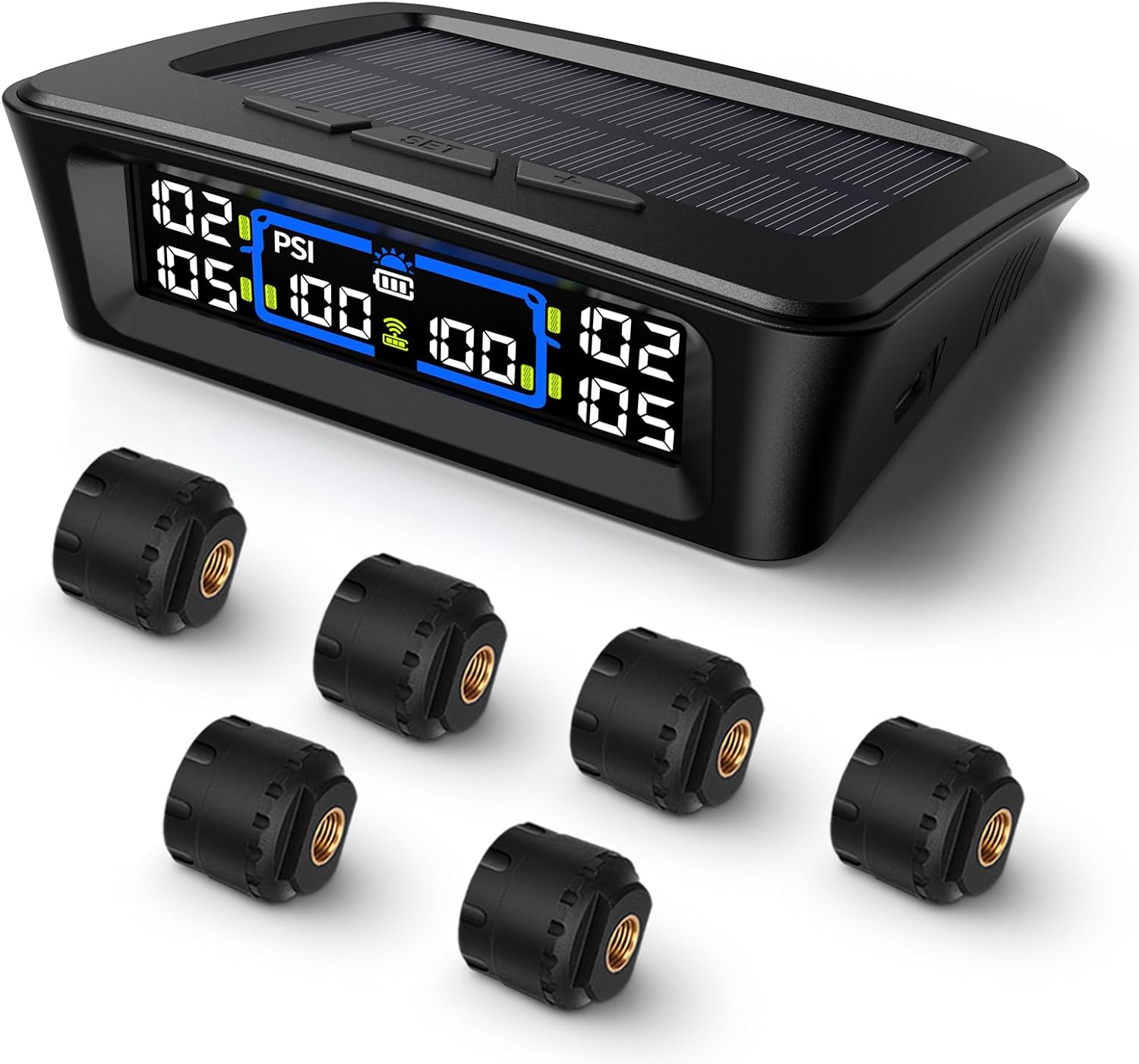
The Tymate TM12 RV TPMS delivers real-time tire pressure and temperature monitoring with a stable 433Hz display for safer long-distance driving. It supports simultaneous monitoring across vehicle and trailer zones, includes six alarm modes for pressure, temperature, leakage, battery, and signal loss, and features easy DIY installation with auto calibration. Power is supplied via USB-C charging or solar recharging, with a wide 0–144 PSI range and up to 50 ft signal coverage for RVs and towable trailers.
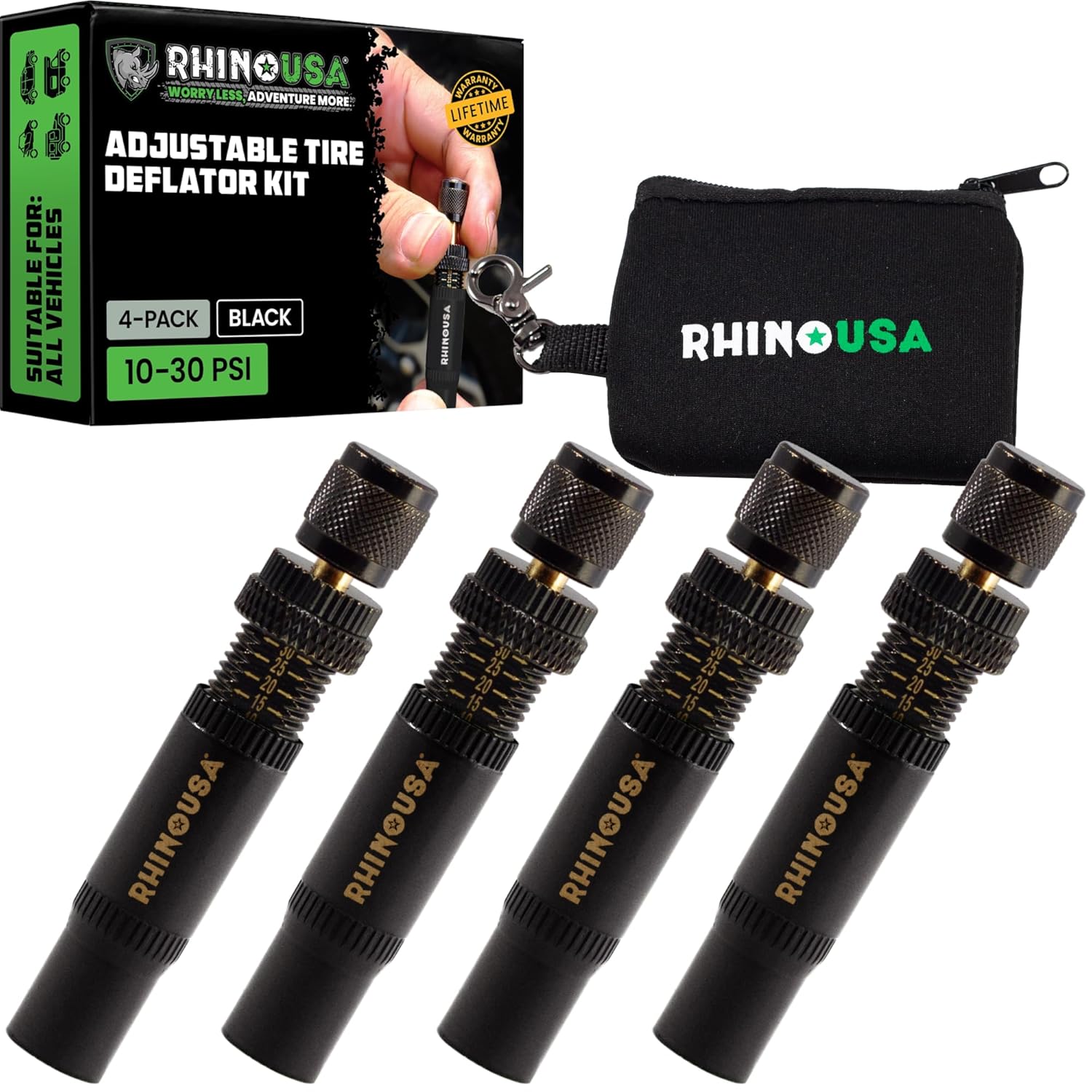
Use the Rhino USA adjustable tire deflators to air down all four tires at once by screwing one deflator onto each valve stem, letting you step away while the tires reach your preset pressure. Each deflator independently adjusts across a 10–30 PSI range with laser-etched indicators for quick setup and verification, making it ideal for beach, sand, and rocky off-road trails.
Run-Flat vs. Conventional All-Terrain Tires for a 4Runner
| Factor | Run-Flat Tire | Conventional All-Terrain Tire |
| After a pressure loss | May provide limited mobility within the exact tire’s published speed and distance limits. | Normally requires an immediate safe stop, repair, spare installation, or towing. |
| Ride comfort | Often firmer because of reinforced construction. | Varies by load range and design but is often more compliant in a comparable size. |
| Off-road use | Depends on tread and construction; many options are intended mainly for paved roads. | Purpose-built all-terrain models generally offer more suitable tread and trail performance. |
| Repair and replacement | Requires manufacturer-approved evaluation and internal inspection after low- or zero-pressure driving. | Some tread-area punctures may be repairable if they meet industry and manufacturer requirements. |
| Best suited to | Mostly paved driving near tire-service facilities, when an approved fitment is available. | Mixed road and trail use, particularly when paired with a full-size spare and recovery equipment. |
[Products Worth Considering]

These aluminum alloy tire valve stem caps with an O-ring seal help protect valve stems from corrosion while adding a clean, stylish look to your vehicle. The universal fit works across cars, trucks, motorcycles, bicycles, and more, making them an easy upgrade for everyday driving and off-road use. Installation is quick, and the included four-pack keeps all your tires dressed and protected.

Marsflex brand TPMS replacement sensors help restore tire pressure monitoring for compatible Toyota, Lexus, Scion, and Pontiac models. Each sensor is pre-programmed for the vehicle application and includes a long-life battery for up to 8 years of normal use. Designed to replace common OE numbers and requires relearning using a TPMS scan tool after installation.

This ALL-TOP auto-stop tire deflator valve kit lets you air down off-road tires quickly without watching pressure, automatically stopping when your preset PSI is reached. Each valve is individually calibrated for reliable performance with an acceptable +/- 2 PSI tolerance. The adjustable deflator range covers 10 to 30 PSI and includes four valves plus valve caps and a zipper pouch for easy setup on trucks, SUVs, RVs, UTVs, and powersports.
What to Do If a Run-Flat Tire Loses Pressure
- Stay calm and avoid abrupt inputs. Hold the steering wheel firmly and reduce speed smoothly.
- Check the warning and vehicle behavior. Note the affected tire if your display identifies it.
- Move to a safe location. Leave high-speed traffic or hazardous terrain as soon as it is safe.
- Inspect from a safe distance. Look for sidewall damage, separation, smoke, excessive heat, wheel damage, or a tire that has left the rim.
- Read the exact tire limit. Do not exceed the tire manufacturer’s published zero-pressure speed or distance.
- Reduce load when possible. Heavy cargo and towing can increase tire stress and heat.
- Visit a qualified tire professional. The tire should be removed from the wheel and inspected internally after low- or zero-pressure operation.
Do not rely only on the TPMS light for routine maintenance. NHTSA recommends checking cold tire pressure at least monthly because TPMS normally warns only after a tire is already significantly underinflated. See the NHTSA TireWise guidance for tire-pressure and inspection recommendations.
Expert Tips for Choosing the Right Run-Flat Tires
- Shop by exact vehicle configuration. Use the year, trim, drivetrain, wheel size, and original tire service description.
- Do not mix run-flats and conventional tires. Different constructions can create inconsistent steering, traction, and response.
- Prioritize load capacity. A tire with inadequate load capacity is unsuitable even when its physical dimensions appear correct.
- Compare real use, not only puncture mobility. Review wet braking, winter performance, road noise, ride firmness, off-road traction, and replacement availability.
- Keep the spare for trail use. Run-flat mobility cannot overcome every sidewall cut, bead failure, or damaged wheel.
- Inspect after hard impacts. Potholes, curbs, and rocks can cause internal damage that is not visible from outside.
- Use the door-label pressure. Do not inflate the tire to the maximum pressure molded on its sidewall unless a specific manufacturer procedure requires it.
- Ignore mileage guesses based on UTQG alone. A treadwear grade is a comparative rating, not a guaranteed number of road miles.
[Products Worth Considering]

Monitor tire tread wear with a smart, color-coded depth gauge that shows clear condition ranges at a glance. The bar is range marked for fast, easy readings, helping you maintain safer traction and performance. Each gauge is portable with a pocket clip, and the set includes 20 units for daily use and sharing.

The Topeak SmartGauge D2 delivers precise digital tire pressure readings for bikes, motorcycles, and sports equipment up to 250 psi (17 bar). Its rotating SmartHead works with both Presta and Schrader valves, so you can check pressure quickly without adapters. The LCD display makes it easy to read results in psi, bar, or kg/cm² with an included CR2032 battery for immediate use.

The 22800 wheel stud installer makes replacing wheel studs quick and secure, saving time and effort during tire service. It uses a ratchet or impact wrench to pull new studs firmly into place, helping when existing studs are too long. Compatible with most automotive wheels and light-duty truck wheel studs, it’s designed for easy, tool-assisted installation.
Frequently Asked Questions
Can I switch from run-flat to regular tires?
Yes, when the conventional tires meet the 4Runner’s required size, load index, speed rating, wheel fit, and inflation specifications. Use four matching tires and retain a spare, repair equipment, or dependable roadside plan. Have a qualified installer confirm the change for your model and drivetrain.
Do run-flat tires require special wheels on a 4Runner?
It depends on the run-flat system and tire. Some self-supporting run-flats can be mounted on compatible conventional wheels, while other systems have specific wheel requirements. Confirm the approved rim diameter, width, bead profile, and vehicle application with the tire manufacturer before installation.
Can a punctured run-flat tire be repaired?
Possibly, but only when the tire manufacturer permits repair and the damage meets its requirements. The tire must be removed and inspected internally. Sidewall damage, excessive zero-pressure driving, exposed cords, heat damage, or damage outside the repairable tread area normally requires replacement.
Should I remove the spare after installing run-flat tires?
Keeping the spare is the safer choice for most 4Runner owners, particularly when towing or driving off-road. Severe sidewall cuts, bead damage, wheel damage, and impacts that exceed the run-flat’s operating limit can still leave the vehicle unable to continue.
Are run-flat tires good for off-roading?
They are usually not the first choice for serious off-road driving. Run-flat construction provides limited post-puncture support, but it does not automatically provide the tread, flotation, sidewall protection, or low-pressure flexibility of a purpose-built all-terrain tire. Frequent trail drivers will generally benefit more from suitable all-terrain tires and a full-size spare.
Sources
- Toyota 4Runner specifications — current trim, wheel, tire, and vehicle configuration information.
- Toyota 4Runner owner’s manual: winter and tire guidance — specified tire sizes, matching tires on 4WD vehicles, and tire-pressure precautions.
- Michelin run-flat tire guidance — operation, TPMS, ride characteristics, inspection, and replacement considerations.
- U.S. Tire Manufacturers Association replacement guidance — size, load-index, speed-rating, and replacement-tire requirements.
- NHTSA TireWise — inflation, TPMS, UTQG, inspection, and tire-safety information.
- Continental off-road tire guidance — selecting tires designed for serious off-road terrain.
Conclusion
A compatible run-flat tire can provide useful temporary mobility for a Toyota 4Runner that spends most of its time on paved roads near service facilities. However, you should not choose one based only on wheel diameter or a generic tire-size recommendation.
Verify the exact size, load index, speed rating, wheel fit, cold pressure, TPMS operation, and manufacturer-approved zero-pressure limit. Install four matching tires and keep a usable spare when traveling off-road or far from help. For frequent trail driving, a properly matched all-terrain tire and full-size spare will usually be the more practical setup.